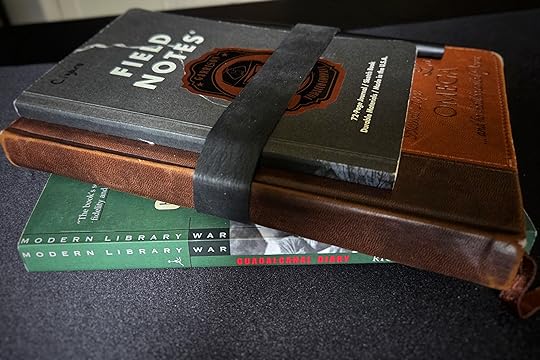
This celebrated classic gives a soldier's-eye-view of the Guadalcanal battles--crucial to World War II, the war that continues to fascinate us all, and to military history in general. Unlike some of those on Guadalcanal in the fall of 1942, Richard Tregaskis volunteered to be there. An on-location news correspondent (at the time, one of only two on Guadalcanal), he lived alongside the soldiers: sleeping on the ground--only to be awoken by air raids--eating the sometimes meager rations, and braving some of the most dangerous battlefields of World War II. He more than once narrowly escaped the enemy's fire, and so we have this incisive and exciting inside account of the groundbreaking initial landing of U.S. troops on Guadalcanal.
With a new Introduction by Mark Bowden--renowned journalist and author of Black Hawk Down--this edition of Guadalcanal Diary makes available once more one of the most important American works of the war.
Richard Tregaskis was born in Elizabeth, New Jersey, on November 28, 1916, and educated at the Pingrie Day School for Boys, Elizabeth, New Jersey, at Peddie School, Hightstonsic, New Jersey, and at Harvard University. Prior to World War II he worked as a journalist for the Boston Herald newspaper.
Shortly after the U.S. entered World War II, Tregaskis volunteered as a combat correspondent representing the International News Service. (In fact, Tregaskis was one of only two journalists on location at Guadalcanal.)
Assigned to cover the war in the Pacific, Tregaskis spent part of August and most of September, 1942 reporting on Marines on Guadalcanal, a pivotal campaign in the war against Japan. He subsequently covered the European Theater of Operations against Nazi Germany and Italy.
Tregaskis' most renowned book, Guadalcanal Diary, recorded his experiences with the Marines on Guadalcanal. As the jacket of the book's first edition noted, "This is a new chapter in the story of the United States Marines. Because it was written by a crack newspaperman, who knew how to do his job. . . . Until the author's departure in a B-17 Flying Fortress bomber on September 26th, he ate, slept, and sweated with our front-line units. His story is the straight day-by-day account of what he himself saw or learned from eyewitnesses during those seven weeks."
As a testimony to the power of Tregaskis' writing, ''Guadalcanal Diary'' is still considered essential reading by present-day U.S. military personnel. (A modern edition is available with an introduction by [[Mark Bowden]], author of Black Hawk Down: A Story of Modern War.
Tregaskis later covered Cold War-era conflicts in China, Korea, and Vietnam.
Tregaskis died at age 56 near his home in Hawaii as a result of drowning.
Around 1961/62, my librarian Mom got me hooked on the Landmark American History series.
She was an American, you see, and never gave up that status even though she spent the next 35 years of her life with her Canadian family.
In 1961 the Landmarks were a challenge I was ready for!
This one describes the awful American Marine campaign in Guadalcanal - which actually took more enemy than US casualties by a huge margin.
***
But I, too, yearned for such an awesome experience.
So much so, that two years later - as a Boy Scout - I teamed up with other area scouts in a war game that was dubbed Operation Escape...
It was sorta like the childhood game of Sardines, where the leader would find a difficult hiding place and we others would then hafta find him - quietly - and cram into his cubbyhole, like sardines.
Last guy left outside lost the game!
Well, the final day of Op Escape I lost the game for my team. I was captured. Wow, were they PO 'd at me!
But there was a saving grace to it all. My home Boy Scout unit knew nothing of my acute embarrassment, as Op Escape was a regional effort.
Thank Heaven!
For though bloody (to me) as that horrible Marine operation at Guadalcanal, the experience with which I had been credited at Op Escape ironically earned me my promotion to Patrol Leader -
As bent outta shape as I was -
For I quit scouts soon afterward. ***
That experience proved to be an early facet of my coming of age: the fabled experience of being badly stung by adulthood. That sting intensified as the summertime greens turned to red and yellow.
For on November 22, 1963, Kennedy was shot.
Such experiences made me see myself as I was - “left-handed, lost” - to quote Auden.
Too lost to ever consider joining the military as a career!
I first read this book in 1967 as an seventh grader who was forced to pick out a book from the bookmobile by my mother. All I wanted to do was play that summer and I chose a "war book" out of spite. Little did I know the door that I had inadvertantly opened for myself to a brand new world. But enough about me. This book was written in a time when not only were there war time censors but also those who monitored content for things that were morally and socially acceptable for the public at large at the time. In spite of these "handicaps" the author told a tale that was not only facinating but historically accurate as well. In time I acquired an original copy of this classic work which I have reread time and again over the years.
This is frontline reporting at it's best. Written in diary form by a reporter embedded with the Marines on Guadalcanal right from the start of the invasion, it brings you the day-to-day conditions these men faced during the difficult early days of the fight for the island. He brings all the uncertainty, tension, hopes and fear of the men to life in this masterful work, and wrote this in the weeks following his experiences, when the outcome of the war was still in the balance. What I really liked about the book though, is how he names a Marine, sailor or airman and then tells their story firsthand. Highly recommended as this is a great World War 2 book!!
At one point in Mike Nichols' film 'Carnal Knowledge', Jack Nicholson gets pissed off (as only Nicholson can) listening to Art Garfunkel go on and on about what a big reader his girlfriend Candice Bergen is (her favorite book is 'The Fountainhead' - talk about instant character-insight!). Not to be outdone in the 'well-read' department, Nicholson chimes in with book titles. He includes with, "Yeah, you ever read 'Guadalcanal Diary' by Richard Tregaskis? That was a best seller and I read it."
Well, maybe now I'm as well-read as Nicholson's Jonathan.
I read 'GD' because I had recently seen the 1943 film version. It was the first time I watched a WWII film that made me think I'd like to read the source material. It's an impactful film in a number of ways but, as the grandson of a Major General at Guadalcanal remarked, even though some of the day to day life was shown, what we didn't see was "the fatigue, the months of day to day stress. the inevitable disease...".
There were things you couldn't show in a 1940s war film. You couldn't show (as Tregaskis describes in his book), bodies blown apart by bombs or artillery fire, or ripped apart by swords. Not that you would want to see such things anyway - but that's part of what the book brings you. The depiction is quite often as ugly as the reality no doubt was.
My first thought along the way was, 'How did Tregaskis manage to write all this?!' Sure, he was a professional and all but even so. Being that close to the almost-non-stop action, how did he manage the astonishing amount of detail he serves up? 'Impressive' doesn't even state the case. This is ringside reporting that could possibly be unequalled.
There are many passages which are simultaneously a blur and minutely drawn - esp. those dealing with strategic maneuvers, esp. when engagement suddenly shifts (as it often does). But this is mainly a book about personalities - about the particular men at Guadalcanal. And Tregaskis gives just about each one a face, by stating names and then hometowns.
My interest here was in reading about a *real* war - not a fake one that's a product of what has become the pernicious military-industrial complex (which is pretty much all we see anymore). The war described by Tregaskis had a real purpose; it wasn't about making money. Naturally we didn't want that one either - but there seemed to be genuine honor involved.
That doesn't change the horror - and it's always horror:
One had the feeling of being at the mercy of great accumulated forces far more powerful than anything human. We were only pawns in a battle of the gods, then, and we knew it.
I found this book in my late Grandfather in-law's library -- a first edition hardcover from the forties. It sounds trite, but the effects of war, the mark it leaves on the those who fight it, is always more interesting to me than the mechanics of combat or tactics. This book gives a good historical boots-on-the-ground perspective of Guadalcanal from a theatre of the second world war that often takes a backseat to Europe given the scale of Nazi atrocities.
Shortly after I finished this book, my wife and I took a trip to Oahu and we took the time to visit the National Cemetary of the Pacific high above Honolulu in a dormant caldera. Luckily the dates of the Guadalcanal invasion stuck with me -- along with the Marine divisions involved -- and I was able to find a large number of grave markers for Marines who died in the first few days of the invasion, leaving little doubt in my mind about where and how they died. Heavy stuff.
Tregaskis’s work, which is his most well-known publication, is a ground-level account of the first several weeks of the Guadalcanal campaign. A copious notetaker, Tregaskis documented his personal observations of the daily entanglements between the U.S. Marines and Navy and the Imperial Japanese Army and Navy.
I was surprised to learn that his work was published in January of 1943—so fast that Operation Watchtower had yet to conclude. The expedient publication provided Americans with a firsthand account of the brutality of infantry combat in the Solomons.
Tregaskis was a civilian war correspondent who volunteered for front-line duty and represented the International News Service during his assignment. Though a noncombatant, he lived alongside Marines, sharing their hardships and struggles, at times admitting that the intensely personal nature of combat led him to wish he were carrying a rifle himself.
The introduction to Guadalcanal Diary, authored by Mark Bowden, whetted my appetite for the pages that followed. He frames Tregaskis’s diary within the broader context of war literature, contrasting it with historical writing, which is typically presented from the perspective of a detached observer rather than an active participant. Bowden also reflects on the unpredictability of war, its moral difficulty, and its impact on the human condition. He notes that while the diary is literature, it is free of boastful self-inflation or embellishment.
Tregaskis presents war as a shaper of character and a test of psychological endurance, illustrating how a soldier balances duty, fear, and composure. In one scene, deep in the bowels of a ship bound for the Solomons, Marines employ psychological mechanisms to ready themselves for killing: emotional distancing, bravado, stereotyping, and fatalistic humor. In another, some men attend church, a moment of quiet solemnity set against others methodically loading ammunition and coldly, mentally dedicating each bullet to an unseen enemy. The effect is a stark juxtaposition of religious reverence and impending violence.
The majority adopt a ruthless, take-no-prisoners mindset, reinforced by caricature and hostility intended to distance them from the emotional burden of killing. Others, labeled “eight balls,” decline to participate in racially dehumanizing banter and are perceived as lacking the aggressive spirit expected in preparation for combat. This contrast reveals the range of mental strategies within the unit and enriches Tregaskis’s portrayal of the psychological landscape preceding battle.
It is difficult to identify a single portion of the diary that stands out above the rest, as several episodes are remembered with vividness. The soldiers’ frequent harassment by the enemy submarine, nicknamed “Oscar.” Tregaskis’s visit to Tulagi, Gavutu, and Tanambogo. Numerous bombing raids. Encounters with “Red Mike” and the brutal fighting for Edson’s Ridge.
Guadalcanal Diary is not a historian’s editorial, but a firsthand account of front-line combat in the Solomons, presented honestly, humbly, and truthfully. Later academic accounts, despite their value, lack the intimacy of moments experienced at ground level. The immediacy is the book’s beauty.
I am left with a deeper appreciation for the Marine and an understanding for the emotional, physical, and psychological burdens he carries. Guadalcanal, Operation Watchtower, and Operation Shoestring are more than just names for a military operation; they describe an experience lived by soldiers who feared, fought, and perished for freedoms they themselves would never fully enjoy and are often taken for granted.
Please feel free to follow or connect with me on Goodreads, and to visit my blog, which is linked in my profile.
This wasn't a great book but it was an interesting read. I expected more than what I got out of it. Richard Tregaskis is a journalist who tags along with the U.S. Marines when they invade Guadalcanal during WWII. Each day he records what he sees and hears for the people back home in the U.S. Where Tregaskis succeeds is in his description of Guadalcanal and the surrounding islands. He made these exotic South Pacific islands come alive for me. Where he fails is his inability to convey the excitement, fear, and other emotions people go through in a war. Everything is written so matter-of-fact. For example, Tregaskis writes about bombing raids and air raid drills occurring every single night. But he never tells us how the lack of sleep affected them. They had to be exhausted. What did they eat? What did they carry with them? I wanted to know more, more, more. In another strange part of the book, Moana Tregaskis writes the afterword but nowhere do they tell us who she is. Wife, daughter, niece of Tregaskis? Just another missing gap in this book.
During World War II, after the sneak attack on Pearl Harbor and the Japanese takeover of the Philippines, among other areas, the U.S. Army in the Pacific retreated south all the way to Australia. When it regrouped it began a campaign of moving back up north, island by island. After game changing naval victories in the battles of the Coral Sea and Midway the U.S was ready to take the offensive at Guadalcanal. The marines landing and subsequent battles on the island is the subject of Richard Tregaskis' book, "Guadalcanal Diary". Tregaskis was one of a very few reporters who were allowed to hook up with the army and follow the battles whenever he could find them. And there were plenty. The book follows the landing which was almost unopposed. As the marines moved farther from the shore and deeper into the forests skirmishes with the Japanese army became a daily occurrence. With the enemy largely hidden in underground caves Tregaskis describes the harrowing battles with enemy soldiers appearing almost out of nowhere. Tregaskis talks about the heroism of the men he followed, whom he became friendly with and whom he mourned when they were killed. On the march with the soldiers Tregaskis shared in their sleep and food deprivations while completing a mission. In short, although only a reporter, he did everything a soldier did. If I have a complaint with this book it is that Tregaskis left Guadalcanal in September 1942, and was not there when the Guadalcanal operation ended in February 1943, missing out on the most dangerous part of the fighting. Still, it is a great history of the first great land battle in the Pacific and a grim forecast of the bloody battles that were to follow. It showed the American soldier at his bravest even at the beginning of the war and inspired confidence in other soldiers and the nation as a whole. We knew we could win the war after Guadalcanal. Our country has to continue teaching our children about D-Day, and Iwo Jima, as well as famous battles from other wars like Yorktown, New Orleans and Gettysburg. "Guadalcanal Diary" is a great book to begin with.
Contemporary accounts of World War II are always interesting. Listening to news broadcasts from the time bring the immediacy of the time even though sometimes the news they announce might not always be accurate. Reading the newspaper accounts of the war day to day give the reader of today a better idea of what life was like during the era. There were also magazine articles galore written during the war as magazine reading was especially popular during this time.
Along with the previous contemporary accounts we had books that came out during the war that resembled the other forms of media. Richard Tregaskis diary of his time in Guadalcanal from the beginning of the operations in July of 1942 until he left the island in September of that year is a fascinating day to day impression of one war correspondent.
He was a representative of the International News Service, this news organization merged with the United Press after the war and became United Press International. He was six foot seven inches and a diabetic which makes his adventures as a war correspondent even more amazing. The detail of the day to day action in Guadalcanal makes for very fast reading and I thoroughly enjoyed the writing style, of course we only get the American side and the Japanese are described as was common at the time.
Besides the diary my Kindle Edition also included a short biography of Tregaskis and some photographs. Recommended for those interested in contemporary World War II descriptions.
Richard Tregaskis is the original war reporter vérité. His accounts are a straightforward narrative of the action, without the ego puff that a khaki and Rayban-wearing modern 'war correspondent' would inject. A modern correspondent uses the word "I" much more than Tregaskis ever did. A modern correspondent will let you know if he's hot, or hungry or tired, whereas Tregasksis was solely interested in the soldier who asked to do a very tough job for his country in very tough circumstances. Brian Williams should take note. Tregaskis' later works would become military apologist pieces, but Guadalcanal stands on its own. The prose is very simple and dated, but perhaps that's what makes it real and accessible. A recommended read, for those who are beginning to forget the horrors of WWII or for those who never gave the horrors of war a thought; in other words, those who would readily wield our young men and women soldiers as a political tool and send them to their deaths in unnecessary wars. But then, politicians don't read anything other than poll results.
During the Second World War, the USA fought a series of vicious battles against the Japanese on islands in the Pacific. Richard Tregaskis went along as a war correspondent for the first of those battles, on the island of Guadalcanal, and wrote an account – Guadalcanal Diary. Writing with candor and restraint, Tregaskis describes the look and feel, and smell of the Pacific War, the oppressive tropical heat and humidity that caused rashes and fungi to appear on men's bodies, the horror of fighting in tall grass and in jungles against an often invisible enemy, the odd transformation of paradisiacal Pacific landscapes into Hell itself. Tragaskis brings to life the nightmare of that fighting but also the inspiring camaraderie of men at war, the humorous details of life in combat zone, and the bizarre juxtaposition of the gruesome and the mundane. He also demystifies the new ground war. His story reveals the legendary professional Japanese suicide warriors to be merely human, cunning, determined fighters – men vulnerable to American artillery and infantry and not the eager to attempt a sucide once denied a knife. Above all, Tregaskis captures the stoic young Americans who calmly boarded landing crafts, knowing that probably one in four of them would be killed. His diary shows the determination and courage of American soldiers in 1941, a diverse ethnic and racial mix, who would prove to be more than a match for the fierce Japanese. In his diary, Tregaskis is less concerned with the stories of individuals than with the fate of the entire effort, on which everyone's survival depended. What makes his account unique, however, is that he didn't aim to explain the source of the conflicts or to critique the judgement of generals and statesmen. Rather, he had recorded the experience of war itself through the eyes of those living and dying in it. Although Tregaskis writes admiringly of the men he risked his life to watch, Guadalcanal Diary is no whitewash. He directly records the racist banter of young Marines steeling themselves for battle against a feared alien enemy, dehumanazing the soldiers they were trying to kill. He tells of the trophy hunters who pried gold fillings from Japanese teeth to make necklaces and sliced ears off the dead, and of those who strolled among the dead and dying after a battle, shooting them one by one to make sure they were all dead. Yet, he neither condemns nor glorifies the deeds of men in desperate straits, whose resolve to survive and whose rage over the loss of their friends rapidly overshadowed moral restraint. Guadalcanal Diaries is a raw, honest, and highly compelling account of the war as it was fought in the Pacific and a brilliant example of war reporting.
Guadalcanal--a battle that remains a milestone in the history of WWII. Along with Midway, it became a turning point in the Pacific. The author wrote of those violent days without resorting to hyperbole. It may not be the definitive book on Guadalcanal, but it is very readable.
A gyrene's perspective on America's first step back across the Pacific. Great battlefield reporting from a noted war correspondent. The movie's a hoot, with geezer William Bendix as a Marine!
By one of the two correspondents who was there from the beginning, this is a first-hand account of that first US offensive of the Pacific War. Spanning the six months from landing to victory it is a classic of nonfiction from World War II.
I have to say upfront that this is a book that had specially meaning to me as I read it in that my paternal grandfather fought on Guadalcanal. As a matter of fact he was in the first wave. The family, however, knows little of what he truly experienced on that island because he refused to speak of happened. (He would participate in several campaigns culminating on Peleliu where is was one of 11 Marines out of his original company to walk off the island.) There is that personal connection that makes this not just some far off point of history but an event that affected someone I knew.
Guadalcanal Diary is written as a diary by a reporter attached to the 1st Marine Division. This is not just another book written in often cold, analytically method of most history books talking about how this unit moved here or there while engaging this opposing unit. Tregaskis writes in the experience of a man trying to survive in not only the dangerous environment of battle but the unforgiving landscape of a jungle island. This is his personal experience telling of the anxiety, fear and loathing along with bits of humor that is the nature of war.
The other interesting aspect of not only Tregaskis' first person narrative but in how he makes those he meets seem more real by including their home towns the first time he introduces them. Its that connection that gives the Marines a human quality to them and not just figures in some moment of time so many years ago. Its that reminder that these were real men with dreams and aspirations that were so rudely interrupted.
Unlike today so few books were written in the first hand experience of combat in World War II. Most books covering that time period are cold analytic pieces that almost read like a chess game as pieces move about the game board. This is a book that conveys a very real sense of what it was like on that far away spit of land that became America's first major land offense of the Second World War.
A boring, repetitive slog. I don't recall why I purchased the ebook--probably because I'd read that it was a landmark in boots-on-the-ground reporting that inspired many other war reporters and novelists such as Norman Mailer and James Jones--but I didn't enjoy it. The narrative isn't compelling or immersive. I didn't feel like I was there in the jungle, experiencing what the soldiers experienced. Tregaskis's account is more detached, matter-of-fact than later reporting from the Vietnam War (see Michael Herr's Dispatches). Also, the racist epithets used for Japanese soldiers are offensive and tiresome to modern readers. They wore me down.
But here's something I did enjoy about the book: Tregaskis's descriptions of the sounds of battle, often resorting to onomatopoeic words to describe noises. For example:
"I could hear heavy gunfire, in a sequence that I knew instantly was ominous: the metallic, loud br-room-brroom of the guns going off, then the whistle of the approaching shells, then the crash of the explosions, so near that one felt a blast of air from the concussion."
It was probably one of the main reasons I had an early interest in journalism. Journalist Richard Tregaskis' intense writing had me riveted, and staying up late because it was very hard to put down. I was only 12 when this book captured me.
Many things hung in the balance in that pivotal battle in WWII. The U.S. desparately needed a victory in that early chaotic phase of the war. None of it came easy as Japan had control of the sea and air when U.S. forces landed there. Those factors contributed to the misery Marines, soldiers, and airmen suffered to gain control of this key island in the Solomons.
His book was made into a movie in 1943 with the island only recently secured.
Tregaskis' journalistic career would be worthy of a movie, too. The tall 6-7 New Jersey native covered more of WWII before also reporting from Korea and Vietnam. Ironically, he died from drowning while swimming near his home, suffering a heart attack in Hawaii at age 56.
This is an actual diary (edited for readability) of a war correspondent who landed with the Marines on Guadalcanal in 1943. He was not shy about joining them in their expeditions and patrols, and spent a lot of time lying flat on the ground listening to Japanese bullets snap overhead, or sitting in a bunker during the Japanese Navy's regular night bombardment. The volume I read was printed the very year of the landing. It would be very interesting to read this in parallel with a modern campaign history, to compare the grunt's-eye view with the historian's.
Dick Tregaskis’s account of his time on Guadalcanal as a military news correspondent. Reading his diary puts you in the middle of the intense action that was happening. A thoroughly gripping and awe inspiring book.
This book is the 145th entry in my World Reading Challenge. I still have 52 books to go in order to complete at least one book set in each of the 197 countries and territories on my list.
The genre of this book is memoir, as Richard Tregaskis was stationed in the Solomon Islands on the island of Guadalcanal between August 7 and September 26, 1942. The diary entries themselves cover the period from July 26 to September 26.
The book is divided into eight segments:
Approach, which describes the boat journey to the islands
Six segments detailing the experience of war on Guadalcanal
And the final section, Bomber to Bougainville, which covers Tregaskis’ departure
An especially meaningful addition is the Afterword written by his wife, Moana Tregaskis.
I found the book somewhat cumbersome to read because it focuses heavily on war, dead Japanese soldiers, and the Marines’ attitudes toward combat. While I did gain a sense of the geography of the islands, there was very little about the native people. One short passage introduced their pidgin English, which gave me a small glimpse of local culture, but I wished there had been more.
The Afterword provides a powerful explanation of the book’s purpose:
“The battle on that feverish island changed all those who survived it, yet these men couldn’t bring themselves to talk about their experiences. Richard Tregaskis, who had been with them, told their stories.”
Although the book is well regarded, it was not entirely successful for a reader like me, who can grow tired of the military maneuvers and the war-centered attitudes of the combatants.
I’m in the process of trying to get a feel for what it was like on Guadalcanal because my dad fought there with the 25th Inf Div. The 25th didn’t arrive until December of 1942 well after the Marines went in. This book covers the period July 26th until September 26th 1942 and follows the Marines through the eyes of and words of War Correspondent Richard Tregaskis. Tregaskis went in with the Marines and like the Marines slept where he could, when he could. He also got shot at regularly. The edition I have was published in 1943 and went through wartime censorship. Tregaskis did not issue ‘dispatches’ he kept notes and didn’t actually write the book until he got back to Pearl Harbor with his ‘satcheful of notes.’
The book stands the test of time well even though if anything it understates the severity of the conditions the Marines faced. It records many incidents of heroism and many instances of loss and the brutality you would expect in a fight like Guadalcanal or “Guadal” as Tregaskis calls it. It also holds American Marine leadership in the person of MGen Alexander Vandegrift and the officers, NCOs and enlisted men who serve under him in very high regard. Col (later MGen) ‘Red Mike’ Edson is described in some detail. ‘Red Mike’ was a very cool customer who didn’t seem to have much of anything in his character that resembled fear. One thing which comes out clearly is that Marine leaders readily single out individual acts of heroism by privates and corporals and are very slow to accept much in the way of credit for themselves. In comparison, although they did fight and the Marines did suffer some significant casualties, the Japanese opposition seemed less ineffective and rather badly led. This was particularly in evidence with regard to the Japanese fighters and bombers which seemed to be at best marginally effective. Or, perhaps our pilots were just better trained with a superior will to win.
The book stands the test of time well because although the book is censored and there is no real ‘colorful’ language you have no doubt what the Marines favorite descriptor was. Finally, the book is good because it is clear that Tregaskis was able to go where he wanted to go when he wanted to go. There was not attempt to ‘manage’ his coverage of events as they unfolded and he clearly wanted to be where the action was. This is not to say that there was no censorship, certainly there was. But, on the whole the book gives the reader a pretty good feel for how tough it was on “Guadal.”
Guadalcanal Diary was originally published in 1943 while the battle for the Solomon Island group was fresh in the minds of Americans. The book was written as a memoir Richard Tregaskis, a war correspondent for International News Service, in the form of a daily journal. The book recounts the activities prior to the invasion and the first months of the battle for the islands in the Solomons. During the battle, Tregaskis lived with the Marines and went through several battles on the front lines. Tregaskis described the day to day lives of the combatants from the point of view of someone involved in the experience. Unlike a description of a battle written by a military historian, Guadalcanal Diary does not dwell on strategies, tactics and troop movements. Rather, the book is written as a description of what it was like to be involved in the on-going struggle. Tregaskis described for the reader what it was like to be in battle or to undergo a bombing raid. Tregaskis' writing let the reader know what it felt like to be targeted by a sniper or to try to out run a submarine while in a small boat.
Some readers may be offended by the author's referring to the Japanese as "Japs" or "Nips" or to describing them in the stereotypical manner as short, bucktoothed and nearsighted. The author also was very descriptive in his reporting of the battles and the manner in which the enemy was killed. Today, such writings would be characterized as racist and xenophobic. However, the reader must realize that the book was published during World War II. At that point in our history, the United States was involved in what was likely to be a protracted war with an enemy that had struck with no warning and without a declaration of war. The reader must remember that throughout the history of mankind the opposing sides in any conflict attempt to portray the enemy as subhuman and evil beyond description. It makes it much easier to kill an enemy that is less than a human and that you viscerally hate.
I recommend this book to any reader of military history and also to anyone who might wonder what it is like to be in battle.
This is a journalist's reporting of our first invasion in the Pacific that was also supposedly the first use of air, land and sea resources in an amphibious invasion. He lived on the island for more than a month in harsh conditions, and he took a lot of risks accompanying marines and Raiders on assaults, raids and the main invasion. He was a literature major from Harvard who signed up for the press corps at the start of the war, and was pretty tough to do it considering he was a diabetic. The book is organized by days, but the "diary entries" read more like short articles on the day's events rather than subjective interpretations of his own experience. He gives the full names and hometown of each person he talks to, I guess to raise morale at home if a name was recognized. The invasion was not a certain success even though it started out easy on Guadalcanal (an island in the Solomons directly northeast of Australia). After a few weeks of just accepting starving Japanese laborers, the Japanese started daily air attacks; their Navy bombarded their several square mile large beachhead at night; and the enemy kept landing troops by night until they had acquired parity in numbers, then launched an attack at night. The enemy had more than 10 to 1 superiority in local numbers at the point of attack, but they were repulsed by the Marines and raiders on what the journalist christened Edson's ridge. He wrote up the book on the flight home to Hawaii and on the island, and a month later it was selected by the book of the month club, so he became famous. He was stationed again in Italy the next year, and a shell splinter pierced his skull so bad he had to relearn how to use his right hand to write. But he continued to be a war reporter in Korea and Vietnam. He was also 6'6", which makes it hard to hide in foxholes. This book is considered a model of war reporting by later military journalists and writers.
Guadalcanal Diary is one of great classic works of World War II. Richard Tregaskis kept detailed notes from his work for the International News Service as he joined the U.S. Marines in taking Guadalcanal -- one of the most important engagements of the Pacific war. The U.S. public was eager for accounts of the battles, and Tregaskis soon produced this book (1943) -- which he worked on in a secure room provided by the Navy. It was immediately selected for the Book of the Month Club. It is clear from reading it that many details had to be left out due to wartime censorship, but the long term importance of the book is that Tregaskis, a gifted and precise writer, became the voice for less literary Marines, who appreciated this tribute to their tenacity and courage. I was surprised to learn that Tregaskis was diabetic -- considering the treatment options in the 1940s, he would not have been accepted for military service -- but it is clear (not only in this volume but also in his subsequent works) that he was willing to hike up the ridges and through difficult terrain with the military units with only the usual soldierly grousing. Books and articles written during the war itself have an immediacy that even the greatest historians cannot capture. I also recommend Tregaskis's Invasion Diary (about the war in Italy; he was severely wounded near Monte Cassino, but within a few months returned to his work, joining Gen. Patton in recording the last thrust of the European war). One particular thing I have noted with World War II correspondents -- they provide names and cities of residence for those they interviewed and worked with. (Ernie Pyle's writings sometimes even give street addresses!). This must of have been of great interest to those at home, who could recognize their relatives and friends. I highly recommend this book for anyone interested in the Pacific War or the Second World War in general.
Guadalcanal Diary was written by and experienced by the author, Richard Tregaskis, who accompanied the first wave of marines to land on Guadalcanal in fall of 1942, America's first counterattack intended to dislodge the Japanese from conquered territory. He was a non-combatant war correspondant who experienced first hand the initial relative calm, the ferocious close quarters fighting, and the brutal carnage that is military combat. He puts personal spins on the day to day activities as well as the fighting by naming many of the individuals and where they were from in his descriptions. This is not big picture stuff but on the front lines where life or death decisions are made minute by minute. He includes some gory descriptions as well as grim humor that is part of the marines and the military generally. This is one of only a few books that I have read that is totally focused on what the troops in combat endure. It was originally published in March 1943 and made into a movie that same year, all while the fierce combat in the Pacific continued. Must read for any WWII buff.
Richard Tregaskis' book Guadalcanal Diary is the embedded coverage of the first two months of the Guadalcanal Campaign. Tregaskis was only 26 at the time and was eventually evacuated when he got sick. He kept copious detailed notes during the campaign--for example, making sure to get the hometown of every enlisted man or officer he talked to. He started to write this book while he was being flown to Pearl Harbor for further medical treatment. When he got to Pearl Harbor the Navy confiscated his notes since they were classified information. However, they let him write the book in a secure room during the day. He sent his first draft to Bennett Cerf expecting that it would need further editing before being published. But Cerf OKed it and it was duly published.
Richard Tregaskis was 26 year-old reporter when he went ashore with the Marines on Guadalcanal--embedded, as we would now say. He spent seven weeks there, on the frontlines, recording what he saw, felt, and experienced. Once back in Hawaii he cranked out the manuscript for this book, submitting it a little more than a month later. Three days later it was accepted by Random House and a few days after that selected for the Book of the Month club. It became a best-seller and later a hit film--providing the anxious American public with one of their first looks at what the men in the Pacific Theater were experiencing.
All these years later it remains a worthwhile read, particularly for readers who want to understand what the American public first came to know about Guadalcanal. Of course this is a memoir, not a history of the campaign.
This was an interesting, if not exceptional account of the events of the first several weeks of the battle for Guadalcanal. Richard Tregaskis gives a clear view of his experience of the battle and for a press correspondent seems to have had tremendous bravery to see things "from the front". There are some grisly pictures described in this book but seem to be done in a very deadpan manner. I suppose that is because, as Tregaskis admits, the first time he saw such scenes was a shock but he felt nothing after that. It did leave the book feeling overall a bit detached and clinical which made it tough going in parts. That's not to detract overall from this, still a very much recommended read for those interested in WWII.
War Correspondant Tregaskis spent 7 weeks on Guadalcanal with the 1st Marine Division and published his account several months later. He captures the anxiety of the young Marines on ships before the landing and the fear of air attacks and naval bombardments. It is certainly not a definitive account of the opening days of the campaign, but it does give the reader a sense of the heroism, chaos, and waste of war.