

What do you think?
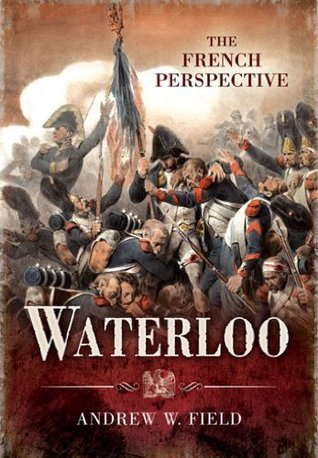
Waterloo: The French Perspective
The story of the Battle of Waterloo – of the ultimate defeat of Napoleon and the French, the triumph of Wellington, Blücher and their allied armies - is most often told from the viewpoint of the victors, not the vanquished. Even after 200 years of intensive research and the publication of hundreds of books and articles on the battle, the French perspective and many of the primary French sources are underrepresented in the written record. So it is high time this weakness in the literature – and in our understanding of the battle – was addressed, and that is the purpose of Andrew Field’s thought-provoking new study. He has tracked down over ninety firsthand French accounts, most of which have never been previously published in English, and he has combined them with accounts from the other participants in order to create a graphic new narrative of one of the world’s decisive battles. Virtually all of the hitherto unpublished testimony provides fascinating new detail on the battle and many of the accounts are vivid, revealing and exciting.
309 pages, Hardcover
First published June 1, 2012
About the author
Andrew W. Field
10 books17 followersAndrew Field MBE is a former British army officer whose travels around the world have given him a unique opportunity to explore battlefields from ancient history to present times. He has always harboured a special fascination for the Napoleonic Wars. In particular he has reassessed Napoleon's campaigns in 1814 and 1815, and has carried out extensive research into Wellington's battles in the Peninsula. He has published articles on these topics and two notable books: Talavera: Wellington's First Victory in Spain and Waterloo: The French Perspective.
Ratings & Reviews
Friends & Following
Create a free account to discover what your friends think of this book!
Community Reviews
Displaying 1 - 8 of 8 reviews

December 9, 2012
While slightly derided by some contemporary English Napoleonic scholars, many of whom apparently have other, competing works in the offing, I found this book to be excellent. It is well written, avoids jargon and is organizationally pristine. The author uses many different French , but also British and German sources, to examine the events of the battle. What was fascinating was to see how many recollections matched up from the different sides. Most importantly, the author explains WHY the French did what they did. The battle was a series of errors, every one of which looked like the best choice at the moment. It is written from a soldiers’ viewpoint, with a soldiers’ sympathies. I must confess that having read over fifty books about the battle over the past 45 years I learned quite a lot of new stuff. Who knew the French artillery had such a critical ammunition shortage?
I very much enjoyed reading it and look forward to seeing more French recollections uncovered over the next few years.
I very much enjoyed reading it and look forward to seeing more French recollections uncovered over the next few years.

February 21, 2022
Ever since acquiring my obsession with Napoleonic history in childhood - and for me it all started with Waterloo - I've always been more drawn to the French side of the story than the English. It was after all their revolution that precipitated the whole period and and their leader who gives it his name.
So as the years have passed and my book collection has grown, it's always been something of a disappointment for me that Waterloo has, until recently, almost always been treated, within the voluminous English language literature, from the Allied or, more accurately, British perspective.
This galled me to such a degree that until very recently I've deliberately sidelined the campaign that was my entrée to the period, and instead explored such campaigns as those of 1809 (France vs. Austria) and 1812 (France and her allies/vassals vs. Russia). However, with the bicentenary of Waterloo, I began getting back into it.
And in the time around and since 2015 I've been happy to find that many books are emerging looking at the other aspects of the Waterloo campaign, such as the other battles, Ligny, Quatre Bras, Wavre, and the other forces, such as the Prussians, and our 'bouillabaisse' of European allies (German, Dutch, Belgian, etc.), and even the French. Andrew Field's Waterloo: The French Perspective is part of this long overdue re-balancing of our island understanding of this epoch-ending battle.
The book draws on numerous French accounts, some published as standalone books, but many buried in French military archives (Carnet de le Sabertache, etc), and benefits from the excellent literary organisational principle of many short chapters, which makes reading it a great pleasure, as you feel you're always making good rapid progress ('en avance!'). After an excellent introduction, Field starts with the state of the French Army in 1815, before moving rapidly through the events that lead up to Waterloo, including brief synopses of Ligny and Quatre Bras.
The book is also subdivided into sections. The aforementioned stuff forms section one. Sections two to seven cover the battle, starting with the night before, progressing through to the morning of the battle, during which long period activity was more or less constant; Napoleonic warfare was a round the clock affair, with all arms and ranks susceptible to the possibility of being called upon for all manner of duties, at any time of day or night!
Each section is full of fascinating detail, and uses, as much as possible, firsthand French accounts to flesh out the narrative and the action. There are still quite a lot of quotes from Allied and English sources, sometimes to fill gaps in the French records, and sometimes to either show another side to long held Anglocentric versions of events, or to illustrate how the Allies reacted to certain French actions. The level of detail is fantastic, and the use of firsthand accounts masterful. The whole thing is both highly informative and tremendously engaging.
The moments worthy of mention are innumerable, so I'll leave them, and let you enjoy them for yourselves. There's a lot here, both in terms of characters and events, that readers of Napoleonic literature will already know to some extent. But there's also a lot, by virtue of taking the French perspective, that revitalises this so oft-discussed battle. And just as the book looks closely at the build up to the battle, Field also uses his sources to look at the aftermath, as the French army disintegrated and fled south.
Some excellent additional material - analyses of tactics, summaries of the various events, OOB, a list of French sources (in addition to a more conventional broader bibliography), and a very enjoyable chapter of anecdotes - all conspire to make an already excellent book even better. Pen & Sword titles can be quite varied in terms of editorial finesse. I just read an abridged version of Mercer's Waterloo journal that was strewn with lamentable typos. Waterloo, The French Perspective, is, thankfully, much better in this regard.
This is a truly excellent and long overdue addition to the vast literature on Waterloo. And it's such a wonderful thing that a British soldier and historian has, like Edward Cotton so long before him, seen that it doesn't tarnish British martial glory - if anything instead enhancing it - to look at what has for so long (and so understandably) been trumpeted as a key British victory, from the perspective of the vanquished yet valiant foe. Superbe!
So as the years have passed and my book collection has grown, it's always been something of a disappointment for me that Waterloo has, until recently, almost always been treated, within the voluminous English language literature, from the Allied or, more accurately, British perspective.
This galled me to such a degree that until very recently I've deliberately sidelined the campaign that was my entrée to the period, and instead explored such campaigns as those of 1809 (France vs. Austria) and 1812 (France and her allies/vassals vs. Russia). However, with the bicentenary of Waterloo, I began getting back into it.
And in the time around and since 2015 I've been happy to find that many books are emerging looking at the other aspects of the Waterloo campaign, such as the other battles, Ligny, Quatre Bras, Wavre, and the other forces, such as the Prussians, and our 'bouillabaisse' of European allies (German, Dutch, Belgian, etc.), and even the French. Andrew Field's Waterloo: The French Perspective is part of this long overdue re-balancing of our island understanding of this epoch-ending battle.
The book draws on numerous French accounts, some published as standalone books, but many buried in French military archives (Carnet de le Sabertache, etc), and benefits from the excellent literary organisational principle of many short chapters, which makes reading it a great pleasure, as you feel you're always making good rapid progress ('en avance!'). After an excellent introduction, Field starts with the state of the French Army in 1815, before moving rapidly through the events that lead up to Waterloo, including brief synopses of Ligny and Quatre Bras.
The book is also subdivided into sections. The aforementioned stuff forms section one. Sections two to seven cover the battle, starting with the night before, progressing through to the morning of the battle, during which long period activity was more or less constant; Napoleonic warfare was a round the clock affair, with all arms and ranks susceptible to the possibility of being called upon for all manner of duties, at any time of day or night!
Each section is full of fascinating detail, and uses, as much as possible, firsthand French accounts to flesh out the narrative and the action. There are still quite a lot of quotes from Allied and English sources, sometimes to fill gaps in the French records, and sometimes to either show another side to long held Anglocentric versions of events, or to illustrate how the Allies reacted to certain French actions. The level of detail is fantastic, and the use of firsthand accounts masterful. The whole thing is both highly informative and tremendously engaging.
The moments worthy of mention are innumerable, so I'll leave them, and let you enjoy them for yourselves. There's a lot here, both in terms of characters and events, that readers of Napoleonic literature will already know to some extent. But there's also a lot, by virtue of taking the French perspective, that revitalises this so oft-discussed battle. And just as the book looks closely at the build up to the battle, Field also uses his sources to look at the aftermath, as the French army disintegrated and fled south.
Some excellent additional material - analyses of tactics, summaries of the various events, OOB, a list of French sources (in addition to a more conventional broader bibliography), and a very enjoyable chapter of anecdotes - all conspire to make an already excellent book even better. Pen & Sword titles can be quite varied in terms of editorial finesse. I just read an abridged version of Mercer's Waterloo journal that was strewn with lamentable typos. Waterloo, The French Perspective, is, thankfully, much better in this regard.
This is a truly excellent and long overdue addition to the vast literature on Waterloo. And it's such a wonderful thing that a British soldier and historian has, like Edward Cotton so long before him, seen that it doesn't tarnish British martial glory - if anything instead enhancing it - to look at what has for so long (and so understandably) been trumpeted as a key British victory, from the perspective of the vanquished yet valiant foe. Superbe!

December 25, 2014
How refreshing to at last have the French perspective on the great battle and with so many other books on it coming out on the 200th anniversary a timely one. French friends looked at it and wondered whether jokingly the end was different to the one written by the victors .....sadly not. However, it is a real gem of a book, superbly written and extraordinarily well-sourced/researched which gives free rein to not just the senior officers accounts -- as Field says their's were loaded with self-interest and avoiding blame for the defeat -- but sergeant's such as Mauduit and junior officers like Lieutenant Martin. Very moving and one is struck by a sense of gallantry, courage and elan that by the time the Great War came was very much in the past. Both sides -- for there is when necessary eye witness testimony from the British and allied armies -- pour praise on one another and the epic scale of the few hours of fighting are superbly illustrated as the French pored forth, sometimes in too cavalier fashion, and the Allied Army defended in stoical fashion, rarely going on the offensive but then the burden of overwhelming victory was on Napoleon's part for waiting in the wings were his other enemies Austria and Russia with fresh troops. Field also argues well at the end how Napoleon missed the chance of the victory -- poor choice in entrusting the courageous but hot-headed Ney with command when it is likely, though, this is my opinion a more calm spirit like the most under-rated of his few remaining loyal marshal's Suchet was posted on the border with Switzerland when he would have been better used at Waterloo. I was also although this is not mentioned struck how little the terrain was scouted by Napoleon so the sunken road came as a nasty surprise to the cavalry and broke their rhythm. As for the popular villain Marshal Grouchy there is little mention as he infamously never played a role in the battle and marches his seething 33000 troops round pointlessly. Anecdotes aplenty -- the almost surreal testimony of the reserve grenadiers cooling their heels and climbing trees to watch the battle for themselves and a heartbreaking one about a horse called Bijou -- with an especially interesting one that the Foot Guards who earned their title the Grenadier Guards that day for seeing off the Middle Guard Grenadiers in fact beat off the Middle Guard Chasseurs.... British soldier Sergeant Major Cotton of the Hussars summary reflects the great respect between the two Armies -- the Prussians were another matter they and the French went in for mutual self-loathing. "The French are as brave a people.....The best and bravest of them fell; but not till they had inflicted almost equal loss upon their conquerors. To deny them the tribute of respect and admiration which their bravery and misfortunes claim would tarnish the lustre of our martial glory." This is a must read book for not only Waterloo devotees but for the neutral readers as well for rarely has a battle been so brilliantly brought to life and with such vivid testimony. The account of the advance of the infantry of the 1st Corps of Comte D'Erlon and the cries from the officers and NCO's of 'serrez les rangs (close ranks) to replace those who fell from the grapeshot is emblematic of that. Hats off to Field for he has produced a book worthy of 'La Gloire'.

December 8, 2020
This is clearly not meant to be your first book on Waterloo, which is somewhat unfortunate as it purports in part to disabuse students of Waterloo who have only read British accounts of the war. Still, Mr. Field does not pretend this is an introductory guide, so I don't fault him for that. Simply be prepared for a tone of assuming you have a decent grasp of the main characters, major orders of battle, and a basic familiarity of the battle itself. If you don't, you might be a bit lost and unsure even if Mr. Field is referring to a British or French unit in almost any passage. Even with all that, and coming from my perspective of this being my first Waterloo book, this is a rather enjoyable read.
As the name indicates, much of the book is a patchwork quilt of sometimes pithy oftimes lengthy quotations from multitudinous French sources, many of them translated by Mr. Field himself. Field gives it all a decent cohesion, but sometimes the disjointed nature of many voices threatens that cohesion. Field also cites many English sources in comparison with the French sources, which are usually posited as more correct (the French, not the English, since that's his point with this book).
The most helpful section of the book is the summary notes at the end of the book (though, like Mr. Jackson's Return of the King, this book has about 5 different ending-like sections). The concise summaries of the various movements and engagements of the battle are quite useful.
Another positive aspect of the book is the lack of speculation. Sure, Field does ask whether the French could have won, but he doesn't belabor the point or spend too much time in other what ifs. He does a fine job (from my ignorant perspective) of weighing the contradictory accounts and drawing logical conclusions of what more likely happened, but he has plenty of evidence for it all.
I definitely recommend this, even if it is your first Waterloo book (though it probably shouldn't be).
As the name indicates, much of the book is a patchwork quilt of sometimes pithy oftimes lengthy quotations from multitudinous French sources, many of them translated by Mr. Field himself. Field gives it all a decent cohesion, but sometimes the disjointed nature of many voices threatens that cohesion. Field also cites many English sources in comparison with the French sources, which are usually posited as more correct (the French, not the English, since that's his point with this book).
The most helpful section of the book is the summary notes at the end of the book (though, like Mr. Jackson's Return of the King, this book has about 5 different ending-like sections). The concise summaries of the various movements and engagements of the battle are quite useful.
Another positive aspect of the book is the lack of speculation. Sure, Field does ask whether the French could have won, but he doesn't belabor the point or spend too much time in other what ifs. He does a fine job (from my ignorant perspective) of weighing the contradictory accounts and drawing logical conclusions of what more likely happened, but he has plenty of evidence for it all.
I definitely recommend this, even if it is your first Waterloo book (though it probably shouldn't be).

December 20, 2024
I want to start by saying that this book from a quality of historical research and scholarship perspective should receive 4 or 5 stars. It tells the Battle of Waterloo from the perspective of the French, explains most of the actions taken by the French during the battle, and dispels myths that allied historians have propagated for over a hundred years. The author's sources are made up of secondary sources as well as many first-hand accounts from all sides of the battle. This book goes into a fair amount of detail and should probably be your second or third book on Waterloo if you are going to get the most out of it.
The reason I gave this book a 3-star rating is because of the huge quotations that are used in the book. Many pages of the book are almost entirely quotations and I felt it could have been summarized with a paragraph and a shorter quote to make the book flow better. However, this is entirely a personal preference and if you do not mind this style then I would highly recommend this book.
The reason I gave this book a 3-star rating is because of the huge quotations that are used in the book. Many pages of the book are almost entirely quotations and I felt it could have been summarized with a paragraph and a shorter quote to make the book flow better. However, this is entirely a personal preference and if you do not mind this style then I would highly recommend this book.
October 10, 2018
An engaging work describing the Battle of Waterloo from a new perspective. Not 5 stars because multiple points of view and sources quoted make it difficult at times to follow the chain of events - it's as if the author jumps between different spots on the battlefield.

June 17, 2022
An great look at Waterloo from the other side of the hill.

May 9, 2016
An interesting and informative look at the great battle which saw the end of Napoleon's effort to regain control of France. This book looks at the various aspects of the Waterloo campaign from the French point of view so much of it is based on writings produced by French officers and Napoleon himself produced some years later. Evidently, Napoleon blamed three men for much that went wrong, and he certainly has a point when it comes to Ney and Grouchy, but it would seem that he was not as willing to admit that he made mistakes as well.
The author talks more about Ney than Grouchy, probably because Ney was right there on the battlefield while Grouchy was some miles away with 30,000 men who might have made the difference in the battle. Obviously, there is no disputing who won and who lost the battle of Waterloo, but Field has pointed out certain things which might have contributed to the result.
The author talks more about Ney than Grouchy, probably because Ney was right there on the battlefield while Grouchy was some miles away with 30,000 men who might have made the difference in the battle. Obviously, there is no disputing who won and who lost the battle of Waterloo, but Field has pointed out certain things which might have contributed to the result.
Displaying 1 - 8 of 8 reviews