Jump to ratings and reviews
Rate this book

The Sniper

Rate this book
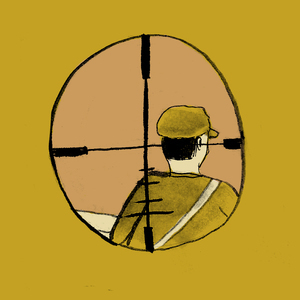
A trained sniper doing his job during the Irish Civil War faces a shocking turn of events, after killing an enemy.

Unknown Binding

First published January 1, 1923

18 people are currently reading
706 people want to read

About the author

Liam O'Flaherty

124 books74 followers
People know Irish writer Liam O'Flaherty especially for his short stories, collected in Two Lovely Beasts (1948) and The Pedlar's Revenge (1976).

This significant novelist, a major figure in the literary renaissance, also wrote short stories. Left-wing politics involved him as was his brother Tom Maidhc O'Flaherty (also a writer), and their father, Maidhc Ó Flaithearta, for a time.

Ratings & Reviews

What do you think?
Rate this book

Friends & Following

Create a free account to discover what your friends think of this book!

Community Reviews

5 stars
387 (26%)
4 stars
524 (35%)
3 stars
393 (26%)
2 stars
132 (8%)
1 star
46 (3%)
Displaying 1 - 30 of 150 reviews
Profile Image for Murray.
Author 149 books748 followers
November 7, 2023
🇮🇪 I read it for the first time at 14. We have Irish family. The story cut right through me. It’s short and hits hard 🇮🇪
Profile Image for Kushagri.
182 reviews
April 1, 2024
Ah, I just reminisced about this story today. I read it in school, and have given it five stars just for the nostalgia. Perhaps as a conscientious reader (and reviewer) I should read it again but there must be something about this story that even after a decade whenever I think about literature on spoils of war, this is the first story that comes to mind and tugs at my heartstrings!
A gut-punch of a story!

—————————————————————————————-
Revisited review:

The title itself evokes a stark image – a lone figure perched precariously, a world reduced to the sights through a rifle scope. But this story is so much more than a wartime thriller. It’s a gut-punch, a haunting echo of the brutality that war inflicts on not just bodies, but on the very soul.

I first encountered this story in the confines of a classroom, yet it transcended the dusty textbook and burrowed deep into my psyche. Yes, nostalgia can be a powerful drug. But for “The Sniper” to hold such a prominent place in my memory after a decade speaks about the story’s enduring power. There’s a certain comfort, wouldn’t you say, in revisiting a cherished book from our youth? It’s like stepping back into a familiar world, one where the characters and their struggles feel etched into our very being. Five stars for nostalgia alone? Absolutely. But here’s the thing – “The Sniper” transcends nostalgia. It taps into something primal, a raw understanding of the human cost of war, specifically the brutal Irish Civil War (1922-1923).

This conflict erupted after the Irish War of Independence (1919-1921), a fight for Irish freedom from British rule. The Sniper is a Republican soldier, one who opposed the Anglo-Irish Treaty that partitioned Ireland and ended the fight for a fully unified nation. This context adds a layer of tragedy – the sniper isn’t just fighting an enemy, he’s fighting a former comrade, a fellow Irishman caught on the other side of a bitter ideological divide.

The story unfolds against the backdrop of Dublin, a city once a symbol of unity, now fractured and scarred.
The narrative is deceptively simple. We’re thrust onto a rooftop with the Irish Republican sniper, a nameless protagonist locked in a deadly game with an unseen enemy across the street. The tension is palpable, the city a cacophony of distant gunfire and the ever-present threat of death. But O’Flaherty doesn’t just focus on the mechanics of the kill. He delves into the psychological toll, the gnawing hunger, the desperate thirst, the agonising wait for an opportunity. The story becomes a desperate dance between hunter and hunted, a chilling display of human resilience and the chilling ease with which life can be snuffed out. But O’Flaherty’s brilliance lies in the final twist. The protagonist’s victory, the silencing of the enemy rifle, is met not with triumph, but with a wave of nausea and a chilling emptiness.
It’s not just about the adrenaline rush of the fight, but the devastating aftermath. It forces us to confront the absurdity of war, the way it twists humanity, and the enduring cost of violence.

It’s a story that deserves to be revisited, to be pondered, and to continue tugging at our heartstrings.
Profile Image for AB.
634 reviews156 followers
January 2, 2018
It was really good short story. I really liked the way the author wrote the story!
Profile Image for Hákon Gunnarsson.
Author 29 books162 followers
August 20, 2018
If you would ask me why I like short stories so much, I could say it is because of stories like “The Sniper” by Liam O'Flaherty. Stories that say so much in so few words. Reading this story probably takes less than ten minutes, but in that time the reader gets a good sense of the brutality of war, and the futility of it.

Is anybody any better off after what happens in the story? I don’t think so. And for most parts war doesn’t make things better. The story takes place during the Irish Civil War, and the ending of this story is probably strongest in relation with civil war, but in a sense it applies to war in general as well.

To think that this is the first story O'Flaherty got published is interesting. To begin a career with such a strong story, that is amazing. To my view, this story is definitely worth a read and a re read.
Profile Image for Hossein Sharifi.
162 reviews8 followers
November 21, 2016
O'Flaherty

description
ترجمه داستان کوتاه تک تیرانداز


Summary

“The Sniper” relates an encounter in downtown Dublin, near the O’Connell Bridge, between
a sniper for the Republicans and a sniper for the Free Staters. Guns roar in the distance as the
Republican sniper lies on a rooftop. He is a young boy. “His face was that of a student—thin
and ascetic , but his eyes had the cold gleam of a fanatic . . . the eyes of a man
who is used to looking at death.”
It is a June evening, and the sniper, who has had nothing to eat since morning, hungrily wolfs
down a sandwich and takes a short drink from the flask of whiskey he carries in his pocket.
He desperately wants a cigarette and finally risks showing his position by igniting a match
and lighting one. Instantly, a bullet hits the wall near him. He takes two puffs of the cigarette
and snuffs it. He raises himself to look over the parapet , but another bullet whizzes
by his head, and he flattens himself against the roof.
An armored car crosses O’Connell Bridge and stops just below the sniper’s position. An old
woman with a tattered shawl around her head comes out of a side street to talk with a man in
the turret of the armored car. The sniper wants to shoot at the armored car, but he knows that
his bullets will not penetrate its fortified exterior. The old woman points in the direction of
the sniper, who now realizes that she is an informer. When the man inside opens the turret to
talk with her, the sniper shoots, and the man slumps over lifeless. The woman hurries toward
the side street, but the sniper shoots again. The old woman shrieks and falls into the
gutter . The car speeds away, the man in the turret still slumped there. More shooting
is heard, and the sniper knows that it is coming from the roof across the way. He has been hit
in his right arm, in which he has lost all feeling.
The sniper takes out his knife and uses it to rip open his shirt. He sees that a bullet has gone
into his arm but has not emerged from the other side. He takes out his field-dressing kit,
breaks off the top of the iodine bottle that he pulls from it, and pours the dark liquid into his
wound. Then he applies the bandages from his kit, using his teeth to tie the knot.
The sniper knows that he must get off the roof by morning or else the enemy sniper will kill
him. He realizes that the sniper on the roof across the way is watching him every minute and
will not let him get away. Taking his rifle, which is useless to him because his wounded arm
makes it impossible for him to fire it, he puts his army cap on the muzzle and raises it slightly
above the parapet. A shot rings out and the cap falls to the earth far below. The sniper lets his
left arm hang lifelessly over the parapet, holding his rifle in it. Then he lets the rifle fall and
rolls over.
The opposing sniper, assuming that his enemy is dead, relaxes his vigilance and stands up on
the roof. The Republican sniper aims his revolver at his opponent and fires. The enemy sniper
reels over the parapet in his death agony, then falls to the earth. The Republican sniper is
suddenly revolted by what he sees and by what he has done. “His teeth chattered. He began to
gibber to himself, cursing the war, cursing himself, cursing everybody.” He drains his
whiskey flask in one draft.
The sniper leaves the roof. When he gets to the street, his curiosity overcomes him and forces
him to steal over to see whom he has shot. He attracts machine-gun fire as he goes toward the
dead sniper, but he is not hit. He flings himself down beside the body of the man he has
killed, then turns it over. He finds himself staring into his own brother’s face.

description

Characters:

1.The Enemy Sniper:

The Enemy Sniper is the Sniper’s main opponent in the story. A member of the Free State
army, he still shares similarities with the Sniper. The two men are engaged in the same role.
The Enemy Sniper, too, is a good shot, enough so that he wins the respect of the Sniper by
the end of the story. His physical presence, on a rooftop across the street, further reinforces
the idea that he is a mirror image for the Sniper.
The Enemy Sniper wants to kill the Sniper. He appears to have the advantage after shooting
and injuring the Sniper. He makes a fatal error, however, when he falls for the Sniper’s ruse.
Once he thinks he has killed the other man, the Enemy Sniper stands up on his rooftop, thus
making himself a clear mark. The Sniper shoots him, and he falls to the street below, dead.
After that, the Sniper—along with the reader—discovers that the two snipers are brothers.

2.The Old Woman:

The Old Woman points out the Sniper’s location on the rooftop to the Soldier in the Turret.
The Sniper shoots and kills her.

3.The Sniper:

The Sniper is the main character of the story. This young man is a member of the Republican
army and his eyes have “the cold gleam of the fanatic.” A hardened fighter, the Sniper has
become a man “used to looking at death.” In his role as a soldier, he functions efficiently and
automatically. For instance, when he gets shot, he applies his own field dressing despite the
excruciating pain.

description

Setting

......."The Sniper" takes place in Ireland's largest city, Dublin, on the country's east coast on Dublin
Bay, an inlet of the Irish Sea. The time is nightfall in June after the establishment of the Irish Free
State in 1922. The sniper posts himself on a rooftop in central Dublin near the Four Courts building,
which houses the high courts of Ireland, and O'Connell Bridge, which spans the River Liffey. The
Liffey divides the city into two sections as it runs eastward to Dublin Bay.
Point of View
.......O'Flaherty wrote "The Sniper" in limited third-person point of view, in which he presents the
thoughts of the IRA sniper but does not present the thoughts of any other character. He wrote "The
Sniper" while Ireland was embroiled in sectarian conflict.

THEMES

War reduces human beings to mere objects. They have no names, no faces. They are targets,
nothing more, to be shot at from a distance. To support this theme, O’Flaherty refrains from naming
any of his characters.
War knows no boundaries—age, sex, location, time of day, family ties. The IRA sniper is a young
man, and the informer is an old woman. The fighting takes place in the heart of a city after sundown.
The IRA sniper unwittingly shoots and kills his own brother.

Climax

.......The climax occurs when the IRA sniper discovers the identity of the enemy sniper.
Profile Image for Preetam Chatterjee.
7,160 reviews385 followers
March 10, 2020
The theme of the story 'The Sniper' is the dreadfulness of a civil war. It is the worst type of war where brother rises against brother and a neighbour turns against his neighbour. Even army and police get divided and take sides according to their views. The cause of a civil war may be ethnic, political or social -- the country is ruined nevertheless. There is distrust and people attack one another only out of trepidation or suspicion. Houses, bridges, school, hospitals are destroyed. All types of activities come to a standstill. Innocent people are killed. Their houses are destroyed. All the resources are used up in war and there is no productivity.

The writer has very dexterously created the horrifying atmosphere prevailing during a civil war in Ireland.

It is a atrociously dark night. The eerie silence is shattered by the terrifying sounds of gunfire. The two snipers are trenched against each other on the rooftops of opposite houses across the street. An armoured car arrives. The sniper kills the soldier whose head falls heavily on the turret wall. He kills the old informer woman with a tattered shawl. She whirls round and falls with a shriek into the gutter. He also kills the enemy sniper who sways unsteadily over the parapet in his death agony and falls over on the pavement. Though the sniper kills his enemy yet he is human after all. He is filled with remorse, sweat stood out in beads on his forehead. His teeth chatter and he mutters senselessly.

Such descriptions bring out how horrible civil war is. The final shock comes when the sniper discovers that he has killed his own brother. The theme is brought home in a shocking and stunning manner.

Though the narrative is dramatic, there is no conversation or dialogues because there is only one character, alone on the roof-top. Only once, when he is shot in the arm, does he speak to himself. The sentences are simple and short. There are a few compound sentences too but they too sound like simple sentences joined by 'and' or 'but'. The story is action paeked and there is hardly any description of scenes or people. The arrival of the armoured car, the woman informer lighten the suspense. Bullets whiz past the sniper's head. The description of his bandaging his wound and the trick he plays on the enemy sniper are so graphic that we can easily picture them as we read the story.
Profile Image for gi✩˚꩜。.
72 reviews8 followers
August 19, 2024
« ֪ ׅ ֹ =͟͞ ♡ 3.0 🌟

2/6 of the short stories i have to read this semester for english😭🫶🏻 it was pretty mid🤷‍♀️
Profile Image for Sassy Sarah Reads.
2,354 reviews305 followers
September 2, 2019
The Sniper by Liam O'Flaherty

4 stars

The Sniper follows a young man in the Irish Civil War. O'Flaherty uses imagery and the atrocity of war to convey the dehumanization of a young man in a world pitted against itself. The students loved the last line (and I did to!). It's always fun to read a twist in the last line of a short story. It proves the mark of an excellent writer, especially since the buildup and the foreshadowing points to it as a possibility, but it's far too dark for even the main character to consider outright. Highly recommended!


11 reviews2 followers
January 24, 2023
This book was rather good for being only four pages long. Although it was quite a quick read, it felt like an entire novel in just a few short pages. I would definitely recommend reading this (especially if you struggle to find motivation to read/finish entire books).
22 reviews2 followers
May 25, 2017
Personal Response
I thought this short story was very enjoyable. It was somewhat suspenseful, and the ending really threw me for a loop. I give this story 4 out of 5 stars because it was a little too short.

Summary
This story is about a sniper during the civil war in Ireland. He was perched atop a building when he came under fire by another sniper across the street. The sniper tried to return fire, but was pinned down, so he moved to a different part of the roof and perched himself on a parapet. There he was able to get off a shot, but missed. This time, the enemy had hit him in the arm. The sniper reeled back in pain, and tried his best to heal his bullet wound. After a while, the sniper made a distraction that made it seem like the enemy had killed him. The enemy had believed the ruse and got up from his hiding place. It was then that the sniper pulled out his revolver and shot down the enemy. Content with what he had done, the sniper decided to check the dead body to see who it was he had killed. When the sniper arrived at the corpse and flipped it over, he was starring at the face of his brother.

Characterization
At the beginning of the story, the sniper was excited to be out ready to snipe any enemies that happened to come his way. But at the end, he no longer wanted to be a sniper, for he had killed his own brother without even realizing it.

Recommendation
I would recommend this short story to anyone who enjoys stories about war. I say it's more for older kids because it contains killing.
Profile Image for R..
548 reviews3 followers
May 25, 2025
war could even make the best people turn against each other and they'd never know that..
1 review1 follower
February 26, 2015
In “The Cog”, by Charles Fritch, and “The Sniper”, by Liam O’Flahtrey the roles of the main characters seem very different, yet can be so similar.
In “The Sniper”, the protagonist is a sniper in a civil war between republicans and free-staters. He is on post on a roof, and he hasn’t had any food or water for about a day. He spots an enemy on a roof and outsmarts him, killing the enemy. He looks at the dead body on the other roof, and reveals the face of his now dead brother. This takes the book from hardship to dread, and makes the reader sad for the protagonist.
In “The Cog”, the main character James Maxwell is watching the launch of the spaceship President to Alpha Centauri. He reflects on how he wanted to become an astronaut, and how his best friend acted upon that and actually became an astronaut. He illustrates how everyone has a role in society --- a cog in the machine. At the end, the story reveals that he is the president of the world order, yet he is still unhappy with his decisions. “The Cog” and “The Sniper” show how even in a dystopian war, or the happiest situations, there is always something you care about and would be said if it left.
That theme is shown a lot through both short stories, each with a twist that changes it at the end. At the end of “The Sniper”, the protagonist reveals that the man he killed was in fact his brother, and at the end of “The Cog”, the announcer reveals James Maxwell is the president of the “New World Order”. In “The Cog”, the main character is longing the whole story on opportunities he missed, and in the end, the reader realizes he has a good thing going. In “The Sniper”, the character doesn’t realize what he is missing until the end --- when he kills his brother. In both stories, they long for something by the end, whether it be a missed opportunity to become an astronaut, or a missed opportunity to make amends with your brother over political beliefs, both characters missed an opportunity. Maxwell in “The Cog” could’ve became an astronaut, but he chose a more sensible option, law, and still regrets it when he is in the best position there can be. The protagonist in “The Sniper” could’ve not fought in a civil war, and instead been at home with his family instead of fighting for his political beliefs. They both missed opportunities, and will forever be unhappy about it.
The protagonist in “The Sniper”, and James Maxwell in “The Cog” are very different people, but they still share one thing --- despair. They both missed opportunities were they could’ve been happy, but they went for the more sensible choice. Are you going to strive for your dreams, or are you going to waste your life away with the “sensible choice”?
This entire review has been hidden because of spoilers.
1 review
October 20, 2021
The short story is called “The Sniper” by Liam O’ Flaherty. The story was okay based on the literary elements used in the story.

The story is about a man in a civil war. He was on a roof by a bridge waiting for the other sniper to show up there so he could kill them.

A good short story should include action , a good introduction, and suspense. Liam O’ Flaherty, effectively uses action in the beginning of the story when the character heard gunshots and fighting. There was a war going on. A good intro should capture the reader's attention. The story did not include enough background information on the sniper. I would have liked to know how the sniper got to the rooftop.The story did not build up enough suspense to guess on who the other sniper was.
The short story ‘The Sniper’ by Liam O’ Flaherty can be considered an okay story. It doesn't include enough details for the good intro, action, and suspense.

Profile Image for Janet Forrest.
165 reviews2 followers
October 16, 2023
'The Sniper' is a popular short story set during the Battle of Dublin, a series of street fights that occured between June 28th and July 5th 1922, which marked the beginning of the Irish Civil War. It was published in a socialist weekly while the war was in progress.

The protagonist is a sniper who takes a calculated risk; the consequences of that decision are lethal - but for whom?

'The Sniper' is a fascinating story, with great detail and descriptive language that is excellent to teach to any group of English and / or History students. The plot twist ending is iconic and a real testiment of the realities of civil war. A must read for any Irish History enthusiast, a lover of war literature or for anyone who loves a good, descriptive, gripping short story.
Profile Image for Kier Scrivener.
1,283 reviews141 followers
February 6, 2020
"Here and there through the city, machine guns and rifles broke the silence of the night, spasmodically, like dogs barking on lone farms. Republicans and Free Staters were waging civil war."

I read this twice in high school. Once in grade nine and another in grade 12. Both times I was mesmerized by it. It tells the heart of realistic fiction. The price of war.

Rereading it again in 2020, I am struck by the wordplay of this three page story. Every word is used beautifully to describe the setting, feelings, themes and advance the plot and character. It is a story, I will continue to come back to again and again through the years and be marvelled still.
Profile Image for Federico DN.
1,165 reviews4,464 followers
April 23, 2024
Meh.

It was good, but not worth reviewing.

For the moment at least.

-----------------------------------------------
PERSONAL NOTE :
[1923] [8p] [Fiction] [2.5] [Not Recommendable]
-----------------------------------------------

Meh.

Estuvo bien, pero no vale la pena reseñarlo.

Al menos por ahora.

-----------------------------------------------
NOTA PERSONAL :
[1923] [8p] [Ficción] [2.5] [No Recomendable]
-----------------------------------------------
7 reviews
January 17, 2013
Set during the Irish civil war, a sniper is stationed in Dublin, Ireland. He first kills and elderly woman who discovers his position, then an enemy soldier. He then is spotted by an enemy sniper, who shoots him once in the arm. He tricks the other sniper into thinking he is dead, by allowing his hat to be shot and dropping his gun. He then, using a revolver, kills his opponent. He, curious to see his enemies face walks up to his dead body and discovers that it was his brother,
Profile Image for Lunetune.
161 reviews
September 26, 2023
Essentially a less well-written version of Ambrose Bierce’s “A Horseman in the Sky”, if you know what I mean. Decent, but not nearly as good and thus not nearly as shocking or emotional. It does not get its point across with such beauty and tact, but it still gets the point across, and it’s a short read. Meh. I’d recommend it.
Profile Image for Ámbar.
101 reviews
July 7, 2022
Our literature teacher gave us this short story as an assignment. I liked it because it has not only an ironic ending but also a deep message.
Displaying 1 - 30 of 150 reviews

Can't find what you're looking for?

Get help and learn more about the design.