

What do you think?
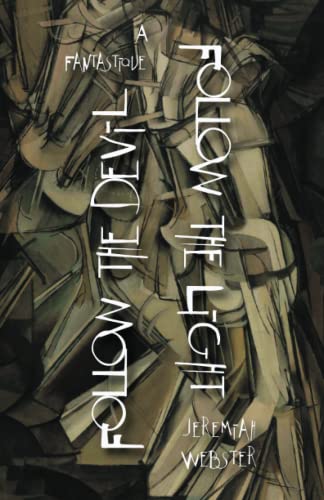
Follow the Devil / Follow the Light
Can the reality of Imago Dei eclipse the failings of a troubled protagonist? Can the Christian imagination speak to a generation captivated by Stranger Things, Squid Game, and the Marvel universe? Can the means of pop culture advance theological ends? These were just some of the questions I wrestled with during the creation of Follow the Devil / Follow the Light.
What follows is a supposal, a work of fiction, a dark vision for dark times. There are fits of allegory throughout, but nothing to advance the tradition of Plato, Spencer, Bunyan, Hawthorne, etc. I have no unique access into the provinces of the infernal or beatific. Fortunately, neither do my readers. This side of the veil, we can only speculate “what dreams may come.”
What follows is a supposal, a work of fiction, a dark vision for dark times. There are fits of allegory throughout, but nothing to advance the tradition of Plato, Spencer, Bunyan, Hawthorne, etc. I have no unique access into the provinces of the infernal or beatific. Fortunately, neither do my readers. This side of the veil, we can only speculate “what dreams may come.”
238 pages, Paperback
Published April 18, 2023
Ratings & Reviews
Friends & Following
Create a free account to discover what your friends think of this book!
Community Reviews
Displaying 1 - 11 of 11 reviews

May 31, 2023
Now this book has real meat to it. I think I’ll be chewing over it for some time. The prose is lyrical—it’s very apparent that Webster is a poet—and full of arresting scenes and images and characters. (I think the character of The Failed Artist, gently cradling the bleeding fawn, will live in my imagination for a long time to come.)
The novel casts a vision of hell as humanity left to its own devices. Hell is the natural conclusion—the inevitable end point—of human will to power. This is vividly portrayed throughout Joe’s journey: as he encounters hell’s diabolically egalitarian version of “justice” (the abacus scene will haunt me), hell’s mockery of truth, and hell’s utter incapacity to accommodate beauty. As aptly stated in the novel, “We either reside in the source of all life or find ourselves diminished in hells of our own making.” Joe, still decidedly committed to the hell of his own making, must tour hell’s vision of the good, the true, and the beautiful, and the resulting journey is both haunting and, ultimately, hopeful.
It's the subtle undercurrent of hope—how even in the midst of hell, Heaven’s perfume lingers—that makes this novel stunning. Even while we slog through the muck of hell with Joe Muggeridge, the novel subtly but continually points our attention back to what is divine: grace, mercy, unselfish love. In the very act of portraying a world impoverished of same, the novel throws them—their absolute necessity to us—into greater relief. “Hell is perfectly rational,” says the demon character Morte Magari, “It’s Heaven that strains credulity.” The novel’s denouement and the end of Joe’s journey satisfyingly echoes the truth of that.
Even on the road to hell, redemptive love can still be encountered.
The novel casts a vision of hell as humanity left to its own devices. Hell is the natural conclusion—the inevitable end point—of human will to power. This is vividly portrayed throughout Joe’s journey: as he encounters hell’s diabolically egalitarian version of “justice” (the abacus scene will haunt me), hell’s mockery of truth, and hell’s utter incapacity to accommodate beauty. As aptly stated in the novel, “We either reside in the source of all life or find ourselves diminished in hells of our own making.” Joe, still decidedly committed to the hell of his own making, must tour hell’s vision of the good, the true, and the beautiful, and the resulting journey is both haunting and, ultimately, hopeful.
It's the subtle undercurrent of hope—how even in the midst of hell, Heaven’s perfume lingers—that makes this novel stunning. Even while we slog through the muck of hell with Joe Muggeridge, the novel subtly but continually points our attention back to what is divine: grace, mercy, unselfish love. In the very act of portraying a world impoverished of same, the novel throws them—their absolute necessity to us—into greater relief. “Hell is perfectly rational,” says the demon character Morte Magari, “It’s Heaven that strains credulity.” The novel’s denouement and the end of Joe’s journey satisfyingly echoes the truth of that.
Even on the road to hell, redemptive love can still be encountered.

April 27, 2023
The beauty of Webster’s writing as evident in this work as all his previous publications. Every word seems handpicked to best convey the thoughts of his characters or a clearly depicted setting. Highly recommend this modern day allegory.

June 26, 2023
In what I would call a companion to Lewis’ classic The Great Divorce, Webster offers up a modern day descent into hell that is theologically thought-provoking, honest, profound, and—perhaps most surprisingly—playful.
The plot is relatively straightforward: a demon visits an ordinary Joe & takes him to hell where Joe must complete three challenges to see and save his beloved twin sister who died as a child. Along the way Joe is faced with the fracturing of beauty, truth & goodness as well as flashbacks that reveal more of his schismed humanity. The plot is compelling, but it’s Webster’s story-telling, setting details, and multifaceted symbolism that make this story shine, and the literary references and mythic quality will have you queuing up for a second read through to catch the layers.
In addition to his deft prose, Webster includes recognizable inversions of and nods to beloved literary works. As I read I recognized the (un)ethereal mythic qualities of Phantastes, the (im)moral landscape mapping of Pilgrim’s Progress, the wit of Screwtape, the vivid symbolism of The Master and the Margarita, the curiosity of Wonderland, as well as a myriad of other literary references. This has the unexpectedly delightful effect on the reader of feeling like you are journeying with a beloved friend through this difficult and shocking terrain of spoiled goodness and death and sorrow and hope-haunted loss.
TW: bereavement, death, suicide, abuse.
The plot is relatively straightforward: a demon visits an ordinary Joe & takes him to hell where Joe must complete three challenges to see and save his beloved twin sister who died as a child. Along the way Joe is faced with the fracturing of beauty, truth & goodness as well as flashbacks that reveal more of his schismed humanity. The plot is compelling, but it’s Webster’s story-telling, setting details, and multifaceted symbolism that make this story shine, and the literary references and mythic quality will have you queuing up for a second read through to catch the layers.
In addition to his deft prose, Webster includes recognizable inversions of and nods to beloved literary works. As I read I recognized the (un)ethereal mythic qualities of Phantastes, the (im)moral landscape mapping of Pilgrim’s Progress, the wit of Screwtape, the vivid symbolism of The Master and the Margarita, the curiosity of Wonderland, as well as a myriad of other literary references. This has the unexpectedly delightful effect on the reader of feeling like you are journeying with a beloved friend through this difficult and shocking terrain of spoiled goodness and death and sorrow and hope-haunted loss.
TW: bereavement, death, suicide, abuse.

July 19, 2023
Jeremiah has written a suspenseful story with incredible prose about a young man / tech geek who experiences what Hell may be like in the 21st century. Mash up Dante's inferno with Dickens, A Christmas Carol and you have – Follow the Devil / Follow the Light. Jeremiah has superbly woven themes of our postmodern era and it's techno-centric sensibilities with the notion of classical depravity and it's effects on the human conscience and greater psychology. I can't wait to read Jeremiah's future work!

November 29, 2023
Jeremiah Webster has created something here that only a true master of the English language can. Something brilliantly new and brave that also conjures the resounding echoes of Dante and Lewis’s wisdom and the zeal of Donne (and W.S. Burroughs may have crudely crashed the party before being ejected—but not forgotten). Our author has met them through study, and I have a sneaking suspicion they’ve spoken with him directly. They’ve shared their ideas with him. And they’ve leapt in the afterlife after reading what their modern, living contemporary has done here, how he has expanded the idea of what Hell is—or could be—now that humanity has been eaten alive by the isolation of technological wonder.
Our imaginations are no longer safe. And as we follow a disillusioned Joe Muggeridge through the modern-Hell—vast neon landscapes devoid of hope, abacus puzzles lined with condemned human souls like some sort of bizarre carnival game, a librarian with an eternally unforgiving workload—we both see and feel Joe fight against his own humanity while questioning what we, the reader, think we know about hell—and consequently what we know about Heaven. Can we think of one without also thinking of the other? I mean, c’mon, even Morte Magari does. Why does this book cause me to question my own imagination? Why, by the end, have I traversed every stage of grief when I’ve nothing to grieve over? And why do I sorta-kinda-at-times relate to the demon antagonist? After all, I’m housetrained, Morte Magari is not. That said, I can’t count how many times I willed cell coverage to Joe just so he would have something to distract him. What does that say about me?
The language here is free and endued with wit, but every nuanced sentence and phrase is careful, which is what happens when a poet writes prose. Yet there’s just enough of a case-study feel to it (thanks to the endnotes) to remind me that no ordinary person wrote this. Rather, the writer has waded through a lifetime of seeking understanding about something that can’t be understood without a measure of Godly faith. As such, for me, this embodies the jubilation that comes when a collection of ponderances have accumulated over time and finally coalesce into something perfectly cohesive. What I’m trying to say is that this book somehow manages to combine multiple approaches that speak to my own rational/emotional duality that is truly heightened in the world of academia and appreciated as a deep reader.
To use present day textspeak, though: YMMV, but WTF.
What we’ve got here is something that doesn’t happen enough: a book that combines the complexity of classical literature, the simplicity of Modernism, and the (at times) Naked Lunch-esque taste of Post-Modernism, while also embracing today’s drive to challenge our own worldview.
Read it.
Our imaginations are no longer safe. And as we follow a disillusioned Joe Muggeridge through the modern-Hell—vast neon landscapes devoid of hope, abacus puzzles lined with condemned human souls like some sort of bizarre carnival game, a librarian with an eternally unforgiving workload—we both see and feel Joe fight against his own humanity while questioning what we, the reader, think we know about hell—and consequently what we know about Heaven. Can we think of one without also thinking of the other? I mean, c’mon, even Morte Magari does. Why does this book cause me to question my own imagination? Why, by the end, have I traversed every stage of grief when I’ve nothing to grieve over? And why do I sorta-kinda-at-times relate to the demon antagonist? After all, I’m housetrained, Morte Magari is not. That said, I can’t count how many times I willed cell coverage to Joe just so he would have something to distract him. What does that say about me?
The language here is free and endued with wit, but every nuanced sentence and phrase is careful, which is what happens when a poet writes prose. Yet there’s just enough of a case-study feel to it (thanks to the endnotes) to remind me that no ordinary person wrote this. Rather, the writer has waded through a lifetime of seeking understanding about something that can’t be understood without a measure of Godly faith. As such, for me, this embodies the jubilation that comes when a collection of ponderances have accumulated over time and finally coalesce into something perfectly cohesive. What I’m trying to say is that this book somehow manages to combine multiple approaches that speak to my own rational/emotional duality that is truly heightened in the world of academia and appreciated as a deep reader.
To use present day textspeak, though: YMMV, but WTF.
What we’ve got here is something that doesn’t happen enough: a book that combines the complexity of classical literature, the simplicity of Modernism, and the (at times) Naked Lunch-esque taste of Post-Modernism, while also embracing today’s drive to challenge our own worldview.
Read it.

July 21, 2023
What if you didn’t believe in heaven and hell? What if a demon showed up on your kitchen table anyway? Joe Muggeridge is your typical “virtual” kid without virtue, looking for his next dopamine fix and withdrawing from the real world. The real world is messy, sad, and dangerous.
Joe’s done a good job shoving down the grief of losing his twin sister, done a good job shutting down any “religious stuff” from his mother. That is until a demon named Magari shows up in his kitchen one day with a promise to take Joe to his sister, Nora. But first, he must travel through Hell and pass dangerous tests that await him. These tests force Joe to pass judgements on others and ultimately himself.
“Follow the Devil / Follow the Light” contains laughable moments of bureaucracy between demons, touching scenes of departed soldiers, and a wonderful monologue by a “Lost Artist” who describes the despair of chasing after beauty divorced from truth and goodness.
This book does a wonderful job summing up the postmodern experience with its relentless dissection of life and general futility. It savors strongly of classics such as Dante’s Inferno, Paradise Lost and also The Screwtape Letters, and The Great Divorce by C.S. Lewis.
While this story does not shy away from the darkness of our modern world, it doesn’t tantalize it. Instead, it speaks of the darkness plainly and seeks to humanize us once again—to awaken sensitivity and feeling. Ultimately, it is a call to action for the modern soul that finds itself trapped in acedia—apathy, despair, and sullenness. Darkness and light are depicted as very visceral things and one must choose a side.
Though reading this story with a classical background is fun, this book is also good for new readers. The vocabulary is intermediate to advanced but remains mostly accessible. Great for those who find themselves discouraged by a spiritless modern world, or for those who want a challenging yet engaging read!
Joe’s done a good job shoving down the grief of losing his twin sister, done a good job shutting down any “religious stuff” from his mother. That is until a demon named Magari shows up in his kitchen one day with a promise to take Joe to his sister, Nora. But first, he must travel through Hell and pass dangerous tests that await him. These tests force Joe to pass judgements on others and ultimately himself.
“Follow the Devil / Follow the Light” contains laughable moments of bureaucracy between demons, touching scenes of departed soldiers, and a wonderful monologue by a “Lost Artist” who describes the despair of chasing after beauty divorced from truth and goodness.
This book does a wonderful job summing up the postmodern experience with its relentless dissection of life and general futility. It savors strongly of classics such as Dante’s Inferno, Paradise Lost and also The Screwtape Letters, and The Great Divorce by C.S. Lewis.
While this story does not shy away from the darkness of our modern world, it doesn’t tantalize it. Instead, it speaks of the darkness plainly and seeks to humanize us once again—to awaken sensitivity and feeling. Ultimately, it is a call to action for the modern soul that finds itself trapped in acedia—apathy, despair, and sullenness. Darkness and light are depicted as very visceral things and one must choose a side.
Though reading this story with a classical background is fun, this book is also good for new readers. The vocabulary is intermediate to advanced but remains mostly accessible. Great for those who find themselves discouraged by a spiritless modern world, or for those who want a challenging yet engaging read!

February 19, 2024
It is a funny thing how desperate we are to avoid looking at ourselves. We will dig our own graves, meticulously craft the iron bars, and design the most elaborate of locks, then wail and lament inside our cages at our pitiful state and ignore the ladder in the corner leading the way out. Why? Because it leads by the abyss of our own darkness where our dragon lies in wait. But there is nothing new under the sun. Even through our dragons, an embodiment of missing the mark, exists a declaration of the sovereignty of Love, Goodness, Truth, and Beauty. Joe Muggeridge lives his life like many, avoiding looking at that abyss while he slowly builds for himself a gilded caged box where he judges all but himself. Yet, through the very corruption intent on guiding him away from the Light, he can not help but stumble upon sovereign Love that reigns even here. Let this book read you. What is your devilish passion? What is your highest virtue or light? Follow them both and face your dragons. This book will have more to say each time you read it. It is difficult to capture it or sum it up in a paragraph. I can only be reminded of the words of Rilke, “…here there is no place that does not see you. You must change your life.”

February 26, 2024
I imagine that if Hieronymus Bosch had been an early 21st century writer instead of a late 15th century painter he might likely have described an underworld in much the same way as Jeremiah Webster has in his novel Follow the Devil/Follow the Light.
Joe Muggeridge is an average Seattle techie anybody/nobody who has been watched over from birth, along with his twin sister Nora, by the diabolical demon Morte Magari and now the check has come due. Escorted by this demon with dark designs for his soul, Joe is given a tour of Hades where he must face his true self when challenged by his own false virtue, hidden desires, past regrets, and finally with the one thing he truly loves. In the process we learn that Joe’s average nothing life is highly pivotal and significant, there really are no “little people.”
This is an intense story, both colorful and dramatic for the imagery and for the many allusions to classical literature and modern tech tropes. I got a lot out of it, maybe even saw some things about myself. One more thing I will add: apparently in Hell, as described by the author, there is a lot of bureaucracy and red tape - not unlike our present day in the real world... dammit!
Joe Muggeridge is an average Seattle techie anybody/nobody who has been watched over from birth, along with his twin sister Nora, by the diabolical demon Morte Magari and now the check has come due. Escorted by this demon with dark designs for his soul, Joe is given a tour of Hades where he must face his true self when challenged by his own false virtue, hidden desires, past regrets, and finally with the one thing he truly loves. In the process we learn that Joe’s average nothing life is highly pivotal and significant, there really are no “little people.”
This is an intense story, both colorful and dramatic for the imagery and for the many allusions to classical literature and modern tech tropes. I got a lot out of it, maybe even saw some things about myself. One more thing I will add: apparently in Hell, as described by the author, there is a lot of bureaucracy and red tape - not unlike our present day in the real world... dammit!

September 30, 2023
This book had me enthralled within the first ten pages. Webster delivers a masterclass on how to bring classics into the modern world. In a combination of Dante's startling descriptions and experiences in The Divine Comedy and Lewis's soul-piercing, convicting style in Perelandra and elsewhere, Follow the Devil Follow the Light is simply brilliant. I need to read Dante again to grasp all the allusions, but the unobtrusive footnotes were incredibly helpful, whether readers are familiar with Dante's Commedia or not.
This book delves deep into the modern milieu and, in light of spiritual realities, asks the question "how then shall we live" while providing a story that captures, convicts, enthralls, and lays bare the modern soul. Dealing with many of the deadly draws of our modern world, from aimlessness and despair to lust, greed, pride, and the nature of evil, Dr. Webster writes in a very personal style while maintaining the macabre feeling and symbolic significance of Dante, perfectly melding the two into a critique and calling for modern readers and classic lovers alike. I had been anticipating reading this book for over a year, and it did not disappoint!
This book delves deep into the modern milieu and, in light of spiritual realities, asks the question "how then shall we live" while providing a story that captures, convicts, enthralls, and lays bare the modern soul. Dealing with many of the deadly draws of our modern world, from aimlessness and despair to lust, greed, pride, and the nature of evil, Dr. Webster writes in a very personal style while maintaining the macabre feeling and symbolic significance of Dante, perfectly melding the two into a critique and calling for modern readers and classic lovers alike. I had been anticipating reading this book for over a year, and it did not disappoint!

March 1, 2024
Follow the Devil / Follow the Light is the story of a walk through hell. Joe Muggeridge comes home to his Seattle apartment, only to find a demon waiting for him. The demon, Morte Magari, pressures/lures Joe into hell to see his deceased sister Nora. What follows is a journey where Joe encounters the sins and illusions of our modern society, both played out in hell and reflected in his own life. What he is slow to notice, however, is how the grace and power of God also pervades the adventure.
I enjoyed the book. It reminded me of some of C.S. Lewis' stuff and, of course, Dante's Inferno. While Follow the Devil / Follow the Light isn't quite as good as those classics, I did appreciated a vision of hell that illustrated our current era and culture. I saw myself in more than one of Joe Muggeridge's failings, but also had that constant reminder of heavenly love and forgiveness.
I enjoyed the book. It reminded me of some of C.S. Lewis' stuff and, of course, Dante's Inferno. While Follow the Devil / Follow the Light isn't quite as good as those classics, I did appreciated a vision of hell that illustrated our current era and culture. I saw myself in more than one of Joe Muggeridge's failings, but also had that constant reminder of heavenly love and forgiveness.
May 22, 2023
A truly beautiful work of fiction that creates a world you both want to dive into and can't wait to escape from as Joe journeys through hell. It reminded me of Mark Z. Danielewski's House of Leaves with it's all-encompassing world and use of footnotes/end notes to build that world even further - and also a nod to Jasper Fforde's immersive world building if he wrote subject matter like Stephen King. I'm glad I took this journey with Joe! I read it weeks ago and am still thinking about it.
Displaying 1 - 11 of 11 reviews