Part of The Wadsworth Casebooks for Reading, Research, and Writing Series, this new title provides all the materials a student needs to complete a literary research assignment in one convenient location.
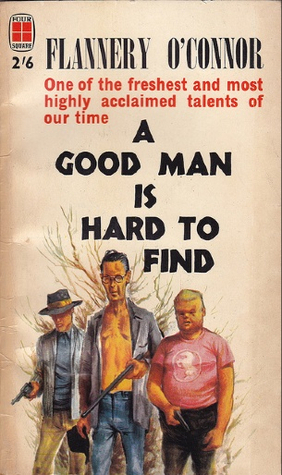
Critics note novels Wise Blood (1952) and The Violent Bear It Away (1960) and short stories, collected in such works as A Good Man Is Hard to Find (1955), of American writer Mary Flannery O'Connor for their explorations of religious faith and a spare literary style.
The Georgia state college for women educated O’Connor, who then studied writing at the Iowa writers' workshop and wrote much of Wise Blood at the colony of artists at Yaddo in upstate New York. She lived most of her adult life on Andalusia, ancestral farm of her family outside Milledgeville, Georgia.
O’Connor wrote Everything That Rises Must Converge (1964). When she died at the age of 39 years, America lost one of its most gifted writers at the height of her powers.
Survivors published her essays were published in Mystery and Manners (1969). Her Complete Stories, published posthumously in 1972, won the national book award for that year. Survivors published her letters in The Habit of Being (1979). In 1988, the Library of America published Collected Works of Flannery O'Connor, the first so honored postwar writer.
People in an online poll in 2009 voted her Complete Stories as the best book to win the national book award in the six-decade history of the contest.
Flannery O'Conner has twisty sick mind. I like it. Wow. This short story is not what you would expect from the title. I do not plan to say anything more because I want everyone to discover the plot for themselves.
I previously read Wise Blood by the author which was was very strange\. The subject was not to my taste but it was a very interesting read.
Have you ever played out an imaginary dreamscape in your mind over what you'd do if you were held at gunpoint by a psychotic killer? We all have done that, and we all ended up heroes in our dreams!
But in THIS story you never get a chance to do that.
That's O'Connor's genius!
When I was a teen, filled with typical teen angst, our Dad used to drive us kids into town this time of year to see the tulips, along with my Mom and her mother, our dear Gagi.
In the older days of early childhood it had proven a pleasant but boring diversion, but now, with girl problems and peer pressure it was just plain boring. And awful.
I remember reading La Cimetière Marin in the backseat with Gagi (my grandmother) and my brother, and trying to memorize it - it was impossible! The heat was stifling for mid-May and the small talk intolerable. But I was stuck.
Ms O’Connor must have known such spoiled kids and such despairing adults among the well-to-do families near her spartan dwelling place in the Deep South.
I can see just her mouthing Chaucer: ´yes, indeed - money is the root of all Evil.´
In the earlier days when she still lived on the North-East Coast - before her terminal Lupus sent her packing for her home in the deep South - one evening O’Connor was collared by a girlfriend into attending a lavish literary soirée hosted by the late Mary McCarthy in her Manhattan brownstone.
This much-touted young Catholic writer must have bitterly disappointed her enterprising friend, for Flannery completely clammed up.
In this story you see why:
Glamour and pretension were simply not in her vocabulary. And here she exposes wealth and social ease - not to mention permissive Christianity - as the lies they are in the Big Picture.
O’Connor may have written in lean, spare surroundings, but she earnestly hoped thereby to inherit the Kingdom of Heaven. Better than the alternative.
This scathingly ironic (and inexpensive) tale may turn your hair gray. It’s that scary.
And the juxtaposition of lazy, bored richesse with the violent force of sheer apathetically weird Evil -
Review of the title story: An unnamed grandmother, a woman caught up in appearances and social standing, travels with her son's family to Florida on a vacation. The grandmother was pushing to go to Tennessee instead, for lots of reasons - she has friends there; an escaped criminal called The Misfit is running around loose in Florida - but she gets overruled.
So she goes along on the trip to Florida, of course, but manages to make life more than difficult for her son's family. Lots of things go south, and it's more than just the family and their car.
I read this story in college for an English course, and reread it again for my real life book club, along with A Rose for Emily, which is equally disturbing Southern literature from an earlier generation. Though Flannery O'Connor is somewhat sparing with her descriptions, the characterization of the grandmother and her family is excellent. O'Connor has a great eye for human foibles.
This story has a lot going on beneath the surface, and has some really intriguing things going on with symbolism and religious belief, thought it was difficult to get a handle on the grandmother's religious discussion with another character toward the end. There's a subtle moment of grace there, but readers who dislike books that don't have a HEA ending should keep right on going. If you like bizarre Southern lit, though, you really need to read this one.
There's a free copy of this story online here. Sensitivity warning: violence (not graphic but quite disturbing), and the grandmother uses the N-word a couple of times and in other ways clearly shows her unthinking prejudices.
I knew the name of the author and title of the story, but nothing more. I assumed it was about trying to find a suitable husband. It’s not!
Before reading this, I learned that O’Connor wrote Southern Gothic, with a Grotesque slant, and that she was a devout Roman Catholic. This story starts with the first and ends with the latter.
From the very first word, it’s clear this is a waspish satire about a somewhat dysfunctional family: “THE grandmother didn’t want to go to Florida.” Not “Grandmother”, or “the children’s grandmother”, let alone a name. Then, very soon after, “The children’s mother”. Again, no name, and unlike the grandmother, she doesn't even speak. Such detachment. The grandmother lives with her son, his wife, and their three children.
Despite her objections, they go on a roadtrip to Florida. The older two children, John Wesley and June Star, are snarky brats, and the grandmother is a selfish and manipulative snob, anxious to be seen as a good southern lady. It’s a little clichéd but quite amusing, and there’s some careful foreshadowing. As the grandmother pontificates, it becomes clear she has attitudes that fit the time and place: “‘Oh look at the cute little pickaninny!’ she said and pointed to a Negro child standing in the door of a shack. ‘Wouldn’t that make a picture, now?’”
They stop at a roadside diner, and the grandmother and proprietor reminisce about better times: “‘A good man is hard to find,’ Red Sammy said. ‘Everything is getting terrible. I remember the day you could go off and leave your screen door unlatched. Not no more.’... The old lady said that in her opinion Europe was entirely to blame for the way things were now.”
Then there’s a sudden change of setting, tone, and genre: .
Image: The Misfit (spotlight on one stick figure that is unlike the others) (Source)
And the moral is…
I wasn’t really sure, but it sure was preachy, and that’s not my thing. I couldn't decide if O'Connor was highlighting God’s love and forgiveness, exposing the hypocrisy of the desperate, or both. It’s often said that flattery will get you everywhere, but will it get you into heaven? “I know you’re a good man. You don’t look a bit like you have common blood.”
I found the final three lines the most baffling and they make the story hard to rate, hence a neutral 3*. That fits the symbolic recurrence of the number three in the story, echoing famous Bible passages.
O’Connor explained somewhat in an essay about the element of suspense in the story, HERE. However, I was most struck by the opening words: “A story really isn't any good unless it successfully resists paraphrase, unless it hangs on and expands the mind.” On that basis, perhaps I should have awarded it more than 3*.
The following week I read another story of hers that was similar in many ways, but dialled down a little. It seemed an anti-racist story, until I read how O'Connor identified with the protagonist. See my review of RevelationHERE.
Quotes
• “A young woman in slacks, whose face was as broad and innocent as a cabbage and was tied around with a green head-kerchief that had two points on the top like rabbit’s ears.” [innocent cabbage?!]
• “The trees were full of silver-white sunlight and the meanest of them sparkled.”
• “I ain’t a good man… but I ain’t the worst in the world neither.”
Over the last year, I have found myself enjoying short stories, especially when I am in between denser books or when my schedule warrants a quicker read. Flannery O'Connor, a gothic, harrowing, southern tale.
The Grandmother lives with her son Bailey Boy, his children John Wesley and June Star, his baby, and the children's mother somewhere in the backwoods of Georgia. It appears to be summer as the children are home and clamoring for both attention and something fun to do from the adults. The Grandmother is a religious woman although we do not find this out until later on, and she often tells both her son and the children stories as a way to temper their short attention span. She gets it in her head that the entire family, even the mother who appears to complain a lot, needs to take a family road trip to Tennessee, and that is what they decide to do.
Immediately in the car, it is apparent that O'Connor wrote during the Jim Crow era. She referred to a rural African American boy as a poor n---, and, while this was normal for the time and place, it is a word that I am uncomfortable with. O'Connor was a religious person and lived in the bible belt, and the grandmother desired salvation of all people, even the unclothed boy that her family saw while driving. Despite her station as a religious woman, the grandmother could strike up a conversation with anyone, even the proprietor of a bar, and this is where she exclaims to him that, "a good man is hard to find." Perhaps it is because the good men had all been lost to the Great War, or because she had been widowed for years, but the grandmother sees that in the south, that good men are like diamonds in the rough. The barman and his wife warn the family of a bandit named the Misfit, and they are back on their way.
For a short story, the characters are extremely well developed, especially the feisty grandmother who is the protagonist. It is easily apparent what each family member's role in the unit is, and the grandmother takes on the role of spokesperson. This becomes evident when the family does encounter the Misfit and his small gang of men, and it is the grandmother who uses the premise of both salvation and one being from good southern stock as a way to get her family out of its current predicament. Emphasizing that the Misfit did indeed come from a good southern family is something I have seen repeatedly in southern writing, where the old south mirrored a caste system, and the grandmother wonders why a good man from a good family would go rotten. I enjoyed the dialogue between the grandmother and the Misfit, and, because this is a short story, these interchanges took up nearly half of the prose. Even though this story is slim in length, these exchanges and the premise behind the plot really packed a punch.
Even though A Good Man Is Hard To Find is short in length, it exposed me to the southern gothic writing of Flannery O'Connor, who is still known as a leading short story writer from the first half of the 20th century. With rich prose and well developed characters, O'Connor's writing is deep and provocative and was interesting for me to read. While I am an eclectic reader and may not revisit O'Connor for awhile, I know that when I do I will be entertained by a classic short story writer. A Good Man Is Hard To Find is said to be her premier work and did not disappoint, and for this, I rate it 3.5 stars.
انا كنت مفكر اني هقرا حاجة خفيفة و ظريفة كده 😂💔 تبدأ القصة بعائلة جميلة من ستة أفراد الزوج و الزوجة و الاطفال الثلاثة و الجدة. تتجه هذه العائلة بسيارتهم الي فلوريدا في رحلتهم الصيفية بعد تحذير من الجدة و تذمر دائم لأنها كانت تريد الذهاب لمسقط رأسها (تينيسي) .
و لنعيش مع العائلة أوقاتاً طريفة خفيفة و لكن النهاية كانت مفاجأة .
الحوار بالنهاية قوي و مُقلق و مُربِك و مخيف.
القصة بها رمزية عميقة منها أنك اذا رغبت في شيئ ما بشدة ستراه دائما في كل شيئ اخر.
و في النهاية نقول فعلاً من الصعب العثور علي انسان جيد أو من الممكن العثور عليه و لكن في الوقت و الظروف الخطأ.
و أيضا في النهاية منك لله أيتها الجدة 😂. سأترك لينك مترجم للقصة القصيرة - حوالي 10 صفح - في الكومنت.
Wew, this is some story. Excellent writing, food for thought, brutal though. Nothing really visible, but the described sounds say it. I would say not for the faint of heart ;-) Can't say too much, the story is short and to the point and it would be spoiling. But... here is the outline: A family of grandmother (plus cat), father, mother and kids go out on a trip. All the while a well known criminal is out on the loose. While the grandmother is strongly against the trip direction due to this situation, she is the one who brings the family into danger zone unwillingly but stubbornly. Wew... And amazing how much info, detail and character a writer can bring across in such a short story. That is quality writing. But wew... brutal. Have to read again though, take it all in again....
This story follows a family of two small children, a mother, a father and a grandma who decide to go on holiday to Florida. Nobody in the family really listens to the grandma or cares about her wishes (most likely due to a generational divide), which leads the grandma to often use manipulation to get her way. It doesn’t always work, but unfortunately, it does work near the end of the story when the grandma wants to take a quick detour to visit some mansion. This detour leads to a series of unfortunate events where the family is eventually confronted with a criminal who escaped from prison and who seems to have no qualms about putting a family in the ground if it comes down to keeping himself safe and hidden…
Personally, I wasn’t a big fan of the writing style, but the story itself was pretty good and interesting.
"It isn't a soul in this green world of God's that you can trust."
A family, including a grandmother, is traveling to Florida in this Southern Gothic story. The Misfit is on the loose, escaped from the federal prison, which worries the travelers. The story begins with the grandmother, a Southern lady, acting in a self-centered, manipulative, and hypocritical manner. There are many instances of dark foreshadowing during the trip with the journey ending on a frightening note.
The story questions the nature of goodness. The Misfit is not good, but he is honest about it. Flannery O'Connor has created characters that are very memorable. She also brings up religious elements, the idea of divine grace and salvation, in the midst of violence in a very dark ending.
A family goes on a roadtrip hollyday, taking old Grandma Everygranny with them. There’s also a serial killer called The Misfit on the loose. But they couldn’t possibly run into him - after all this story’s called An Unhinged Evil Serial Killer is Hard to Find - riiiiight….. /??
This was absolutely great! Flannery O’Connor’s writing and storytelling is so on point that if the story was simply a quirky old lady and her family go on a trip across the south, I’d’ve still been satisfied. But things take a very, very, very dark - and unexpected - turn towards the end which tipped it over the top for me.
I loved all of it. The characterisation is brilliant. The grandma subtly and not so subtly manipulates her son’s family to do her bidding, the kids’ voices are convincing, the restaurant owner’s voice is distinctly Southern and The Misfit is chillingly bleak, in stark contrast to the warmth of the family on vacation. Their names are great too - John Wesley, June Star, Red Sam - and you get a strong sense of Southern culture.
As soon as the grandma convinces her son to drive them down a dirt road though the unease builds and builds so superbly. And when things go completely to hell, it was masterful of O’Connor to have the horrors happen off the page rather than explicitly tell the reader what’s going on - it makes the events that much more shocking.
A Good Man is Hard to Find reminded me of Shirley Jackson’s The Lottery for the total U-turn in tone with that final scene. The story is like a distilled and immensely potent mix of Shirley Jackson and Cormac McCarthy - an amazing example of Southern Gothic and a thoroughly impressive piece. Bravo, Flannery O’Connor!
The story is about a stone killer. And an older woman, a potential victim, who tries to befriend him. Dorothy was trying to say something with this plot but few understood her writings among the general population. I remember being in a class that included a religious man who railed against this story. Dorothy was Catholic (like Anthony Burgess - A Clockwork Orange; and Graham Greene and his whiskey priest in The Power and the Glory). He seemed to expect her to act like one and therefore write like a nun. He had never noticed the Bible doesn’t sound like it was written by a nun either. On the other hand, who knows what a nun may write? Dorothy followed Emily Dickinson’s admonition to tell the truth but tell it slant.
Tell all the truth but tell it slant — Success in Circuit lies Too bright for our infirm Delight The Truth's superb surprise As Lightning to the Children eased With explanation kind The Truth must dazzle gradually Or every man be blind —
5★ “The grandmother didn’t want to go to Florida. She wanted to visit some of her connections in east Tennessee and she was seizing at every chance to change Bailey’s mind.”
This famous short story was first published in 1953, eighty years ago, and is also the title of a longer book of Flannery O'Connor stories.
The grandmother lives in Georgia with her adult son, Bailey, his wife and two children. She tries to convince them to go to Tennessee instead of Florida by carrying on, waving a newspaper article, and talking of a killer in that area.
“ ‘Here this fellow that calls himself The Misfit is aloose from the Federal Pen and headed toward Florida and you read here what it says he did to these people. Just you read it. I wouldn’t take my children in any direction with a criminal like that aloose in it. I couldn’t answer to my conscience if I did.’”
She gets no support from the wife or the kids, who suggest she stay home, but they know she’d never miss out on a trip. The next day, she’s the first one in the car (sneaking the cat in as well), and they’re off across Georgia, headed for Florida.
She points out all the sights, including a “ ‘cute little’” black boy standing at the door to a shack who waves at them when they stare.
“ ‘He didn’t have any britches on,’ June Star [the girl] said.
‘He probably didn’t have any,’ the grandmother explained. ‘Little n*s in the country don’t have things like we do. If I could paint, I’d paint that picture,’ she said.”
During the trip and at a rest stop, “Red Sammy’s”, she carries on about how times have changed. Her grandchildren are not respectful the way children were in her day. He agrees. She says he’s a good man.
“ ‘A good man is hard to find,’ Red Sammy said. ‘Everything is getting terrible. I remember the day you could go off and leave your screen door unlatched. Not no more.’
He and the grandmother discussed better times. The old lady said that in her opinion Europe was entirely to blame for the way things were now. She said the way Europe acted you would think we were made of money and Red Sam said it was no use talking about it, she was exactly right.’ ”
When she suggests revisiting an old plantation house she thinks she remembers, the story really takes off.
Not the usual family road trip, but it is only short and worth your time!
Thanks to the Short Story Club for the link to a PDF of the story online:
A gritty Southern tale that begins in humor and ends in pathos. I confess to feeling a genuine chill at the end and wondering if this story wouldn't have more impact now than when it was written, since serial killers and gruesome murders are more common now than they would have been then. Of course, the country had just come through the bloodiest and cruelest of wars when this was written, so perhaps therein lies the inspiration.
I hate to admit it, but Flannery O'Connor is really not my style. I have tried her a number of times and over the course of decades, and I just cannot connect.
Thought I read a short story before I go to bed with a cleansed palate from my novel that I finished today. Thought I read it out loud for my little man. I mean the story started with a grandmother that I could picture speaking in her Southern drawl, cheeky grandkids and a road trip ahead. I was shocked as I progressed page by page quieting my voice 😳. Appalling story brilliantly written! Clear recommendation. 📚
What a story!! O’Connor lulled me in with a few laughs- those kids were pretty funny - and then she took me to the dark side and left me reeling. A powerful story that absolutely took my breath away. She is an exceptional writer.
This is my first encounter with Flannery O’Connor. I picked this up now as a favourite podcast of mine- the Mookse and the Gripes- are doing a whole episode on her works. I know I will be rereading this one and am so looking forward to exploring more of her stories.
I really appreciated this line: “Where’s the plantation?” John Wesley asked. “Gone with the Wind,” said the grandmother. “Ha,ha.”
A Bad Man is Easy to Find would have been a more accurate title for this story.
The protagonist calls himself The Misfit. He was traumatized by his experiences in the carceral system and now he is going to make society pay for his suffering. “I call myself The Misfit because I can’t make what all I done wrong fit what all I gone through in punishment.”
He expressed the joy he took in hurting people, telling the grandma that there is “no pleasure but meanness”, and then later tells his co–conspirator, “it’s no real pleasure in life.”
The Misfit and his gang are a reminder that the real horror story is as close as the front door of our homes…and that we are all truly defenseless against the evil lurking in people’s hearts.
Number 3 in my “quest to find the most disturbing (short) story” effort.
Dear fellow reader and fellow critic/reviewer, I write these passages for you. If nobody reads what I have written, my text has no meaning, and I have wasted my time writing it. I’d like to use the experience of this disturbing text under review and it’s enigmatic, intensely complex writer, to elaborate a little on critical theory. And make no mistake, each and every one of you implicitly believes in a certain “correct” way to read fiction, of how to analyze and review a text. I see it in your reviews.
I’ll mention the main groups I most often encounter here. Some of you write a little (or long) précis of the plot of the story, and put that up as your review. I think of these as the “Blurb-writers”. Of these reviewers I think: “Well, there goes a person who believes they have just saved me the time of reading this story for myself. You guys are probably closer to “New Criticism” than most others, since you look at the text and only the text. Others close to this ‘text only' approach, will name salient features of the text and the mood of the text (you’d inform us that there’s beautiful flowing prose, tragicomedy, racism, sexism, etc. etc. in the text). I tend to often incline to the latter myself.
Then there are those of you who write a beautiful historical and/or contextual background about the piece of fiction and often its writer. You guys would tend to fall in the camps of Historical and Biographical criticism, as well as New Historicism and/or Structuralism. I myself often tend toward New Historicism/Structuralism when I have the time for it – because make no mistake, this is a time-consuming mode of critique.
Then we have our often poetic and lyrical “Reader Response” reviewers, who tell us about how their personal experience of this text went, and these reviews are often very entertaining, artistic and original pieces of writing, something that I have often wished I could do, but lack the spontaneity to do, since I tend to hide personal emotions and prefer to intellectualize stuff (even when I talk about my emotions I prefer a distance, a remove). It feels safer that way.
With this story, I personally had quite a “reader response” experience, then strove to intellectualize it afterwards, but I feel myself breaking my own mold, because… sigh, let me try to explain. I came into this knowing that Flannery O’Connor was a prominent writer in the Southern Gothic tradition, but knew nothing about her and hadn’t read anything by her, so I came in as a complete virgin, white as the driven snow.
I initially found the story pretty funny – in fact I laughed at the characters’ foibles and mishaps. When the story turned darker, I saw it starting to turn into dark comedy and black humor, with a terribly ironic twist. I mean there’s irony in this story from the start. The grandma is overtly manipulative, and so one never knows whether she sincerely means anything she says, since the writer very successfully gave you a few clues early on already, that this grandma does things ‘for effect’.
Not knowing that O’ Connor was a devout Catholic, I assumed that the story is a cynical attack on Christianity and that it was meant to point out the folly and futility of believing that God or Jesus will protect you – as well as cynically pointing out how false and hypocritical some Christians can be (something I have personal experience with). I mean, the grandmother is depicted as a relatively unsympathetic character who, for example, sees no pathos in a little black child having no pants, but declares that the status quo is the acceptable way of being – even finds it cute, and wanting to paint a picture of it.
She also manipulates her son in various ways, and most ostensibly, through his children. She is a comic character, who through her own various manipulations and stupidity, gets herself into worse and worse hot water, time and time again, including the climax at the end. If I had left things then and there, I would have given this story 5 stars, with the commentary that the writing was astute and excellent, that the author is obviously an excellent observer of humanity, and even now, nothing about that has changed for me.
Despite what she said to people in interviews and letters, her writing shines on its own and its evocative power cannot be renounced, even by its author. For the author, who by her own insistence was a devout Catholic, and who continually flouted her religion and claimed that it was the raison d’être for her writing, stated clearly about this very story, that what for me seemed to be an ironic demonstration of a human being’s utmost folly, was actually intended to portray a moment where an individual is touched by divine grace. She even goes as far as to claim (extraneous to the text) that the character “became Jesus by grace of the Holy Spirit”.
After learning of this, I started wishing I had not poked further and that I had taken the New Criticism approach of just letting the text shine for itself. That would have been so much easier. But, to strike a slightly moralistic pose myself, growth and development only comes through conflict and strife. Wars always tended to have improved technology as a result. Perhaps I can grow from this experience.
I find myself grappling with this conflict in myself, of how to report on this text with integrity, given my inner conflict between my personal experience of the text and the intention of the author. She had meant the story to be a redeeming experience for non-believers, she said that she thought it would bring non-believers closer to Christ. I had read it as being the opposite, in fact, as an attack against religion so able and well executed that I could compare it to the intentions of the Marquis De Sade - I had read his novel Justine, and Justine's story and O' Connor's Grandma's stories are comparable to me.
This question is forcing me to re-appraise my entire personal paradigm of how to approach a text, and fiction in general. I think the answer is already there, deep within myself; - that as much as I would have loved for, and even as a child hoped for and fantasized that reading literature could be a meeting of an author’s mind and mine, I realize now that that is folly. Any “meeting of the minds”, any feeling that “this author gets it” is pure fantasy and wishful thinking. There could perhaps be kindred spirits in this world – but don’t take it for granted that they are easy to recognize. In a way this shatters a part of my soul, reminds me of the terrible fear of the black chasm of nothingness and loneliness that I had to deal with when I gave up all illusion of religious faith – that takes a special kind of courage, no matter how pragmatic a person might be, and I do have my fanciful side.
Flannery O’Connor, much as you break my heart with your letters and explanations, knowing therefore that we are not kindred spirits in any way that is easy to conceive of, I still bow to the enormous talent inherent in your art, to your incredible ability to write well. I was going to give the story five stars, but I think it would be more appropriate to give it four and a half.
If you have read up to here, thank you for your forbearance with this baring of the soul.
A dysfunctional family road trip from Georgia to Florida in the 1950s had me laughing out loud until the story took a literal detour and entered very dark territory. A Southern Gothic at its finest. I knew nothing about this story despite it being among Flannery O'Connor's most popular works and I think it really added to how much I loved it, so I'll refrain from sharing any more plot details.
The characters are not all that likeable, which made them that much more believable for me. A good man, a good person even, is truly "hard to find."
Flannery O'Connor was a devout Roman Catholic from Georgia, in the American South, a geographical area more common to Baptists, which I found interesting. "A Good Man is Hard to Find" reflects her beliefs in that it examines the complexities of what makes a person "good."
*A very special thank you to GR friend, Antoinette, whose wonderful review of this short story led me to finally reading it for myself.
My first book by her leaves me well satisfied. She has such a knack of hooking your heart for her downtrodden characters without sentimentality. Such a master of dialog and patterns of speech and of rhythm and timing in her narrative. Every word seems to be laid like bricks in a wall. Her endings always resonate and move you beyond the frame of your short sojourn with her stories.
A short story with a punch, a knock you on your ass punch. Writing so real, I was there in that car, then on that gravel road. Unforgettable, Darkness and evil flowing from the mind and through the pen of O'Connor.
I can't explain it, but I found this story riddled with wry humour. I may have chuckled at the naivety of the grandmother, the children's cheekiness, the mother's quietness and the stoic personality of Bailey, the father, the leader.
A strange instance occurred where someone (a nameless grandmother) manifested "something" based on an article she had read, which later contributed to the "oh, grandma was right" scenario, had it not been for her idea of visiting the plantation house. But it isn't just that. It's the way she uses the article as an excuse, hoping that she'll go to Tennessee instead of Florida for a short trip so that she can visit friends. "A good man is hard to find", the grandma remarks consistently throughout this beautiful piece of writing. Connor points out that even Grandma has a cheeky side.
The following pages of the short story capture the essence of helplessness and complete fear. If I may assume this, A Good Man Is Hard to Find by Flannery O'Connor is horror at its best.
I have read horror books in the past (and still occasionally do*) where monsters kill people, and I sleep well afterwards. I do this because I know that these monsters do not exist. Then there are books like Nightmare Alley, 1922, and now A Good Man Is Hard to Find, where words like greed, morality, and the nature of humanity scare the big pulp out of me. Monsters don't frighten me at night. But I cannot say the same concerning human nature. People do frighten me, and a good man is indeed hard to find nowadays. By the way, Flannery O' Connor achieves this feat with only 23 pages.
It is the horror that keeps me awake all night, pondering my true purpose in life, and whether I will witness it come to fruition; the fear that it will suddenly come to an end, or some poor soul I love gets hurt because of me. It is dreadful! It's also how Bailey crumples when he realises what is about to happen after his old Ma says she recognises the Misfit. How helpless he might've felt. Words of comfort fall short on dry lips. And how lofty the ideas of the Misfit seem to him as he explains himself. That loud, shrill cry of the nameless wife in the woods. F*ck!
* I am rereading At the Mountains of Madness by H.P. Lovecraft, and I'll review it again after I finish it.
5/5. Read this!
This entire review has been hidden because of spoilers.
The following trigger warnings: Murder, Sexual Assault Disgusting. Yeah, I get the underlying theme that Southern Protestant religiosity is apparently judgmental and has double-standards and whatnot. But I'd really, REALLY like to read a pleasant book for English class. Just once. Just one time during my high school career I would LOVE to read a book that leaves an impact on me, that changes my outlook on things, that educates me. I'm tired of reading about people killing or raping or eating babies or just being disgusting filth. What I read is what I think about, and I really don't want to be forced to think about all the worthless scum in this world. I want to think about happy lives and romance that works out from beginning to end. They say a story with no conflict isn't a story...sure, but do we have to have the blackest, most depressing conflict there is in EVERY work of literature I have to read? Don't get me wrong, I appreciate a good, intesne, dark story every now and then. BUT NOT ALL THE DARN TIME. I mean, really.
Sometimes, whilst on a journey, it's final destination remains different than the original plan, that's the case in Flannery O'Connor's tale of good Vs evil. A grandma in the deep south unintentionally leads her family into the face of danger. Although she is depicted as a seemingly good person, the grandma holds responsibility for the death of her family because she fails to see the signs of multiple warnings of their upcoming encounter with a menacing convict, 'The Misfit'. While the use of violence remains disturbing, with an ending that resonates strong in the mind, O'Connor intentionally uses indicative foreshadowing to expose the destructive path the grandma consistently chooses when confronted by good and of evil. While preparing for the road trip, the grandma dresses in her Sunday best in the chance an accident may occur so anyone seeing her dead on the highway would know at once she was a lady. This is an abnormal thought to consider when getting ready; she is dressing in her best, similarly to how the deceased individual is prepared before the burial. Additionally, while continuing on their journey, the family passes a field which contains five or six graves. As this contributes to the mysterious mood and path they are headed towards, the number of tombs happens to match the number of family members inside the car. Yet once again, the family thinks nothing of it and continues anyways drifting down a dirt road following sharp curves on dangerous embankments towards the town of Toombsboro, another sign of death reflected just within the name as the setting implies misfortune. Furthermore after a car accident occurs, the grandma notices an approaching big black battered hearse-like automobile that representing evil. This short tale slowly crawls along with a pitch dark foreboding and chilling tone leading to it's shocking conclusion. As my first time reading O'Connor, it's easy to see why she is associated with the term 'Southern Gothic'.
what an incredible short. it feels almost as if o'connor drew inspiration from dostoevsky because i see a distinct parallel between this story and the brothers karamazov. both depict violent scenes where certain characters commit premeditated acts of evil all the while striving to dialectic good because in this instance good by default is a "natural and divine grace intervening in human affairs".
catholics, like all christians, as far as i'm concerned, believe humans are inherently sinful and require the intercession of divine grace to be redeemed and saved. but usually the idea of grace in abrahamic religions is expressed in love, or kindness, in the idea of god forgiving us our trespasses and allowing us into heaven despite our sinful natures. what makes o'connor particularly striking is that she, just like dostoevsky suggests that "evil", like merciless killing and cruelty go hand in hand with the redemptive power of god. we see this in the character of the grandmother. she’s awful, and we’re supposed to ridicule and dislike her. yet she becomes a far better and more sympathetic character as she faces the misfit’s violence. her speech patterns change and she becomes more generous, more understanding, and you see a very different side of the grandmother.
the famous line from that story, “she would have been a good woman ... if there had been someone there to shoot her every minute of her life,” perfectly captures that theme. grandmother is a pretty terrible person, but faced with violent death, she is redeemed. she requires violence and suffering to be saved, and would have been a better person with a gun constantly to her head.
it’s pretty provocative to suggest murderers are actually agents of salvation. but any religion that believes in an all-powerful benevolent deity has to explain why the world is so frequently violent and awful. o'connor’s answer is basically that human beings are so wicked, that’s what it takes for god to shock us back onto the right path. violence and death provide humans with an opportunity to be saved.
i am an atheist but i enjoyed this story a lot for its great characters, its plots, its humour, and even the sentiment of its message. after all, there's a certain virtue in being able to appreciate a work on its own merits
Absolute evil exists and one can encounter it anytime and anyplace, even on your way to Florida to have a holiday with the whole family. You can try to appeal to the remains of good in it, flatter it, try to deceive it (clumsily), talk about God with it, beg it but everything is in vain. The evil will be polite, it will confide in you and will tell you the story of his life. But eventually, the trigger will be inevitably pressed. It is a heart-wrenching story, a roller-coaster with brilliantly-develped characters.
''There was a piercing scream from the woods, followed closely by a pistol report. “Does it seem right to you, lady, that one is punished a heap and another ain’t punished at all?” “Jesus!” the old lady cried. “You’ve got good blood! I know you wouldn’t shoot a lady! I know you come from nice! Pray! Jesus, you ought not to shoot a lady. I’ll give you all the money I’ve got!” “Lady,” The Misfit said, looking beyond her far into the woods, “there never was a body that give the undertaker a tip.”
It is a wonderful story. One is immediately drawn to the characters as they are so well etched out. With a striking use of dialogues, the readers can almost visualize the nameless grandmother, around whom the story revolves, her son Bailey and his wife and their three children. Very quickly we see how this family is, and what is their life like. One important feature is that there is no genuine communication between any one of them. The parents, for instance, hardly talk to their loud-mouthed children, nor do they correct them when they are so utterly rude. The grandmother, on the other hand, the oldest member of the family, dwells in her own nostalgias of both past and present. She manipulates others in different garbs.
At home, we see that on the surface it is just like any other family. However, a close look reveals damaging imperfections. It shows the unconcerned and manipulative adults who have nothing really to contribute to their children's lives. The mother is hardly seen talking to her loud-mouthed children or engaging with them in any way. Even the car trip makes the choppy father nervous.
Later in the car, we see the same pattern. The children, as usual, indulge in their own whims. The grandmother, as usual, plays word games with her grandmother children and remains only concerned with her things, her wishes.
In the next scene, we see them in some sort of roadside eatery. Here again, the children are being rude. The grandmother talks to the owner of the property about 'goodness.' It is just a superficial talk. In her head, she is occupied with the thoughts of 'the runaway man.' She is scared of all this and at the same time she is thrilled about it.
Furthermore, there is hardly any difference between the kids and their grandmother. Just like the grandmother, the kids pursue what fancies them with absolute disregard any hindrance. The parents, too, are absorbed in their own mundane stuff. So the adult who can, or should, positively influence the children are just not 'there.' There is a 'moral' vacuum that no one is qualified and eager to fulfill. Modernity has turned everybody into consumers. Even the old good 'religion' has just mutated into a babble of sorts.
In the last scene, we again see the lack of communication or concern, both within the family and among people in the outer world. The misfit's accomplices kill Bailey and his son. The gunshot is heard but the grandmother, and Bailey's wife too, hardly responds in any 'familiar way.' Grandmother's entire focus is on to save her life. In the second round, Bailey's wife and her remaining two children are killed. The grandmother, until now, has done her best to thaw the misfit and turn him around. She only thinks about her life. Just a few moments before when Bailey and her son are shot, we hear no cries and repentance of any kind from the still alive family members. They hardly respond. The only remaining family member–the grandmother– hardly mourns these deaths but instead, she begs for her own life.
The misfit and his helpers go about their 'task' without a shred of remorse. The story sharply suggests that the outer world is just the bigger, cruder, and much crueler version of the family.