What do you think?
Rate this book


448 pages, Paperback
First published January 1, 1934

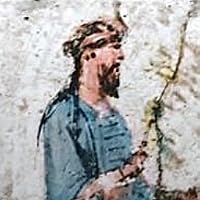
"Having taken the plunge into this dark and torturous labyrinth, what thread are we going to catch hold of in order to make our way back to where there is at least a patch daylight on which we can fix our eyes amid the surrounding gloom?"Orpheus, was, of course, the musician whose lyre charmed the underworld and who almost got his dead bride, Eurydice, back. He was much more than this, though, and the Eurdice story is much younger than other Orphic stories. In Thrace he had given up women (although the homosexual element is only implied. He was asexual) and lured the men to him with his music. Thracian women in a jealous Dionysian frenzy tore him apart...and yet his dismembered head continued to sing.
"The worshippers trail dancing over the mountains, using various means to induce in themselves the condition desired, namely 'madness ' or ecstasy. They utter loud cries, they make music with flutes and cymbals. Arrived at the culminating pitch of frenzy, they tear and eat raw an animal victim. Dionysos appeared to them in the form of a bull. The ultimate aim was union with the god, by the attachment of ecstasy and the sacred meal to become oneself a Bakchos. "Looking at my notes, which are actually brief, I was surprised to find that the boring introduction by Larry J. Alderink was the clearest part for me of the whole book. From there I get some apt summaries:
"Viewing Orphism as a reform of Dionysiac energy in the direction of Apllonian sanity allows us to focus on the two deities who are polar opposites yet mutually attracting in Orphism. "It seems Orphism was an oddball in Greek religious life that was hard to reconcile for most Greeks. Its ideas of original corruptness and a striving for a better afterlife have some striking parallels with Christianity.
...
"On Guthrie's interpretation, Orphic writers sifted through popular religious attitudes to organize their own set of beliefs, at the center of which was the myth of the dismemberment of Dionysos by the Titans, the revenge Zeus took by striking the Titans with lightning, and finally the birth of human beings from the smoldering ashes. Eschatological doctrines could easily be derived from such a myth: human nature, derived from Titanic actions, is evil, but escape from an evil present is possible through proper ritual practices and a strenuous ascetic life. "
Everyone finds himself immersed in his own personal drama, which is but a tiny thread woven into the tapestry of salvation history. The early stage of life, from childhood to the threshold of adulthood, builds up to the critical decision in which one embraces and commits to one’s vocation. However many peripeties may intervene in the intermediate years, the denouement will be one’s entry into heaven, provided one has been blessed with the grace of final perseverance. What confers on the drama its piquancy is precisely this heavenly destination, which organizes everything that tends towards it into the form (Gestalt) God wishes it to have and for which he creates the human being in the first place. I hypothesize that this statement of mine constitutes a natural characterization of what the medieval mystics mean by the ‘apex of the soul’ (apex animae). Bonaventure, a keener scholastic theologian, would have termed it the apex mentis, which must be more correct from a philosophical point of view….Jesus has something surprising to say about this question in the readings for the liturgy on Sunday, November 4th this year [2018]. The first reading was the ancient formulation of Israelite monotheism from the Pentateuch, ‘And hence, if, throughout your lives, you fear YHWH your God and keep all his laws and commandments, which I am laying down for you today, you will live long, you and your child and your grandchild. Listen, then, Israel, keep and observe what will make you prosperous and numerous, as YHWH, God of your ancestors, has promised you, in giving you a country flowing with milk and honey. Listen Israel: YHWH our God is the one, the only YHWH. You must love YHWH your God with all your heart, with all your soul, with all your strength. Let the words I enjoin on you today stay in your heart’ (Deuteronomy 6:2-6). The gospel reading was from Mark, ‘One of the scribes who had listened to them debating appreciated that Jesus had given a good answer and put a further question to him, “Which is the first of all the commandments?” Jesus replied, “This is the first: Listen, Israel, the Lord our God is the one, the only Lord, and you must love the Lord your God with all your heart, with all your soul, with all your mind and with all your strength. The second is this: You must love your neighbor as yourself. There is no commandment greater than these.” The scribe said to him, “Well spoken, Master; what you have said is true, that he is one and there is no other. To love him with all your heart, with all your understanding and strength, and to love your neighbor as yourself, this is far more important than any burnt offering or sacrifice.’ Jesus, seeing how wisely he had spoken, said, “You are not far from the kingdom of God.” And after that no one dared to question him any more’ (Mark 12:28b-34). Notice how, strikingly, Jesus inserts on his own authority into the words of scripture, ‘with all your mind’. Here, what translates into English as ‘mind’ must be ‘nous’ in Greek, often rendered as ‘intellect’ in English (I wonder what Aramaic word Jesus could have used that Mark put as ‘nous’ in Greek). Anyway, if one were to adopt the traditional Hellenistic graded divisions, the sequence would be heart, soul, intellect, with intellect the highest element in man. Jesus appears to agree so far, but then the sequence continues with strength. How could there be something higher and closer to God than the intellect, and why is it strength? I’ve been pondering for six weeks what these scriptural passages are saying to us. As far as I’ve gotten thus far, it’s evident that strength isn’t quite the same thing as power, which theoretically belongs to God alone.
This point is very important, though rarely, if ever, acknowledged. For it implies that the apex of the soul serves as the conduit through which information flows into the created person under the supervision of the Holy Spirit. Here, we must understand ‘to inform’ in its etymological sense deriving from the Latin, where ‘in-’ means ‘into’ and ‘form’ stands for ‘formare’, which is a verb indicating the action of imparting form. Gregory of Nyssa was the first theologian to conceive of the infinitude of God (Duns Scotus was the medieval scholastic most associated with an emphasis on this divine attribute). In as much as we are to become ‘partakers of the divine nature’ (2 Peter 1:4), we human beings are destined to take on the robes of infinity ourselves as well: ‘The nature of souls and of angels does not know limits, and nothing stops their respective natures from progressing to the infinite’ (Gregory of Nyssa). Progressing to the infinite = welcoming the splendorous form = accepting one’s calling from God. Resplendence is the proper state of the resurrected bodies.