

What do you think?

Nagamandala: Play With A Cobra
In Naga-Mandala Karnard weaves two Kannada folk-tales together. The first one comments on the paradoxical nature of oral tales in general; they have an existence of their own, independent of the teller, and yet live only when they are passed on from one story-teller to another. Ensconced within this is the story of Rani who makes up tales to fill the void in her life. Rani's predicament poignantly reflects the human need to live by fiction and half-truths, the need not to push the search for Truth beyond the point where the whole edifice of day-to-day living may come tumbling down.
46 pages, Paperback
First published January 1, 1988
About the author
Girish Karnad
46 books157 followersGirish Raghunath Karnad (Konkani : गिरीश रघुनाथ कार्नाड, Kannada : ಗಿರೀಶ್ ರಘುನಾಥ್ ಕಾರ್ನಾಡ್) (born 19 May 1938) is a contemporary writer, playwright, screenwriter, actor and movie director in Kannada language. His rise as a prominent playwright in 1960s, marked the coming of age of Modern Indian playwriting in Kannada, just as Badal Sarkar did it in Bengali, Vijay Tendulkar in Marathi, and Mohan Rakesh in Hindi. He is a recipient of the 1998 Jnanpith Award for Kannada, the highest literary honour conferred in India.
For four decades Karnad has been composing plays, often using history and mythology to tackle contemporary issues. He has translated his major plays into English, and has received critical acclaim across India. His plays have been translated into several Indian languages and directed by eminent directors like Ebrahim Alkazi, B. V. Karanth, Alyque Padamsee, Prasanna, Arvind Gaur, Satyadev Dubey, Vijaya Mehta, Shyamanand Jalan and Amal Allana. He is also active in the world of Indian cinema working as an actor, director, and screenwriter, both in Hindi and Kannada cinema, earning numerous awards along the way. He was conferred Padma Shri and Padma Bhushan by the Government of India.
For four decades Karnad has been composing plays, often using history and mythology to tackle contemporary issues. He has translated his major plays into English, and has received critical acclaim across India. His plays have been translated into several Indian languages and directed by eminent directors like Ebrahim Alkazi, B. V. Karanth, Alyque Padamsee, Prasanna, Arvind Gaur, Satyadev Dubey, Vijaya Mehta, Shyamanand Jalan and Amal Allana. He is also active in the world of Indian cinema working as an actor, director, and screenwriter, both in Hindi and Kannada cinema, earning numerous awards along the way. He was conferred Padma Shri and Padma Bhushan by the Government of India.
Ratings & Reviews
Friends & Following
Create a free account to discover what your friends think of this book!
Community Reviews
Displaying 1 - 30 of 52 reviews

November 7, 2017
The epitome of storytelling is, IMO, myth. Myth must have originated around the campfire of primitive man, as he narrated the tales of the hunt suitably embellished with symbols dragged up from the depths of his mind, where it connects with the collective unconscious of humanity. The earliest myth-creators were possibly the earliest dramatists too. That is why drama is an eminently suitable medium for transmitting myth and fable: for on the stage, both time and space telescope and there is a willing suspension of disbelief on part of the audience.
"Nagamandala" has been created out of two folktales, I have heard (I am not sure). The play has a framing story, about a man who must keep awake to avoid death. He does so with the help of "story", which is the tale personified in the form of a beautiful woman. She keeps him awake with a tale, with the proviso that he has to tell it to the world.
The actual play involves Rani, a young girl locked up inside his house by her boorish husband Appanna, who goes on his philandering way every night. He comes back every morning to eat, during which time he only scolds her. To win her husband's love, she tries lacing his food with a magic root supplied by a blind witch - but ends up pouring it down a snake's lair by mistake. The snake falls in love with Rani, and visits her every night in the guise of her husband. So Rani's life now revolves around the strange duality of a husband who is a tyrant by day and a romeo by night. As time goes by, she becomes pregnant - and an adulteress in the eyes of Appanna and the world. However, she extricates herself from this predicament with the help of her Naga lover in a totally satisfying climax with an unexpected twist.
The snake, that hallowed phallic symbol from time immemorial, has a bit of an ambiguous role in this play. Is he the dual self of her husband, or a metaphor for the wild sexual longings of the repressed Indian woman? The playwright leaves that to the viewer's imagination.
Karnad has done a masterful job. With a minimum of stage directions, this is a director's play - it can be done on an entirely bare stage or with as many props as desired. The heart of the story is in the dialogue, and the chemistry between the characters. The play flows without breaks - the movement through time of the narrative is dreamlike, as it should be for a myth. I have not watched any performance so far, but I had created a stage in my mind (I do it whenever I read a play) and it was bare and stark. I imagined the actors moving with dance-like, stylised movements rather like a Kathakali performance; never allowing one to forget the basic unreality of what I was happening. And I would give full credit to the playwright that I never had to go back and read a particular piece of stage direction - it was all happening in my mind.
A real gem.
"Nagamandala" has been created out of two folktales, I have heard (I am not sure). The play has a framing story, about a man who must keep awake to avoid death. He does so with the help of "story", which is the tale personified in the form of a beautiful woman. She keeps him awake with a tale, with the proviso that he has to tell it to the world.
The actual play involves Rani, a young girl locked up inside his house by her boorish husband Appanna, who goes on his philandering way every night. He comes back every morning to eat, during which time he only scolds her. To win her husband's love, she tries lacing his food with a magic root supplied by a blind witch - but ends up pouring it down a snake's lair by mistake. The snake falls in love with Rani, and visits her every night in the guise of her husband. So Rani's life now revolves around the strange duality of a husband who is a tyrant by day and a romeo by night. As time goes by, she becomes pregnant - and an adulteress in the eyes of Appanna and the world. However, she extricates herself from this predicament with the help of her Naga lover in a totally satisfying climax with an unexpected twist.
The snake, that hallowed phallic symbol from time immemorial, has a bit of an ambiguous role in this play. Is he the dual self of her husband, or a metaphor for the wild sexual longings of the repressed Indian woman? The playwright leaves that to the viewer's imagination.
Karnad has done a masterful job. With a minimum of stage directions, this is a director's play - it can be done on an entirely bare stage or with as many props as desired. The heart of the story is in the dialogue, and the chemistry between the characters. The play flows without breaks - the movement through time of the narrative is dreamlike, as it should be for a myth. I have not watched any performance so far, but I had created a stage in my mind (I do it whenever I read a play) and it was bare and stark. I imagined the actors moving with dance-like, stylised movements rather like a Kathakali performance; never allowing one to forget the basic unreality of what I was happening. And I would give full credit to the playwright that I never had to go back and read a particular piece of stage direction - it was all happening in my mind.
A real gem.

May 31, 2023
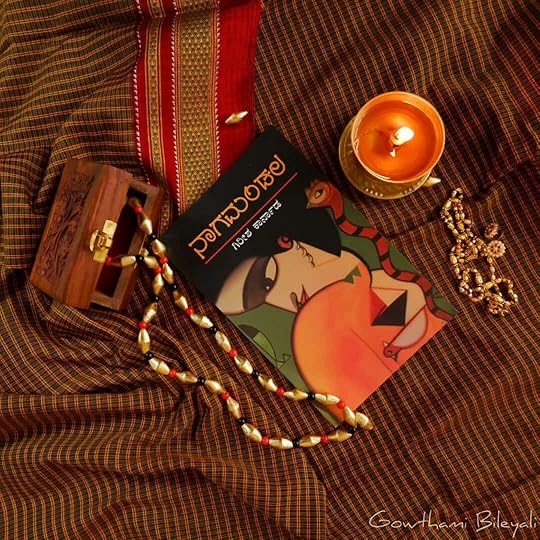
ಪುಸ್ತಕ: ನಾಗಮಂಡಲ
ಲೇಖಕ: ಗಿರೀಶ್ ಕಾರ್ನಾಡ್
ವಿಭಾಗ : ನಾಟಕ ರೂಪಾಂತರ
ನಾಗಮಂಡಲ ಚಿತ್ರ ನೋಡಿದ ನಂತರ ಓದಿದ ಪುಸ್ತಕವಿದು, ಚಲನಚಿತ್ರಕ್ಕೂ ಪುಸ್ತಕಕ್ಕೂ ಹೋಲಿಕೆ ಮಾಡದೆ ಓದಿದರೆ ಒಳ್ಳೆಯದು. ಕಥೆ ಶುರುವಾಗುವುದೆ ಹಾಳು ಗುಡಿಯಲ್ಲಿ , ಜ್ಯೋತಿಗಳ ನಡುವೆ ಬಂದ ಕಥೆಯು ಮನುಷ್ಯನನ್ನು ಸೇರುವ ಪರಿಯಲ್ಲಿ .
ಸಂಸಾರ ಏನು ಎಂದರೆ ತಿಳಿಯದ ರಾಣಿಯನ್ನು ಮದುವೆ ಮಾಡಿಕೊಂಡು ಬಂದ ಅಪ್ಪಣ್ಣ ಅವಳನ್ನು ಒಂದು ದಿನಕ್ಕೂ ಅಕ್ಕರೆಯಿಂದ ನೋಡಿದುದಿಲ್ಲ, ಅವನ್ನನ್ನ ಒಲಿಸಿಕೊಳ್ಳುವ ಬಗ್ಗೆ ಕುರುಡಜ್ಜಿಯ ಸಲಹೆ ಪಡೆದ ರಾಣಿಗೆ ಆಕಸ್ಮಿಕವಾಗಿ ನಾಗರ ಹಾವು ಒಲಿದು, ತನ್ನ ಗಂಡನ ರೂಪ ತಾಳಿ ತನ್ನ ಒಡಲು ತುಂಬಿಸಿದ ಮೇಲೆ, ಅವಳ ಪಾತಿವ್ರತ್ಯ ಹೇಗೆ ನಿರೂಪಿಸಿಕೊಳ್ಳುತ್ತಾಳೆ?, ತನ್ನ ನಿಜವಾದ ಗಂಡ ಹೇಗೆ ಒಲಿಯುತ್ತಾನೆ? ಗಂಡನೆಂದು ತಿಳಿದು ಹಾವಿನ ಮಗ್ಗುಲಲ್ಲಿ ಪ್ರೀತಿಯಲ್ಲಿ ಮುಳುಗಿದ ಮೇಲೆ ನಿಜವಾದ ಗಂಡನ ಮಗ್ಗುಲಲ್ಲಿ ಬೇರೆ ತರಹದ ಪ್ರೀತಿ ಗುರುತಿಸಲು ಆಗುವುದಿಲ್ಲವೇ? ತನ್ನ ಮಗುವಿನ ತಂದೆ , ತಾಳಿ ಕಟ್ಟಿದ ಗಂಡ ಬೇರೆ ಎಂದು ತಿಳಿದರೆ ಏನು ಮಾಡಿಯಾಳು? ... ಹೀಗೆ ಎಲ್ಲದಕ್ಕೂ ಉತ್ತರ ಬೇಕೆಂದರೆ ಒಮ್ಮೆ ಓದಬೇಕು, ಕಥೆಯ ಕೊನೆ ಚಲನಚಿತ್ರಕ್ಕಿನ್ನ ಸ್ವಲ್ಪ ಭಿನ್ನ .... ತುಂಬಾ ದಿನಗಳ ನಂತರ ಒಂದು ಒಳ್ಳೆಯ ಓದು.

February 15, 2023
I have been savouring Girish Karnad’s plays over the last year and a half. The most recent one I read was, perhaps, the most famous one – Nagamandala. The play opens with a scene in a crumbling village temple at night. There’s a man who needs to stay awake the whole night to thwart death. But all the Flames in the village have been snuffed out but he manages to ward off sleep with the help of Story. Flames and Story are personified and they have their own characteristics. The play then follows Rani who is wed to a controlling, surly man named Appanna who locks her up in their hut everyday. She tries to win his affection in different ways and one of them leads to her awakening a snake, which begins to visit her every night masquerading as Appanna. This, of course, leads to consequences which the rest of the play details.
The play is chockfull of symbolism. Through skilful characterisations, Karnad raises some deep thoughts around marriage, gender, patriarchy, and the roles of women. For instance, Rani is practically hidden away from the outside world and she doesn’t have a voice. Appanna represents the patriarchy and he also stands for traditional attitudes towards women. Not everything is a straightforward interpretation though. The snake could either represent an evolved version of Appanna, of what he could be or just a figment of imagination as Rani dissociates herself from reality.
Karnad weaves a rich tapestry of myth and oral storytelling along with the social commentary, in the space of just four short acts. I wish I had this play in my English Lit classes back in college because I can imagine the number of debates the play would have sparked!
Magnificent. I am such a fan, and I hope you become one by reading his works too.
The play is chockfull of symbolism. Through skilful characterisations, Karnad raises some deep thoughts around marriage, gender, patriarchy, and the roles of women. For instance, Rani is practically hidden away from the outside world and she doesn’t have a voice. Appanna represents the patriarchy and he also stands for traditional attitudes towards women. Not everything is a straightforward interpretation though. The snake could either represent an evolved version of Appanna, of what he could be or just a figment of imagination as Rani dissociates herself from reality.
Karnad weaves a rich tapestry of myth and oral storytelling along with the social commentary, in the space of just four short acts. I wish I had this play in my English Lit classes back in college because I can imagine the number of debates the play would have sparked!
Magnificent. I am such a fan, and I hope you become one by reading his works too.

February 4, 2026
ಇಷ್ಟು ವರ್ಷಗಳಾದ ಮೇಲೆ ಒಂದು ನಾಟಕವನ್ನು ಮೊದಲ ಬಾರಿಗೆ ಓದುತ್ತಿರವುದು. ಕಥೆ - ಕಾದಂಬರಿಯನ್ನು ಬಿಟ್ಟು ಬೇರೆ ಏನು ಓದದ ನನಗೆ ಈ ಪುಸ್ತಕ ಮಾತ್ರ ನಾಟಕದ ಹುಚ್ಚು ಹಿಡಿಸಿದೆ.
ಅಂದು ಯಾವತ್ತೋ ನೋಡಿದ ನಾಗಮಂಡಲ ಚಲನಚಿತ್ರದ ಅಳಿದುಳಿದ ನೆನಪುಗಳನ್ನು ಈ ಪುಸ್ತಕ ಮೆಲುಕುಹಾಕಿತ್ತು. ಪುಸ್ತಕ ಓದಿದ ತಕ್ಷಣ ನಾಗಮಂಡಲ ಚಿತ್ರ ಇನ್ನೂಮ್ಮೆ ನೋಡಿದಾಗ ಸಮಾಧಾನ ಎನ್ನಿಸಿತ್ತು.
ಈ ಕತೆಯಲ್ಲಿ ಒಂದು ಹಳ್ಳಿಯಲ್ಲಿ ಆರಿದ ದೀಪಗಳೆಲ್ಲಾ ಒಂದು ಗುಡಿಯಲ್ಲಿ ಬಂದು ಸೇರುತ್ತವೆ. ರಾತ್ರಿ ಇಡೀ ಜ್ಯೋತಿಗಳ ಮನೆಯಲ್ಲಿ ನಡೆದ ಘಟನೆಗಳನ್ನು ಚರ್ಚಿಸುತ್ತಾ, ನಗುತ್ತಾ, ಅಳುತ್ತಾ, ಕಾಲಹರಣ ಮಾಡುತ್ತವೆ.
ಒಂದು ದಿನ ಆ ಗುಡಿಗೆ ಶಾಪಗ್ರಸ್ತ ಮನುಷ್ಯನೊಬ್ಬ ಶಾಪವಿಮೋಚನೆಗೆ ಆ ಗುಡಿಗೆ ಬಂದಾಗ, ಯಾರದ್ದೋ ಬಾಯಿಂದ ತಪ್ಪಿಸಿಕೊಂಡ ಕತೆಯೇ ನಾಗಮಂಡಲ ಕತೆಯನ್ನು ಆ ಮನುಷ್ಯ ಮತ್ತು ಜ್ಯೋತಿಗೆ ಹೇಳುತ್ತದೆ.
ರಾಣಿ ಎಂಬ ಸುಂದರಿ ತನ್ನ ವೈವಾಹಿಕ ಜೀವನದ ಸುಂದರ ಕನಸ್ಸುಗಳನ್ನು ಕಟ್ಟಿಕೊಂಡವಳು. ಒಬ್ಬ ಶ್ರೀಮಂತ ಅನಾಥನಿಗೆ ಕೊಟ್ಟು ಅವಳನ್ನು ಮದುವೆ ಮಾಡುತ್ತಾರೆ. ಅವನು ಇವಳನ್ನು ಪ್ರೀತಿಸುವ ಬದಲು ತನಗೆ ಸುಖ ಕೊಡುವ ವೇಶ್ಯೆಯ ಜೊತೆನೆ ಇರುತ್ತಾನೆ. ಮಧ್ಯಾಹ್ನ ಊಟಕ್ಕೆ ಮಾತ್ರ ಮನೆಗೆ ಬರುತ್ತಿದ್ದ. ಹೊರಗಡೆ ಬೀಗ ಜಡಿದು ಮತ್ತೆ ವೇಶ್ಯೆಯ ಮನೆಗೆ ಹೋಗುತ್ತಿದ್ದ.
ಮನೆಯಲ್ಲಿ ರಾಣಿಯೊಬ್ಬಳೆ ಏಕಾಂತದಿಂದ, ಅಂಜಿಕೆಯಿಂದ ನರಳುವಾಗ, ಈ ಸಂಸಾರವನ್ನು ಸರಿಮಾಡುತ್ತೆನೆ ಎಂದು ಕುರುಡವ್ವ ಎಂಬ ಕುರುಡಿ ಕಿಟಕಿಯ ಮೂಲಕ ದಿನ ಒಂದೊಂದು ಉಪಾಯ ಕೊಡುವಳು. ಆದರೆ ಉಪಾಯ ಪಲಿಸಿತ್ತಾದರೂ ಕಾರಣಾಂತರಗಳಿಂದ ಒಂದು ನಾಗರಹಾವು ರಾಣಿಗೆ ಮನಸೋಲುವಂತಾಗುತ್ತದೆ.
ರಾತ್ರಿ ಅವಳ ಗಂಡನ ರೂಪ ತಾಳಿ ಅವಳಿಗೆ ಸಾಕಾಗುವಷ್ಟು, ಬೇಕೆನ್ನುವಷ್ಟು ಪ್ರೀತಿ ಕೊಡುತ್ತದೆ. ಹಗಲಿಗೆ ಕಿಡಿಕಾರುವ ಗಂಡ ರಾತ್ರಿ ಯಾಕೆ ಇಷ್ಟೊಂದು ಪ್ರೀತಿ ನೀಡುವ ಗಂಡಸಾಗುತ್ತಾನೆ ಎಂದು ರಾಣಿಗೆ ಅರಿಯದೇ ಹೋಯ್ತು.
ಸಮಸ್ಯೆ ಶುರುವಾಗುವುದು ರಾಣಿ ಬಸಿರಾದಾಗ. ಮಧ್ಯಾಹ್ನ ನಿಜವಾದ ಗಂಡ ಬಂದು ಈ ಅನೈತಿಕ ಸಂಬಂಧ ಯಾರ ಜೊತೆ ಇಟ್ಟು ಕೊಂಡಿದ್ದಿಯೇ? ಎಂದು ಹೊಡೆದಾಗ. ಈ ಪುಸ್ತಕದುದ್ದಕ್ಕೂ ತನ್ನ ಗಂಡನ ರಾತ್ರಿ ಮತ್ತೆ ಹಗಲಿನ ವರ್ತನೆಯ ಅಜಗಜಾಂತರ ವ್ಯತ್ಯಾಸದ ಅರ್ಥವನ್ನು ಹುಡುಕುತ್ತಾ ಗೊದಲದಲ್ಲೇ ಇರುವ ರಾಣಿ ಕೊನೆಗೂ ಈ ದೊಡ್ಡ ಸಮಸ್ಯೆಯಿಂದ ಹೇಗೆ ಪಾರಾಗುತ್ತಾಳೆ ಎನ್ನುವುದೇ ಈ ಪುಸ್ತಕ.
ಪುಸ್ತಕ ಓದಿ ಚಲನಚಿತ್ರನೋಡಿದ ಮೇಲೆ ಪುಸ್ತಕಗಿಂತ ಚಿತ್ರದಲ್ಲಿ ರಾಣಿನ ತುಂಬಾ ಸುಂದರವಾಗಿ ತೋರಿಸಿದ್ದಾರೆ, ಚಿತ್ರದುದ್ದಕ್ಕು ಬರುವ ಹಾಡುಗಳು ರಾಣಿಯ ಸೌಂದರ್ಯವನ್ನು ಹಾಗೆ ಪರಿಸ್ಥಿತಿ, ಸನ್ನಿವೇಶಗಳಿಗೆ ಇನ್ನಷ್ಟು ಭಾವನೆಗಳನ್ನು ತುಂಬಿಸಿದೆ ಅನ್ನಿಸಿತ್ತು.
ನಾಗಮಂಡಲ
ಗಿರೀಶ್ ಕಾರ್ನಾಡ್
ಅಂದು ಯಾವತ್ತೋ ನೋಡಿದ ನಾಗಮಂಡಲ ಚಲನಚಿತ್ರದ ಅಳಿದುಳಿದ ನೆನಪುಗಳನ್ನು ಈ ಪುಸ್ತಕ ಮೆಲುಕುಹಾಕಿತ್ತು. ಪುಸ್ತಕ ಓದಿದ ತಕ್ಷಣ ನಾಗಮಂಡಲ ಚಿತ್ರ ಇನ್ನೂಮ್ಮೆ ನೋಡಿದಾಗ ಸಮಾಧಾನ ಎನ್ನಿಸಿತ್ತು.
ಈ ಕತೆಯಲ್ಲಿ ಒಂದು ಹಳ್ಳಿಯಲ್ಲಿ ಆರಿದ ದೀಪಗಳೆಲ್ಲಾ ಒಂದು ಗುಡಿಯಲ್ಲಿ ಬಂದು ಸೇರುತ್ತವೆ. ರಾತ್ರಿ ಇಡೀ ಜ್ಯೋತಿಗಳ ಮನೆಯಲ್ಲಿ ನಡೆದ ಘಟನೆಗಳನ್ನು ಚರ್ಚಿಸುತ್ತಾ, ನಗುತ್ತಾ, ಅಳುತ್ತಾ, ಕಾಲಹರಣ ಮಾಡುತ್ತವೆ.
ಒಂದು ದಿನ ಆ ಗುಡಿಗೆ ಶಾಪಗ್ರಸ್ತ ಮನುಷ್ಯನೊಬ್ಬ ಶಾಪವಿಮೋಚನೆಗೆ ಆ ಗುಡಿಗೆ ಬಂದಾಗ, ಯಾರದ್ದೋ ಬಾಯಿಂದ ತಪ್ಪಿಸಿಕೊಂಡ ಕತೆಯೇ ನಾಗಮಂಡಲ ಕತೆಯನ್ನು ಆ ಮನುಷ್ಯ ಮತ್ತು ಜ್ಯೋತಿಗೆ ಹೇಳುತ್ತದೆ.
ರಾಣಿ ಎಂಬ ಸುಂದರಿ ತನ್ನ ವೈವಾಹಿಕ ಜೀವನದ ಸುಂದರ ಕನಸ್ಸುಗಳನ್ನು ಕಟ್ಟಿಕೊಂಡವಳು. ಒಬ್ಬ ಶ್ರೀಮಂತ ಅನಾಥನಿಗೆ ಕೊಟ್ಟು ಅವಳನ್ನು ಮದುವೆ ಮಾಡುತ್ತಾರೆ. ಅವನು ಇವಳನ್ನು ಪ್ರೀತಿಸುವ ಬದಲು ತನಗೆ ಸುಖ ಕೊಡುವ ವೇಶ್ಯೆಯ ಜೊತೆನೆ ಇರುತ್ತಾನೆ. ಮಧ್ಯಾಹ್ನ ಊಟಕ್ಕೆ ಮಾತ್ರ ಮನೆಗೆ ಬರುತ್ತಿದ್ದ. ಹೊರಗಡೆ ಬೀಗ ಜಡಿದು ಮತ್ತೆ ವೇಶ್ಯೆಯ ಮನೆಗೆ ಹೋಗುತ್ತಿದ್ದ.
ಮನೆಯಲ್ಲಿ ರಾಣಿಯೊಬ್ಬಳೆ ಏಕಾಂತದಿಂದ, ಅಂಜಿಕೆಯಿಂದ ನರಳುವಾಗ, ಈ ಸಂಸಾರವನ್ನು ಸರಿಮಾಡುತ್ತೆನೆ ಎಂದು ಕುರುಡವ್ವ ಎಂಬ ಕುರುಡಿ ಕಿಟಕಿಯ ಮೂಲಕ ದಿನ ಒಂದೊಂದು ಉಪಾಯ ಕೊಡುವಳು. ಆದರೆ ಉಪಾಯ ಪಲಿಸಿತ್ತಾದರೂ ಕಾರಣಾಂತರಗಳಿಂದ ಒಂದು ನಾಗರಹಾವು ರಾಣಿಗೆ ಮನಸೋಲುವಂತಾಗುತ್ತದೆ.
ರಾತ್ರಿ ಅವಳ ಗಂಡನ ರೂಪ ತಾಳಿ ಅವಳಿಗೆ ಸಾಕಾಗುವಷ್ಟು, ಬೇಕೆನ್ನುವಷ್ಟು ಪ್ರೀತಿ ಕೊಡುತ್ತದೆ. ಹಗಲಿಗೆ ಕಿಡಿಕಾರುವ ಗಂಡ ರಾತ್ರಿ ಯಾಕೆ ಇಷ್ಟೊಂದು ಪ್ರೀತಿ ನೀಡುವ ಗಂಡಸಾಗುತ್ತಾನೆ ಎಂದು ರಾಣಿಗೆ ಅರಿಯದೇ ಹೋಯ್ತು.
ಸಮಸ್ಯೆ ಶುರುವಾಗುವುದು ರಾಣಿ ಬಸಿರಾದಾಗ. ಮಧ್ಯಾಹ್ನ ನಿಜವಾದ ಗಂಡ ಬಂದು ಈ ಅನೈತಿಕ ಸಂಬಂಧ ಯಾರ ಜೊತೆ ಇಟ್ಟು ಕೊಂಡಿದ್ದಿಯೇ? ಎಂದು ಹೊಡೆದಾಗ. ಈ ಪುಸ್ತಕದುದ್ದಕ್ಕೂ ತನ್ನ ಗಂಡನ ರಾತ್ರಿ ಮತ್ತೆ ಹಗಲಿನ ವರ್ತನೆಯ ಅಜಗಜಾಂತರ ವ್ಯತ್ಯಾಸದ ಅರ್ಥವನ್ನು ಹುಡುಕುತ್ತಾ ಗೊದಲದಲ್ಲೇ ಇರುವ ರಾಣಿ ಕೊನೆಗೂ ಈ ದೊಡ್ಡ ಸಮಸ್ಯೆಯಿಂದ ಹೇಗೆ ಪಾರಾಗುತ್ತಾಳೆ ಎನ್ನುವುದೇ ಈ ಪುಸ್ತಕ.
ಪುಸ್ತಕ ಓದಿ ಚಲನಚಿತ್ರನೋಡಿದ ಮೇಲೆ ಪುಸ್ತಕಗಿಂತ ಚಿತ್ರದಲ್ಲಿ ರಾಣಿನ ತುಂಬಾ ಸುಂದರವಾಗಿ ತೋರಿಸಿದ್ದಾರೆ, ಚಿತ್ರದುದ್ದಕ್ಕು ಬರುವ ಹಾಡುಗಳು ರಾಣಿಯ ಸೌಂದರ್ಯವನ್ನು ಹಾಗೆ ಪರಿಸ್ಥಿತಿ, ಸನ್ನಿವೇಶಗಳಿಗೆ ಇನ್ನಷ್ಟು ಭಾವನೆಗಳನ್ನು ತುಂಬಿಸಿದೆ ಅನ್ನಿಸಿತ್ತು.
ನಾಗಮಂಡಲ
ಗಿರೀಶ್ ಕಾರ್ನಾಡ್

June 12, 2023
ಮೊನ್ನೆ ನಾಗಮಂಡಲದ ರಂಗಪ್ರಯೋಗವನ್ನು ನೋಡಿ ಮತ್ತೊಮ್ಮೆ ಈ ನಾಟಕವನ್ನು ಓದಬೇಕೆನಿಸಿತು. ಪುಸ್ತಕದ ಚೆಲುವಿನ ಮುಂದೆ ದೃಶ್ಯರೂಪವೂ ತೀರಾ ಸಪ್ಪೆ. ನಾಟಕದಲ್ಲಿನ ಪದಗಳ ಸಂಭ್ರಮಕ್ಕೆ ದೃಶ್ಯರೂಪ ಸಮವಲ್ಲ. ಕಾರ್ನಾಡರು ಬಳಸಿರುವ ಭಾಷೆ, ಪದಗಳ ಜೋಡಣೆ ಶ್ರೇಷ್ಠ ಮಟ್ಟದ್ದು.ಎ ಆರ್ ರಾಮಾನುಜರು ಹೇಳಿದ ಎರಡು ಜಾನಪದ ಕಥೆಗಳನ್ನು ಆಧಾರವಾಗಿಟ್ಟುಕೊಂಡು ಕಾರ್ನಾಡರು ನಾಟಕ ರೂಪದಲ್ಲಿ ಕಟ್ಟಿದ್ದಾರೆ. ಮನುಜನ ಕಾಮದ ಬಹಿರ್ಮುಖವನ್ನು ಸಾಂಕೇತಿಕವಾಗಿ ಈ ವಸ್ತು ತಿಳಿಸಿಕೊಡುತ್ತದೆ. ಈ ನಾಟಕಕ್ಕೆ ಮೂರು ಅಂತ್ಯಗಳಿವೆ, ನಾಟಕದ ಶ್ರೇಷ್ಠತನವನ್ನು ಉತ್ತುಂಗಕ್ಕೆ ಏರಿಸುವಂತ ದೃಶ್ಯವವು. ರಾಣಿ ಮತ್ತು ನಾಗಪ್ಪನ ಸಂಬಂಧವನ್ನು ರಾಣಿಗೆ, ಕುಪ್ಪಣ್ಣ ಮತ್ತು ಯಕ್ಷಿಣಿಯ ಸಂಬಂಧದ ಮೂಲಕ ಅರಿವಾಗುವಂತೆ ಮಾಡಿರುವ ತಂತ್ರ ಅನನ್ಯ.

May 25, 2022
"Naaga Mandala" is a fairytale-like story that reveals the Indian myth of the snake's holiness through the character of Naaga. Throughout the play, the writer shows that 'Naaga' is more human than 'Apanna'.. the husband of 'Rani'. While 'Apanna' behaves like a 'poisonous snake'. The writer traces the movement of Rani or the Indian women, in general---from enslavement to empowerment. In this transition are woven the themes of patriarchal tyranny, female and male sexuality, adultery, and chastity. There are multiple levels of transformation in the play. There are transformations at the physical level – the flames assume female voices, the story transforms into a young woman, and the snake into a man. Besides these, there is the psychic and emotional transformation of different characters. 'Transition' or 'Change' also leads to self-knowledge, closure, and position movement. By and by, I truly adore this love story of an innocent young girl and snake.
(Komal Ehsan..)
(Komal Ehsan..)

Read
March 16, 2015I believe the description given here for the play is total bullshit . The story is set in the south of India and not in the Himalayan region as it says here. Moreover the geographical context is of special import since the play and movie deals with the customs and superstitions of Karnataka . So not only is the description a crass racist bigoted generalisation but also a half assed bullshit attempt to portray some sort of cultural diversity.

August 7, 2023
ಸಿನಿಮಾ ನೋಡಿದ ನೆನಪು ಮಸುಕು ಮಸುಕಾಗಿತ್ತು...ನಾಟಕ ರೂಪದಲ್ಲಿ ಓದಿದ್ದು ತುಂಬಾ ಖುಷಿ ಕೊಟ್ಟಿತು.

September 12, 2021
|!•ನಾಗಮಂಡಲ•!|
ಗಿರೀಶ ಕಾರ್ನಾಡ
ನಾಗಮಂಡಲ ನಾಟಕ ರೂಪಾಂತರ ಚಲನಚಿತ್ರ .ರಂಗಭೂಮಿಯವರಿಗೆ ಗಿರೀಶ ಕಾರ್ನಾಡ ಅವರ ನಾಟಕ ಬಲು ಪ್ರಿಯವಾದದ್ದು .
ನಾಟಕದ ಕಥೆ ಶುರುವಾಗುವುದೇ ಒಂದು ಹಾಳುಗುಡಿ ! ಮುಖ್ಯ ಪಾತ್ರಗಳು ಅಪ್ಪಣ್ಣನ ಹೆಂಡತಿ ರಾಣಿ ,ಕುರುಡವ್ವ ಮಗ ಕಪ್ಪಣ್ಣ .ಒಬ್ಬಳೇ ಮಗಳು ತಾಯಿ-ತಂದೆ ಪ್ರೀತಿಯಿಂದ ರಾಣಿ ಅಂತ ಕರೀತಿದ್ದರು .ಉದ್ದ ಹೆರಳಿನ ರಾಣಿ, ದೊಡ್ಡ ತುರುಬಿನ ರಾಣಿ ,ಚಂದನದ ಗೊಂಬೆ ರಾಣಿ .ಮದುವೆಯಾದ ಬಳಿಕ ಪಂಜರದ ಗಿಳಿ !
ಇಡೀದಿನ ಒಂಟಿ ಜೀವ ಗಂಡನಿಗಾಗಿ ಕಾಯುತ್ತಾಳೆ ರಾಣಿ .
ನಾಗರ ಹಾವಿನ ಹುತ್ತಕ್ಕೆ ಸುರಿದಳು ಮಜ್ಜಿಗೆ ! ನಾಗರಹಾವು ರೂಪ ತಾಳಿತು ಅಪ್ಪಣ್ಣನ ಪ್ರತಿರೂಪ, ಕಥೆಗೆ ಸೂತ್ರದಾರಿ ಆದಳು ಕುರುಡವ್ವ ಹಾಗೂ ಮಗ ಕಪ್ಪಣ್ಣ .ನಾಟಕದ ಕಥೆ ಹೆಚ್ಚಾಗಿ ಬರೆಯುವುದು ಬೇಡ .
ಸಮಯ ಮಾಡಿಕೊಂಡು ಓದಿ .. ನಾಟಕ ಓದಿದವರು ನಿಮ್ಮ ಅನಿಸಿಕೆ ಹಂಚಿಕೊಳ್ಳಿ .
#ಹರಣಿ
ಗಿರೀಶ ಕಾರ್ನಾಡ
ನಾಗಮಂಡಲ ನಾಟಕ ರೂಪಾಂತರ ಚಲನಚಿತ್ರ .ರಂಗಭೂಮಿಯವರಿಗೆ ಗಿರೀಶ ಕಾರ್ನಾಡ ಅವರ ನಾಟಕ ಬಲು ಪ್ರಿಯವಾದದ್ದು .
ನಾಟಕದ ಕಥೆ ಶುರುವಾಗುವುದೇ ಒಂದು ಹಾಳುಗುಡಿ ! ಮುಖ್ಯ ಪಾತ್ರಗಳು ಅಪ್ಪಣ್ಣನ ಹೆಂಡತಿ ರಾಣಿ ,ಕುರುಡವ್ವ ಮಗ ಕಪ್ಪಣ್ಣ .ಒಬ್ಬಳೇ ಮಗಳು ತಾಯಿ-ತಂದೆ ಪ್ರೀತಿಯಿಂದ ರಾಣಿ ಅಂತ ಕರೀತಿದ್ದರು .ಉದ್ದ ಹೆರಳಿನ ರಾಣಿ, ದೊಡ್ಡ ತುರುಬಿನ ರಾಣಿ ,ಚಂದನದ ಗೊಂಬೆ ರಾಣಿ .ಮದುವೆಯಾದ ಬಳಿಕ ಪಂಜರದ ಗಿಳಿ !
ಇಡೀದಿನ ಒಂಟಿ ಜೀವ ಗಂಡನಿಗಾಗಿ ಕಾಯುತ್ತಾಳೆ ರಾಣಿ .
ನಾಗರ ಹಾವಿನ ಹುತ್ತಕ್ಕೆ ಸುರಿದಳು ಮಜ್ಜಿಗೆ ! ನಾಗರಹಾವು ರೂಪ ತಾಳಿತು ಅಪ್ಪಣ್ಣನ ಪ್ರತಿರೂಪ, ಕಥೆಗೆ ಸೂತ್ರದಾರಿ ಆದಳು ಕುರುಡವ್ವ ಹಾಗೂ ಮಗ ಕಪ್ಪಣ್ಣ .ನಾಟಕದ ಕಥೆ ಹೆಚ್ಚಾಗಿ ಬರೆಯುವುದು ಬೇಡ .
ಸಮಯ ಮಾಡಿಕೊಂಡು ಓದಿ .. ನಾಟಕ ಓದಿದವರು ನಿಮ್ಮ ಅನಿಸಿಕೆ ಹಂಚಿಕೊಳ್ಳಿ .
#ಹರಣಿ

August 29, 2024
கன்னட எழுத்தாளர் கிரிஷ் கார்னட்டை பற்றிக் கேள்விப்பட்டிருக்கிறேன். பாம்பு மனிதனாக மாறும் கதைகள், சினிமாக்களை சிறுவயதில் ரசித்திருப்போம். தற்பொழுது இந்த நாடகத்தை படிக்கும்போது பகுத்தறிவு இதுபோன்ற மூடத்தனங்களை ஏற்க மறுக்கின்றது. மூடத்தனம் மட்டுமல்லாது நிறைய அபத்தங்களும் இதில் மலிந்து கிடக்கின்றது. தொன்மம், நாட்டுப்புறவியல் என்று முட்டுக் கொடுத்தாலும் அறிவுக்கு முரண்பாடான விஷயங்களால் பயன் ஏதுமில்லை என்பதே என் கருத்து.

February 12, 2026
One of the best drama written in Indian literature. Writing makes it an easy adaptation for both stage and screens. The story is enjoyable across 3 formats.
A must read drama.
A must read drama.

December 14, 2024
No man, only an animal could love and respect her
Double standards between Appanna and Rani
Chastity, the inhumane practices to prove chastity
If chaste then Goddess herself, able to hold red hot iron (Goddess-whore, Madonna whore)
The symbolism of hair, a stereotypically feminine characteristic, housing her lover, her protector, being something loving and fiercely protective
Meta theater that allows to change endings
Poetic inspiration towards a playwright who has quit writing. The inspiration dressed as a beautiful young woman, seducing him into writing again. Plato and muses
Snake - phallic
The old woman is Rani. Has a habit of suppressing shit
Double standards between Appanna and Rani
Chastity, the inhumane practices to prove chastity
If chaste then Goddess herself, able to hold red hot iron (Goddess-whore, Madonna whore)
The symbolism of hair, a stereotypically feminine characteristic, housing her lover, her protector, being something loving and fiercely protective
Meta theater that allows to change endings
Poetic inspiration towards a playwright who has quit writing. The inspiration dressed as a beautiful young woman, seducing him into writing again. Plato and muses
Snake - phallic
The old woman is Rani. Has a habit of suppressing shit

December 2, 2018
Various aspects of this play work brilliantly together to create an engrossing and beautiful play which will make you think. Would love to watch it someday.

January 3, 2022
The play is based on the two oral stories from Karnataka that the playwright Girish Karnad heard from his mentor, Professor A.K Ramanujan. The character which I liked most was Rani, the protagonist who is a symbol of patriarchal societal domination and a victim of child marriage. Though we will get numerous questions at the end of the play we will be satisfied with Karnad's dialogues which give the reader answers to all the questions the readers had.

November 20, 2012
A very quick read it was! Thoroughly enjoyed visualizing the characters as the story read. The play of cobra in humans' lives marks a good theme to the play. The play has in it the sense of the local flavour and serves well to the connection between the readers and the region portrayed in the play.

June 19, 2013
Very nicely written. The personification of the snake with love and adultery is just awesome. Very meaningful.

October 13, 2016
Gorgeous, haunting play about shapeshifting power of love with a bit of the uncanny thrown in for good measure.

February 15, 2021
this was very interesting and weird. filled with weird myths and stuff. i love weird.

November 19, 2020
Naga mandala' by Girish Karnad is second play by the author which made me no less than to agape at the playwright's skill in framing the story & narration so vividly & lucidly. I am always in awe of the themes selected by him though which seems easy while reading yet seems definitely challenging bringing it live on stage.
✍️✍️✍️
The curtain raises up to a dilapidated temple in a still night & a man inside it who bares the curse of dying if he sleeps that night. All the flames of lights put off by the villagers that night (flames are characters in the play) and a 'story' ( which is also a character) meet at the temple. The man overhears their tete-e-tete & asks the 'story' to tell him a story up till dawn so that it keeps him awake. There starts the original story of Naga mandala.
✍️✍️✍️
Rani , a doting daughter of her parents happens to marry Appanna. They both live a detested married life right from the day of marriage. The play further proceeds to how King Cobra enters Rani's life in the trials of meandering her crumbled nupital relation with Appana. At its heart , this is an enchanting story of Rani-Naga( King Cobra disguised as Appana) - Appanna.
✍️✍️✍️
We mostly come across revenge dramas between human & serpentines but here Karnad gives a humanitarian touch to the story. I liked how Karnad has written two endings to this play justifying the reason behind it & at the same time one ending convincing more than the other. He has tactfully braided the plot with immortal elements like flames & story which makes the read surreal & interesting. I totally enjoyed reading this !!
After reading this play I have strongly determined to read all his plays for sure !!!
✍️✍️✍️
The curtain raises up to a dilapidated temple in a still night & a man inside it who bares the curse of dying if he sleeps that night. All the flames of lights put off by the villagers that night (flames are characters in the play) and a 'story' ( which is also a character) meet at the temple. The man overhears their tete-e-tete & asks the 'story' to tell him a story up till dawn so that it keeps him awake. There starts the original story of Naga mandala.
✍️✍️✍️
Rani , a doting daughter of her parents happens to marry Appanna. They both live a detested married life right from the day of marriage. The play further proceeds to how King Cobra enters Rani's life in the trials of meandering her crumbled nupital relation with Appana. At its heart , this is an enchanting story of Rani-Naga( King Cobra disguised as Appana) - Appanna.
✍️✍️✍️
We mostly come across revenge dramas between human & serpentines but here Karnad gives a humanitarian touch to the story. I liked how Karnad has written two endings to this play justifying the reason behind it & at the same time one ending convincing more than the other. He has tactfully braided the plot with immortal elements like flames & story which makes the read surreal & interesting. I totally enjoyed reading this !!
After reading this play I have strongly determined to read all his plays for sure !!!

February 19, 2023
Naga-mandala Mandala refers to a circular space – like a space that is encircled by a snake. What is this space? Let us say, it is the story here, or the narrative. And the whole narrative is as though encircled by a snake who holds the all-dominating position. Karnad labelled the play as a story theatre, meaning its tale is derived from folk stories.
So far as the performance space of the play is concerned, it bears a unique structure. The action takes place at the inner sanctum of a ruined temple and there are hiding places for the characters, and if one sees a little more, it may well be guessed that the space must be having elevations to add to the performance dynamics. What is more interesting is the fact that this multi-layered performance space which one can visualise simply by reading the text runs parallel to the unique narrative structure that the play carries.
Even if we leave everything aside and assess the title of the play by its narrative structure, we will see it making perfect sense. We will discuss that in a while – how the different layers of knowledge and narrative creates a novel, whirling structure of the play.
If one looks closely into the play, there are four different stories and four different narrative levels that make up Naga-mandala. The frame story (the outer most, with which we begin and which remains throughout as a motif) contains three other stories each inside the previous one.
The rest, you must read.
So far as the performance space of the play is concerned, it bears a unique structure. The action takes place at the inner sanctum of a ruined temple and there are hiding places for the characters, and if one sees a little more, it may well be guessed that the space must be having elevations to add to the performance dynamics. What is more interesting is the fact that this multi-layered performance space which one can visualise simply by reading the text runs parallel to the unique narrative structure that the play carries.
Even if we leave everything aside and assess the title of the play by its narrative structure, we will see it making perfect sense. We will discuss that in a while – how the different layers of knowledge and narrative creates a novel, whirling structure of the play.
If one looks closely into the play, there are four different stories and four different narrative levels that make up Naga-mandala. The frame story (the outer most, with which we begin and which remains throughout as a motif) contains three other stories each inside the previous one.
The rest, you must read.
January 7, 2024
The first play by girish karnad that I have picked up. He is definitely a good storyteller, where with the use of minimum characters basically 3 rani ,appanana and cobra takes on social issues like patriarchy , female value in an household and arranged marriages . Looking forward to read more of his plays.

February 17, 2022
such great storytelling. it was a simple and fun read.

October 15, 2020
"I swear by this absent God, if I survive this night I shall have nothing more to do with themes, plots, or stories. I abjure all story-telling, all play-acting."
Live in there happily, for ever.
Live in there happily, for ever.

February 1, 2021
It was fine enough I suppose. Interesting in terms of the meta aspects and nested narratives.

July 10, 2018
Storytelling at its best.
May 22, 2023
Such a beautiful sublime fairytale love, with an abrupt and perplexing climax, which could have been a bit better..!
I'm eager to watch the dance drama version of the same by Parshwanath Upadhye and team!
I'm eager to watch the dance drama version of the same by Parshwanath Upadhye and team!
September 19, 2013
Writing style was engaging but core story is grandmother's tale, repetitive and read/seen several places earlier.

February 18, 2021
Karnad's post-modern approach incorporates myths and folk tales of South India that can be read in the light of Feminism. Btw, why the description in the Goodreads for this play is bullshit?
December 24, 2018
Nagamandala is a work nothing short of genius. Indian theatre has always been a really experimental field yet under-appreciated. Karnad blends the folktales of Indian mythology to yield a rich, layered and beautifully written play in two acts.
I won't go much into the premise because that would hamper with the amazing experience of reading this piece of art. The narrative frameworks, the vivid characters, surreal imagery and the clever dialogue- are all juxtaposed to give in a complete whole. The basic premise of the play is about a woman Rani who is abused by her husband who locks her up everyday before going to a courtesan. However, in the night she is visited by a naga(cobra) who takes in the form of her husband and makes love to her.
The plot seems like a typical mythical story but has deep layers in it. Is the playwright taking a dig at men-- who are demons to women during the day but become passionate lovers by night?
Apart from its feministic perspective, the play has several other motifs. If made into a well-directed movie , Nagamandala is sure to be a classic film.
But nevertheless, you shouldn't miss out on the experience of reading this wildly original play by a genius playwright.
I won't go much into the premise because that would hamper with the amazing experience of reading this piece of art. The narrative frameworks, the vivid characters, surreal imagery and the clever dialogue- are all juxtaposed to give in a complete whole. The basic premise of the play is about a woman Rani who is abused by her husband who locks her up everyday before going to a courtesan. However, in the night she is visited by a naga(cobra) who takes in the form of her husband and makes love to her.
The plot seems like a typical mythical story but has deep layers in it. Is the playwright taking a dig at men-- who are demons to women during the day but become passionate lovers by night?
Apart from its feministic perspective, the play has several other motifs. If made into a well-directed movie , Nagamandala is sure to be a classic film.
But nevertheless, you shouldn't miss out on the experience of reading this wildly original play by a genius playwright.
December 10, 2022
Nagamandala is a play by an Indian author Girish karnad.
Among his other two plays, this play deals with the theme of raising the flags of women's empowerment. The play incredibly sheds light on the dilemma females have to encounter in a patriarchal society.
The Play Nagamandala uncovers the exploitation and incarceration of women that occurs through the institution of marriage and exposes the fear displayed by men to women in earlier periods in the patriarchal society and thus used to control and restrict the actions of women.
The play was purely written in personification and metaphorically and that's what makes the author unique in the writing as he offers an aesthetic approach to myths, folklore and storytelling. It is a play that provides ample scope for a variety of experiments on the stage that readers witness.
Perhaps, fusing two tales into one, it becomes a tale of love, yearning and psychological manifestation.
Among his other two plays, this play deals with the theme of raising the flags of women's empowerment. The play incredibly sheds light on the dilemma females have to encounter in a patriarchal society.
The Play Nagamandala uncovers the exploitation and incarceration of women that occurs through the institution of marriage and exposes the fear displayed by men to women in earlier periods in the patriarchal society and thus used to control and restrict the actions of women.
The play was purely written in personification and metaphorically and that's what makes the author unique in the writing as he offers an aesthetic approach to myths, folklore and storytelling. It is a play that provides ample scope for a variety of experiments on the stage that readers witness.
Perhaps, fusing two tales into one, it becomes a tale of love, yearning and psychological manifestation.
This entire review has been hidden because of spoilers.
Displaying 1 - 30 of 52 reviews