

What do you think?

Caspar David Friedrich by Norbert Wolf
Caspar David Friedrich <> Hardcover <> NorbertWolf <> Taschen
Hardcover
About the author
Norbert Wolf
107 books10 followersNorbert Wolf is an art historian and author based in Munich. He has published several books with Prestel, including "Art Nouveau", "Art Deco", "Impressionism", "Spanish Painting", and "The Golden Age of Dutch and Flemish Painting", as well as monographs on Albrecht Dürer and Titian.
Ratings & Reviews
Friends & Following
Create a free account to discover what your friends think of this book!
Community Reviews
Displaying 1 - 5 of 5 reviews

May 19, 2026
Pats gražiausias romantizmo epochos paveikslas man yra dailininko Caspar David Friedrich “Klajoklis virš rūko jūros”.
Kopk aukštyn, į kalno viršūnę, žvelk į ilgas kalvų grandines… ir kokia emocija tave užvaldo? – Tylus atsidavimas tave pripildo, tu prarandi save beribėje erdvėje, visa tavo būtis tyliai apsivalo ir nuskaidrėja, tavo ego išnyksta, tu esi niekas…
Tu jau turi viską, tu esi virš kasdienybės, tu žvelgi į priekį, o pasiekęs savo viršūnę imi palengva matyti kitą.
Kopk aukštyn, į kalno viršūnę, žvelk į ilgas kalvų grandines… ir kokia emocija tave užvaldo? – Tylus atsidavimas tave pripildo, tu prarandi save beribėje erdvėje, visa tavo būtis tyliai apsivalo ir nuskaidrėja, tavo ego išnyksta, tu esi niekas…
Tu jau turi viską, tu esi virš kasdienybės, tu žvelgi į priekį, o pasiekęs savo viršūnę imi palengva matyti kitą.
December 6, 2024
A decent succinct introduction
Any review of this book would have to start out by pointing out that it is part of Taschen Publishing's "Basic Art" series. As such it is relatively short, at only 94 pages. The text, due to the fact that a large portion of the book consists of illustrations, is much shorter. Hence if someone is looking for an in-depth academic opus this is not the book. The book, instead, is intended as an introduction to the artist geared to the novice. In that is succeeds (more on that below).
The second point that needs made is that is part of the "2.0" series of the "Basic Art" series. For those who are already familiar with the original "Basic Art" series, the 2.0 is a reprint that differs from the original series in two ways. One is that that the pages are much larger and secondly, the pages are coated with a much thinner plastic coating. The text is the same, the trade-off only comes in the illustrations. On the one hand, the illustrations are larger thanks to the larger pages but on the other hand they seem to lack (subtly) the vibrant color and detail of the original series. Regardless, the illustrations, the real stars of the show, are still pretty impressive. Not quite on a par of museum quality books, that may cost $50, $100, or $150 but still unsurpassed for the $10-$15 price range this book falls in.
The book provides a decent biography of the man as well as overview of his most famous paintings. There is decent commentary on the allegorical meanings of the paintings. Additionally, it provides a good background to what influenced him during his life. Early on it was German anti-French nationalism and later, after the defeat of Napoleon lead to the restoration of the crown, the repressive nature of that crown (many of Friedrich's colleagues were imprisoned or ruined thanks to political repression) that lead him to become an intellectual and artistic hermit (despite the fact that he himself did not suffer as much repression as so many of his colleagues - albeit he did suffer quite a bit). In this stage he was influenced much more withdrawn and introspective.
As a matter of fact, the early 1820s marked a distinct breaking point in his art. Before that it was characterized by a monochromatic style with very subdued color and after that with much brighter and vivid colors. This change also corresponded to his marriage which brings the question to mind, did that play any role in his change of style? Unfortunately, Dr. Wolf, the author, does not attempt to answer this question.
The book does have a few weaknesses. One is that, despite discussing his change in styles between the pre and post early 1820s break in his styles, there is no discussion or analysis of how his style changed within the pre-early 1820s period and little discussion as to how it changed within the post early 1820s period (basically that, thanks to his health problems, towards the end of that period he converted from painting to sketching instead). Plus, unlike the better Taschen Basic Art series books, there is no discussion of Friederich's technique. For example, in the Taschen book covering Watteau there is a discussion of his use of quick and thick brush strokes and in the book on Vermeer there is a discussion of his use of the camera obscura. Unfortunately, this book lacks any such discussion.
Despite these weaknesses, still a very good introduction to the artist that is beautifully illustrated. Highly recommended.
Any review of this book would have to start out by pointing out that it is part of Taschen Publishing's "Basic Art" series. As such it is relatively short, at only 94 pages. The text, due to the fact that a large portion of the book consists of illustrations, is much shorter. Hence if someone is looking for an in-depth academic opus this is not the book. The book, instead, is intended as an introduction to the artist geared to the novice. In that is succeeds (more on that below).
The second point that needs made is that is part of the "2.0" series of the "Basic Art" series. For those who are already familiar with the original "Basic Art" series, the 2.0 is a reprint that differs from the original series in two ways. One is that that the pages are much larger and secondly, the pages are coated with a much thinner plastic coating. The text is the same, the trade-off only comes in the illustrations. On the one hand, the illustrations are larger thanks to the larger pages but on the other hand they seem to lack (subtly) the vibrant color and detail of the original series. Regardless, the illustrations, the real stars of the show, are still pretty impressive. Not quite on a par of museum quality books, that may cost $50, $100, or $150 but still unsurpassed for the $10-$15 price range this book falls in.
The book provides a decent biography of the man as well as overview of his most famous paintings. There is decent commentary on the allegorical meanings of the paintings. Additionally, it provides a good background to what influenced him during his life. Early on it was German anti-French nationalism and later, after the defeat of Napoleon lead to the restoration of the crown, the repressive nature of that crown (many of Friedrich's colleagues were imprisoned or ruined thanks to political repression) that lead him to become an intellectual and artistic hermit (despite the fact that he himself did not suffer as much repression as so many of his colleagues - albeit he did suffer quite a bit). In this stage he was influenced much more withdrawn and introspective.
As a matter of fact, the early 1820s marked a distinct breaking point in his art. Before that it was characterized by a monochromatic style with very subdued color and after that with much brighter and vivid colors. This change also corresponded to his marriage which brings the question to mind, did that play any role in his change of style? Unfortunately, Dr. Wolf, the author, does not attempt to answer this question.
The book does have a few weaknesses. One is that, despite discussing his change in styles between the pre and post early 1820s break in his styles, there is no discussion or analysis of how his style changed within the pre-early 1820s period and little discussion as to how it changed within the post early 1820s period (basically that, thanks to his health problems, towards the end of that period he converted from painting to sketching instead). Plus, unlike the better Taschen Basic Art series books, there is no discussion of Friederich's technique. For example, in the Taschen book covering Watteau there is a discussion of his use of quick and thick brush strokes and in the book on Vermeer there is a discussion of his use of the camera obscura. Unfortunately, this book lacks any such discussion.
Despite these weaknesses, still a very good introduction to the artist that is beautifully illustrated. Highly recommended.

September 13, 2024
Caspar David Friedrich was a mystic with a brush. One of his best known paintings, The Woman at the Window of 1822, serves as a reflection of near and far, of a narrow interior and a spaciousness that can be sensed outside, of confinement within the here and now and a longing look beyond. Elements that recall the famous definition by Novalis: "By giving higher meaning to the mundane, a mysterious appearance to the normal, the distinction of the unknown to the known, the guise of infinity to the finite, I romanticize it." Window pictures were characteristic of German Romanticism. The tension between the sweep of the landscape outside and the intimacy of the interior corresponds in exemplary fashion to the Novalis's demand that the poet should "romanticize" the world by lending the finite the guise of infinity. Romanticizing became Friedrich's passion and rapidly placed him at variance with the bourgeois spirit of the age.
August 6, 2023
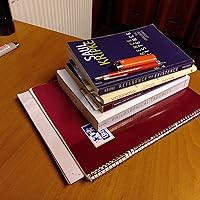
learned something about Friedrich's Life and Works, but also about how to look at his paintings. I liked the prominence of religious and spiritual interpretations throughout the book. Also, Taschen always does a great job at laying out of the pages in an aesthetically pleasing way. I liked that text and picrel were not always on the same page.
March 15, 2025
I enjoyed it a nice introduction of the master Caspar David Friedrich I love watching some of his works talks to me and the most known are included I think it deserves a nice look and read
Displaying 1 - 5 of 5 reviews