

What do you think?

The Nocebo Effect: When Words Make You Sick
An investigation of the nocebo effect—the placebo effect's evil twin.
Can beliefs make you sick? Consider "The June Bug" incident from a US textile factory in the early 1960s. Many employees began to feel dizzy, had an upset stomach, and vomited. Some were even hospitalized. The illness was attributed to a mysterious bug biting workers. However, when the CDC investigated this outbreak, no bugs or any other cause of the illnesses could be identified. Instead, it appears to be an illness caused by the mind -- that is, sickness due to expectation.
The June Bug story is one of many striking examples of the nocebo effect, a phenomenon best summarized as the occurrence of a harmful event that stems from expecting it. The nocebo effect plays a role in side effects for some of the most commonly prescribed medications. It provides a lens for understanding how sensationalized media reports that sound alarm about public health might even become a self-fulfilling prophecy. It might even explain the mysterious symptoms associated with Havana Syndrome, during which dozens of US government employees fell ill after reportedly being exposed to an unidentified sound wave in Cuba.
We are just discovering the power behind this effect and how it can be ethically mitigated. Enlightening and startling, The Nocebo Effect is the first book dedicated to investigating this fascinating phenomenon by the foremost experts in the field.
Can beliefs make you sick? Consider "The June Bug" incident from a US textile factory in the early 1960s. Many employees began to feel dizzy, had an upset stomach, and vomited. Some were even hospitalized. The illness was attributed to a mysterious bug biting workers. However, when the CDC investigated this outbreak, no bugs or any other cause of the illnesses could be identified. Instead, it appears to be an illness caused by the mind -- that is, sickness due to expectation.
The June Bug story is one of many striking examples of the nocebo effect, a phenomenon best summarized as the occurrence of a harmful event that stems from expecting it. The nocebo effect plays a role in side effects for some of the most commonly prescribed medications. It provides a lens for understanding how sensationalized media reports that sound alarm about public health might even become a self-fulfilling prophecy. It might even explain the mysterious symptoms associated with Havana Syndrome, during which dozens of US government employees fell ill after reportedly being exposed to an unidentified sound wave in Cuba.
We are just discovering the power behind this effect and how it can be ethically mitigated. Enlightening and startling, The Nocebo Effect is the first book dedicated to investigating this fascinating phenomenon by the foremost experts in the field.
229 pages, Kindle Edition
Published March 19, 2024
Ratings & Reviews
Friends & Following
Create a free account to discover what your friends think of this book!
Community Reviews
Displaying 1 - 12 of 12 reviews
November 4, 2024
“NOCEBO EFFECT” IS A DIFFICULT TERM TO DEFINE. It stems from the Latin word nocere, which translates roughly as “to harm.” Some experts view it as a kind of negative placebo effect in which the outcome is undesirable, such as a headache or stomachache, while the placebo effect, such as feeling less pain or depression, is desirable..."
The Nocebo Effect was a decent look into an incredible phenomenon. Mindsets and expectations have real-world biological consequences that can be systemic. In extreme cases, a nocebo effect can cause death. This is a well-documented occurrence called "Voodoo death," or "psychogenic death."
Author Michael Bernstein is an experimental psychologist and Assistant Professor in the Department of Diagnostic Imaging at Brown University’s Warren Alpert Medical School. He directs the Medical Expectations Lab at Brown.
Michael Bernstein:
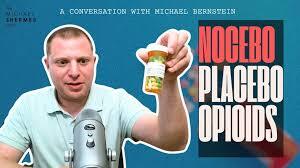
I have been fascinated by the concepts of placebo and nocebo for a long time. In an alternate universe, I have a life in academia, where I head up a Mindset Lab. But, I digress...
I came across the book and the author on a recent appearance he made on Michael Shermer's Skeptic Podcast.
The author drops the quote above in the book's intro, and it continues below:
The book is presented as a compilation from many different authors, with Berstein as editor. The authors cover many well-known examples of nocebo and placebo; citing many scientific studies as they go.
Some of what they cover here includes:
• The above-mentioned "psychogenic death"
• The number 4 in Asian cultures
• "Havana Syndrome." Some good writing here, however, some of these victims actually had TBIs. I'm not sure if a TBI is something that nocebo can produce.
• The ethics of placebo and nocebo treatments
• Modern medicine and nocebo. Clinicians setting negative self-fulfilling expectations
• EMF exposure. There is no plausible mechanism of harm, as these EMFs are non-ionizing radiation
• Statins
Unfortunately, despite the book fielding such incredibly rich and interesting source material, I found quite a lot of the writing here a bit dry for my tastes. A subjective take, for sure, and I'm very picky on how readable my books are.
********************
The Nocebo Effect was still a good read, despite my minor gripe. I would easily recommend it.
4.5 stars.
The Nocebo Effect was a decent look into an incredible phenomenon. Mindsets and expectations have real-world biological consequences that can be systemic. In extreme cases, a nocebo effect can cause death. This is a well-documented occurrence called "Voodoo death," or "psychogenic death."
Author Michael Bernstein is an experimental psychologist and Assistant Professor in the Department of Diagnostic Imaging at Brown University’s Warren Alpert Medical School. He directs the Medical Expectations Lab at Brown.
Michael Bernstein:
I have been fascinated by the concepts of placebo and nocebo for a long time. In an alternate universe, I have a life in academia, where I head up a Mindset Lab. But, I digress...
I came across the book and the author on a recent appearance he made on Michael Shermer's Skeptic Podcast.
The author drops the quote above in the book's intro, and it continues below:
"...No surprise, then, that the nocebo effect has been called “the placebo effect’s evil twin.” In our view, the nocebo effect can be summarized as “the occurrence of a harmful event that stems from consciously or subconsciously expecting it.” The core of the nocebo effect is that adverse health effects occur as a result of negative expectations. Expectations come up in everyday conversation, like when you tell a friend that you’re stuck in traffic but expect to meet them for dinner in twenty minutes. But it’s also an important technical term that academics use (sometimes interchangeably with expectancy), and it was popularized by Dr. Irving Kirsch at Harvard University. Expectancies can teach us a lot about our behavior and actions. They are critical to our health and well-being. The nocebo effect, then, can be thought of as the scientific term for saying that when you expect to feel sick, you are more likely to feel sick."
The book is presented as a compilation from many different authors, with Berstein as editor. The authors cover many well-known examples of nocebo and placebo; citing many scientific studies as they go.
Some of what they cover here includes:
• The above-mentioned "psychogenic death"
• The number 4 in Asian cultures
• "Havana Syndrome." Some good writing here, however, some of these victims actually had TBIs. I'm not sure if a TBI is something that nocebo can produce.
• The ethics of placebo and nocebo treatments
• Modern medicine and nocebo. Clinicians setting negative self-fulfilling expectations
• EMF exposure. There is no plausible mechanism of harm, as these EMFs are non-ionizing radiation
• Statins
Unfortunately, despite the book fielding such incredibly rich and interesting source material, I found quite a lot of the writing here a bit dry for my tastes. A subjective take, for sure, and I'm very picky on how readable my books are.
********************
The Nocebo Effect was still a good read, despite my minor gripe. I would easily recommend it.
4.5 stars.

September 12, 2024
This book is mainly for doctors and how they can mitigate the "nocebo effect" . This means that if we think a medication is going to give you certain side effect that is what usually happens.
I was hoping the book would be about how someone is personally affected by the nocebo effect
A good example of this is when I worked in the oil field there was a poisonous gas (hydrogen sulfide) that I was exposed to on a daily basis. It would give me panic attacks in the evening after being exposed to it all day.
Eventually just the smell of it would make me feel like I was dying. The nocebo effect is probably a protective mechanism that the brain uses.
To this day even thinking about that smell will give me symptoms.
I was hoping the book would be about how someone is personally affected by the nocebo effect
A good example of this is when I worked in the oil field there was a poisonous gas (hydrogen sulfide) that I was exposed to on a daily basis. It would give me panic attacks in the evening after being exposed to it all day.
Eventually just the smell of it would make me feel like I was dying. The nocebo effect is probably a protective mechanism that the brain uses.
To this day even thinking about that smell will give me symptoms.
April 9, 2024
Best summed up in the introduction: " The nocebo effect has been called the placebo effect's evil twin," and "the occurrence of a harmful event that stems from consciously or subconsciously expecting it." The book provides several examples of adverse health effects occurring because of negative expectations. Health care providers are one, but not the only source of negative expectations.

February 20, 2024
Thanks to Netgalley and the publisher for this eARC.
The Nocebo Effect: History & Contemporary Applications is a fascinating and timely exploration of the dark side of the mind-body connection. The authors, four experts in the field of placebo and nocebo research, provide a comprehensive and engaging account of how negative expectations can influence our health and well-being in various contexts, from clinical trials to public health crises.
The book begins with a historical overview of the concept of nocebo, tracing its origins from ancient times to the present day. The authors show how nocebo effects have been observed and documented in various cultures and medical traditions, as well as how they have been exploited for political and religious purposes. The book then delves into the contemporary experimental research on the mechanisms and moderators of nocebo effects, covering topics such as verbal suggestions, conditioning, social learning, personality, and genetics. The authors also discuss the ethical and practical implications of nocebo effects for clinical practice, informed consent, and communication.
The book is written in an accessible and engaging style, with clear explanations of complex concepts and ample examples and anecdotes. The book also features helpful illustrations, tables, and boxes that summarize key points and findings. The book is suitable for a wide audience, from students and researchers interested in the psychology and neuroscience of placebo and nocebo effects, to health professionals and policymakers who want to understand and minimize the negative impact of nocebo effects on patient outcomes and public health.
The Nocebo Effect - a must-read for anyone who wants to learn more about the power of the mind over the body, and the potential pitfalls and challenges of harnessing this power for good. The book offers a balanced and nuanced perspective on the nocebo effect, acknowledging both its scientific validity and its social and ethical implications. The book also provides useful suggestions and recommendations for future research and practice, as well as for raising awareness and educating the public about the nocebo effect. The book is a valuable contribution to the literature on placebo and nocebo effects, and a stimulating and thought-provoking read for anyone interested in the fascinating and mysterious workings of the human mind.
The Nocebo Effect: History & Contemporary Applications is a fascinating and timely exploration of the dark side of the mind-body connection. The authors, four experts in the field of placebo and nocebo research, provide a comprehensive and engaging account of how negative expectations can influence our health and well-being in various contexts, from clinical trials to public health crises.
The book begins with a historical overview of the concept of nocebo, tracing its origins from ancient times to the present day. The authors show how nocebo effects have been observed and documented in various cultures and medical traditions, as well as how they have been exploited for political and religious purposes. The book then delves into the contemporary experimental research on the mechanisms and moderators of nocebo effects, covering topics such as verbal suggestions, conditioning, social learning, personality, and genetics. The authors also discuss the ethical and practical implications of nocebo effects for clinical practice, informed consent, and communication.
The book is written in an accessible and engaging style, with clear explanations of complex concepts and ample examples and anecdotes. The book also features helpful illustrations, tables, and boxes that summarize key points and findings. The book is suitable for a wide audience, from students and researchers interested in the psychology and neuroscience of placebo and nocebo effects, to health professionals and policymakers who want to understand and minimize the negative impact of nocebo effects on patient outcomes and public health.
The Nocebo Effect - a must-read for anyone who wants to learn more about the power of the mind over the body, and the potential pitfalls and challenges of harnessing this power for good. The book offers a balanced and nuanced perspective on the nocebo effect, acknowledging both its scientific validity and its social and ethical implications. The book also provides useful suggestions and recommendations for future research and practice, as well as for raising awareness and educating the public about the nocebo effect. The book is a valuable contribution to the literature on placebo and nocebo effects, and a stimulating and thought-provoking read for anyone interested in the fascinating and mysterious workings of the human mind.
October 28, 2025
The Nocebo Effect: When Words Make You Sick explores an unsettling but essential topic: the capacity of expectations and information to cause genuine physical harm, known as the nocebo effect. The authors, all subject experts, bridge the gap between academic research and popular writing. They argue convincingly that the nocebo effect—the opposite of the placebo effect—is real and widespread, rooted in both biological and psychological mechanisms. The book surveys how this phenomenon manifests in clinical practice and everyday life, and suggests ways to mitigate it.
One of the book’s most significant contributions lies in raising public and professional awareness. By examining how words, warnings, and media messages can inadvertently trigger symptoms or worsen outcomes, the authors compel readers to reconsider how medical information is communicated. The discussion touches on ethics: when disclosure itself can harm, what responsibilities do physicians, journalists, and policymakers bear? In an age of instant global communication, this question has both practical and moral urgency.
Despite its scholarly grounding and detailed citations, the book’s analytical framework feels somewhat diffuse. It groups phenomena that likely stem from diverse mechanisms—from an increase in side-effect reports following news coverage to sudden death following acute fear, all under the single banner of the nocebo effect. This broad categorization weakens explanatory precision. A more fruitful research agenda would involve disaggregating these patterns and identifying distinct subtypes, each requiring its own explanation and clinical response.
Ultimately, The Nocebo Effect succeeds as a public education effort more than as a theoretical synthesis. Its main value lies in cultivating awareness: by understanding how our minds and expectations shape physical experience, we may learn to reduce unnecessary suffering. Yet its tone remains closer to the academic than the conversational, which limits its reach. With greater narrative warmth and fewer technical digressions, its message could have resonated more widely—and perhaps done even more to neutralize the harms it so insightfully diagnoses.
One of the book’s most significant contributions lies in raising public and professional awareness. By examining how words, warnings, and media messages can inadvertently trigger symptoms or worsen outcomes, the authors compel readers to reconsider how medical information is communicated. The discussion touches on ethics: when disclosure itself can harm, what responsibilities do physicians, journalists, and policymakers bear? In an age of instant global communication, this question has both practical and moral urgency.
Despite its scholarly grounding and detailed citations, the book’s analytical framework feels somewhat diffuse. It groups phenomena that likely stem from diverse mechanisms—from an increase in side-effect reports following news coverage to sudden death following acute fear, all under the single banner of the nocebo effect. This broad categorization weakens explanatory precision. A more fruitful research agenda would involve disaggregating these patterns and identifying distinct subtypes, each requiring its own explanation and clinical response.
Ultimately, The Nocebo Effect succeeds as a public education effort more than as a theoretical synthesis. Its main value lies in cultivating awareness: by understanding how our minds and expectations shape physical experience, we may learn to reduce unnecessary suffering. Yet its tone remains closer to the academic than the conversational, which limits its reach. With greater narrative warmth and fewer technical digressions, its message could have resonated more widely—and perhaps done even more to neutralize the harms it so insightfully diagnoses.

December 14, 2024
Probably 4.5 stars for a book this size, but rounding up.
This book is only in part about attempting to define just what the nocebo effect is, and I think some reviewers, no matter how many or how few stars they gave it, missed that.
It's also about issues in medical ethics on how to prevent nocebo effects while still maintaining good medical ethics, patient-doctor interactions on both ends of that conversation, to "bracket" if not outrightly reduce, nocebo effects, and more.
Indeed, I think every clinician in the country should read this.
Not all nocebo effects are induced by other people. Indeed, the old "self-fulfilling prophecy" would fall here, and in certain types of cases, such as self-claimed electromagnetic frequency sensitivity sufferers, it happens.
Re one other reviewer, I'm not aware of a single Havana Syndrome sufferer having **a properly, clinically diagnosed traumatic brain injury.** Claims of such? Yes. And a different story. Per my link text, the one person diagnosed with such allegedly got it while in Moscow. I am also aware of "red-baiters" in general and "Cuba-baiters" in particular in Congress like Marco Rubio **claiming** others have TBI. With no proof presented.
This book is only in part about attempting to define just what the nocebo effect is, and I think some reviewers, no matter how many or how few stars they gave it, missed that.
It's also about issues in medical ethics on how to prevent nocebo effects while still maintaining good medical ethics, patient-doctor interactions on both ends of that conversation, to "bracket" if not outrightly reduce, nocebo effects, and more.
Indeed, I think every clinician in the country should read this.
Not all nocebo effects are induced by other people. Indeed, the old "self-fulfilling prophecy" would fall here, and in certain types of cases, such as self-claimed electromagnetic frequency sensitivity sufferers, it happens.
Re one other reviewer, I'm not aware of a single Havana Syndrome sufferer having **a properly, clinically diagnosed traumatic brain injury.** Claims of such? Yes. And a different story. Per my link text, the one person diagnosed with such allegedly got it while in Moscow. I am also aware of "red-baiters" in general and "Cuba-baiters" in particular in Congress like Marco Rubio **claiming** others have TBI. With no proof presented.

January 17, 2024
Although my background is in psychology, I found the medical components of this book to be the most interesting. It's "mind over matter" in action… Or to put it in slightly more new age terms, it mirrors the principles laid out and Rhonda Byrne's "The Secret" or Deepak Chopra's explanation of quantum physics… Your expectations create the world in which you exist. I work in the medical industry and I've been sharing interesting tidbits from this book with our practitioners, so we can more closely pay attention to how we are explaining procedures to patients. There's a fine line to be walked between setting clear expectations for risks and outcomes versus creating the expectation for failure. I'm glad I had the opportunity to read this book ahead of publication.

August 6, 2024
Interesting food for thought. However, did feel like it was the same thing stated over and over. Lots of research referenced but isolating nocebo effects is a difficult thing to prove or disprove so none of the research gave a definitive answer which I didn't love. Definitely more of a theory for the time being.
I chose this book thinking that it would help in how I speak to patients regarding their diagnosis/prognosis/etc. However, I feel like this book helped more so with my perspective regarding my own health and the importance of positive thought processes, spirituality, self-talk, and more.
I chose this book thinking that it would help in how I speak to patients regarding their diagnosis/prognosis/etc. However, I feel like this book helped more so with my perspective regarding my own health and the importance of positive thought processes, spirituality, self-talk, and more.

March 11, 2024
In this revelatory book, discover the power of the nocebo effect—how negative expectations can create real symptoms. Uncover its role in medication side effects and the media’s impact on public health perceptions. Explore emerging insights and ethical strategies to mitigate this phenomenon’s influence.
This book is fascinating and a little frightening. It offers practical tips on how to interact with health professionals to help protect against the nocebo effect.
Thanks, NetGalley, for the ARC I received. This is my honest and voluntary review.
This book is fascinating and a little frightening. It offers practical tips on how to interact with health professionals to help protect against the nocebo effect.
Thanks, NetGalley, for the ARC I received. This is my honest and voluntary review.
September 13, 2024
As a non medical professional I found this book interesting in a phenomenon that I hadn’t heard about. It included a case where I too think I suffered from the Nocebo effect. It gives a very authoritative overview of how the words chosen by the media and medical professionals impact our health in a negative way. It also provides a useful framework of how to approach these facts, though does not shy away from the need for more research on it
January 6, 2025
I hadn't heard of the "nocebo" effect.. interesting phenomenon. The power of suggestion and expectation manifesting in physical symptoms.
Heading read with oodles of examples and research citations.
Heading read with oodles of examples and research citations.

April 24, 2025
A decent volume on the nocebo effect, though I think the lack of studies on the effect (something not really controllable by its authors) hold it back somewhat.
Displaying 1 - 12 of 12 reviews