

What do you think?

BFI Film Classics
Gun Crazy
Traces Gun Crazy's roots in the rain-slicked, night-time world of noir, and in the postwar American society that gave birth to it. This book teases out the effects of the Production Code, and the contributions of director Joseph H Lewis, writers MacKinlay Kantor and the blacklisted Dalton Trumbo, and stars, Peggy Cummins and John Dall.
96 pages, Paperback
First published June 26, 1996
About the author
Jim Kitses
8 books3 followersJIM KITSES has taught film in England, Canada and his native USA. An expanded edition of Horizons West, his pioneering text in Western and genre studies, was published by BFI in 2004. He has also co-edited The Western Reader (Limelight Editions: New York, 1998), contributed a study of the film noir classic Gun Crazy (BFI, 1996) and authored the commentary for the DVD of 7 Men From Now, the first acclaimed cycle of Budd Boetticher-directed Westerns.
Ratings & Reviews
Friends & Following
Create a free account to discover what your friends think of this book!
Community Reviews
Displaying 1 - 6 of 6 reviews

September 4, 2023
They wouldn’t release a movie called Gun Crazy now, can you imagine. They were a little nervous about the title back in 1950 too and it was originally released as Deadly is the Female
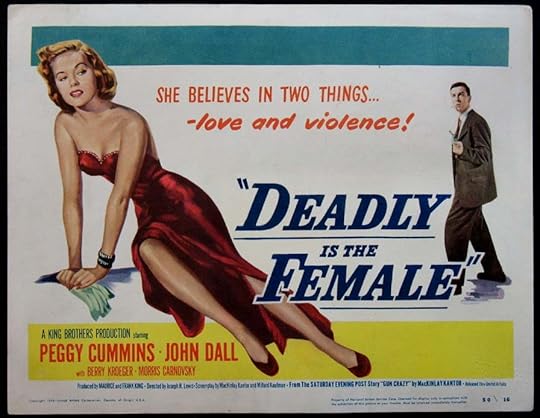
before they thought nahhh. Gun Crazy is way better.
I was very late in becoming a fan of film noir, the la di dah name put me off, plus a lot of the great ones are hard to find. Here’s my current list of favourite film noirs :
1. You Only Live Once
2. Dead End
3. They Drive by Night
4. High Sierra
5. This Gun for Hire
6. Detour
7. The Killers
8. Out of the Past
9. Crossfire
10. Kiss of Death
11. The Naked City
12. Pitfall
13. Cry of the City
14. Act of Violence
15. Call Northside 777
16. Side Street
17. They Live by Night
18. The Reckless Moment
19. Criss Cross
20. Night and the City
21. Where the Sidewalk Ends
22. In a Lonely Place
23. Gun Crazy
24. On Dangerous Ground
25. Pickup on South Street
26. The Big Heat
27. Crime Wave
28. 99 River Street
29. Kiss me Deadly
30. The Desperate Hours
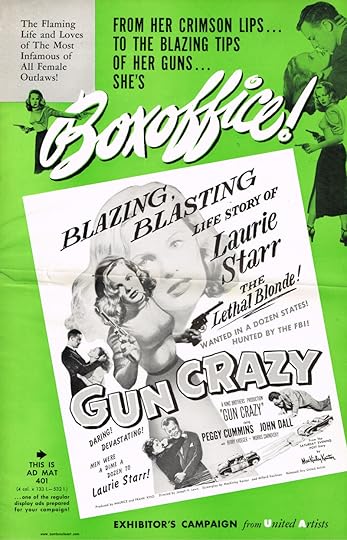
before they thought nahhh. Gun Crazy is way better.
I was very late in becoming a fan of film noir, the la di dah name put me off, plus a lot of the great ones are hard to find. Here’s my current list of favourite film noirs :
1. You Only Live Once
2. Dead End
3. They Drive by Night
4. High Sierra
5. This Gun for Hire
6. Detour
7. The Killers
8. Out of the Past
9. Crossfire
10. Kiss of Death
11. The Naked City
12. Pitfall
13. Cry of the City
14. Act of Violence
15. Call Northside 777
16. Side Street
17. They Live by Night
18. The Reckless Moment
19. Criss Cross
20. Night and the City
21. Where the Sidewalk Ends
22. In a Lonely Place
23. Gun Crazy
24. On Dangerous Ground
25. Pickup on South Street
26. The Big Heat
27. Crime Wave
28. 99 River Street
29. Kiss me Deadly
30. The Desperate Hours

April 21, 2013
In film school I had the pleasure of taking Kitses' class and he introduced me to Gun Crazy. We read the book for class and I enjoyed both his book and the film.

February 23, 2016
Best of this series that I've encountered so far. There's no critical ax to grind here -- the context is broadly, but concretely drawn and the examples are on point, so his arguments never seems forced.

July 29, 2016
Another viewing of the film led naturally to another reading of the book.

January 31, 2010
This is the third volume in the BFI Film Classics series that I have read--The Big Sleep and Detour are the others--and it is by far the best. These books are really long essays, and in the available space, Jim Kitses' treatment of Gun Crazy gives you exactly what it should: he places the film in its context, both in terms of the history of the United States and the history of cinema; he gives ample background on the writing and production of the film; he gives a thorough, informed analysis of the film itself; and he makes a provocative argument for the film's importance. Well done.

February 6, 2013
The quality of the BFI Film Classics series is all over the place. This is one of the best.
Displaying 1 - 6 of 6 reviews