Jump to ratings and reviews
Rate this book

The Resistance #1

A Train in Winter: An Extraordinary Story of Women, Friendship, and Resistance in Occupied France

Rate this book
New York Times Bestseller "A haunting account of bravery, friendship, and endurance." – Marie Claire The riveting and little-known story of a group of female members of the French resistance who were deported together to Auschwitz, a remarkable number of whom survived . In January 1943, 230 brave women of the French Resistance were sent to the death camps by the Nazis who had invaded and occupied their country. This is their story, told in full for the first time—a searing and unforgettable chronicle of terror, courage, defiance, survival, and the power of friendship.  Caroline Moorehead, a distinguished biographer, human rights journalist, and author of Dancing to the Precipice and Human Cargo , brings to life an extraordinary story that readers of Mitchell Zuckoff’s Lost in Shangri-La , Erik Larson’s In the Garden of Beasts , and Laura Hillenbrand’s Unbroken will find an essential addition to our retelling of the history of World War II. A Train in Winter is a riveting, rediscovered story of courageous women who sacrificed everything to combat the march of evil across the world.

374 pages, Paperback

First published November 1, 2011

1871 people are currently reading
18900 people want to read

About the author

Caroline Moorehead

48 books260 followers
Caroline Moorehead is the New York Times bestselling author of Village of Secrets: Defying the Nazis in Vichy France; A Train in Winter: An Extraordinary Story of Women, Friendship, and Resistance in Occupied France; and Human Cargo: A Journey Among Refugees, which was a finalist for the National Book Critics Circle Award. An acclaimed biographer, Moorehead has also written for the New York Review of Books, the Guardian, the Times, and the Independent. She lives in London and Italy.

Ratings & Reviews

What do you think?
Rate this book

Friends & Following

Create a free account to discover what your friends think of this book!

Community Reviews

5 stars
2,537 (28%)
4 stars
3,491 (39%)
3 stars
1,939 (22%)
2 stars
573 (6%)
1 star
243 (2%)
Displaying 1 - 30 of 1,459 reviews
Profile Image for Will Byrnes.
1,372 reviews121k followers
November 5, 2020
Paris had become a city of collaborators, both open and hidden, anti-Semites, anti-Freemasons, repentant communists and right-wing Catholics, who had hated Blum’s Front Populaire and felt more than a sneaking admiration for the German cult of youthful valour, orderliness and heroism.
Thankfully there were people who stood tall against the madness. A Train in Winter is a moving and devastating story of a group of two hundred thirty incredibly brave French women, part of the Resistance during World War II. The train of the title is the one that transported them to the first of the Nazi-run camps in which they would be imprisoned.
description
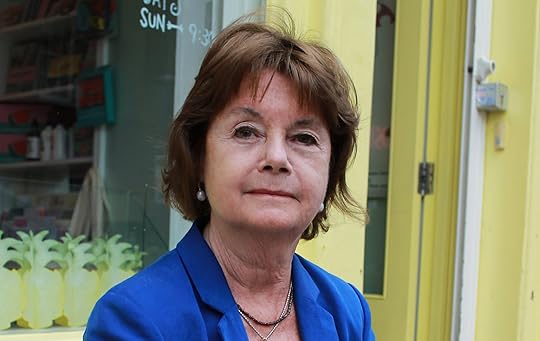
Caroline Moorehead - image from Star Tribune - photo credit Daisy Heath

The first part of the book tells of the transition from the initial days of German occupation through a period when the people began to realize just what they were in for, to a fuller realization of what the Nazis were about, and with that the growth of the French Resistance. This is interesting material. I had had no idea, for example, that Occupied France had been divided into two zones by the Nazis, or that while most government agencies were taken over, some were not. Crossing the internal frontier became a significant element of the resistance and farmers’ wives were central in this aspect of the struggle, whether smuggling materiel or people.

Young Parisian women engaged in a wide range of resistance activities right under the noses of the Nazi occupiers. Distribution of newsletters and posters was prime. When groups of mesdemoiselles rested from biking outings their rest periods were political meetings. Vichy’s head, Petain’s, dim view of women influenced women, who had increasingly been gaining liberties in pre-Nazi France. Writing bred demonstrations, which bred more writing, which bred more…

I found the story-telling somewhat stiff for the tale up to here, but when hundreds of women are arrested and transported to a prison in Romainville outside Paris, the story gains in fluidity. A Train in Winter is a tale of survival among death, of heroism amidst depravity, of courage amidst fear, of love in a world of hate and of the power of liberté, egalité, and sororité within the most hellish conditions. The women see and endure unspeakable things at an unbelievable scale every day for years. From Romainville the survivors are transported to Aushwitz-Birkenau. Most would never leave. Even if you have seen or read about the goings on at such places, there are dark new revelations in store. There appears to be no bottom to the depths of human depravity.

Moorehead’s portrayal of the women’s experiences kept me in tears, both of sympathy and of rage. Almost as maddening as the concentration and extermination camps was the post-war environment in which, after offering support to the survivors, France opted to turn a blind eye to the past.
DeGaulle, pushing his myth of France as a country of united resisters betrayed by a handful of traitors, needed national amnesia. The gaunt sickly deportees were an unwelcome reminder that in five weeks the Germans had crushed what had been considered one of the finest armies in the world; and that during four years of occupation, it was the French themselves who had rounded up and interned Jews and resisters, before sending them to their death in Poland
Some of the two hundred thirty survived. The life to which they returned was not as happy as they had hoped and Moorehead’s telling is as moving as are her stories of life in the camps.

There is much to learn here. World War II is arguably the most important event in the 20th century and not only are we still learning new things about it all the time, we must keep alive the memories we already have. A Train in Winter offers a new look at an old story. It is illuminating, horrifying and sad, but it is an important and, in its way, a beautiful book, showing how hope, focus and commitment can join to keep at least some light burning in the darkness.

==============================EXTRA STUFF

A wonderful interview with Moorehead from the Sydney Writers Project, on the genesis and writing of the book. Excellent material
Profile Image for Elyse Walters.
4,010 reviews11.9k followers
May 21, 2017
I recently saw that Carolyn Moorehead has a new book coming out in Aug. of 2017,
"A Bold and Dangerous Family", A true story about an Italian Mother, her sons, and their Fight against Fascism, which I want to read. I was declined within hours after having requested an advance copy on Netgalley, so I need to wait. It looks terrific and I look forward to other reviews.

However, I had never read "A Train in Winter": An Extraordinary Story of Women, Friendship, and Resistance in Occupied France (The Resistance Trilogy Book 1).

From the library I checked out both the ebook and the audiobook. I don't recommend the audiobook. The woman speaking had a sharp British accent and talked very fast.
I was much happier with the ebook.

This true story tells us how women of the French Resistance lived and died during their imprisonment. 230 Women of diverse backgrounds were rounded up in France ---
shipped via cattle car -to "Arbeit macht frei" camps.

These women came together to help and protect each other. Their determination was not to be destroyed!!!
Once the women returned to their homes after liberation, the ones who made it out, had great difficulty mixing back into their neighborhoods.

These are brutal stories..... details of shameful cruelty.... (at times hard to keep track of each of the characters).....but it's hard to imagine the endurance it took ( while physically and mentally broken down), of what it 'really' took for these women to survive against the horrors and suffering that they did.

Courageous and amazing women...always sad.
I still read these stories from time to time - No two Holocaust stories are ever exactly the same for me. I read these stories from time to time -because I just do!!! I feel strong about it - just part of my personal responsibility.

I have my own memories of survivors I loved. They've died now...but I had them in my life growing up. As a child, I never knew the the scope of their past suffering. Maybe I wasn't suppose to then. They 'were' exceptional women!
I DON'T FORGET! I know we 'say' these words ... "we don't forget". I really don't!!!

Caroline Moorhead's diligent research for this book must definitely be applauded!
Profile Image for Melanie.
Author 8 books1,406 followers
August 30, 2013

In his Nobel Prize acceptance speech, the great Irish poet Seamus Heaney, whom we have lost this sad August morning, writes this:

"In one of the poems best known to students in my generation, a poem which could be said to have taken the nutrients of the symbolist movement and made them available in capsule form, the American poet Archibald MacLeish affirmed that “A poem should be equal to/not true.” As a defiant statement of poetry's gift for telling truth but telling it slant, this is both cogent and corrective. Yet there are times when a deeper need enters, when we want the poem to be not only pleasurably right but compellingly wise, not only a surprising variation played upon the world, but a re-tuning of the world itself. We want the surprise to be transitive like the impatient thump which unexpectedly restores the picture to the television set, or the electric shock which sets the fibrillating heart back to its proper rhythm. We want what the woman wanted in the prison queue in Leningrad, standing there blue with cold and whispering for fear, enduring the terror of Stalin's regime and asking the poet Anna Akhmatova if she could describe it all, if her art could be equal to it. And this is the want I too was experiencing in those far more protected circumstances in Co. Wicklow when I wrote the lines I have just quoted, a need for poetry that would merit the definition of it I gave a few moments ago, as an order “true to the impact of external reality and ... sensitive to the inner laws of the poet's being.”"

"True to the impact of external reality" is what this heartbreaking and necessary book (a true testament to courage and human dignity) is from start to finish. I still believe, as the few women who survived did when they returned from Auschwitz-Birkenau, that language will never be able to translate the horror that took place in the camps but the words in this account are as tangible and true as they can possibly be.

I was particularly shaken by the account of the survivors' return to daily life and its ultimate impossibility. The massive sadness that settles in when you realize that after having fought so hard to survive hell, normal life and its joys and pleasures are forever lost to you.

I am honored to have met these women and pronounced their names in my head. I am deeply humbled by their sacrifice and in awe of their humanity.


Profile Image for ☮Karen.
1,800 reviews8 followers
April 30, 2016
So the first half was chock full of names and dates like many nonfiction books that bore me to death. But I knew from reading other reviews not to judge too quickly.

These were 230 women of all occupations, backgrounds, and aged 15-67.  French women suspected of resistance, communism, or a variety of offenses.  All were very interesting in their own right. But I ended up wishing the author had chosen to focus only on a handful of the women to tell the story of the group.  I knew the females depicted were a rare breed,  fighting for France, fighting for their futures, their lives, for each other.  Rounded up and eventually sent to Auschwitz, and later Ravensbrück, you know not all will survive; but we also come to know how brave and strong they were.  I loved how strong a bond the women all formed, interminable friendships where they put each others' welfare ahead of their  own, time  after time after time.

For those who did survive and made it home, life was not always easy as they relived the atrocities in their minds and missed their friends tremendously. Some could not forget or move on. One said, "Looking at me one would think that I'm alive. I'm not alive. I died in Auschwitz, but no one knows it. "

This became available  on audio at the same  time I was reading Lilac Girls, and there are many similarities of time and  place.  If you have read The Nightingale (and if you haven't, you should), you will also be reminded of those heroic women.
Profile Image for Canadian Jen.
661 reviews2,805 followers
March 7, 2016
This is a powerful book and one that will stay with me for a very long time. A disturbing account of the atrocities that took place during WW2. A story about friendship, passion and survival. Women who were involved in the resistance movement of occupied France by the Germans; the steps they took to stand up and fight for their country and where it landed them: on a train bound for a concentration camp. All 230 of them. This is a story of the depth of love these women had for each other - how they protected each other during the darkest days when death was at times seconds away. How friendship was what gave these women life; helped them to survive. The darkest days followed by darker ones upon the return of only 49; when happiness became elusive with constant reminders of the horror and loved ones lost; and the debilitating diseases and illness the years in the camp left them with. Survival doesn't always mean happiness; as one survivor stated "to forget would be an act of betrayal". Thank you Caroline Moorehead for writing this.
Profile Image for Lisa Vegan.
2,911 reviews1,315 followers
May 28, 2015
I think I’d have enjoyed reading this book no matter what but I was particularly happy to read it with my reading buddy Diane, and glad that she wanted to read slowly through the book; it made the reading experiencing really fun, if I can use that word, and absorbing and thinking about the information more interesting.

I’ve read extensively about the Holocaust, but I learned so much from this book. I knew little of the treatment of French women Communists and other Nazi resistors. I’m fascinated with this history. I must admit as I read about what befell these women in various places at various times, I found myself thinking about the Jews, and the times, places, events, ways they were being murdered on a parallel timeline with the events in this book.

I was riveted to the account from the start, though the list of names was long and, as I predicted, I sometimes lost track of details about particular people. I resisted taking notes though, and that’s where my buddy came in handy, sometimes interjecting information such as: these two women had been friends before the war and providing the page number. I did enjoy that but was too lazy to try to remember all the details. Even without them, I feel as though I got to know these women, and particularly their friendship, which was a character itself. It’s really a book about the friendship among the group of women, how they were a unit of sorts. While I often forget connections and pre-war activities, I remained engrossed in the book and felt I got more than the gist.

I was thrilled with the two maps and all the photographs. I wised for even more. Those included really enhanced the reading experience for me.

I found myself wanting to know each of the women’s fates and my reading buddy Diane alerted me to one page in the back of the book that listed surviving women who were still alive and were interviewed or their family members interviewed for the book, and that’s when I found the complete list: those women, in alphabetical order the women who survived and then in alphabetical order the women who did not survive. I wanted to find out and to bear witness, so I pretty much stopped reading the book proper and, even though I knew I’d forget specifics and have to refer back to names as I read about them in the book, I read the lists. It was highly disturbing, even reading the fates of the survivors left me feeling extremely sad. Real life horror show! I knew how what the Nazis did have affected more than that one generation but it was powerful to see it spelled out in simple list form. It was hard to avoid using profanity when trying to absorb the facts. I’m really glad that the fates, with a bit of detail, of all the women were revealed.

Even though I wasn’t willing to create it, in addition to the lists of women at the end, I wouldn’t have minded lists at the beginning, showing why the women were arrested, who knew who before capture, etc.

I know in some cases it wasn’t possible to tell more of certain women because of the lack of information and for those women I’m grateful their existence was noted, but for those women who had a lot known about them, I longed for more detailed information about their pre-war and post-war lives. However; the entity of them as a group, of the friendship as the main character was powerful. The juxtaposition of how different people and groups dealt with Nazi occupation was told effectively and I find the subject fascinating.

I was amazed at how brave most of these women were. Because they were not Jewish (known Jews) almost all could have avoided concentration camps, and once they were imprisoned I was so impressed with the big, unexpected, all kinds of kindnesses, often at their own peril and/or deprivation, and often even at risk of saving their own lives. Talk about true friendship!

Whenever reading about the Nazis I always admired the resistors but this time around I kept wondering if mothers of young children really should have been so boldly participating. I am in awe of what they did but a part of me wanted anyone who could stay safe (and hopefully still do some good) to do so.

These French women went through a lot of the almost unimaginable suffering that the targeted groups (Jews, Gypsies, mentally ill, developmentally disabled, homosexual, etc.) did. I’m still glad that at the end, when summing up, the Jews were mentioned and the reader saw how they fared re return rate, and re France’s collaboration and the prevalent anti-Semitism, re overall how they fared worse, and given how these women fared, that was very, very badly. I respect this account even more for all it tried to cover.

I felt so sad to read the fates of the women, not only those who didn’t survive, but also those who did survive. I kept wondering what if they’d had modern day post traumatic stress treatments in 1945 whether some could have greatly benefited, even though I have no illusions that they would be anything other than horribly damaged in many ways. So horrifying what humans can do to others!

I really enjoyed this book but I was left profoundly sad, and also profoundly impressed, and very angry about what happened to these women. I think it’s an important story and I’m very glad that it’s now down on paper. I might have given it 5 stars had I gotten to know at least some of the women better than I did.

These sorts of accounts always have me soul searching about just how brave I’d be, just how altruistic I’d be, just how ethically I’d behave given similar dire circumstances.
Profile Image for Diane S ☔.
4,901 reviews14.6k followers
December 15, 2011
A powerful and intense read covering the Nazi takeover of France and the early days of the French Resistance and underground communism movement. Although it is always difficult to read any book covering the Nazi atrocities and this book is no exception, it is also so much more. There is generosity in the face of adversity, self sacrifice and friendships that help many of the woman get through their imprisonment at Auschwitz. Although way to many died, still more than average lived, the care these woman took of each other was awe inspiring. This book deserves to be widely read and these women deserve to be remembered.
Profile Image for Britany.
1,165 reviews500 followers
May 29, 2016
A Train in Winter tells the story of women of the French Resistance who were arrested and sentenced to prison and then transported to concentration camps during WWII. A non fictionalized account of the French women who endured a harrowing experience that I personally have not read about before. These women fought for communism and freedom, fighting to keep Paris alive during the Nazi invasion. Sent to Auschwitz and then onto Ravensbruck, these women endured, some perished carrying their stories and visions on the weight of their shoulders. Disappearing into skeletons and contracting Typus, Dysentry, and TB they perished. A book showing the reader the torture that these women went through and maintained some fight to survive. The aftermath of WWII was almost more heartbreaking for me to read. These survivors came home to nothing and no one. Some lost their entire families, houses, and money. They struggled with ongoing health issues and depression.

I found Part 1 to be a struggle- too many facts, names, places, and details that didn't bring forth the underlying narrative wanting to break free from the minutiae. Finally, once I got into Part 2 the narrative picked up, making me more interested in finishing this book. The writing was filled with facts and little stories making up one larger one. I felt it was difficult at times to remember the different characters as only a few seemed to rise above the rest of the text. The timing also seemed to go back and forth with each story instead on one fluid chronological passage. Overall, a book about a portion of WWII that I did not know about- would recommend to those that enjoy this time period.
Profile Image for Cheryl .
1,099 reviews150 followers
May 14, 2019
In late January 1943, a convoy of women was sent from France to the concentration camp at Auschwitz in Poland. The convoy was comprised of a total of 230 women.

In this shocking, heartbreakingly sad, and unforgettable book, the author follows the journey of 30 women who were members of the French resistance.
In reading about the brutal and horrific treatment they experienced, it is astounding that anyone from that convoy returned at the end of World War II.

It is a testament to their strength of spirit and will to survive that any of them made it out. After arriving at the camp, the women stayed together and cared for and encouraged each other. Amidst the brutality and horror, they shared an unbreakable bond and sheer determination to survive and tell the world about what they had seen and experienced.

It may be the translation, but at times it was hard to follow the timeline of the narration. In addition, there were so many names mentioned that it was difficult to distinguish one person from another who shared the same first name. The author provides a short description of the many women (both those who survived and those who did not) at the end of the book which definitely helped when reading the book. Despite this, the book is well worth reading. The survivors succeeded in accomplishing their desire to relate what happened to them and to reveal the depths of inhumanity that were part of the Holocaust.
Profile Image for Christie.
100 reviews23 followers
December 4, 2013
A very fascinating and well written account of 230 women from France that stood up and took part in the Resistance. The book follows them on the journey of German occupation of France to their fate up to and after the liberation of the concentration camps. The author did what great authors do and that is impose thought and reflection on what you've read. There were a lot of questions that were raised for me that will give cause to research and learn more about the many topics discussed. I think about how many Holocaust memoirs and accounts I've read and I realize that even if it's now at 30 to 40, in relation to the 6 million Jewish lives and millions of others lost during the commission of these atrocities, I've read about less than 1% of the stories of those who perished or were victims who survived only to wish they hadn't.

"It was not long after Charlotte Delbo came home to Paris that she began to write about the German camps. Much of it was in verse. 'I've come back from another world,' she wrote,
to this world
I had not left
and I know not
which one is real...
As far as I'm concerned
I'm still there
dying there
a little more each day
dying over again
the death of those who died...
I have returned
from a world beyond knowledge
and now must learn
for otherwise I clearly see
I can no longer live"- page 476


Here are thoughts I shared throughout the book as commented on in a buddy read thread in the WWII reading group. I have hidden due to spoilers so click the link to read more.

Profile Image for KOMET.
1,256 reviews143 followers
October 27, 2014
This book is true to its billing. Though I was born a couple of decades after the Second World War, the War itself for me is not an abstraction. My father and several relatives served in the military during the War, experienced the hazards of combat in Europe. Besides, my father also knew people who lived in France under the German occupation. Thus, reading this book was a reminder for me of how the Second World War impacted upon the heart and soul of a nation.

The focus of the book is on a group of French women --- all members of the Resistance --- who were betrayed to the Germans in 1942, tortured by collaborationists and the Gestapo, and shipped east to Auschwitz in January 1943. Out of 230 women who arrived in Auschwitz, only 49 returned alive to France after the War.

This book makes for very sobering reading. It is a testament to the strength and spirit of true, supportive comradeship among a group of women resolved to maintain their humanity amid the horrors of Nazi sadism and brutality. Anyone with a love for life and peace should read this book so that he/she can better appreciate the price that may have to be paid should another scourge like Nazism threaten the world.

Profile Image for Felicity.
289 reviews33 followers
March 26, 2012
In many ways, this book deserves a much higher rating. Moorehead reconstructs the lives (as best she can based on remaining historical evidence) of French women sent to Nazi concentration camps during World War II, specifically the women of Convoy 31000 (the number of the convoy that shuttled them from Paris to the camps and seared into their flesh forever as tattoos). Most of the women on the convoy were political prisoners: women who had been members of the Resistance or via other means, questioned the absolute authority of the Reich in France. Only a handful were Jewish (a fact they kept well hidden) and many were Communist. A few had even informed on the Resisters.

Moorehead's description and recreation of the conditions and atrocities that the women endured (or in most cases, did not) in the concentration camps is harrowing. It's one of the compelling descriptions I've read, its power only enhanced by the fact that what she writes about actually happened (it's not a fictional recreation). But it's not until the final third of the book that Moorehead really gets to the meat of her account: what these woman endured at the hands of the SS and the Gestapo (amongst others) at Auschwitz and Ravensbruck. Much of the material up to that point is an account of the circumstances that got them there: incredibly detailed descriptions of the resistance activities in which the women were involved and how they were caught. I found myself getting bogged down in the incredible detail. While I appreciate Moorehead's desire to be comprehensive and give each woman her due, I became lost in the detail of 200+ women's lives.

Moorehead has two main themes in her book. The first she takes pains to identify is the extent of French collaboration (mainly via the police) with the Germans in identifying and rounding up these women (and therefore being ultimately responsible for sending them to the camps and almost certain death). Her second theme illuminates the way in which the women survived first the French prisons and later the camps, and the extent to which this experience was gender-specific. Barely a quarter of the women in the convoy ultimately survived the camps. Moorehead argues that while luck played a significant role for these survivors, it was also their commitment to each other and to helping each other survive. The bonds of female friendship prompted the women to hide their sick friends from Nazi inspections designed to weed out the infirm for the gas chambers, and to the pooling of scarce food resources and medical supplies so they could help each other survive wherever possible. The women were, Moorehead argued, committed to sending back survivors so that they could bear witness to what they had seen, endured, and survived.

It's a draining book, but one worth persevering with.
Profile Image for Joy D.
3,131 reviews329 followers
October 16, 2023
“A sense of real solidarity took shape among them. It was forged at least in part by the fact that most of the women had known and recognized the risks they had been running in the resistance, and that shared knowledge, with all its attendant misfortunes, provided a bond that proved far stronger than political allegiances.”

This book is focused on the women of the French Resistance during World War II. It provides a vivid depiction of what life was like in France during the German occupation and under the Vichy government. It covers the lives of both the women who survived and those who did not. Moorehead obtained a great deal of this information through interviews with the few remaining survivors as well as family members. She also used documentation from French, German, and Polish archives.

It takes a while to get going. The early chapters feature a stream of people, places, dates, and events, and it can feel a bit overwhelming. However, after deciding to stick with it, I found a wealth of information contained within these pages. It emphasizes the value of the bonds of friendship in providing a reason to resist and to survive once imprisoned. Parts of it are gut-wrenching, as the author does not spare the tortures and abhorrent conditions. Many were executed or sent to die in the camps. It documents the heroism found in the hearts of ordinary people. I found it both inspiring and heartbreaking.
Profile Image for Jeanette (Ms. Feisty).
2,179 reviews2,184 followers
Read
December 25, 2011
dry dry dry dry dry dry dry dry dry dry dry dry dry dry dry dry dry
A veritable Sahara of a book (minus the camels). The importance of memorializing these women is not in question, and I know many people will appreciate this book. I just couldn't take the writing.

One quibble I had with the portion I did read: She seems to be implying that all the people in the French Resistance were communists. I'm no history expert, but is that not incorrect?
Profile Image for Diane .
439 reviews13 followers
June 3, 2015
What an incredibly emotional, heavy and powerful book -- the cover of my copy states "compelling and moving, a necessary book" as written by the Washington Post. I would say that describes this book perfectly.

Such a large part of WW2 history is revealed in heart-stopping and brutal detail. I knew embarrassingly little about Germany's occupation of France, and even less about the French Resistance. Not only do you read about the heartbreaking horrors of the 'camps', but the reader is also exposed to the other side of the coin - how the survivors 'survive' once they are free and return home.

I found the book confusing at times, it was challenging trying to keep the names and relationships clear in my mind. I felt that a 'tree' in the front of the book would have been a wonderful addition. That aside, I am so touched, impressed and happy that the author, Caroline Moorehead, had the desire to do such compelling research to tell the tale of these incredibly brave women. I read that she started the book in 2008 and it was published in 2012. I admire her dedication and am happy that she was able to meet in person just a few of these remarkable women.

So often reading I was beyond angry, beyond horrified; I read this book with my buddy-read friend, Lisa V, and her and my partner, Endre, both so well-read on the subject, brought my reading of this book to another level. Special thanks to both of them!
Profile Image for Julie.
Author 6 books2,302 followers
May 30, 2012
This is indeed an extraordinary story. I may try to write a more in-depth review, but I need some time to reflect and recover.

I will thank Moorehead for the gift she has given us in bringing to life the stories of these women and providing a voice to their suffering and astonishing courage. If you think there is nothing more you want or need to learn about World War II, this lovingly-researched and -written work will make you realize how little of we understand of the experience of women during the war and how little of their particular horror of Holocaust we have absorbed. To read this is to honor the memory and sacrifice of the victims of war who were mothers, wives, sisters, daughters and whose greatest crime was compassion. I am humbled and devastated.
Profile Image for Kate.
337 reviews13 followers
October 8, 2016
This is the story of 230 French women who were resisters to the Nazi occupation. It was a story that I had not heard of before. I imagine their tale had not been told for many reasons, the bulk of them were active members of the communist party, not people who western writers would want to honor.
These women were born into families that were very patriotic and had a deep seated love of France and the concept of equality and fraternity. All supporters of Leon Blum and his socialist party the Popular Front and its quest to provide workers rights . These families also were the ones who were extremely anti-Fascist, many of these women as young as 15 when they began resistance work came from families who had taken in the refugees from Franco's Spain, the surviving women and children who entered France near starved and in misery. Some had fathers who had fought in the Spanish war, and whose conversations had made them acutely politically aware, these experiences drew them to socialist and communist struggles, and their anger against the Nazis who occupied their country. They were compelled by convictions to risk everything to obstruct and resist, carrying weapons, explosives, couriering messages, smuggling Jews and other resisters and downed Allied pilots out of Vichy toward a chance at freedom. Often it was their youth that gave them cover or the fact that they were women in their late 40s and 50s who after the executions of their husbands or fathers who took up the work of their fallen family members.
A friend asked me how I could possibly read books like this, as though it was better not to know. Perhaps it is a search for what it takes to have the moral courage to take stands against injustice and to understand the resilience of survivors, and to understand how some could stand heedless of the risks against evil.
It is hard to explain, except to say I am forever search for Herta Kaufman, a German Jewish camp survivor who I met in my 20s and came to know even ithough she never spoke of the horrors she had experienced or witnessed. I felt that I would have had more time with her in my life, and never thought about taking notes about her long journey in life. I regret not being able to tell her story for she was a sole survivor who exists in no ones memory save mine, and I feel that I have somehow failed her for she deserved to exist beyond her difficult life.
This is the story of the women of the French resistance who were rounded up in late 1940, early 41 and imprisoned together in French detention centers; they formed a bond so deep, with commitment to protect each other and pool resources sacrificing for the weakest among them and trying to keep faith with the knowledge that their brothers, fathers, husbands and lovers being held in the men's section were being executed at regular intervals. Many had children who they had sent to be fostered by families and friends in hopes that they would survive and some day be reunited with those they loved.
When the executions failed to terrorize and diminish the number of resisters the Germans and Petain decided that they should disappear and they were loaded into cattle cars and shipped north the women to Birkenau in January of 41. the men to adjacent camps like Auschwitz. Already reduced by starvation and abuse from the French prisons these women understood that survival meant sacrificing for each other, sharing their meager rations with the weakest, hiding those who might be culled out for the gas chambers...only 49 of the 230 women aboard the transport 31000 would survive. Their stories capture the real brutality of the camps, their struggles to maintain some humanity and to live to bear witness for each other and those they lost.
Caroline Moorehead has collected their stories and these women live on the pages in a very real way, she had collected photos from their families as the existed in their life before being imprisoned and photos of them from the camps, that give them even more substance than others who have been written about in this period of history.
This is not easy reading as it is very graphic outlining the real horrors that few can imagine, and the unbelievable price these women paid for the stands they took to honor their belief in the France that they loved and to go against those who collaborated and stood silent. It is a story that is hard to absorb except it shows what cooperation and community can achieve, those traits that create resilience and the ability to put others before self and the capacity of humans to rise above their own interests and sacrifice for each other and their beliefs for a better world. Beyond moving, these women will survive in my memory for their extraordinary human capacities.
Profile Image for Jeanette.
4,088 reviews835 followers
August 22, 2013
This is such a record of pure bravery and endurance that I find it difficult to express the depth and meaning in this book in concise words.

The work in research, documentation or recording of witnesses, and the 1000's of interviews and follow-ups to put this all together for posterity, proof, history! Awesome accomplishment.

I hear them singing. The spirit of survival and hope too, against the impossible. And all the lost never out of mind.

This level of suffering and detail of suffering is not going to be reading for all. It makes the genocides with machetes or machine guns look merciful in comparison. So be warned that this side of human nature was fully expressed and deemed culturally and relatively "acceptable" by that "intelligent" authority of the time. And yet it was worse than Dante's descriptions of hell.

And never forget that factor, nor let those around you forget it- if you observe that they have forgotten and once again have left the deeming of "acceptable ethics" to those who "know best for everyone".

Unpopular you may become. Paid back by mean and cutting ridicule, sarcasm, shunning or severe injury, whatever the response. These women's stories give pure inspiration to continue to call wrong, wrong. And evil, evil- when you observe it. And not redefine it by ANY cultural, economic, religious, racial, or gender considerations.

This was a difficult read but I read it in two long nights- could not leave it for sleep. Incredible spirit.


Profile Image for R-M.
206 reviews3 followers
December 4, 2013
Whoa. It's been awhile since I've "missed" a book after I've finished it and sobbed while reading it. A meticulously researched work that was eye opening w/insights about occupied France and the role of the resistance. I was blown away by what the human spirit can endure. I think everyone wonders what they would do when put in extraordinary circumstances and this book served as a testament to spectrum of the nature of the human animal while capturing the bonds of friendships and the horrors of WWII. It will stay with me long after I finish processing it.
Profile Image for Carl Brookins.
Author 26 books79 followers
January 15, 2012
This book falls under the heading of true crime. It deals with mass murder, attempted genocide and a side of France in the 1940’s that is generally not well-known. This is also one of the most difficult and amazing books I have ever had the privilege of reading. This is, as the cover states, “an extraordinary story of women, friendship and resistance in occupied France.”

In mid-June, 1940, the German army occupied Paris and France fell. There was, for a while, a partition, Vichy France under the aging Marshall Petain. At first, relations between the occupiers and the subjugated French were almost cordial. During the next two years many of France’s second-class citizens, it’s women, took up the battle and became foundations and facilitators of the much celebrated French Resistance, all over the nation. It’s noteworthy that French women were denied the privilege of voting until 1944. Ironically, dismissive attitudes toward women worked to their advantage as they became top organizers and couriers in the resistance.

Gradually, informers and collaborators working with the Gestapo amassed evidence of women’s activities, arresting and gathering women into prisons. In January, 1943, 230 women, the youngest 15, the oldest in her sixties, were loaded into cattle cars and shipped east, to Auschwitz. Only 49 survived to the end of the war. This is the well-documented story of those women.

The author has, through extensive archival research, personal interviews with survivors, and family members, and the development of original sources, pieced together the individual and collective stories of these ordinary yet incredible women. The stories are set against the political and the social turmoil of the times. The women, from all classes of society across the political and social spectrums, bonded together to support one another in fighting for their survival. They had no weapons save their wits, their intelligence and their essential humanity, against a huge and terrible effort to obliterate them. Only a few were Jews. That any survived is testament to their grit, their determination and their mutual support.

This work is meticulously documented with an extensive bibliography, source notes by chapter, and short biographies of the women who live again in these pages. Moorehead’s tone is straightforward; no hysteria, no loud condemnations, there are no exclamation points. But the book, in the weight of its facts here illuminated, is condemnatory. It condemns Nazis, the Gestapo, and French collaborators as well as the post-war government of France which preferred to forget much of the pestilence that came with the occupying German army.

This is a book that should be read by anyone with the slightest interest in human rights and human history. It throws a bright light on an aspect of World War II in Europe little known or studied. And the book is a reminder that we who ignore the lessons of history will inevitably suffer repetition of those devastations.

Profile Image for Laurie Notaro.
Author 23 books2,268 followers
September 9, 2014
One of the most phenomenal books I've ever read. It is essential, profound, moving, shocking, horrifying and astounding. I am embarrassed that I knew nothing of these women before I read the book; World War Two and the Holocaust are full of millions of stories, equally deserving of attention, but the fact that the fate of 230 women, most of them French resistance fighters between the ages of 15-65, had previously gone unmentioned is another crime against them. As a group, they traveled from a French prison to Auschwitz, then Ravensbruk, where they looked out for one another and formed a tight family that was essential to their survival. Their crimes ranged from publishing resistance literature to writing "Viva La France" on a wall. This should be required reading in any women's studies class, it is that important. Critical to know that it is not a novel, but an account of history, written much in the style of In the Garden of Beasts. There are many names, many stories, but my advice is to move through them and not get hung up on remembering who is who--eventually, it catches and you will know the main players after you progress through the book. I cannot recommend this book highly enough. Meticulously researched, almost painstakingly so. This story will leave you without words. It is honest, unflinching, and unforgettable.
Profile Image for Stacey.
362 reviews
March 14, 2017
I made the mistake of trying to tackle this heavy non-fiction book immediately after finishing a 3.5 year long process of obtaining my MBA. My brain needed a rest so the result was me reading this over the course of almost two years, bits here and there. It's an accurate and horrifying telling of the women of the resistance in France. After having read a couple fictional accounts in the same time frame as this, The Nightingale and Lilac Girls, I found that many of the topics in this book were brought up in the novels. I did find it hard to keep track of who was who, which made the book a little disjointed for me. I should have taken notes! This is a must read for anyone interested in real life Holocaust accounts.
Profile Image for David Williams.
Author 29 books7 followers
July 6, 2012
Having just put down this book it's difficult for me to marshal my thoughts for a considered review simply because of the impact this harrowing account has had on me emotionally and psychologically. It has left me weeping for the unimaginable cruelty humans are capable of wreaking on their fellows, and my heart full for the extraordinary sacrifices and selfless kind acts that others have been prepared to make in the face of such barbarity even while victims themselves, imprisoned in a man-made hell.

My World War II reading has been patchy, and I'd read nothing in any detail about the occupation of France or the Resistance before opening Caroline Moorhead's book. I was astonished, in the first section, to learn of the degree of collaboration the Germans had from the French, especially the police and the petty authorities, not only in Vichy but across the country. Was it fear, or is evil so easily transferable, people so culpable and corruptible? Surely not just fear judging by the relish for violence and denunciation that comes through these early chapters.

And yet what risks the resisters were prepared to take in their struggle against the Nazis. Moorhead acknowledges that most of the women who became involved - whether as disseminators of resistance literature, 'passeurs' for the escapees, hiders of weapons or even directly as sabouteurs and guerrillas - were terrified; but they carried on through all their fears without reward. The majority were part of a family of resisters and many saw husbands, fathers, brothers deported or shot for their own acts of defiance, but they carried on regardless, even redoubling their own efforts as if to make up the loss. Inevitably they were caught themselves, or denounced by neighbours, and bundled onto the transports heading east to the concentration camps along with Jews, homosexuals, criminals, and some who had nothing to do with the Resistance at all, but who may have made the mistake of passing an opinion unfavourable to their occupiers, or been maliciously denounced by a jealous neighbour or business competitor.

If conditions in occupied France were dreadful, nothing could have prepared them (or us) for what they encountered in the camp at Auschwitz. Moorhead spares no detail in her descriptions of the filth, the crowding, the denial of life's basics, the unrelieved and pointless labour in the bedraggled cold, and above all the unending cruelty, inhuman violence and savage murder that led to a litter of disregarded corpses, the miasma of death and a growing swamp of mass graves. What makes the account heartbreakingly poignant as well as horrifying is that we follow named women among the 200-odd French contingent of 'Le Convoi des 31000' and watch many of them sink and die, others mutilated or brutally murdered, and steadily the band decreases.

What saves us from utter despair is exactly what saved some of the women - the individual selfless acts and the support network they provided for each other. Early on the indomitable members of the French group persuaded the others that 'everyone for themselves' could end only in the elimination of all. Instead they looked out for each other, often taking the same risks as they did in France, protecting and hiding the weaker members from the guards and saving them from execution or the gas chamber, sharing food, nursing them through the worst of their illnesses. With this combination of friendship, comfort and help, rather than through luck or miracle, some of the women survived - 42 of the original group.

The book has no fairytale ending. Most of the survivors came back to find that husbands and other family members had been shot or perished in their own camp travails. Many of the women had illnesses that dogged them for the rest of their lives, and several died early. Only seven were still alive when work started on the book in 2008, and only four on its completion. Some were given credit and honours by the post-war French government, but there was surprising indifference to their stories for the most part, and a general unwillingness to dwell on this dark chapter of human history. The majority of the women, who had lived only for the dream of returning home, reported a flatness and a continuing unhappiness after they did.

An appendix summarises not only what happened to the survivors after the war, but also records as far as possible how each of the women who did not make it met her end. It's a sad, sad catalogue, but a valuable record. Equally important, some of the women have written their own accounts and memoirs of their time in the camps and after. Caroline Moorhead has drawn on these extensively and acknowledges the fact along with a long list of helpers throughout her painstaking research.

I have not read the first-hand accounts of the survivors, but I'm sure that this powerful account is faithful to their memories, and stands as a hugely important testament in its own right. The final message I will take from this fine book is an optimistic one - that even in the midst of hideous cruelty there is to be found compassion, kindness and courage.
Profile Image for Sharon Metcalf.
754 reviews202 followers
May 27, 2016
This amazing book was so thoroughly researched it took 11 pages to document her source notes and the Bibliography. Of greater significance in terms of making it a realistic and personal account, she also interviewed seven of the remaining survivors spending hours with them over a period of a year or two. Whilst I did not like this book in the traditional sense it was nothing to do with the author or the quality of her writing. It was simply that the content was so horrific, the atrocities so great I couldn't ever consider this as a book to be enjoyed. The title alludes to the friendships formed by the women and so many examples of the strength of these friendships were provided. Yet whilst I recognise and accept the truth of this statement the overwhelming takeaway for me was not about the friendships but the horrors they endured.

Part 1 was difficult as I found I lacked the concentration to retain the details of all the names of places, people and their aliases. I would find my mind wandering and wondering which of my friends would have had the strength of conviction and courage to stand up and take the risks these women did, whilst knowing the risks they faced. I was not proud of the self-assessment but I know myself well enough to believe I would not have been amongst their number. I'd have been too rule oriented, too fearful, too lacking in political awareness and probably lacking in the passion required to take action.

Much of Part 2 was spent describing their treatment at the hands of the Nazi's and as it was so graphic I could only read for short periods before needing to put the book down. Hence, it took me almost a full month to finish. I already knew of the hunger. I knew about disease within the camps. I possibly even knew of the freezing conditions but not necessarily that the women were made to stand naked outdide for hours at a time, and that they ended up with gangrene from frostbite. I knew of the gas chambers. I did not know and somehow wish I could forget the images of alsatians being trained to maul women and children. Of rats mauling the living and the dead. Of guards killing gypsy babies by beating their heads against brick walls, or drowning newborns in front of their mothers. The cruelty. The absolutely saddistic behaviour of the guards. The treatment of these women at the hands of other humans was grotesque and I will never comprehend it. On pg 496 Moorehead included a quote from one of the trials which resonated with me "the wrongs which we seek to condemn and punish have been so calculated, so malignant, and so devastating that civilisation cannot tolerate their being ignored, because it cannot survive their being repeated."

On page 275 in a letter from Betty to her family she wrote "Though she wanted to die she chose to live, to defy the Germans, and not yield to anyone.....I had to hold fast to the end and die of living". I loved this statement when I read it. Betty was one of the 42 survivors written about. She was also one of the seven women interviewed by the author and she died aged 95 in 2009. Unfortunately, I'm not sure she died of living. Of the 42 survivors only one admitted she'd lived a happy life. Most had suffered throughout their lives with survivor guilt, poor health and ongoing depression and nightmares. They returned, in most cases, to find they'd lost family members, homes had been destroyed, they were unable to work. They found themselves unable to express what they'd experienced and in those rare moments when they may have wanted to talk, they found the people left behind were unwilling to hear the details. So, very sadly, instead of dying of living as Betty had wished for another wrote "Looking at me one would think I'm alive. I'm not alive. I died in Auschwitz but no-one knows it".

The more I write the more I want to write, and I am reconsidering my 4 star rating as I really think it's worthy of 5.

Profile Image for Alisa.
483 reviews78 followers
June 23, 2017
This book recounts the journey of 230 French women who were arrested and imprisoned for participating in the French Resistance during the German occupation of France in WWII. Many of these women did not know each other before they ended up in prison together, and as they were grouped together by their captors quickly formed a bond and found ways to look out after each other as a way to get through their dire circumstances. Ranging in ages from 15 to mid-60s at the time of their capture, they were subjected to the most horrid of circumstances of wartime prison labor camps - the living conditions propagated disease and starvation, and the German prison wardens inflicted some of the worst forms of abuse imaginable. The prisoners who were physically the strongest could endure more suffering and still be able to work, which was a plus in the eyes of their captors who needed them to produce to feed the massive German war machine. Weaker prisoners were singled out for beatings and other severe punishment and then left to die or be executed. As hard as it is to imagine, things got worse when they were transported from the labor camps to Auschwitz and Birkenau. Given what was happening there, it was a miracle any of these women made it through alive and clearly many did not. If there is such a thing as a fate worse than death, these women experienced it. The depth of evil that people are capable of inflicting on each other rightfully shocks the sensibilities of anyone with a shred of morality. How on earth could anyone maintain a shred of sanity being subjected to this sort of thing? Reading about it boggles the mind. Somehow, these French women found a way to hold it together as long as they could and devised many ways to take care of each other in a manner that survived scrutiny and punishment by their captors. It is a remarkable story.

The book itself was difficult to read, not just for the subject matter but also due to the writing. The first part of the book that introduces many of these women and describes their Resistance activities was disjointed. The vignettes were brief and random - nothing to tie it together. I struggled during the first 100 pages of the book to follow what was happening and to get into any flow of the story. Perhaps the lack of cohesion in the story line was intentional as a way to illustrate the chaos of occupied France and what people were going through at the time, but it was challenging for me as a reader. The ending of the book in particular was very powerful, and as a good book should makes a lingering impression and a story one is not apt to forget. In all it was a lot to digest. Read this book, if for no other reason than to absorb the story of these people. Their stories must be told and we must listen and remember them.
Profile Image for Pamela.
423 reviews21 followers
December 4, 2018
This remarkable story is divided into two parts by its author and if I could I would give Part One three stars and Part Two, five. The first half introduces the 230 women of France that were sent into Nacht und Nebel by the Germans for their resistance activities. It was interesting but so full of names that it was impossible to keep anyone straight. There were names of the 230 women themselves, their parents, lovers, husbands, children, other friends who were not in the resistance, friends who were but did not get caught, neighbors who supported them, neighbors who turned them in to the Nazis. In addition, there were all the male resistance leaders, French government officials, Vichy officials, Nazis, railway officials, and anyone who made a brief or not so brief appearance in the lives of these women. And this is all before they ever left France. So it was hard to develop any sense of camaraderie, either for them or grasp that which was developing among them. Then a strange thing began to happen. By the time they were all rounded up and sent to the fortress at Romainville, they start to stand out as individuals in the reader's mind. From here on, they become people you care about and as they suffer the absolute horror of what is to come, you desperately want the outcome to be different.

The women themselves were a mixture, united by their work for the Resistance. The youngest was 15, the oldest 68. There were professional women, schoolgirls, farmer's wives, mothers, and widows. In the beginning, they had no idea what was happening to them and where they were being sent. They expected to work in Germany for a short time and then to be released. They wound up in Birkenau, the women's prison at Auschwitz. The shock of what they encountered there killed a few of the women in the first days. The surprise is not that they died. The surprise is that after two and a half years of this, 49 came home. A Train in Winter is the compelling story of what humans are capable of, both the good and the evil.
Profile Image for Ashley Marie .
1,498 reviews383 followers
November 15, 2023
Not what I thought it would be, as seems to be the case for many readers. I expected more information on resistance activities and evading the Nazis and Vichy government. I agree with the criticism of the first part being a mess of names and dates, but where others seem glad to have more of a narrative in part 2, by then it was another (though sprawling) story of life in a concentration camp, of which I’ve read widely. Coupled with the fact that part 1 spanned the first half of the book, this book left me feeling extremely fatigued. However, I would be remiss if I didn’t applaud Caroline Moorehead’s exhaustive research and attention to detail in bringing the stories of these women to life.

The final chapter is stomach-churning, as these stories often are - the lack of closure when so many of the Germans in charge evaded retribution, and the tone-deaf talk of people who did not experience the camps, and the utter lack of assistance and safety nets in reintegrating into society makes my heart ache.

Audio narrated by Wanda McCaddon.

The hardcover book includes a list of French resistance women, from the few living that Moorehead was able to speak with, to their comrades who had also survived the camps but died in the interval, and finally all those who perished in the camps. Notes for each range from names and dates of birth/death to their resistance activities, known family, and how they died. Many have only partial names and little information otherwise.
Profile Image for Sallie Dunn.
891 reviews108 followers
December 7, 2024
⭐️⭐️⭐️⭐️⭐️

While this was not my favorite five star read this year, it is probably the most important. Caroline Moorehead, the author, put extensive research into this history of deported women in the French resistance.

In late 1942, the German secret police managed to round up 230 mostly French women, all arrested as political prisoners. They were taken by unheated train in the dead of winter to the infamous Auschwitz, where they were systematically brutalized, beaten, overworked and underfed, with many beaten or bludgeoned to death or sent to the notorious Block 25 (the last stop before the gas chamber) over the course of 19 months.

Only 49 survived to return home, and of those 49, more than a third died in under ten years. There were eight survivors when the author started to gather information for this book in 2008; she was able to interview four of them extensively. The other four remaining survivors were in such poor health that they were unable to participate.

The biggest theme of this book was friendship. These women bonded together and looked out for each other throughout their entire ordeal. One of the most heartbreaking books I have ever read. So important that we never forget.

The ATY Goodreads Challenge - 2024
Prompt #33 - A book involving travel
Profile Image for Carol.
90 reviews8 followers
April 11, 2015
If a book is to be judged on how fiercely it pierces the consciousness of its reader, this book deserves multiple stars. Like others, I have seen the horrific photographs of the prisoners released from labor and concentration camps as the Allied forces swept through Europe. I am always stunned and appalled to see in those photos what human beings can do to other human beings. I'm also quick to look away, because the prisoners, emaciated, filthy,and shorn of hair, seem almost not real, not human, and I choose not to dwell at length on their degradation and suffering. A Train in Winter gave me my clearest insight to date of how vibrant, congenial, hopeful persons of conviction can be transformed into the lifeless forms in the concentration camp photos.
The book traces the circumstances that led 230 women living in occupied France to a prison outside Paris in 1942 and then on a journey in cattle cars to their next destination, and finally, to the liberation by the Red Army of the 49 who survived. Almost none were Jewish. The 230 women ranged in age from teenage girls to grandmothers in their sixties. Among them were a doctor, a dentist, a midwife, chemists, stenographers, café proprietors, teachers, journalists, furriers, hoteliers, engravers, secretaries, factory workers, writers, and students. Some were well educated; some were not. Some had grown up poor and hungry; some had grown up with security and connections. Many left behind beloved children; many had already seen husbands, fiancés, and parents imprisoned, tortured, or executed by the Nazis or by the Vichy government. Most, but not all, had found their way to prison because of secret involvement with resistance organizations.
In the book's early chapters, as the author tries to share background about the lives and experiences of several of the women, I found it difficult to keep them all straight and to distinguish one from the other. They were a jumble of Maries, Madeleines, Simones, and Germaines, But gradually, I began to identify some of them as individuals with unique personalities, attributes, and motivations who would meld into a group identity. What united them was a will to fight for the group, to protect the weak among them, and to ensure that as many as possible would survive to bear testimony of their shared experience. As each new, unimaginable challenge presented itself, they faced it walking together, singing the "Marseilles."
I understood just how good this book is, when as I finished it, I found it difficult to pick up another title. I am someone who always has two or three books going and a long list of "to-reads," but it seemed as though no other book would be able to rise to the level of this one; I didn't want to let go of what I'd come to feel for these women.
Profile Image for Kimba Tichenor.
Author 1 book160 followers
December 2, 2017
This book follows the story of group of women interned by the Nazi/Vichy regime for their role in the French Resistance. As many reviewers have noted the book gets off to a very slow start; the author's description of the women's lives before their imprisonment is perfunctory at best; in fact Moorehead's description of the women (rather irritatingly) seems to focus more on their physical appearance than on who they were, why they chose to resist, or even what their contribution to the resistance was. This focus almost led me to put down the book, but I am glad that I did not. Yes, the author offers a riveting account of the women's internment at various concentration and extermination camps in Poland and in Germany. But what I found most compelling about this book is that the author resists the temptation to turn these women's experiences into a feel-good, heart-warming narrative of heroism. Instead, the author painstakingly recounts the struggles of the women who survived the camps after liberation: the nightmares; the sense of alienation and unreality they experienced post-liberation, their depression and feelings of guilt for having survived when so many friends and family members did not; their effort to find words to describe their experiences and a nation that did not want to hear them, but only wanted to move on so as to forget its complicity in Nazi war crimes; and finally the long shadow that their experiences cast over their lives as well as the lives of their children and grandchildren. This story that makes up only a small fraction of the book is what makes this book an important read.
Displaying 1 - 30 of 1,459 reviews

Can't find what you're looking for?

Get help and learn more about the design.