The Fundamental Wisdom of the Middle Way was written in the second century and is one of the most important works of Nagarjuna, the pioneering commentator on the Buddha's teachings on the Madhyamika or Middle Way view. The subtle analyses presented in this treatise were closely studied and commented upon by many realized masters from the Indo-Tibetan Buddhist tradition.
Using Nagarjuna's root text and the great modern master Ju Mipham's commentary as a framework, Khenpo Tsültrim Gyamtso explains the most important verse from each chapter in the text in a style that illuminates for modern students both the meaning of these profound teachings and how to put them into practice in a way that benefits both oneself and others.
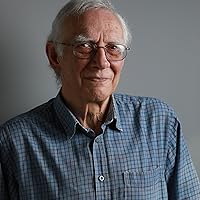
Khenpo Tsültrim Gyamtso Rinpoche (Tibetan: མཁན་པོ་ཚུལ་ཁྲིམ་རྒྱ་མཚོ་རིན་པོ་ཆེ་, Wylie: mkhan po tshul khrim rgya mtsho rin po che), born Sherab Lodro, is a prominent scholar-practitioner in the Karma Kagyu tradition of Tibetan Buddhism. With Khenchen Thrangu, he was a principle teacher at Rumtek Monastery shedra, and thus trained most of the current generation of Karma Kagyu tulkus and lamas, notably including Dzogchen Ponlop Rinpoche.
“You can have a dream of being bound in iron chains and then being set free.
When you do not know you are dreaming, these two states seem to be different. Being bound in chains is bad, being set free from them is good, and they both seem to be real.
When you know that you are dreaming, you know that both are mere appearances.
In the abiding nature of reality, the bondage and liberation are equality.
Between the true nature of bondage and the true nature of liberation, there is not the slightest difference. This is how you should understand it.”
The Sun of Wisdom by Khenpo Tsultrim Gyamtso, (Page 167).
Definitely not a beginning text. This book is best for more advanced practitioners and be ready to need to have some discussion. However, it is very well laid out and very straight forward in presenting Nagarjuna's famous teachings on the Middle Way. he has an answer for everything because there is nothing. lol. If you are looking for the perfect text for studying these teachings, this is it.
This is a wonderful introduction to Prasangika-Madhyamaka logic. It includes the quoted root verses from Nagarjuna's Mūlamadhyamakakārikā, as well as The Heart Sutra in its entirety, root verses from Chandrakirti's Madhyamakāvatāra on the "Twenty Emptinesses", and a song by Milarepa on the Middle Way as appendices.
Great jumping off point and continual reference for a fairly vast and difficult subject - especially because it encourages practice and contemplation, beyond mere study. That being said, both this book and subject are not recommended for beginners to Buddhism.
The history of Western thought shows that it would be impossible to make sense of philosophy while having no acquaintance with the ‘Middle Way’ or ‘non-dual’ philosophy of Buddhism or more generally the Perennial philosophy. Perhaps the clearest explanation of this philosophy is given by the south-Indian philosopher-monk Nagarjuna in the second =century, who in his Fundamental Verses on the Middle Way reduces to absurdity all metaphysical theories and positions except that of the Buddha.
The Sun of Wisdom by Khenpo Tsultrum Gyamtso is an authoritative explanation of Nagarjuna’s teachings. Of the three specialist books I have read on this topic I found this to be by some margin the most approachable and useful, and it is the only one I would recommend, but this is not to say it is easy. The philosophy of nonduality is a significant intellectual and conceptual challenge for philosophers.
Among the topics covered are desire, change, the aggregates, suffering, the source of consciousness and the true nature of reality. Nagarjuna’s explanation of these things is brief and difficult, but Gyamptso expands on the main verses from each chapter of Fundamental Verses to illuminate them for the modern reader. For anyone attempting to comprehend the philosophical meaning of the Buddha’s teachings The Sun of Wisdom will be of great value.
The book’s chapters follow the chapters of Nagarjuna’s middle way treatise; each chapter starts with a quote from the sutras that relates to things that Nagarjuna’s opponents take to be inherently real and therefore nonempty. The author neatly summarises Nagarjuna’s logical reasoning for why all things (including emptiness itself) are empty of inherent existence. The logic tends to be the same (such as the inability of two things to exist sequentially or simultaneously) across chapters. The general advice from the author is to see all phenomena as emptiness-appearance and therefore see the spacious and peaceful nature of reality. He backs this up with several Vajrayana masters, such as Milarepa.
This is easier to read than say Garfield’s commentary, and gives an intuitive sense of emptiness. There are some guidelines for practice but it is a bit limited. The logical reasoning also didn’t resonate with me always either. I therefore am not sure I can give five stars.
even though nagarjuna (root text author), mipham (commentator on root text author), and gyamatso (commentator on the commentary and the root text authors) utilize permutations of the same logic over and over again in order to dismantle the conception of "inherent existence" as they range over a variety of buddhist and "non-buddhist" topics, i really liked this book. usually, the logic is something like - if [A:] (e.g. - cause, a seed, etc.) and [B:] (e.g. - effect, the sprout of the seed, etc.) are inherently existent then they are either the same, different, both, or neither OR they are none of those and are therefore not inherently existent. sounds thrilling i know - i still thought it was fun, especially the movement of your arm or your leg or your bike, etc. along a route - they say it doesn't move - no movement by it in the area where it has already been, no movement by it in the area where it has not yet been, and in between these two no movement can be observed.
commentary on tsongkhapa's commentary on nagarjuna's original text, which provides logical reasonings for virtually all conventionally accepted phenomena, demonstrating universal lack of inherent self-existence, or emptiness. this being a third-level commentary, is higher level than tsongkhapa's commentary, ocean of reasoning, which is quite in-depth. it is very helpful to study them together. the intensely detailed reasonings of tsongkhapa may be easier to understand in conjunction with the modern summary explanations in this book.
This is a brilliantly lucid book and richly rewarding. One to return to and study over time as your practice and understanding deepens. I can’t recommend this book highly enough. Full review here: http://jessicadavidson.co.uk/2015/02/...