

What do you think?

Some Fruits of Solitude
Do you long for simpler days and the wisdom that guided them? Some Fruits of Solitude is a collection of William Penn's reflections on 165 subjects covering leadership, religion, discipline, relationships, and more, originally printed in 1693. Penn, a revolutionary leader and founder of Pennsylvania, was known for his faith, compassion, fairness, and equality to all. Contemplation on his proverbs and principles will deliver the serenity of a much less chaotic time to your life and family. " and there should be a Time and Place for every thing: and whatever else is done or omitted, be sure to begin and end with God." From Discipline
"Between a Man and his Wife nothing out to rule but Love. Authority is for Children and Servants; yet not without Sweetness." From Avarice
This printing preserves the original style, character, and content of the 1901 vintage edition. It is a treasure that keeps our Christian heritage alive and unrevised for every family, leader, and library.
"Between a Man and his Wife nothing out to rule but Love. Authority is for Children and Servants; yet not without Sweetness." From Avarice
This printing preserves the original style, character, and content of the 1901 vintage edition. It is a treasure that keeps our Christian heritage alive and unrevised for every family, leader, and library.
176 pages, Hardcover
First published January 1, 1682
About the author
William Penn
563 books46 followersLibrarian Note: There is more than one author in the GoodReads database with this name.
William Penn was an English real estate entrepreneur, philosopher, and founder of the Province of Pennsylvania. He was an early champion of democracy and a prominent Quaker.
On November 28, 1984 William Penn and his second wife, Hannah Callowhill Penn became Honorary Citizens of the United States, upon an Act of Congress by Presidential Proclamation 5284.
William Penn was an English real estate entrepreneur, philosopher, and founder of the Province of Pennsylvania. He was an early champion of democracy and a prominent Quaker.
On November 28, 1984 William Penn and his second wife, Hannah Callowhill Penn became Honorary Citizens of the United States, upon an Act of Congress by Presidential Proclamation 5284.
Ratings & Reviews
Friends & Following
Create a free account to discover what your friends think of this book!
Community Reviews
Displaying 1 - 30 of 64 reviews

October 11, 2017
This is about fifty pages of a very long list of how a good person should conduct him or herself. Some of it was common sense, some of the platitudes had merit, but on the whole I found it a bit dry. Apparently writing axioms for a good life was a popular past time once. I have a similar book by Francis Bacon. Interesting, but not riveting reading.
Here are a few examples of Penn's Fruits:
Inconsderation:
30. The want fo due Considerations is the Cause of all the Unhappiness Man brings upon himself. For his second Thoughts rarely agree with his first, which pass not without a considerable Retrenchment of Correction. And yet that sensible Warning is, too frequently, not Precaution enough for his future Conduct.
Temperance:
59. To this a spare Diet contributes much. Eat therefore to live, and do not live to eat. That's like a Man, but this below a Beast.
Discipline:
56. Every one in it should know their Duty; and there should be a Time and Place for every thing; and whatever else id sone or omitted, be sure to begin and end with God.
And while it is also a discipline to read through Penn's fruits, they are worthwhile and if one would make the effort, they would be rewarded with food for thought and a greater understanding of how our forefathers carried out their lives, or at least believed they should.
Here are a few examples of Penn's Fruits:
Inconsderation:
30. The want fo due Considerations is the Cause of all the Unhappiness Man brings upon himself. For his second Thoughts rarely agree with his first, which pass not without a considerable Retrenchment of Correction. And yet that sensible Warning is, too frequently, not Precaution enough for his future Conduct.
Temperance:
59. To this a spare Diet contributes much. Eat therefore to live, and do not live to eat. That's like a Man, but this below a Beast.
Discipline:
56. Every one in it should know their Duty; and there should be a Time and Place for every thing; and whatever else id sone or omitted, be sure to begin and end with God.
And while it is also a discipline to read through Penn's fruits, they are worthwhile and if one would make the effort, they would be rewarded with food for thought and a greater understanding of how our forefathers carried out their lives, or at least believed they should.

September 26, 2021
I picked up Some Fruits of Solitude because it is the next part of the Harvard Classics. Penn like Franklin and Woolman, the other Quaker authors, has a similar focus on avoiding excess, praising god, discipline, and working had. He lays out best practices on how to live your life. I have include a few of my favorite at the bottom.
I would recommend to anyone who is reading the Harvard Classic or looking to understand the founding DNA that America was built on. If that’s not you you shouldn’t pick it up.
"Industry
Love Labor...It prevents the Fruits of Idleness, which many times comes of nothing to do, and leads to many to do what is worse then nothing."
"Right Marriage
They that Marry for Money cannot have the true Satisfaction of Marriage; the requisite Means being wanting. Men are generally more careful of the Breed of their Horses and Dogs than of their Children."
"Of Jealousy
The Jealous are Troublesome to others, but a Torment to themselves. Jealousy is a kind of Civil War in the Soul, where Judgment and Imagination are at perpetual Jars....It violates Contracts, Dissovles Society, Breaks Wedlock, Betrays Friends and Neighbors. No Body is Good, and every one is either doing or designing them a Mischief...A Jealous Man only sees his own Spectrum, when he looks upon other Men, and gives his Character in theirs."
I would recommend to anyone who is reading the Harvard Classic or looking to understand the founding DNA that America was built on. If that’s not you you shouldn’t pick it up.
"Industry
Love Labor...It prevents the Fruits of Idleness, which many times comes of nothing to do, and leads to many to do what is worse then nothing."
"Right Marriage
They that Marry for Money cannot have the true Satisfaction of Marriage; the requisite Means being wanting. Men are generally more careful of the Breed of their Horses and Dogs than of their Children."
"Of Jealousy
The Jealous are Troublesome to others, but a Torment to themselves. Jealousy is a kind of Civil War in the Soul, where Judgment and Imagination are at perpetual Jars....It violates Contracts, Dissovles Society, Breaks Wedlock, Betrays Friends and Neighbors. No Body is Good, and every one is either doing or designing them a Mischief...A Jealous Man only sees his own Spectrum, when he looks upon other Men, and gives his Character in theirs."

January 30, 2025
Third book in my journey through the Harvard Classics!
A really lovely and thought-provoking collection of maxims and reflections, some truly beautiful. The first “book” seems more poignant and incisive than the second, which is a bit more rambly and verbose and less focussed. Much of the material has also aged remarkably well, especially his thoughts on virtue (or “Vertue” as he spells it!), integrity, and the beauty of living well with one another.
Some favourites:
“They have a Right to censure, that have a Heart to help: The rest is Cruelty, not Justice.”
“But in Marriage do…be wise; prefer the Person before Money; Vertue before Beauty, the Mind before the Body: Then thou hast a Wife, a Friend, a Companion, a Second Self…that bears an equal Share with thee…Nothing can be more entire and without Reserve; nothing more zealous, affectionate and sincere; nothing more contented and constant than such a Couple; nor no greater temporal Felicity than to be one of them.”
“Patience and Diligence, like Faith, remove Mountains.”
“Be not provoked by Injuries, to commit them.”
“Love is the hardest Lesson in Christianity; but, for that reason, it should be most our care to learn it.”
“Death cannot kill, what never dies.”
A really lovely and thought-provoking collection of maxims and reflections, some truly beautiful. The first “book” seems more poignant and incisive than the second, which is a bit more rambly and verbose and less focussed. Much of the material has also aged remarkably well, especially his thoughts on virtue (or “Vertue” as he spells it!), integrity, and the beauty of living well with one another.
Some favourites:
“They have a Right to censure, that have a Heart to help: The rest is Cruelty, not Justice.”
“But in Marriage do…be wise; prefer the Person before Money; Vertue before Beauty, the Mind before the Body: Then thou hast a Wife, a Friend, a Companion, a Second Self…that bears an equal Share with thee…Nothing can be more entire and without Reserve; nothing more zealous, affectionate and sincere; nothing more contented and constant than such a Couple; nor no greater temporal Felicity than to be one of them.”
“Patience and Diligence, like Faith, remove Mountains.”
“Be not provoked by Injuries, to commit them.”
“Love is the hardest Lesson in Christianity; but, for that reason, it should be most our care to learn it.”
“Death cannot kill, what never dies.”

February 11, 2018
What a charming and refreshing little book. Most notable to me were the passages extolling marriage; his respect for women as equals in marriage and in general is enough to make me wish I were a Quaker in the 17th century!
“Between a man and his wife nothing ought to rule but love. Authority is for children and servants (yet not without sweetness).”
“Sexes make no difference, since in souls there is none: and they are the subjects of friendship.”
“Between a man and his wife nothing ought to rule but love. Authority is for children and servants (yet not without sweetness).”
“Sexes make no difference, since in souls there is none: and they are the subjects of friendship.”

June 17, 2024
More than Pennsylvania’s founder and famous Quaker
This is the third of three books selected by Charles Elliot for his series “The Harvard Classics” volume 1 (Autobiography of Benjamin Franklin & Journal of John Woolman). William Penn’s Fruits of Solitude is presented in two parts and was inspired by his life experiences. For those reading his book, the political circumstances surrounding his formative years is beneficial and worth a quick thumbnail description. Penn was the son of an esteemed English Admiral, emerged from a privileged family, and espoused a pious Christian faith. During the English Civil War (1642-1651), Penn’s family supported the Monarchy of Charles I. The Royalists lost to the Parliamentarian, however, his family retained their land and wealth due to the military service of Admiral Penn. When the monarchy was restored, King Charles II had Admiral Penn help rebuild the nation’s Royal Navy. In 1680, King Charles II granted lands in America to Penn for the service of the now-deceased Admiral Penn. It’s interesting to note that William Penn spent very little time in his colonies of East New Jersey and Pennsylvania (1682-1684 and 1699-1701). After suffering two debilitating strokes, Penn died in England in 1718.
William Penn was as prolific a writer as he was a controversial figure. Although William Penn attended Oxford, Penn was expelled from the institution for “nonconformity”.Later he served in the Royal Navy, traveled throughout Europe, and studied the law. It was not until 1667 that Penn became a Quaker and soon after was imprisoned in the infamous Tower of London for public opposition to the Church of England’s Christian orthodoxy. Penn was critical of all religious groups except Quakers which he believed was the only true Christian sect. He rejected the Church of England (Anglican), called Puritans “hypocrites and revelers in God”, and called the Catholic Church “the Whote of Babylon”. Penn’s aphorisms emerged from his passionate piety.
After a short preface, the first part “Some Fruits of Solitude in Reflections and Maxims” discussed topics such as ignorance, education, pride, discipline, avarice, justice, knowledge, respect, passion, balance, and patience. The second part “More Fruits of Solitude… Reflections and Maxims, Relating to the Conduct of Human Life” continues with pithy axioms regarding morality, praise, friendship, justice, wisdom, envy, ambition, jealousy, and vanity. To be fully appreciated, this book requires time to reflect upon each of Penn’s proverbs and not an exercise of speedreading. Some examples include:
“The Wise Man Governs himself by the Reason of his Case, and because what he does is Best: Best, in a Moral and Prudent, not a Sinister Sense.”
“For as Men in Battle are continually in the way of shot, so we, in this World, are ever within the Reach of Temptation.”
“He that won't hear can't Judge, and he that can't bear Contradiction, may, with all his Wit, miss the Mark.”
“They have a Right to censure, that have a Heart to help: The rest is Cruelty, not Justice.”
“Less Knowledge than Judgment will always have the advantage upon the Injudicious knowing Man.”
“To come but once into the World, and Trifle away our true Enjoyment of it, and of our selves in it, is lamentable indeed.”
"Time is what we want most, but what, alas! we use worst; and for which God will certainly most strictly reckon with us, when Time shall be no more."
Although written in 1682, modern readers should consider it open-mindedly as a 17th-century self-help book. Some may find the religious overtones disconcerting, however, the utility of Penn’s wisdom cannot be denied. He advocated conquering oneself, not the dominion of another's will. There is much to gain from examining the life experiences of historical figures. William Penn’s Fruits of Solitude combines Benjamin Franklin’s wit and John Woolman’s devoutness. In addition, it neatly concludes the first volume of The Harvard Classics - Veritas

February 24, 2021
Definitely some good nuggets here from William Penn:
On the use of our time:
"I can hardly wish any man better, than that he would seriously consider what he does with his time: how and to what ends he employs it; and what returns he makes to God, his neighbor, and himself for it."
On disappointments or trials:
"For disappointments that come by our own folly, for disappointments that come not by our own folly, they are the trials or corrections of heaven: and it is our own fault if they prove not to our advantage. To see the hand of God in them, with a humble submission to his will, is the way to turn our water into wine and engage the greatest love and mercy on our side."
On thinking before speaking:
"If thou thinkest twice before thou speakest once, thou wilt speak twice the better for it."
On motivation:
"Do good with what thou hast, or it will do thee no good. Seek not to be rich, but happy. The one lies in bags, the other in content, which wealth can never give."
???
"He that superjines up another Man's Actions, cozens himself, as well as injures others."
Never superjine another man's rhubarb...
On the use of our time:
"I can hardly wish any man better, than that he would seriously consider what he does with his time: how and to what ends he employs it; and what returns he makes to God, his neighbor, and himself for it."
On disappointments or trials:
"For disappointments that come by our own folly, for disappointments that come not by our own folly, they are the trials or corrections of heaven: and it is our own fault if they prove not to our advantage. To see the hand of God in them, with a humble submission to his will, is the way to turn our water into wine and engage the greatest love and mercy on our side."
On thinking before speaking:
"If thou thinkest twice before thou speakest once, thou wilt speak twice the better for it."
On motivation:
"Do good with what thou hast, or it will do thee no good. Seek not to be rich, but happy. The one lies in bags, the other in content, which wealth can never give."
???
"He that superjines up another Man's Actions, cozens himself, as well as injures others."
Never superjine another man's rhubarb...
November 13, 2020
At least it's short.

August 23, 2025
I love this book; it is full of pithy wisdom and thoughtful advice about a broad range of topics covering just about all of life. Books like this make you realize that despite modern technology, the fundamental human condition, our bents, wants, needs, sins, have not fundamentally changed. So much of Penn’s advice is just as obviously applicable today as it was a few hundred years ago. In many ways, this advice is even more impactful because so little of its plain truth and emphasis on character rather than ceaseless entertainment is presented in modern America.
I highly recommend this book, it is like having a wise grandfather speak to you and “explain life”. Sure you can disagree with certain points, but on the whole, it is a life-enriching and thought provoking book. Today’s wisdom and hot takes will seem shallow in comparison.
I highly recommend this book, it is like having a wise grandfather speak to you and “explain life”. Sure you can disagree with certain points, but on the whole, it is a life-enriching and thought provoking book. Today’s wisdom and hot takes will seem shallow in comparison.

November 27, 2025
Some Fruits of Solitude: This book was similar to the Enchiridion of Epictetus or the book of Proverbs in the Bible. It is full of Maxims and allegories, and if you really applied them to your life, I’m sure you would live to be a very good person. Everyone should read it and try to live it, but, like most 1600’s era classics, it isn’t necessarily a page-turner. 3/5.

Read
October 7, 2024Nice book

October 2, 2016
This wonderful little enchiridion is full of maxims and reflections on living a virtuous life. It reminds me of the Meditations of Marcus Aurelius and the Analects of Confucius. Should be mandatory reading for everyone. My favorite were:
"Opportunities should never be lost, because they can hardly be regained."
"Refuse not to be inform'd: For that shews Pride or Stupidity."
"Neither despise, nor oppose, what thou dost not understand."
"Force may subdue, but Love gains: And he that forgives first, wins the Lawrel."
"It is an old Proverb, Maxima bella ex levissimis causis: The greatest Feuds have had the smallest Beginnings."
"Too few know when they have Enough; and fewer know how to employ it."
"Never esteem any Man, or they self, the more for Money; nor think the meaner of they self or another for want of it: Vertue being the just Reason of respecting, and the want of it, of slighting any one."
"Never give out while there is Hope; but hope not beyond Reason, for that shews more Desire than Judgment."
"It is profitable Wisdom to know when we have done enough: Much Time and Pains are spared, in not flattering our selves against Probabilities."
"As many Hands make light Work, so several Purses make cheap Experiments."
"Knowledge is the Treasure, but Judgment the Treasurer of a Wise Man. He that has more Knowledge than Judgment, is made for another Man's use more than his own. There are some Men like Dictionaries; to be lookt into upon occasions, but have no Connection, and are little entertaining."
"The Wise Man is Cautious, but not Cunning; Judicious, but not Crafty; making Virtue the Measure of using his Excellent Understanding in the Conduct of his Life."
"Clear therefore they Head, and Rally, and Manage thy Thoughts Rightly, and thou wilt save Time, and See and Do they Business Well; for they Judgment will be Distinct, they Mind Free, and the Faculties Strong and Regular. Always remember to bound they Thoughts to the present Occasion."
"To do Evil, that Good may come of it, is for Bunglers in Politicks, as well as Morals."
"Love is the hardest Lesson in Christianity; but, for that reason, it should be most our care to learn it. Difficilia quae Pulchra."
"Of what Benefit is it to say our Prayers regularly, go to Church, receive the Sacraments, and may be go to Confessions too; ay, Feast the Priest, and give Alms to the Poor, and yet Lye, Swear, Curse, be Drunk, Covetous, Unclean, Proud, Revengeful, Vain and Idle at the same time?"
"Opportunities should never be lost, because they can hardly be regained."
"Refuse not to be inform'd: For that shews Pride or Stupidity."
"Neither despise, nor oppose, what thou dost not understand."
"Force may subdue, but Love gains: And he that forgives first, wins the Lawrel."
"It is an old Proverb, Maxima bella ex levissimis causis: The greatest Feuds have had the smallest Beginnings."
"Too few know when they have Enough; and fewer know how to employ it."
"Never esteem any Man, or they self, the more for Money; nor think the meaner of they self or another for want of it: Vertue being the just Reason of respecting, and the want of it, of slighting any one."
"Never give out while there is Hope; but hope not beyond Reason, for that shews more Desire than Judgment."
"It is profitable Wisdom to know when we have done enough: Much Time and Pains are spared, in not flattering our selves against Probabilities."
"As many Hands make light Work, so several Purses make cheap Experiments."
"Knowledge is the Treasure, but Judgment the Treasurer of a Wise Man. He that has more Knowledge than Judgment, is made for another Man's use more than his own. There are some Men like Dictionaries; to be lookt into upon occasions, but have no Connection, and are little entertaining."
"The Wise Man is Cautious, but not Cunning; Judicious, but not Crafty; making Virtue the Measure of using his Excellent Understanding in the Conduct of his Life."
"Clear therefore they Head, and Rally, and Manage thy Thoughts Rightly, and thou wilt save Time, and See and Do they Business Well; for they Judgment will be Distinct, they Mind Free, and the Faculties Strong and Regular. Always remember to bound they Thoughts to the present Occasion."
"To do Evil, that Good may come of it, is for Bunglers in Politicks, as well as Morals."
"Love is the hardest Lesson in Christianity; but, for that reason, it should be most our care to learn it. Difficilia quae Pulchra."
"Of what Benefit is it to say our Prayers regularly, go to Church, receive the Sacraments, and may be go to Confessions too; ay, Feast the Priest, and give Alms to the Poor, and yet Lye, Swear, Curse, be Drunk, Covetous, Unclean, Proud, Revengeful, Vain and Idle at the same time?"

March 12, 2014
To do this book justice, examine every aphorism, would be a long and laborious task, one I won't even attempt. Needless to say, there were some sayings with which I agreed whole-heartedly, and more than a few I found rather silly for one reason or another -- most often, perhaps, because religion was invoked where an appeal to reason would've been both more appropriate, and convincing.
Further, a few advisories seemed to conflict, as when he first states that to be tempted is no sin, but only to submit, yet later claims that a man who covets is no more moral than the man who steals, for he has committed the same sin, only in the mind. Surely these two views cannot coexist. For what it's worth, I mostly agree with the former opinion.
I was also rankled by his insistence on a person's many obligations. He seemed to believe there were certain active duties that, upon a person's birth into the world, were thrust upon him, and to not fulfill them would be to call damnation upon oneself. For these purposes he frequently trotted out the Golden Rule -- and while I agree with such on the surface, I would rather it be named the Golden Guideline. Yes, we ought to treat others as we ourselves would like to be treated, but I see this less as a compulsion and more as a restriction. Were one to see a person on the street, hurt, and so decide to help him, it would certainly be a Good Thing; however, I don't think it necessarily makes inaction in such an instance an Evil Thing. To be morally compelled by one's very existence is a tyrannical idea; is a person not allowed neutrality? A person ought not do harm to another, but to suggest that doing nothing is a sin would rend the spiritual world. If such is the case, should we not spend every second, every minute, every hour of the day, every day of the year, trying desperately to help those in need, no matter how far from us they reside, no matter in which far-flung dictatorship they are shackled? Morality ought to be a way to free oneself from those detrimental behaviours that pain one's life and those lives around him; for it to demand a positive action is simply another form of slavery.
All said, though, the book has many pearls of wisdom, if you're up for the archaic phrasing. Worth reading.
Further, a few advisories seemed to conflict, as when he first states that to be tempted is no sin, but only to submit, yet later claims that a man who covets is no more moral than the man who steals, for he has committed the same sin, only in the mind. Surely these two views cannot coexist. For what it's worth, I mostly agree with the former opinion.
I was also rankled by his insistence on a person's many obligations. He seemed to believe there were certain active duties that, upon a person's birth into the world, were thrust upon him, and to not fulfill them would be to call damnation upon oneself. For these purposes he frequently trotted out the Golden Rule -- and while I agree with such on the surface, I would rather it be named the Golden Guideline. Yes, we ought to treat others as we ourselves would like to be treated, but I see this less as a compulsion and more as a restriction. Were one to see a person on the street, hurt, and so decide to help him, it would certainly be a Good Thing; however, I don't think it necessarily makes inaction in such an instance an Evil Thing. To be morally compelled by one's very existence is a tyrannical idea; is a person not allowed neutrality? A person ought not do harm to another, but to suggest that doing nothing is a sin would rend the spiritual world. If such is the case, should we not spend every second, every minute, every hour of the day, every day of the year, trying desperately to help those in need, no matter how far from us they reside, no matter in which far-flung dictatorship they are shackled? Morality ought to be a way to free oneself from those detrimental behaviours that pain one's life and those lives around him; for it to demand a positive action is simply another form of slavery.
All said, though, the book has many pearls of wisdom, if you're up for the archaic phrasing. Worth reading.
July 13, 2021
Harvard Classics read-through

January 14, 2024
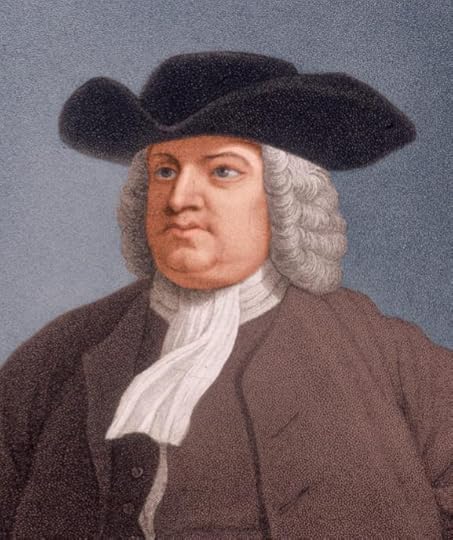
[Image: William Penn as depicted by an unnamed 18th century artist]
*
Some Fruits of Solitude (1682), along with its 1718 sequel, was included in volume one of The Harvard Classics. It is a collection of sayings and epigrams from William Penn (1644-1718), a man most famous for founding the state of Pennsylvania in what became the United States of America. It is a collection of wisdom coming from America before the Revolutionary War. Penn was a Quaker who found inspiration in his faith to bravely fight for human rights, religious freedom, and democracy. As much as I admire the man, I have to admit that Some Fruits of Solitude is a rather tedious read. Yes, there is good advice to be found in it but I craved some kind of narrative to hold my attention.
Some quotes:
*
“It is admirable to consider how many Millions of People come into, and go out of the World, Ignorant of themselves, and of the World they have lived in.” (Ignorance)
*
“We are in Pain to make them Scholars, but not Men! To talk, rather than to know, which is true Canting.” (Education)
*
“55. If thou wouldst be happy and easie in thy Family, above all things observe Discipline.
56. Every one in it should know their Duty; and there should be a Time and Place for every thing; and whatever else is done or omitted, be sure to begin and end with God.” (Disclipine)
*
“TO THIS a spare Diet contributes much. Eat therefore to live, and do not live to eat. That’s like a Man, but this below a Beast.” (Temperance)
*
“111. A true Friend unbosoms freely, advises justly, assists readily, adventures boldly, takes all patiently, defends courageously, and continues a Friend unchangeably.” (Qualities Of A Friend)
*
“133. In all Debates, let Truth be thy Aim, not Victory, or an unjust Interest: And endeavor to gain, rather than to expose thy Antagonist…
136. Men are too apt to be concerned for their Credit, more than for the Cause.” (Rules Of Conversation)
*
“145. Believe nothing against another but upon good Authority: Nor report what may hurt another, unless it be a greater hurt to others to conceal it.” (Justice)
*
“162. Knowledge is the Treasure, but Judgment the Treasurer of a Wise Man. He that has more Knowledge than Judgment, is made for another Man’s use more than his own.” (Knowledge)
*
“235. Never give out while there is Hope; but hope not beyond Reason, for that shews more Desire than Judgment.” (Hope)
*
“253. Never esteem any Man, or thy self, the more for Money; nor think the meaner of thy self or another for want of it: Vertue being the just Reason of respecting, and the want of it, of slighting any one.” (Respect)
*
“300. Haste makes Work which Caution prevents.” (Personal Cautions)
**

[Image: Cover of the Delphi Classics’ The Harvard Classics]
Citation:
Penn, W. (2018). Fruits of solitude, part one. In Charles W. Eliot & Delphi Classics (Eds.), The Harvard classics (1st edition) [eBook]. Delphi Classics. https://www.delphiclassics.com/shop/t... (Original work published 1682)
Title: Some Fruits of Solitude
Original Title: Some Fruits of Solitude in Reflections and Maxims
Author(s): William Penn
Series: The Harvard Classics (1909): Volume I - Delphi Complete Harvard Classics and Shelf of Fiction
Year: 1682
Genre: Nonfiction - Wisdom text
Date(s) read: 1/13/24 - 1/14/24
Book #15 in 2024
**

January 8, 2021
The Author blesseth God for his Retirement, and kisses that Gentle Hand which led him into it: For though it should prove Barren to the World, it can never do so to him. He has now had some Time he could call his own; a Property he was never so much Master of before: In which he has taken a View of himself and the World; and observed wherein he hath hit and mist the Mark; What might have been done, what mended, and what avoided in his Human Conduct.
And yet perhaps he hath not been the Worst or the Idlest Man in the World; nor is he the Oldest. And this is the rather said, that it might quicken, Thee, Reader, to lose none of the Time that is yet thine. There is nothing of which we are apt to be so lavish as of Time, and about which we ought to be more solicitous; since without it we can do nothing in this World. Time is what we want most, but what, alas! we use worst; and for which God will certainly most strictly reckon with us, when Time shall be no more.
He is curious to wash, dress, and perfume his Body, but careless of his Soul. The one shall have many Hours, the other not so many Minutes.
In his Prayers he says, Thy Will be done: But means his own: At least acts so.
We must needs disorder our selves, if we only look at our Losses. But if we consider how little we deserve what is left, our Passion will cool, and our Murmurs will turn into Thankfulness.
They have a Right to censure, that have a Heart to help: The rest is Cruelty, not Justice.
The more merciful Acts thou dost, the more Mercy thou wilt receive; and if with a charitable Imployment of thy Temporal Riches, thou gainest eternal Treasure, thy Purchase is infinite: Thou wilt have found the Art of Multiplying indeed.
Never Marry but for Love; but see that thou lov'st what is lovely.
The usefulest Truths are plainest: And while we keep to them, our Differences cannot rise high.
Let not Enjoyment lessen, but augment Affection; it being the basest of Passions to like when we have not, what we slight when we possess.
It is the difference betwixt Lust and Love, that this is fixt, that volatile. Love grows, Lust wastes by Enjoyment.
They that Marry for Money cannot have the true Satisfaction of Marriage; the requisite Means being wanting.
Men are generally more careful of the Breed of their Horses and Dogs than of their Children.
Covetousness is the greatest of Monsters, as well as the Root of all Evil.
But in Marriage do thou be wise; prefer the Person before Money; Vertue before Beauty, the Mind before the Body: Then thou hast a Wife, a Friend, a Companion, a Second Self; one that bears an equal Share with thee in all thy Toils and Troubles.
Chuse one that Measures her satisfaction, Safety and Danger, by thine; and of whom thou art sure, as of thy secretest Thoughts: A Friend as well as a Wife, which indeed a Wife implies: For she is but half a Wife that is not, or is not capable of being such a Friend.
Between a Man and his Wife nothing ought to rule but Love. Authority is for Children and Servants; yet not without Sweetness.
As Love ought to bring them together, so it is the best Way to keep them well together.
Wherefore use her not as a Servant, whom thou would'st, perhaps, have serv'd Seven Years to have obtained.
An Husband and Wife that love and value one another, shew their Children and Servants, That they should do so too. Others visibly lose their Authority in their Families by their Contempt of one another; and teach their Children to be unnatural by their own Example.
If thou wouldest be obeyed being a Father; being a Son, be Obedient.
Truth often suffers more by the Heat of its Defenders, than from the Arguments of its Opposers.
Rebellion therefore in Children, was made Death by God's Law, and the next Sin to Idolatry, in the People; which is renouncing of God, the Parent of all.
Obedience to Parents is not only our Duty, but our Interest. If we received our Life from them, We prolong it by obeying them: For Obedience is the first Commandment with Promise.
The Obligation is as indissolvable as the Relation.
We are too careless of Posterity; not considering that as they are, so the next Generation will be.
The Country Life is to be preferr'd; for there we see the Works of God; but in Cities little else but the Works of Men: And the one makes a better Subject for our Contemplation than the other.
As Puppets are to Men, and Dolls to Children, so is Man's Workmanship to God's: We are the Picture, he the Reality.
The Country is both the Philosopher's Garden and his Library, in which he Reads and Contemplates the Power, Wisdom and Goodness of God.
As many Hands make light Work, so several Purses make cheap Experiments.
He that corrects out of Passion, raises Revenge sooner than Repentance.
It is an old Proverb, Maxima bella ex levissimus causis: The greatest Feuds have had the smallest Beginnings.
There is a troublesome Humor some Men have, that if they may not lead, they will not follow; but had rather a thing were never done, than not done their own way, tho' other ways very desirable.
Happy that King who is great by Justice, and that People who are free by Obedience.
Let the People think they Govern and they will be Govern'd.
Our Law says well, to delay Justice is Injustice.
The Humble, in the Parable of the Day of Judgment, forgot their good Works; Lord, when did we do so and so?
Content not thy self that thou art Virtuous in the general: For one Link being wanting, the Chain is defective.
Innocent, is not to be Guilty: But Virtuous is to overcome our evil Inclinations.
If thou wouldest conquer thy Weakness, thou must never gratify it.
God is better served in resisting a Temptation to Evil, than in many formal Prayers.
Wouldst thou then serve God? Do not that alone, which thou wouldest not that another should see thee do.
The truest end of Life, is, to know the Life that never ends.
It is a Preposterous thing, that Men can venture their Souls where they will not venture their Money
It is a severe Rebuke upon us, that God makes us so many Allowances, and we make so few to our Neighbor
What we Love, we'll Hear; what we Love, we'll Trust; and what we Love, we'll serve, ay, and suffer for too. If you love me (says our Blessed Redeemer) keep my Commandments. Why? Why then he'll Love us; then we shall be his Friends; then he'll send us the Comforter; then whatsoever we ask, we shall receive; and then where he is we shall be also, and that for ever. Behold the Fruits of Love; the Power, Vertue, Benefit and Beauty of Love!
doing to others, to the Extent of his Ability, as he would have them do unto him.
In vain do we expect to be delivered from such Troubles, till we are delivered from the Cause of them, our Disobedience to God.
It seems but reasonable, that those whom God has Distinguish'd from others; by his Goodness, should distinguish themselves to him by their Gratitude.
But is it not a most unaccountable Folly, that Men should be Proud of the Providences that should Humble them? Or think the Better of themselves, instead of Him that raised them so much above the Level; or in being so in their Lives, in Return of his Extraordinary Favors.
For though God has dignified some Men above their Brethren, it never was to serve their Pleasures, but that they might take Pleasure to serve the Publick.
Nor can we expect to be heard of God in our Prayers, that turn the deaf Ear to the Petitions of the Distressed amongst our fellow Creatures.
God sends the Poor to try us, as well as he tries them by being such: And he that refuses them a little out of the great deal that God has given him, Lays up Poverty in Store for his own Posterity.
Would God this Divine Virtue were more implanted and diffused among Mankind, the Pretenders to Christianity especially, and we should certainly mind Piety more than Controversy, and Exercise Love and Compassion instead of Censuring and Persecuting one another in any Manner whatsoever.
And yet perhaps he hath not been the Worst or the Idlest Man in the World; nor is he the Oldest. And this is the rather said, that it might quicken, Thee, Reader, to lose none of the Time that is yet thine. There is nothing of which we are apt to be so lavish as of Time, and about which we ought to be more solicitous; since without it we can do nothing in this World. Time is what we want most, but what, alas! we use worst; and for which God will certainly most strictly reckon with us, when Time shall be no more.
He is curious to wash, dress, and perfume his Body, but careless of his Soul. The one shall have many Hours, the other not so many Minutes.
In his Prayers he says, Thy Will be done: But means his own: At least acts so.
We must needs disorder our selves, if we only look at our Losses. But if we consider how little we deserve what is left, our Passion will cool, and our Murmurs will turn into Thankfulness.
They have a Right to censure, that have a Heart to help: The rest is Cruelty, not Justice.
The more merciful Acts thou dost, the more Mercy thou wilt receive; and if with a charitable Imployment of thy Temporal Riches, thou gainest eternal Treasure, thy Purchase is infinite: Thou wilt have found the Art of Multiplying indeed.
Never Marry but for Love; but see that thou lov'st what is lovely.
The usefulest Truths are plainest: And while we keep to them, our Differences cannot rise high.
Let not Enjoyment lessen, but augment Affection; it being the basest of Passions to like when we have not, what we slight when we possess.
It is the difference betwixt Lust and Love, that this is fixt, that volatile. Love grows, Lust wastes by Enjoyment.
They that Marry for Money cannot have the true Satisfaction of Marriage; the requisite Means being wanting.
Men are generally more careful of the Breed of their Horses and Dogs than of their Children.
Covetousness is the greatest of Monsters, as well as the Root of all Evil.
But in Marriage do thou be wise; prefer the Person before Money; Vertue before Beauty, the Mind before the Body: Then thou hast a Wife, a Friend, a Companion, a Second Self; one that bears an equal Share with thee in all thy Toils and Troubles.
Chuse one that Measures her satisfaction, Safety and Danger, by thine; and of whom thou art sure, as of thy secretest Thoughts: A Friend as well as a Wife, which indeed a Wife implies: For she is but half a Wife that is not, or is not capable of being such a Friend.
Between a Man and his Wife nothing ought to rule but Love. Authority is for Children and Servants; yet not without Sweetness.
As Love ought to bring them together, so it is the best Way to keep them well together.
Wherefore use her not as a Servant, whom thou would'st, perhaps, have serv'd Seven Years to have obtained.
An Husband and Wife that love and value one another, shew their Children and Servants, That they should do so too. Others visibly lose their Authority in their Families by their Contempt of one another; and teach their Children to be unnatural by their own Example.
If thou wouldest be obeyed being a Father; being a Son, be Obedient.
Truth often suffers more by the Heat of its Defenders, than from the Arguments of its Opposers.
Rebellion therefore in Children, was made Death by God's Law, and the next Sin to Idolatry, in the People; which is renouncing of God, the Parent of all.
Obedience to Parents is not only our Duty, but our Interest. If we received our Life from them, We prolong it by obeying them: For Obedience is the first Commandment with Promise.
The Obligation is as indissolvable as the Relation.
We are too careless of Posterity; not considering that as they are, so the next Generation will be.
The Country Life is to be preferr'd; for there we see the Works of God; but in Cities little else but the Works of Men: And the one makes a better Subject for our Contemplation than the other.
As Puppets are to Men, and Dolls to Children, so is Man's Workmanship to God's: We are the Picture, he the Reality.
The Country is both the Philosopher's Garden and his Library, in which he Reads and Contemplates the Power, Wisdom and Goodness of God.
As many Hands make light Work, so several Purses make cheap Experiments.
He that corrects out of Passion, raises Revenge sooner than Repentance.
It is an old Proverb, Maxima bella ex levissimus causis: The greatest Feuds have had the smallest Beginnings.
There is a troublesome Humor some Men have, that if they may not lead, they will not follow; but had rather a thing were never done, than not done their own way, tho' other ways very desirable.
Happy that King who is great by Justice, and that People who are free by Obedience.
Let the People think they Govern and they will be Govern'd.
Our Law says well, to delay Justice is Injustice.
The Humble, in the Parable of the Day of Judgment, forgot their good Works; Lord, when did we do so and so?
Content not thy self that thou art Virtuous in the general: For one Link being wanting, the Chain is defective.
Innocent, is not to be Guilty: But Virtuous is to overcome our evil Inclinations.
If thou wouldest conquer thy Weakness, thou must never gratify it.
God is better served in resisting a Temptation to Evil, than in many formal Prayers.
Wouldst thou then serve God? Do not that alone, which thou wouldest not that another should see thee do.
The truest end of Life, is, to know the Life that never ends.
It is a Preposterous thing, that Men can venture their Souls where they will not venture their Money
It is a severe Rebuke upon us, that God makes us so many Allowances, and we make so few to our Neighbor
What we Love, we'll Hear; what we Love, we'll Trust; and what we Love, we'll serve, ay, and suffer for too. If you love me (says our Blessed Redeemer) keep my Commandments. Why? Why then he'll Love us; then we shall be his Friends; then he'll send us the Comforter; then whatsoever we ask, we shall receive; and then where he is we shall be also, and that for ever. Behold the Fruits of Love; the Power, Vertue, Benefit and Beauty of Love!
doing to others, to the Extent of his Ability, as he would have them do unto him.
In vain do we expect to be delivered from such Troubles, till we are delivered from the Cause of them, our Disobedience to God.
It seems but reasonable, that those whom God has Distinguish'd from others; by his Goodness, should distinguish themselves to him by their Gratitude.
But is it not a most unaccountable Folly, that Men should be Proud of the Providences that should Humble them? Or think the Better of themselves, instead of Him that raised them so much above the Level; or in being so in their Lives, in Return of his Extraordinary Favors.
For though God has dignified some Men above their Brethren, it never was to serve their Pleasures, but that they might take Pleasure to serve the Publick.
Nor can we expect to be heard of God in our Prayers, that turn the deaf Ear to the Petitions of the Distressed amongst our fellow Creatures.
God sends the Poor to try us, as well as he tries them by being such: And he that refuses them a little out of the great deal that God has given him, Lays up Poverty in Store for his own Posterity.
Would God this Divine Virtue were more implanted and diffused among Mankind, the Pretenders to Christianity especially, and we should certainly mind Piety more than Controversy, and Exercise Love and Compassion instead of Censuring and Persecuting one another in any Manner whatsoever.
August 29, 2020
Jag gillade boken, för den inbjöd mig till introspektion och till utvärdering av mina egna vanor. Däremot är den inte skarpsinnig eller unik.
Boken är i två delar. En välskriven förstahalva som lånar mycket av de romerska moralfilosoferna a la Seneca, och en ärligare som säger samma sak, med mer passion, och mindre förnuft. Jag är glad att jag läste den förra först, för där vinnlägger sig författaren om att följa sina egna råd, såsom "undvik hastiga uttalanden, för de kommer inte att leda till eftertanke, utan till trots".
Vad gäller utgåvan, så var den horribel. Det finns dollartecken istället för siffror, och siffror istället för bokstäver.
Vad gäller innehållet rent användbarhetsmässigt, så innehåller den väldigt lite som inte Covey eller andra moderna moralfilosofer (för det är vad ledarskapslitteratur hade kallats för 200 år sedan) säger. Det som är skillnaden är att Penn är uppriktig i sin början i att detta handlar om att reflektera den verklighet som han trodde gick djupare än vår.
Penns gudsbild är mycket platonsk. Hans politik är liberalkonservativ. Hans råd skapta för att leva ett handelsliv eller ett socialt stadsliv. Alla råden fungerar fortfarande, och väl.
Om du som läser detta kan hitta en utgåva som är välbevarad, och egentligen inte har tid att sätta dig med de månghundrasidiga böcker som brukar kunna sammanfattas på tio sidor som idag säljs i management, är detta en bra bok för dig. Annars hittar du samma data i moderna formuleringar, utan alldeles för mycket ansträngning, annat än i mer tid.
Boken är i två delar. En välskriven förstahalva som lånar mycket av de romerska moralfilosoferna a la Seneca, och en ärligare som säger samma sak, med mer passion, och mindre förnuft. Jag är glad att jag läste den förra först, för där vinnlägger sig författaren om att följa sina egna råd, såsom "undvik hastiga uttalanden, för de kommer inte att leda till eftertanke, utan till trots".
Vad gäller utgåvan, så var den horribel. Det finns dollartecken istället för siffror, och siffror istället för bokstäver.
Vad gäller innehållet rent användbarhetsmässigt, så innehåller den väldigt lite som inte Covey eller andra moderna moralfilosofer (för det är vad ledarskapslitteratur hade kallats för 200 år sedan) säger. Det som är skillnaden är att Penn är uppriktig i sin början i att detta handlar om att reflektera den verklighet som han trodde gick djupare än vår.
Penns gudsbild är mycket platonsk. Hans politik är liberalkonservativ. Hans råd skapta för att leva ett handelsliv eller ett socialt stadsliv. Alla råden fungerar fortfarande, och väl.
Om du som läser detta kan hitta en utgåva som är välbevarad, och egentligen inte har tid att sätta dig med de månghundrasidiga böcker som brukar kunna sammanfattas på tio sidor som idag säljs i management, är detta en bra bok för dig. Annars hittar du samma data i moderna formuleringar, utan alldeles för mycket ansträngning, annat än i mer tid.

March 13, 2021
Με το ζόρι το τελείωσα. Ευτυχώς που ήταν σχετικά μικρό βιβλιαράκι, διαφορετικά θα το είχα σίγουρα εγκαταλείψει. Ανέκαθεν με ενοχλούσαν τα βιβλία που νουθετούν. Να κάνεις αυτό, να μην κάνεις εκείνο. Ειδικά όταν αυτές οι νουθεσίες είναι θρησκευτικού τύπου διότι δεν πιστεύω σε θρησκείες. Ομολογώ ότι όταν το αγόρασα δεν ήξερα ότι το έχει γράψει ένας Κουάκερος κάποιους αιώνες πριν, γιατί είχα δει μόνο το οπισθόφυλλο και εκεί δεν αναφέρει κάτι τέτοιο. Στο οπισθόφυλλο γράφει μόνο την κριτική του Robert Louis Stevenson όπου αναφέρει πόσο σημαντικό βιβλίο ήταν για τη ζωή του και τη γαλήνη του. Τέλος πάντων, την πάτησα. Δεν είναι ότι διαφωνώ με όλα όσα γράφει στο βιβλίο, ο τρόπος που τα επικοινωνεί είναι ενοχλητικός. Και, φυσικά, έχει και κάποια αποσπάσματα που σου σηκώνεται η τρίχα και θέλεις να το πετάξεις απ'το παράθυρο.
'Ενα χαρακτηριστικό απόσπασμα που μου την έδωσε:
“Καμιά ανατροφή δεν μπορεί να θεωρηθεί υπερβολικά αυστηρή για τα παιδιά. Γιατί, εκτός του ότι η σκληραγώγηση τους κάνει καλό, τα καθιστά, συνάμα, ανδρεία, ακμαία και υγιή.”
Ε, άι σιχτίρ.
'Ενα βιβλίο που ανήκει σε άλλες εποχές, αιώνες πριν, ένα θρησκευτικό βιβλίο με συμβουλές και αντίστοιχες ιδέες. Ο Σωτήρας μας, ο καλοκάγαθος Θεός, ο ελεήμων και όλα τα συναφή.
Συγνώμη ζητώ από τους πιστούς. Εγώ θα πάω κατευθείαν στην κόλαση.
'Ενα χαρακτηριστικό απόσπασμα που μου την έδωσε:
“Καμιά ανατροφή δεν μπορεί να θεωρηθεί υπερβολικά αυστηρή για τα παιδιά. Γιατί, εκτός του ότι η σκληραγώγηση τους κάνει καλό, τα καθιστά, συνάμα, ανδρεία, ακμαία και υγιή.”
Ε, άι σιχτίρ.
'Ενα βιβλίο που ανήκει σε άλλες εποχές, αιώνες πριν, ένα θρησκευτικό βιβλίο με συμβουλές και αντίστοιχες ιδέες. Ο Σωτήρας μας, ο καλοκάγαθος Θεός, ο ελεήμων και όλα τα συναφή.
Συγνώμη ζητώ από τους πιστούς. Εγώ θα πάω κατευθείαν στην κόλαση.

March 12, 2018
Part of the Harvard Classics reading list, like the Journal of John Woolman this is the work of a colonial era Quaker. Apart from founding Pennsylvania, William Penn was a principled and devout theologian and worked to spread religious tolerance in his community. (He was also the original face of the Quaker Oats brand, until they rebranded to a more generic figure later.)
The book itself is a collection of homilies and observations, generally having to do with personal improvement and faith. A lot of them are well trodden ground, but others remain good advice today. That being said, I found it a bit ironic that someone who extols the virtue of humility would write a book that aims to provide moral instruction. To me, that seems to be the epitome of "holier than thou."
The passages about "servants" also didn't sit very well, as Penn was a slave owner. Those sections made me reflect fondly on fellow Harvard Classics member John Woolman's abolitionist fervor, but perhaps it's unfair to judge Penn by the merits of a Quaker who wasn't born until two years after Penn's death.
Overall this book was an interesting look at the values of Penn's time, but modern readers will find a lot of the advice either obvious, outdated, or too tied to specific aspects of religion.
The book itself is a collection of homilies and observations, generally having to do with personal improvement and faith. A lot of them are well trodden ground, but others remain good advice today. That being said, I found it a bit ironic that someone who extols the virtue of humility would write a book that aims to provide moral instruction. To me, that seems to be the epitome of "holier than thou."
The passages about "servants" also didn't sit very well, as Penn was a slave owner. Those sections made me reflect fondly on fellow Harvard Classics member John Woolman's abolitionist fervor, but perhaps it's unfair to judge Penn by the merits of a Quaker who wasn't born until two years after Penn's death.
Overall this book was an interesting look at the values of Penn's time, but modern readers will find a lot of the advice either obvious, outdated, or too tied to specific aspects of religion.

May 13, 2025
This is basically a collection of thoughts William Penn had over the course of his life. Many of them are well-stated moral pearls, but as a whole it is not a great book. I think this would function better as a "line a day" calendar or something as each sentence is its own thought. Trying to read this through from front to back is kind of exhausting.
some of my favorites:
" We are apt to call things by wrong names. We will have prosperity to be happiness and adversity to be misery"
"For many that have got largely, have lost all, by coveting to get more"
"We're the superfluities of a nation valued, and made a perpetual tax or benevolence, there would be more almshouse than poor; schools than scholars; and enough to spare for government besides"
some of my favorites:
" We are apt to call things by wrong names. We will have prosperity to be happiness and adversity to be misery"
"For many that have got largely, have lost all, by coveting to get more"
"We're the superfluities of a nation valued, and made a perpetual tax or benevolence, there would be more almshouse than poor; schools than scholars; and enough to spare for government besides"

February 2, 2021
[...]Είναι πραγματικά θλιβερό να ερχόμαστε μόνο μία φορά σε τούτο τον κόσμο και να σπαταλάμε τηv αληθινή χαρά που μπορούμε να πάρουμε από αυτόν και τον ίδιο μας τον εαυτό. Και μόνο ο συλλογισμός αυτός μπορεί να είναι ιδιαίτερα διδακτικός για ένα σκεπτόμενο άνθρωπο. Κανένα πλάσμα κατώτερο από τον άνθρωπο δεν μπορεί να συλλογιστεί κατ' αυτό τον τρόπο' όταν όμως ο άνθρωπος δε συλλογίζεται, τότε πέφτει χαμηλότερα από τον ίδιο του τον εαυτό. Οπωσδήποτε αυτό κάνουν οι περισσότεροι, αφού δε νοιάζονται να αξιοποιήσουν τον τόσο πολύτιμο Χρόνο τους.[...]
January 25, 2023
2.8 stars, I liked it, and may read again (perhaps in time for a New Year's resolution). From Harvard Classics 3 of 3, vol. 1 of 51
William Penn makes an attempt to organize and codify his experiences into aphorisms of advice. He is not as precise as Proverbs or Benjamin Franklin, but there are a number of paragraphs that prompt serious self-reflection. I suspect it is one of those books that will be more enlightening the second time.
As a 17th century book, it is a little hard to parse in places, but this is does not detract to greatly.
William Penn makes an attempt to organize and codify his experiences into aphorisms of advice. He is not as precise as Proverbs or Benjamin Franklin, but there are a number of paragraphs that prompt serious self-reflection. I suspect it is one of those books that will be more enlightening the second time.
As a 17th century book, it is a little hard to parse in places, but this is does not detract to greatly.

Read
February 1, 2023Dated in its philosophy and flawed in its morality, sailing far below the lowest epistemological barrier, the strength of this collection of musings lies mainly in its value as a historical document. Nevertheless, it contains some minor moments of insight which you may quote at a candlelight supper while pondering what went wrong with your life, but like all religious texts, is otherwise utterly worthless in a modern, more enlightened world.

July 15, 2019
I love books of proverbs and wisdom, this being no exception. I hadn't realized Mr. Penn had penned (no pun intended) such works--an enviably industrious man. Good reading for all. Be sure to read his own words, not a modernized version; I don't understand the need (it's not Middle English or something) and it's worth the slight extra effort.

October 13, 2021
Penn compiled this list of reflective thoughts that have benefited readers over time. I appreciate formats design for succinct, prescient concepts as is found in this book. Readers should be aware that there are some antiquated forms of speech indicative of his era. This may require slower prodding through but there are many wise nuggets to be discovered.
August 1, 2020
There are some nice tidbits of insight, but they are astonishingly rare. The primary point of the read, for myself, was an insight into the thinking of the times. Of how one fairly fascinating person hoped to live their life
July 20, 2026
A quick read with an outline of how to be a good person and with religion at the end. A lot of the things are common sense but there are most certainly good things said. Some things are not agreeable but I can’t blame the guy.

August 5, 2017
A much easier read than some of the other William Penn offerings I've read!

July 11, 2021
An older list of proverb type advice from someone who thought on it well. Basically the thoughts and considerations of a leisurely retirement.
December 3, 2021
Maxims are ok no real insight in this list

January 22, 2024
Moronic musings of a medieval man
Displaying 1 - 30 of 64 reviews