

What do you think?

Newsflesh #0.50
San Diego 2014: The Last Stand of the California Browncoats
It was the summer of 2014, and the true horrors of the Rising were only just beginning to reveal themselves. Fans from all over the world gathered in San Diego, California for the annual comic book and media convention, planning to forget about the troubling rumors of new diseases and walking dead by immersing themselves in a familiar environment. Over the course of five grueling days and nights, it became clear that the news was very close to home…and that most of the people who picked up their badges would never make it out alive.
120 pages, Kindle Edition
First published July 11, 2012
About the author
Mira Grant
49 books6,278 followersMira also writes as Seanan McGuire.
Born and raised in Northern California, Mira Grant has made a lifelong study of horror movies, horrible viruses, and the inevitable threat of the living dead. In college, she was voted Most Likely to Summon Something Horrible in the Cornfield, and was a founding member of the Horror Movie Sleep-Away Survival Camp, where her record for time survived in the Swamp Cannibals scenario remains unchallenged.
Mira lives in a crumbling farmhouse with an assortment of cats, horror movies, comics, and books about horrible diseases. When not writing, she splits her time between travel, auditing college virology courses, and watching more horror movies than is strictly good for you. Favorite vacation spots include Seattle, London, and a large haunted corn maze just outside of Huntsville, Alabama.
Mira sleeps with a machete under her bed, and highly suggests that you do the same.
Born and raised in Northern California, Mira Grant has made a lifelong study of horror movies, horrible viruses, and the inevitable threat of the living dead. In college, she was voted Most Likely to Summon Something Horrible in the Cornfield, and was a founding member of the Horror Movie Sleep-Away Survival Camp, where her record for time survived in the Swamp Cannibals scenario remains unchallenged.
Mira lives in a crumbling farmhouse with an assortment of cats, horror movies, comics, and books about horrible diseases. When not writing, she splits her time between travel, auditing college virology courses, and watching more horror movies than is strictly good for you. Favorite vacation spots include Seattle, London, and a large haunted corn maze just outside of Huntsville, Alabama.
Mira sleeps with a machete under her bed, and highly suggests that you do the same.
Ratings & Reviews
Friends & Following
Create a free account to discover what your friends think of this book!
Community Reviews
Displaying 1 - 30 of 345 reviews

April 25, 2013
how do there keep being more of these?? and they aren't even new, i am just only now discovering them, and it is like when you take your winter coat out of storage (or in my case "flung behind the door that is really just for show because of all the stacks of books preventing it from opening) and finding twenty dollars in the pocket. IT WAS THERE ALL ALOOOONG!

there is, indeed, a door behind there.
and although this one was in no way as satisfying as countdown, which actually contributed something vital to the newsflesh series, while this one is more of a "what-if" writing exercise seemingly created just as a fan-gift by someone who knows her demographic, it is completely worth reading, because i cannot return to this world frequently enough. i am always ready for more zombiestories from ms grant. always.
so this one is about "what if zombies were locked into comic-con and did the things that zombies do??" and while i have never personally been to comic-con (MOCCA is about as much as i can handle), it sounds like she knows what she is talking about, and i definitely appreciated the little bits of detail that i understood, while acknowledging that i probably missed a lot of the references.
the problematic thing about this one is all to do with the structure. it takes place at a remove, as many years later mahir gowda, our beloved reporter, interviews lorelei tutt, the only survivor of the attack, who had been at the time a teenager sulking off to the hotel for a nap while her parents set up their booth with their friends, all of whom would become victims of the event in one way or another.
so, with no survivors, all the "flashback" sequences are necessarily extrapolated from security camera footage and cell phone conversations and the like, and many of the scenes could not have been observed or reported by any of the available means, which is a little strange for a writer who usually goes to such great lengths with her details and her research, but if you are seriously going to bitch about verité in a zombie-attack novella that takes place at comic-con, you are totally missing the spirit of the exercise.
because some of the best-written scenes are these ones that could not have been recorded, only imagined. the legally-blind woman in the engineering room with her helper dog, the television star/geek-icon rising to the challenge, the various small heroisms and unfortunate mistakes... it's all great material. and the fact that she seems to be able to churn this stuff out and revisit the same basic situation while always keeping it fresh rather than just rehashing old scenes excites me. so even though it is not my favorite extra-newsflesh thingie she has written, it is well worth the reading, and i am incredibly excited to know that there are (still, somehow) more of these out there for me to read.
thank you, mira grant...
 come to my blog!

there is, indeed, a door behind there.
and although this one was in no way as satisfying as countdown, which actually contributed something vital to the newsflesh series, while this one is more of a "what-if" writing exercise seemingly created just as a fan-gift by someone who knows her demographic, it is completely worth reading, because i cannot return to this world frequently enough. i am always ready for more zombiestories from ms grant. always.
so this one is about "what if zombies were locked into comic-con and did the things that zombies do??" and while i have never personally been to comic-con (MOCCA is about as much as i can handle), it sounds like she knows what she is talking about, and i definitely appreciated the little bits of detail that i understood, while acknowledging that i probably missed a lot of the references.
the problematic thing about this one is all to do with the structure. it takes place at a remove, as many years later mahir gowda, our beloved reporter, interviews lorelei tutt, the only survivor of the attack, who had been at the time a teenager sulking off to the hotel for a nap while her parents set up their booth with their friends, all of whom would become victims of the event in one way or another.
so, with no survivors, all the "flashback" sequences are necessarily extrapolated from security camera footage and cell phone conversations and the like, and many of the scenes could not have been observed or reported by any of the available means, which is a little strange for a writer who usually goes to such great lengths with her details and her research, but if you are seriously going to bitch about verité in a zombie-attack novella that takes place at comic-con, you are totally missing the spirit of the exercise.
because some of the best-written scenes are these ones that could not have been recorded, only imagined. the legally-blind woman in the engineering room with her helper dog, the television star/geek-icon rising to the challenge, the various small heroisms and unfortunate mistakes... it's all great material. and the fact that she seems to be able to churn this stuff out and revisit the same basic situation while always keeping it fresh rather than just rehashing old scenes excites me. so even though it is not my favorite extra-newsflesh thingie she has written, it is well worth the reading, and i am incredibly excited to know that there are (still, somehow) more of these out there for me to read.
thank you, mira grant...
come to my blog!
September 8, 2013
Things you probably don't know about me:
1. Husband and I were early Firefly-adopters. Somewhere I still have VHS tapes with every episode that aired (along with the cancelled too soon John Doe that no one else seems to care about. DIGGER! [shakes fist]). We went so long not knowing other people who watched (and being unable to convince ANYONE to watch) that it's still kind of shocking to me how many people love it now.
2. My first non-TDMA cell phone was a Nokia 3595, and my ringtone FOREVER was a midi version of Hero of Canton .
3. I lived in/around San Diego until I was 10, then spent every weekend there when I was 17, 18 and 19.
4. I have a mega lump in my throat as I type this, thinking about Wash being a leaf on the wind.
Add to that my love of zombies and the fact that (in spite of my problems with some of her stuff) I will read anything Seanan McGuire/Mira Grant writes, and San Diego 2014: The Last Stand of the California Browncoats was a perfect storm of all my favourite sorts of geekery.
It reads like fanfic. I don't say that in a bad way, at all. It reads like those fanfics that you take into your heart and absorb as your own personal canon. It's like that fic I read right after Deathly Hallows came out where Dudley and Harry met again on Platform 9¾ during the epilogue cos Dudley has just sent HIS oldest off to Hogwarts.
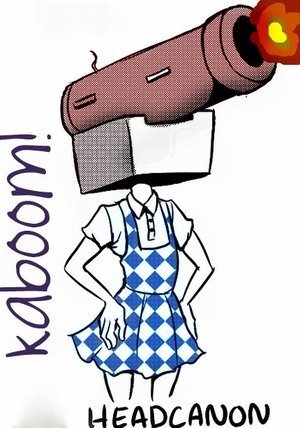 via
via
Grant's Newsflesh series (which I kind of panned a bit here) was full of small shit that bugged me and overshadowed what would have been a good time (for me, anyway - lots of friends love them unabashedly [see Charleen's recent experience with Feed here]), but she totally excells at the short format. Even though this novella could be considered (and has been called) Hugo Bait, I took that bait because this was exactly what I was hoping for.
EXACTLY.
San Diego 2014 takes place (as the title suggests) at the beginning of the outbreak whose aftermath we read about in Feed. Parts of it take place in the in universe current timeline, but it's mostly a "found footage" sort of book, detailing what happened at SDCC before we were even fully prepared to admit that the zombie apocalypse was, y'know - actually a thing that was happening.
We know from the very beginning that we're reading an interview with the lone survivor of the Con, which makes this an incredibly poignant - and at times - tearful read.
Read this even if you haven't read the rest of the series. Read this if you love zombies or Firefly or Doctor Who or Star Wars or comics of any sort. Read this and be comforted that maybe you'd stand a chance afterall, since you've been prepping for this as a member of ANY fandom for most of your life. Read this and be reminded that we all stand a chance to be Big Damn Heroes someday.
I totally cried. I cried and when I wasn't crying I had a hard time swallowing because the lump in my throat was so large.
Just read it. It's cheap as hell and there are thousands of worse ways you could be spending your time.
Originally posted here.
1. Husband and I were early Firefly-adopters. Somewhere I still have VHS tapes with every episode that aired (along with the cancelled too soon John Doe that no one else seems to care about. DIGGER! [shakes fist]). We went so long not knowing other people who watched (and being unable to convince ANYONE to watch) that it's still kind of shocking to me how many people love it now.
2. My first non-TDMA cell phone was a Nokia 3595, and my ringtone FOREVER was a midi version of Hero of Canton .
3. I lived in/around San Diego until I was 10, then spent every weekend there when I was 17, 18 and 19.
4. I have a mega lump in my throat as I type this, thinking about Wash being a leaf on the wind.
Add to that my love of zombies and the fact that (in spite of my problems with some of her stuff) I will read anything Seanan McGuire/Mira Grant writes, and San Diego 2014: The Last Stand of the California Browncoats was a perfect storm of all my favourite sorts of geekery.
It reads like fanfic. I don't say that in a bad way, at all. It reads like those fanfics that you take into your heart and absorb as your own personal canon. It's like that fic I read right after Deathly Hallows came out where Dudley and Harry met again on Platform 9¾ during the epilogue cos Dudley has just sent HIS oldest off to Hogwarts.
viaGrant's Newsflesh series (which I kind of panned a bit here) was full of small shit that bugged me and overshadowed what would have been a good time (for me, anyway - lots of friends love them unabashedly [see Charleen's recent experience with Feed here]), but she totally excells at the short format. Even though this novella could be considered (and has been called) Hugo Bait, I took that bait because this was exactly what I was hoping for.
EXACTLY.
San Diego 2014 takes place (as the title suggests) at the beginning of the outbreak whose aftermath we read about in Feed. Parts of it take place in the in universe current timeline, but it's mostly a "found footage" sort of book, detailing what happened at SDCC before we were even fully prepared to admit that the zombie apocalypse was, y'know - actually a thing that was happening.
We know from the very beginning that we're reading an interview with the lone survivor of the Con, which makes this an incredibly poignant - and at times - tearful read.
Read this even if you haven't read the rest of the series. Read this if you love zombies or Firefly or Doctor Who or Star Wars or comics of any sort. Read this and be comforted that maybe you'd stand a chance afterall, since you've been prepping for this as a member of ANY fandom for most of your life. Read this and be reminded that we all stand a chance to be Big Damn Heroes someday.
I totally cried. I cried and when I wasn't crying I had a hard time swallowing because the lump in my throat was so large.
Just read it. It's cheap as hell and there are thousands of worse ways you could be spending your time.
Originally posted here.

July 19, 2012
The book is written with a nod to its brethren in the Newsflesh series: Mahir Gowda, head Newsie of After the End Times has managed to get an exclusive interview with a survivor of the Kellis-Amberlee outbreak that happened on Preview Night of the San Diego Comic Con 2014. While this book is set in the same 'verse as Feed, Deadline, and Blackout, one does not necessarily have to be familiar with the main three books in this series to enjoy this one.
That I read the novel right after San Diego makes it that much more fiendishly chilling a read. I want to hug every Browncoat and Webcomicker I know because I know several who attend that Con every year, and that makes the read much more vivid; makes it hit that much closer to home.
As usual, Grant (who is better known as Seanan McGuire, author of the October "Toby" Daye series of faerie urban fantasy) writes with the sort of spin that makes a reader care about the characters. Even the dog gets written so you know her personality and care about her as an individual.
While this story, taking place in one of the most Genre Savvy places on earth, means it's full of tropes, a lot of the ones a reader expects to see in a story like this are absent. There's no obnoxious obstructionist who you look forward to seeing get his when it all hits the fan -- it's just a bunch of strangers, thrown together, who are struggling against an adversity they never dreamed they'd face. It's just a bunch of people with regular people motivations, who were looking to geek out for a weekend but had to try to survive.
Mira Grant is One Of Us. She's a geek through and through, proud of every drop of her geek blood. And it shows by the loving touches she applies to certain things in the story.
So yes, she hits it out of the park again. And if you're a fan of San Diego Comic Con and particularly Firefly? It's going to really hit you where you live.
That I read the novel right after San Diego makes it that much more fiendishly chilling a read. I want to hug every Browncoat and Webcomicker I know because I know several who attend that Con every year, and that makes the read much more vivid; makes it hit that much closer to home.
As usual, Grant (who is better known as Seanan McGuire, author of the October "Toby" Daye series of faerie urban fantasy) writes with the sort of spin that makes a reader care about the characters. Even the dog gets written so you know her personality and care about her as an individual.
While this story, taking place in one of the most Genre Savvy places on earth, means it's full of tropes, a lot of the ones a reader expects to see in a story like this are absent. There's no obnoxious obstructionist who you look forward to seeing get his when it all hits the fan -- it's just a bunch of strangers, thrown together, who are struggling against an adversity they never dreamed they'd face. It's just a bunch of people with regular people motivations, who were looking to geek out for a weekend but had to try to survive.
Mira Grant is One Of Us. She's a geek through and through, proud of every drop of her geek blood. And it shows by the loving touches she applies to certain things in the story.
So yes, she hits it out of the park again. And if you're a fan of San Diego Comic Con and particularly Firefly? It's going to really hit you where you live.
May 24, 2024
4.5*
July 4, 2014
I don't normally like short stories or novellas as I take some time to get invested in the story and characters. I also find that with a lot of these new dystopian series, it really is just a money making scheme and there is not much to the stories. I am very happy to say that this is not true of the Newsflesh trilogy novella's. They are well written and can almost be read a stand alones. They provide inside into areas of the story not covered by the main books. I will definitely be reading the rest of them.
July 27, 2012
Why did it take me TEN DAYS to read this short story/novella? Lots of reasons, and all having to do with how well Mira Grant (Seanan McGuire) writes. I think just the title of the book gives some spoilers, and as the story is taking place as part of the zombie uprising that is so well documented in Grant's other books (Feed, Deadline and Blackout), you know someone (and probably more than one someone) is going to die. Grant uses a character we know from the novels, Mahir, to tell the story of the 2014 San Diego Comic-con, which was the site of one of the first major outbreaks of the Rising. Mahir is interviewing a "survivor" of the Comic-con, who tells her story for the first time in thirty years. I would read one section, and be filled with dread knowing, but not knowing, that the end was coming for these characters and dreading the final outcome. Over the course of 10 days I finally talked myself into reading to the end, and finished with tears streaming down my face. Damn you, Seanan McGuire! I am crying my eyes out over characters in a short story, and it is all your fault. But please write more. I will read them, too, even if they make me cry. Thank you very much!
July 1, 2018
The year is 2014 and the Rising has made it to San Diego.
San Diego 2014: The Last Stand of the Browncoats was an interesting, in-depth account of what may have happened at the San Diego Comic Con in 2014, where hundreds of thousands of vendors and spectators alike showed up for the con, but only one survived. I say ‘may have happened’ because essentially, the entire story is crafted around an interview between two people, with the rest of the details pulled from various online accounts of the events...which may or may not hold any truth to them.
Mahir Gowda finally landed an interview with Lorelei Tutt, the single survivor, and she recounts, in painful detail, the events that killed everyone, including her parents, as she witnessed and lived them. The rest is suppositional accounts from third parties who may or may not have seen the con from a distance, who may or may not have fabricated some details, but it’s certainly not information collected and witnessed from a ground-level perspective. Anyone who was ground-level, inside or directly outside, of the convention center is now one of the many hordes of biters.
Last Stand of the Browncoats doesn’t have any of the beloved characters from the series, outside of Mahir interviewing Tutt, and that’s perfectly ok. The entire short story is reminiscent of the blog entry breaks in the series and that’s precisely why I liked it so much. That, and anything that recounts the events of the actual apocalypse is something I look forward to because the actual series doesn’t recount in detail the past events, outside of the basics. This is so far probably my second-favorite short in the Newsflesh series, with Countdown being the first, and it’s going to very hard to top these two. Although I’ll get see if any are just as good as these two when I (happily) devour the rest. And lets be honest — this entire series is phenomenal, so I have no doubt the rest of the shorts are going to be phenomenal as well.
San Diego 2014: The Last Stand of the Browncoats was an interesting, in-depth account of what may have happened at the San Diego Comic Con in 2014, where hundreds of thousands of vendors and spectators alike showed up for the con, but only one survived. I say ‘may have happened’ because essentially, the entire story is crafted around an interview between two people, with the rest of the details pulled from various online accounts of the events...which may or may not hold any truth to them.
Mahir Gowda finally landed an interview with Lorelei Tutt, the single survivor, and she recounts, in painful detail, the events that killed everyone, including her parents, as she witnessed and lived them. The rest is suppositional accounts from third parties who may or may not have seen the con from a distance, who may or may not have fabricated some details, but it’s certainly not information collected and witnessed from a ground-level perspective. Anyone who was ground-level, inside or directly outside, of the convention center is now one of the many hordes of biters.
Last Stand of the Browncoats doesn’t have any of the beloved characters from the series, outside of Mahir interviewing Tutt, and that’s perfectly ok. The entire short story is reminiscent of the blog entry breaks in the series and that’s precisely why I liked it so much. That, and anything that recounts the events of the actual apocalypse is something I look forward to because the actual series doesn’t recount in detail the past events, outside of the basics. This is so far probably my second-favorite short in the Newsflesh series, with Countdown being the first, and it’s going to very hard to top these two. Although I’ll get see if any are just as good as these two when I (happily) devour the rest. And lets be honest — this entire series is phenomenal, so I have no doubt the rest of the shorts are going to be phenomenal as well.
August 25, 2015
I really enjoy these novellas that form part of the bigger Newsflesh trilogy – they are like sprinkles on an already awesome cupcake.
And this brings me to say what I always do in my reviews of these books. The Newsflesh trilogy is for people who normally don’t like Zombie books. The bloody-zombie-chasing-and-chomping action is at a bare minimum as the books rely on strong characterization and plausible science to set the scene and propel the plot.
Yes you can read this novella as a stand-alone but in my opinion, why would you deprive yourself of the fun by NOT reading the entire series. Reading this as a stand-alone however would not convince you that this series is different from any other zombie books.
I think this installment has the most zombie action of all the novellas in the series and if I had read this one first I probably would not have given Feed a try. So although fun to read, it was not my favourite out of the bunch.
And this brings me to say what I always do in my reviews of these books. The Newsflesh trilogy is for people who normally don’t like Zombie books. The bloody-zombie-chasing-and-chomping action is at a bare minimum as the books rely on strong characterization and plausible science to set the scene and propel the plot.
Yes you can read this novella as a stand-alone but in my opinion, why would you deprive yourself of the fun by NOT reading the entire series. Reading this as a stand-alone however would not convince you that this series is different from any other zombie books.
I think this installment has the most zombie action of all the novellas in the series and if I had read this one first I probably would not have given Feed a try. So although fun to read, it was not my favourite out of the bunch.

July 5, 2012
Another short story from the Mira Grant Newsflesh series. This one, also set during the year of the Rising: 2014. Instead of concerning itself with the virus or any of the larger story of the Masons, this one tells the story of one of the early outbreaks - The San Diego Comic Con of 2014, the last ever Comic Con.
You would think this would be a perfect story for a series that has, so far, been far more about bloggers and nerds than zombies. Unfortunately, what starts out as an absolutely brilliant idea, fails to deliver for me. I have no complaints about the idea, the characters, the story or the ending. The one thing that spoilt the story for me was the the flashback point-of-view combined with the omniscient narrator. I can see what Grant was trying to do, but I've never really been a fan of stories where the flashback is such an obviously present device. Each section of the story is interspersed with our alleged narrator, Mahir Gowda (yes the same one from the Newsflesh series), interviewing a survivor of the Comic Con outbreak, Lorelei Tuff. Except she's not really a survivor, she only survived because she went back to the hotel with a headache. So the only real details she can provide are from before she left, the two phone conversations she had with her parents and the video footage that was recorded on her parent's friend's iPad. Yet strangely, Mahir is able to piece together parts of the story that he couldn't possibly know - the blind woman locked in the control room; the conversations between Elle and her group of friends; the thoughts and feelings of all sorts of other characters.
The story would have worked a lot better for me if Grant had dropped Mahir completely and told the entire story in a straightforward third-person, or multiple first-person point-of-view narrative.
You would think this would be a perfect story for a series that has, so far, been far more about bloggers and nerds than zombies. Unfortunately, what starts out as an absolutely brilliant idea, fails to deliver for me. I have no complaints about the idea, the characters, the story or the ending. The one thing that spoilt the story for me was the the flashback point-of-view combined with the omniscient narrator. I can see what Grant was trying to do, but I've never really been a fan of stories where the flashback is such an obviously present device. Each section of the story is interspersed with our alleged narrator, Mahir Gowda (yes the same one from the Newsflesh series), interviewing a survivor of the Comic Con outbreak, Lorelei Tuff. Except she's not really a survivor, she only survived because she went back to the hotel with a headache. So the only real details she can provide are from before she left, the two phone conversations she had with her parents and the video footage that was recorded on her parent's friend's iPad. Yet strangely, Mahir is able to piece together parts of the story that he couldn't possibly know - the blind woman locked in the control room; the conversations between Elle and her group of friends; the thoughts and feelings of all sorts of other characters.
The story would have worked a lot better for me if Grant had dropped Mahir completely and told the entire story in a straightforward third-person, or multiple first-person point-of-view narrative.

June 11, 2013
Going into the story, you know how it's going to end. Everything, from the title to the narration to the dialogue, points to that end. Yet, as you read, you still have hope that the end will be averted somehow, that these people can escape their fates. Then, when the inevitable happens, that you've known will happen since you started the story, it's gutting. HOW DOES SHE DO IT? HOW?!

January 4, 2025
SAN DIEGO 2014 was a heartbreaking read as we follow several different groups trapped inside the Comic-Con convention center when the zombie outbreak starts. This was intense and emotional but also strongly highlighted the importance and beauty of human connection.

June 23, 2013
Mira Grant/Seanan McGuire has been nominated in the novel, novella, and novelette categories for the Hugo Awards this year (and twice in the novelette category). All the more power to her! I admit that I’m not a fan of the Newsflesh series. (I read the first two books when they were nominated for Hugo Awards.) So I’m surprised that San Diego 2014: The Last Stand of the California Browncoats, a prequel (told through flashbacks) set in the same universe, managed to impress me.
Mahir, Shaun and Georgia’s correspondent and editor from London, has tracked down the only survivor of the 2014 San Diego Comic Convention. This occurred during the early days of the Rising, when people had not yet gotten to grips with what the infectious nature of the zombie apocalypse meant for large, open-air gatherings like Comic Con. Lorelei survived only because she happened to be in the hotel at the time, outside the main convention centre. She has lived with the guilt of losing her parents and their friends ever since.
Each chapter is a flashback recounted from Lorelei’s recollection or assembled by Mahir from evidence and recovered footage. Grant prefaces each chapter with some pithy quotations from Mahir’s writing and snippets of his conversation with Lorelei. Both of these serve to set the tone and remind us that the fate of the California Browncoats is sealed: there will be no eleventh hour rescue from the army.
It’s easy to identify why San Diego 2014 works for me while Newsflesh doesn’t. Try as Grant might, she just can’t make me care that much about her zombie-stricken characters. The plots of Feed and Deadline were too anaemic, the writing too pedantic to sustain much tension. Working over a much more condensed length, with the characters against the ticking clock as the infection spreads and nobody from the outside world comes to help, Grant manages to create a much more compelling conflict. The tragedy of the Kellis–Amberlee virus is apparent in the novels, but here it is more intense in its ruthless presence.
The ensemble cast of disconnected characters helps as well. Grant lets us see how the zombie apocalypse affects this narrow cross-section of people who are from all walks of life but united in their affection for comics, science-fiction, and other nerdery. She touches on the types of isolation and marginalization these people feel, especially those fans (or actors, in the case of Elle) who are women and at risk of being branded a “fake geek girl”. In this respect, San Diego 2014 is a very topical story that’s really of its time.
We’re having a lot of conversations right now about what it means to be a “fan”, “geek”, “nerd”, “gamer”, etc. These conversations are inextricably connected to larger discussions about race and sex/gender. Geek has gone mainstream in a big way, which worries some people. Fear leads to anger, anger leads to hate, and hate leads to people going after vulnerable, visible minorities, branding them as posers and fakes. (And there seems to be a lot of sexist resentment pent up in certain sectors of geekdom, almost a “you can’t come and play with my toys” type of deal, despite the fact that women have always been a part of geek culture, as both creators and consumers, since Day Zero.)
So San Diego 2014 addresses a lot of these issues in the guise of a look at a slice of the zombie apocalypse. The meaning of fandom, the extent to which one is a fan, changes as people can no longer gather post-Rising. Also, this is a bit of a love-letter to geek culture in the way Grant portrays the self-sacrifice and bravery of the California Browncoats. It’s a bit of a “hell yeah” feeling of cameraderie, a sense that these people have come together to celebrate the shows and books that they love, and instead they have decided they will die together, if that’s what needs doing….
The thematic statements here are a little heavyhanded and on the nose, subtext often scraping the surface. Embedded in the zeitgeist as it is, I’m not sure how well this story will age as geek culture continues to evolve—as a clear product of its times, I suspect that we might look back at as “vintage” one day, rather than “classic”. Don’t get me wrong: it’s still a good story. But the trappings of the story are difficult to decontextualize. I think that readers who aren’t as familiar with the idea of Comic Cons or the issues that are currently front-and-centre will have a harder time understanding parts of this story, much like we’re less sensitive to the socialist imprecations of Dickens in this day and age.
I wouldn’t hesitate to recommend this story for people who haven’t read previous Newsflesh books. It’s an accessible place to start, providing a taste of the universe and a little exposition, while also lacking much in the way of spoilers. Aside from Mahir, it doesn’t feature any major characters (to my knowledge), which means you can read it, get a taste of Grant’s writing, before checking out Feed. Mind you, I liked this better than either of the first two books, so take that for what you will…. While not my pick for the Hugo Award, it definitely earns its nomination, and I’m pleased there’s finally a Newsflesh story I can say I haven’t tried to shred into tiny pieces.

Mahir, Shaun and Georgia’s correspondent and editor from London, has tracked down the only survivor of the 2014 San Diego Comic Convention. This occurred during the early days of the Rising, when people had not yet gotten to grips with what the infectious nature of the zombie apocalypse meant for large, open-air gatherings like Comic Con. Lorelei survived only because she happened to be in the hotel at the time, outside the main convention centre. She has lived with the guilt of losing her parents and their friends ever since.
Each chapter is a flashback recounted from Lorelei’s recollection or assembled by Mahir from evidence and recovered footage. Grant prefaces each chapter with some pithy quotations from Mahir’s writing and snippets of his conversation with Lorelei. Both of these serve to set the tone and remind us that the fate of the California Browncoats is sealed: there will be no eleventh hour rescue from the army.
It’s easy to identify why San Diego 2014 works for me while Newsflesh doesn’t. Try as Grant might, she just can’t make me care that much about her zombie-stricken characters. The plots of Feed and Deadline were too anaemic, the writing too pedantic to sustain much tension. Working over a much more condensed length, with the characters against the ticking clock as the infection spreads and nobody from the outside world comes to help, Grant manages to create a much more compelling conflict. The tragedy of the Kellis–Amberlee virus is apparent in the novels, but here it is more intense in its ruthless presence.
The ensemble cast of disconnected characters helps as well. Grant lets us see how the zombie apocalypse affects this narrow cross-section of people who are from all walks of life but united in their affection for comics, science-fiction, and other nerdery. She touches on the types of isolation and marginalization these people feel, especially those fans (or actors, in the case of Elle) who are women and at risk of being branded a “fake geek girl”. In this respect, San Diego 2014 is a very topical story that’s really of its time.
We’re having a lot of conversations right now about what it means to be a “fan”, “geek”, “nerd”, “gamer”, etc. These conversations are inextricably connected to larger discussions about race and sex/gender. Geek has gone mainstream in a big way, which worries some people. Fear leads to anger, anger leads to hate, and hate leads to people going after vulnerable, visible minorities, branding them as posers and fakes. (And there seems to be a lot of sexist resentment pent up in certain sectors of geekdom, almost a “you can’t come and play with my toys” type of deal, despite the fact that women have always been a part of geek culture, as both creators and consumers, since Day Zero.)
So San Diego 2014 addresses a lot of these issues in the guise of a look at a slice of the zombie apocalypse. The meaning of fandom, the extent to which one is a fan, changes as people can no longer gather post-Rising. Also, this is a bit of a love-letter to geek culture in the way Grant portrays the self-sacrifice and bravery of the California Browncoats. It’s a bit of a “hell yeah” feeling of cameraderie, a sense that these people have come together to celebrate the shows and books that they love, and instead they have decided they will die together, if that’s what needs doing….
The thematic statements here are a little heavyhanded and on the nose, subtext often scraping the surface. Embedded in the zeitgeist as it is, I’m not sure how well this story will age as geek culture continues to evolve—as a clear product of its times, I suspect that we might look back at as “vintage” one day, rather than “classic”. Don’t get me wrong: it’s still a good story. But the trappings of the story are difficult to decontextualize. I think that readers who aren’t as familiar with the idea of Comic Cons or the issues that are currently front-and-centre will have a harder time understanding parts of this story, much like we’re less sensitive to the socialist imprecations of Dickens in this day and age.
I wouldn’t hesitate to recommend this story for people who haven’t read previous Newsflesh books. It’s an accessible place to start, providing a taste of the universe and a little exposition, while also lacking much in the way of spoilers. Aside from Mahir, it doesn’t feature any major characters (to my knowledge), which means you can read it, get a taste of Grant’s writing, before checking out Feed. Mind you, I liked this better than either of the first two books, so take that for what you will…. While not my pick for the Hugo Award, it definitely earns its nomination, and I’m pleased there’s finally a Newsflesh story I can say I haven’t tried to shred into tiny pieces.

August 8, 2021
Chilling, adds to understanding the background and what it means to be human.

March 2, 2025
Great read. I can't believe it took me so long to get to this series

July 29, 2013
Mira Grant aka Seanan McGuire achieved the impressive feat of having more Hugo Nominations than perhaps anyone had managed previously with a nomination for best novel, a nomination for this novella, two novelette nominations as well as a fancast nomination. I had enjoyed reading one or two blog posts from her so I approached this book with a certain amount of optimism although many people had suggested this was the weakest novella in the novella category this year.
There are few books that I give 1 stars to and this is because usually if I am not enjoying a book I just dump it and then I rarely feel it would be fair to review a book that I have read less than half of. With this book I did tough it out and read it to the end. I can see to a point why Mira Grant has many fans, she respects fandom/ geekdom, the pages turn quickly when you read her work, there is a decent amount of humor in the novella that works reasonably well...but the writing is really not that great. I mean as a stylist she is far better than Dan Brown or James Patterson but this was still probably the worst written book I have read in several years. Her prose is marred by repetition and cliche, the character motivation is barely believable at times, it looks like a bad first draft by a fan writer who writes with a certain amount of exuberance but not with any class. She is a bit like the pulp writers of the 30s and 40s though in that if you turn your brain off a bit then you can zip along with the dodge prose, questionable character motivations and hackneyed plot and find there are moments where it is mildly enjoyable.
As for the story itself, we have already had zombie outbreaks at SF conventions before, there is nothing here in this story that works as anything other than a fan titbit for those who love her novels in the series. To someone who has not read those books it all still make sense it just doesnt make anything interesting or worthwhile.
I can see why she has her fans just like I can see why people love CSI book tie is or the writings of Dan Brown but I cannot see me being tempted to pick up something else by Mira Grant unless her writing undergoes a bigger change than Robert Silverberg's did when he decided to actually try to write well rather than just produce the maximum number of sales for the minimum amount of effort. Even if I do hear about such a change I will take it with a somewhat large pinch of salt.
There are few books that I give 1 stars to and this is because usually if I am not enjoying a book I just dump it and then I rarely feel it would be fair to review a book that I have read less than half of. With this book I did tough it out and read it to the end. I can see to a point why Mira Grant has many fans, she respects fandom/ geekdom, the pages turn quickly when you read her work, there is a decent amount of humor in the novella that works reasonably well...but the writing is really not that great. I mean as a stylist she is far better than Dan Brown or James Patterson but this was still probably the worst written book I have read in several years. Her prose is marred by repetition and cliche, the character motivation is barely believable at times, it looks like a bad first draft by a fan writer who writes with a certain amount of exuberance but not with any class. She is a bit like the pulp writers of the 30s and 40s though in that if you turn your brain off a bit then you can zip along with the dodge prose, questionable character motivations and hackneyed plot and find there are moments where it is mildly enjoyable.
As for the story itself, we have already had zombie outbreaks at SF conventions before, there is nothing here in this story that works as anything other than a fan titbit for those who love her novels in the series. To someone who has not read those books it all still make sense it just doesnt make anything interesting or worthwhile.
I can see why she has her fans just like I can see why people love CSI book tie is or the writings of Dan Brown but I cannot see me being tempted to pick up something else by Mira Grant unless her writing undergoes a bigger change than Robert Silverberg's did when he decided to actually try to write well rather than just produce the maximum number of sales for the minimum amount of effort. Even if I do hear about such a change I will take it with a somewhat large pinch of salt.

July 11, 2012
So I've been on a mission to clear out the short fiction from my queue, as well as to not let any new short fiction become forgotten on my Kindle as I have in the past. So when Mira Grant's new Newsflesh novella arrived on my Kindle, I read it as soon as I finished reading Leviathan Wakes. It seemed appropriate, given that I've been on a Grant binge lately. This should be it for a while, so if you're tired of seeing Mira Grant reviews, this is the last. :)
And I have to say: I got a perverse bit of pleasure reading this novella which is set during the San Diego Comic Con, which features what's essentially a fan club for Firefly. The pleasure came from the fact that I was reading it during Comic Con (no, I wasn't there, but Comic Con was happening while I was reading the novella!), and this year also happened to be the 10th anniversary of Firefly, and at this year's Comic Con, there was a reunion. Apparently, it was a huge hit.
How intentional the writing of this particular story was, and how intentional the timing of the publication was, I don't know. I'd say one's more intentional (publishing a story about the 2014 Comic Con during the 2012 one) than the other, but while Grant may not have known about the Firefly reunion panel, I doubt she was unaware that this year was Firefly's 10th anniversary.
But I should stop babbling about all that delightful geek stuff. Let's talk about the story!
The full review, NO SPOILERS, may be found in my blog, which is linked below. As always, comments and discussion are most welcome!
REVIEW: Mira Grant's SAN DIEGO 2014: THE LAST STAND OF THE CALIFORNIA BROWNCOATS
Happy Reading!
And I have to say: I got a perverse bit of pleasure reading this novella which is set during the San Diego Comic Con, which features what's essentially a fan club for Firefly. The pleasure came from the fact that I was reading it during Comic Con (no, I wasn't there, but Comic Con was happening while I was reading the novella!), and this year also happened to be the 10th anniversary of Firefly, and at this year's Comic Con, there was a reunion. Apparently, it was a huge hit.
How intentional the writing of this particular story was, and how intentional the timing of the publication was, I don't know. I'd say one's more intentional (publishing a story about the 2014 Comic Con during the 2012 one) than the other, but while Grant may not have known about the Firefly reunion panel, I doubt she was unaware that this year was Firefly's 10th anniversary.
But I should stop babbling about all that delightful geek stuff. Let's talk about the story!
The full review, NO SPOILERS, may be found in my blog, which is linked below. As always, comments and discussion are most welcome!
REVIEW: Mira Grant's SAN DIEGO 2014: THE LAST STAND OF THE CALIFORNIA BROWNCOATS
Happy Reading!

July 5, 2016
4.5 stars
So yeah, I decided to read this two weeks before San Diego Comic Con. Perhaps not the best time. *will now not be able to go to any vender not right beside an exit*
Anyways.....this was a really good novella set in the Newsflesh world. This is back in the beginning when the virus was first starting. The story starts with Mahir interviewing one of the few survivors of the Comic Convention. This story has it all. Great world building, great characters and oh the feelz. So sad in places. (I swear this author guts me every time she does a pov from a dog). This was great and a must read for both fans of the series and people who haven't read it too. It works fine as a stand alone.
So yeah, I decided to read this two weeks before San Diego Comic Con. Perhaps not the best time. *will now not be able to go to any vender not right beside an exit*
Anyways.....this was a really good novella set in the Newsflesh world. This is back in the beginning when the virus was first starting. The story starts with Mahir interviewing one of the few survivors of the Comic Convention. This story has it all. Great world building, great characters and oh the feelz. So sad in places. (I swear this author guts me every time she does a pov from a dog). This was great and a must read for both fans of the series and people who haven't read it too. It works fine as a stand alone.

September 17, 2012
“Trapped and Doomed! It’s simple and thrilling!”
San Diego Comic Con 2014, all geeks’ most favorite part of the year! All I can say is that it’s simple and thrilling!
Picture this…you’re having fun at the San Diego Comic Con then there’s screaming outside then you’ve been locked-in inside. No way out and some people got bit and it starts spreading like hell. The only way of communicating from the outside is the Wi-Fi through status updates of the social media.
People around you become a zombie and the army decided to blow-up the whole arena and no one survives.
Trapped and Doomed!
San Diego Comic Con 2014, all geeks’ most favorite part of the year! All I can say is that it’s simple and thrilling!
Picture this…you’re having fun at the San Diego Comic Con then there’s screaming outside then you’ve been locked-in inside. No way out and some people got bit and it starts spreading like hell. The only way of communicating from the outside is the Wi-Fi through status updates of the social media.
People around you become a zombie and the army decided to blow-up the whole arena and no one survives.
Trapped and Doomed!
July 12, 2012
Why do you read a story when you already know how it ends? Because of the story telling. Heartbreaking and triumphant all at once.
I'll never walk into the vendors hall at a convention without a bit of a shiver ever again.
I'll never walk into the vendors hall at a convention without a bit of a shiver ever again.

September 19, 2016
this makes you think twice about going to comicon, just in case the zombie invasion does happen.

June 24, 2013
I'm catching up on a backlog of Goodreads reviews, so I'm going to make this quick: I read San Diego 2014 in one sitting, and finished it ugly-crying on my friend's sofa and making incoherent noises at them about a seeing-eye dog. When typing up my favourite quotes below, a certain excerpt made me burst into tears -- and then when I reread to fix typos, it made me cry a second time.
This novella is extremely well-written and the Newsflesh world works really well in such a condensed format. It's emotionally manipulative, yes, but it's also a fascinating slice-of-life of nerd life, and commentary on escapism, science fiction/fantasy, heroism and sacrifice, sub-cultures and misfits and finding a place where you belong. Also despair. (Also extremely topical subjects wrt geek culture and the role of women within it.)
Having been to SDCC twice, Grant captures the mayhem and chaos and claustrophobic crowds perfectly; I've always felt that this convention is already as close as you could get to being trampled in a crowd fleeing a zombie apocalypse, just without, you know, the zombies. The atmosphere in this novella is claustrophobic, with a slow, slow build-up of dread and helpless inevitability. The unfurling of the story is intercut with scenes of Mahir's decades-later interview with the last survivor, so this -- in combination with, perhaps, having heard snippets in the other Newsflesh books about what happened to Comic-Con -- you know that this will not end well. And yet you're locked in for the ride, just like the people literally locked into the convention centre. You spend time getting to know all of these interlocking characters, and as the story (and horror) unfolds, you see how their tales overlap, why you got to know them, and what happens to them.
It doesn't go well. In fact, the novella's actually made me strangely skittish about the idea of going to San Diego Comic-Con in 2014, hah.
You can read this perfectly fine as a standalone, separate from the rest of the Newsflesh series, and I'd heartily recommend people to do so. Because it's great. Painful, and great.
(Tangentially, my only thing is that I really, really don't get why Grant keeps recycling names in this series. Across the Newsflesh texts that I've read so far, there's Shaun/Shawn, Rebecca/Rebecca, Kelly/Kelly, and Joseph/Joseph "Joey"/Joseph "Joe"/Joseph "Joe". Seriously, what?)
Either way. Fave (spoilery) quotes below:
This novella is extremely well-written and the Newsflesh world works really well in such a condensed format. It's emotionally manipulative, yes, but it's also a fascinating slice-of-life of nerd life, and commentary on escapism, science fiction/fantasy, heroism and sacrifice, sub-cultures and misfits and finding a place where you belong. Also despair. (Also extremely topical subjects wrt geek culture and the role of women within it.)
Having been to SDCC twice, Grant captures the mayhem and chaos and claustrophobic crowds perfectly; I've always felt that this convention is already as close as you could get to being trampled in a crowd fleeing a zombie apocalypse, just without, you know, the zombies. The atmosphere in this novella is claustrophobic, with a slow, slow build-up of dread and helpless inevitability. The unfurling of the story is intercut with scenes of Mahir's decades-later interview with the last survivor, so this -- in combination with, perhaps, having heard snippets in the other Newsflesh books about what happened to Comic-Con -- you know that this will not end well. And yet you're locked in for the ride, just like the people literally locked into the convention centre. You spend time getting to know all of these interlocking characters, and as the story (and horror) unfolds, you see how their tales overlap, why you got to know them, and what happens to them.
It doesn't go well. In fact, the novella's actually made me strangely skittish about the idea of going to San Diego Comic-Con in 2014, hah.
You can read this perfectly fine as a standalone, separate from the rest of the Newsflesh series, and I'd heartily recommend people to do so. Because it's great. Painful, and great.
(Tangentially, my only thing is that I really, really don't get why Grant keeps recycling names in this series. Across the Newsflesh texts that I've read so far, there's Shaun/Shawn, Rebecca/Rebecca, Kelly/Kelly, and Joseph/Joseph "Joey"/Joseph "Joe"/Joseph "Joe". Seriously, what?)
Either way. Fave (spoilery) quotes below:

May 6, 2021
This is a very geeky short story about Comic-Con and the zombie outbreak.
I disliked knowing from the beginning that no one survived. It made it hard to follow the characters and become invested in them. As I’m new to the series maybe this outcome is known from the first full novel of the series as this was written after that first book.
I enjoyed reading about the women who is blind with her guide dog. Severely lacking in diversely abled characters in most dystopian fiction.
I disliked knowing from the beginning that no one survived. It made it hard to follow the characters and become invested in them. As I’m new to the series maybe this outcome is known from the first full novel of the series as this was written after that first book.
I enjoyed reading about the women who is blind with her guide dog. Severely lacking in diversely abled characters in most dystopian fiction.
This entire review has been hidden because of spoilers.

April 13, 2025
Mira Grant, please keep writing these! I'm not usually a zombie genre fan, but I absolutely adore this series. This installment, set at the comic book convention, was completely page-turning. Highly recommend!

October 2, 2017
I have no one to blame for this pain but myself (and Mira for making me love these characters even though we were told that they were all going to die).
January 4, 2019
This was a fun fast read. Not tons of gore for a zombie novel and great examples of how heroism doesn't need to be violent.
March 27, 2019
Loved this book. It was entertaining reading the whole way through

March 6, 2020
CW: animal death, blood, violence


September 8, 2023
this was my favorite so far! So touching, beautifully written. Easy to follow. It was very realistic too. Again I want a book from the POV of a dog!
October 1, 2017
This shtuff gave me nightmares, changing my rating form 3 to 4. It makes you think.
Displaying 1 - 30 of 345 reviews