

What do you think?

The Detour
Ernst Vogler is twenty-six years old in 1938 when he is sent to Rome by his employer—the Third Reich's Sonderprojekte, which is collecting the great art of Europe and bringing it to Germany for the Führer. Vogler is to collect a famous Classical Roman marble statue, The Discus Thrower, and get it to the German border, where it will be turned over to Gestapo custody. It is a simple, three-day job.
Things start to go wrong almost immediately. The Italian twin brothers who have been hired to escort Vogler to the border seem to have priorities besides the task at hand—wild romances, perhaps even criminal jobs on the side—and Vogler quickly loses control of the assignment. The twins set off on a dangerous detour and Vogler realizes he will be lucky to escape this venture with his life, let alone his job. With nothing left to lose, the young German gives himself up to the Italian adventure, to the surprising love and inevitable losses along the way.
The Detour is a bittersweet novel about artistic obsession, misplaced idealism, detours, and second chances, set along the beautiful back-roads of northern Italy on the eve of war.
Things start to go wrong almost immediately. The Italian twin brothers who have been hired to escort Vogler to the border seem to have priorities besides the task at hand—wild romances, perhaps even criminal jobs on the side—and Vogler quickly loses control of the assignment. The twins set off on a dangerous detour and Vogler realizes he will be lucky to escape this venture with his life, let alone his job. With nothing left to lose, the young German gives himself up to the Italian adventure, to the surprising love and inevitable losses along the way.
The Detour is a bittersweet novel about artistic obsession, misplaced idealism, detours, and second chances, set along the beautiful back-roads of northern Italy on the eve of war.
320 pages, Paperback
First published January 1, 2012
About the author
Andromeda Romano-Lax
23 books477 followersAndromeda Romano-Lax worked as a freelance journalist and travel writer before turning to fiction. Her first novel, The Spanish Bow, was translated into eleven languages and was chosen as a New York Times Editors’ Choice. Her suspense novel, The Deepest Lake, was a Barnes & Noble Monthly Pick. Among her nonfiction works are a dozen travel and natural history guidebooks to the public lands of Alaska, as well as a travel narrative, Searching for Steinbeck’s Sea of Cortez. She currently lives on Vancouver Island in British Columbia, Canada.
RECEIVE ANDROMEDA'S MONTHLY AUTHOR NEWSLETTER: https://romanolax.substack.com/
RECEIVE ANDROMEDA'S MONTHLY AUTHOR NEWSLETTER: https://romanolax.substack.com/
Ratings & Reviews
Friends & Following
Create a free account to discover what your friends think of this book!
Community Reviews
Displaying 1 - 30 of 110 reviews

February 9, 2012
[7/10]
I will use an analogy from cinema for describing this book : it reads like an indie movie with a low budget, but with good actors and a smart script. Being a bit arthouse / Sundance Festival material can be a major advantage if that is what the reader expects / likes. Instead of flashy explosions, high speed chases and slick special effects, the story is focused on the intimate, the close focus, gaining in credibility, and making it easier to relate to the main characters.
The Detour is explicitly about transporting a famous antique statue from Mussolinni's Italy to Hitler's Germany. Some shady deals force the truck carrying the statue to use back roads and to hide from crooks trying to lay their hands on the valuable cargo. The Detour is for me the story of Vogler - the young German minder and art dealer sent to bring in the statue - from Ernst to Ernesto, from straight line to crooked path, from teutonic buttoned up seriosity and rigid submission to rules and to superiors towards the liberating anarchy and impulsiveness of the Latin spirit. An early scene in a Roman piazzetta with some street urchins illustrating this differrence in mentalities is one of my favorites in the book.
The story is told in flashbacks within flashbacks : opening in 1948 with Vogler returning to Piedmont after the war, going back to the fateful journey in 1938 and from there jumping back to his childhood in Munchen, his days in the army, the Munchen Olympics, the first political purgings, his work at the agency responsible for collecting / looting Europe's art masterpieces. To balance the introverted, cautious nature of Vogler, the author introduces twin Italian brothers: Enzo and Cosimo, and later their extended family (typical loud Latin thing with great uncle, mother, sister, niece, in-laws, dog, etc).
Same as other reviewers, I was unimpressed by the first chapters. They are OK, but not all that memorable or original. I'm glad I kept reading, because I understand what Romano-Lax was trying to do by focusing on the banal and uncomplicated Vogler point of view. She did a good job gradually adding depth and complexity to the character, and placing him in the larger context of Europe on the brink of World War II. The historical details are spare and understated, but much more effective by focusing on Vogler direct experiences with racism, people dissapearing in concentration camps, forced medical procedures, bootcamp bullies, fanatic fathers.
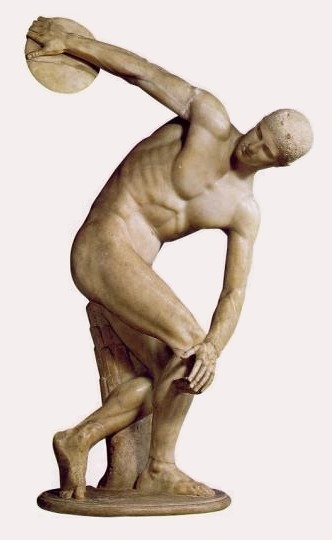
Art, as exemplified in the Discus Thrower marble statue, is explored in the book from the perspective of Nazi Propaganda machine - using the Greek ideal of the perfect athletic body to promote the Aryan Ubermensch image; as the valuable McGuffin being chased for monetary gain; and finally as the personal tool of revelation and redemption for a man still trying to discover/ to define himself (Vogler)
There is a romantic element to the story, well written but a little abrupt and convenient for the final closure of Ernst / Ernesto journey. I also had some issues with some plot decisions , but overall it was a good book that I have no problem recommending.
I will use an analogy from cinema for describing this book : it reads like an indie movie with a low budget, but with good actors and a smart script. Being a bit arthouse / Sundance Festival material can be a major advantage if that is what the reader expects / likes. Instead of flashy explosions, high speed chases and slick special effects, the story is focused on the intimate, the close focus, gaining in credibility, and making it easier to relate to the main characters.
The Detour is explicitly about transporting a famous antique statue from Mussolinni's Italy to Hitler's Germany. Some shady deals force the truck carrying the statue to use back roads and to hide from crooks trying to lay their hands on the valuable cargo. The Detour is for me the story of Vogler - the young German minder and art dealer sent to bring in the statue - from Ernst to Ernesto, from straight line to crooked path, from teutonic buttoned up seriosity and rigid submission to rules and to superiors towards the liberating anarchy and impulsiveness of the Latin spirit. An early scene in a Roman piazzetta with some street urchins illustrating this differrence in mentalities is one of my favorites in the book.
The story is told in flashbacks within flashbacks : opening in 1948 with Vogler returning to Piedmont after the war, going back to the fateful journey in 1938 and from there jumping back to his childhood in Munchen, his days in the army, the Munchen Olympics, the first political purgings, his work at the agency responsible for collecting / looting Europe's art masterpieces. To balance the introverted, cautious nature of Vogler, the author introduces twin Italian brothers: Enzo and Cosimo, and later their extended family (typical loud Latin thing with great uncle, mother, sister, niece, in-laws, dog, etc).
Same as other reviewers, I was unimpressed by the first chapters. They are OK, but not all that memorable or original. I'm glad I kept reading, because I understand what Romano-Lax was trying to do by focusing on the banal and uncomplicated Vogler point of view. She did a good job gradually adding depth and complexity to the character, and placing him in the larger context of Europe on the brink of World War II. The historical details are spare and understated, but much more effective by focusing on Vogler direct experiences with racism, people dissapearing in concentration camps, forced medical procedures, bootcamp bullies, fanatic fathers.
Art, as exemplified in the Discus Thrower marble statue, is explored in the book from the perspective of Nazi Propaganda machine - using the Greek ideal of the perfect athletic body to promote the Aryan Ubermensch image; as the valuable McGuffin being chased for monetary gain; and finally as the personal tool of revelation and redemption for a man still trying to discover/ to define himself (Vogler)
There is a romantic element to the story, well written but a little abrupt and convenient for the final closure of Ernst / Ernesto journey. I also had some issues with some plot decisions , but overall it was a good book that I have no problem recommending.

February 24, 2023
In this atypical World War II story, twenty-six-year-old Ernst Vogler works in the branch of the German Reich responsible for “acquiring” great artworks throughout Europe. In 1938, he travels to Italy to ensure a statue, The Discus Thrower, is transported to Germany. Italian twin brothers assist him in transporting the sculpture through the Italian countryside. The mission gets complicated, involving betrayal, romance, and the titular “detour” where he eventually meets Rosalina, the twins’ sister. The storyline provides Ernst’s background, including his difficult relationship with his father and how he got his current job.
The setting in the Italian countryside is beautifully described. The story is more focused on artwork with Hitler in the background in the role of “art collector.” I liked the premise. Unfortunately, the protagonist, Ernst, is bland and does not seem like a real person, especially not a representative of the Reich. We do not get to know what he thinks of his role in “collecting” works of art. It is unevenly paced - very slow in the beginning and a flurry of action at the end. This book is another mixed bag for me. It falls under the category of “great idea, not so great execution.”
The setting in the Italian countryside is beautifully described. The story is more focused on artwork with Hitler in the background in the role of “art collector.” I liked the premise. Unfortunately, the protagonist, Ernst, is bland and does not seem like a real person, especially not a representative of the Reich. We do not get to know what he thinks of his role in “collecting” works of art. It is unevenly paced - very slow in the beginning and a flurry of action at the end. This book is another mixed bag for me. It falls under the category of “great idea, not so great execution.”

October 24, 2011
I think this is almost a perfect book. It has much to say about the relationships between fathers and sons and brothers, as well as the nature of beauty and perfection. And the pre-WWII Italian countryside setting was beautiful and perfectly captured. I loved it.

January 12, 2012
This is a gem of a novel and while i expected to like it, I really did not expect to be blown away by it and to be honest the first 50 pages or so while good do not reveal how just superb the novel becomes once the narrator starts his Italian trek with two dubious twin brothers and a highly prized classical statue in the back of a truck.
I will have a full rv soon so few points only:
- I quite liked The Spanish Bow but I thought the whole weaker than the sum of its parts as the author seemed to have scattered too much especially in the end; the prose (and translation) was very good though
- here the opposite stands true - after a slightly scattered beginning which though starts making sense later in the book, the novel pulls together and it is just stunning; a personal tale of discovery, suspense and ultimately life affirming amid the signs of the impending apocalypse
- the narrator, a seeming "loser" still young (34 in 1948 when he retraces his journey of 10 years ago) turns actually to be a very decent young man, however unheroic and shy outwardly, and that is much more than could be said for many people living in that period; a working class background and an embittered domineering father, coupled with the failure of becoming the "world star athlete" of said father's dream, leads young Ernst to a seemingly going nowhere life in the Reich, until a quarrel with his father and a gesture due to that is misinterpreted and by chance Ernst gets noticed by the higher ups of the Reich and gets a job as 'cultural adviser" - ie cataloging art that the Fuhrer and his acolytes plan to loot (buy to start as this is 1938, but big scale looting will come) from abroad
Because as it happens, the gesture was leaving the 1936 Berlin Olympic Stadium where his father at great expense purchased some tickets (and did not stop reminding Ernst that he should have been there running in the competition with a little more this or that, which coupled to their recent family tragedy made the young man just leave in disgust..) and by sheer chance the moment was when a black athlete was due to receive a gold medal and his leaving was seen as racially motivated (a huge plus in the Reich) and was soon followed by others who wanted to be "in" with the Nazis....
Ernst of course does not realize it but later when he is offered the job he takes it as salvation, only of course his "naive, loser" attitude marks him for an easy prey for the gangsters that thought the Nazis were an easy ticket to their riches as fellow gangsters with a powerful state, army and police...
The book goes mostly back to 1938 and recounts Ernst travel to Italy but there are a few present moments and of course all the back story, while the ending is superb too.
a top 25 novel of mine
Full FBC rv
INTRODUCTION:Andromeda Romano-Lax is the author of The Spanish Bow, a novel about an underprivileged child prodigy who grows to be a famous cellist and mingle with the noble society, while in the process bringing to life some half century of Spanish history. I liked that book quite a lot when I read it on publication in 2008 and the only negative for me was that towards the end it started lacking balance and devolved into a succession of vignettes rather than a coherent tale.
Overall The Spanish Bow was an impressive debut and when I found out about The Detour from the Amazon Vine monthly catalog of all places, the book became an asap and I even got two advanced review copies, the print one from Vine and an e-version from Net Galley. Here is the blurb which while accurate enough does not quite reflect the richness and power of this novel:
"Ernst Vogler is twenty-four years old in 1938 when he is sent to Rome by his employer--the Third Reich's Sonderprojekt, which is collecting the great art of Europe and brining it to Germany for the Führer. Vogler is to collect a famous Classical Roman marble statue, The Discus Thrower, and get it to the German border, where it will be turned over to Gestapo custody. It is a simple, three-day job.
Things start to go wrong almost immediately. The Italian twin brothers who have been hired to escort Vogler to the border seem to have priorities besides the task at hand--wild romances, perhaps even criminal jobs on the side--and Vogler quickly loses control of the assignment. The twins set off on a dangerous detour and Vogler realizes he will be lucky to escape this venture with his life, let alone his job. With nothing left to lose, the young German gives himself up to the Italian adventure, to the surprising love and inevitable losses along the way.
The Detour is a bittersweet novel about artistic obsession, misplaced idealism, detours, and second chances, set along the beautiful back-roads of northern Italy on the eve of war."
OVERVIEW/ANALYSIS: The Detour is a gem of a novel and while I expected to like it, I really did not expect to be blown away by it and to be honest the first 50 pages or so while good do not reveal how just superb the novel becomes once the narrator starts his Italian trek with two dubious twin brothers and a highly prized classical statue in the back of a truck.
As noted above, the author's novelistic debut, The Spanish Bow, scattered a bit too much towards the end, while in The Detour the opposite stands true - after a slightly disorganized beginning which starts making more sense only later in the book, the book pulls its narrative threads together and it is just stunning: a personal tale of discovery, suspense and ultimately life affirming amid the signs of the impending apocalypse.
The narrator, a seeming "loser" still young at 34 in 1948 when he retraces his journey of 10 years ago, turns actually to be a very decent young man, however unheroic and outwardly shy, and that is much more than could be said about many people living in that period. A working class background and an embittered domineering father, coupled with his failure to become the "world class athlete" of said father's dream, leads young Ernst to a seemingly going nowhere life of temporary jobs, essentially being another "male body good for construction work and army training" in the Reich, until a quarrel with his father and a gesture due to that is misinterpreted.
So by chance Ernst gets noticed by the higher ups of the Reich and gets a job as "cultural adviser" - ie cataloging art that the Fuhrer and his acolytes plan to loot - actually as this is 1938, for now they have to buy it, but big scale looting will come soon enough - from abroad.
Ernst does not realize at the time what happened, but later when he is offered the job he takes it as "salvation", only of course his "naive, loser" attitude marks him as an easy prey for the run-of-the-mill gangsters who thought the Nazis were their ticket to their riches as fellow gangsters with a powerful state and police.
"As it turned out, one could have too much knowledge and experience in the arts to be the best match for certain kinds of employment. Someone older than me, who had worked in the field longer and under a different zeitgeist, would have developed many ideas and tolerances that were no longer acceptable. When I first started working in our office there had been several modern art curators among us, but invariably, their tastes became problematic. Perhaps they defended an artist, living or dead, or had certain ideas about embracing new possibilities, or weren’t sympathetic to the anti-modern “degenerate” exhibitions supported by the government."
As structure, The Detour seamlessly weaves its 1938 mostly Italian tale with the back story that is both poignant and reveals a lot about how the Reich happened and why "normal" people supported a bunch of gangsters led by a charismatic madman. In addition there are several chapters that take place in 1948 when Ernst narrates the tale while back for the first time in Italy since 1938. This structure reduces a little the tension about the fate of Ernst - after all we know he survived both his ill fated trip of 1938 and the war - but in return it offers a dual way of seeing the events of the novel and that pays off big time as the book goes on.
The writing is top notch with excellent narrative flow, action and drama, while the Italian countryside and its seeming timelessness and detachment from the dramatic world events of the time is pictured pitch perfect by the author. Add to this the interludes where Ernst muses about art and its role in society and you will get a sense of why the book succeeds so well as it brings quite a few disparate elements into a whole that is more than the sum of its parts.
A great ending - not unexpected but still excellent - and no wonder I really loved The Detour and ranked it a top 25 novel of mine for 2012!
I will have a full rv soon so few points only:
- I quite liked The Spanish Bow but I thought the whole weaker than the sum of its parts as the author seemed to have scattered too much especially in the end; the prose (and translation) was very good though
- here the opposite stands true - after a slightly scattered beginning which though starts making sense later in the book, the novel pulls together and it is just stunning; a personal tale of discovery, suspense and ultimately life affirming amid the signs of the impending apocalypse
- the narrator, a seeming "loser" still young (34 in 1948 when he retraces his journey of 10 years ago) turns actually to be a very decent young man, however unheroic and shy outwardly, and that is much more than could be said for many people living in that period; a working class background and an embittered domineering father, coupled with the failure of becoming the "world star athlete" of said father's dream, leads young Ernst to a seemingly going nowhere life in the Reich, until a quarrel with his father and a gesture due to that is misinterpreted and by chance Ernst gets noticed by the higher ups of the Reich and gets a job as 'cultural adviser" - ie cataloging art that the Fuhrer and his acolytes plan to loot (buy to start as this is 1938, but big scale looting will come) from abroad
Because as it happens, the gesture was leaving the 1936 Berlin Olympic Stadium where his father at great expense purchased some tickets (and did not stop reminding Ernst that he should have been there running in the competition with a little more this or that, which coupled to their recent family tragedy made the young man just leave in disgust..) and by sheer chance the moment was when a black athlete was due to receive a gold medal and his leaving was seen as racially motivated (a huge plus in the Reich) and was soon followed by others who wanted to be "in" with the Nazis....
Ernst of course does not realize it but later when he is offered the job he takes it as salvation, only of course his "naive, loser" attitude marks him for an easy prey for the gangsters that thought the Nazis were an easy ticket to their riches as fellow gangsters with a powerful state, army and police...
The book goes mostly back to 1938 and recounts Ernst travel to Italy but there are a few present moments and of course all the back story, while the ending is superb too.
a top 25 novel of mine
Full FBC rv
INTRODUCTION:Andromeda Romano-Lax is the author of The Spanish Bow, a novel about an underprivileged child prodigy who grows to be a famous cellist and mingle with the noble society, while in the process bringing to life some half century of Spanish history. I liked that book quite a lot when I read it on publication in 2008 and the only negative for me was that towards the end it started lacking balance and devolved into a succession of vignettes rather than a coherent tale.
Overall The Spanish Bow was an impressive debut and when I found out about The Detour from the Amazon Vine monthly catalog of all places, the book became an asap and I even got two advanced review copies, the print one from Vine and an e-version from Net Galley. Here is the blurb which while accurate enough does not quite reflect the richness and power of this novel:
"Ernst Vogler is twenty-four years old in 1938 when he is sent to Rome by his employer--the Third Reich's Sonderprojekt, which is collecting the great art of Europe and brining it to Germany for the Führer. Vogler is to collect a famous Classical Roman marble statue, The Discus Thrower, and get it to the German border, where it will be turned over to Gestapo custody. It is a simple, three-day job.
Things start to go wrong almost immediately. The Italian twin brothers who have been hired to escort Vogler to the border seem to have priorities besides the task at hand--wild romances, perhaps even criminal jobs on the side--and Vogler quickly loses control of the assignment. The twins set off on a dangerous detour and Vogler realizes he will be lucky to escape this venture with his life, let alone his job. With nothing left to lose, the young German gives himself up to the Italian adventure, to the surprising love and inevitable losses along the way.
The Detour is a bittersweet novel about artistic obsession, misplaced idealism, detours, and second chances, set along the beautiful back-roads of northern Italy on the eve of war."
OVERVIEW/ANALYSIS: The Detour is a gem of a novel and while I expected to like it, I really did not expect to be blown away by it and to be honest the first 50 pages or so while good do not reveal how just superb the novel becomes once the narrator starts his Italian trek with two dubious twin brothers and a highly prized classical statue in the back of a truck.
As noted above, the author's novelistic debut, The Spanish Bow, scattered a bit too much towards the end, while in The Detour the opposite stands true - after a slightly disorganized beginning which starts making more sense only later in the book, the book pulls its narrative threads together and it is just stunning: a personal tale of discovery, suspense and ultimately life affirming amid the signs of the impending apocalypse.
The narrator, a seeming "loser" still young at 34 in 1948 when he retraces his journey of 10 years ago, turns actually to be a very decent young man, however unheroic and outwardly shy, and that is much more than could be said about many people living in that period. A working class background and an embittered domineering father, coupled with his failure to become the "world class athlete" of said father's dream, leads young Ernst to a seemingly going nowhere life of temporary jobs, essentially being another "male body good for construction work and army training" in the Reich, until a quarrel with his father and a gesture due to that is misinterpreted.
So by chance Ernst gets noticed by the higher ups of the Reich and gets a job as "cultural adviser" - ie cataloging art that the Fuhrer and his acolytes plan to loot - actually as this is 1938, for now they have to buy it, but big scale looting will come soon enough - from abroad.
Ernst does not realize at the time what happened, but later when he is offered the job he takes it as "salvation", only of course his "naive, loser" attitude marks him as an easy prey for the run-of-the-mill gangsters who thought the Nazis were their ticket to their riches as fellow gangsters with a powerful state and police.
"As it turned out, one could have too much knowledge and experience in the arts to be the best match for certain kinds of employment. Someone older than me, who had worked in the field longer and under a different zeitgeist, would have developed many ideas and tolerances that were no longer acceptable. When I first started working in our office there had been several modern art curators among us, but invariably, their tastes became problematic. Perhaps they defended an artist, living or dead, or had certain ideas about embracing new possibilities, or weren’t sympathetic to the anti-modern “degenerate” exhibitions supported by the government."
As structure, The Detour seamlessly weaves its 1938 mostly Italian tale with the back story that is both poignant and reveals a lot about how the Reich happened and why "normal" people supported a bunch of gangsters led by a charismatic madman. In addition there are several chapters that take place in 1948 when Ernst narrates the tale while back for the first time in Italy since 1938. This structure reduces a little the tension about the fate of Ernst - after all we know he survived both his ill fated trip of 1938 and the war - but in return it offers a dual way of seeing the events of the novel and that pays off big time as the book goes on.
The writing is top notch with excellent narrative flow, action and drama, while the Italian countryside and its seeming timelessness and detachment from the dramatic world events of the time is pictured pitch perfect by the author. Add to this the interludes where Ernst muses about art and its role in society and you will get a sense of why the book succeeds so well as it brings quite a few disparate elements into a whole that is more than the sum of its parts.
A great ending - not unexpected but still excellent - and no wonder I really loved The Detour and ranked it a top 25 novel of mine for 2012!

Read
March 20, 2012Made it through 72 pages. Dry and not believable. Didn't feel authentic. Her voice as Ernst is not plausible, and how did the brothers, Enzo and Cosimo just happen to speak German?

February 2, 2012
I love the history of art and its fate during WWII, and this is just one example of Hitler’s fanaticism for acquiring the most choice pieces. Here the object of his desire is the classic Roman Discus Thrower, and Ernst Volger is sent to Italy to obtain it for his fuhrer. From the moment he steps on Italian soil, Volger’s mission is hindered by circumstance, misunderstandings and more sinister motives. He is escorted by two dubious Italian brothers, the stoic Cosimo and the brash Enzo. What should have taken them three days to get the marble statue to the German border takes nearly a week. During that time Volger reflects on his own infatuation with art and his unfortunate circumstances.
There were two things that I really appreciated about this book: the lyrical prose and Volger’s character. Volger is young enough to be idealistic, but not engrained enough in German extremism to be a staunch party man. He still has enough courage to question the motives of high ranking Nazis for obtaining a vast collection, much like his mentor Gerhard, who disappeared into the shadowy realm of political dissidents, i.e. Dachau. Volger’s insecurities about a mild physical irregularity are justified in a Germany that demands perfection. He has a naiveté and sensitivity that makes him human, but also a sense of duty despite his principles.
I thought Volger’s return to Italy 10 years later was both picturesque and eloquent. This second phase of his personal journey a decade after the calamitous first trip brings his story full circle and I appreciate this closure and balance that it gives to the conclusion. Again, it’s an interesting aspect of history and Romano-Lax writes Italy and art beautifully.
I received a complimentary copy of this book via the Amazon Vine program.
There were two things that I really appreciated about this book: the lyrical prose and Volger’s character. Volger is young enough to be idealistic, but not engrained enough in German extremism to be a staunch party man. He still has enough courage to question the motives of high ranking Nazis for obtaining a vast collection, much like his mentor Gerhard, who disappeared into the shadowy realm of political dissidents, i.e. Dachau. Volger’s insecurities about a mild physical irregularity are justified in a Germany that demands perfection. He has a naiveté and sensitivity that makes him human, but also a sense of duty despite his principles.
I thought Volger’s return to Italy 10 years later was both picturesque and eloquent. This second phase of his personal journey a decade after the calamitous first trip brings his story full circle and I appreciate this closure and balance that it gives to the conclusion. Again, it’s an interesting aspect of history and Romano-Lax writes Italy and art beautifully.
I received a complimentary copy of this book via the Amazon Vine program.
February 28, 2012
Ernst Vogler is a courier sent by the German government to escort a famous sculpture from Italy to Germany. He begins his journey in a truck and has 3 days to make it to the border. It's a slow, tedious journey and Vogler does quite a bit of thinking on the way. People start dying and then somehow there is a quick romance at the end.
This book began and continued at a very slow pace for me. There was so much of Vogler's internal dialogue that I found to be uninteresting. His journey in the truck took forever. I wanted more action or something. Vogler didn't seem to have any passion or strong opinions about anything. The emotion and excitement came from the Italian brothers Cosimo and Enzo and their family. Vogler seemed so flat.
One of the biggest turn offs for me in this book was the author's use of broken English for dialogue. Vogler spoke very little Italian. Cosimo and Enzo were Italians who spoke broken German. All of this was written by the author in English. So much was lost in the broken dialogue. Enzo was even stuck with using the present tense at all times.
I'm not sure what would have made this book better for me. Perhaps I would have like Vogler more if he had some sort of spark in him. The end did pick up a little bit.
2.5 stars out of 5.
This book began and continued at a very slow pace for me. There was so much of Vogler's internal dialogue that I found to be uninteresting. His journey in the truck took forever. I wanted more action or something. Vogler didn't seem to have any passion or strong opinions about anything. The emotion and excitement came from the Italian brothers Cosimo and Enzo and their family. Vogler seemed so flat.
One of the biggest turn offs for me in this book was the author's use of broken English for dialogue. Vogler spoke very little Italian. Cosimo and Enzo were Italians who spoke broken German. All of this was written by the author in English. So much was lost in the broken dialogue. Enzo was even stuck with using the present tense at all times.
I'm not sure what would have made this book better for me. Perhaps I would have like Vogler more if he had some sort of spark in him. The end did pick up a little bit.
2.5 stars out of 5.

June 7, 2012
This novel is a good and well paced story. It's a character study. It's an historical novel, covering a niche in a larger, broader. deadly epic. It's a look at the pre-war cultures of Italy and Germany, two countries bound by their leaders but not their people.
Ernest Vogler might have been an Olympic athlete but for a medical problem. While his problem is slowly revealed, it, and almost everything that flowed from it, demonstrates how the Nazi philosophy infused daily life at this time in Germany. This is the story of a mission Vogler was sent on; a fictional treatment of how Hitler began his art acquisition project.
This is not only a good and substantive novel... it has good reviewers! There is nothing I can add to what has already been said here, except that this book could work well as a movie script.
This book is an achievement for its young author Andromeda Romano-Lax.
Ernest Vogler might have been an Olympic athlete but for a medical problem. While his problem is slowly revealed, it, and almost everything that flowed from it, demonstrates how the Nazi philosophy infused daily life at this time in Germany. This is the story of a mission Vogler was sent on; a fictional treatment of how Hitler began his art acquisition project.
This is not only a good and substantive novel... it has good reviewers! There is nothing I can add to what has already been said here, except that this book could work well as a movie script.
This book is an achievement for its young author Andromeda Romano-Lax.

June 21, 2011
A wonderful story, atmospheric and elegently told. Set in 1938, a young German man is sent on a mission on behalf of the Third Reich to transport the famous "Discus Thrower" statue from Italy, which the Fuhrer has purchased to add to his growing collection of classical art. The German is escorted by two Italian brothers - twins with very different temperaments and agendas, and as soon as they set out for their destination, the project is quickly derailed, with detours of every sort through the Italian countryside. This novel works quietly and magically - perfect to savor slowly with a glass of good wine on a summer day.

September 25, 2018
DETOUR
I found this to be a very pleasurable novel to read. Sometimes you learn a lot not by being hit over the head with big events, but more by little details woven within a story that help you get a feeling for that time of the past. Small personal realities.
WWII - Hitler's attempt to gather magnificent artworks for The Third Reich's House of German Art. A detour in Italy while obtaining one of these acquisitions - The Discus Thrower - develops into a beautiful story of family, love, loss, and hope. The story grows nicely throughout the entire book, slowly developing the details of personalities.
I look forward to reading much more by this author.
I found this to be a very pleasurable novel to read. Sometimes you learn a lot not by being hit over the head with big events, but more by little details woven within a story that help you get a feeling for that time of the past. Small personal realities.
WWII - Hitler's attempt to gather magnificent artworks for The Third Reich's House of German Art. A detour in Italy while obtaining one of these acquisitions - The Discus Thrower - develops into a beautiful story of family, love, loss, and hope. The story grows nicely throughout the entire book, slowly developing the details of personalities.
I look forward to reading much more by this author.

April 19, 2024
Romano-Lax is such an intriguing writer who takes on unusual topics that at first seem questionable choices but somehow makes them unputdownable. This deceptively simple story contains multitudes about art, beauty, love, hate, deception, fascism and forgiveness.

August 19, 2012
Andromeda Romano-Lax is worthy of being much more widely known. In other words, she would be loved, feted, and sought after if she were promoted more. But she is not published by one of the big houses and she doesn't write about vampires or sado-masochistic love affairs. Soho Press is fairly small in today's publishing scheme of things. For what it is worth, I am here to tell you that she is truly a great writer.
The Detour is her second novel, following the wonderful Spanish Bow. Again it is historical and lies on the fault line between art and politics. If it were not so beautifully written, it would be labeled a historical thriller. The unwitting Ernst Vogler, thinking he is really getting somewhere in the Third Reich, has been sent to Rome to pick up a famous ancient marble statue, The Discus Thrower.
All he has to do is get it to the Italian/German border and turn it over to the Gestapo. The Fuhrer has added art thief to his roster of dastardly deeds, but it turns out he has gotten in over his head. There are more dastardly art thieves who are counting on Hitler's sudden interest in art to raise the stakes.
Ernst Vogler has a sorrowful past including an alcoholic and abusive working class father and a secret physical deformity. In the 1938 world of Germany's fascination with youthful physical perfection, Ernst has nothing going for him except his recently acquired position with Hitler's Sonderprojekte (translates as Special Project.) On all levels, personal, political, and passionate (the young man is an art geek bordering on obsessive), he needs to make good.
Of course nothing goes right and Vogler spends the entire story getting a grip, finding his strengths and losing his innocence both politically and in matters of the heart. Once the novel gets going, it is a hair-raising bloody tale filled with desperate characters both Italian and German.
This was the first book I downloaded onto the iPad I got for my birthday in August, so I had to overcome two barriers. I got 22 pages in and felt so adrift that I quit reading it for two months, blaming my troubles on being an eReader virgin. But truthfully, the novel has a slow, confusing opening that does not draw the reader into the story. Risky!
Once I got back to reading it, I saw that the author was putting me directly and immediately into Ernst Vogler's viewpoint: his lack of self confidence, his bumbling ways, and his confusion about what was happening with the statue he revered. The protagonist's traits became mine as a reader. Risky indeed!
Ernst finally completes the transaction with the Italian art dealer and gets the statue loaded onto a truck. He has hired two drivers, Italian twins, but doesn't speak Italian. He can barely decipher the map they are following. Eventually it dawns on him that they are far off from the planned route to the border and have taken a detour for reasons known only to the drivers.
Underlying what becomes a thrilling tale is the theme of the ways that evil infects those who become involved with it. The reader perceives all this through the eyes and mind of Ernst. The lulls in the plot serve to depict this young man's dawning self-knowledge. He moves away from the fear that was driving him into the most intense human involvement he has known thus far in his short life.

August 24, 2012
http://www.owltellyouaboutit.com/posts/the-detour/
I requested The Detour from the Solid Gold Reviewers Program at Audiobook Jukebox. I have a small obsession with anything set during World War II. I feel like I’ve been living in that era a lot recently since I only finished City of Women a few weeks ago. It wasn’t too bad this time though because this book is actually set in Italy, not Germany, so the war seems removed.
Ernst Vogler, who carries the burdens of both self-conciousness and some major daddy issues, tells the story. Ernst is a little difficult to connect with because he such a disconnected person. He’s gone through life brooding about his own circumstances and practically idolizing classic sculpture. The sculpture important in this story is The Discus Thrower. Ernst spends so much time caring more about a statue than actual living, breathing humans that I was easily put off and had to stop listening. At least he develops. Rosina is the right woman coming along at the wrong time. It’s no secret that she’s an important character. Their relationship is insinuated clearly in the first chapter. The problem is she doesn’t actually appear in the story until over halfway through. It wasn’t until meeting her that I became truly interested in the story.
The good news is Dan Butler does an excellent job. His voice is perfectly suited to the character, though I would have enjoyed a German accent. He doesn’t employ any distinct character voices, but I think this is one of those stories that doesn’t need that. I found his narration to be both appropriate and emotionally invested.
Butler did such a good job that I wish the story had been more engaging. I think he tried his best, but it just couldn’t hook me. I was so relieved when I finished because I could move on to something I would actually enjoy. I will say that it surprised me. The plot had some complications I wasn’t expecting, but they weren’t quite enough to make up for the boring start. “The Detour” is certainly apt. I managed to take away the message that sometimes things don’t follow the path we’ve chosen, but the path they do follow might be better. I think Herr Volger’s detour turned out better than anything he could have hoped for had everything gone according to plan.
The Detour didn’t manage to wow me, but I didn’t hate it either. I feel unusually neutral about this book. I will recommend Dan Butler. I think he did a great job telling this story and I’ll be putting him on my “watch for” list.
Disclosure: I received this book from the publisher in exchange for an honest review.
I requested The Detour from the Solid Gold Reviewers Program at Audiobook Jukebox. I have a small obsession with anything set during World War II. I feel like I’ve been living in that era a lot recently since I only finished City of Women a few weeks ago. It wasn’t too bad this time though because this book is actually set in Italy, not Germany, so the war seems removed.
Ernst Vogler, who carries the burdens of both self-conciousness and some major daddy issues, tells the story. Ernst is a little difficult to connect with because he such a disconnected person. He’s gone through life brooding about his own circumstances and practically idolizing classic sculpture. The sculpture important in this story is The Discus Thrower. Ernst spends so much time caring more about a statue than actual living, breathing humans that I was easily put off and had to stop listening. At least he develops. Rosina is the right woman coming along at the wrong time. It’s no secret that she’s an important character. Their relationship is insinuated clearly in the first chapter. The problem is she doesn’t actually appear in the story until over halfway through. It wasn’t until meeting her that I became truly interested in the story.
The good news is Dan Butler does an excellent job. His voice is perfectly suited to the character, though I would have enjoyed a German accent. He doesn’t employ any distinct character voices, but I think this is one of those stories that doesn’t need that. I found his narration to be both appropriate and emotionally invested.
Butler did such a good job that I wish the story had been more engaging. I think he tried his best, but it just couldn’t hook me. I was so relieved when I finished because I could move on to something I would actually enjoy. I will say that it surprised me. The plot had some complications I wasn’t expecting, but they weren’t quite enough to make up for the boring start. “The Detour” is certainly apt. I managed to take away the message that sometimes things don’t follow the path we’ve chosen, but the path they do follow might be better. I think Herr Volger’s detour turned out better than anything he could have hoped for had everything gone according to plan.
The Detour didn’t manage to wow me, but I didn’t hate it either. I feel unusually neutral about this book. I will recommend Dan Butler. I think he did a great job telling this story and I’ll be putting him on my “watch for” list.
Disclosure: I received this book from the publisher in exchange for an honest review.

February 26, 2012
I know I took a long time to finish this but I did. Without further ado, here's my not-perfectly-done review / thoughts:
I find that the beginning was a bit slow and confusing - I just couldn't see the pictures - although it does get better as the story progresses. There were so many details and flowery sentences. The contents are mostly, if not all, of Vogler's thoughts and actions. We saw what Vogler saw, did, thought and felt. He was real. I felt his emotions; despair, confusion, anger and so much more. I get that his flaws made him insecure and in turn, a perfectionist. The journey lasted only a few days but it felt so much longer than that. And in those few days he found the true meaning of friendship and love, and how the journey could result in an unexpected life-changing experience. It also showed the thing that he had loved passionately - art - in a different angle. The things that happened to him made you realize that sometimes the things that doesn't last a long time are the most important one in your life. That the shortest moment could mean so much more than most. This story also made you realize that nothing really is exactly as it seems.
I said the beginning was confusing because I "couldn't see the pictures" and it was true. Although, don't blame me for not knowing much about art and history. Then again, I do enjoyed the book despite that and the foreign language. There were some parts that I found quite uncomfortable, though. They were too straight forward. I was really, really sad when the twins died because I personally think that they had been good companions (most of the time) to Vogler and deserved better than their terrible death. I also loved the way Vogler described the art and sculptures; it was well-explained and made me see art in a differently (in a good way).
I honestly couldn't find the perfect words to explain the emotions I'm feeling right now. That's what the book do to you; it just shook off everything you knew and believed and then you're left behind feeling dazed, thinking, What the hell just happened and whether or not to smash the book or bow down to it.
Anyhow.
I thoroughly enjoyed reading The Detour and I am not lying. Seriously. It is a well-written and certainly touching story. This book deserves so much love and respect from me. Lovely read!
I find that the beginning was a bit slow and confusing - I just couldn't see the pictures - although it does get better as the story progresses. There were so many details and flowery sentences. The contents are mostly, if not all, of Vogler's thoughts and actions. We saw what Vogler saw, did, thought and felt. He was real. I felt his emotions; despair, confusion, anger and so much more. I get that his flaws made him insecure and in turn, a perfectionist. The journey lasted only a few days but it felt so much longer than that. And in those few days he found the true meaning of friendship and love, and how the journey could result in an unexpected life-changing experience. It also showed the thing that he had loved passionately - art - in a different angle. The things that happened to him made you realize that sometimes the things that doesn't last a long time are the most important one in your life. That the shortest moment could mean so much more than most. This story also made you realize that nothing really is exactly as it seems.
I said the beginning was confusing because I "couldn't see the pictures" and it was true. Although, don't blame me for not knowing much about art and history. Then again, I do enjoyed the book despite that and the foreign language. There were some parts that I found quite uncomfortable, though. They were too straight forward. I was really, really sad when the twins died because I personally think that they had been good companions (most of the time) to Vogler and deserved better than their terrible death. I also loved the way Vogler described the art and sculptures; it was well-explained and made me see art in a differently (in a good way).
Anyhow.
I thoroughly enjoyed reading The Detour and I am not lying. Seriously. It is a well-written and certainly touching story. This book deserves so much love and respect from me. Lovely read!
July 26, 2012
I had mixed feelings about this book. Some of the writing was beautiful, and parts of the story were very moving. Additionally, I'm always a sucker for a happy ending. However, my main critique is that the author was trying to do too many things at once. This was a love letter to art, a contemplation on how ordinary people inadvertently contributed to the rise of Hitler, a romance, and a commentary on the long-term effects of physical and emotional abuse by a parent. Then throw in some action and violence for the sake of the plot. I thought the story of Ernst's physical deformity was unnecessary, and the suspense building up to what had taken place between father and son was just annoying. I understood that Ernst's deformity was supposed to be analogous to the larger themes of "purity" and the "Aryan race," but I thought this subtext didn't really add any value to the story. And I thought that the final message to the reader("there was a brief window of time...when I and Mueller and my coworkers could have done something") was a bit heavy-handed -- and I felt manipulated, as though the author had used the story and characters to lecture me. In some ways the story would have been more interesting if Ernst wasn't such a good guy -- his main flaw was passivity, but it seemed that the author was trying to protect her character and the reader by not making him more controversial. If Ernst had been likeable but more morally objectionable, the story would have been more complex and therefore more interesting to me. I guess what it comes down to is that this book didn't challenge me enough as a reader.
This entire review has been hidden because of spoilers.

December 12, 2011
The Detour by Andromeda Romano-Lax I won this book through Goodreads. This book was very different than I thought it would be. The title says it all. Three men two Italian twin brothers and one German man are hired to move the statue of the Discus Thrower to Germany on Hitlers orders. While in route they take a detour so they would not be seen by the police. They take too many detours, one brother dies when he leaves the truck and goes off on his own to see his girlfriend. He was the victim of a hit and run. They then have to return him to his family for burial. While at the Italians home the German meets and falls in love with a sister of the dead man. The police come and arrest Ernst and take the statue to Germany. Ernst is setenced to hard labor for three years. At the end of the story he is reunited with his Italian love and finds out he is a father. The detour gave him a new life, one he wouldn't have known otherwise. In 1948 the Discus Thrower was returned to Italy.
This entire review has been hidden because of spoilers.

December 6, 2011
Very good, unusual premise for a Pre-WW2 story. I enjoyed it.
May 18, 2021
I enjoyed two of my favourite themes in this book: historical details from WWII and art history. I liked that there is an factual event that the story is based on, i.e. Hitler’s desire to collect famous pieces of art, namely the statue, the Discus Thrower. The story was complicated by the cultural differences and misunderstandings between the young German man who is sent to Rome to transport the statue back to Germany in 3 days, and the two Italian men hired to make the drive and who have other interests. Just about every thing goes wrong that can.

April 15, 2018
Interrupted art heist in Italy’s pre-WW2 countryside has side romantic story with unexpected long term consequences. My favorite parts: “...be wary of replacements. It is in wanting to replace, to reach out for false hope or false comfort, [that we can] stumble so dangerously. Sometimes, we must simply accept an absence in our lives.” And “[Love] is beautiful and unexpected . . . an undeserved gift . . . but we can always hope for more than we deserve.”
February 5, 2019
This is a good book, well written with interesting characters. The detour ended up being different than I expected. I didn't like the deaths, which were very sad. I was happy with the ending of the story. The part about his physical "defect" was a bit strange, but it greatly impacted the character's relationship with his father and contributed to the person he became, as did the experiences he had on the detour.

March 28, 2021
A former Nazi art curator returns to Italy in 1948 to discover what happened to an ill-fated family. The title refers to Ernst Vogler’s first visit to Italy in 1938 when a detour caused serious disruptions to Vogler’s duty.
Totally focused writing with unusual plot twists, the writing at first seems pedantic but turns out to be much deeper as the novel moves along and characters are fully developed. Philosophical food for thought!
Totally focused writing with unusual plot twists, the writing at first seems pedantic but turns out to be much deeper as the novel moves along and characters are fully developed. Philosophical food for thought!

August 19, 2017
Fascinating story, really compelling history.
Completely horrible pacing. I get that if they are your world and characters you get to bend time to magnify the story, but the pacing in this book just didn't work for me at all. I liked that the characters were not completely likeable and pretty flawed, I thought the story of Nazi art acquisition made for a pretty compelling historical backdrop.
Completely horrible pacing. I get that if they are your world and characters you get to bend time to magnify the story, but the pacing in this book just didn't work for me at all. I liked that the characters were not completely likeable and pretty flawed, I thought the story of Nazi art acquisition made for a pretty compelling historical backdrop.
March 3, 2021
Set at the beginning of World War II, Ernst is tasked with returning to Germany with an ancient Italian statue, the discus thrower. From the beginning, nothing goes right. He ends up changing his mind about some ideas, falling in love, and out of sync with his country.
August 29, 2017
Disappointed

March 28, 2025
I listened to four of Romano-Lax's audio books during a 6 day fever/flu. I preferred this one and the Spanish Bow best for the author's clear descriptions of the wars in Europe..

February 15, 2026
Wow. This beautiful book cements Andromeda Romano-Lax as one of my favourite authors and I believe one of the best contemporary literary writers writing today.

March 12, 2017
The Detour recounts the tale of Ernst Vogler, a budding art historian who worked on the Third Reich’s Sonderprojekte, collecting great art for the Fuhrer before the Second World War. It is told as recollection as Vogler arrives back in Italy in 1948 to track down the woman he fell in love with on his last visit, a decade previously. On that trip, Vogler was sent to Rome to accompany the famous statue, The Discus Thrower, back to Germany. He is accompanied on his journey to the border by twin brothers, Enzo and Cosimo, who are police officers and speak rudimentary German. Fearing that the statue is at risk, the brothers lose their escort and take a detour, with Enzo becoming obsessed with seeing his girlfriend. As the journey progresses a series of mishaps and tragedies befall the trio. Rather than telling the tale as a straightforward adventure, Romano-Lax nicely blends in a smattering of politics, art and philosophy, as well as thread of romance. The historical context and Vogler’s backstory is well constructed and there’s a strong sense of place as the trio head north through the back-roads of central Italy. The result is a bittersweet tale of a sensitive and insecure young man coming of age in difficult circumstances and returning years later to see if he can find lost love.

January 8, 2012
1/10 - Won this book on goodreads giveaway.
1/12 - Received this book today, very fast shipping!!
1/25 - Probably 3.5 stars, but I gave it 4 because it was better than several books I gave 3 stars to.
I thought this would be more fast-paced and it's quite slow, but still an interesting book, based on actual events, although not factually told. The basis is the sale of the statue the Discus Thrower, purchased by Hitler as part of his campaign (Sonderprojekt) to have Germany possess the world's great art. I kept waiting for this to pick up and there were promising moments, then it would slow right back down. It's told from the point of view of the Sonderprojekt employee who is sent to make sure the statue travels safely from Italy to Germany, where things go wrong right from the beginning and eventually a plot to steal the statue is uncovered, although who is behind that is made pretty plain early on.
The book starts out with him returning to Italy in 1948, 10 years after the events surrounding the statue occurred. There is one spot in the middle of the book where, after talking about the 1938 events, he is suddenly in 1948 again, which was confusing because that fact isn't noted and it took me a few pages to understand that. As the copy I read was an ARC, maybe they'll fix that on the chapter heading in the final copy? At other spots, it is made clear when it shifts between 1948 and 1938.
There are lots of words in German and Italian, most of the time they're translated into English, but there were a few instances where they didn't seem to be and I was left wondering what they meant.
Again, with the theme of this book being about WWII and the possible theft of the statue, it had great promise for action and it wasn't. The romance was a little rushed at the end, to me, and I was able to guess the outcome of that early on as well. The ending of the events of 1938, before the author finishes up with 1948, finally got going a little bit and the turn of events there was enticing. For me, the plot could have been developed more than it was, although, again, I did find it an interesting book. I seem to find out more about WWII that I didn't know with each book about it that I read, so this was interesting to learn about the Sonderprojekt and to read about it from an entirely different point of view than Holocaust victims or military personnel.
As far as content, there is a brief mention made of Dachau, but no description of the events or horrors that occurred there, assuming the reader understands the reference. There is some violence towards the end but not graphically described, as well as insinuation of sex but, again, not descriptive.
Interesting book. 3.5 stars
1/26/12 - There was a part in the middle of the book where he's talking about the Berlin Olympics, before the war but as Hitler was building up to it and was already in power where the main character talks about leaving the stadium as an American runner was receiving his gold medal. Now, given Hitler's ideology of Aryan supremacy, this is quite significant because the American runner is black. Ernest (the main character) is there at the games with his father and decides to leave because of an argument but it ends up being that pivotal moment when this black athlete is receiving his medal (it's not Jesse Owens, I can't remember the name now). Anyway, it's a brief part of the story but the commentary is interesting and the fact that the audience applauds Ernest's exit, which they mistakenly assume is in protest, ends up leading him to his job with the Sonderprojekt. However, in looking it up just now, it appears that Hitler did not express animosity towards blacks, only Jews, at least that's what historians are saying nowadays.
Another thing I remembered was the mystery throughout the story surrounding what the birth defect was that Ernest had that influenced his life and angered his father so much. When it is revealed towards the end as he's talking about it with Rosina, I had the same reaction as she did, I laughed. Ernest and his father make a much bigger deal of it than I would give it, but as those events took place in the 1920s when he was a teen, maybe the stigma on such a thing was really bad, although the trip to the doctor where another boy was apparently castrated, also makes it a much bigger issue than I would consider it.
1/12 - Received this book today, very fast shipping!!
1/25 - Probably 3.5 stars, but I gave it 4 because it was better than several books I gave 3 stars to.
I thought this would be more fast-paced and it's quite slow, but still an interesting book, based on actual events, although not factually told. The basis is the sale of the statue the Discus Thrower, purchased by Hitler as part of his campaign (Sonderprojekt) to have Germany possess the world's great art. I kept waiting for this to pick up and there were promising moments, then it would slow right back down. It's told from the point of view of the Sonderprojekt employee who is sent to make sure the statue travels safely from Italy to Germany, where things go wrong right from the beginning and eventually a plot to steal the statue is uncovered, although who is behind that is made pretty plain early on.
The book starts out with him returning to Italy in 1948, 10 years after the events surrounding the statue occurred. There is one spot in the middle of the book where, after talking about the 1938 events, he is suddenly in 1948 again, which was confusing because that fact isn't noted and it took me a few pages to understand that. As the copy I read was an ARC, maybe they'll fix that on the chapter heading in the final copy? At other spots, it is made clear when it shifts between 1948 and 1938.
There are lots of words in German and Italian, most of the time they're translated into English, but there were a few instances where they didn't seem to be and I was left wondering what they meant.
Again, with the theme of this book being about WWII and the possible theft of the statue, it had great promise for action and it wasn't. The romance was a little rushed at the end, to me, and I was able to guess the outcome of that early on as well. The ending of the events of 1938, before the author finishes up with 1948, finally got going a little bit and the turn of events there was enticing. For me, the plot could have been developed more than it was, although, again, I did find it an interesting book. I seem to find out more about WWII that I didn't know with each book about it that I read, so this was interesting to learn about the Sonderprojekt and to read about it from an entirely different point of view than Holocaust victims or military personnel.
As far as content, there is a brief mention made of Dachau, but no description of the events or horrors that occurred there, assuming the reader understands the reference. There is some violence towards the end but not graphically described, as well as insinuation of sex but, again, not descriptive.
Interesting book. 3.5 stars
1/26/12 - There was a part in the middle of the book where he's talking about the Berlin Olympics, before the war but as Hitler was building up to it and was already in power where the main character talks about leaving the stadium as an American runner was receiving his gold medal. Now, given Hitler's ideology of Aryan supremacy, this is quite significant because the American runner is black. Ernest (the main character) is there at the games with his father and decides to leave because of an argument but it ends up being that pivotal moment when this black athlete is receiving his medal (it's not Jesse Owens, I can't remember the name now). Anyway, it's a brief part of the story but the commentary is interesting and the fact that the audience applauds Ernest's exit, which they mistakenly assume is in protest, ends up leading him to his job with the Sonderprojekt. However, in looking it up just now, it appears that Hitler did not express animosity towards blacks, only Jews, at least that's what historians are saying nowadays.
Another thing I remembered was the mystery throughout the story surrounding what the birth defect was that Ernest had that influenced his life and angered his father so much. When it is revealed towards the end as he's talking about it with Rosina, I had the same reaction as she did, I laughed. Ernest and his father make a much bigger deal of it than I would give it, but as those events took place in the 1920s when he was a teen, maybe the stigma on such a thing was really bad, although the trip to the doctor where another boy was apparently castrated, also makes it a much bigger issue than I would consider it.
This entire review has been hidden because of spoilers.

January 30, 2012
Soho Press kindly allowed me to read an advanced copy of The Detour via netgalley.
It’s fitting that The Detour will be released on St. Valentine’s Day. That said, the romance aspect of The Detour really surprised me because I expected it to be more of a police thriller after reading the jacket copy. Ernst Vogler, a young art curator from Munich, is sent to Italy and charged with the task of bringing The Discus Thrower, recently acquired from Rome, back to Germany for inclusion in Hitler’s art collection. Ernst is accompanied by two Italian policemen–twin brothers–and must make the drive back to Munich on a tight deadline.
Initially, Ernst’s obstacles are cultural ones. He is used to operating in an environment that is rigid, punctual, and binary. While he travels through Italy with his two escorts, surrounded by beauty that languishes and people who don’t put much stock in punctuality, Ernst has to learn to let go and live in the moment.
But he isn’t happy about it:
While the three men drive north, one of the policemen, Enzo, frequently attempts to show Ernst the beauty of Italy. He encourages him to visit Florence, tells him to close his eyes when something truly spectacular will soon be visible over the next hill, and tries to engage Ernst in activities that show appreciation for natural landscape. Enzo’s efforts go unrewarded, though. Ernst is above being charmed and incapable of responding to Italy with the same passion as Enzo.
Told in first person by Ernst, looking back ten years after the events of the novel unfolded, his perspective on his task and on the war is clouded by the harrowing experiences he had between 1938 and 1945.
The things in life that tie us to a place, to our pasts, can interfere with our endeavours to create a desirable future.
Ernst’s detour through the backroads of northern Italy forces him to let go of his schedule, his plans, his desire to please his superiors with good performance. He learns to respond to his hosts on a more instinctual, emotional level. He finds passion, and though he finds a lover, ten years thence he is unsure that he has found genuine love.
I enjoyed The Detour for Ernst’s candid honesty and surrender to the things that make us human. It was wonderful to watch his character blossom over the course of the novel. The Detour is sure to be a hit with fans of historical fiction, especially because Romano-Lax has created such human characters that the seventy-year gap seems to disappear. These people are recognizable, relatable, and their struggles become the reader’s own.
It’s fitting that The Detour will be released on St. Valentine’s Day. That said, the romance aspect of The Detour really surprised me because I expected it to be more of a police thriller after reading the jacket copy. Ernst Vogler, a young art curator from Munich, is sent to Italy and charged with the task of bringing The Discus Thrower, recently acquired from Rome, back to Germany for inclusion in Hitler’s art collection. Ernst is accompanied by two Italian policemen–twin brothers–and must make the drive back to Munich on a tight deadline.
Initially, Ernst’s obstacles are cultural ones. He is used to operating in an environment that is rigid, punctual, and binary. While he travels through Italy with his two escorts, surrounded by beauty that languishes and people who don’t put much stock in punctuality, Ernst has to learn to let go and live in the moment.
But he isn’t happy about it:
And this is why, perhaps, the Italians were better off selling some of their national art. Because they too often thought: What’s the difference? A few kilometres off the main road, a few hours off schedule, a few pieces of straw from the crate. Everything was flexible, everything emotional.
While the three men drive north, one of the policemen, Enzo, frequently attempts to show Ernst the beauty of Italy. He encourages him to visit Florence, tells him to close his eyes when something truly spectacular will soon be visible over the next hill, and tries to engage Ernst in activities that show appreciation for natural landscape. Enzo’s efforts go unrewarded, though. Ernst is above being charmed and incapable of responding to Italy with the same passion as Enzo.
The only kind of passion i had managed to sustain was my passion for art, itself a substitution for other losses. And yet it remained to be seen if that passion would itself be my undoing, and it there would be nothing left to hold onto, even if the most carefully carved marble would price itself to be inconstant, insignificant, ultimately worthless.
Told in first person by Ernst, looking back ten years after the events of the novel unfolded, his perspective on his task and on the war is clouded by the harrowing experiences he had between 1938 and 1945.
Could I tell you whether a nation should have been escalating its acquisitions of fine art, rather than feeding its people, or finding some future for its youth beyond the trench, the munitions factory, or the museum?
The things in life that tie us to a place, to our pasts, can interfere with our endeavours to create a desirable future.
All too often, a quick glance often the shoulder could turn into a risky detour.
Ernst’s detour through the backroads of northern Italy forces him to let go of his schedule, his plans, his desire to please his superiors with good performance. He learns to respond to his hosts on a more instinctual, emotional level. He finds passion, and though he finds a lover, ten years thence he is unsure that he has found genuine love.
It would have been a fitting punishment, too, for a man who had been obsessed with a lifeless marble icon–to be remembered merely as a stand-in for someone or something else, rather than loved as something real, inconvenient, flawed.
I enjoyed The Detour for Ernst’s candid honesty and surrender to the things that make us human. It was wonderful to watch his character blossom over the course of the novel. The Detour is sure to be a hit with fans of historical fiction, especially because Romano-Lax has created such human characters that the seventy-year gap seems to disappear. These people are recognizable, relatable, and their struggles become the reader’s own.

February 24, 2012
I really enjoyed this novel; I thought the main character was well-realized, the language understated and elegant, and the story interesting and unique enough that it kept me reading.
Set in Germany / Italy just before WWII really gets started but when Hitler is perhaps at the height of his power, the protagonist of this story is a rather ineffectual 24-year-old art appraiser, who has been tasked with supervising the transport of the Roman statue The Discus Thrower to Munich, as part of Hitler’s attempt to assemble the world’s great art in Germany (following the example of other imperial cultures).
The main character is really kind of unlikeable: he’s working for the Nazis, he’s rather pompous and weak-willed, and manages to bungle the whole trip. The main narrative is told in flashback, so the reader has the advantage of the character’s added perspective, and it’s sometimes a little excruciating when he recounts his own moments of embarrassment or pride or silliness. I love this kind of self-reflective awkwardness, so this really worked well to draw me into the story.
There’s this whole theme with his relationship with his father, related to some mysterious physical imperfection that caused him to be sick for a while and that halted his possible career as a professional athlete. It turns out the protagonist gets noticed by the Nazis because at the 1936 Olympics he has a fight with his father and leaves the stadium or arena precisely at the moment that Jesse Owens is being given the gold medal, which was interpreted as his being indignant at a black man getting the gold medal. Even though this was not the case, he does not hesitate to use it to his advantage when a Nazi official applauds him for it, and thus he gets his “art appraiser” job.
I really enjoy books about morally questionable characters, and thought these aspects of the protagonist’s personality were well drawn out. However, things fell apart for me a little bit when the love interest comes into the story; the author did such a good job at depicting her character’s youth and lack of skill in handling any number of situations, that I found it difficult to believe that the woman he meets would be quite so taken with him.
Overall, though, I liked the book, even if I would have preferred that the ending be a little darker. The writing was really lovely, and went a long way toward increasing my enjoyment.
I received a digital advance copy of this book from NetGalley.
Set in Germany / Italy just before WWII really gets started but when Hitler is perhaps at the height of his power, the protagonist of this story is a rather ineffectual 24-year-old art appraiser, who has been tasked with supervising the transport of the Roman statue The Discus Thrower to Munich, as part of Hitler’s attempt to assemble the world’s great art in Germany (following the example of other imperial cultures).
The main character is really kind of unlikeable: he’s working for the Nazis, he’s rather pompous and weak-willed, and manages to bungle the whole trip. The main narrative is told in flashback, so the reader has the advantage of the character’s added perspective, and it’s sometimes a little excruciating when he recounts his own moments of embarrassment or pride or silliness. I love this kind of self-reflective awkwardness, so this really worked well to draw me into the story.
There’s this whole theme with his relationship with his father, related to some mysterious physical imperfection that caused him to be sick for a while and that halted his possible career as a professional athlete. It turns out the protagonist gets noticed by the Nazis because at the 1936 Olympics he has a fight with his father and leaves the stadium or arena precisely at the moment that Jesse Owens is being given the gold medal, which was interpreted as his being indignant at a black man getting the gold medal. Even though this was not the case, he does not hesitate to use it to his advantage when a Nazi official applauds him for it, and thus he gets his “art appraiser” job.
I really enjoy books about morally questionable characters, and thought these aspects of the protagonist’s personality were well drawn out. However, things fell apart for me a little bit when the love interest comes into the story; the author did such a good job at depicting her character’s youth and lack of skill in handling any number of situations, that I found it difficult to believe that the woman he meets would be quite so taken with him.
Overall, though, I liked the book, even if I would have preferred that the ending be a little darker. The writing was really lovely, and went a long way toward increasing my enjoyment.
I received a digital advance copy of this book from NetGalley.
Displaying 1 - 30 of 110 reviews