

What do you think?
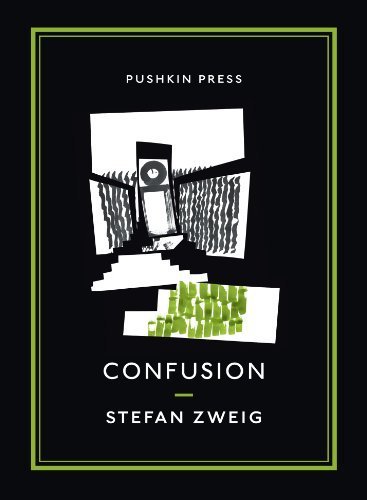
Confusion
- GenresFiction
Paperback
Published January 1, 2006
About the author
Stefan Zweig
2,574 books11.4k followersStefan Zweig was one of the world's most famous writers during the 1920s and 1930s, especially in the U.S., South America, and Europe. He produced novels, plays, biographies, and journalist pieces. Among his most famous works are Beware of Pity, Letter from an Unknown Woman, and Mary, Queen of Scotland and the Isles. He and his second wife committed suicide in 1942.
Zweig studied in Austria, France, and Germany before settling in Salzburg in 1913. In 1934, driven into exile by the Nazis, he emigrated to England and then, in 1940, to Brazil by way of New York. Finding only growing loneliness and disillusionment in their new surroundings, he and his second wife committed suicide.
Zweig's interest in psychology and the teachings of Sigmund Freud led to his most characteristic work, the subtle portrayal of character. Zweig's essays include studies of Honoré de Balzac, Charles Dickens, and Fyodor Dostoevsky (Drei Meister, 1920; Three Masters) and of Friedrich Hölderlin, Heinrich von Kleist, and Friedrich Nietzsche (Der Kampf mit dem Dämon, 1925; Master Builders). He achieved popularity with Sternstunden der Menschheit (1928; The Tide of Fortune), five historical portraits in miniature. He wrote full-scale, intuitive rather than objective, biographies of the French statesman Joseph Fouché (1929), Mary Stuart (1935), and others. His stories include those in Verwirrung der Gefühle (1925; Conflicts). He also wrote a psychological novel, Ungeduld des Herzens (1938; Beware of Pity), and translated works of Charles Baudelaire, Paul Verlaine, and Emile Verhaeren.
Most recently, his works provided the inspiration for 2014 film The Grand Budapest Hotel.
Zweig studied in Austria, France, and Germany before settling in Salzburg in 1913. In 1934, driven into exile by the Nazis, he emigrated to England and then, in 1940, to Brazil by way of New York. Finding only growing loneliness and disillusionment in their new surroundings, he and his second wife committed suicide.
Zweig's interest in psychology and the teachings of Sigmund Freud led to his most characteristic work, the subtle portrayal of character. Zweig's essays include studies of Honoré de Balzac, Charles Dickens, and Fyodor Dostoevsky (Drei Meister, 1920; Three Masters) and of Friedrich Hölderlin, Heinrich von Kleist, and Friedrich Nietzsche (Der Kampf mit dem Dämon, 1925; Master Builders). He achieved popularity with Sternstunden der Menschheit (1928; The Tide of Fortune), five historical portraits in miniature. He wrote full-scale, intuitive rather than objective, biographies of the French statesman Joseph Fouché (1929), Mary Stuart (1935), and others. His stories include those in Verwirrung der Gefühle (1925; Conflicts). He also wrote a psychological novel, Ungeduld des Herzens (1938; Beware of Pity), and translated works of Charles Baudelaire, Paul Verlaine, and Emile Verhaeren.
Most recently, his works provided the inspiration for 2014 film The Grand Budapest Hotel.
Ratings & Reviews
Friends & Following
Create a free account to discover what your friends think of this book!
Community Reviews
Displaying 1 - 17 of 17 reviews

August 12, 2026
This story of professor guarding a secret (shocking in 1927) was hard for me to get invested in, but Zweig wrote with such psychological insight and compassion. The title delivers.
August 25, 2025
Voorlopige Zweig rating:
-Angst 3/5: beetje saai.
-Burning secret 3/5: beetje 20e eeuwse boeketroman-vibe.
- Journey into the past 3.5/5: wordt beter en beter richting het einde.
-Confusion 4/5: erg boeiende mysterieuze sfeer, beetje matig einde maar leest als een trein.
-Schaaknovelle 4.5/5: gewoon kneitergoed.
-Angst 3/5: beetje saai.
-Burning secret 3/5: beetje 20e eeuwse boeketroman-vibe.
- Journey into the past 3.5/5: wordt beter en beter richting het einde.
-Confusion 4/5: erg boeiende mysterieuze sfeer, beetje matig einde maar leest als een trein.
-Schaaknovelle 4.5/5: gewoon kneitergoed.

August 7, 2026
I am going to willingly ignore that this is a story of a grown ass man falling in love with one of his college students because a book depicting homosexual feelings with such tenderness in the 1930s is amazing. The way Zweig writes about how difficult yet beautiful it is to be a queer man at this time is so touching. But yeah, all of this beautiful story is a bit tainted by the gigantic age gap 😬 Thankfully there is no romantic or sexual relationship between them and Zweig focused on telling us the gay man's life at the end but still. I have conflicting feelings towards this book lol.

February 29, 2024
Zweig is exceptional in analyzing and describing the feelings of his characters. For a modern reader the 'plot' isnt as shocking and surprising as it would have been 100 years ago, though.

August 27, 2025
What a stellar novella, my heart !! I need a physical copy of this

September 7, 2026
Extremely ahead of its time

December 23, 2025
Przeczytałem wydanie anglojęzyczne, w rewelacyjnym, mistrzowskim tłumaczeniu Anthei Bell.
Historia pięknie napisana, powstała w czasach gdy wszystkie dzisiejsze "labels" jeszcze nie istniały, a wydana właśnie wtedy w Niemczech gdy Dr Magnus Hirschfeld zaczął naukową kategoryzację orientacji seksualnych.
Książkę kupiłem kilka lat temu i o niej zapomniałem, a gdy zasiadłem do czytania nie wiedziałem już za bardzo o czym będzie. Przed czytaniem naprawdę nie należy wiedzieć za dużo. Romans między osobami z dwóch odłegłych pokoleń, jednej miłości o podłożu intelektualno duchowym a drugiej z podłożem intelektualnym ale też bardzo świadomie erotycznym, ujęty jest rewelacyjnie. Przystępność a jednocześnie ogromna elegancja stylu sprawiły że miałem naprawdę wielką frajdę w tej lekturze.
Dyskutować można bez końca piękno fizyczne, duchowe, intelektualne. To właśnie w pomieszaniu tych piękn i rodzajów zauroczeń jest to totalne pomieszanie uczuć. Ważny jest też wątek który początkowo wydaje nam się uboczny (żona),porusza bowiem wielowymiarowy temat zdrady. To może ta żona reprezentuje właśnie prawdziwą nowoczesną miłość? Cała opowieść i wszystkie jej wątki są wielowymiarowe i ponadczasowe, uczucia są bowiem nieprzewidywalne i nic na to poradzić nie możemy.
Historia pięknie napisana, powstała w czasach gdy wszystkie dzisiejsze "labels" jeszcze nie istniały, a wydana właśnie wtedy w Niemczech gdy Dr Magnus Hirschfeld zaczął naukową kategoryzację orientacji seksualnych.
Książkę kupiłem kilka lat temu i o niej zapomniałem, a gdy zasiadłem do czytania nie wiedziałem już za bardzo o czym będzie. Przed czytaniem naprawdę nie należy wiedzieć za dużo. Romans między osobami z dwóch odłegłych pokoleń, jednej miłości o podłożu intelektualno duchowym a drugiej z podłożem intelektualnym ale też bardzo świadomie erotycznym, ujęty jest rewelacyjnie. Przystępność a jednocześnie ogromna elegancja stylu sprawiły że miałem naprawdę wielką frajdę w tej lekturze.
Dyskutować można bez końca piękno fizyczne, duchowe, intelektualne. To właśnie w pomieszaniu tych piękn i rodzajów zauroczeń jest to totalne pomieszanie uczuć. Ważny jest też wątek który początkowo wydaje nam się uboczny (żona),porusza bowiem wielowymiarowy temat zdrady. To może ta żona reprezentuje właśnie prawdziwą nowoczesną miłość? Cała opowieść i wszystkie jej wątki są wielowymiarowe i ponadczasowe, uczucia są bowiem nieprzewidywalne i nic na to poradzić nie możemy.
January 29, 2025
Stefan Zweig schafft es wiedermal die Gefühle des Protagonisten auf den Leser zu übertragen. Ein schrecklicher Zwiespalt, ein Hin- und Herreißen der Gefühle, eine existenzielle Angst und die Hingabe gegenüber dem Liebenden.
Das Buch hat mich sehr beeindruckt aber auch etwas traurig gemacht, da man sich ein anderes (besseres) Ende für den Protagonisten gewünscht hätte.
Das Buch hat mich sehr beeindruckt aber auch etwas traurig gemacht, da man sich ein anderes (besseres) Ende für den Protagonisten gewünscht hätte.
This entire review has been hidden because of spoilers.
May 12, 2025
mesmerizing, exquisite.


February 19, 2026
An anxiety fueled read - bc of the prose, my state when I read it, or both?
March 18, 2026
Explores intellectual intimacy through prose like no other

June 21, 2026
Maybe my perpetual confusion is why this story was so boring to me...
July 27, 2026
Light read, each chapter leaves the reader in suspense.. ending is solid, prepared to be surprised and confused.

August 22, 2026
Beautifully written prose. The story keeps you wondering where it is headed. Stefan Zweig is a master of exploring and describing human emotions with precise scalpel-like words.
3.75 stars.
3.75 stars.
December 30, 2024
This book had its intriguing moments, especially when the narrator describes a professor who articulates fascinating observations about Shakespeare. For example, he asserted that while Shakespeare's genius is undeniable, his work was also a product of his time and place ( the is more detail than that, of course). The student becomes mentored by the professor and doesn't understand that the older man is gay and is in love with the student. Nothing happens between them, but 40 years later, the student is a successful professor with a wife and family but looks back on this man and realizes that he loved his mentor as well.
It seemed to me that Zweig was influenced by the classic American short stories of the 1920s and 30s, as the revelation about the mentor occurs in the last line, aiming for an unexpected twist at the end. I am sure this book was daring for its time.
It seemed to me that Zweig was influenced by the classic American short stories of the 1920s and 30s, as the revelation about the mentor occurs in the last line, aiming for an unexpected twist at the end. I am sure this book was daring for its time.
This entire review has been hidden because of spoilers.

Displaying 1 - 17 of 17 reviews