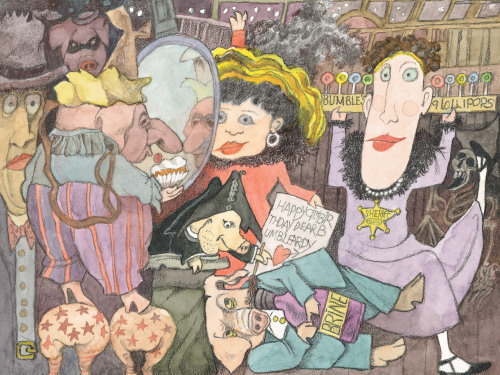
Book Description Publication September 1, 2011 A brand-new picture book from the creator of WHERE THE WILD THINGS ARE! BUMBLE-ARDY is a glorious picture book about a mischievous pig who has reached the age of nine without ever having had a birthday party. But all that changes when Bumble throws a party for himself and invites all his friends, leading to a wild masquerade that quickly gets out of hand. In this highly anticipated book, Maurice Sendak once again explores the exuberance of young children and the unshakeable love between parent (in this case, an aunt) and child. BUMBLE-ARDY is the first book illustrated and written by Sendak since Outside Over There in 1981.
Maurice Sendak was a visionary American illustrator and writer best known for transforming the landscape of children's literature through his emotionally resonant stories and distinctive artistic style. He gained international acclaim with Where the Wild Things Are, a groundbreaking picture book that captured the emotional intensity of childhood through its honest portrayal of anger, imagination, and longing. Widely recognized for his ability to blend the whimsical with the profound, Sendak created works that resonated with both children and adults, challenging conventional notions of what children's books could be. Born and raised in Brooklyn, Sendak was a sickly child who spent much of his early life indoors, nurturing a love for books, drawing, and storytelling. The son of Polish-Jewish immigrants, he was deeply affected by the losses of the Holocaust, which shaped the darker emotional undercurrents in his work. His art was influenced by a range of sources, from comic strips and Mickey Mouse to Mozart, Blake, and German Romanticism. Though he began his career illustrating other writers’ books, he soon transitioned to authoring his own, beginning with Kenny’s Window and then The Sign on Rosie’s Door. It was Where the Wild Things Are, published in 1963, that solidified Sendak’s reputation as a master of children’s literature. The book, which won the Caldecott Medal, was initially controversial due to its depiction of unruly behavior and ambiguous emotional tone. However, it was later recognized as a revolutionary work that respected children’s inner lives and psychological complexity. This theme continued in his later works, including In the Night Kitchen and Outside Over There, which formed a loose trilogy exploring the emotional and imaginative experiences of childhood. These books, celebrated for their dreamlike narratives and lush illustrations, often tackled fears, fantasies, and the challenges of growing up. Throughout his career, Sendak illustrated more than a hundred books, working with authors such as Ruth Krauss and Else Holmelund Minarik. His visual style—characterized by its intricate detail, dynamic line work, and expressive characters—evolved over the decades, but always retained an unmistakable emotional intensity. He also designed sets and costumes for operas and ballets, bringing his imaginative worlds to the stage. Notably, he created productions for works by Mozart and Prokofiev, combining his love of classical music with theatrical design. Sendak was known for his sharp wit, fierce independence, and deep empathy for children. He openly criticized the sanitized and moralistic tone of much of children's publishing, insisting instead that young readers deserved stories that acknowledged their full emotional range, including fear, grief, anger, and wonder. He was also an openly gay man in a long-term relationship, though he only spoke publicly about his sexuality later in life. Later in his career, Sendak continued to produce new work, collaborate with artists and institutions, and advocate for intellectual freedom. His final books, including Bumble-Ardy and My Brother’s Book, reflected both a return to his childhood memories and a meditation on aging, love, and mortality. Though his stories often ventured into the dark or surreal, they remained rooted in a deep respect for the emotional reality of children and a belief in the power of imagination to confront life's challenges. Maurice Sendak’s legacy endures in the countless writers and illustrators he inspired, the cultural impact of his stories, and the enduring affection readers of all ages hold for his wild things, mischievous children, and tender monsters. Through his work, he redefined what children’s literature could be: rich, honest, haunting, and, above all, deeply human.
Well, in this book, Maurice shows kids how to throw a raging kegger. Bumble-Ardy has missed his 1st 8 birthdays. At 9, he is living with his aunt because his family was slaughtered and she gives him a party. While at work, Bumble sends out invitations and has pigs dress up in costume. They proceed to get horribly drunk on brine. I really don’t know why kids need this idea in their heads at a young age, but Maurice thought they did. I feel like this book also has a mean tone to it, accept for the ending. There is some real bitterness and resentment going on in these pages. Maurice is working something out here. The party guests are dressed up to the 9’s. It’s a great costume party.
The artwork is great Sendak, but the subject seems beyond children’s years. I know Maurice likes to give adult content to children in a way they can digest it, but to me, it seems children will get here to this easily on their own. Anyway, maybe I’m just getting old.
The nephew read this and he thought all the wild acting pigs dressed as adults were really funny. He loved the pigs doing wacky things. He was sad when the aunt broke it all up. He enjoyed this book a lot. He gave it 5 stars. The niece thought the party seemed a little out of control and she wasn’t crazy about that. She likes control. She gave this 3 stars.
As he has aged, Sendak has grown gloomier and gloomier. The man who wrote Where the Wild Things Are,the book my older daughter adored, In the Night Kitchen, which her younger sister loved with equal fervor and The Nutshell Library, stories which I have read and sung to my girls and countless other kids, now writes books clearly aimed at his own sad self.
The fun is gone. Watch the Henson/Sendak film instead.
As curled as a little piggy's tail, this tale of a wild rumpus (haven't we all craved that since Where the Wild Things introduced this idea?) has all the reality a child might need to be well-adjusted to the world, or perhaps worlds, of childhood. I grew up reading the Grimm canon of fairytales and found solace in the grim realities that so many of the heroines or heroes faced and endured in tale after tale. I preferred the ones that didn't always have a pat ending and Sendak recognized the necessity to allow for children to come to that wisdom too. Too many children's books offer neat platitudes for the "rules" of the universe. Sendak allows for disappointment, frustration and plain naughtiness in this most interesting last book by the master. Raise high your overflowing cup of brine and dance for Bumble-Ardy, the pig who was deprived *who should stand for that!* of the party of birth, the acknowledgement that you actually matter and were loved. I think, if I were still a child, I would find solace in the pure fact that if life doesn't give you what you feel you need to be happy - well, do it for yourself with style and élan. Read this to a child and heed the message yourself so you can be proactive in the happiness department. Why, in our family, you don't have a birthday, you have a birthweek! We even have a song about being a birthday pig. My brother and I co-wrote this song when we were 3 and 6 and sing it every year and laugh. It is not a terrific song, but it was great fun when we were small. Trust your child to make their way through this book's great fun. Sendak tweaks at adult fears and gives kiddies just what they need to be sane adults. Otherwise, buy those dreadful books at the grocery store that cost 1.99 and feel smug. oy. Sendak is a national treasure. Splurge and buy hardcover and celebrate riotousness.
Perhaps I am a heretic, but I just never truly got the charm of Maurice Sendak's books. Sure, I read Where the Wild Things Are as a child and a parent and I definitely had to check out In the Night Kitchen to see what all the fuss was about. But I never really liked his books. When I read that he'd released a new one, I thought I'd give him another chance. No luck again.
The rhyming narrative is entertaining, but I had to go back several times to make sure that I didn't skip a page because it didn't flow right. And the illustrations are just creepy and bizarre. With talk of his parents being eaten and drinking distilled brine (we weren't sure what this meant - I told our girls that it was probably pickle brine, but it appeared to be more of a reference to hooch), the subject matter seems more appropriate to older children or adults. Some of the illustrations are fairly disturbing, especially the ire of the sweet old aunt - she's transformed from a calm, sweet thing to a mad, raving tyrant who makes little Bumble-ardy so frightened that he promises not to turn 10. All in all, it's an interesting story. But I didn't like it.
This book is just plain awful. I haven't seen the Sesame Street segment it was based on, so I'm not sure if it is similar, but I just can't imagine SS showing something this awful to kids. The story is supposed to show the unconditional love between a parent and a child, but after the aunt comes at Ardy's friends with a meat cleaver, I wouldn't be so quick to forgive.
The illustrations leave much to be desired. At one point, Sendak tries to show us how angry the aunt is by making her look like Anjelica Huston in The Witches. Certainly no Where the Wild Things Are.
I had such high hopes for this one and I don't feel as though they were met. I was expecting a wonderful amazing book and the book I got instead was a very odd just OK read. I read the first page, I liked that the pig newspaper said "We Read Banned Books" which made me laugh. But from there, nothing. I do like the rhyming text which has a very nice rhythm to it. The artwork of course is interesting to look at, even if the masquerade costumes are a bit odd and sometimes a bit creepy. I think they'd be especially odd to young kids. I don't know that I would say this is a kids book, but more a picture book for adults, especially adults wanting a throwback nostaglia picture book.
But it's the story as as whole that's missing something. I can't even put my finger on exactly what it is, it just didn't have that spark of magic or dash of humor I was expecting. It ended too soon and while it's supposed to show the unconditional love between parent (or Aunt in this case) and child, I don't know that that really came across. Instead the Aunt threatens the friends and leaves Bumble Ardy cowering in the corner promising not to turn ten. Doesn't seem like unconditional love to me. The end wrapped up too quickly and it just didn't work for me. I really wanted more humor and a bit more heart. The rhymes weren't enough for me. Odd and strange, OK, but not a classic.
Wow! I am shocked to see this book has so many low ratings. I agree that it is not up to par with Sendak's prior works but it is certainly not a 1 or 2 star book.
That being said, Bumble-Ardy is about a pig who throws an over-the-top birthday party to make-up for missed birthdays in the past. This party doesn't end well but Bumble-Ardy learns a lesson in unconditional love. A fun story, filled with rhythmic text and Sendak's round, warm illustrations that most have come to love.
It is of chief necessity that one should never turn nine, as this book demonstrates that one will become inebriated on fun and then wreck your aunt's house. Then again if one has multiple aunts the previous message should be casually ignored.
Although I have only the highest praise for Higglety Pigglety Pop, and Where the Wild Things Are is a classic in the genre, I'm not the world's biggest Sendak fan, and I've never really understood his high place in the pantheon of American children's author/illustrators. There's been a lot of buzz about both him and this book in the library world of late, however, so when the chance came to read it, I made sure to do so.
Even for Sendak, who's made a career out of creating hallucinatory worlds, this is a weird, disjointed book. It's based, more or less, on a brief cartoon that Sendak and Jim Henson did for Sesame Street, but the changes that Sendak has made make the book less sensical and much darker. In the original, Bumble is a human boy, Adeline is his mother, and there's no mention of this being Bumble's first ever party. The kid invites some pigs over (for "wine," not "brine," which you couldn't really say in a kid's story now, but which makes a good deal more sense), they make a mess, and his mom kicks them out. It's still a middling cartoon at best, but it hangs together a lot better.
The epically disturbing prologue, in which it's revealed that Bumble (now a pig himself) has never had a birthday because his parents didn't like fun, and that his parents were subsequently turned into someone's breakfast, feels grafted on and incomplete. The party occupies a huge portion of the book, and is illustrated in a style that looks for all the world like Sendak had been momentarily possessed by the ghost of James Ensor. When aunt Adeline comes back, her enraged threat to turn the party guests into ham now carries decidedly more creepy undertones, especially when viewed in light of the prologue. And where the original short had a thematically unifying idea -- boy is impatient, decides to succumb to the desires of his id, is caught, apologizes, is forgiven -- I'm puzzled as to what exactly the reader is designed to come away from this odd story of a horribly damaged protagonist with.
In some way, it's obviously related to the 2007 death of Sendak's lifelong partner. But Higglety Pigglety Pop was also a book in which Sendak worked through grief -- in that case, the death of his dog -- and though it too had a surreal logic, and left the reader with as many questions as answered, the narrative had a power that Bumble-Ardy lacks.
This isn't at all a book for children, though it'll be shelved that way. That's okay -- I mean, Chris Van Allsburg isn't really a children's writer either, and it's perfectly possible to use the picture book format to write for grown-ups. But it's not a successful book for grown-ups either; it's obvious that the writer was in enormous pain, but the pain isn't channeled and focused into something that can be considered great art. It's a weirdly insular book, and whatever it meant to Sendak is lost before it can get to the reader.
It's getting a lot of good reviews, but I can't help but feel that Sendak's recent tragedies, as well as his status as a sort of elder statesman in American children's literature, are making people want to see the book as better than it is. I can't see it as anything other than a messy, confused footnote, one that's likely to be of more interest to Sendak's future biographers than readers interested in the book itself.
Okay, look. Maurice Sendak is like, a thousand years old. He's gonna get a little loopy. It's what happens with artists - compare early works, their drawings get looser, artists care less about detail than they did when they were younger (ie Where the Wild Things Are vs this book).
I knew there was some hubbub regarding its release, but I purposely didn't read any of the reviews before checking Bumble-Ardy out from my local library. And yeah, it's kinda not for kids.
But neither was Where the Wild Things Are.
Spoiler Alert Slash Synopsis:
The title character is this pig who was horrifically mentally abused by his parents. They never celebrated his birthday in 8 years of being a family. He just accepted it. Then, he watches as his parents get sent to slaughter - apparently they were not smart to hold jobs and were never personified into walking on two legs. An orphan, he gets adopted by his wonderful Aunt Adeline - who is a single, independent gal who works hard and apparently plays hard, too. She brews her own "brine" and does not like sharing it.
On Bumble-Ardy's ninth birthday, Adeline deems they finally celebrate. But during the day she has to to work. Little does Adeline know that her precious nephew has been planning a major event for quite some time. Exactly nine minutes after Aunt Adeline takes off for work, Bumble-Ardy has a house-ful of piggly neighborhood acquaintances swing by. He is adamant that they show up 1) in costume and 2) freshly washed.
A twelve hour Eyes-Wide-Shut meets Animal Farm type orgy ensues, drinking tons of Aunt Adeline's moonshine/brine.
When Adeline comes home to see her house has been wrecked, she kicks all of Bumble-Ardy's pig friends out, threatening cannibalism.
She then tells Bumble-Ardy that she does not condone this behavior and he is sincerely scared and remorseful, offering to kill himself - "to never turn ten".
Adeline realizes that he's totally damaged goods, but you can't turn away from family. How would he know what level of decorum to gauge the party by? They embrace.
Which is somewhat acceptable until you realize that 9 pig years = like 36 human years and that Bumble-Ardy is a socially stunted semi-psychopath.
Like I said, not really for kids. Adults, though - almost as good as an episode of Law and Order. And if you're a Sendak fan, the art is great.
I was so excited when I found out that Maurice Sendak was coming out with a new book. I actually raced with one of my patrons to see who could find it and read it first. I found it and read it and was immediately disappointed. It was not what I expected at all. The illustrations were terrible and the story was entirely too dark for children. (I know Where the Wild Things are is not exactly bright...but it is at least enjoyable.) I handed the book over to the patron and shook my head. "Neither you, nor your son will like this," I said. He took it and said that it could not be that bad. He spent 5 minutes looking over it and handed it back to me saying that I was right and he would pass on it. If you love Sendak, then read it, just don't get your hopes up.
Normally I do not list picture books here because I read quite a lot of them for my job however I felt this one needed attention. I read Bumble-Ardy and was horrified in a way that I haven't been in a very long time. I felt the rhyme was lacking in the story, the illustrations were creepy and the story in general was dark and scary (insert image of Bumble-Ardy's aunt going after the party guests with a meat cleaver). This is not a book for children and to be honest I felt the plot didn't track from the beginning to the end.
However, if you are looking for a new picture book that has a bit of dry witty humor try I Want My Hat Back by Jon Klassen.
Controversial- This book is about a young piglet who has never had a birthday party. He does not have parents and lives with his aunt. He decides to throw himself a party when his aunt isn't home and it gets out of control. I can see why some parents do not like this book and would not want their young children to read it. It is a picture book based on parents death and disobeying authority. At some point though, children are going to learn about these things and you can even use this book as a teaching tool for your child.
Just didn't do it for me. Very strange, very dark, and geared more for adults than kids. I expect it will get lots of good reviews and good sales based on the fact that it's a Maurice Sendak book... but if I removed the name on the front cover and looked at it like any other book... I wouldn't buy it. There are some lovely illustrations, but that wasn't enough to carry the book... for me, at least.
I didn't like this at all. The illustrations were not up to Sendak's usual standard, the story was both meandering and pandering. The characters were unlikeable, the plot absent. There wasn't anything I liked about this one, not a bit of it.
After years and years of reading Maurice Sendak’s works (Where the Wild Things Are and In the Night Kitchen are some of my favorite works by him), I wanted to read Maurice Sendak’s most recent works and I just picked up this little gem of a book by Maurice Sendak, called “Bumble-Ardy!” “Bumble-Ardy” is a truly unique and fun book that children everywhere will definitely enjoy!
A young pig named Bumble-Ardy never celebrated his birthday when he was younger (which happens to be on June 10th) until his parents were eaten when he turned eight and his aunt Adeline decided to take him in. However, when Bumble-Ardy turned nine, his aunt decided to give him a birthday party and Bumble invited all of his friends, even though his aunt did not want him to serve them her brine. When Aunt Adeline left the house, Bumble and his friends start partying!
Will Aunt Adeline find out about Bumble’s party?
Oh my gosh! I never would have thought that I would enjoy any of Maurice Sendak’s most recent works, since I have been a huge fan of his older works which includes “Where the Wild Things Are” for many years! But, this book really did surprise me with its whimsical verses and its creative illustrations! I loved the way that Maurice Sendak wrote this book in a rhyming lyrical prose as it is hilarious to read through. Some of my favorite quotes in this book included:
“At nine past the piggy swine, Broke down the door and guzzled brine.”
Maurice Sendak’s writing is simplistic yet creative at the same time, making this book extremely easy for young children to read through. Maurice Sendak’s illustrations are truly creative and colorful to look at as the images of the characters dressing up in various costumes for the masquerade party are a treat to see! I loved the six page spread of all of Bumble-Ardy’s guests dancing around in their costumes (which strongly reminded me of the scene in “Where the Wild Things Are” where Max and the Wild Things have their wild rumpus). The costumes that the pigs were wearing included some of the pigs wearing large human masks and skull masks on their faces. My favorite costume wore by one of the pigs was when one of the pigs was wearing a scary looking black skull mask with a Napoleon like hat on its head.
Overall, “Bumble-Ardy” is a truly brilliant and creative book for children who love reading books about parties and are huge fans of Maurice Sendak’s works. As an adult, I had no problem with this book, but I guess the only problem that parents might have with this book is that the main character disobeys his aunt and that might encourage young children to disobey their parents. Also, there are some scary images with Bumble-Ardy’s guests dressing up in various costumes, including the skull mask costume that one of the guests wears. However, this book is told in such a lyrical and fun way that young children and parents should not have any problems with this book!
I finally listened to the Terri Gross interview of Maurice Sendak, which made me seek out this book. Sendak wrote it as his partner was dying. It is a work of art that resonates with grown-up children who have experienced loss, and references the Holocaust. My daughter doesn't understand all the layers, but I think she understands the chaos that can accompany celebrations and likes the artwork. Sendak explores again the flip side of zeal and revelry which is disorder and violence. It probably won't become one of our favorites, but is an opportunity for reflection as we view childhood from different vantage points. Here is the link to the interview: https://www.npr.org/2011/12/29/144077...
When I heard there was a new Sendak book coming out I was excited; I ordered multiple copies for the library and I couldn't wait for them to get here. It finally appeared on the new book shelf and I read it. Boy was I disappointed. I can't believe this is written by the same person that wrote Where the Wild Things Are. Sure Sendak's books are all a little different and quirky, but they are at least fun to read. This one not so much. I thought the story was bad, the characters awful and the illustrations just so-so. I wouldn't really recommend it and I am kind of sad that I didn't just buy one copy instead of several for the library...can't get those budget dollars back.
This book is written and illustrated by Maurice Sendak. It's a fun and silly story about a little pig named Bumble-Ardy and his Aunt Adeline. All of the prose is in rhymes which children will love although some of the words are a bit beyond the knowledge of a younger child (ie. brine, swine). Also, some children might find the pictures of the characters a bit scary. And they might be upset about Aunt Adeline's threat not to let little Bumble-Ardy have a birthday party ever again! Although I thought the story and illustrations were cute, I think one would need to be careful about reading this to a really young child or one who is easily frightened by the pictures.
a little creepy, a little sad, a little amazing. people underestimate kids, i think, what they can handle and what they can enjoy, and i think people ultimately underestimate exactly how bloodthirsty and macabre children can be. maurice sendak does not insult children that way. bumble-ardy gets carried away at his first (well, 9th) birthday party and his loving aunty gets mad, threatens to eat his guests, but in the end forgives him and loves him. where's the terrible? i don't see it, but i did see some great creepy illustrations and read some great rhymes, so i'm happy. maurice sendak rules.
Dear god, Yuck! The pictures are creepy, the rhyme is strange, the angry aunt seems to turn demonic towards the end. Did the publishers lose a bet? Is that why this was accepted. Do they just publish any old thing that Maurice Sendak sends them now? Yuck!
Bumble-Ardy by Maurice Sendak is a story about a pig named Bumble-Ardy who’s never had a birthday party before so he decides to throw himself one that quickly gets out of hand. Will his aunt return to find the mess? This is a horizontally oriented picturebook which helps to show the amount of characters there are at the party. The book jacket is designed in an interesting way because the font that the author used is large and stretched and wraps around the oval shape of the main character which helps to capture the attention of viewers. However, the main character is positioned in the center of an oval shaped background that makes the picture of Bumble-Ardy larger which makes it feel stronger for viewers. The character’s center placement gives importance. The character is up close and personal which makes us feel closer to the character and the character also breaks the oval shaped frame that extends beyond the shapes outline which makes viewers more excited to read the book. The back of the book jacket uses the same oval shaped frame that serves to convey the impression we are looking through a window. In this photograph the character is also looking at viewers through his reflection in the mirror which breaks the fourth wall and allows viewers to feel closer to the character. The background color of the book jacket is also a dark green which symbolizes the color of Bumble-Ardy’s cowboy gear that he received as a birthday present from his aunt. Under the book jacket, the hard cover of the front and back pages are different than the book jacket which changes the narrative and is meaningful and intentional. The front of the hard cover shows a smaller picture of the character but in a square green lined frame. The character is depicted walking to his left which helps to move the story along. The front and back end papers are the same which is symbolic of his green cowboy gear. The story begins before the title page which lets viewers know that Bumble-Ardy has not had a birthday party in eight years. In the title page of the book the author also uses frames and white space to further tell the story and gives hints to viewers that the main character’s parents passed away. It also depicts the facial expressions of the characters and conveys their feelings. A prologue was also provided for viewers to learn more about the character’s parents and his aunt adopting him. Throughout the story there is also the use of thinking bubbles and character writing on papers and signs that help to tell the story and show the sequence of events that occur in the story. The author uses the same oval shaped framing within a rectangular framing to introduce character, and also depicts them breaking the frame which makes the story more exciting for viewers. In some pages there is no use of framing or borders but the use of white space that allows viewers to focus on the images of the characters. There are also several full bleed pages used during the wild party scenes that suggest a life going on behind the confines and make viewers more of a participant than a spectator. I found the illustrations in the book interesting as well because I noticed human characters were invited to the main character’s party and partied with pigs who live like humans. I also interpreted themes of the book as the celebration of youth through Bumble-Ardy and the notion of forgiveness and caring through the aunt because she forgives Bumble-Ardy at the end of the story. The theme of family is also emphasized because he is adopted by his aunt right after he loses his parents.