Omnibus of five novels, each originally published separately: Rocannon's World, Planet of Exile, City of Illusions, The Left Hand of Darkness (winner 1969 Nebula Award, 1970 Hugo Award, 1995 James Tiptree, Jr. Award, Retroactive. Nominated, 1970 Ditmar Award. 1975 Locus Poll Award, All-Time Best Novel (Place: 3). 1987 Locus Poll Award, All-Time Best SF Novel (Place: 2). 1998 Locus Poll Award, All-Time Best SF Novel before 1990 (Place: 3).); and The Word for World is Forest (winner, 1973 Hugo Award; nominated, 1972 Nebula Award; 1973 Locus Poll Award, Best Novella (Place: 2)). These are the first five novels in the Hainish Universe series, followed by The Dispossessed and The Telling.
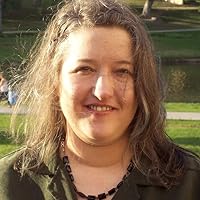
Ursula K. Le Guin published twenty-two novels, eleven volumes of short stories, four collections of essays, twelve books for children, six volumes of poetry and four of translation, and has received many awards: Hugo, Nebula, National Book Award, PEN-Malamud, etc. Her recent publications include the novel Lavinia, an essay collection, Cheek by Jowl, and The Wild Girls. She lived in Portland, Oregon.
She was known for her treatment of gender (The Left Hand of Darkness, The Matter of Seggri), political systems (The Telling, The Dispossessed) and difference/otherness in any other form. Her interest in non-Western philosophies was reflected in works such as "Solitude" and The Telling but even more interesting are her imagined societies, often mixing traits extracted from her profound knowledge of anthropology acquired from growing up with her father, the famous anthropologist, Alfred Kroeber. The Hainish Cycle reflects the anthropologist's experience of immersing themselves in new strange cultures since most of their main characters and narrators (Le Guin favoured the first-person narration) are envoys from a humanitarian organization, the Ekumen, sent to investigate or ally themselves with the people of a different world and learn their ways.
Be wary of this edition. There are many typos in the text. I just finished Left Hand of Darkness and was thinking the writing style was confusing. But it was the non-obvious typos that gave this opinion.
I got a 1st edition Hardback and read it over again. Le Guin is a superior writer and I got none of the confusion I had blamed on her.
Le Guin's work had a huge impact on my life when I was 14; the worlds, characters and interactions she created shaped my thinking about who we are and how we treat each other. My love of the social sciences is a direct result of Ursula K. Le Guin. I re-read five of her novels after a 30+ year hiatus. It felt a bit like riding a merry-go-round with memories and "ah-ha" moments coming around again and again. It was a surprisingly personal experience.
I do not usu ally read science fiction. I wanted to try Le Guin after hearing about her writing after her recent death. It was hard for me to suspend belief and enjoy the stoies at first, but i ended up reading 3 of them. Rocannon's World, The Left hand of Darkness, and the Word for World is Forest. I got caught up in the last two after getting used to the style and other-worldliness of the first novel of the three.
So, it is obvious she is a talented writer and the stories are told from different perspectives characters which adds to the confusion for a bit, but then helps build the character and increases understanding of each of the strange worlds.
I am still not a fan of science fiction but I appreciate the fine story telling and imagination of Ursula le Guin.
The Left Hand of Darkness is probably the best of the five, but there are 3 award winning books in this collection. While there sex and rape are discussed in some of her works, there is nothing lurid. However, I would not let a young teen read this book. Her writings are connected together and frankly I find the ideas interesting. I can't believe I did not read these earlier.
Le Guin's five novels are all loosely tied together within her rich, interstellar setting. Holy shit. This was such an incredible read! Each world puts a scifi spin on some aspect of humanity.
These novels are all part of Ursula Le Guin's Hainish cycle and are among her first novels. Rocannon's World, her first novel, seemed too much like Tolkien's Middle Earth overlayed with space opera. In clever ways, but still pretty derivative. The second, Planet of Exile, was still rather conventional, but it was one where the planet's cosmology did do more to drive the plot: this is a planet with a year sixty times longer than our earth about to enter a winter that will last 15 of our years. City of Illusions is a direct sequel to Planet of Exile and was more memorable, had more twists and turns, and delivered along the way a good adventure across a post-apocalyptic far-future America. I can also see her philosophy more to the fore in this book. Le Guin did a translation of the Tao Te Ching, and Taoism is said to imbue both Earthsea and her novel The Dispossessed. A passage in the Tao is key in this story, and we even meet a "Thurro-dowist" (follower of Thoreau of Walden Pond and Taoism.) This is the the first novel here I'd call a standout.
The Left Hand of Darkness is perhaps LeGuin's most famous and influential novel, painting one of the most fascinating and unique of alien worlds. Interspersed through the narrative are myths and legends that give a texture to the cultures central to the tale. This is one of the great science-fiction novels of all time that examines a lot of the issues surrounding gender, prejudice and identity--it's specifically considered one of the great feminist science fiction novels but I don't think it's at all heavy-handed but above all a involving and moving story set in a intriguing world.
I wish I could say the same of the last novel included. I didn't care at all for the preachy The Word for World is Forest. Maybe, just maybe, if Captain Don Davidson whose perspective we open with weren't such a caricature, if he wasn't such a repellant, twirl-the-mustache villain from the very first pages, I could have hung on until what was good in the book took hold. As it was, I felt if I'm was going to experience a tale of how cutting down trees is evil, where the noble, peaceful indigenous people fight back against the rapacious Yumens, well, I'll go watch Avatar again--at least it's pretty. Though the novel won a Hugo though for Best Novella, and is considered one of Le Guin's best works, so it's not a bad choice to round things out.
Ursula Le Guin is considered one of the best authors in science fiction and her Hainish series clearly shows why she is celebrated. Every story in this volume is a chapter in the history of different worlds in the galaxy where Earth is just one of the planets and space ships can make journeys to planets light-years away with passengers not aging in the process. It is not immediately obvious that they are connected because every story takes place on a different planet with generations worth of time in between the "chapters" but once I figured it out the series took on a more wholesome feel and became more satisfying. It was interesting to see different themes dominate every story underneath the general theme of being an alien in a strange world and finding a place in it. For example for Planet of Exile it was belonging, for The Left Hand of Darkness - patriotism and friendship and for The Word for World is Forest - acceptance, tolerance and respect for what is different as well as preserving the environment. The Left Hand of Darkness was my favorite in the series, so I'll tell you about it and leave the rest for you to discover on your own. At first I didn't enjoy it very much, it read as a report without much insight into the people of Winter, which in retrospect is what it was meant to be, but as the story progressed and protagonist changed from the Terran Genly Ai to the Karhidish Therem Harth and the format changed from report to diary I became increasingly invested in the story. With protagonists alternating it became something of a dialogue and then the real adventures started and I was hooked. A very nice addition was the lore of the land with legends interspersed between chapters, it helped create an impression of a culture, a history of this planet and gave it a more human aspect. Don't want to give anything away, but I almost cried towards the end and even now, a week and two books later, I'm still thinking about it, the characters and the societies that shaped them. I have a feeling I'll always remember it and will re-read it many times.
I am SO glad my writing crowd sent me in search of Ursula K. Le Guin's The Left Hand of Darkness, since the other four novels that I absolutely had to read right after I finished her most epic masterpiece (The Left Hand of Darkness) were well worth consideration, in my humble opinion.
Then again, it is true I might be one of the bigger science fiction junkies on the East Coast and possibly always have been, from the tender age I could sound out all of the words in Carl Sagan's Cosmos with a 65% success rate. I am concerned about revealing too many details about the stories in this volume in case of spoiler.
The other reviews comment about typos, but my review focuses on the intent behind the presentation here, which was my focus. (Honestly, this library book is literally falling apart - its binding has broken at the front, and there's a suspicious yellow stain from page 331 to 364...)
So I absolutely adored this collection of majesty. If you appreciate sci-fi/fantasy, then this might be a good fit for you. If you're just not like that, you might not.
This anthology contains the first five long narratives of LeGuin’s Hainish Cycle. I wanted to reread the cycle in order of publication, and had this one handy volume containing all but the last two books (I consider WforWisF as preceeding Dispossessed, although the longer version of WforWisF was published after Dispossessed) . The novels are wonderful (especially LHofD) but the typesetting is horrible—littered with typographical errors, so that it is obvious no one proofed the galleys. I have another anthology (printed a year earlier) by the same publisher, and while the lay-out was a little cheesy, at least it didn’t have so many glaring typos. Still, LeGuin is remarkable.
Finished the first of the five today - Rocannon's World. It's more a novella. I really liked the mix of scifi and fantasy. -Finished them all. Everyone in the universe should at least read Left Hand of Darkness. I think some of the images will stick with me forever. It was definitely my favorite. The Word for World is Forest should not be read by angry environmentalists - it will put you over the edge into a either despair or murderous rage. It's just too accurate, in its own way.
Each novel emphasizes diversity of culture and considers what it is to be alien and an outsider. This is one of the characteristics of an excellent science fiction: to examine our own society from a different perspective.
***** Rocannon's World (1966) ***** Planet of Exile (1966) ***** City of Illusions (1967) ***** The Left Hand of Darkness (1969) ***** The Word for World Is Forest (1972)