

What do you think?
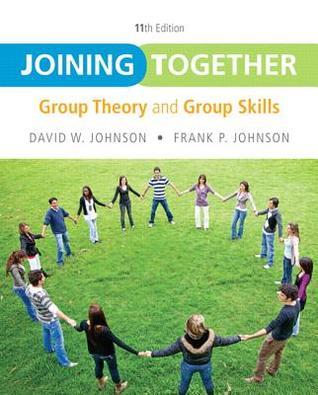
Joining Together: Group Theory and Group Skills
Joining Together introduces readers to the theory and research needed to understand how to make groups effective and, through exercises and thorough explanations, equips them with the skills required to apply that knowledge to practical situations. Chapters discuss the history of groups and group dynamics, the nature of experiential learning, group goals, communication within groups, leadership, power, decision making, controversy and creativity, and conflict management. More applied chapters focus on valuing diversity, cooperative learning, leading counseling groups, and team development and training. The new edition of this best-selling text features:
New sections on controversy and creativity
New individual and group exercises
A focus on new technologies
Greater focus on minority influence, group goals, and diversity
and many other updates and changes. Joining Together introduces readers to the theory and research needed to understand how to make groups effective and, through exercises and thorough explanations, equips them with the skills required to apply that knowledge to practical situations.
New sections on controversy and creativity
New individual and group exercises
A focus on new technologies
Greater focus on minority influence, group goals, and diversity
and many other updates and changes. Joining Together introduces readers to the theory and research needed to understand how to make groups effective and, through exercises and thorough explanations, equips them with the skills required to apply that knowledge to practical situations.
- GenresPsychologyLeadership
656 pages, Paperback
First published March 1, 1975
Ratings & Reviews
Friends & Following
Create a free account to discover what your friends think of this book!
Community Reviews
Displaying 1 - 8 of 8 reviews

April 25, 2021
Excellent overview of group functioning and the strengths and weakness of working in groups. The chapter on Power was particularly elucidating.
If you're confused about why we're all being dicks on the internet, this book will explain it to you. If you're hating on your group projects and bewailing group decision-making, this book will make you a better group member. If you're in the unfortunate position of being in charge of a ragtag group of humans, this book will remind you that our strength and wisdom comes from healthy collaboration.
Life is a team sport.
If you're confused about why we're all being dicks on the internet, this book will explain it to you. If you're hating on your group projects and bewailing group decision-making, this book will make you a better group member. If you're in the unfortunate position of being in charge of a ragtag group of humans, this book will remind you that our strength and wisdom comes from healthy collaboration.
Life is a team sport.
August 18, 2017
Read 90% of the textbook. It makes a good case for the value and benefits of educating people within a group context. I will come back to the book again in the future as a reference when I have the opportunity to instruct adults again.

September 29, 2021
SO many words on the minutiae of 1920-70s social psychology and so little on how to actually create positive humanising change for people using groups. Lots of ideas for group exercises though

February 12, 2009
This is a great book. I can be a bit dense, but there are activities in each chapter that break things up, that are also useful in forming groups. I do sense sometimes, that they are so sold on Cooperative Learning, that you don't always get all the negatives. IN this sense, Robert Slavin seems to be more objective.

September 6, 2009
Decent book, but there was so much information that things seemed to be watered down at times.

Read
July 6, 2013i thing so satisfied if was reading this article, please permitted me, thank for your attention
This entire review has been hidden because of spoilers.

May 1, 2014
For my COM423 class. Didn't really care for this text book.
June 2, 2014
This book has sections that are really geared more towards someone teaching about groups than for students. There are some good exercises in the chapters.
Displaying 1 - 8 of 8 reviews