

What do you think?

Constantine the Emperor
No Roman emperor had a greater impact on the modern world than did Constantine. The reason is not simply that he converted to Christianity, but that he did so in a way that brought his subjects along after him. Indeed, this major new biography argues that Constantine's conversion is but one feature of a unique administrative style that enabled him to take control of an empire beset by internal rebellions and external threats by Persians and Goths. The vast record of Constantine's administration reveals a government careful in its exercise of power but capable of ruthless, even savage, actions. Constantine executed (or drove to suicide) his father-in-law, two brothers-in-law, his eldest son, and his once beloved wife. An unparalleled general throughout his life, planning a major assault on the Sassanian Empire in Persia even on his deathbed. Alongside the visionary who believed that his success came from the direct intervention of his God resided an aggressive warrior, a sometimes cruel partner, and an immensely shrewd ruler. These characteristics combined together in a long and remarkable career, which restored the Roman Empire to its former glory.
Beginning with his first biographer Eusebius, Constantine's image has been subject to distortion. More recent revisions include John Carroll's view of him as the intellectual ancestor of the Holocaust (Constantine's Sword) and Dan Brown's presentation of him as the man who oversaw the reshaping of Christian history (The Da Vinci Code). In Constantine the Emperor, David Potter confronts each of these skewed and partial accounts to provide the most comprehensive, authoritative, and readable account of Constantine's extraordinary life.
Beginning with his first biographer Eusebius, Constantine's image has been subject to distortion. More recent revisions include John Carroll's view of him as the intellectual ancestor of the Holocaust (Constantine's Sword) and Dan Brown's presentation of him as the man who oversaw the reshaping of Christian history (The Da Vinci Code). In Constantine the Emperor, David Potter confronts each of these skewed and partial accounts to provide the most comprehensive, authoritative, and readable account of Constantine's extraordinary life.
388 pages, Hardcover
First published January 1, 2012
About the author
David Stone Potter
20 books32 followersDavid Potter is the author of Constantine the Emperor and The Victor’s Crown: A History of Ancient Sport from Homer to Byzantium. He is the Francis W. Kelsey Collegiate Professor of Greek and Roman History and Arthur F. Thurnau Professor at the University of Michigan.
Ratings & Reviews
Friends & Following
Create a free account to discover what your friends think of this book!
Community Reviews
Displaying 1 - 30 of 52 reviews

June 4, 2018
"As with every modern version of Constantine, the urge to draw reductive conclusions is a strong one, and the religious question in a world where religious affiliation is a strong one, and the religious question in a world where religious affiliation is still for so many a crucial aspect of their identity makes this both a reasonable and perhaps inevitable choice."
- David Potter, Constantine the Emperor
A nice survey of Constantine's life, utilizing primarily first hand documents to separate the man from the myth. Porter's biography of Constantine essentially paints Constantine as a pragmatic emperor and religious leader. Where he felt he could change things through battle, he would (and did). Where he felt like he could strengthen the empire through compromise and moderation he would (and did). His conversion to Christianity allowed him to weave parts of the empire together, and unify them under a divine "Mens Divina". He used Christianity as much as Christianity "used" him. Both were legitimized and strengthened by the other. That doesn't mean he wasn't a true believer, but mostly that his conversion (as told by Christian historians) might not have been as immediate. Perhaps, it was line upon line as Constantine became more confident in his new God.
It really is hard to imagine what place Christianity would hold globally without Constantine, or what exactly it would look like. Probably after Christ and Paul, Constantine might be considered the most influential Christian. He unified (mostly) the Church, gave it a safe place to grow, and sheltered it under the Aegis of the Roman empire. Potter does a good job of pointing out the complexities of Constantine and the limits of what we actually DO know about this influential ruler, Christian, and man.
That said, the biography sometimes gets lost in the weeds. I could have probably done without as much detailed exposition on details such as the Arch of Constantine. Sometimes, these expansions throw the reader off the narrative thread a bit. For the most part, however, it was a good biography. I walked away with a more complex and complicated idea of not just Constantine, but his father (Constantius), Diocletian, Galerius, and Maximian.
- David Potter, Constantine the Emperor
A nice survey of Constantine's life, utilizing primarily first hand documents to separate the man from the myth. Porter's biography of Constantine essentially paints Constantine as a pragmatic emperor and religious leader. Where he felt he could change things through battle, he would (and did). Where he felt like he could strengthen the empire through compromise and moderation he would (and did). His conversion to Christianity allowed him to weave parts of the empire together, and unify them under a divine "Mens Divina". He used Christianity as much as Christianity "used" him. Both were legitimized and strengthened by the other. That doesn't mean he wasn't a true believer, but mostly that his conversion (as told by Christian historians) might not have been as immediate. Perhaps, it was line upon line as Constantine became more confident in his new God.
It really is hard to imagine what place Christianity would hold globally without Constantine, or what exactly it would look like. Probably after Christ and Paul, Constantine might be considered the most influential Christian. He unified (mostly) the Church, gave it a safe place to grow, and sheltered it under the Aegis of the Roman empire. Potter does a good job of pointing out the complexities of Constantine and the limits of what we actually DO know about this influential ruler, Christian, and man.
That said, the biography sometimes gets lost in the weeds. I could have probably done without as much detailed exposition on details such as the Arch of Constantine. Sometimes, these expansions throw the reader off the narrative thread a bit. For the most part, however, it was a good biography. I walked away with a more complex and complicated idea of not just Constantine, but his father (Constantius), Diocletian, Galerius, and Maximian.

September 27, 2012
I received this uncorrected proof copy through an Early Reader's program. It contained the usual number of typos and omissions (plain cover and no index.) I was a little worried from the introduction that this would be "Christian" oriented version where Constantine sees the cross and immediately converts (a much-loved myth) then leads the empire into holy bliss by making Christianity the official religion (he didn't.) I was pleasantly surprised to find Potter does a good job of putting Constantine's conversion and subsequent actions on behalf of Christianity in the context of the times. Like many "biographies" set in the poorly document centuries of Late Antiquity and Early Byzantine there is more information about the times than the life of Constantine. The first third of the book is dedicated to the time of Diocletian and Constantine's father and much of the following two thirds is given over to laws (used to show Constantine's thinking and moral compass) and lists of various bureaucrats (which don't show up again and could have been skipped.) Potter approaches the subject of Constantine's execution of his oldest son and supposed culpability in his empress' death with sensitivity. He presents and assesses the sources and doesn't take sides, leaving the reader to make up their own minds.
As someone who has read a lot in this time period, I found this book useful and well researched (thus the the four stars.) But, I feel the casual reader would find it tough going.
As someone who has read a lot in this time period, I found this book useful and well researched (thus the the four stars.) But, I feel the casual reader would find it tough going.

January 8, 2016
David Potter's book on Constantine is at first a little hard to pin down. It's not really a biography, and despite the title, only about half the book is about the reign of Emperor Constantine, with the first half being a grounding in the crisis of the third century, and Diocletian's reign (and depicts the Tetrarchy as being far less a far-sighted idea than I've seen elsewhere), and then shows what Constantine's place in the Imperial court was before his self-appointment to the rank of Augustus.
Through it all, the book is a slightly dry recounting of Roman government from Diocletian through Constantine's death. There is a lot of attention paid to, and things read into, surviving official correspondence. Knowing what the person Constantine was like is probably impossible with the surviving sources, and Potter doesn't try. He sketches in the outlines, but doesn't go for a lot of color. The thrust of the narrative presents the early fourth century Empire as the world in which Constantine existed, and what his conversion to Christianity really meant.
And the answer is 'not a lot'. Potter's interpretation of Constantine's faith is (understandably) as something that evolved over time, and doesn't necessarily bear a strong resemblance to faith as it is understood today. His reign was not the dramatic conversion of the purpose of the Empire that it is generally presented as (especially in Christan sources). Instead, Potter shows that Constantine's legislation shows a very evenhanded approach, retaining traditional practice (as he saw it) where possible, while integrating Christian belief into it.
He also admits that Constantine leaned towards promoting Christian administrators, which one would figure would promote the process of the Roman Empire becoming a 'Christian' Empire, but such long-term results are not looked into. Given Potter's emphasis on the somewhat heterogeneous composition of the the empire and its government, I'd like to see what he has to say about the reign of Julian, and if it comes off as controversial at the time as it gets presented in hindsight or from hostile Christian sources.
Through it all, the book is a slightly dry recounting of Roman government from Diocletian through Constantine's death. There is a lot of attention paid to, and things read into, surviving official correspondence. Knowing what the person Constantine was like is probably impossible with the surviving sources, and Potter doesn't try. He sketches in the outlines, but doesn't go for a lot of color. The thrust of the narrative presents the early fourth century Empire as the world in which Constantine existed, and what his conversion to Christianity really meant.
And the answer is 'not a lot'. Potter's interpretation of Constantine's faith is (understandably) as something that evolved over time, and doesn't necessarily bear a strong resemblance to faith as it is understood today. His reign was not the dramatic conversion of the purpose of the Empire that it is generally presented as (especially in Christan sources). Instead, Potter shows that Constantine's legislation shows a very evenhanded approach, retaining traditional practice (as he saw it) where possible, while integrating Christian belief into it.
He also admits that Constantine leaned towards promoting Christian administrators, which one would figure would promote the process of the Roman Empire becoming a 'Christian' Empire, but such long-term results are not looked into. Given Potter's emphasis on the somewhat heterogeneous composition of the the empire and its government, I'd like to see what he has to say about the reign of Julian, and if it comes off as controversial at the time as it gets presented in hindsight or from hostile Christian sources.

October 7, 2012
David Potter's biography of Constantine begins prior to his conversion to Christianity and follows his life as he ruthlessly ruled the Roman empire and converted it to Christianity. Although dry, it is certainly a well-written, well researched and very thorough account of his life and the events that changed Rome, and made the religion of Christianity what it is today. If I had not received this book for free in exchange for a review through Librarything.com, I probably would not have read it, and I must admit that my knowledge of Constantine was non-existant prior to this book. I still enjoyed it and was glad that I read it.
January 11, 2024
This was not a bad book, I think it was pretty alright, but it was still lacking in my opinion. I felt that it tried to be more friendly to the casual reader, but so doing it hurt the actual content of the book. It seemed that some things were omitted, reduced to a simple sentence or paragraph, or so heavily simplified that they barely represented any historical accuracy. I understand that it can be hard to make some events or developments interesting or exciting for the general reader, especially for this time period (think of the fiscal and economic reforms of Diocletian), but it is certainly not impossible. Before and after having read this book, I read biographies of Diocletian and Julian, and to my surprise, I felt that these books mentioned things Constantine did that aren't even discussed in this book. These were not all necessarily huge, but they do make me feel like I finished this book without really knowing as much about Constantine as I would have liked.
However, like I said, this is not a bad book per se. I still learned a lot about Constantine and I enjoyed reading the many very readable chapters. Constantine is remembered for his adoption of Christianity and his many policies that helped strengthen Christianity's position and influence in the Roman Empire. I also felt it was very interesting that the Nicene Creed was adopted by the Council of Nicaea, which was convened by him. After being proclaimed emperor in York, he would beat several rivals to become the sole ruler of the empire for the first time in decades, ending Diocletian's Tetrarchy. He ruled for around thirty years and his many reforms and actions would leave a great mark on the empire. I for a fact, even own a coin from his time, commemorating the 20th anniversary of his reign!
So while this book was not great, I can still say that I enjoyed most of it. I do feel I have to read more about Constantine though, as I feel that this book left me wanting.
However, like I said, this is not a bad book per se. I still learned a lot about Constantine and I enjoyed reading the many very readable chapters. Constantine is remembered for his adoption of Christianity and his many policies that helped strengthen Christianity's position and influence in the Roman Empire. I also felt it was very interesting that the Nicene Creed was adopted by the Council of Nicaea, which was convened by him. After being proclaimed emperor in York, he would beat several rivals to become the sole ruler of the empire for the first time in decades, ending Diocletian's Tetrarchy. He ruled for around thirty years and his many reforms and actions would leave a great mark on the empire. I for a fact, even own a coin from his time, commemorating the 20th anniversary of his reign!
So while this book was not great, I can still say that I enjoyed most of it. I do feel I have to read more about Constantine though, as I feel that this book left me wanting.

August 16, 2013
A good introduction to the life and reign of Constantine, arguably history's most influential Roman emperor (second, perhaps, only to Augustus Caesar himself). Recommended for undergraduate level readers, and contains useful endnotes without overwhelming the text with documentation. Potter's 'Constantine' portrait is highly influenced by Gibbon and Burckhardt and emphasises primary source material within the Theodosian Code and Latin Panegyrics in order to draw attention to Constantine's way of governing. Potter argues that Constantine's imperial policies were less influenced by Christian faith and more by setting traditional imperial precedents in a new context.

April 19, 2019
A pretty academic but readable biography by a serious scholar. It turns out that contemporaneous information about Constantine is relatively sparse despite his outsized role in the history of Rome and Christianity.
As a result, the early years of Constantine are a blur, and mostly describe his probable experiences in Diocletian’s court. The biography draws from panegyrics (long poems celebrating his achievements) and Constantine’s responses to petitions from around the empire. It reveals an world where people had fixed legal duties and obligations to their communities, much of the petitions were seeking for exemptions from these costly obligations.
The author tries hard to not “back out” Constantine’s life from his conversion. Hence the title “emperor” and reliance on contemporaneous sources like panegyrics and petition responses. Constantine comes across as a supremely pragmatic ruler. He reforms some marriage laws to protect young brides and is concerned about mistakes in status that could deprive a person born free of their free status but never questions slavery or the notion that people are born into fixed statuses itself. His conversation experience is a little more nuanced as well. Early experiences seem to indicate that he wasn’t sure which god was speaking to him, either Apollo or a personal warrior god. The idea of a personal god for the emperor was not particularly new, as a predecessor took sol invictus as his. Eventually Constantine became convinced that the god helping him win battles was the Christian God. There’s some suggestion that Constantine may have adopted monotheism to distance his reign from Diocletian’s. A particularly fascinating argument the book makes is that in the famous moment that Constantine has his soldiers paint the chi-rho in their shields may not have been linked with Christianity at all. The chi-rho could have stood for Christ or simply luck (in Greek they’re apparently similar), and only record of the story of Constantine’s famous dream was not contemporaneous. Constantine is shown as a ruler, who learns from his mistakes, first blundering by reacting harshly the donatist controversy before trying to resolve the Adrian controversy through a more peaceful council at Nicaea where he proposed a compromise.
The book is shorter than it seems, and it is a work of serious historical scholarship. Parts of it are dense (prepare to learn a lot about the period, its complex politics and law. As an aside, I particularly liked a response to a petition setting aside a contract as immoral. A predecessor to public policy?) but interesting historically. A great biography about a great figure
As a result, the early years of Constantine are a blur, and mostly describe his probable experiences in Diocletian’s court. The biography draws from panegyrics (long poems celebrating his achievements) and Constantine’s responses to petitions from around the empire. It reveals an world where people had fixed legal duties and obligations to their communities, much of the petitions were seeking for exemptions from these costly obligations.
The author tries hard to not “back out” Constantine’s life from his conversion. Hence the title “emperor” and reliance on contemporaneous sources like panegyrics and petition responses. Constantine comes across as a supremely pragmatic ruler. He reforms some marriage laws to protect young brides and is concerned about mistakes in status that could deprive a person born free of their free status but never questions slavery or the notion that people are born into fixed statuses itself. His conversation experience is a little more nuanced as well. Early experiences seem to indicate that he wasn’t sure which god was speaking to him, either Apollo or a personal warrior god. The idea of a personal god for the emperor was not particularly new, as a predecessor took sol invictus as his. Eventually Constantine became convinced that the god helping him win battles was the Christian God. There’s some suggestion that Constantine may have adopted monotheism to distance his reign from Diocletian’s. A particularly fascinating argument the book makes is that in the famous moment that Constantine has his soldiers paint the chi-rho in their shields may not have been linked with Christianity at all. The chi-rho could have stood for Christ or simply luck (in Greek they’re apparently similar), and only record of the story of Constantine’s famous dream was not contemporaneous. Constantine is shown as a ruler, who learns from his mistakes, first blundering by reacting harshly the donatist controversy before trying to resolve the Adrian controversy through a more peaceful council at Nicaea where he proposed a compromise.
The book is shorter than it seems, and it is a work of serious historical scholarship. Parts of it are dense (prepare to learn a lot about the period, its complex politics and law. As an aside, I particularly liked a response to a petition setting aside a contract as immoral. A predecessor to public policy?) but interesting historically. A great biography about a great figure

January 19, 2025
Constantine the Emperor by David Potter
Summary: Constantine is well known as the Roman Emperor that led the conversion of the Empire to Christianity.
But how did he run Rome day to day as an Emperor? This book looks to provide details on Constantine’s governing through historical records, laws and panegyric deliveries.
Potter also includes discussion points on possible reasons for Constantine’s initial motive to convert as well as scenarios on when and how that happened. Probably unsurprisingly, the time period’s (272-337) non propaganda on this topic is a bit scare or unreliable.
Another two topics that were informative were the pages on Diocletian’s reign as well as details on the choice of the famous city, Constantinople.
As a heads up, this reads like a school book due to the bulk of the information coming from law and edict records at the time. It truly has a focus on the governing, court cases, and how Constantine the Great balanced religious disputes (Nicene Creed).
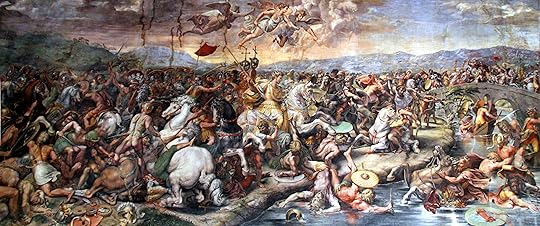
The pages on war are very brisk and would require further reading to learn how they occurred, even his most popular, the Battle at Milvian Bridge, where it’s said Constantine may have seen a cross in the sky.
Summary: Constantine is well known as the Roman Emperor that led the conversion of the Empire to Christianity.
But how did he run Rome day to day as an Emperor? This book looks to provide details on Constantine’s governing through historical records, laws and panegyric deliveries.
Potter also includes discussion points on possible reasons for Constantine’s initial motive to convert as well as scenarios on when and how that happened. Probably unsurprisingly, the time period’s (272-337) non propaganda on this topic is a bit scare or unreliable.
Another two topics that were informative were the pages on Diocletian’s reign as well as details on the choice of the famous city, Constantinople.
As a heads up, this reads like a school book due to the bulk of the information coming from law and edict records at the time. It truly has a focus on the governing, court cases, and how Constantine the Great balanced religious disputes (Nicene Creed).
The pages on war are very brisk and would require further reading to learn how they occurred, even his most popular, the Battle at Milvian Bridge, where it’s said Constantine may have seen a cross in the sky.

May 22, 2025
The author does a careful job with limited data, presenting the story of Constantine derived from a few histories and surviving contemporary documents. Interestingly he thinks about Constantine’s laws to gain insight into the way Constantine thinks. Does he read too much into this? I am not sure.
In any case there is enough information to create an interesting account. Constantine was a tremendously strong emperor, perhaps the strongest. His actions influenced history more than most emperors before him and surely all the emperors after him.
Was he a Christian, really? It is hard to tell but from what is presented in this book I’d lean towards a qualified yes. He was a man of his time and clearly misunderstood much, but he may have truly followed Christ. However, one doesn’t have to answer that question to see that he was a significant world historical figure.
I listened to this as an audiobook. The reader spoke in a monotone throughout. That made it a little challenging to get through.
In any case there is enough information to create an interesting account. Constantine was a tremendously strong emperor, perhaps the strongest. His actions influenced history more than most emperors before him and surely all the emperors after him.
Was he a Christian, really? It is hard to tell but from what is presented in this book I’d lean towards a qualified yes. He was a man of his time and clearly misunderstood much, but he may have truly followed Christ. However, one doesn’t have to answer that question to see that he was a significant world historical figure.
I listened to this as an audiobook. The reader spoke in a monotone throughout. That made it a little challenging to get through.
July 31, 2022
Not necessarily written to reconstitute a biography but Potter gathers the facts and exposes them without giving too much interpretation. A difficult task since Eusebius and Zosimus the two main sources have written a life of Constantine that is almost certainly biased. The rest can be found in scattered texts and epigraphs but doesn’t reveal much.
The main flaw of the book though are the digressions. As a matter of fact the first half has barely anything to do with Constantine but rather with Diocletian and his successors in the Tetrarchy. Surely one doesn’t need so much to set the stage.
The end is redeeming but I would have expected more analysis instead of pure exposure. The epilogue and the appendix are funnily enough the most insightful chapters.
The main flaw of the book though are the digressions. As a matter of fact the first half has barely anything to do with Constantine but rather with Diocletian and his successors in the Tetrarchy. Surely one doesn’t need so much to set the stage.
The end is redeeming but I would have expected more analysis instead of pure exposure. The epilogue and the appendix are funnily enough the most insightful chapters.

January 9, 2025
The first half of the book was written more about the Roman Empire generally and Constantine is not mentioned, which was not what I expected. Overall I found the writing hard to follow at times, with passages written in riddles that I had to read multiple times to understand. With that said I really enjoyed the second half of the book.
October 1, 2026
The author does a thorough job of making sure you understand Constantine in his Context. It was a bit dry for my taste. I prefer more of a storytelling narrative.

February 6, 2019
This was actually a hard book to read. There was a lot of good information, but I found it hard to follow the author's organizational pattern. There were a number of earlier chapters that felt like asides. I thought the later chapters were a little stronger than the earlier half of the book.

January 4, 2013
A biography of the Roman emperor Constantine, who is often called "the first Christian emperor" (or at least the first to offer full religious equality and tolerance for Christianity). This biography does address Constantine's problematic relationship with Christianity, but not in a very effective way. Potter seems to take the view that Constantine was in fact a Christian, but one who did . . . waver, a bit . . . in his relationships with pagan cults (particularly that of Sol Invictus). On the whole, it is a fairly good biography, even including some exploration of the emperors who immediately preceded Constantine in order to put his reign into some kind of context. Nevertheless, I hesitate to recommend it, since it is rather dry as presented, and does not (I feel) satisfactorily address the problems of Constantine and Christianity.

December 10, 2012
Meandering. No focus. No story line. I am sure it was well researched but totally boring.
September 4, 2024
Interesting account of Constantine written in a clear, sympathetic manner.

February 18, 2025
‘Constantine the Emperor‘ (2013) by David Stone Potter. Archpriest Weber introduced me to the Constantine Project by John Mark N Reynolds as an option to Dreher's BenOp [as Dreher abbreviates it].
Reading more on the Constantine Project I discovered the Jeremiah Option by Chris Smith. This lead me to the Gregorian Corollary by Hannah Matis. Then on to the Gregorian Option by Shelia Liaugminas. Finally the Other Benedict Option, Pope Benedict XVI, by Marc (no last name found), but Daniel B Gallagher did write on Benedict XVI & the 'Benedict Option! And the Justinian Option. And I haven't even written my option yet.
Finally, the thread ends with Archbishop Charles J Chaput, 'Strangers in a Strange Land: Living the Catholic Faith in a Post-Christian World! A guide to how Christians-and particularly Catholics--can live their faith vigorously, and even with hope, in a post-Christian public square.
This all started with Dreher reading Alasdair MacIntyre, 'After Virtue A Study in Moral Theology' (1981). 'We are waiting not for a Godot, but for another -doubtless very different- St Benedict' (p305).
Reading more on the Constantine Project I discovered the Jeremiah Option by Chris Smith. This lead me to the Gregorian Corollary by Hannah Matis. Then on to the Gregorian Option by Shelia Liaugminas. Finally the Other Benedict Option, Pope Benedict XVI, by Marc (no last name found), but Daniel B Gallagher did write on Benedict XVI & the 'Benedict Option! And the Justinian Option. And I haven't even written my option yet.
Finally, the thread ends with Archbishop Charles J Chaput, 'Strangers in a Strange Land: Living the Catholic Faith in a Post-Christian World! A guide to how Christians-and particularly Catholics--can live their faith vigorously, and even with hope, in a post-Christian public square.
This all started with Dreher reading Alasdair MacIntyre, 'After Virtue A Study in Moral Theology' (1981). 'We are waiting not for a Godot, but for another -doubtless very different- St Benedict' (p305).
October 6, 2024
Potter menyajikan potret kompleks dari seorang Constantinus, kaisar Romawi yang pertama kali memeluk Kekristenan. Ternyata Constantinus tidak langsung mengimani Kekristenan setelah Pertempuran Jembatan Milvius (312 M), tapi prosesnya jauh lebih panjang dari itu. Constantinus sempat berada di antara Sol Invictus dan Yesus Kristus, sampai setidaknya tahun 320-an M.
Potter juga menjelaskan mengenai bagaimana Constantinus memerintah, menggambarkan seorang dengan energi luar biasa untuk menyatukan kekaisaran di bawah kuasa pribadinya.
Potter juga menjelaskan mengenai bagaimana Constantinus memerintah, menggambarkan seorang dengan energi luar biasa untuk menyatukan kekaisaran di bawah kuasa pribadinya.

August 9, 2025
Potter’s “Constantine the Emperor” is a cautious biography that traces the life of this legendary figure through primary sources. Potter is skeptical of Eusebius’ “Life of Constantine” and views contemporary government documents as surer footing for reconstructing Constantine’s personality and reign.
The book is not a page-turner. Since I listened to it as an audiobook, I had trouble remembering all of the names and connections in the imperial government and family. But I did learn the basics of what scholars know (and don’t know) about Constantine the Emperor.
The book is not a page-turner. Since I listened to it as an audiobook, I had trouble remembering all of the names and connections in the imperial government and family. But I did learn the basics of what scholars know (and don’t know) about Constantine the Emperor.

April 9, 2018
This book starts out in the crisis of the third century and sets up the fracturing Roman world that Constantine would be born into. Its a tad slow early on but I think this background information is key in setting the stage for the events of the early fourth century. A worthy read for me as I knew little of this time period.

October 3, 2024
This book improved my appreciation for who Constantine was and what he was trying to do. It doesn't make me defend his mistakes but it does make me believe his mistakes were inevitable. He privileged Christianity and its bishops because privileging a religion was what emperors did. It was part of the job as Constantine saw it, or anyone in his position would have seen it.
Read
March 11, 2023The text is very, very dry - and I suspect anyone at least not somewhat familiar with Ancient Rome will be lost - but there’s enough interesting bits on Constantine’s reign and history of early Christianity to keep one interested.

November 28, 2018
Very good book about one of the most influential leaders in history.

August 27, 2020
Good if you want the story of Constantine told through all the legal documents and laws he wrote but I found it a bit dry. Didn't help that the audiobook is read by the most boring man ever.

Read
July 18, 2021Honestly I wrote a fire book report about this

November 9, 2021
Choppy start, interesting ending. A bit too dense for someone looking for a casual Constantine biography.

March 5, 2023
Fascinating read.
May 21, 2023
This is a really well written account of Constantine, beyond the Christian narrative. Drags a bit in the beginning, but becomes more readable starting about a third of the way through.
June 15, 2023
Chronologically laid out and well written. Highly recommended if you're interested in the range loosely Diocletian to Constantine

February 18, 2024
A bit too dry
Displaying 1 - 30 of 52 reviews