Recent years have seen a significant shift in the study of new religious movements. In Satanism studies, interest has moved to anthropological and historical work on groups and inviduals. Self-declared Satanism, especially as a religion with cultural production and consumption, history, and organization, has largely been neglected by academia. This volume, focused on modern Satanism as a practiced religion of life-style, attempts to reverse that trend with 12 cutting-edge essays from the emerging field of Satanism studies. Topics covered range from early literary Satanists like Blake and Shelley, to the Californian Church of Satan of the 1960s, to the radical developments that have taken place in the Satanic milieu in recent decades. The contributors analyze such phenomena as conversion to Satanism, connections between Satanism and political violence, 19th-century decadent Satanism, transgression, conspiracy theory, and the construction of Satanic scripture. A wide array of methods are employed to shed light on the Devil's statistical surveys, anthropological field studies, philological examination of The Satanic Bible , contextual analysis of literary texts, careful scrutiny of obscure historical records, and close readings of key Satanic writings. The book will be an invaluable resource for everyone interested in Satanism as a philosophical or religious position of alterity rather than as an imagined other.
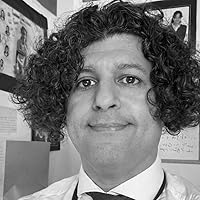
Per Faxneld is Swedish Historian of Religion he holds a ph.d. in History of Religions (obtained in 2014). his field of specialisation is Western esotericism, new religions and "alternative spirituality" (e.g. Satanism, Theosophy, Anthroposophy, New Age, the sacralization of physical excercise, etc), with a particular emphasis on how they are formed in tandem with processes of modernization (especially secularization). he has also worked from a sociological perspective with questions pertainng to strategies of legitimation, religious authority and identity formation. Other interests include religion and popular culture (reflection my background in cinema studies), folk religion (e.g. editing a critical edition of a folkloristic classic), gender issues, globalization and religion and violence. A key theme in his research is the relation between Western esotericism and art/literature.
My doctoral dissertation (Satanic Feminism: Lucifer as the Liberator of Woman in Nineteenth-Century Culture, awarded the Donner Institute Prize for Eminent Research on Religion, and later re-published by Oxford University Press) adresses how anti-clerical feminists – primarily during the time period 1880–1930 – used Satan as a symbol of rejecting the patriarchal traits of Christianity. I emphasized how these women were inspired by the period's most influential new religion, Theosophy, and how the anti-religious discourses of secularism impacted feminism.
I not only thought this was a great work with an interesting subject matter, but the writing was top notch and showed an interest in writing about something in a way to engage the reader. I also detected that the author wrote the book they would want to read, when people do that you can be assured a great read. I thought this was very well done. I will purchase it.
A solid intellectual history of 'self-declared Satanism', as opposed to the better known Satanism Scares. Intellectual history because, interestingly, with the exception of leading figures such as LaVey and other published representatives, satanists are pretty much absent from the chapters, which instead focus on ideas. We do meet them as short soundbites in Jim Lewis's chapter on his Satanism survey and similarly in a chapter on Polish Satanism online. Anyway, an interesting collection.
The book examines the evolution of Satanism as a subculture, primarily focusing on its manifestations in Western Europe, North America, and beyond. The text blends historical and sociological approaches, which is good for readers to better understand the varied ideologies, practices, and cultural representations of Satanism, both past and present. I liked the book's structure, each chapter addresses a different facet of Satanism. From ideology and ritual practices to representations in literature, art, music, and film, the essays work cohesively to present a thorough analysis of Satanism’s development over time. The use of a wide range of academic sources ensures that each topic is presented with depth and academic rigour. I think the book somehow enables the reader to engage with the material critically, exploring both the complexities and contradictions that arise when discussing a subject as controversial as Satanism. One of the book’s greatest strengths is the diversity of methodologies, the authors also navigate the complex epistemological questions surrounding the boundaries between 'real' Satanism and devil worship, and they explore the intersections between Satanism, religion, and politics. This nuanced perspective provides a valuable resource for those looking to better understand the role of Satanism within broader sociocultural and religious frameworks. One disadvantage is that the book's focus on Satanism primarily within the UK and the US could be viewed, the emphasis on Western perspectives leaves certain cross-cultural dimensions of Satanism relatively underexplored, which was a disappointment for me as I was looking for a more global analysis. The book raises important questions about identity, representation, and cultural consumption, making it a key resource for researchers studying the intersection of culture, religion, and society.
I have mixed feelings about this book - not surprising, really, for a collection of essays by twelve different authors.
First, the negative: Many of the essays were too short to really get their teeth into their subject, and ended up essentially restating their central thesis for a dozen pages (e.g. van Luijk). A couple (Petersen and Smoczynski) were riddled with terrible deconstruction prose, for example writing “comprehending the tension between individuality and community, as well as particularity and mainstreaming” (page 143) where a better, less wank author would write “comprehending the tension between the individual and their community, the particular and their mainstream.” I used to be a sucker for that kind of waffle, but, having grown out of it (and dropped my academic career), I resent subjecting myself to it again.
On the other hand, the positive: I did really appreciate several of the essays. I heartily enjoyed Hall’s examples of 17th- and 18th-Century Scandinavians describing their dealings with the devil, and Faxneld’s mini biography of Stanislaw Przybyszewski. Gallagher’s analysis of Anton LaVey’s borrowings from Might is Right, and Lewis’s statistical analysis of contemporary Satanic conversions, both managed to paint remarkably in-depth pictures of their subjects. Lewis’s essay in particular significantly deepened my understanding of my own faith, and is the essay that will stick with me the most from this collection. Finally, Senholt’s essay on the Order of Nine Angels is an important reminder that we need to be vigilant about detecting those who’d use our religion to foment hatred and general dick-headed-ness.
This volume illustrates the variegated development of an intellectual tradition which may broadly be labeled 'satanic'; that is, self-defined cultural and ideological movements explicitly professing inspiration by, sympathy with, or devotion to values, practices, or metaphysical figures which they, largely in keeping with conceptions drawn from western popular culture, identify as satanic. The articles collected here comprise a variety of methodological approaches, including documentary history, quantitative ethnography, and textual analysis of key writings by major figures within subcultural history. Taken together, they serve to place the spectrum of modern 'satanisms' within a common analytical framework with other new religious movements, as well as historical 'world religions'. In this sense, the satanic discursive complex, socially and spiritually elitist in its posture of transgression toward normative social values – especially those construed as inhibiting the self-realization of the individual – has taken shape in conversation with the overlapping spheres of personal identity, group identification, and the relationship between individual and society.