What do you think?
Rate this book


544 pages, Hardcover
First published January 1, 1987

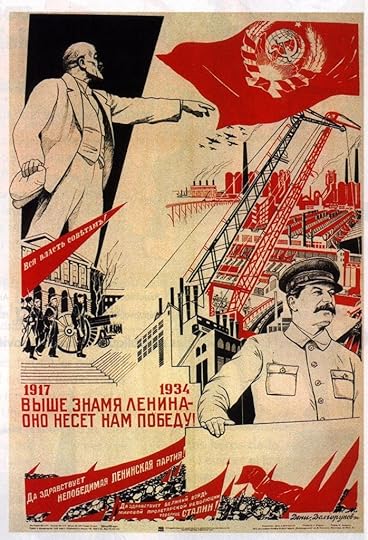

 It is the early '30s and we are introduced to a handful of late-teen residents, a circle of friends, and observe their interactions and ambitions. Foremost here are Sasha and Yuri.
 This novel was suppressed by the Soviet Union for over twenty years.[..] The author was arrested and exiled to Siberia but was later 'rehabilitated' when he became a highly decorated tank commander in WWII.
Taken from the dust cover

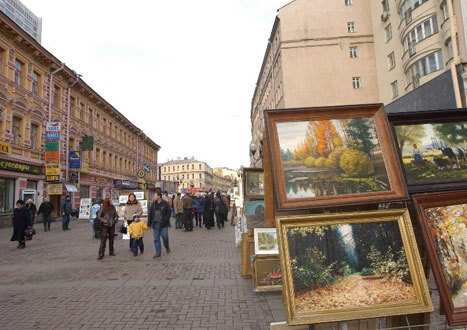 Originally a suburb where traders from the East would arrive with their caravans, in the 18th Century the Arbat became popular with Moscow's intelligentsia and artistic community, who enjoyed frequenting the many cafes and taking strolls along the area's mansion-lined boulevards. Pushkin himself lived here with his wife in house number 53 (the building has since been turned into a museum dedicated to the poet) and Tolstoy resided on the adjoining Kaloshin Lane. In fact Count Fyodor was said to have modelled his famous character Anna Karenina on Maria Gartung - Pushkin's oldest daughter, who also lived nearby. Source
Children of the Arbat (Russian: Дети Арбата) is a novel by Anatoly Rybakov that recounts the era in the Soviet Union of the build-up to the Congress of the Victors, the early years of the second Five Year Plan and the (supposed) circumstances of the murder of Sergey Kirov prior to the beginning of the Great Purge.
- wiki - sourced
 This section is for interesting items found during my read-time to enable 'light and well-meaning' contrasts and comparisons *cough* within the intellectual and artistic communities today: