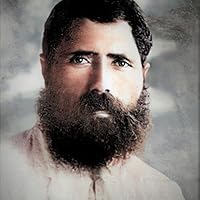
Make Yourself a Teacher is a teaching book and a book about teaching. It discusses three dramatic, well-known stories about the student and teacher Rabbi Eliezer ben Hyrcanus from the Oral Torah. The stories of R. Eliezer serve as teaching texts and models for reflection on the teacher/student relationship in the Jewish tradition and in contemporary culture with special emphasis on the hevruta mode of Jewish learning, a collaborative process that invites the reader into a dialogue with teachers past and present.
Susan Handelman considers how teacher/student relations sustain and renew the Jewish tradition, especially during troubled times. As a commentary on historical and contemporary educational practices, she asks a range of questions about teaching and What is it that teachers do when they teach? How do knowledge, spirituality, and education relate? What might Jewish models of study and commentary say about how we teach and learn today? Handelman not only presents pedagogical issues that remain controversial in today's debates on education but she also brings the stories themselves to life. Through her readings, the stories beckon us to sit among the sages and be their student
Make Yourself a Teacher takes its title from the Talmudic instruction attributed to Yehoshua ben Perahyah in Pirkei Avot. Even a mediocre person can serve as your teacher if you "imagine" him in that role. The book, grown from three lectures delivered at the University of Washington in 2004, follows a single galvanizing figure across three dramatic rabbinic stories. R. Eliezer ben Hyrcanus, known to posterity as R. Eliezer the Great, one of the most formidable and famously intransigent personalities in all of rabbinic literature.
The first story, from Avot de-Rabbi Natan, introduces R. Eliezer at twenty-two, illiterate in Torah, plowing his father Hyrcanus's fields under direct threat of starvation. He resolves to walk to Jerusalem, finds his teacher R. Yohanan ben Zakkai, and proceeds to sit before him in silence for days, eating nothing but a stone he picks up from the road, until bad breath rises from his mouth and R. Yohanan diagnoses the situation with the immortal formulation: "You and I, between us, left Rabbi Eliezer to perish." The cistern, as Handelman would have it, has finally found its water source.
The second story is the famous "Oven of Akhnai" from tractate Bava Metzi'a, and it is, to put it delicately, the one where heaven backs the losing team. R. Eliezer's colleagues at the rabbinic academy in Yavneh vote against his legal ruling on whether a segmented clay oven, rejoined with sand, constitutes a whole vessel susceptible to ritual impurity. R. Eliezer calls upon a carob tree, which uproots itself a hundred cubits; upon a stream, which flows backwards; upon the walls of the study house, which lean perilously toward him.
A heavenly voice then thunders that the law follows R. Eliezer in every case. His colleague R. Yehoshua responds to this with the verse "it is not in heaven," meaning that majority rule among the Sages outweighs celestial endorsements. God, inquired of later by R. Natan via the prophet Elijah, is said to have smiled and remarked, "My sons have defeated Me."
The Sages then vote to ban R. Eliezer from their company. His wife Imma Shalom, whose name translates as "Mother of Peace" and who is also the sister of the court's head Rabban Gamaliel, begins a frantic vigil to prevent her husband from performing the prayer of "falling upon the face," for she carries a family tradition: all gates of prayer are closed after the Temple's destruction, save the gates of wounded feelings.
The third story, from Sanhedrin 68a, places R. Eliezer on his deathbed, wrapped in his phylacteries, in a canopied bed screened from view, while R. Akiva and the other Sages sit in the outer salon at the prescribed distance of four cubits that the terms of his ban require. His biological son Hyrcanus attempts to remove the phylacteries, R. Eliezer rebukes him in full public hearing, and the visiting Sages discover that his mind is admirably unimpaired.
They enter his room. He greets them with "Why have you come?" and receives the answer "We had no time before" with the warmth one might expect. R. Eliezer then places both arms over his heart, compares them to Torah scrolls rolling shut, and laments that he took from his teachers only what "a dog licks from the sea," and that his students drew from him as a painting stick draws from a narrow tube.
R. Akiva, the closest of his disciples, had once asked him to magically fill a field with cucumbers, then to gather them in one place. R. Eliezer complied on both counts, and this extraordinary pedagogical field trip is the sum total of what any student ever asked him about.
What happens when the Sages finally put their legal questions to him at the bedside, and whether R. Akiva's subsequent grief costs him blood, you will have to discover on their own terms, at four cubits or closer.
Susan Handelman is a professor of English literature at Bar-Ilan University in Israel, previously at the University of Maryland, whose earlier books "The Slayers of Moses" and "Fragments of Redemption" explored rabbinic interpretation through the lens of literary theory. By the time she wrote this one, she had grown tired of the postmodern academic circus and wanted to write something personal, pedagogically urgent, and readable by humans rather than dissertation committees. This book is genuinely sincere, though it occasionally drowns its best moments in theological commentary the way R. Eliezer drowned his hunger in explanatory silence.
Teaching is a living transmission between persons and texts alone cannot carry the full Torah. This claim is as old as Sinai and as fresh as every professor who has ever watched a student stare at a phone. Handelman's version of it, filtered through three rabbinic stories about R. Eliezer's hunger, his catastrophic dispute over a segmented oven, and his deathbed reckoning, is moving because the stories themselves are extraordinary.
A man who eats a stone to feed his spiritual hunger; a heavenly voice that loses a vote; a dying sage whose students finally show up and claim they had "no time." These are tales for our era too, when the transmission of wisdom has been replaced by the transmission of content, and the teacher has been replaced by the tutorial. The gates of wounded feelings, as Imma Shalom knew, are always open.
For lovers of Agadda, lay Talmudists, teachers, and students. ❤️ 🇮🇱
A thoughtful, passionate exploration of the teacher-student relationship as exemplified in the Talmud's stories of Rabbi Eliezer ben Hyrcanus, and his relationships with his own teachers and students. Accessible to all, no prior knowledge of Talmud required. Beautifully written, incorporating the thought of many sages, both modern and ancient. Highly recommended.