Jump to ratings and reviews
Rate this book

Gabriela, Clove and Cinnamon

Rate this book
Ilhéus in 1925 is a booming town with a record cacao crop and aspirations for progress, but the traditional ways prevail. When Colonel Mendon�a discovers his wife in bed with a lover, he shoots and kills them both. Political contests, too, can be settled by gunshot...

No one imagines that a bedraggled migrant worker who turns up in town-least of all Gabriela herself-will be the agent of change. Nacib Saad has just lost the cook at his popular caf� and in desperation hires Gabriela. To his surprise she turns out to be a great beauty as well as a wonderful cook and an enchanting boon to his business. But what would people say if Nacib were to marry her?

Lusty, satirical and full of intrigue, Gabriela, Clove and Cinnamon is a vastly entertaining panorama of small town Brazilian life.

426 pages, Paperback

First published January 1, 1958

496 people are currently reading
13769 people want to read

About the author

Jorge Amado

148 books1,601 followers
Jorge Amado was a modernist Brazilian writer. He remains one of the most read and translated Brazilian authors, second only to Paulo Coelho. In his style of fictional novelist, however, there is no parallel in Brazil. His work was further popularized by highly successful film and TV adaptations.
He was a member of the Brazilian Academy of Letters from 1961 until his death in 2001. In 1994, his work was recognized with the Camões Prize, the most prestigious award in Portuguese literature.
His literary work presents two distinct phases. In the first, there is a clear social critic and political focus, with works such as Captains of the Sands and Sea of Death standing out.
In his more mature phase, he adopts an aspect of good-humored and sensual chronicler of his people, abandoning ideological motivations, with works such as Gabriela, Clove and Cinnamon, The Double Death of Quincas Water-Bray and Dona Flor and Her Two Husbands.

Ratings & Reviews

What do you think?
Rate this book

Friends & Following

Create a free account to discover what your friends think of this book!

Community Reviews

5 stars
3,841 (40%)
4 stars
3,813 (39%)
3 stars
1,522 (15%)
2 stars
320 (3%)
1 star
79 (<1%)
Displaying 1 - 30 of 796 reviews
Profile Image for Jim Fonseca.
1,163 reviews8,486 followers
October 11, 2023
Ah, Gabriela, scent and color, a beautiful young woman, almost still a girl, who arrived in the city with a rag-tag band of starving, dirty immigrants from the backlands of northeastern Brazil in the 1920s.

(I added a funny TBR story about this book at the end.)

description

Although he’s not in the title, much of the story also follows Nacib, a Syrian Brazilian, whom you can call Arab, but don’t ever call him Turk. He needs a cook for his restaurant. It’s the only restaurant in town that isn’t also a brothel. He hires Gabriela and the romance begins. Maybe he’ll even marry her, but one of the themes in this book is “Wildflowers don’t belong in vases.”

The novel overall is an epic James Michener-type story about the real city of Ilheus, the author’s hometown, and how it grew in its time as the major cocoa-growing region of Brazil. (And it still is.) But all the action is in the present; we get the historical background through narrative and discussion among the characters. Many of the important characters are wealthy ‘colonels’ who won control of cocoa lands through wild-west gun battles between rival cowboy gangs.

This is Brazil in the 1920s so “The Doctor was not a doctor and the Captain was not a captain. Just as most of the colonels were not colonels: the title was merely a traditional symbol of ownership of a large plantation…they were ‘colonels of the most irregulars,’ for many of them had led bands of outlaws for the bloody struggle for control of the land.” The priest is a real priest, but his unmarried housekeeper may be a bit more than that because she miraculously keeps having children.

A young, wealthy man from Rio de Janeiro comes to town. He has big ideas about improving the town. He personally pays to build a public boardwalk on the beach. He helps start a bus company. He wants to dredge the harbor to improve navigation. I guess we can call him a Progressive. (Or a ‘Young Turk,’ but that may no longer be politically correct?). The stage is set for a political battle and maybe even violence because the old reactionary colonels don’t want change and they want to maintain their behind-the-scenes control of everything.

description

Women’s lib is nowhere to be found in Brazil in the 1920s. Maybe there’s an inkling of it in one young woman who wants to get an education and doesn’t want to be forced to marry someone chosen by her father. But the double standard is supreme – and extreme. If you are a wealthy colonel your wife has a comfortable life with her children and her servants back at the plantation. You keep your mistress in a house in town. You don’t have to worry about your wife finding out because she and everyone else in town knows this.

If your mistress is unfaithful, you dump her and throw her stuff out on the street. Let her go off with her new lover – she’s just a mistress. If your wife is unfaithful, you kill her and her lover. Period. No jury will ever convict you. If you get a good lawyer you probably won’t even be charged with anything. What’s the point? Even the women agree: his wife was unfaithful – what else could he do?

Do these rules apply to Wildflowers? There’s a Pygmalion theme to this novel. Can you take a wildflower, a young woman who has never worn shoes and doesn’t know her last name, or even have one, and turn her into a fine lady?

description

I enjoyed the book and the writing. Much of this is satire and tongue-in-cheek. I liked this when someone is visiting one of the old colonels: “His hands shook slightly, his shoulders were bowed, his step was unsteady. " 'You look stronger than ever,’ said Antonio.”

It’s an old Brazilian classic, but not that far back – published in Brazil in 1958. The author was not only progressive but he was elected to Brazil’s parliamentary body as a Communist. Of course, like almost all other well-known Latin American authors of the time, Amado (1912-2001) had to go into exile when military dictators took over.

description

Some of his work was not well-received in Brazil. Wiki tells “His depiction of the sexual customs of his land was scandalous to much of 1950s Brazilian society and for several years Amado could not even enter Ilhéus [his home town], where Gabriela was set, due to threats received for the alleged offense to the morality of the city's women.” Amado is best known in English translation for his novel Dona Flor and Her Two Husbands.

Here's a TBR story for you. I’ve enjoyed a lot of Brazilian authors including two others by Amado: Home is the Sailor and Shepherds of the Night. A copy of Gabriela had been staring at me from my TBR shelf for 50 years – since college. It survived book cullings from Massachusetts to Virginia to Ohio to Florida. Just never got to it. Then about a month before I wrote this review my older sister was clearing out stuff and, knowing my interest in translations, she sent me her copy of Gabriela. She had received the book as a prize 60 years ago for being the ‘best Portuguese language student’ at our local high school where many students took Portuguese as their foreign language. It has an inscription of congratulations from the Brazilian ambassador at that time – 1963. (It was published in English in 1962, so it was brand new then.) I gave away my old copy and I read and I am keeping her copy!

Top photo of Sonia Braga as Gabriela from the 1975 Brazilian telenovela based on the book. There was also another telenovela series made in 2012. From Wikipedia.
Modern-day Ilheus from alamy.com
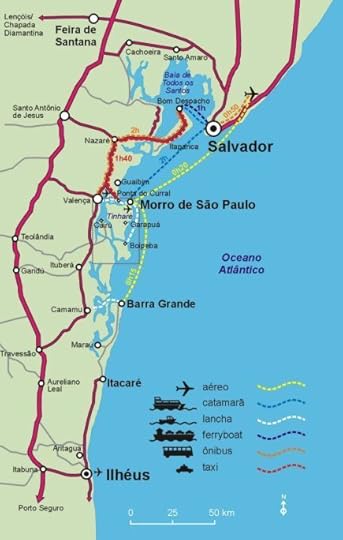
Map showing Ilheus from pinterest.com
The author on a Brazilian stamp from ebay.com

[Edited 7/22/23, typos 10/11/23]
Profile Image for Em Lost In Books.
1,057 reviews2,273 followers
July 6, 2020
"The world is like that -- incomprehensible and full of surprises. "

And same is true for this book. Highly recommended.
Profile Image for Joselito Honestly and Brilliantly.
755 reviews429 followers
October 2, 2010
Sneer if you want. Roll your eyes in disbelief and say there he goes again, he reads a good book then praises it to high heavens. I tell you this, however: this one is pure, unadulterated pleasure from its first page to the last. It is more than amazing, or unforgettable. And what is more than amazing or unforgettable? I don't know. Maybe, one can describe it like how Gabriela's seasoning (she is a cook) is described, tongue-in-cheek, in this book: somewhere between the sublime and the divine.

This book gives you all the joys you find in reading. It transports you to another place, and to another time, where the air is sensuous and the words spoken are poetic, where the characters are alive like they are just next to you. Then there is the humor, which is not soundless. How many times have I read comical writing (P.G. Wodehouse included) that I would just light up within, with a mute laugh inside? Here, with Jorge Amado's wry humor and perfect timing I really laughed, with true sound of laughter, like a baby being tickled, sometimes because of just one or two words he used. It was that funny, sound had to come out.

And Gabriela? She of the cinnamon skin and the smell of clove? You won't forget her. She's more than Machado de Assis' Capitu, or Shakespeare's Juliet. Around fifty pages before the novel ends, some characters were talking about her, in a chapter entitled "Of Gabriela's Love"--

"The Captain asked:
"'Joao Fulgencio, how do you explain Gabriela?...
"Joao Fulgencio looked out on the busy street, saw the Dos Reis sisters wrapped in their mantillas, and smiled.
"'I don't know the answer, Captain. Gabriela is a mystery, and a mystery is by definition inexplicable.'
"'A beautiful body and the soul of a bird,' said Josue....
"'The soul of a child, perhaps,' the Captain speculated.
"'Of a child? Maybe. Of a bird? No, Josue, that's nonsense. Gabriela is generous and pure. She's impulsive; she lacks foresight and adaptability. You can state her good and bad qualities without much trouble. But explain her? Never.'....
"'Love is not to be proven or measured,' said Joao Fulgencio. 'It's like Gabriela. It exists, and that is enough. The fact that you can't understand or explain something doesn't do away with it. I know nothing about the stars, but I see them in the heavens; and my ignorance in no way affects either their existence or their beauty."

Oh my, I need one extra star for this book so I can add it to the five I've given it so eagerly and without hesitation like I was paying a long, outstanding debt. Beautiful, beautiful book (to borrow from Gabriela's description of Nascib the first time they met: "beautiful man!")!
Profile Image for Luís.
2,370 reviews1,358 followers
July 14, 2024
Since its release in 1958, Gabriela has achieved notoriety, gained numerous translations worldwide, and had its plot adapted for soap operas, miniseries, and films, which have constantly repeated the novel's success.
It is a love story between Gabriela, the brunette made of cloves and cinnamon, who wins the love of the Arab Nacib and challenges the customs of her time. The novel is set in Ilhéus in the 1920s, a city in the interior of Bahia that undergoes rapid and dramatic transformations thanks to the wealth that cocoa cultivation brings to the region.
I loved reliving this well-known story from soap operas. It was captivating, engaging, and very uplifting. It had me hooked from start to finish.
Profile Image for Renata.
134 reviews170 followers
February 9, 2017
Recently I saw that a reader on GR had started Gabriela, Clove, and Cinnamon and I instantly felt delighted to see that title come up - rather like unexpectedly running into a friend from your past. Years ago I read a great deal of South American literature and this novel has remained one of my favorites. The story is often humorous, lushly descriptive of the people and the land, and it has an exuberant characters and plot. Rather like being at a Mardi Gras.
Profile Image for Left Coast Justin.
612 reviews199 followers
May 19, 2024
I will confess to being seduced by the title of this book. Knowing absolutely nothing else about it, I tracked down a copy and learned that it was set in the northern Brazilian state of Bahia and was written way back in 1958. Despite being hailed as Literature by The New York Times and The Atlantic, this is a romance novel, plain and simple. One, however, that is aimed squarely at men and thus somewhat unconventional.

The Romance Writers of America state that a romance novel contains

A Central Love Story: The main plot centers around individuals falling in love and struggling to make the relationship work. A writer can include as many subplots as they want as long as the love story is the main focus of the novel.

An Emotionally Satisfying and Optimistic Ending: In a romance, the lovers who risk and struggle for each other and their relationship are rewarded with emotional justice and unconditional love.


So, in keeping with the tradition of the audience, I will transport myself mentally to what, to be honest, is the life I was really intended to live in the first place: Namely, a wealthy cacao plantation owner on the Brazilian coast, a lazy bum whose most taxing decision each day is which pair of white shoes to wear down to the market, where I can hang out with my fellow grandees, down fiery shots of liquor and end the night covered in lipstick from any of the delectable cinnamon-skinned ladies who seem to have no ambitions greater than bringing joy to the town's aristocrats for a few hours a night.

Alas, this state of perfect equilibrium is ruptured when one of my ingrate servants up and quits, meaning I have to find another one -- and with the town's economy going gangbusters due to the world's dawning appreciation of chocolate, this is no easy task. So at last, after about a hundred pages of languorous scene-setting, a plot is set in motion.

For men of my class, Providence provides. For scarcely have I begun my quest when a dusty and desperate mulatta stumbles into town. All she wants is somebody to cook for, a house to clean and a single dress to wear:

description
Brazilian actress Sonia Braga, in the 1983 big-screen adaptation of this novel, illustrates the proposition that if your master is kind enough to buy you a dress, it would be churlish to make a fuss about underwear. Or shoes.

Oh, and to close the loop on the romance, a master to bang her senseless on a nightly basis. Heaven!

Amado, a writer of great efficiency, dispatches the entire "struggling to make the relationship work" aspect in couple of paragraphs, a day after they meet:
When he came out of the bathroom, he was fully dressed. Gabriela had just placed his breakfast on the white tablecloth: steaming pots of coffee and milk, fried bananas, yams, cassava, and corn meal with coconut milk. She stood in the doorway to the kitchen and looked at him as if to say:

"The gentleman must tell me what he likes."

With rapture in his eyes, Nacib swallowed mouthfuls of corn meal. His gluttony held him to the table while his curiosity impelled him to hurry; it was time for the funerals. The fried banana was sublime. By a supreme effort he tore himself from the table. Gabriela had tied her hair with a ribbon. Nacib thought how good it must be to bite the back of her brown neck.

There follows another couple hundred additional pages of languorous scene setting and various scandals before emotional justice is served and unconditional lots of physical love is restored.

The End.

description
This one didn't turn my world upside down, but it was fun enough. A bad day for a Brazilian aristocrat is better than a good day for anyone else.
Profile Image for Bram De Vriese.
87 reviews65 followers
March 8, 2023
Loved this book. I think Jorge Amado is my favourite writer in the Portuguese language. I also really anjoyed Capitaes de arreia. The story is colourfull, characters really come to life and the language is pretty straightforward. Looking forward to the next Amado novel.
1,212 reviews163 followers
June 21, 2024
Colonels, Cacao, and Country Matters

Jorge Amado must have been a kind, romantic man who loved life. He was also a Communist for many years because he had seen the oppression of Brazilian laborers in the cacao plantations of the northern state of Bahia, a place he must have loved. He had to leave the country a couple of times. These two facts combined to produce an amazing oeuvre of novels over many years.

Amado’s novels, including this one, present Brazilian life in a vast panorama reminiscent of the murals of Thomas Hart Benton. OK, then, a certain romanticized view of the Brazilian scene! The characters in novels such as this one, set in 1925, drink, spout bad poetry, eat fabulous local dishes and go to bed with other fabulous local dishes. They are racially tolerant; they don’t pooh-pooh the Afro-Brazilian religion called sometimes candomblé or umbanda. Women are certainly objectified, but he also stands up for women’s rights, for women to have lives of their own, to make their own choices. Is this an accurate picture of Brazil? GABRIELA is not so much a portrait, but a huge mural showing the gun-totin’ colonels, lording it over their cacao plantations, with a history of recruiting gangs of gunmen to enforce their will. [The word “colonel” only signifies a big landowner, not a military rank.] It shows the rising economic transformation of a Brazilian country town in a colorful manner ---the new bus line, the dredging of the harbor, new buildings, an accredited school, economic and social organizations, the end of domination by the colonels, new ways of thinking. Gabriela, a poor but beautiful immigrant from the drought-stricken sertão to the north, who cooks divinely, weaves her independent way through this novel, which is really about politics, cultural styles, and the economic changes brought by cacao cultivation in the area of Ilhéus, a city and region in the state of Bahia. There are a vast number of characters as in a Breughel painting, none of them developed very much, except for Nacib, a Syrian bar owner at the center of the town’s elite such as it was, but fated to love the innocent Gabriela who is certainly the author’s sexual fantasy. The main character is really Transformation, not only of the town, but of some of the characters.

Though the book concerns change in a violent land, most characters survive till the end and the “baddies” mostly turn out to be honorable and possibly changeable. If you prefer grim tales of oppression, reeking with the dreaded “socio-economic import”, probably you should forget about GABRIELA. It is, as I said, a novel written by a kind man who saw life as a comedy rather than a tragedy, who saw potential in everyone, sympathized with people of all classes. I first read it over half a century ago, recently re-read it and still found it most enjoyable. When I actually went to Brazil some years back, I realized how much literary creation can differ from actual society.
Profile Image for Rita.
904 reviews186 followers
May 8, 2023
Jorge Amado publicou Gabriela, Cravo e Canela em 1958, mas a história passa-se na década de 1920 na cidade de Ilhéus, localizada na região cacaueira da Bahia.

Do romance, surgiram as telenovelas Gabriela, Cravo e Canela (TV Tupi, 1960), com Janete Vollu; Gabriela (TV Globo, 1975), com Sônia Braga; Gabriela (TV Globo, 2012), com Juliana Paes, e ainda o filme Gabriela, Cravo e Canela (1983), com Sônia Braga e Marcello Mastroianni.


A história começa com dois acontecimentos importantes, e que são determinantes para toda a história:

• O assassinato de Sinhazinha e Dr. Osmundo pelo marido dela, o coronel Jesuíno Mendonça.
• O navio ita* encalhado à entrada da barra de Ilhéus.

Assistimos às transformações políticas e sociais que ocorreram no Brasil na década de 1920. O país passava por uma transição da economia agrária para uma economia urbano-industrial, o que trouxe mudanças significativas para as estruturas sociais e políticas.

Há um confronto entre classe dominante conservadora e aqueles que defendem o progresso e a mudança.
Aliás, Jorge Amado apresenta uma crítica ao poder oligárquico e dos coronéis que dominavam o cenário político da época, através de personagens políticos corruptos e autoritários, como o coronel Ramiro Bastos, que usam sua influência para manter o status quo e perpetuar as suas próprias vantagens económicas, mantendo as desigualdades sociais e a exploração do povo.
O poder dos coronéis assenta num sistema de poder baseado em laços de lealdade pessoal e submissão ao "coronel".

O progresso chega a Ilhéus através de Mundinho Falcão, um jovem que tem como objetivo modernizar a cidade, produzir riqueza, e acima de tudo desafiar o poder instituído construindo um porto em Ilhéus.

E, quando os grandes cargueiros viessem buscar o cacau no porto de Ilhéus, então poder-se-ia falar realmente em progresso…

Paralelamente a todos estes embates sociais e políticos desenrola-se a história de Nacib, um comerciante sírio dono do bar Vesúvio, e Gabriela, uma retirante nordestina que se torna sua cozinheira.

Gabriela desafia as normas sociais e dá voz à opressão que as mulheres enfrentam. Ela representa uma figura feminina sensual, livre e dona de si mesma, em contraste com os papéis tradicionais impostos às mulheres naquela sociedade patriarcal.
É uma mulher que se recusa a ser subjugada e controlada pelos homens. Ela rejeita as convenções sociais que limitam a liberdade e a expressão feminina, e busca viver de acordo com seus próprios desejos e necessidades. É a representação simbólica de resistência feminina e de questionamento das estruturas opressivas e dos papéis de género tradicionais.
Ao longo da história, Gabriela é confrontada com o machismo e a opressão de homens que tentam controlá-la, restringir a sua liberdade e limitar seu poder. No entanto, ela mantém-se fiel a si mesma, resiste a essas pressões e defende a sua autonomia. A personagem Gabriela permite-nos observar as injustiças e as dificuldades enfrentadas pelas mulheres na sociedade da época.

Na minha opinião a grande personagem deste romance é Ilhéus. A cidade é vibrante, tem a sua própria personalidade, e evolui ao longo da história. As descrições da cidade são minuciosas, e cheias de vida. A cidade é marcada pela diversidade cultural, com influências africanas e nordestinas presentes na música, na culinária e nas tradições. Mas também reflete as tensões e os conflitos sociais, políticos e culturais da época, além de ser um elemento central para a compreensão das transformações e das lutas presentes na história.


* Ita era o nome dos navios a vapor brasileiros e que tinham nomes em tupi-guarani iniciados pelas sílabas ita: Itaberá, Itagiba, Itaguassu, Itahité, Itaimbé, Itaipu, Itajubá, Itanagé, Itapagé, Itapé, Itapema, Itapuca, Itapuhy, Itapura, Itaquara, Itaquatiá, Itaquera, Itaquicé, Itassucê, Itatinga, Itaúba.


Profile Image for Luciana.
516 reviews160 followers
June 23, 2023
Quarta novela do Ciclo do Cacau, Gabriela, Cravo e Canela é sobretudo, como o escritor a definia, uma história de amor que nasce e perdura meio a um embate que iniciou-se em São Jorge dos Ilhéus, onde as novas guerras não mais são travadas nos caxixes, nas tocaias e sim, no campo político.

Com um tom mais moderno, o escritor segue a linha de retratar a urbanização e o progresso como os grandes vilões daqueles que outrora derrubaram matas virgens, plantaram o cacau, enriqueceram e portanto não desejam a perca do poder/influência, menos ainda se isso for desencadeado por um não grapiúna. No entanto, é acerca desse embate que a trama se desenvolve: de um lado o passado representado pelo Coronel Ramiro Bastos e seus seguidores, do outro o futuro encabeçado por Mundinho Falcão, carioca desejoso de modernizar Ilhéus; dois polos diversos que ao se encontrarem trarão de volta a faísca do passado e as lutas sangrentas para as ruas da cidade.

A meio ao caos, às mudanças sociais, a migração e fome da década de 20, aos novos cabarés, ao machismo, a violência doméstica e tanto mais, surge Gabriela, que não muda apenas a vida do árabe Nacib, como de todos aos quais orbitam à sua volta; cozinheira de espírito livre, nada monogâmico, a personagem é parte bonita, gentil e inocente que não se encaixa na cidade, mas precisamente por isso, se destaca, é amada, compreendida e desencadeia os melhores atos da trama, seja para o bem, seja para o mal.

Com uma obra voltada mais aos costumes, como em Dona Flor e Seus Dois Maridos e Tereza Batista cansada de guerra, Gabriela, Cravo e Canela é um retorno ao passado com um salto no futuro, em uma obra que representa a conhecida grandiosidade de Jorge Amado, sendo, a mim, como sempre, uma excelente leitura.
Profile Image for Simona.
974 reviews228 followers
July 13, 2016
Nel Brasile dei colori, dei profumi e delle spezie del 1925, per la precisione a Ilhéus, dove ci si prodiga per le piantagioni di cacao, la bella Gabriella, dalla pelle color cannella e dal profumo di garofano, giunge con il suo carico di vitalità e passionalità.
Gabriella è una donna che non cammina, ma danza, non parla, ma canta come un usignolo, una tipica donna mulatta che cambierà la vita degli abitanti di questa città brasiliana, con il suo modo di fare e di amare e la sua cucina a base di spezie.
Amado riesce a dare vita a una storia di passioni, di brio con personaggi (forse troppi), che danno lustro alla vicenda.
"Gabriella, garofano e cannella" non è solo la storia d'amore tra Gabriella e Nacib, ma sono anche i cambiamenti di un popolo, diviso tra il duro lavoro e la passione che lo smuove. Sono i cambiamenti di una civiltà, di un popolo, di una nazione che cerca di espandersi, ma anche di una donna passionale, viva che regala pagine di grande interesse e dona quella luce al paese.
July 29, 2017
Cinque stelle perchè è Amado.
Cinque stelle perchè il Brasile è multiculturale, multirazziale, solidale, allegro, vitale, in cui si vive con i cinque sensi che guidano la ragione lo stretto indispensabile. E non è poi indispensabile essere ricchi.
Cinque stelle perche Mundinho Falcao è sputato José Mourinho: nel lontano '58, quando Gabriella vide la luce, Amado non poteva saperlo.
Cinque stelle perchè il musulmano siriano Nacib dà lezioni di civiltà e tolleranza: invece di lavare l'onore sporcato dalle corna di Gabriella ripulisce il certificato di matrimonio. Scomparso questo, scomparse le corna.
Cinque stelle perchè le ingiustizie sociali (ci sono, eccome: Amado era un comunistazzo giusto) non hanno potere sulle speranze degli ultimi, braccianti schiavi del cacao dei colonnelli ex cowboys.
Cinque stelle perchè Gabriella, un pò ingenua, un pò figurina di presepe una cosa l'ha capita: a che serve il matrimonio?
Cinque stelle perchè mi è dispiaciuto fosse finito; e se un tomazzo che non finisce più ti lascia pure il rimpianto allora è un cinque stelle sicuramente.
Profile Image for Sergio.
1,343 reviews133 followers
April 9, 2024
Per diverso tempo ho avuto in mente di leggere questo romanzo di Jorge Amado che già mi aveva stupito con la sua scrittura scoppiettante e la sua fervida fantasia con “Teresa Battista stanca di guerra” …e questo che ho appena terminato di leggere non è stato da meno: nel Brasile delle grandi piantagioni di caffè e di cacao sorge il paese di Ilhéus, socialmente arretrato anche perché chi comanda sono i grandi fazendeiros della zona, proprietari di appezzamenti coltivati a cacao, uomini senza scrupolo e senza morale, sempre pronti a sparare, a uccidere, a imporsi con la forza del più forte. Ma i tempi stanno cambiando perché in paese giungono due personaggi destinati a incidere e a sovvertire le sorti del luogo: da una parte il giovane esportatore Moundinho Falcao, pieno di idee innovative che non possono non colpire l’immaginazione degli abitanti che vedono in lui l’uomo “nuovo” e dall’altra l’avvenente Gabriella, giunta a piedi attraverso il deserto in cerca di una “patria”. La felice inventiva letteraria di Amado, legata a una abilità descrittiva e introspettiva che senza essere pesante, scava nell’anima dei personaggi e ne mette a nudo le qualità e i difetti, i vizi e le aspettative interiori, ha allietato questa mia recente lettura e mi ha legato per sempre ai suoi indimenticabili personaggi e ai luoghi narrati.
Profile Image for Acrasia.
204 reviews86 followers
August 7, 2018
Un bellissimo romanzo che mi ha circondata di colori, profumi e tanta spensieratezza.
La trama è molto coinvolgente ma anche la scrittura di Amado è invitante ed incessante, un vortice di parole che ammalia.
Ciò che mi ha fatto veramente divertire è stata la vita della città descritta attraverso lo sguardo delle zitelle pettegole e timorate di Dio e degli avventori del bar che seduti ai tavolini in piazza si fanno gli affari di tutti, sentono voci e ci ricamano su.
Nonostante la diffidenza nei confronti dei forestieri che portano novità e la lotta spietata dei fazendeiros - i proprietari delle piantagioni di cacao - nei confronti del nuovo che avanza e del progresso che sta arrivando ad Ilhéus, l'atmosfera che si respira è quella della festa soprattutto quando arriva Gabriella che con la sua spontaneità e spensieratezza porta freschezza e tutti se ne innamorano.
Gabriella però non è donna da essere legata da vincoli di matrimonio e Nacib che cerca invece di farla diventare una signora con abiti di seta e gioielli se ne accorgerà, in fondo un fiore reciso non vive per sempre e non si possono mettere limiti a Gabriella.
Profile Image for Betty.
408 reviews51 followers
August 15, 2016
Jorge Amado, author of "Gabriela, Clove and Cinnamon" tells a good, sometimes funny, story about a coastal, cacao town in Bahia, Brazil. The subtitle, clove and cinnamon, while hinting at the cooking in the story, refers to the fragrance and appearance of the young woman Gabriela, a migrant who survived the journey from the drought-stricken backlands to Ilhéus, a town in transition surrounded by cacao plantations whose colonels have set the tone for the town and economy. The mid-1920s bring change: the political chief dies before the election, the incomers are bringing progressive ideas (a daily newspaper, a plan to stabilize the sand in the sea channel, a notion of woman's freedom, etc), and the crop production and economy are booming. Amado's story resolves the conflicts of the transition between the outmoded customs and the present needs to foster a town and characters in tune with their real natures.
Profile Image for Algernon (Darth Anyan).
1,838 reviews1,163 followers
November 26, 2024

Literature was for singing the beauties of life, the joy of living, the bodies of beautiful women. Without hypocrisy.

The easiest five star rating I gave in a long, long time. I laughed, I cried, I danced, I cheered for the triumphal procession through the streets of Ilheus, in the province of Bahia, as tradition and modernity struggled to reconcile the false values of small bourgeois minds with the exuberant freedom of love. What a vibrant, colourful place this Ilheus is in 1925. What a terribly cruel and deadly place this same Ilheus is at the same time. Watch them all in carnival procession, to the sound of samba drums ...

At the front, Gabriela with the banner in her hand.

Greatness is achieved by Jorge Amado not with post-modernist or magical realism tools, endless introspections or conflicted intelectuals in existential crisis. Jean Paul-Sartre describes it as the “best example of a folk novel": plain language and dramatic plotting, rooted in the author’s own childhood in Ilheus, in its customs and history.
It seems to me right now that to write an analytical review of themes and style is to be as fake and self-inflated with air as the pseudo-intellectuals of Ilhean high society. What could I even say to rival this description of the novel, written by Amado:

Adventures and misadventures of a good Brazilian (born in Syria), all in the town of Ilheus in 1925, when cacao flourished and progress reigned, with love affairs, murders, banquets, creches, divers. Stories for all tastes, a remote and glorious past of proud seigneurs and rogues, a more recent past of rich plantation owners and notorious assassins, with loneliness and sighs, desire, hatred, vengeance, with rain and sun and moonlight, inflexible laws, political maneuvers, controversy about a sandbar, with miracles, danceress, prestidigitator, and other wonders

Nacib Saad, owner of one of the two bars in town, wakes up one day to find that his old cook has finally left him. He is desperate to find a replacement, before he loses his customers to his rival. But he has to stop and listen to the momentous gossip that is spreading like wildfire through the streets: Colonel Jesuino had caught his wife Sinhazina in bed with the town’s young dentist Osmundo and had gunned down both lovers.

In Nacib’s opinion, there was nothing more enjoyable – except food and women – than to discuss the news and speculate on the latest rumours.
Gossip was the art supreme, the superlative delight, of the town.


On one thing only were they all agreed: it was a husband’s right and duty to kill his adulterous wife.

The rumour mill is churning full speed in Ilheus, with piquant details about the unclothed bodies of the lovers and even praise for the ‘macho’ behaviour of the wronged husband. The celebratory, tongue-in-cheek opening chapters describing life in Ilheus and the march of progress start to ring hollow under this assault of toxic masculinity. The Colonels who control every aspect of life in town are not military men, but self-appointed robber barons who carved vast estates from the virgin forest at gunpoint and now became rich in the export of cocoa from their plantations. Their authoritarian leader is Colonel Ramiro Bastos, old now but still ruling over Ilheus politics with an iron fist.

Life was rotten, full of hypocrisy; Ilheus was a heartless town where nothing mattered but money.

The bar Vesuvius, owned by Nacib, is the gathering place of the progressive opposition in town, about to select a young investor from Bahia as their frontman. Mundinho Falcao promises to dredge the sandbar that stops large ships from entering Ilheus harbour, facilitating exports and new taxes to invest in the town’s infrastructure.

The political conflict between old and new will be the main drive of the plot, paralleling the sentimental conflict between traditionalists and emancipated youngsters that has Nacib and his new cook Gabriela at its heart, with variations on this same theme in the lives of several other couples in town.

The sweet, spicy smell of clove emanated from her – from her hair, perhaps, or from the nape of her neck.
“Can you really cook?”


Nacib, a recent immigrant, and Gabriela, a destitute refugee from the drought that is ravaging the interior, seem made for each other once you read the way the author introduces them. Their mutual attraction is undeniable, but their love story is subject to the same unwritten laws of the Colonels: their passionate natures will lead them to an unavoidable tragedy.

He had no taste for violence. What he really liked was to eat well – good, highly seasoned dishes and a bottle of cold beer; to play backgammon or join an all-night poker game, with fervent pleas to Lady Luck lest he lose the profits he was accumulating to buy land; to maximize these profits by adulterating drinks and padding the bills of customers who held charge accounts; to go to a cabaret; and to end the night in the arms of some Risoleta. Also, to talk with his friends and to laugh.

She loved many things with all her heart: the morning sun before it got too hot; white sand and the sea; circuses, carnivals, and movies; guavas and pitanga cherries; flowers, animals, cooking, walking through the streets, talking, laughing. Above all, beautiful young men; she loved to lie with them, moaning, kissing, biting, panting, dying and coming back to life. With Mr. Nacib among others.

I think you noticed the slight difference in emphasis between the two biographies: he is carefree and a bit lecherous. She is exuberant and a bit promiscuous. What could go wrong? Well, Nacib gets possessive and jealous. His friends push him towards marriage, claiming it is the only way to control the woman. The free spirit of Gabriela is stifled by demands to be decorous, to wear shoes and proper dresses, to socialize with the town matrons and to be quiet and prim there.

“What have you done, you infidel Saracen, to my red flower, to my Gabriela? She had merry eyes, she was a song, a joy, a holiday. Why did you steal her, why did you take her away and put her behind bars? You filthy bourgeois ...”

The town of Ilheus is filled with memorable personages. Each deserves a paragraph, a mention, a context in the larger conflict. I want to concentrate on Gabriela and Nacib, so I will only say here that the voice of reason in town, most of the time, belongs to the Arab’s friend Joao Fulgencio, a true intellectual able to see and to laugh at the folly of his peers. Nacib, unfortunately, listen more often to the self-serving advice of his other young friend: Tonico Bastos, the town’s lecherous rake.

>>><<<>>><<<

I think I will stop here with the synopsis. I would rather sing the songs of Gabriela, Malvina, Gloria, of the fabled virgin Ofenisia or the murdered Sinhazinha. The author thinks the same, since each major part of the novel starts with a song dedicated to one of these women.

She had something; it was impossible to forget her. Was it her cinnamon color? The smell of cloves? Her way of laughing? How should he know? She had warmth, burning on her skin, burning inside, a fire.

Nacib is as clueless as the other men in town about the treasure he has in his hands. He thinks only about how to keep tis fire for himself exclusively. He even buys Gabriela a singing bird [its name soufre has its roots in the French word for suffering]

Superior and distant, he treated her as if he were paying her royally for her work and doing her a favor by sleeping with her.

Gabriela’s eyes turned sad. The sofre’s throat was about to burst, its song was heart-rending.
“What harm did I do?”


I don’t care how many times Jorge Amado repeats this musical theme, this opposition between the freedom of love and the prison of bourgeois hypocrisy. It’s the whole point of the novel, after all:

Life was good, one had only to live it. To warm oneself in the sun, then take a cold bath; to eat guavas and mangoes, to chew peppercorn, to walk through the streets, to sing songs, to sleep with a young man. And to dream of another.
[...] She was a daughter of the people lost in a jumble of incomprehensible talk, of unattractive sumptuousness, and of envies, vanities, and gossip that did not interest her.


It was the silliest thing: why did men suffer so much when a woman with whom they lay, lay also with another man? She couldn’t understand it.

Which brings me back to Joao Fulgencio and his common sense observations:

“I believe she has the kind of magic that causes revolutions and promotes great discoveries. There’s nothing I enjoy more than to observe Gabriela in the midst of a group of people. Do you know what she reminds me of? A fragrant rose in a bouquet of artificial flowers.”

“Eternal love does not exist. Even the strongest passion has its span of life. When its time comes, it dies, and a new love is born.”
“That’s the very reason why love is eternal,” concluded Joao Fulgencio, “because it is forever renewed. Passions die, love remains.”


I could write page after page about the actual developments in town, about the fate of each actor, about political terrorism, poverty or pretentious yet hilarious poetry reading by the eminent Doctor Argileu Palmeira – poet laureate, Parnassus , about the waging tongues of old maids, the suggestive dancing in the cabarets or the ever changing spectacle on the streets of Ilheus. All these details flesh out the grand spectacle, carnival and circus, progress and decadence, freedom and prejudice walking hand in hand.
Probably two more, brief, examples will suffice:

Malvina is a young girl about to finish high school. She tries to start a romance with the young engineer who comes to dredge the sandbar at the invitation of the progressive party. Her father, Melk Tavares, is old school:

Melk had all the rights, made all the decisions. He frequented the cabarets and brothels, spent money on women, and gambled and drank with his friends in the hotels and bars, while his wife withered away in the house, haggard and meek, compliant in every way, without a will of her own.

Malvina receives a savage beating at the hands of her father, simply for having opinions of her own. Nobody in town dares to comment, least of all her presumptive lover, who turns out to be a coward. In the end, progress is inevitable [unless you want to live in president elect Trump’s world]:

“Malvina will never beg forgiveness and she’ll probably never come back. That girl knows her own mind, and its a good one. She’ll go far – literally and figuratively.”

Gloria, she of the epic breasts proudly displayed from the window of her main street house (bought and paid by her sponsor, a married Colonel), is probably the loneliest woman in town. No man dares to speak to her in fear of the Colonel’s violent response. She sighs and she waits in vain for one that will be man enough to dare enter her bedroom.
Eventually, the town’s poet and school teacher Josue, driven by the rejection of his unrequited passion for Malvina, starts to write poetry dedicated to Gloria’s ample charms:

He exalted Gloria, a victim of society, ostracized by the community, a woman of defiled purity, undoubtedly violated by force. She was, in fact, a saint.

Gloria is, in fact, anything but saintly, but we must welcome love in any guise it decides to come knocking at the door. Joao Fulgencio deserves to have the last word on the subject, the novel’s most charming conclusion:

“Love is not to be proven or measured,” said Joao Fulgencio. “It’s like Gabriela. It exists, and that is enough.”

>>><<<>>><<<

I don’t recommend to do this before reading the novel, but if you enjoyed the visit to Ilheus, it’s a good idea to check out the 1983 movie version by Bruno Barreto. Here is a director who knew how to appreciate and film a woman’s beauty. He not only married my teenage crush Amy Irving, but he also filmed Dona Flor and her Two Husbands - Amado’s other epic novel of life and love. For Gabriela he made an inspired choice by pairing an overweight and moustachioed Marcello Mastroianni with a burning hot and costume impaired Sonia Braga. The plot is too much condensed and the support cast not quite as good as the main actors, but a musical score by the legendary Antonio Carlos Jobim is a bonus.
Profile Image for Teodora.
251 reviews63 followers
May 7, 2025
Отправяме се на пътешествие към Североизточна Бразилия и разрастването на град Илиеус през далечната 1925 г. Благодарение на рекордна реколта на какао, градът цъфти, прогреса настъпва, но съзнанието на хората е все още ограничено и трудно настига вятърът на промяната.

Запознаваме се освен с историята на един град и с живота на хората в него. Порядките, предразсъдъците, културата, социалната и политическа атмосфера през онези времена, която ври и кипи. А на този фон и една любов. Една жена, която се появява и разкъсва оковите на наложения патриархат и власт.

“Това е песен за Габриела, тя е за мен карамфил и канела”

Жоржи Амаду, авторът на тази пъстра история е родом от този колоритен край. Това му дава правото да си препише всички заслуги за брилянтното предаване на всички настроения и комплекси на Илиеус и жителите му, където все още “честта на измаменият мъж се измива с кръвта на виновниците”.

Но да се върнем на историята, в която читателят се запознава със суматохата под горещото бразилско слънце. Истории, съдби,обикновено на вид ежедневие и необикновени чувства и страсти.
Сблъсък между старата традиция и модернизацията, между патриархата и желанието за индивидуализъм, демокрацията.

Героите! Кой от кой по цветен и жив. Полковник Рамиру Бастус - авторитета на местната власт, символ на стари времена, който трябва да предаде властта на новото в лицето на остроумния Мундиньо Фалкау, който решава да се намеси в политиката и да наложи модерното мислене. Доктора, който не е доктор. Малвина, която се бори с ограниченията от баща ѝ. Насиб-“хубавият момък”, съдържател на местната кръчма и заклет ерген поне докато не се появява Габриела.

Ах, Габриела. Символ на онази природа у жената, която не може да бъде поставена в рамка, да бъде затворена в клетка, да бъде ограничавана.Страстна, естествена, жизнерадостна, свободна от тесногръдие и закърнели убеждения въпреки скромния си и неясен произход. Лицето на промяната.
Любовта, която пламва между бедната мулатка и сирийския имигрант Насиб беше колкото забавна, толкова и показателна за променящите се настроения в тази част на света. Съвместимостта изглежда невъзможна, но любовта винаги намира път. Ще превъзмогне ли общоприетите норми и ще стопи ли онова неприятно напрежение, което се появява в семействата, в които жената превива гръб роболепно пред своя господар?

Историята на тяхната любов е като поема. Образът на Габриела е почти магичен. Авторът предава усещането за екзотика, за Бразилия не само чрез сюжета в книгата, а и чрез начина на разказване. Засяга много сериозни теми, които обаче са туширани благодарение на иронията и сарказма, с които се пресмива на моралните възгледи и лицемерието на елита. Лекотата и красотата на повествованието го правят достъпно за всеки читател, носейки наслада за сетивата.

Романът показва как опитът да ограничиш човешката природа води неизбежно до нещастие, а посланието е определено: приемете се такива каквито сте.
Възхвала на промяната и демокрацията. Остра критика към консерватизма и патриархата. Личната, социалната и културна свобода са в основата на посланията в произведението на Амаду.

Profile Image for Jenny Baker.
1,489 reviews240 followers
did-not-finish
September 24, 2022
1001 Books You Must Read Before You Die
Read: 111
(Well, this would have been #111.)

First, I want to thank my coworker for borrowing this book for me through Interlibrary Loan. Thanks, Wendy!

I DNF'd at page 30. I tried to get into it, and I wanted to love it, I just couldn't get into it. I'm not fond of Amado’s writing style. Instead of experiencing the story, the reader is told the story, keeping you at arm’s length. It's too slow and it prattles on. Sorry, I did my best, but it's time to move on.

(No rating and no finish date.)
Profile Image for Dragan.
104 reviews18 followers
August 10, 2020
Idealno štivo za ove sparne ljetne dane, ne baš za čitanje na plaži, više terasa u smiraju ljetne večeri.
Raskošno napisan roman, polifone strukture, natopljene rakijom od šećerne trske, ozvučen slatkim uzdasima vatrenih ljubavnika u revolveraškim obračunima, ispunjen mirisima klinčića, kakaa i drugih egzotičnih začina koji nas upućuju na užitke- kako nepca, tako i one seksualne.
Profile Image for Fernando Évora.
Author 16 books18 followers
July 14, 2014
Eis um livro em que fui adiando a leitura. Era gaiato quando esta telenovela fez furor em Portugal (foi a primeira novela brasileira na nossa tv). Nessa altura devo ter perdido poucos episódios. Há poucos meses houve um remix em telenovela. Vi alguns episódios. Pelo caminho li diversos livros de Jorge Amado, autor de que, pode-se dizer, sou fã. Agora peguei neste livro mais por uma questão técnica: como consegue este mestre condensar no mesmo livro muitas personagens, mantendo uma estrutura inteligível.
É claro que passadas poucas páginas deixei-me embrenhar no livro e tive de fazer um esforço para atentar na tal questão técnica (que me interessava enquanto autor e não leitor, obviamente, e que não vou abordar até porque não estou certo de ter tirado conclusões dignas desse nome).
Partindo do pressuposto que a muitos viram a telenovela e menos leram o livro, opto então por apresentar, porque penso que isso seja o mais importante para os leitores portugueses, mas também brasileiros, o que tem o livro que não tem a adaptação televisiva.
Desde logo o tema. O tema do livro é, obviamente, "os novos tempos". As mudanças em Ilhéus, microcosmos, servirão para caracterizar a mudança de um sistema baseado na posse da terra dos latifundiários para um sistema dominado pelos exportadores de cacau capitalistas. O mais interessante no livro é como que a inevitabilidade destes novos tempos e as alianças entre correntes supostamente mais revolucionárias e intelectuais (personificadas pelo Doutor e João Fulgêncio) com os novos capitalistas, bem como a adesão "interesseira" da tecnologia (personificada pelo engenheiro Osmundo). O tema é portanto dinâmico e não, como me parecia, um retrato de um dado momento social. E deixa na entrelinha a ideia da corrupção do poder. De que a mudança não será, afinal, tão substancial. Em muitos momentos me lembrei de "O Leopardo" de Giusepe Tomasi di Lampedusa, espécie de referência neste tema.
Como seria de esperar, na obra não existem os intrincados problemas ligados às histórias de amor que são característicos da tv comercial. Muitas dessas histórias são criações televisivas e terminam de maneira completamente diferente por imposição do tal princípio telenoveleiro de que todos, ou quase todos, devem casar nos últimos episódios(suponho que ainda seja assim, que não sou consumidor de telenovelas).
E depois, claro, o livro tem uma beleza da escrita à Jorge Amado. Uma delícia! Um realismo que não é um realismo frio, meramente descritivo e objetivo, mas um realismo que aponta à poesia em tantas passagens. Leiam os curiosos, a título de exemplo, o capítulo "Gabriela com pássaro preso" (na minha versão, pela página 199 de 351), de que deixo este excerto (mas leiam, ao menos todo este capítulo):

"Tão bom ir ao bar, passar entre os homens. A vida era boa, bastava viver. Quentar-se ao sol, tomar banho frio. Mastigar as goiabas, comer manga espada, pimenta morder. Nas ruas andar, cantigas cantar, com um moço dormir. Com outro moço sonhar."

E, mais à frente, conclusão do capítulo:

"Foi pro quintal, abriu a gaiola em frente à goiabeira. O gato dormia. Voou o sofrê, num galho pousou, para ela cantou. Que trinado mais claro e mais alegre! Gabriela sorriu. O gato acordou."

E muitos mais trechos belos, imensamente belos.
Por isso: não deixem de ler. É mesmo das melhores, quiçá a melhor, das obras de seu Jorge Amado.
Profile Image for Montse Gallardo.
575 reviews61 followers
September 12, 2017
Novela con nombre de mujer que habla de hombres; de su visión del mundo, de sus deseos, de sus peleas, de sus normas, de su forma de gobernar, gestionar y organizar. La novela refleja una sociedad (una incipiente ciudad brasileña, a principios del siglo XX) en la que el progreso empieza a cambiar los modos de actuar y relacionarse. En la que se pasa de dirimir cualquier disputa a tiros a una política más "civilizada" (con compra de votos, alianzas interesadas y enla que siguen gobernando los de siempre con otras maneras)

Siempre pensé -por el título y la sinopsis- que sería una novela de corte romántico; pero ni los amores de Gabriela y Nacib son lo más relevante de la historia, ni hay demasiado amor en el libro. Sí hay vida -vibrante, excesiva, apasionada, intensa- y alegría y diversión (incluso el drama tiene cierta ligereza en la novela, en cómo lo ven los habitantes de Ilheus... por terribles que sean algunos hechos que se narran)

Me ha sorprendido muy gratamente la historia; imagino que porque no es lo que esperaba. Está muy bien construida, los personajes -muy ricos y variados- reflejan muy bien esas nuevas ciudades pujantes, construidas a golpes y con fuerza bruta, desde cero, en la que se entretejen relaciones de dependencia, de amistades y enemistades, alianzas en las que cualquier cambio implica el riesgo de que todo se desmorone.

Mi personaje preferido es Nacib, el árabe. Es en cierto modo quien hace de cronista (inconsciente) de lo que ocurre en la ciudad, y de catalizador de los hechos más relevantes. Y, sobre todo, marca una gran diferencia tomando una decisión sorprendente que puede ser el inicio de una nueva forma -real- de hacer las cosas.

Respecto a Gabriela, es una mujer libre (en todos los sentidos), que no encaja en las convenciones sociales de Olheus, ni entiende por qué se espera de ella que se convierta en algo que no es. Es también de una inocencia a veces deseperante, no tiene malicia ninguna.

Pero la sensación final que me queda es contradictoria, pues es una novela con momentos divertidos, con otros duros, en general alegre y optimista, que relata una sociedad tremendamente machista y dura para las mujeres, lo que deja un regusto de injusticia y malestar (¿cómo puede caerme bien un personaje que hace lo que hace?)

En cualquier caso, me parece una novela muy recomendable.
Profile Image for Tempest.
28 reviews12 followers
August 28, 2008
This novel is about a town organized almost exclusively around sex and violence, but through a growing prosperity is suddenly having to reconsider this fundamental structure and become 'civilized'. The plot teeters back and forth between the town's upcoming election and the romance between a poor woman and a rich man. In both circumstances, there is a direct conflict between what is and what, inevitably, will be.

Phoenix-like, the couple loves, then hates, then loves again. The idea seems to be that the core of something, whether it is a person or a town, is unalterable. It can be gussied up, but will eventually re-emerge as raw and dirty as it began, only to be gussied up once more.

Stimulating and titillating; rhythmic and poetic. Timeless, etc. A good book.
Profile Image for Vahid.
356 reviews29 followers
December 28, 2019
کتاب گابریلا،.... از دو داستان اصلی شکل گرفته است که به موازات هم پیش می‌رود.
ماجرای نجیب کافه‌دار و عشق او و داستان دیگر که به موضوعات سیاسی و گزارش توسعه و پیشرفت شهر و رقابت‌های نامزدها برای انتخابات شهرداری می‌پردازد.
اما برخلاف دیگر آثار نویسندگان مطرح آمریکای لاتین این کتاب به حد کافی قوی و جاندار نیست.
تعدد شخصیت‌ها، عدم شخصیت پردازی و معرفی ناکافی آنها، نداشتن تعادل و تناسب در ارائه دو موضوع اصلی داستان و اشکال در ارائه تصویری کامل از گابریلا و ترجمه نه چندان خوب، از جمله نقاط ضعف این کتاب بود.
Profile Image for gratría.
44 reviews1 follower
August 25, 2025
не смогла дочитать , это вообще не то что я ожидала и что читала про эту книгу
думала здесь будет красиво показана культура бразилии ( от части было, но не так ), страстная любовь к габриэле и все такое
по итогу только рассуждения мужиков о каких то жалких проблемках которые они сами себе навыдумывали, плюс дичайшая сексуализация любой женщины и особенно габриэлы.
ее все любили только потому что хотели ею обладать и мне очень противно было на это смотреть («Габриэла была похожа на ребенка, ее выдавала только ее фигура и бедра»)
может когда нибудь перечитаю но щас это просто кринж
Profile Image for tiago..
462 reviews135 followers
November 15, 2020
Que romance maravilhoso; é muito raro encontrar um livro de quase 450 páginas e querer que seja mais longo ainda. Jorge Amado não conta histórias, pinta cenas. É um desses autores que tem a rara capacidade de criar ambientes com a vivacidade do seu estilo. Preenche este livro uma cidade queimada pelo sol, com cheiro a cacau e cheia de tipos pitorescos, uma escrita limpa, fluída, cheia de humor e de amor à vida, de um encanto achado no quotidiano, nas coisas mais pequenas.

O romance versa sobre a cidade de Ilhéus, que atravessa um processo de mudança política: ao sistema político instalado, liderado por "coronéis" (grandes proprietários) do cacau que conquistaram a fortuna e as posses à custa de morte e violência, opõe-se uma nova corrente liderada pelo forasteiro Mundinho Falcão, que procura fazer de Ilhéus uma cidade moderna, conectada ao mundo por estradas e portos, com jornais, restaurantes e infraestruturas modernas, esquecida da violência do seu nascimento e caminhante em direção a um futuro novo.

É uma obra-prima da literatura feminista? Provavelmente não. Mas um dos focos deste romance é também a situação da mulher na Ilhéus dos anos 20: como o seu destino lhes era arrancado das mãos, submetidas primeiro às vontades dos pais e depois às dos maridos, como eram tratadas como um objeto desprovido de humanidade e prontamente assassinadas se buscassem escapar-se à sua lúgubre realidade nos braços de outro homem. Amado faz ainda uma crítica do mito do amor romântico e possessivo: esse que projeta o eu no outro e procura moldá-lo a seu gosto, esse amor ciumento que enjaula o amado, não vá o seu amor esgotar-se com outrem.

Tem certas flores, você já reparou?, que são belas e perfumadas enquanto estão nos galhos, nos jardins. Levadas pros jarros, mesmo jarros de prata, ficam murchas e morrem.

- O amor eterno não existe. Mesmo a mais forte paixão tem o seu tempo de vida. Chega seu dia, se acaba, nasce outro amor.
- Por isso mesmo o amor é eterno - concluiu João Fulgêncio. - Porque se renova. Terminam as paixões, o amor permanece.


E assim nesta Ilhéus romanceada, alterada pelos ventos da mudança que sopram através das páginas deste livro, mulheres fogem aos pais em busca de uma vida independente, homens rejeitam as velhas tradições de matar a mulher infiel, nascem portos na barra, caem coronéis do pódio do poder. No final, Ilhéus é uma cidade mudada: aberta ao progresso e deixando para trás um passado de violência e velhos conceitos do que significa amar e ser amado, evoluir e ver a evolução. Realista? Talvez não. Talvez se procure uma realidade mais ampla, um ideal em direção ao qual se possa caminhar, como essa Ilhéus que vivia na mente de Mundinho Falcão.
This entire review has been hidden because of spoilers.
Profile Image for Ренета Кирова.
1,316 reviews57 followers
May 8, 2025
Книгата е с колоритни герои, трудни за описване. Зад лековатия тон се прокрадват доста сериозни теми за размисъл. Мъжът може да убие съпругата си и любовника ѝ, ако ги завари заедно. Не го осъждат и не го вкарват в затвора. В същото време той е свободен да ходи по други жени, да се отнася грубо със собствената си жена и да я заключва в къщи.
Тази книга описва времето, когато в Бразилия старото трябва да бъде забравено и да се проправи път на новите, цивилизовани правила. Прогресът навлиза дори и в това малко градче, наречено Ильеус.
Габриела, за която става дума в заглавието на книгата, всъщност е простодушна душа с разсъждения на дете. Красива, грациозна мулатка с канелена кожа и мирис на карамфил, тя олицетворява жизнеността и красотата. Интересен образ е и може би някакъв символ, че промяна насила никога не може да се случи.
Всичко е добре, когато завършва щастливо!
Profile Image for Inderjit Sanghera.
450 reviews143 followers
December 7, 2017
The sultry smell of clove and cinnamon surrounds Gabriela, a conflagration of sensuality and salaciousness. Gabriela, like many of the other female characters in the novel, is a light whose ebullience is dimmed by the murkiness of male insecurities and hypocrisy, who sinks beneath the weight of Nacib, seeking to tame the wildness of her personality beneath the banality of bourgeoisie morality, ends up losing her and his happiness due to the-largely unwarranted-doubts which creep into his mind, due to his inability to accept and love Gabriela for what she is and to mould her into a respectable, but soulless, woman.

Reading the story of Nacib and Gabriela, the reader recalls this quote from Antoine de Saint-Exupéry; “And that heart which was a wild garden was give to him who only loved trimmed lawns. And the imbecile carries the princess into slavery.” Gabriela herself intuits when she considers Nacib’s marriage proposal; Nacib, measuring Gabriela against the prostitutes he frequents, feels love is expensive shoes and laced clothing, domestic oppression and social pretence; for Gabriela it is the feel of Nacib’s body over her thigh at night. Nacib views love as a form of ownership, whereas for Gabriela it is freedom. Indeed the novel is full of women who seek to break free from the yoke of societal prejudices, from the hypocrisy of men and to re-take ownership of their bodies and emotions-whilst Gabriela’s struggle is more primitive than intellectual, it is symptomatic of the struggles the female characters face in the novel.

The cadence and rhythm of Amado’s prose echoes the sensuality note just of the story, but of Ilheus and of the sultry hedonism of Bahia and and the fiery atmosphere which pervades the novel;

“The prayer rose to the diaphanous, cloudless sky, with a pitiless sun-a murderous ball of fire set on the newborn pod of cacao sprouts.”

Mixed in with this are the plots and political intrigues, of the Machiavellian machinations of local politics and of the wide-spread cronyism inherent in Brazilian politics as well as a series of soap opera sub-plots. However, more fundamental than this is the story of a well-meaning, if naive, man who seeks to enslave the woman who only seeks freedom in the love she feels for him.
Displaying 1 - 30 of 796 reviews

Can't find what you're looking for?

Get help and learn more about the design.