

What do you think?

Anti-Judaism: The Western Tradition
This incisive history upends the complacency that confines anti-Judaism to the ideological extremes in the Western tradition. With deep learning and elegance, David Nirenberg shows how foundational anti-Judaism is to the history of the West. Questions of how we are Jewish and, more critically, how and why we are not have been churning within the Western imagination throughout its history. Ancient Egyptians, Greeks, and Romans; Christians and Muslims of every period; even the secularists of modernity have used Judaism in constructing their visions of the world. The thrust of this tradition construes Judaism as an opposition, a danger often from within, to be criticized, attacked, and eliminated. The intersections of these ideas with the world of power the Roman destruction of the Second Temple, the Spanish Inquisition, the German Holocaust are well known. The ways of thought underlying these tragedies can be found at the very foundation of Western history.
624 pages, Hardcover
First published February 4, 2013
About the author
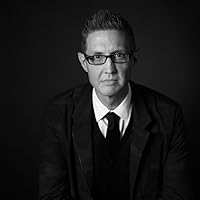
David Nirenberg
21 books40 followersI have spent most of my intellectual life shuttling between the micro and the macro, trying to understand how life and ideas shape and are shaped by each other. One stream of my work has approached these questions through religion, focusing on the ways in which Jewish, Christian, and Islamic cultures constitute themselves by interrelating with or thinking about each other. My first book, Communities of Violence: Persecution of Minorities in the Middle Ages, studied social interaction between the three groups within the context of Spain and France in order to understand the role of violence in shaping the possibilities for coexistence. In later projects I explored the work that “Judaism,” “Christianity,” and “Islam” do as figures in each other’s thought. One product of that approach, focused on art history, was (jointly with Herb Kessler) Judaism and Christian Art: Aesthetic Anxieties from the Catacombs to Colonialism (2011). In Anti-Judaism: The Western Tradition (2013), I attempted to apply the methodology to a very longue durée, studying the work done by pagan, Christian, Muslim, and secular thinking about Jews and Judaism in the history of ideas. More or less simultaneously in Neighboring Faiths: Christianity, Islam, and Judaism Medieval and Modern (2014), I tried to bring the social into conversation with the hermeneutic, in order to show how, in multireligious societies, interactions between lived experiences and conceptual categories shape how adherents of all three religions perceive themselves and each other. Then in Aesthetic Theology and Its Enemies: Judaism in Christian Painting, Poetry, and Politics (2015), I focused on how thinking about Judaism shaped the ways in which Christian cultures could imagine the possibilities and limits of community and communication.
Beginning with my book Anti-Judaism, which stretched from ancient Egypt to the twentieth century in order to try to understand the work done by a family of concepts across history, I have tried to cultivate a new approach to the “long history” of ideas. My most recent book, Uncountable: A Philosophical History of Number and Humanity from Antiquity to the Present, written in collaboration with Ricardo Nirenberg (a mathematician who happens also to be my father), follows this path as well. It explores the long history of the various types of sameness that underpin the claims of different forms of knowledge (from poetry and dreams, to monotheism, math, and physics), using these to think critically about the powers and the limits of the sciences and the humanities. I am now at work on the long history of yet another family of concepts, namely the inter-connected history of race and religion from the Neolithic to the present.
Beginning with my book Anti-Judaism, which stretched from ancient Egypt to the twentieth century in order to try to understand the work done by a family of concepts across history, I have tried to cultivate a new approach to the “long history” of ideas. My most recent book, Uncountable: A Philosophical History of Number and Humanity from Antiquity to the Present, written in collaboration with Ricardo Nirenberg (a mathematician who happens also to be my father), follows this path as well. It explores the long history of the various types of sameness that underpin the claims of different forms of knowledge (from poetry and dreams, to monotheism, math, and physics), using these to think critically about the powers and the limits of the sciences and the humanities. I am now at work on the long history of yet another family of concepts, namely the inter-connected history of race and religion from the Neolithic to the present.
Ratings & Reviews
Friends & Following
Create a free account to discover what your friends think of this book!
Community Reviews
Displaying 1 - 30 of 89 reviews

July 18, 2016
Christian Anti-Semitic Identity
Christians have perennially defined themselves as those not wanting to be mistaken for Jews. As Nirenberg points out: "If Paul had converted to Christianity during the second century rather than the first he would have been declared a heretic" simply because he never denied his Judaism.
Christians, since the first gospel-writer called Mark, have developed the term 'Jew' quite independently of what actual Jews are, believe and do. The fewer Jews there are around - after the English expulsion and the Spanish Inquisition for example - the more the caricature of The Jew becomes an independent Christian cultural archetype that can be used on both sides of any political argument against the other:
Jews are Capitalists, Jews are Communists; Jews have no culture, Jewish culture is permanently threatening to Christianity; Jews are weak, Jews are incredibly obstinate and resilient; Judaism is legalistic ritual, Judaism has no ethical content. Jews, in short, represent whatever social problem happens to be current, for whatever faction proposing a solution.
Largely this is a consequence of the persistent promulgation by the (Catholic) Church of a theology of alienation. Unable to fundamentally distinguish itself from Judaism, except through its rejection by Judaism, Christianity has needed Judaism as a unifying symbol.
Not until the Second Vatican Council (1962-1965), with the recognition of its role in the Holocaust, did the church formally reject this theological symbol. One wonders to what degree this move rather than other liturgical changes contributes to the subsequent decline in institutional church participation.
Of greater social relevance perhaps, one also wonders to what degree the recent rise in European anti-Semitism is a cultural attempt to re-establish this lost symbol of Christian unity. Isn't it the Jews in Israel after all who are ultimately responsible for Muslim unrest, while they are simultaneously responsible for so much disruptively liberal social policy? The seeds need only a little watering by populist wannabes to sprout another round of good Christian hate.
Nirenberg’s message is that the The Jew is not a person; he is not a member of an ethnic or religious group; he is not even a ‘type’. The Jew is a perennial trope, a figure of speech, created and institutionalised in European Christianity. The Jew is what ‘we’ are not. This trope gets used, inserted into conversation and debate, in any number of situations to promote unrest and misdirect popular anger. Language has power. The semiotic linguistic process which the church began almost 2000 years ago is much harder to stop than it was to start.
Postscript 13May19: https://www.tabletmag.com/jewish-news...
Christians have perennially defined themselves as those not wanting to be mistaken for Jews. As Nirenberg points out: "If Paul had converted to Christianity during the second century rather than the first he would have been declared a heretic" simply because he never denied his Judaism.
Christians, since the first gospel-writer called Mark, have developed the term 'Jew' quite independently of what actual Jews are, believe and do. The fewer Jews there are around - after the English expulsion and the Spanish Inquisition for example - the more the caricature of The Jew becomes an independent Christian cultural archetype that can be used on both sides of any political argument against the other:
Jews are Capitalists, Jews are Communists; Jews have no culture, Jewish culture is permanently threatening to Christianity; Jews are weak, Jews are incredibly obstinate and resilient; Judaism is legalistic ritual, Judaism has no ethical content. Jews, in short, represent whatever social problem happens to be current, for whatever faction proposing a solution.
Largely this is a consequence of the persistent promulgation by the (Catholic) Church of a theology of alienation. Unable to fundamentally distinguish itself from Judaism, except through its rejection by Judaism, Christianity has needed Judaism as a unifying symbol.
Not until the Second Vatican Council (1962-1965), with the recognition of its role in the Holocaust, did the church formally reject this theological symbol. One wonders to what degree this move rather than other liturgical changes contributes to the subsequent decline in institutional church participation.
Of greater social relevance perhaps, one also wonders to what degree the recent rise in European anti-Semitism is a cultural attempt to re-establish this lost symbol of Christian unity. Isn't it the Jews in Israel after all who are ultimately responsible for Muslim unrest, while they are simultaneously responsible for so much disruptively liberal social policy? The seeds need only a little watering by populist wannabes to sprout another round of good Christian hate.
Nirenberg’s message is that the The Jew is not a person; he is not a member of an ethnic or religious group; he is not even a ‘type’. The Jew is a perennial trope, a figure of speech, created and institutionalised in European Christianity. The Jew is what ‘we’ are not. This trope gets used, inserted into conversation and debate, in any number of situations to promote unrest and misdirect popular anger. Language has power. The semiotic linguistic process which the church began almost 2000 years ago is much harder to stop than it was to start.
Postscript 13May19: https://www.tabletmag.com/jewish-news...

March 7, 2013
Erudite yet readable for the nonspecialist, and sparkling with wit despite the depressing topic. The aim is to show how anti-Judaism isn't some marginal phenomenon, but a foundational platform of Western (and Islamic) thought. Since St. Paul's epistles, Jews have been cast in the role of "vessels of wrath," into which all of the troubling features of cultural life could be quarantined. And this othering has remained constant, even as those troubling features change in response to new ideological needs.
Thus, for the earliest Christian thinkers, Judaism became synonymous with law and narrow literalism, as opposed to the spiritual freedom of Christianity. When Martin Luther wanted to reintroduce the verbatim biblical text during the Reformation, Jews were cast as interlopers in the biblical story, whose protagonists were actually to be regarded as Christian. When commercial activity became crucial to new European states, parasitic "Jewish" speculation was made to stand against productive Christian economic develoment. And when rationalism became fashionable during the Enlightenment, Judaism putatively became the preserve of unreasonable hatred and fanaticism. Critical thinkers abjectly failed to question their received prejudices about Jews and Judaism, even when the thinkers themselves were of recent Jewish descent: e.g., Spinoza, Marx, Hannah Arendt. Indeed, modern thinkers even mined the pre-Christian past for evidence of Jewish iniquity.
Jews didn't have to be present for this kind of thinking to occur, and when scholars throughout the ages write about Jews, they often mean non-Jews with "Jewish traits". But when Jews were nearby, the prevailing images of Judaism had profound consequences for them. In the background, we can see antisemitism rising alongside anti-Judaism, which culminated in the Holocaust. And Nirenberg sees the post-war discourse as more of the same, with "Israel" replacing "Jew". He is cautious to rule out determinism when considering how trends in thought impact behavior, but he does assert that these trends can smooth the way for particular outcomes while making others harder to imagine.
The dismal synopsis is that negative stereotypes can be highly functional for ideological requirements and we can't always rely upon critical scholars to question them. And this is particularly true for figures of Judaism, which form a major pillar of Western culture.
Thus, for the earliest Christian thinkers, Judaism became synonymous with law and narrow literalism, as opposed to the spiritual freedom of Christianity. When Martin Luther wanted to reintroduce the verbatim biblical text during the Reformation, Jews were cast as interlopers in the biblical story, whose protagonists were actually to be regarded as Christian. When commercial activity became crucial to new European states, parasitic "Jewish" speculation was made to stand against productive Christian economic develoment. And when rationalism became fashionable during the Enlightenment, Judaism putatively became the preserve of unreasonable hatred and fanaticism. Critical thinkers abjectly failed to question their received prejudices about Jews and Judaism, even when the thinkers themselves were of recent Jewish descent: e.g., Spinoza, Marx, Hannah Arendt. Indeed, modern thinkers even mined the pre-Christian past for evidence of Jewish iniquity.
Jews didn't have to be present for this kind of thinking to occur, and when scholars throughout the ages write about Jews, they often mean non-Jews with "Jewish traits". But when Jews were nearby, the prevailing images of Judaism had profound consequences for them. In the background, we can see antisemitism rising alongside anti-Judaism, which culminated in the Holocaust. And Nirenberg sees the post-war discourse as more of the same, with "Israel" replacing "Jew". He is cautious to rule out determinism when considering how trends in thought impact behavior, but he does assert that these trends can smooth the way for particular outcomes while making others harder to imagine.
The dismal synopsis is that negative stereotypes can be highly functional for ideological requirements and we can't always rely upon critical scholars to question them. And this is particularly true for figures of Judaism, which form a major pillar of Western culture.

May 15, 2018
Am reading this in bites because almost every page requires me to go and read something else to understand the discourse. An over-arching book which dives into the history of thought and its construction. Staggering and painfully revealing. More to follow.

January 21, 2014
Painful reading. I am glad I forced myself to finish it. David Nirenberg will not let us draw a causal line from the scapegoating of Judaism and Jewish people (even when Jews were a tiny minority through forced conversions to Christianity or expulsions) to their extermination in the Holocaust. It's more complicated than that, he says. As a Christian I found shocking his documentation of the anti-Judaism writings of the early fathers and saints -- Justin Martyr, Sts. John Chrysostom, Jerome, Augustine.
I'd wondered if the book would reference the Catholic Church's 1965 declaration Nostra Aetate ("In our age" or "in our time") of its relationship to non-Christian religions. In the brief Vatican II document "the Church, mindful of the patrimony she shares with the Jews and moved not by political reasons but by the Gospel's spiritual love, decries hatred, persecutions, displays of anti-Semitism, directed against Jews at any time and by anyone." Nostra Aetate has had a major impact on Catholicism, quietly producing positive changes in the language of the Mass and teaching the faith to children and adults. http://www.vatican.va/archive/hist_co.... Nirenberg's book does not refer to it. That is for another book or article such as the Feb. 10, 2014 issue of Commonweal magazine, which calls on much more to be done to repair the damage from the now-rejected belief that the Christian church replaced God's covenant with Israel and the people of Israel. https://www.commonwealmagazine.org/ge....
Nirenberg says that the way we have thought about Judaism through the ages and used socially accepted ideas about Judaism against factions we oppose in our own religion, Christian, Moslem or secular, bears hauling into the open. "How could untold millions of Europeans (and not only Germans) come to believe — or act as if they believed — the claims of the Nazis (and not only the Nazis) that Jews and their conspiracies so threatened the security of the world that they needed to be excluded, expelled, or exterminated?...The liquidation of the Jews of Europe was not grounded in 'reality.' It took place in the vast gap between an explanatory framework ('anti-Semitism') that made satisfying sense of the world to a significant portion of its citizens, and the complexity of the world itself...What gave anti-Semitic ideas their power was...their exemption from reality checks — that is, from the critical testing to which so many other concepts were subjected." What is pathological about anti-Semitism is the absence of reflection about the evils the Nazis, among others through the millennia, were painting onto Judaism.
"We need a point from which we can reflect on our own habits of thought." If we are to achieve "never again," he is saying, we must pay attention.
I'd wondered if the book would reference the Catholic Church's 1965 declaration Nostra Aetate ("In our age" or "in our time") of its relationship to non-Christian religions. In the brief Vatican II document "the Church, mindful of the patrimony she shares with the Jews and moved not by political reasons but by the Gospel's spiritual love, decries hatred, persecutions, displays of anti-Semitism, directed against Jews at any time and by anyone." Nostra Aetate has had a major impact on Catholicism, quietly producing positive changes in the language of the Mass and teaching the faith to children and adults. http://www.vatican.va/archive/hist_co.... Nirenberg's book does not refer to it. That is for another book or article such as the Feb. 10, 2014 issue of Commonweal magazine, which calls on much more to be done to repair the damage from the now-rejected belief that the Christian church replaced God's covenant with Israel and the people of Israel. https://www.commonwealmagazine.org/ge....
Nirenberg says that the way we have thought about Judaism through the ages and used socially accepted ideas about Judaism against factions we oppose in our own religion, Christian, Moslem or secular, bears hauling into the open. "How could untold millions of Europeans (and not only Germans) come to believe — or act as if they believed — the claims of the Nazis (and not only the Nazis) that Jews and their conspiracies so threatened the security of the world that they needed to be excluded, expelled, or exterminated?...The liquidation of the Jews of Europe was not grounded in 'reality.' It took place in the vast gap between an explanatory framework ('anti-Semitism') that made satisfying sense of the world to a significant portion of its citizens, and the complexity of the world itself...What gave anti-Semitic ideas their power was...their exemption from reality checks — that is, from the critical testing to which so many other concepts were subjected." What is pathological about anti-Semitism is the absence of reflection about the evils the Nazis, among others through the millennia, were painting onto Judaism.
"We need a point from which we can reflect on our own habits of thought." If we are to achieve "never again," he is saying, we must pay attention.

August 27, 2020
Full disclosure: I'm not Jewish, nor am I Israeli.
This is recommended by Bari Weiss, who wrote 'How to Fight Anti-Semitism', and it's a revelation. The only thing more admirable than the style is the author's chutzpah.
David Nirenberg challenges an assumption: Jewish law evolved into Christian dogma. His book proves the dogma is based on conflict with its roots. There's a split in Western thinking, beginning with the Early Christian Fathers, between the material and the spiritual. While the Jewish soul is mean and earthly, concerned with material things, the Christian soul is loving and ethereal, thereby closer to God.
Despite this, Jews are few. Why should they dominate Gentile minds? Nirnberg draws a distinction between 'Jews', flesh-and-blood Israelites, and 'figures of Judaism', mental demons. In this way, 'Jewishness' becomes abstract. Thinkers from St Augustine to Karl Marx scoured their work for 'Jewish ideas'. There's also a belief one can 'become' a Jew by thinking 'Jewishly' - which forces us to draw a conclusion.
'Anti-Judaism' is more than a form of racism. It's a mental disorder.
Paranoia peaks with the Industrial Revolution. Materialism sweeps Europe. Prosperity increases. Urban populations grow. Jews have never been so many. Thinkers wonder whether Europeans have lost their souls - and who might have taken them. Fortunately, there was a rich history to inspire them ... and the conclusion is known to all.
There's a shorter section of the book about Islamic anti-Judaism, but it's dedicated to Europe and its bloody past. I recommend it highly. Please read it and spread the word.
This is recommended by Bari Weiss, who wrote 'How to Fight Anti-Semitism', and it's a revelation. The only thing more admirable than the style is the author's chutzpah.
David Nirenberg challenges an assumption: Jewish law evolved into Christian dogma. His book proves the dogma is based on conflict with its roots. There's a split in Western thinking, beginning with the Early Christian Fathers, between the material and the spiritual. While the Jewish soul is mean and earthly, concerned with material things, the Christian soul is loving and ethereal, thereby closer to God.
Despite this, Jews are few. Why should they dominate Gentile minds? Nirnberg draws a distinction between 'Jews', flesh-and-blood Israelites, and 'figures of Judaism', mental demons. In this way, 'Jewishness' becomes abstract. Thinkers from St Augustine to Karl Marx scoured their work for 'Jewish ideas'. There's also a belief one can 'become' a Jew by thinking 'Jewishly' - which forces us to draw a conclusion.
'Anti-Judaism' is more than a form of racism. It's a mental disorder.
Paranoia peaks with the Industrial Revolution. Materialism sweeps Europe. Prosperity increases. Urban populations grow. Jews have never been so many. Thinkers wonder whether Europeans have lost their souls - and who might have taken them. Fortunately, there was a rich history to inspire them ... and the conclusion is known to all.
There's a shorter section of the book about Islamic anti-Judaism, but it's dedicated to Europe and its bloody past. I recommend it highly. Please read it and spread the word.
November 25, 2013
Literalism, legalism, materialism, xenophobia, unforgiving--these are some of the behaviors ascribed to Judaism and to philosophical and theological opponents, whether Jewish or not for over 2,000 years. The author conducts the reader on a masterful tour of the history of anti-Jewish thought in western civilization. Nirenberg re-states his thesis in almost every chapter, making it easier for the lay reader to follow his argument. Is the argument valid? I am not qualified to answer, but I appreciate David Nirenberg's arguments for his claim that Judaism provided the lens through which Christian and Muslim thinkers sought to make sense of their worlds.

February 7, 2020
"The righteous Law of MosesThis was probably the hardest book to get through I've read in the last couple years.
The Jews here misapplied,
Which their deceit exposes,
Their hatred and their pride.
The judgement is the Lord's.
When by falsification
The foe makes accusation,
It's His to make awards."
-Hallgrim Pétursson, Hymn 25, translated
The basic thesis of Anti-Judaism is that antisemitism is not a weird pathology or a bigotry that flares up occasionally and then dies down, it is a fundamental building block of European civilization, as impossible to separate from European history and intellectual thought as the Roman Empire or Christianity itself. The reason that the book is entitled "Anti-Judaism" rather than "Anti-Semitism" is because Judaism is, for Europe, a kind of category that doesn't actually require any association with real Jews or our religious practices. Even from the earliest moments of Christian civilization, Judaism was being used as an intellectual category into which everything undesirable or unseemly was placed.
For example, early on in Christian history, there was a conflict between various factions over what Christianity was, and one of the major ways it defined itself was as "not Judaism." After all, Jews and Christians drew on the same scriptures but interpret them in very different ways, and Christians needed a way to distinguish themselves from those who went even further afield such as Marcion, and they settled on Jews as deceitful snakes. Judaism, in its devotion to the "Law" rather than the "Spirit," had misinterpreted G-d's messages through his prophets, leading to their rejection and murder of Jesus. We could be kept alive, but in misery, as an abject lesson of the proper state of the non-Christian word and as a punishment for our murder of Jesus.
Over time, this reduced contact between most Christians and Jews, but it didn't reduce the place of Judaism in Christian thought. Because Christianity defined itself in opposition to Judaism, Judaism became whatever was necessary to smear one's opponents. In early religious arguments, "Judaism" was a devotion to the letter of the law rather than the spirit, a care for this world rather than the next, empty ritual rather than faith, and greed rather than Christian charity, and Christians who had never met one of us would freely call their fellow Christians "Judaizers" based on their perceived lack of Christian characteristics. And then after centuries of this, during the European Enlightenment, everything flipped on its head--since the Enlightenment valued the power of reason and human rationality, "Judaism" was a devotion to priests and G-d rather than natural reason and Enlightenment writers accused others of "Judaism" to indicate they were too devoted to their traditional Christian faith rather than what reason could reveal.
I use Judaism in quotes here because at this point, most of the Jews in Western Europe had either been forcibly converted, expelled, or murdered, so the comparisons to Judaism had nothing to do with living Jews. It drew on the ancient European traditional of Judaism as the eternal outsider, the rebel, the liar and deceiver, the obstinate and blind fool, scorned by all. The French Revolution took up the question of "can Jews be citizens of the Republic?" thirty-two times even though barely any Jews lived in Revolutionary France, because "Jews" here were a stand-in for everything that wasn't French or, more broadly, Christian European.
Because of all this, Anti-Judaism barely touches on the Holocaust. Nirenberg's contention is that it wasn't a uniquely German or modern or industrial phenomenon--after all, the Pogroms of 1391 in Spain killed or forcibly converted between half and three-quarters of the Jews there, and some of the first racist legislation in European history was written to prevent formerly Jewish converts to Christianity from holding positions of power over "natural Christians"--but rather a particularly strong expression of the traditional European opposition to the Jews. As he writes, a German soldier who fell into a coma in 1915 and awoke thirty years later, on being told that a European power had fallen to totalitarianism, attempted to conquer the continent, and tried to exterminate the Jews, could reasonably have exclaimed, "Aha! I knew those French dogs could not be trusted!"
As the Holocaust ramped up in Europe, the vast majority of Americans thought that America should keep Jewish refugees out. Even after Kristallnacht, these numbers held. The tradition of Judaism as the opposite, the other, all that was undesirable, still held in the new world.
In a way, Anti-Judaism: the Western Tradition read to me as another Capital in the Twenty-First Century. The latter book makes the argument that the modern economic conditions of a strong middle class, a widespread consumer culture, and high class mobility are all the product of very particular circumstances and, absent government policy to maintain them, the usual state of human history--a tiny elite owning everything, a small artisan and managerial class below them, and everyone else in abject poverty--will reassert itself. Similarly, when I read this book I couldn't help but think about the spike in antisemitism lately as the natural state of European civilization reasserting itself as the memories of the Holocaust slowly fade.
In this context, it's a little harder to dismiss the comments from some of the people I've heard say, "Who cares about [non-Jews]? They've always hated us and they always will."
December 28, 2014
This is an extremely important book! Nirinberg argues that enmity towards Jews is intrinsic to the Western tradition, in which Jews have historically functioned as the proximate other--simultaneously the necessary and legitimating principle of the dominate power and the object of hatred and violence. His argument is compelling and the evidence from Christian, Islamic, and secular sources is startling. This is a must read for anyone interested in the Western intellectual tradition.

July 17, 2013
I'm not going to pretend that I understood every nuance of this book; some of the material (particularly latter chapters that delve into 19th century philosophy) is incredibly complex, but Nirenberg makes a strong case for his thesis. He is not writing about anti-Semitism, which he makes clear from the outset. Rather, he is interested in the ways in which western culture has defined itself in opposition to Judaism, even in times and places where very few Jews lived. Nirenberg argues that theologians, historians, philosophers, and many others made the charge of "Judaizing" against those their ideological opponents, leading Judaism to have a much greater presence in western society than Jews actually did.
Nirenberg certain acknowledged that thinking about Jews may not have been central at all times (like the Enlightenment, for instance), but Judaism was still there, lurking in the background as the "other" against which much new thought needed to be defined. The accusations against Judaism were wildly inconsistent, ranging from too "materialistic" to not concerned enough with earthly matters, demonstrating that the charges were more about the society producing them (and the argument being made) than anything inherent in Judaism.
Nirenberg is also very careful not to say that anti-Judaism caused the Holocaust (yet the reader is, of course, aware that the road must lead to Auschwitz), as it existed in France, Britain, even America, as well as Germany, but notes that the deeply ingrained beliefs about Judaism were likely a necessary (if not sufficient) precondition to the genocide of Europe's Jews. This is a complicated and difficult read, but ultimately a worthwhile one.
Nirenberg certain acknowledged that thinking about Jews may not have been central at all times (like the Enlightenment, for instance), but Judaism was still there, lurking in the background as the "other" against which much new thought needed to be defined. The accusations against Judaism were wildly inconsistent, ranging from too "materialistic" to not concerned enough with earthly matters, demonstrating that the charges were more about the society producing them (and the argument being made) than anything inherent in Judaism.
Nirenberg is also very careful not to say that anti-Judaism caused the Holocaust (yet the reader is, of course, aware that the road must lead to Auschwitz), as it existed in France, Britain, even America, as well as Germany, but notes that the deeply ingrained beliefs about Judaism were likely a necessary (if not sufficient) precondition to the genocide of Europe's Jews. This is a complicated and difficult read, but ultimately a worthwhile one.

June 9, 2014
A truly impressive piece of scholarship. Basically a history of philosophy. Traces "figures of Judiasm" – Jews as metaphors, not the actual human beings – through 2 thousand years of Western thought & how those metaphors collided with actual human Jews with typically lethal results.
March 21, 2023
This is a brilliant work of scholarship, and after reading this book, I now understand how and why antisemitism is a fact of modern life and deeply embedded in the DNA of Western and Muslim society.
I have learned so much I previously was unaware of, that it feels like a before and after.
I have learned so much I previously was unaware of, that it feels like a before and after.

October 11, 2013
I found this history truly rewarding, but it was a difficult read. The author has researched in the field of the history of ideas and produced an amazing analysis of how Western Civilization has used the idea of Judaism as a very productive tool of thought. This is history is not focused on Jewish people, history, or culture as much as it focuses on how Western Civilization has used the the idea of a people that are "other". He traces how Egyptians used anti-judaism as a means to bolster their self image especially after the Romans conquered them. There are chapters on the early Christians, on the Muslims, on Spain, and on toward modern times. One chapter discusses Shakespeare and "The Merchant of Venice" which is so interesting as there were effectively no Jews in England while Shakespeare lived. The chapters on the German philosophers is especially dense.
I remember reading Nietzsche in college and I completely blew off his remarks about Jews in the one book I had to write a paper on. Now I have a better idea why Nietzsche would have brought up the subject. Philosophers would use the concept of people who focus on literal truth as "Jewish" and would criticize one another using those terms. Spanish poets would do the same thing, even and especially after the Jews had been expelled from Spain!
I have not read such a history before. This is another gift of the Jews to Western Civilization - critical ideas for creating identity and conformity.
I remember reading Nietzsche in college and I completely blew off his remarks about Jews in the one book I had to write a paper on. Now I have a better idea why Nietzsche would have brought up the subject. Philosophers would use the concept of people who focus on literal truth as "Jewish" and would criticize one another using those terms. Spanish poets would do the same thing, even and especially after the Jews had been expelled from Spain!
I have not read such a history before. This is another gift of the Jews to Western Civilization - critical ideas for creating identity and conformity.

March 12, 2014
Author/historian David Nirenberg defines Anti-Judaism as "a powerful theoretical framework for making sense of the world." It's different than anti-semitism, a hatred that is irrational, and more insidious. He tracks its influence on the Western tradition dating back to the early Christians through World War II. The enemy is not Jews, but more a phantom Jew who exists in the minds of the gentile as a corrupting element. There are few religious or even non-observant or converted Jews profiled in the book, rather the non-Jewish great thinkers of two millennium who found dangerous a people without a land, a minority often absent from their personal landscape, who yet represented a philosophy that had to be eradicated from public discourse. It's pretty discouraging reading, dense with historic detail, and made me conclude by its end that if Judaism didn't exist someone would have had to invent it.

July 6, 2015
Professor David Nirenberg, dean of the University of Chicago Divinity School, is an authority on anti-Judaism, a prevalent and still growing force in our international lives. This is an important work in the violent world winning which Judaism survives. I probably ought to read other works by Nirenberg. This work goes beyond the virulence of anti-Judaism in Christian and Islamic bodies to include secular hatred of Jews. This is a good volume to include in church and public libraries.
I have a paperback copy I have worn down during the few years I have owned it. I highly recommend this work.
I have a paperback copy I have worn down during the few years I have owned it. I highly recommend this work.
October 31, 2013
Nirenberg's big idea in this book is that anti-Judaism doesn't need Jews as targets, rather it creates Jews out of whatever is available. Those created-Jews (whether actually Jewish or not) represent an attachment to the material world, the pull away from the spiritual, and thus an obstacle to salvation. There is a lot of historical detail, interesting in its own right whether you accept his thesis or not. But certainly his thesis is strongly supported and quite explanatory of many historical situations.

December 5, 2018
A difficult read on several levels. Nirenberg's scholarship is as impressive as it is exhaustive, tracing the strains of anti-Jewish thought from ancient Egypt to the present. His thesis, though, is novel, one I'd not considered before, at least not in the terms Nirenberg details: anti-Judaism (as distinct from Antisemitism, which tends toward definite acts taken against actual individuals) is a religious, philosophic, or political stance adopted--even in the absence of actual Jewish antagonists--to define the scope of one's claims. The corollary to this? Demonizing the opposition by labeling their position "Jewish." Thus, Jews--or, rather, the beliefs and practices Jews are alleged to hold--become the boogie-men of history, the eternal despoilers. Anti-Jewish thinking, in Nirenberg's exposition, is less an appendage to Western history and development as its heart, an ongoing exercise in self-definition by powers that wax and wane. The prose here was slow at times, and I found some of the history dry; but Nirenberg's conclusions left this reader convinced--and unsettled.

December 18, 2021
Excellent book historicizing anti-Judaism, from the common xenophobia of the Egyptians, Greeks and Romans to eventually Christianity (and Islam, to a lesser degree) needing both to supersede and distance themselves from Judaism, to the racial component that developed once forced conversion in Spain blurred the Jew/Gentile line, to modern antisemitism.In this era of increased awareness of how racial relations have impacted history, this history of how Gentiles have thought of Jews is a necessary work. Would have liked to see more Jewish responses to the Christian world changing ideas about them and more fleshed out history of the persecutions derived from these ideas, but the author warns that it is outside the scope of this book.
April 1, 2025
Nirenberg avoids the pitfalls common to tracts on antisemitism (I’m looking at you, “People Love Dead Jews”) and delivers an extremely learned and wide-ranging examination of “anti-Judaism” throughout history. Longer review to come.
Personal reading notes:
- methodology of using anti-Judaism as a lens of insight into the history of ideas
- He has a very global thesis and he does proffer evidentially-supported claims that can support that conclusion, but he’s not good at connecting the dots and requires more work from readers than he should. As a result, I find myself reading somewhat impressionistically.
- Egyptian anti-Judaism includes tropes of misanthropy and universal enmity.
- His discussion of Paul’s exegetical moves is interesting. I especially liked the point about transposing from a terrestrial to a spiritual Jerusalem—this conversion of the promise.
- Consider the formation of a religion’s representation: what’s treated as aberrant and what’s treated as characteristic. E.g., Jesus in his final sermon instructing his audience to bring his enemies to this place and execute them.
- Justin argued that the Christians antedated the Jews, echoing the now familiar arguments of Jewish blindness in the biblical past and resultant suffering in the present. The nutshell of the argument is the bidirectionally transhistorical nature of Jesus’ teaching, which (Justin argued) have always been available as the word of God. The Jews, he argues, misunderstood their own prophets (who now become rightfully Christianity’s prophets) and failed to apprehend Jesus’ messianic stature. Further, Israel’s present suffering was taken to evince the transference of divine favoritism.
- Augustine figured the Jew as Cain (to the Christian’s Abel). This is a distinction that is meant to point to the perceived carnality of the Jew, among other things.
- “Islam, like Christianity, staked its claims in the name of Jewish truth, but guaranteed those claims with Jewish falsity.”
- In medieval times, the monarch’s ability to levy taxes was attenuated by cultural rules. To maintain income, monarchs would push Jews towards money lending, because Jews (in the eyes of the law) were in some sense property of the monarch, so the monarch would skim off of the top of the interest of those loans. Jews were the coffers of the princes.
- Judaism as race: the descendants of converts (to Christianity) were systemically discriminated against.
- Mass conversion in pre-inquisition Spain through Christian identity into crisis insofar as it posited itself in contradistinction to Jewry
- Hegel thought Kant’s critical philosophy too “Jewish.”Schopenhauer, too, and many others, found in philosophical idealism a fundamental struggle against a quintessentially Jewish cosmology.
- Goebbels had a PhD in German lit
Personal reading notes:
- methodology of using anti-Judaism as a lens of insight into the history of ideas
- He has a very global thesis and he does proffer evidentially-supported claims that can support that conclusion, but he’s not good at connecting the dots and requires more work from readers than he should. As a result, I find myself reading somewhat impressionistically.
- Egyptian anti-Judaism includes tropes of misanthropy and universal enmity.
- His discussion of Paul’s exegetical moves is interesting. I especially liked the point about transposing from a terrestrial to a spiritual Jerusalem—this conversion of the promise.
- Consider the formation of a religion’s representation: what’s treated as aberrant and what’s treated as characteristic. E.g., Jesus in his final sermon instructing his audience to bring his enemies to this place and execute them.
- Justin argued that the Christians antedated the Jews, echoing the now familiar arguments of Jewish blindness in the biblical past and resultant suffering in the present. The nutshell of the argument is the bidirectionally transhistorical nature of Jesus’ teaching, which (Justin argued) have always been available as the word of God. The Jews, he argues, misunderstood their own prophets (who now become rightfully Christianity’s prophets) and failed to apprehend Jesus’ messianic stature. Further, Israel’s present suffering was taken to evince the transference of divine favoritism.
- Augustine figured the Jew as Cain (to the Christian’s Abel). This is a distinction that is meant to point to the perceived carnality of the Jew, among other things.
- “Islam, like Christianity, staked its claims in the name of Jewish truth, but guaranteed those claims with Jewish falsity.”
- In medieval times, the monarch’s ability to levy taxes was attenuated by cultural rules. To maintain income, monarchs would push Jews towards money lending, because Jews (in the eyes of the law) were in some sense property of the monarch, so the monarch would skim off of the top of the interest of those loans. Jews were the coffers of the princes.
- Judaism as race: the descendants of converts (to Christianity) were systemically discriminated against.
- Mass conversion in pre-inquisition Spain through Christian identity into crisis insofar as it posited itself in contradistinction to Jewry
- Hegel thought Kant’s critical philosophy too “Jewish.”Schopenhauer, too, and many others, found in philosophical idealism a fundamental struggle against a quintessentially Jewish cosmology.
- Goebbels had a PhD in German lit

September 13, 2023
I need 25 more years in academia to understand this completely. Very informative.

March 17, 2026
„The greater danger lies in inventing continuities or in forgetting them. […] Holding both those possibilities in balance – exploring past ideas about Judaism and their many futures, while at the same time insisting that those futures themselves affect how we can think about the past – is the greatest challenge of this history, as it is of any other.“
- David Nirenberg
Anti-Judaism is about the historical and philosophical question of how people not just thought about Judaism but also how they viewed the world in terms of Judaism. The central idea is that Judaism has often been used as a symbolic opponent in (not just Western) thought, far beyond actual Jewish people or practices.
The book is both compelling and unsettling, and it really shows how deeply these patterns are embedded in history and people‘s minds.
Anti-Judaism (and antisemitic) thinking is not a marginal phenomenon, but builds the foundational core of certain belief systems.
The book covers history across many time periods. We start in Ancient Egypt and end our journey in the philosophical spheres in Germany.
The wide range of examples - from ancient sources to modern thinkers - adds depth and supports the author’s theory/ idea.
Christianity, Islam, philosophical traditions, and many more, each incorporated, to varying degrees, the concept of the Jewish scapegoat („Jewish“ ideas and behaviour representing all the evil, immorality and corruption in their society of the time).
This way of thinking meant that someone could be „Jewish“ based on their behaviour, traits, thoughts or profession, e.g. collecting money, without really being Jewish.
Overall, despite the weight of the subject matter, the book is quite readable and accessible. It is engaging and thought-provoking, and presents a serious topic in a clear and approachable way.
- David Nirenberg
Anti-Judaism is about the historical and philosophical question of how people not just thought about Judaism but also how they viewed the world in terms of Judaism. The central idea is that Judaism has often been used as a symbolic opponent in (not just Western) thought, far beyond actual Jewish people or practices.
The book is both compelling and unsettling, and it really shows how deeply these patterns are embedded in history and people‘s minds.
Anti-Judaism (and antisemitic) thinking is not a marginal phenomenon, but builds the foundational core of certain belief systems.
The book covers history across many time periods. We start in Ancient Egypt and end our journey in the philosophical spheres in Germany.
The wide range of examples - from ancient sources to modern thinkers - adds depth and supports the author’s theory/ idea.
Christianity, Islam, philosophical traditions, and many more, each incorporated, to varying degrees, the concept of the Jewish scapegoat („Jewish“ ideas and behaviour representing all the evil, immorality and corruption in their society of the time).
This way of thinking meant that someone could be „Jewish“ based on their behaviour, traits, thoughts or profession, e.g. collecting money, without really being Jewish.
Overall, despite the weight of the subject matter, the book is quite readable and accessible. It is engaging and thought-provoking, and presents a serious topic in a clear and approachable way.

February 18, 2023
This book may have taught me more than any other. Anyone who wants to begin to understand, notice, and unlearn antisemitism should consider it required reading. I really appreciate being given an actual explanation of antisemitism and how it snowballed throughout history rather than being told antisemitic is unexplainable and the choice of Jews as a scapegoat is random.
The book is well-organized, accessible, and easy to follow. The details of certain examples were too abstract for me to completely understand but that did not make it impossible to move on or understand the main point.
It was a heavy read as it really made me feel the weight of all the hatred of Jews and the anxieties projected onto us building and getting heavier throughout history. But it did feel nice to emerge with an understanding of how deeply anti-Judaism is ingrained in the world's ways of thought. The main point is that throughout history, the central questions, paradoxes, and anxieties of Western societies have been projected onto Jews and explained in terms of Judaism, in many cases leading to violence against actual Jews but in other cases only adding to the canon of anti-Judaism.
The book ends by explaining that the Holocaust cannot have happened without this historical tradition unconsciously ingrained in the world's consciousness and setting a precedent for scapegoating of the Jews. The epilogue adds that today, this pattern of explaining anxieties in terms of Judaism can be seen in the idea of many groups that "the challenges of the world they live in are best explained in terms of 'Israel," a pattern that many people are terrifyingly unaware of in themselves.
5 stars
The book is well-organized, accessible, and easy to follow. The details of certain examples were too abstract for me to completely understand but that did not make it impossible to move on or understand the main point.
It was a heavy read as it really made me feel the weight of all the hatred of Jews and the anxieties projected onto us building and getting heavier throughout history. But it did feel nice to emerge with an understanding of how deeply anti-Judaism is ingrained in the world's ways of thought. The main point is that throughout history, the central questions, paradoxes, and anxieties of Western societies have been projected onto Jews and explained in terms of Judaism, in many cases leading to violence against actual Jews but in other cases only adding to the canon of anti-Judaism.
The book ends by explaining that the Holocaust cannot have happened without this historical tradition unconsciously ingrained in the world's consciousness and setting a precedent for scapegoating of the Jews. The epilogue adds that today, this pattern of explaining anxieties in terms of Judaism can be seen in the idea of many groups that "the challenges of the world they live in are best explained in terms of 'Israel," a pattern that many people are terrifyingly unaware of in themselves.
5 stars

Read
December 11, 2015HAVE YOU READ ANTI-JUDAISM BY DAVID NIRENBERG? I'M COMPLETELY OBSESSED WITH IT BECAUSE IT'S EXACTLY THE KIND OF HISTORY WRITING I'D LIKE TO DO. IT'S NOT ABOUT JEWISH PEOPLE AT ALL. INSTEAD, IT'S ABOUT THE IDEA OF JEWISH PEOPLE IN THE MINDS OF GENTILES THROUGHOUT HISTORY, AND HOW THEY USED "JEWISHNESS" AS AN IDEOLOGICAL CONCEPT TO DEFINE THEMSELVES AGAINST.
YOU SHOULD READ ANTI-JUDAISM, WHICH IS ABOUT THE HISTORY OF THE IDEAS BEHIND JEWISHNESS = BAD, RATHER THAN THE HISTORY OF THE OPPRESSION OF THE PEOPLE. YOU DON'T HAVE THE COGNITIVE BIAS THAT JEWISH PEOPLE ARE ASSOCIATED WITH THOSE TRAITS, BUT IF YOU GREW UP IN THE WEST, YOU DEFINITELY HAVE SOME COGNITIVE BIASES ABOUT WHAT IT MEANS TO BE A GOOD PERSON THAT WERE ORIGINALLY CONSTRUCTED IN OPPOSITION TO AN IMAGINARY VERSION OF JUDAISM. WE VALUE BEING FOCUSED ON THE SPIRITUAL, NOT THE MATERIAL, NOT BEING GREEDY, ETC. IF YOU HAD JUST MADE THE SMALL LEAP THAT THOSE TRAITS = JEWISH TRAITS, YOUR LIZARD BRAIN WOULD ALREADY BE THERE WITH A WHOLE FILLED OUT TYPE OF PERSON TO HATE.
YOU SHOULD READ ANTI-JUDAISM, WHICH IS ABOUT THE HISTORY OF THE IDEAS BEHIND JEWISHNESS = BAD, RATHER THAN THE HISTORY OF THE OPPRESSION OF THE PEOPLE. YOU DON'T HAVE THE COGNITIVE BIAS THAT JEWISH PEOPLE ARE ASSOCIATED WITH THOSE TRAITS, BUT IF YOU GREW UP IN THE WEST, YOU DEFINITELY HAVE SOME COGNITIVE BIASES ABOUT WHAT IT MEANS TO BE A GOOD PERSON THAT WERE ORIGINALLY CONSTRUCTED IN OPPOSITION TO AN IMAGINARY VERSION OF JUDAISM. WE VALUE BEING FOCUSED ON THE SPIRITUAL, NOT THE MATERIAL, NOT BEING GREEDY, ETC. IF YOU HAD JUST MADE THE SMALL LEAP THAT THOSE TRAITS = JEWISH TRAITS, YOUR LIZARD BRAIN WOULD ALREADY BE THERE WITH A WHOLE FILLED OUT TYPE OF PERSON TO HATE.

December 17, 2024
This was eye-opening. While I initially thought the author's distinction between antisemitism and anti-Judaism was pedantic and even unnecessary, I now understand what he was getting at and how important that distinction is. The common thread was the scapegoating of Jews and Judaism, not as an actual people or religion, but rather as metaphors - even more so when the percentage of Jews in a society was insignificant. As other reviews have mentioned, it's not a history of Jews and Judaism - it's a history of how other people have perceived Jews and Judaism. Even in the modern day, where we like to say we're free of all the "isms" (racism etc.) on an individual level, this book helps explain why antisemitism is so deeply ingrained in society.
This is a five-star work. I've knocked off two stars because it was an absolute slog to get through, but that is ENTIRELY a Me Problem and shouldn't dissuade anyone from reading the book. The density and complexity was necessary to explain the point with such a nuanced subject.
This is a five-star work. I've knocked off two stars because it was an absolute slog to get through, but that is ENTIRELY a Me Problem and shouldn't dissuade anyone from reading the book. The density and complexity was necessary to explain the point with such a nuanced subject.
September 16, 2019
I can add only little to the preceding excellent reviews, so I'll confine mine to a simple wish: this book MUST have a crash-101 course for the masses. Whether one agrees or disagrees with Nirenberg's thesis, our society is completely incapable to reflect on its own notions, ideas and perceptions in general, and on "Jews" (actually - "Judaism" , according to Nirenberg's thesis) in particular. As we take things more and more for granted, flooded by information, incapable to sift through it, using soundbites for our more profound thoughts and acronyms (tl;dr?) for the rest, we are losing the mental and intellectual skills to make sense of the world, and are driving at full speed into the concrete wall of nihilism. The fact that the book has been rated (rated! not reviewed!) thus far by exactly 201 readers is maddening and discouraging.

January 7, 2019
The Power of Words
For everyone seeking to understand Judaism in the modern world, this book is a must read. Whether the reference is to real Jews or virtual Jews, Jews and Judaism continue to be referred to in a negative context. From the ancient Egyptians, to the Greeks, Christianity, Islam, Enlightenment, Reformation and Modernity, there is a continuous anti-Jewish thread. Nuremberg documents that thread with an extensive list of references. The notes in themselves are important reading. Will any Western philosophy be able to express its ideals without reference to the Jews?
For everyone seeking to understand Judaism in the modern world, this book is a must read. Whether the reference is to real Jews or virtual Jews, Jews and Judaism continue to be referred to in a negative context. From the ancient Egyptians, to the Greeks, Christianity, Islam, Enlightenment, Reformation and Modernity, there is a continuous anti-Jewish thread. Nuremberg documents that thread with an extensive list of references. The notes in themselves are important reading. Will any Western philosophy be able to express its ideals without reference to the Jews?

June 19, 2018
This is an absorbing study of the history of "anti-Judaism"--related to, but distinct from, antisemitism. Nirenberg isn't interested in the persecution of Jews as people as much as the ideas that have animated hatred of Jews and Judaism, even in the absence of Jews themselves. He examines the language surrounding Jews in the New Testament and the Quran, in medieval Spanish literature and modern philosophy. What Nirenberg shows is that anti-Judaism has been a continuous presence in western thought.
October 12, 2019
This is a new review. I went back and read most of the book (I skipped 2 chapters). This is an important book and worth reading; however, it is dense and academic, so not for everyone. But it is a devastating history, including much that is not generally known and all of it extremely negative. Mr. Nirenberg does not offer policy or other prescriptions for individuals hoping to eliminate this terrible tradition, but I was certainly left hoping somebody will.

September 24, 2025
Few essays on the subject are more enlightening. The prejudices and hatred woven over 3000 years are definitely settled within their authors words. Victims are never ashamed or presented as partly responsible. The History of this particular brand of « thinking » is analysed and presented in full context.
Unfortunately looks like it has a full bloom revival in the west as well as islamic countries (even if on this front, some hope could be seen)
Unfortunately looks like it has a full bloom revival in the west as well as islamic countries (even if on this front, some hope could be seen)

January 5, 2021
This is a fascinating book that really got me thinking. It took me awhile to get through, and I was occasionally glad for my Kindle's built-in dictionary. It is not about anti-Semitism, but instead about aversion to Judaism and Jewishness as a philosophy or trait that can be just as easily ascribed to non-Jews (and very often was.) It is worth the effort.

April 5, 2024
Perhaps one of the most important books I have ever read. In fact, do not even SPEAK to me again until you have read this book.
Displaying 1 - 30 of 89 reviews