Entre 1960 y 1967, Charles Bukowski y Sheri Martinelli mantuvieron una relación epistolar tan tempestuosa como desenfrenada, un torrencial cruce de cartas caracterizado por su sinceridad absoluta y su feroz urgencia. Bukowski empezaba por entonces a disfrutar del reconocimiento que tanto le había costado alcanzar, y en estas misivas se refleja la mezcla de alegría y extrañeza con la que lo recibe. Sheri Martinelli, la inopinada confidente del autor, era también escritora, crítica, artista plástica, modelo de Vogue y editora. Aunque hicieron planes para encontrarse, Bukowski y Martinelli no llegaron a conocerse en persona; sin embargo, la relación que se forja a lo largo del presente volumen es de una intensidad y una profundidad muy poco comunes. La esencia de la creación artística, la política en la convulsa época de la rivalidad entre Kennedy y Castro, el sexo en sus distintas vertientes, la perversión y la figura de Pound como vínculo entre ambos son algunos de los numerosos temas que abordan y desbrozan los dos escritores sin asomo de recato ni preocupación por el qué dirán. Esta correspondencia ―trufada de exabruptos, tropiezos e incorrecciones, pero sobre todo de felices hallazgos instintivos― constituye un valioso documento para todo aquel que aspire a leer a Bukowski sin filtros, en estado puro.
Henry Charles Bukowski (born as Heinrich Karl Bukowski) was a German-born American poet, novelist and short story writer. His writing was influenced by the social, cultural and economic ambience of his home city of Los Angeles.It is marked by an emphasis on the ordinary lives of poor Americans, the act of writing, alcohol, relationships with women and the drudgery of work. Bukowski wrote thousands of poems, hundreds of short stories and six novels, eventually publishing over sixty books
Charles Bukowski was the only child of an American soldier and a German mother. At the age of three, he came with his family to the United States and grew up in Los Angeles. He attended Los Angeles City College from 1939 to 1941, then left school and moved to New York City to become a writer. His lack of publishing success at this time caused him to give up writing in 1946 and spurred a ten-year stint of heavy drinking. After he developed a bleeding ulcer, he decided to take up writing again. He worked a wide range of jobs to support his writing, including dishwasher, truck driver and loader, mail carrier, guard, gas station attendant, stock boy, warehouse worker, shipping clerk, post office clerk, parking lot attendant, Red Cross orderly, and elevator operator. He also worked in a dog biscuit factory, a slaughterhouse, a cake and cookie factory, and he hung posters in New York City subways.
Bukowski published his first story when he was twenty-four and began writing poetry at the age of thirty-five. His first book of poetry was published in 1959; he went on to publish more than forty-five books of poetry and prose, including Pulp (1994), Screams from the Balcony (1993), and The Last Night of the Earth Poems (1992).
He died of leukemia in San Pedro on March 9, 1994.
Fascinating because of the two clear divisions in the book. The letters Bukowski wrote to Martinelli BEFORE he realized he wasn't going to get in her pants, and then the letters after that sad realization.
At first Buk is a praise-horse that Sheri can ride around, and he hardly chides her at all on her incredibly pretentious writing style (which can best be described as a cell phone text message of some 2000 words) and even goes along with her when (c'mon, Buk!) she starts honestly talking about visits from the Great God Pan, who simply MUST be the one that's moving her incense candles and divining sticks around. After all, she hears the lutes!
But Bukowski plays right along with it, now and then mentioning that the two of them should meet.
Here....I'll out my gender. Ladies, when we men say, "Your ideas are very fascinating and we should meet up to discuss them," what we really mean is, "Your ideas might well be fascinating, but I really haven't been paying attention. We should have a lot of sex."
After they've been writing to each other for a few years, though, a different Bukowski takes control. This is the guy who knows only tragedy can possibly occur if the two of them were to meet, and hell, Sheri's getting kind of old anyway, and Buk isn't sure a woman is any better than a beer, so why go through all the effort? At this point Buk no longer cares too much if he needs to call bullshit on what Sheri is talking about. So he does it. A lot.
Of course...Sheri wasn't stupid, either. And she had the luxury (oh, you women!) of ALWAYS calling Buk on his own bullshit, which of course he had in spades. His bullshit, and his sporadic control of it, is what made him a good writer.
All in all, a fairly interesting look at a correspondence between a beautiful woman who was an ugly writer, and an ugly man who was a beautiful writer.
Aesthetics first, because I must. Kudos to Black Sparrow Press for producing this beautiful edition of “Beerspit Night and Cursing - The Correspondence of Charles Bukowski and Sheri Martinelli 1960-1967.” The binding is tight as a tick, the pages are printed on acid-free paper, and then you have this:
“Printed April 2001 in Santa Barbara & Ann Arbor for the Black Sparrow Press by Mackintosh Typography & Edwards Brothers Inc. Text set in Plantin by Words Worth. Design by Barbara Martin. This first edition is published in paper wrappers; there are 750 hardcover trade copies; & there are 526 numbered & lettered copies handbound in boards by Earle Gray each containing an original serigraph print by Charles Bukowski.”
I possess one of the 750 hardbound copies, and I really have no idea how it was acquired so cheaply. It pays to keep scanning the used book sites and stores for deals, my friends. Bottom line: this book is gorgeous.
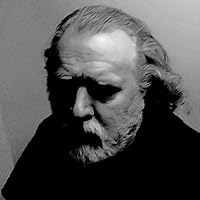
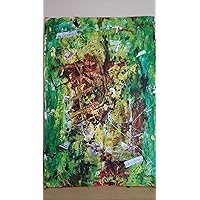
Sheri Martinelli second, because you probably already know Charles Bukowski, else why would you be here? Goodness, Martinelli is a hard one to get a handle on, and yet she is infinitely interesting. An artist in the truest sense, she was an adept of Anais Nin, a former Vogue model, and a companion to Ezra Pound when he was shackled at Saint Elizabeth’s psychiatric hospital in Washington, D.C. after World War II. Brilliant and curious, she moved to San Francisco after getting married to Gilbert Lee and started up a small literary magazine called “The Anagogic and Paideumic Review.” She was close to Allen Ginsburg and was nicknamed “The Queen of the Beats.” Bukowski initially encounters Martinelli when he submits a few poems to A&P Review and is rejected by Martinelli in a polite but somewhat patronizing letter. He responds...she responds….he responds…..and a correspondence is born. That correspondence is what makes up this book, though the bulk of the letter writing is done by Bukowski. Martinelli also painted, and her works have been shown in various galleries at various times. There is a nice photo section that allows a glimpse of Martinelli and Bukowski. She was a physically gorgeous woman. Martinelli and Bukowski never met in person. I think that might have been for the best. You can check out her Wiki page here:
I honestly thought that “Beerspit Night and Cursing” would be a fairly quick read. I have read editions of letters before and they typically flow by reasonably fast. Boy, was I wrong. Most of the issue comes down to the odd sort of Beat shorthand lingo that both Bukowski and Martinelli use to impress each other in the first half of the book. Bukowski mostly abandons this sort of childspeak about midway through, but Martinelli stubbornly keeps it up throughout the course of the book. Here are a couple of examples:
Page 254, Martinelli to Bukowski - “DeaRRRRRRRRR Bukowski: From mah lofty perch which ah has built fo’ mahzelffff ah dew notice (the air beingkkkkkclearer op here) that one l’l letter ob mine doth cause yew to rage mo’n one l’l poem ob yrs did cause me.”
Page 150, Bukowski to Martinelli - “,,,aw, fo’ Kriwts sake Sheri stop wotthehell screaming bout romantized orangsucked bankers, so MUCH old stuff STUFF…..the owl screaming… u make me feel like a much older man than I am….AND, HELL, AM NOT GONA FORGIVE U FOO THAT!!!!!!”
Ay yi yiiiiiiii…...it just goes on and on, rambling page after page. There is great STUFF to be gleaned here, but the reader has to carefully wade through this sort of Beatpoetchildspeak to sort the wheat from the chaff. As such, I was only able to get about 10-12 pages a day read before my brain began to shut off. Things get a bit better midway through after Bukowski jettisons this style, but it’s still a bit of a slow slog even then. Don’t take this criticism to mean that there isn’t anything of value here. There is, but you have to want to work for it.
Bukowski, for his part is...well...Bukowski. And look, if you don’t know what I mean by that then you are in the WRONG place. Go and grab a copy of “Post Office” and begin your journey there. Don’t even attempt to tackle something like “Beerspit……” Anyway, Bukowski rambles, he plays the horses, he binges and wakes up sick with enormous hangovers, he obfuscates, he flirts, he rants and rants and rants for endless hours and days. In short, he’s pretty much what you would expect from reading any of his prose or poetry. I suppose he reflects a bit of a softer and more HONESTLY reflective side to his persona in these pages, but at the end of the day he is still Buk, all coarseness and prickly-pear and a pack of cigarettes and pages drenched in beer. And I will once again state for the record that Bukowski is often unfairly maligned as a misogynist when he is in fact an unapologetic misanthrope. He hates both sexes here with equal fervor, perhaps being even harder on the male of the human species. Bukowski’s biggest drawing card was his ability to dig deep into the depths of the human condition. His vision was raw and often caught wallowing in the gutter, where we would all eventually end up if our circumstances were truly equal and the scales of justice rightly tipped to balance. That Bukowski can certainly be found here, even if he is more unguarded and willing to cast aside the trappings of his carefully cultivated image.
Martinelli, for her part is...well...I guess Martinelli. There is an introduction to the book that gives us some relevant background on who Sheri Martinelli was and what her significance was to the dual worlds of poetry and art, certainly plenty enough information to be able to put her into context as far as her correspondences with Bukowski are concerned. She comes off as a sort of anti-Bukowski, taking the more traditional view that poetry and art are to be heralded as something special, imbuing them with the ability to lift mankind up and show him the benefits of culture. She is prone to rambling discourses, all in that strange sort of Beat shorthand that leaves the reader struggling to maintain the threads of her arguments and statements. She believes in the mystical, the Great God Pan is certainly one of her muses. She is Nin, Sappho, and H. D. all rolled into one persona, arguably just as pent up and frustrated as Bukowski, but for different reasons and with a different set of actors around her dictating their influences. I found myself liking her, despite her open adoration of Ezra Pound and her slightly right of center politics. She gets heavy into astrology and seems to be more scattered in her thinking as we get into the later years of the correspondence. Her final written line to Bukowski reads like an epitaph: “Have nothing to do w/the affairs of t/world.”
Appendix 1 is Martinelli’s review of “A Signature of Charles Bukowski” which appeared in Anagogic & Paideumic Review #5. An interesting piece that illustrates Ms. Martinelli’s disconnect with Bukowski’s earthy brand of poetry. She never could quite get over Bukowski’s lack of affection for the “classics” or his disdain for promoting his own work or seeing himself as a serious poet, at least at this point in the show.
Appendix #2 sums up Bukowski’s poetic contributions to the Anagogic & Paideumic Review. My personal favorite here is “Poem For My Little Dog Who Also Growls Quite Well.” Bukowski’s poem in tribute to the late H. D. is called “Poem For Liz,” and I can see why he thought that it would piss Martinelli off. It did.
The book finishes with a selection of the drawings that Bukowski sent to Sheri Martinelli over the course of the correspondence. Typical Bukowski artwork, scenes of domestic turmoil and his trademark down in the gutter histrionics. An interesting look into Bukowski’s psyche.
Bukowski and Martinelli never met in person, and this was a conscious decision on both their parts. They mention meeting several times in the letters, but by midway through it is apparent that neither one wants to commit to a physical meeting, even though they were only separated by several hundred miles of the Pacific Coast Highway. I think that neither one wanted to shatter the personas that they had both invented. A meeting would have only proved awkward, and I think they both communicated better through the correspondence.
All in all I think this is a pretty important book, even if it’s only really going to be of interest to Bukowski completionists. It does present a somewhat different side of the man to those who might only be familiar with his public image as a churl. Sheri Martinelli is a revelation here, and I’m certainly interested in learning more about her. I’m gonna throw five stars at this DESPITE the difficulty in dealing with the Beatspeak lingo that the two particulars throw at each other for significant portions of the proceedings. The rewards here are too great to pass up for a lack of patience.
These are some interesting letters to read and I think they show a fairly different side of Bukowski, but they didn't entertain me as much as the ones in the "Living on Luck" series. I think that the relationship between Bukowski and Martinelli was so close that there are gaps in the conversation that they did not need filled that I do. Still fascinating to read, but perhaps not as entertaining as the aforementioned other series. I did find it interesting to find out that Martinelli was the basis for Esme in "The Recognitions." When I bought this book that wouldn't have meant anything to me, but between buying this book and reading it a friend convinced me to read that book. Just gave an extra dimension to enjoy.
This book of correspondence between the the great poet and a woman who in the annals of time has gone down as a relative unknown, but in the moment served as muse to many creative people, is outstanding and intimate.
Letters between Buk and Sherrie M. Quite boring actually. This is the most disappointing book I've read that had Bukowski's name attached to it. Definitely not a keeper...
Much soul singing and heart flinging to 'n fro in the phonetically scribbled and scrawled notes, letters and prose sketches. Have to put this on pause while I progress through Vollmann's stuff, init.
A messy look into the lives of two folks that wrote letters to each other and never met, otherwise. I wrote a review of the book. You can see it here: http://www.curatormagazine.com/brett-...
If you enjoy Bukowski's writing and want a deeper insight into his personal motivations it's a nice book. It isnt a poetry book, or narrative od prose, it's a series of letters between Buk and a former lover of Ezra Pound, starting with a rejection letter for his peoms. It is mostly Buk's letters as she kept them more. Just fyi, she has some opinions that may be seen as antisemitic and that's unfortunate, but I see it as lingering influence from E. Pound. Good stuff for the Bukowski completists.
Not exactly an entertaining read, but a very informative one. Bukowski somewhat meets his match in the form of Sherri Martinelli. He keeps waiting for her to back down and she never does.
I'll start my review by riffing off Paul's review found here on GR; he writes: Fascinating because of the two clear divisions in the book. The letters Bukowski wrote to Martinelli BEFORE he realized he wasn't going to get in her pants, and then the letters after that sad realization.
I agree with him, but I would add that there were other recognitions crafting this division as well. Here are a couple: SM's letters had no arc, her personality seemed frozen, never quite able to get beyond Ezra Pound's dismissal; Buk was growing as an artist and his overnight success, like most successes, was decades in the making, and this success shifted the balance of power from Sheri's religion of EP to CB's very tangible literary fruit.
Also, hat's off to editor Stephen Moore. BNaC is not always a fun read, but it is a vital one for those of us who admire the work of William Gaddis and who were brought here by the tenuous connection between Ms. Martinelli and a fictional character named Esme in Gaddis' novel The Recognitions. (Moore's annotations of The Recognitions are an indispensable treasure, and, last I knew, they were still available for free on the internet.)