

What do you think?
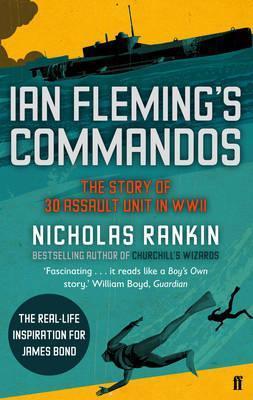
Ian Fleming's Commandos: The Story of 30 Assault Unit in WWII
Brand New Book!
397 pages, Paperback
First published September 6, 2011
Ratings & Reviews
Friends & Following
Create a free account to discover what your friends think of this book!
Community Reviews
Displaying 1 - 30 of 49 reviews

May 14, 2018
This was an interesting book, if a little bit scattered now and then.
In essence, it's the story of how one Ian Fleming, using his charm and wit and fascination with gadgets, managed to help fight the war of bureaucracy on the Royal Navy and successfully create a force of commandos, tasked with gathering German military secrets and ciphers during the big push by the Allied forces in the West throughout 1942-1945.
Following early intelligence blunders in Norway and France, the British military establishment figured they needed a different approach to major offensives. Hence, the idea of deep-penetration intelligence-and-reconnaissance teams is born. SBS, SAS and 30 AU are the result of these bloody lessons, and the book focuses mostly on the last. The early missions are in North Africa and Sicily, and there, the commando learn the hard lessons, but then, they become an efficient and effective force after the Normandy landings.
The bulk of the book deals with the last year of the war, following the 30 AU through France and Germany, and it's a very compelling piece of work - full of anecdotes, absurdities of war, daring missions, crazy situations, and curious people - a German general who wears a Scottish kilt, Ernest Hemingway getting drunk in Paris, Churchill taking a wee in the Rhine, a buxon freulein trying to set fire to the Kreigsmarine archive and being threatened with spanking, art and booze being stolen, tiny units forcing the surrender of large armies, the hunt after Nazi criminals, and more.
The backdrop to this story is Ian Fleming. He is a curious character.
An egocentric megalomaniac alcoholic with suicidal tendencies, a flair for politics and a penchant for writing. This book does not portray him in a brilliant light. If anything, it makes James Bond less glamorous, especially since it would seem 007 is a very linear combination of Ian and the various WW2 missions that he oversaw. Kind of underwhelming in that sense. He was also notoriously patriotic and slightly kinky, so Bond being somewhat of a closet wife beater is almost a requirement, and everything British being absolutely the best is also a given. The movies moderate this message quite a bit, hence their international success.
Ian Fleming was also distanced from the ordinary soldiers - he did want to be part of the commando, but not quite involved in gory details. He still is one mad bloke, and his contribution to the war effort cannot be denied, but there are some rather gray areas to his actions and personality, and this book explores them well. I like the non-obvious approach to storytelling.
This is also one of the flaws of this book - sometimes, it feels like too many conflicting sources were used to compile some of the bits and pieces. The author also has a plummy approach to writing - he never omits to mention who's who - Churchill's uncle, this and that's nephew, rotary club, sir this, lady that, very high society, very posh, with frequent quotes from fiction books, so this sometimes feels almost like a medieval bard paying homage to his patrons. Very English country club with some Jamaican rum in that 5 o'clock tea (it's 5 o'clock somewhere in the empire).
It's one of the more unusual history book, for sure, and I liked it quite a bit. It could be a little more polished and cohesive, and the message around Fleming is ambiguous. Which is nice, but then, I wonder if that's not just the result of him not really being able to decide who he wants to be. For that reason, James Bond is also a troubled, unhappy character.
Through that lense, it is obvious that Timothy Dalton pulled the best personification of the secret agent. In fact, T Dal is THE BEST Bond evar. There. It had to be said.
Recommended, just make sure your brain has an extra cog to spin all the plot lines, curiosities and side stories. And be prepared to have your 007 glamor shattered some.
Igor
In essence, it's the story of how one Ian Fleming, using his charm and wit and fascination with gadgets, managed to help fight the war of bureaucracy on the Royal Navy and successfully create a force of commandos, tasked with gathering German military secrets and ciphers during the big push by the Allied forces in the West throughout 1942-1945.
Following early intelligence blunders in Norway and France, the British military establishment figured they needed a different approach to major offensives. Hence, the idea of deep-penetration intelligence-and-reconnaissance teams is born. SBS, SAS and 30 AU are the result of these bloody lessons, and the book focuses mostly on the last. The early missions are in North Africa and Sicily, and there, the commando learn the hard lessons, but then, they become an efficient and effective force after the Normandy landings.
The bulk of the book deals with the last year of the war, following the 30 AU through France and Germany, and it's a very compelling piece of work - full of anecdotes, absurdities of war, daring missions, crazy situations, and curious people - a German general who wears a Scottish kilt, Ernest Hemingway getting drunk in Paris, Churchill taking a wee in the Rhine, a buxon freulein trying to set fire to the Kreigsmarine archive and being threatened with spanking, art and booze being stolen, tiny units forcing the surrender of large armies, the hunt after Nazi criminals, and more.
The backdrop to this story is Ian Fleming. He is a curious character.
An egocentric megalomaniac alcoholic with suicidal tendencies, a flair for politics and a penchant for writing. This book does not portray him in a brilliant light. If anything, it makes James Bond less glamorous, especially since it would seem 007 is a very linear combination of Ian and the various WW2 missions that he oversaw. Kind of underwhelming in that sense. He was also notoriously patriotic and slightly kinky, so Bond being somewhat of a closet wife beater is almost a requirement, and everything British being absolutely the best is also a given. The movies moderate this message quite a bit, hence their international success.
Ian Fleming was also distanced from the ordinary soldiers - he did want to be part of the commando, but not quite involved in gory details. He still is one mad bloke, and his contribution to the war effort cannot be denied, but there are some rather gray areas to his actions and personality, and this book explores them well. I like the non-obvious approach to storytelling.
This is also one of the flaws of this book - sometimes, it feels like too many conflicting sources were used to compile some of the bits and pieces. The author also has a plummy approach to writing - he never omits to mention who's who - Churchill's uncle, this and that's nephew, rotary club, sir this, lady that, very high society, very posh, with frequent quotes from fiction books, so this sometimes feels almost like a medieval bard paying homage to his patrons. Very English country club with some Jamaican rum in that 5 o'clock tea (it's 5 o'clock somewhere in the empire).
It's one of the more unusual history book, for sure, and I liked it quite a bit. It could be a little more polished and cohesive, and the message around Fleming is ambiguous. Which is nice, but then, I wonder if that's not just the result of him not really being able to decide who he wants to be. For that reason, James Bond is also a troubled, unhappy character.
Through that lense, it is obvious that Timothy Dalton pulled the best personification of the secret agent. In fact, T Dal is THE BEST Bond evar. There. It had to be said.
Recommended, just make sure your brain has an extra cog to spin all the plot lines, curiosities and side stories. And be prepared to have your 007 glamor shattered some.
Igor

June 13, 2017
There are the makings of several good history books in the Nicholas Rankin' s Ian Fleming's Commandos. And for all the meticulous research none of those possible history books are completed.
We do eventually get some information about the World War II history of 30 Assault Unit, a.k.a 30 Commando. We do get occasional sightings of Reserve Navy Commander Ian Fleming but up until the end of the book there are very few complete and completely connected narratives.
We get something of the usual story of Bletchley Park and decoding the German Enigma machine. There is a little of Alan Turing. This is nice except neither Fleming nor his commandos were "read into" the secrets of Alan Turing and his code breaking. This is according to the footnotes in the book. There are bits about commando training the formation of what would become the Special Boat Service and a few asides about America's OSS and its Chief Wild Bill Donovan. But at least in these cases there is some evidence that these people had occasional contact with 30 Commando or Fleming.
To his credit Rankin mentions several specific achievements by German Intelligence, code breaking and tactical targeted intelligence gathering. This is one of the few books I have read that speaks to these kinds of successes. The text will make the point that Fleming got the idea to form small group commando units for the purpose of targeting and seizing, called pinching, important enemy documents and devices from active battlefields. The more technical term for this approach is given in the preface as TARget EXploitation, TAREX. The term will not be used again.
The units within 30 Commando would eventually consist of a few technically trained individuals supported by commando trained Royal Marines. Their job was to go if possible, in front of attacking forces in an effort to overrun radar stations and command bunkers with the intention of collecting papers, codes and secret equipment before they are destroyed in the course of the fighting, as defensive measures by the retreating Germans or the usual souvenir hunting and casual destruction by the indifferent attacking allies.
In general I like Rankin's writing style and there are several good individual stories within the larger text. The problem is there's just too many scattered, short, and poorly connected bits of history cobbled together to make his book. Better editing and a tighter focus and Ian Fleming's Commandos would be another good book about a relatively obscure operation within World War II
We do eventually get some information about the World War II history of 30 Assault Unit, a.k.a 30 Commando. We do get occasional sightings of Reserve Navy Commander Ian Fleming but up until the end of the book there are very few complete and completely connected narratives.
We get something of the usual story of Bletchley Park and decoding the German Enigma machine. There is a little of Alan Turing. This is nice except neither Fleming nor his commandos were "read into" the secrets of Alan Turing and his code breaking. This is according to the footnotes in the book. There are bits about commando training the formation of what would become the Special Boat Service and a few asides about America's OSS and its Chief Wild Bill Donovan. But at least in these cases there is some evidence that these people had occasional contact with 30 Commando or Fleming.
To his credit Rankin mentions several specific achievements by German Intelligence, code breaking and tactical targeted intelligence gathering. This is one of the few books I have read that speaks to these kinds of successes. The text will make the point that Fleming got the idea to form small group commando units for the purpose of targeting and seizing, called pinching, important enemy documents and devices from active battlefields. The more technical term for this approach is given in the preface as TARget EXploitation, TAREX. The term will not be used again.
The units within 30 Commando would eventually consist of a few technically trained individuals supported by commando trained Royal Marines. Their job was to go if possible, in front of attacking forces in an effort to overrun radar stations and command bunkers with the intention of collecting papers, codes and secret equipment before they are destroyed in the course of the fighting, as defensive measures by the retreating Germans or the usual souvenir hunting and casual destruction by the indifferent attacking allies.
In general I like Rankin's writing style and there are several good individual stories within the larger text. The problem is there's just too many scattered, short, and poorly connected bits of history cobbled together to make his book. Better editing and a tighter focus and Ian Fleming's Commandos would be another good book about a relatively obscure operation within World War II

June 26, 2012
This book supposedly tells the story of an Assault Unit founded predominantly due to the promptings of Ian Fleming - the man who went on to write the James Bond books.
That's what it says on the blurb anyway - what it actually does in reality is anyone's guess.
Firstly and foremostly, this is an incredibly poorly edited book.
Compared to the likes of Ben Macintyre, Stephen Ambrose and Cornelius Ryan, who already occupy the space that this author is trying to co-habit, this is very poor fare indeed. The three champions of the genre manage to weave diligent research into coherent, readable narrative; this offering by Nicholas Rankin splutters like a misfiring engine. Every once in a while, a very readable piece of narrative prose appears, which just about drags this book from the very bottom of the barrel; but far too often the narrative is at best disjointed, with one paragraph bearing little relation to what has preceded it, or to what follows it; at worst, it simple becomes elongated bullet points, facts fired staccatto at the reader, leaving him slightly bemused, confused and often utterly bored.
On at least three different occasions, long inventories of almost half a page appear in the book - a simple umbrella term such as "German manufacturing output" would have sufficed every time. I compared two of the lists - they were around 66% identical. I lost the will to make any further comparisons.
The plot jumps, often completely inexplicably, to an entirely disconnected set of facts - and that is what a lot of this book is - quite simply, a lot of facts that have been put down in virtual note form, then copied on to a page with little or no effort to make them attractive to the reader -leaving you with the sense that there are some interesting stories to tell here - if only a bit more effort had been made to tell them interestingly.
The author also tries to weave references from war events into reasons behind events in some of Fleming's novels - but the following passage sums up the strain the reader is put under with some of this cross referencing...."A Canadian scientist....called Dr CH Noton seems to have been a source of complaint about 30AU. If Ian Fleming heard about it, it is possible that the name may have later resurfaced...as Dr No". An equally feasible explanation might have been that Fleming went to his doctor, asked him for a prescription, and the Dr said No. My imaginary explanation would appear to be based on as much fact as the authors' - though arguably my explanation is a little more realistic. These annoying flights of fantasy pepper the book liberally - and make an already frustrating read even more annoying.
A good editor really should have sifted a lot of these fundamental weaknesses out - but if this had been edited diligently, I wonder if there would have been very much left?
That's what it says on the blurb anyway - what it actually does in reality is anyone's guess.
Firstly and foremostly, this is an incredibly poorly edited book.
Compared to the likes of Ben Macintyre, Stephen Ambrose and Cornelius Ryan, who already occupy the space that this author is trying to co-habit, this is very poor fare indeed. The three champions of the genre manage to weave diligent research into coherent, readable narrative; this offering by Nicholas Rankin splutters like a misfiring engine. Every once in a while, a very readable piece of narrative prose appears, which just about drags this book from the very bottom of the barrel; but far too often the narrative is at best disjointed, with one paragraph bearing little relation to what has preceded it, or to what follows it; at worst, it simple becomes elongated bullet points, facts fired staccatto at the reader, leaving him slightly bemused, confused and often utterly bored.
On at least three different occasions, long inventories of almost half a page appear in the book - a simple umbrella term such as "German manufacturing output" would have sufficed every time. I compared two of the lists - they were around 66% identical. I lost the will to make any further comparisons.
The plot jumps, often completely inexplicably, to an entirely disconnected set of facts - and that is what a lot of this book is - quite simply, a lot of facts that have been put down in virtual note form, then copied on to a page with little or no effort to make them attractive to the reader -leaving you with the sense that there are some interesting stories to tell here - if only a bit more effort had been made to tell them interestingly.
The author also tries to weave references from war events into reasons behind events in some of Fleming's novels - but the following passage sums up the strain the reader is put under with some of this cross referencing...."A Canadian scientist....called Dr CH Noton seems to have been a source of complaint about 30AU. If Ian Fleming heard about it, it is possible that the name may have later resurfaced...as Dr No". An equally feasible explanation might have been that Fleming went to his doctor, asked him for a prescription, and the Dr said No. My imaginary explanation would appear to be based on as much fact as the authors' - though arguably my explanation is a little more realistic. These annoying flights of fantasy pepper the book liberally - and make an already frustrating read even more annoying.
A good editor really should have sifted a lot of these fundamental weaknesses out - but if this had been edited diligently, I wonder if there would have been very much left?

August 29, 2019
When you are fighting a strong and well organized enemy- in both military and espionage battles- the fresher your intelligence is, the better off you are. If you can grab information from your enemy without them even knowing- even better. This was the brilliant insight that led the British Intelligence Services and Military Commands to create No 30 Commando, a special unit for "Smash and Grab" operations- grabbing Axis technology and especially codes at the very frontlines of the action. The unit was husbanded along by none other than Ian Fleming, the future writer of the Fantasy Espionage series of books and movies about the character James Bond. Nicholas Rankin, the author, tells us the story in a fun and compelling way- along the way showing us the fictional events and characters taken directly fom this war service and dropped into the Bond Books.
Once created- out of the Commando and Intelligence traditions already extant in the British hierarchy, the unit was thrown into the action right away. Early on in the slow moving Tunisian, Sicilian and Italian Campaigns, the action takes a little while to get going- but when the Normandy Breakout happens- events truly begin to fly. These blokes formed little Jeep columns, attached themselves to Allied Divisional commands- and raced all over Europe grabbing technology and information. As the war wound down- their pace picked UP- as now they had to grab things before the Soviets could. It's a fun ripping yarn, fairly well told.
There is some gore- and a lot of adult concepts, office political, and carnal, that makes this book best for junior readers over 11 or 12. For the Gamer/Modeller/Military Enthusiast- a Really cool book. I think it will spawn interesting scenarios for gamers (grab the radar before the germans can blow it up-style)- and great Dioramas too. The Military enthusiast will like this book as a complement to the many others on "Ultra" and Code-breaking, showing how intel was USED- and "Snatch" jobs for enemy technology sped up interpretation back at HQ. There are also plenty of gun battles and deft maneuvers and tricks to add to games for effect. At first I got annoyed with the constant mentions of how this material showed up in the Bond books- but by the end I was interested in how Fleming used the books to express himself about that time in his life. A solid rec.
Once created- out of the Commando and Intelligence traditions already extant in the British hierarchy, the unit was thrown into the action right away. Early on in the slow moving Tunisian, Sicilian and Italian Campaigns, the action takes a little while to get going- but when the Normandy Breakout happens- events truly begin to fly. These blokes formed little Jeep columns, attached themselves to Allied Divisional commands- and raced all over Europe grabbing technology and information. As the war wound down- their pace picked UP- as now they had to grab things before the Soviets could. It's a fun ripping yarn, fairly well told.
There is some gore- and a lot of adult concepts, office political, and carnal, that makes this book best for junior readers over 11 or 12. For the Gamer/Modeller/Military Enthusiast- a Really cool book. I think it will spawn interesting scenarios for gamers (grab the radar before the germans can blow it up-style)- and great Dioramas too. The Military enthusiast will like this book as a complement to the many others on "Ultra" and Code-breaking, showing how intel was USED- and "Snatch" jobs for enemy technology sped up interpretation back at HQ. There are also plenty of gun battles and deft maneuvers and tricks to add to games for effect. At first I got annoyed with the constant mentions of how this material showed up in the Bond books- but by the end I was interested in how Fleming used the books to express himself about that time in his life. A solid rec.

September 4, 2014
Ian Fleming born into a rich and well connected Scottish banking family was recruited in 1939 into the Royal Navy intelligence division as a personal assistant to NID’s head, Admiral John Godfrey. Fleming had the rank of Commander. He played a key role in the secret world of spies during World War II. He suggested schemes and ideas some of which were taken up and proved notable covert success.
I was surprised to learn a fact about Winston Churchill I had not come across or if I did the fact did not stay with me. Rankin stated that after the disaster at Dunkirk Churchill suggested creating commando units. The commando units were created by all the services and are still a key part of the military forces today. Rankin states that the most remarkable and lasting ideas by Fleming was his suggestion that a special group of Royal Marine Commandos be set up. This small group of intelligence gathering raiders who would attack and plunder targeted German establishments---radar stations, Kriegsmarine offices, naval installation, stealing anything useful such as code books, movement orders and so on. It was called 30 Assault Unit. The Unit proved invaluable in North Africa, Sicily, Italy, Rhodes, Yugoslavia and the invasion of France. It was most effective in Germany during the last days of the Third Reich. It stole the entire archives of the German Navy over 500 tons of material.
Rankin tells the stories of the unit’s raids, describing the men and their exploits. After the war Fleming wrote the James Bond novels. Rankin tells a bit about Fleming’s personal life and problems after the war to his death. The 30 Assault Unit of the Royal Marines is still in existence and fought in Iraq and Afghanistan.
The book could have benefited from the services of a good editor. I read this as an audio book downloaded from Audible. Napoleon Ryan with his base voice narrated the book. I would have given this book a four for the content but the book needs an editor therefore I could only give it a three.
I was surprised to learn a fact about Winston Churchill I had not come across or if I did the fact did not stay with me. Rankin stated that after the disaster at Dunkirk Churchill suggested creating commando units. The commando units were created by all the services and are still a key part of the military forces today. Rankin states that the most remarkable and lasting ideas by Fleming was his suggestion that a special group of Royal Marine Commandos be set up. This small group of intelligence gathering raiders who would attack and plunder targeted German establishments---radar stations, Kriegsmarine offices, naval installation, stealing anything useful such as code books, movement orders and so on. It was called 30 Assault Unit. The Unit proved invaluable in North Africa, Sicily, Italy, Rhodes, Yugoslavia and the invasion of France. It was most effective in Germany during the last days of the Third Reich. It stole the entire archives of the German Navy over 500 tons of material.
Rankin tells the stories of the unit’s raids, describing the men and their exploits. After the war Fleming wrote the James Bond novels. Rankin tells a bit about Fleming’s personal life and problems after the war to his death. The 30 Assault Unit of the Royal Marines is still in existence and fought in Iraq and Afghanistan.
The book could have benefited from the services of a good editor. I read this as an audio book downloaded from Audible. Napoleon Ryan with his base voice narrated the book. I would have given this book a four for the content but the book needs an editor therefore I could only give it a three.

May 13, 2018
Quite a fascinating read. I started reading books on WWII aged 12 and have continued reading them. Of course, now there are no auto-biographies coming out and few biographies or studies about the period, so I was pleased to see this one, and even more pleased that it was in the bargain book bin at the Warehouse (my wife was buying clothes, so I wandered off bored).
The title could be misleading if you thought that Ian Fleming was the action man James Bond was, but Fleming was a desk warrior and ideas man. The material is very well researched and the bibliography is extensive for those who want to follow up on the contents. Rankin did manage to interview some of the survivors of 30 Assault Unit and weave their thoughts into the text.
The Unit's job was to "pinch" German and Italian technology and secret papers, often working ahead of the army in enemy territory and that was often a very risky job and needed men with nerves of steel. There is an interesting under story where the author gives examples where deeds and characters in the James Bond novels are based on fact (and a lot more so that one would think). Of course, the Bond films are no where near as credible as the novels, even those based on novels.
I was interested in the amount of "blue on blue" incidents related and the number of blunders and lost opportunities, many caused by bureaucracy and/or lack of communication.
The Brits are not shiny white, but the American forces are the subject of much criticism, especially by those who were there with their cowboy behaviour or tendency to not be willing to get close to the action.
Again, an fascinating read.
The title could be misleading if you thought that Ian Fleming was the action man James Bond was, but Fleming was a desk warrior and ideas man. The material is very well researched and the bibliography is extensive for those who want to follow up on the contents. Rankin did manage to interview some of the survivors of 30 Assault Unit and weave their thoughts into the text.
The Unit's job was to "pinch" German and Italian technology and secret papers, often working ahead of the army in enemy territory and that was often a very risky job and needed men with nerves of steel. There is an interesting under story where the author gives examples where deeds and characters in the James Bond novels are based on fact (and a lot more so that one would think). Of course, the Bond films are no where near as credible as the novels, even those based on novels.
I was interested in the amount of "blue on blue" incidents related and the number of blunders and lost opportunities, many caused by bureaucracy and/or lack of communication.
The Brits are not shiny white, but the American forces are the subject of much criticism, especially by those who were there with their cowboy behaviour or tendency to not be willing to get close to the action.
Again, an fascinating read.

February 13, 2019
This book tells what Ian Fleming did before he wrote the James Bond books, and shows the influence his years as a spy had on the books he wrote. He helped to organize a British commando unit during World War II whose job it was to collect intelligence. The small groups often went into battle zones and behind enemy lines and collected literally tons of information during the war. Among other things, this unit helped the allies crack the German Enigma systems for sending coded messages. If you can't find out what the enemy is doing you're fighting with a blindfold. As an aside, the wife of a friend of mine worked with Fleming. The friend once tried to get her to tell some of the things she did and she freaked out. Spies were restricted in what they could talk about by the Official Secrets Act and similar laws, and woe betide those who spoke out of turn.

September 30, 2025
Bought from Oxfam as a hardback. The story of Ian Fleming's innovation as a xx within the Naval intelligence division of the RNVR to set up a small team of individuals (Commandos) to raid and capture foreign (Nazi) military intelligence.
A harrowing opening chapter describing a disastrous raid on the port of Dieppe in 1942 that Ian Fleming participated in.
However, there is much nuance to war, it's composite battles and this is reflected very well in the chapters of this book. 30 Commando's time as a unit during WWII was principally to raid and capture axis military assets and intelligence.
A terrific book, well researched and referenced. The allusions to Fleming and Bond come sporadically, but the exploits of 30AU, it's men and indeed all those who fought in and lived though WWII are remarkable.
A harrowing opening chapter describing a disastrous raid on the port of Dieppe in 1942 that Ian Fleming participated in.
However, there is much nuance to war, it's composite battles and this is reflected very well in the chapters of this book. 30 Commando's time as a unit during WWII was principally to raid and capture axis military assets and intelligence.
A terrific book, well researched and referenced. The allusions to Fleming and Bond come sporadically, but the exploits of 30AU, it's men and indeed all those who fought in and lived though WWII are remarkable.
June 3, 2025
An insightful book filled with many great stories and facts from throughout the Second World War. Unfortunately, the writing is disjointed and occasionally obtuse, making it difficult to follow as it feels like an assortment of stories have just been thrown together in a random generator.
The book has something of an identity crisis, never knowing whether to focus on Ian Fleming the man, or on the escapades of the 30AU Commandos, whose raids never involved Fleming on the front line, so the actual “meat and potatoes” of the book often doesn’t have much to do with Fleming despite the book ostensibly being about him. Definitely worth a read for all the interesting and heroic stories, just a shame the book has been pieced together in a somewhat incoherent manner.
The book has something of an identity crisis, never knowing whether to focus on Ian Fleming the man, or on the escapades of the 30AU Commandos, whose raids never involved Fleming on the front line, so the actual “meat and potatoes” of the book often doesn’t have much to do with Fleming despite the book ostensibly being about him. Definitely worth a read for all the interesting and heroic stories, just a shame the book has been pieced together in a somewhat incoherent manner.
November 19, 2017
If you want to learn more about World War 2 and you are a James Bond fan, this is the book for you.
This fact filled work gives a good insight into the use of Commandos for gathering much needed intelligence from the Germans. It illustrates how far behind the Brits really were. While the Germans built new and cutting edges technologies, communications and deadly weapons, the Allies were sacrificing lives at Dunkirk and Dieppe. The book reinforces the debt owed to all those who fought to free Europe and other countries from the Grip of the Axis powers.
This fact filled work gives a good insight into the use of Commandos for gathering much needed intelligence from the Germans. It illustrates how far behind the Brits really were. While the Germans built new and cutting edges technologies, communications and deadly weapons, the Allies were sacrificing lives at Dunkirk and Dieppe. The book reinforces the debt owed to all those who fought to free Europe and other countries from the Grip of the Axis powers.

February 8, 2021
Very well researched and easy to read (well structured). I didn't realise that Ian Fleming was so central in the creation and further development of the special No. 30 Commando unit which "undertook covert infiltrations into enemy territory by land, sea or air, to capture much needed intelligence, in the form of codes, documents, equipment or personnel." (as Wikipedia describes it). Exciting read definitely, better reading than the James Bond books on fictional agents.

November 22, 2021
I found this rather scattershot account of Ian Flemings involvement in early World War II engaging at first, but by the midpoint the rambling just became tedious. It doesn't delve into specific actions by 30 Commando and covers too much of WWII at a strategic level. This lack of focus, coupled with the fact that the group's actions become rather dull as the war progresses, led to this getting set aside unfinished.
October 2, 2023
There is a lot to unpack in this very well-researched effort from Nicholas Rankin. The research in-and-of itself is worth five stars but I found his application of all the fascinating information to be......well.......a bit dry and a bit of a slog at times. Almost over-whelming, but still a very worthwhile read.

August 10, 2025
This book didn’t interest me much, I finished it, but felt it was boring. I also expected more tie ins to the Bond books throughout the book ( the reason I purchased the book)there were some, but few and far between. Not what I expected. It was a historical account of the Commandos and WWII, I just expected something else.

May 6, 2017
A good account of the exploits of Ian Fleming's commandos.
February 11, 2018
Very detailed and interesting account of WWII. Glad I persevered with.
July 2, 2020
Not a great read. Jumps around too much, lacks focus. Does cover an aspect of the war that I have not seen covered elsewhere.

February 10, 2024
A fascinating insight into how the nascent RM Commandos operated in WWII, and how this helped to inspire the James Bond books.
February 22, 2024
Had a good link to Flemming and 007, which was great!
March 24, 2024
Pulls together the war, Flemming and Bond. The book is a very good potted version of the war with quite a lot about the less well known theatres such as Norway, Greece and Vichy France.
June 1, 2024
Interesting book with Ian Fleming actually playing a very minor part throughout. It's really a book about 30AU, rather than Ian Fleming.

July 24, 2026
The interesting parts were really interesting but the rest was just not interesting enough.

November 13, 2017
For reasons vaguely related to my new NaNoWriMo project that I hadn't actually expected to start writing anytime soon, I finally read Nicholas Rankin's Ian Fleming's Commandos: The Story of 30 Assault Unit in WWII, which I picked up at the Harvard Bookstore Warehouse Sale last year.
It took me a little longer to get through than I'd like, partly due to my being very busy and partly due to the writing being a bit drier than ideal, but I still finished it... about three weeks ago now, meaning it's not nearly as fresh in memory as it should be for me to be writing a review. It's been a busy few months.
This book is partly a biography of Ian Fleming but mostly a biography of the 30 Assault Unit, the Navy commando unit that he administrated in World War II, and a thorough cataloging of the things in the life of the 30 Assault Unit that were later used in the James Bond novels. It doesn't have as much of a strong narrative throughline as most of the other WWII spy books I've read, since it doesn't focus on an individual operation (the gold standard of WWII spycraft books that I've read thus far is still Ben McIntyre's Operation Mincemeat), and it doesn't quite focus on Fleming's life or career arc either, since there's so much great other stuff that was done by the rest of the 30AU and the Navy's intelligence operations generally. But it's still a really informative look into a lot of very cool stuff about WWII-era spycraft and especially counterintelligence--a main focus of 30AU's work was "pinching" machinery and documents that would allow the codebreakers at Bletchley to listen in on German messages. Near the end of the war, they also recovered a huge amount of the Third Reich's administrative documentation, which would prove invaluable in the aftermath of the war for figuring out what had gone on and proving it in the Nuremburg trials.
Despite being a little disorganized, it was a good read that I would definitely recommend for other people interested in that sort of subject.
Originally posted at The art of the pinch.
It took me a little longer to get through than I'd like, partly due to my being very busy and partly due to the writing being a bit drier than ideal, but I still finished it... about three weeks ago now, meaning it's not nearly as fresh in memory as it should be for me to be writing a review. It's been a busy few months.
This book is partly a biography of Ian Fleming but mostly a biography of the 30 Assault Unit, the Navy commando unit that he administrated in World War II, and a thorough cataloging of the things in the life of the 30 Assault Unit that were later used in the James Bond novels. It doesn't have as much of a strong narrative throughline as most of the other WWII spy books I've read, since it doesn't focus on an individual operation (the gold standard of WWII spycraft books that I've read thus far is still Ben McIntyre's Operation Mincemeat), and it doesn't quite focus on Fleming's life or career arc either, since there's so much great other stuff that was done by the rest of the 30AU and the Navy's intelligence operations generally. But it's still a really informative look into a lot of very cool stuff about WWII-era spycraft and especially counterintelligence--a main focus of 30AU's work was "pinching" machinery and documents that would allow the codebreakers at Bletchley to listen in on German messages. Near the end of the war, they also recovered a huge amount of the Third Reich's administrative documentation, which would prove invaluable in the aftermath of the war for figuring out what had gone on and proving it in the Nuremburg trials.
Despite being a little disorganized, it was a good read that I would definitely recommend for other people interested in that sort of subject.
Originally posted at The art of the pinch.

February 24, 2015
I feel like there were 3 or more books here that all needed to be fleshed-out.
First, we have a biography of Ian Fleming's war-time years and the role of the NID. This would be a good stand-alone work (see Between Silk and Cyanide: A Codemaker's War, 1941-1945 for a comparable look at SOE's code-school). This is where the footnotes and asides linking to various Bond novels belong (I admit to not having read most of the Bond books and therefore not resonating with these).
The second book is a general history of the British, particularly but not exclusively naval, involvement in WWII. This would be the hardest book to create since it is so general. However, Ian Rankin has a bunch of insights and new research on the war that he wants to put somewhere and he seems intent to shoehorn it in. The bit on the "scientific" bombing of Pantelleria or Patton's anti-Semitic remark immediately after the shell-shock slapping incident were new to me, but not particularly relevant to any other portion of the book.
Finally, we have what I think should be the meat-and-potatoes of this book but is woefully under-represented, a personal-level unit history of the 30 AU. We see lots of interesting characters who serve in the various iterations of this unit through the war in so many theaters and campaigns, but we never really bond (pun not intended) with any of them like you do in volumes such as Band of Brothers: E Company, 506th Regiment, 101st Airborne from Normandy to Hitler's Eagle's Nest or even A Bridge Too Far.
In the post-Normandy portion of the book, we did get to travel with 30AU more, but I felt like the intelligence "pinches" were less important. Yes, capturing the Kriegsmarine Archive and the Walterwerks sub-factories was a big deal, but not to the prosecution of WWII. And 30 AU was by far not the only unit doing this work. Operation Paperclip: The Secret Intelligence Program that Brought Nazi Scientists to America gives a much more in-depth look at the ALSOS and T-Teams working to capture Nazi scientists and science. There was also teams such as the MFAA (as seen in The Monuments Men: Allied Heroes, Nazi Thieves, and the Greatest Treasure Hunt in History) gathering art and cultural works from loss and destruction that get short-shrift in this book.
In all, an interesting book, but one that could have used the firm hand of an editor from conception to completion.
First, we have a biography of Ian Fleming's war-time years and the role of the NID. This would be a good stand-alone work (see Between Silk and Cyanide: A Codemaker's War, 1941-1945 for a comparable look at SOE's code-school). This is where the footnotes and asides linking to various Bond novels belong (I admit to not having read most of the Bond books and therefore not resonating with these).
The second book is a general history of the British, particularly but not exclusively naval, involvement in WWII. This would be the hardest book to create since it is so general. However, Ian Rankin has a bunch of insights and new research on the war that he wants to put somewhere and he seems intent to shoehorn it in. The bit on the "scientific" bombing of Pantelleria or Patton's anti-Semitic remark immediately after the shell-shock slapping incident were new to me, but not particularly relevant to any other portion of the book.
Finally, we have what I think should be the meat-and-potatoes of this book but is woefully under-represented, a personal-level unit history of the 30 AU. We see lots of interesting characters who serve in the various iterations of this unit through the war in so many theaters and campaigns, but we never really bond (pun not intended) with any of them like you do in volumes such as Band of Brothers: E Company, 506th Regiment, 101st Airborne from Normandy to Hitler's Eagle's Nest or even A Bridge Too Far.
In the post-Normandy portion of the book, we did get to travel with 30AU more, but I felt like the intelligence "pinches" were less important. Yes, capturing the Kriegsmarine Archive and the Walterwerks sub-factories was a big deal, but not to the prosecution of WWII. And 30 AU was by far not the only unit doing this work. Operation Paperclip: The Secret Intelligence Program that Brought Nazi Scientists to America gives a much more in-depth look at the ALSOS and T-Teams working to capture Nazi scientists and science. There was also teams such as the MFAA (as seen in The Monuments Men: Allied Heroes, Nazi Thieves, and the Greatest Treasure Hunt in History) gathering art and cultural works from loss and destruction that get short-shrift in this book.
In all, an interesting book, but one that could have used the firm hand of an editor from conception to completion.

June 30, 2016
Having read a couple of James Bond novels this year, I was interested by this account of Ian Fleming's wartime experience in Naval Intelligence and his founding of a naval commando unit, 30AU, which provided much of the inspiration for his famous hero.
I thought this was reasonably enjoyable, and the author's style is quite engaging, but it is let down by a slightly disjointed narrative. It would have benefited from additional biographical material on the main characters (particularly Fleming), more background information to provide context to the exploits of 30AU, and more analysis/conclusions on the impact and value of the unit. All this would have required more stringent editing of the narrative content, but I feel the result would have been a much tighter and definitive account of an undoubtedly fascinating chapter in Britain's WW2 history.
One other thought particularly struck me while reading this. It's often claimed (e.g. Max Hastings in The Secret War) that special forces units like 30AU didn't achieve very much, but I think it's possible to push back a bit against that conclusion. The moral impact of such units on the British public is undeniable, but it seems to me that there was a significant material impact as well. The main successes of 30AU (the capture of a key German naval scientist and the recovery of the entire German Naval archives, as well as various smaller pinches of intelligence and naval equipment) are not insignificant. Particularly given the small size and budget of the unit, these successes seem like a reasonable return on the investment made. Additionally, the tens of thousands of German troops engaged in guard duty out of fear of Commando raids, rather than engaged in front-line duties, also seems a powerful argument for units like 30AU. What is unquestionable is the courage of the men involved, and this book was an interesting insight into their experience, albeit one that I'm unlikely to read again.
I thought this was reasonably enjoyable, and the author's style is quite engaging, but it is let down by a slightly disjointed narrative. It would have benefited from additional biographical material on the main characters (particularly Fleming), more background information to provide context to the exploits of 30AU, and more analysis/conclusions on the impact and value of the unit. All this would have required more stringent editing of the narrative content, but I feel the result would have been a much tighter and definitive account of an undoubtedly fascinating chapter in Britain's WW2 history.
One other thought particularly struck me while reading this. It's often claimed (e.g. Max Hastings in The Secret War) that special forces units like 30AU didn't achieve very much, but I think it's possible to push back a bit against that conclusion. The moral impact of such units on the British public is undeniable, but it seems to me that there was a significant material impact as well. The main successes of 30AU (the capture of a key German naval scientist and the recovery of the entire German Naval archives, as well as various smaller pinches of intelligence and naval equipment) are not insignificant. Particularly given the small size and budget of the unit, these successes seem like a reasonable return on the investment made. Additionally, the tens of thousands of German troops engaged in guard duty out of fear of Commando raids, rather than engaged in front-line duties, also seems a powerful argument for units like 30AU. What is unquestionable is the courage of the men involved, and this book was an interesting insight into their experience, albeit one that I'm unlikely to read again.

June 14, 2013
This is the story of 30 Commando, who during WW2 collected all sorts of naval intelligence initial by running pinch raids against boats and ships.
It was formed with the support of Flemming, assistant to the Director of Naval Intelligence. The first raids and operations were disastrous, many Canadians died in one operation in Dieppe, but as the training improved, the material and information that they collected got better. AT the end of the war they were collecting tons of documents as the allies swept across Europe.
Flemming was intimately linked with 30 Commando, picking targets and working with other intelligence organisations to make the most of the data collected. Rankin links the things that he did during the war with the people, themes and equipment that he uses in the Bond books.
A lot of the book is fascinating, I was not aware just how close we were to failure on some of these raids. That said, the book is disjointed, and at certain points confusing with lots of people being written about. It could have benefited with a stronger narrative.
It was formed with the support of Flemming, assistant to the Director of Naval Intelligence. The first raids and operations were disastrous, many Canadians died in one operation in Dieppe, but as the training improved, the material and information that they collected got better. AT the end of the war they were collecting tons of documents as the allies swept across Europe.
Flemming was intimately linked with 30 Commando, picking targets and working with other intelligence organisations to make the most of the data collected. Rankin links the things that he did during the war with the people, themes and equipment that he uses in the Bond books.
A lot of the book is fascinating, I was not aware just how close we were to failure on some of these raids. That said, the book is disjointed, and at certain points confusing with lots of people being written about. It could have benefited with a stronger narrative.

July 22, 2015
This book started very well with descriptions of the formation of 30 AU and the way in which its early missions were carried out. But after a while I began to feel that each new dramatic, exciting mission was very much like the last one and this 'sameyness' permeates the rest of the book, which is a fair bit too long. I also felt that Fleming's name was on the cover more to sell books than for any other reason: sure, he set the unit up but after that he appears to have played only a very small part in its operations. His name is 'parachuted' into the book from time to time to fit in with the cover conceit but it's a bit of a con to say that 30 AU were 'his' commandos. Carping aside, the book is very educational for those who like their WWII history and there is plenty of adventure and derring-do to get the blood pumping.

January 10, 2015
Very informative book with details and background about the secret war in WW2, so much so it almost feels like a reference book more than a story. But the writing is so engaging and interesting in its presentation that it is still engaging.
Although the book is about Ian Fleming, that's mostly just a device to pull in readers. He's not mentioned all that often, as the story is about the 30 AU Commando unit of spy soldiers who would move in with or even ahead of the troops to find and collect intelligence, such as paperwork, experimental technology, technicians and scientists, etc.
This book, along with A Man Called Intrepid, give an enormous wealth of little-known information about what was going on behind the scenes during WW2.
Although the book is about Ian Fleming, that's mostly just a device to pull in readers. He's not mentioned all that often, as the story is about the 30 AU Commando unit of spy soldiers who would move in with or even ahead of the troops to find and collect intelligence, such as paperwork, experimental technology, technicians and scientists, etc.
This book, along with A Man Called Intrepid, give an enormous wealth of little-known information about what was going on behind the scenes during WW2.

July 17, 2015
Very enjoyable, but it's hard to tell sometimes what is the intent of this book. Is it a biography of Fleming? An account of 30AU? An analysis of the importance of intelligence gathering by commandos? Or a history of the Second World War? Obviously, by attending to all, it focuses on none, but the book is still largely successful throughout, mostly because Rankin has an engaging style and seems to want to keep this book popular as opposed to academic. An interesting portrait of Fleming during the War is presented, as is the story of 30 AU (though it would have benefited from a more linear narrative). I found "Fleming's Commandos" most rewarding as a history of WWII, since it presents some details and perspectives that are missed in other broader surveys.

June 14, 2015
An engaging and detailed account of the wartime exploits of the Royal Marines' 30 (Commando) Assault Unit. Founded in 1942 following a suggestion from Lt Cmdr (later Cmdr) Ian Fleming, Assistant Director of Naval Intelligence, the unit specialised in searching out and capturing enemy technical apparatus and intelligence material.
Continuing in the same vein as Rankin's earlier work, the marvellous Churchill's Wizards, this is a fascinating chronicle of a little-known part of the war and a thoughtful disquisition in the parallels between Fleming's wartime service and his later Bond novels
Continuing in the same vein as Rankin's earlier work, the marvellous Churchill's Wizards, this is a fascinating chronicle of a little-known part of the war and a thoughtful disquisition in the parallels between Fleming's wartime service and his later Bond novels
Displaying 1 - 30 of 49 reviews