Jump to ratings and reviews
Rate this book

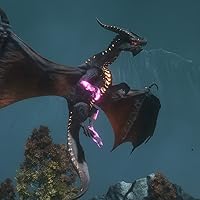
Last Dragon

Rate this book
The debut of a brilliant new voice that will change the fantasy genre forever.

An intricate web of stories weave together to tell a tale of revenge, justice, ambition, and power. Zhan has been sent to find her grandfather, a man accused of killing not only Zhan's family, but every man, woman, and child in their village. What she finds is a shell of a man, and a web of deceit that will test the very foundations of a world she thought she understood.

A tale of revenge that grows into something more, Last Dragon is a literary fantasy novel in the tradition of Gene Wolf and Gabriel Garcia Marquez. J.M. McDermott brings the fantasy genre to new literary heights with a remarkable first novel that will leave critics and readers alike in stunned awe.

390 pages, Paperback

First published January 1, 2008

6 people are currently reading
368 people want to read

About the author

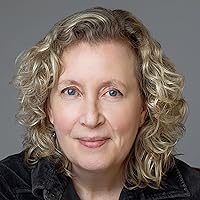
J.M. McDermott

37 books78 followers
His first novel was plucked from a slush pile and went on to be #6 on Amazon.com's Year's Best SF/F of 2008, shortlisted for a Crawford Prize, and on Locus Magazine's Recommended Reading List for Debuts. His short fiction has appeared in Weird Tales Magazine, Fantasy Magazine, Apex Magazine, and Lady Churchill's Rosebud Wristlet, among other places. He has a BA in Creative Writing from the University of Houston, and an MFA in Popular Fiction from the Stonecoast program of the University of Southern Maine.

By night, he wanders a maze of bookshelves and empty coffee cups, and by day he wanders the streets of San Antonio, where he lives and works.

He tries to write in between.

Ratings & Reviews

What do you think?
Rate this book

Friends & Following

Create a free account to discover what your friends think of this book!

Community Reviews

5 stars
36 (19%)
4 stars
66 (36%)
3 stars
47 (25%)
2 stars
24 (13%)
1 star
9 (4%)
Displaying 1 - 30 of 46 reviews
Profile Image for John.
282 reviews67 followers
December 31, 2009
Last Dragon is a collection of letters written by Zhan, a quasi-delirious empress on her death bead, that recounts, in nonlinear fragments, the story of how her hunt for her grandfather - who murdered most of her family - got her embroiled in a war pursuing a far-reaching political gambit.

There is much to love in this book's approach to fantasy: a thoughtful depiction of shamanism and naturalistic magic, a fascinating take on golems, well-worked-out politics and history, an interesting urban setting that avoids most of the by now silly "gritty urban fantasy" cliches, warfare that doesn't try to pawn off savagery and gruesomeness as epic deeds or manly heraldry, and a distinct lack of sentimentality. The prose is rich and lyrical and manages to avoid (most of the time) excursions into the melodramatic.

The most striking feature of Last Dragon - both its best aspect and most glaring weakness - is the narrative style, which is short dream-like bursts of story that give Zhan's story out of order, like hundreds of puzzle pieces just dumped onto a table for the reader to pick through.

There are some wonderful things that nonlinear storytelling does. For instance, when you know the particular outcome of a certain event first, or you know something that some of the other characters are not yet aware of, the subsequent recounting of all that comes before that outcome is imbued with a sense of suspense (in the Hitchcockian sense, i.e. "There's two people having breakfast and there's a bomb under the table. If it explodes, that's a surprise. But if it doesn't..."). With a certain outcome in mind, the author can go about dancing around, foiling, feinting, delaying or otherwise fucking with the reader's expectations.

This is the kind of thing I really love in Gene Wolfe's short stories and Rushdie's early novels, where you have a certain knowledge of things that happen later in the story without any sense of how they connect to earlier events, and you are reading not to find out what happens (you already know) but how, why, to whom, (and, in the case of Wolfe, if) it happens. Some of my most visceral reading experiences have been those moments where a piece of the puzzle falls into place and you say "so *that's* how we got here.

And while Last Dragon achieves this from time to time, the story often slips into place far too easily. Sure, there are loose ends and nagging questions even after turning the last page, but there would have been anyway. There's no good reason to chop up and shuffle the story this way if the reading experience isn't much different were it simply a straight telling (the dying empress on the edge of delirium provides the justification within the story to tell it this way, but there should be should be something about the experience of reading it this way that a straight reading would not have provided).

This aside, Last Dragon is way better than most attempts at epic fantasy I've read, and it was a good curative for everything that annoyed me in The Name of the Wind.
Profile Image for Simon.
587 reviews271 followers
January 5, 2010
I don't know if reading this book in the depths of winter was a good idea or not but it certainly brought it home to me some of what the characters must have been feeling wandering the snowy wastes and mountains in the second half of the story.

I say second "half" as if there is any kind of structure, beginning, middle and end. Which belies the fact that this is probably the most fragmented story structure I have ever read although, I have to say, it is by design. The narrative consists of fragments of memory recalled by a dying queen and aimed at conveying her story to her estranged daughter (whom we never encounter in the story). These fragments are any thing from a couple of lines to a couple of pages long and one fragment never carries on directly from its predecessor. Gradually, as the narrative proceeds, a complete story is pieced together.

The narrative style is both the book's greatest strength and its greatest weakness depending on your point of view. For a lot of people, this will simply serve as a barrier to engaging with the story and characters; it simply cannot be read and enjoyed in a conventional way. But for others, like myself who crave something new and different from fantasy, will find it most refreshing.

It's unique narrative style is not the only thing that sets it apart from other fantasy though, it also has an elegant and thoughtful prose. The characters are well drawn, gritty and real, their emotions and feelings well conveyed. The hardship and physical suffering the characters endure on their quest is also convincingly portrayed.

I didn't know whether to give this four or five stars. I felt that I wanted to know a little bit more about why some of the characters did what they did and about what happened after this story concluded but these are both understandable omissions because this is most firmly the experience and memories of one character, we only see and understand the actions of others through her eyes and she is only interested in conveying a particular story, a particular chapter of her life. Therefore I can't really fault this book at all. Five stars it is.
Profile Image for Judah.
135 reviews56 followers
July 26, 2008
While the basis of this book is quite familiar territory for anyone whose ever read fantasy (country bumpkin goes on a quest and discovers larger destiny in the world) the way it's handled is refreshingly new.

Some may find themselves turned off by the way the pages/chapters jump time and space with no warning, but if you give in to the flow of it, it's easy to follow after a short while.

Some parts did lack clarity, I have to say. Whether this was intentional, due to the style of the book, or due to this being a new author is hard to determine. Again though, it lends itself to the dream-like quality.

My one main complaint is the actual printing style. I.E. having *numerous* pages that only have one sentence/paragraph on them. It strikes me as physically wasteful.
Profile Image for Alex .
664 reviews111 followers
April 19, 2012
The Sci-fi Fantasy field is so overburdened with epic tomes and traditional genre fiction that – as good as much of it is – whilst genre fanatics devour the next instalment from their favourite commercial author, the literary, clever, or the beautiful tend to get thrown onto the curiosity pile and allowed to sink without a trace. I've read reviews of McDermott's “Last Dragon” that, whilst they praise it as a good novel, hardly recommend it unless you enjoy “literary fantasy”. Supposedly this is a book that's only worth reading if you're, y'know, into Gene Wolfe and other overcomplicated, convoluted and obfuscatory bullshit. In other words, sure they can write and they have good ideas, but “where the fuck is the story??”

This may be why, although I have a ridiculous and unexplainable passion for heroic fantasy and those epic tomes myself, I struggle to truly identify with fantasy and sci-fi geeks. If a book such as McDermott's Last Dragon doesn't scream at you “I AM A GODDAMN FUCKING MASTERPIECE” then you and I really don't understand literature in the same way.

Last Dragon is really too good a novel to remain a curiosity forever and it's a great novel for so many reasons. Employing a mixture of stream of consciousness, fractured narrative and unreliable narrator techniques, and weaving it all together in a beautiful, sensitive feminist story, McDermott speaks the ghosts of Virginia Woolf as well as Gene Wolfe, and in doing so carves out his own niche that could happily stand-up alongside such great writers. Zhan's story begins at the end, revealing everything that happens on the first page, but filling in the details that one needs to know to understand Zhan's story as her memories unfold piecemeal, in a wistful, dreamlike and non-linear fashion, sucking you into her web of thoughts and memories that are often as mysterious as they are engaging. As a reader you won't always understand Zhan's recollections, they're not completely coherent and they're not guaranteed to be true, and yet as we turn the final page we have at least an understanding, a grasp of what has happened to Zhan and we too feel as if we're connected to her in her web. Fascinatingly to me – as a contrast to Gene Wolfe's writings – Mcdermott uses his literary confusion techniques to pull the reader into the mind of his central character whereas Wolfe generally pushes you into a relationship of mistrust and questioning. I don't know if Zhan really is an Empress, has a dead child, a husband or a lover. I don't know if the characters in her story existed or if the entire narrative is a fabrication designed to allay the guilt she has for the crimes she has committed. I don't even know who the hell she's really writing or speaking to. But I do know that I care for her story and the emotions and events that underly them. This, then, is less of a puzzle narrative than you'd find in a typical Wolfe novel. There are frequent poetic allusions and metaphors that recur - the ants particularly will continue to haunt me for some time, especially with relation to Korinyes – but they're not there to be tricksy and clever, they're there to provide a continuity of ideas throughout the book as elsewhere the narrative slips and slides in a myriad of different directions.

McDermott's literary technique is a delight. At the level of pure prose he's one of the finest stylists I've read in some time. Every page is full of beautiful, fragmented ideas, snatches of imagery or simple rhythmic poetry. I re-read many pages several times as I went through just to enjoy the way in which McDermott brought his world to life through his words. His narrative style is yet even more intriguing. He makes writing a fractured narrative look simple, but I felt constantly aware of the skill in which he'd employed it, leading me down certain paths and pulling me away at appropriate moments to reflect on other parts of the story with thematic continuity. Introducing characters and ideas at seemingly jarring times that gave their ultimate stories more poignancy when we later learn either their fate or their backstory. There's never a moment in this book where I didn’t feel that McDermott was in control of the story, where it was going, where it had been and most importantly the particular effect he wanted it to have on me, the reader at a particular time.

This review may have started with vicious hyperbole but I'm ending it with a plea to give it a chance. This is a very great book (even though it's *gasp* a fantasy book). It's not an easy book, it's not a book designed to be read purely for the story and you won't likely appreciate a full A-B character progression when reading it. There are no epic battles

“The battle was epic, of course. I shall avoid it entirely. I do not care for epic battles, Adel. I have seen far too many of them to think anything of them. They are battles like any other. (p.387)

But it's a book to be cherished and savoured. It's a book to be read when you've tired of epic battles, traditional stereotypes or plays on traditional stereotypes and fantasy themes. There's so much more here, from unusual character types to unusual emotions and ideas. It's a book with so much to talk about, from the struggle of the individual female voice and her inability to tell her stories in the way that she wants to, to the fragility of humanity and its political systems, to the way that language works, confuses or even changes our perception of reality, to discourses on our relationships with nature. This book doesn't come at you like a freight train with these ideas, you will need to find them and discover, but they're so well worth discovering and they are expressed so well.

Enough of the hyperbole. This book is magnificent, that's all you need to know. I can't wait to read the rest of Mcdermott's novels and I hope that the rest of the world discover him soon.
Profile Image for Kogiopsis.
881 reviews1,621 followers
December 10, 2020
Read as part of my ongoing shelf audit. Verdict: Nope.

This book is trying to do a lot of things, and it is trying hard. Unfortunately, there's one element missing: telling a coherent or satisfying story.

McDermott's structural approach is interesting; this book is framed as the recollections of Zhan, an empress on her deathbed, writing letters to a long-gone lover about how the empire came to be, and how she ended up as one of its rulers. It's nonlinear, and Zhan is an unreliable narrator both through her imperfect recollections and her lack of concrete knowledge about events. Since both nonlinear plot structure and unreliable narrators pose interesting hurdles to readers getting attached to/invested in a story and its characters, it would have been impressive if McDermott had pulled it off! Unfortunately, I don't think he managed it.

I found myself thinking of Dragonoak: The Complete History of Kastelir throughout, because Last Dragon felt similarly stingy with information and characterization. Motivations and connections are never quite clear - somehow, Zhan's quest to execute her murderous grandfather is tied into an invasion of their homeland, but it's not clear whether he instigated it, or whether she did, or whether the southern nation was planning to invade them anyway. Zhan's uncle may or may not have killed their village shaman, may or may not have intentionally abandoned his niece in a foreign city... and all that may or may not matter. I can't tell you much about Zhan at all, about what she wants or cares about, because despite the fact that we're in her head for the entire book, there's surprisingly little to her except for a determination to fulfill certain duties - but why?

And of course, that's not even touching on Adel, who might actually be the most important character in the book. Her significance is made clear from the first page, as is the fact that Zhan still considers her motivations and actions to be opaque, which is a daring gambit - McDermott is essentially telling us, from the start, that he will tell us nothing. He does pretty much fulfill that promise. Who is Jardan Bosch Adel? Whose side was she on, and what were her goals? I read the whole damn book, and I still can't tell you. This could be delicious in the hands of a more experienced writer who could give readers character depth and yet maintain a sense of mystery and hidden motivations. McDermott takes the minimalist approach, barely sketching out a character and then framing all that empty space as 'mystery'. I'm not sold.

There is, I think, a reason that this book has received only 171 ratings in the 12 years since its publication.
Profile Image for Daniel Swensen.
Author 14 books96 followers
February 9, 2012
Reading Last Dragon reminded me of watching Andrei Tarkovsky's "Stalker." It's languid, dreamlike, and occasionally confusing, but the end result is haunting and compelling. The story of a dying empress told in epistolary, Last Dragon has the scope of an epic story without any of the traditional epic fantasy trappings. There are no huge battles, no action sequences, just hard choice and the bleak consequences they bring.

And "bleak" really is the word. I don't mean this as a criticism, but Last Dragon is not a happy book. Death and loss are major themes. McDermott's world is hard and unforgiving, and puts most "gritty" authors to shame with the merciless details of his setting.

I did find the unconventional narrative a bit difficult to follow at times, and a few points were so cleverly obfuscated that I found it bordering on the twee. I think that's just a function of the unreliable narrator at work, though, and it's forgivable. Overall, it's a beautifully written book. Based on Last Dragon, I'd read another McDermott story, perhaps several.
Profile Image for Jason.
20 reviews2 followers
February 9, 2009
Much like the story itself, it's a little hard to find the beginning of a review on this book. There were a lot of things I liked very much about this novel, the author's first, which succeeds for the most part in implementing some very difficult storytelling techniques. Overall, though, I felt it reads more like the work of a very talented amateur than a professional author.

The novel is told non-chronologically, in the form of letters written by the dying narrator, Zhan, to her once-lover Esumi. As such, the ordering of scenes and events is more intuitive than logical; it appears the narrator is jumping from one memory to another as her mind associates images, places, and words. The effect is reminiscent of such works as Joseph Heller's Catch-22 or Gene Wolfe's Book of the Short Sun. In fact, I would be unsurprised if the author has read his fair share of Gene Wolfe: the narrative experimentation and the need for the reader to actively assemble the story in his or her own mind remind me of some of Wolfe's best works. It's a difficult trick to pull off, but McDermott succeeds... mostly. Before too long into the novel, the reader is given enough information to piece together a rough chronology; at least, the author is fairly clear about letting you know whether or not a given scene takes place before, during, or after the "current" point in the narrative. Unfortunately, this effect seems to taper off towards the end, as the story becomes much more linear in the last quarter or so of the novel.

The plot itself is interesting, though not exceptional. It combines elements of a coming-of-age tale, revenge, justice, travelogue, and politics in some rather unique ways. I'd have much preferred, however, if the author had focused more on the interplay between these themes than on the fractured narrative structure, which, although interesting, can't entirely sustain the novel. I also found the ending somewhat dissatisfying: given that the reader in large part knows the outcome from the beginning, it would have been nice if the climactic moments had been presented in some new or unexpected way. Instead, the story builds to a climax that never comes, instead quickly glossing over those final events and leaving me, at least, feeling slightly cheated out of a proper ending.

The characters are effective for the most part, though some seem to be largely unnecessary. I enjoyed the fact that we are given glimpses of several of the characters long before we actually "meet" them in the story. It gives a haunting effect, as of faces half-glimpsed through fog. On the one hand, the characters seem one-dimensional at times; on the other hand, their motivations are clear and understandable. The only exception to this is the character Adel, who the narrator never fully understood. I don't think enough information is given to truly grasp this character, and she's left as an unsatisfying question mark. The work would have been much stronger if the author had paid more attention to Adel, who is arguably the main character of the novel. (As an aside, she may also be the title character, if I'm understanding a very oblique reference mentioned in one scene. Then again, I may simply be reading too much into it. Otherwise, the title doesn't seem to relate much to the content of the story at all.) In the end, it seems as if the author can't decide whether he's more interested in Zhan or Adel, and as a result neither gets the full treatment she deserves.

The prose is, for the most part, well crafted. The narrator writes in a clipped, matter-of-fact style, with short declarative sentences being the norm. This does begin to sound repetitive after a while, but the author clearly made some attempt to vary the style while keeping the narrative voice. After a while, I noticed the clipped writing less and less, though the narrative voice was still quite clear. The descriptions are quite good when they appear, often evoking vivid, detailed imagery. I would have preferred more detail be given about the settings, especially the city of Proliux. It's supposed to be completely alien to Zhan, unlike anything she's ever experienced before, but the lack of detailed description renders it, in my mind at least, as "generic big foreign city." A few telltale glimpses of the architecture or the customs would have gone a long way toward building a strong setting, especially given the author's skill with descriptive prose.

My biggest critique of the novel, however, lies in the level of individual words, especially names. Names, perhaps more than anything else, are the key to establishing a consistent sense of place and culture. This is especially true in fantasy literature (it is, perhaps, unfair to invoke Tolkien here, so I'll let that pass), though one doesn't have to leave the real world to find this phenomenon. Consider these: John, Brian, Lancaster; Akiko, Yoshinori, Saijo; Mbwana, Jumaane, Shangani. Each is consistent in sounds and structure, and evokes a very specific kind of image in the mind. By contrast, the names in Last Dragon don't seem to adhere to any specific pattern. For example, the following are all supposed to be from the same culture: Zhan, Seth, Tsui, Alameda, Bear, Ilhota (not to mention that Zhan uses both the words "skald" and "sensei" to describe roles within her land). Reading the acknowledgements gives a clue as to why the names are so disjointed, but even so, I found it to deeply break the sense of immersion in the novel (though I won't deny allegations that I'm overly language-focused in general).

Overall, I'd say this is a good book, and well worth reading if you're a fantasy fan. The reason I criticize it so much (perhaps too much) is because I feel that it could have been a top bestseller with a little more polish. Even so, McDermott is a highly promising young voice in the fantasy genre, if this debut novel is any indication. I look forward to following what I hope will be a long and successful career for him.
Profile Image for Tim.
85 reviews18 followers
May 31, 2012
I was talking to some people I work with and I asked them if they read. I received a few hearty responses and I asked them what they liked to read. I know these particular two people do read quite a lot and when they asked me what I like to read, I replied “I read a lot of fantasy.........” I would have finished the sentence but I had a strange feeling someone behind me had died. I think the word “Fantasy” is a conversation stopper. When you are talking to people who read, but do not read fantasy, it seems every time the “F” word is brought up, people do not know how to react. They put on their best perplexed face and ask “What, like Lord of the Rings?” and you say “Yeah, something like that.”. The popular misconception with Fantasy is that it cannot move past it’s fairy tale origins and move into the literary realm, but I believe this is an absurd assumption. I think to most readers the Fantasy genre is something that is reserved for their childhood and does not encompass the breadth and width of the adult experience. But when I read Last Dragon by J.M. McDermott I realized why I have dedicated so much time to this genre and why I love it so much.

This novel mesmerized me, the prose is gorgeous and Mr McDermott has instilled his words with such longing and sadness and I do not think I have reacted this way to a novel for a long time. His words can bring images to mind so vividly that the world of Last Dragon feels truly realized. The way he describes a scene often instilled a wonder in me and allowed me to fully suspend disbelief which is so important in the genre of Fantasy.

“Seth held the match in the air, casually. Korinyes leaned forward and blew on the match. Little tongues of fire flew out from her breath.
The fire fell like rain on the cobblestone. She opened her eyes in wonder.
You are pretty girl, he said, pretty fire girl.
Seth placed the match into his mouth, and his mouth lit up with fire. He puffed burning rings that drifted away like ghosts.”


The story revolves around Zhan’s letters to her love Esumi. They are memories of her quest to avenge her family’s death at the hands of her grandfather, and her grandfather’s betrayal of her homeland to a ruthless enemy. The story is non - linear and does jump back and forwards in time, but there is always a thread that connects each letter/memory to each other. A lot of reviewers said that this format was too jarring and did not flow well, but i thought the exact opposite. I really enjoyed the way each letter revealed a new connection to something I had read previously, or shed a new perspective on a previous scene. This ultimately is a quest narrative but it is so differently done that you never feel like “Oh, I have seen this before.”, each character involved with Zhan and Seths quest of retribution is there for their own reasons.

The world of Last Dragon is fully realized with different religions, empires and cultural diversities. There is so much hinted at and not explored and while some might think that is a bad thing, I think that what we saw of this world fit perfectly into the story that was told. The city of Proliux with it’s Asiatic inhabitants and it’s feel of a crumbling giant. The empire of Alemdea, harsh tundra and stealer of life. There really is a lot to savor in the world of Last dragon, particularly the scene in which they travel to the dragons cave, this was an absolute highlight in the novel.

At the end of the day all this would be for naught if there were no characters we could grow to love and ultimately sympathize with. Whilst the whole novel is told from Zhan’s viewpoint we do get some of the other characters stories through what they have related back to Zhan. I thought this was a great way of adding depth to the supporting cast and really making them feel alive. The characters endure betrayal, love, friendship and hardship, all the makings for a classic fantasy tale. Another character which we never see or hear from is Esumi, but without this character the story would not be possible. The aching heartbreak that Zhan infuses her letters to Esumi with resonates deeply.

“We are divided at the heart. When we hold each other, we are slowly healed. When we are apart we bleed to death.
I cough blood, and I cough blood, and I cough blood.
Do you remember these lips? They are red all the time, like fresh spring berries because they are always covered in the blood of longing.”


This is one of the best fantasy novels I have ever had the pleasure of reading. If I could give more than 5 stars I definitely would. Would I recommend it to someone who has not delved into the genre? Probably not. This is something for the lovers of Fantasy to enjoy, something new and fresh. If more Fantasy writers tried new directions instead of falling back on the old tropes, maybe there would be more widespread acceptance and reading of one of my favourite genres.
Profile Image for Scott.
176 reviews16 followers
September 9, 2009
I received an “advanced reader copy” of this through LibraryThing.Com. It was my first ARC. For a synopsis, I am borrowing parts, with my alterations, of a review by Michael Levy for Strange Horizons.

Zhan, an aging woman, perhaps an empress, is recalling her life in what we eventually realize are a series of short letters to a long-absent lover named Esumi. As a young woman, a member of a primitive northern tribe, Zhan was quite literally in the midst of taking her final vows as a warrior when she was called back home by a terrible tragedy. Her grandfather, a wild, perhaps mad, wanderer who had spent years away from their ancestral village, had returned home and slaughtered Zhan’s entire extended family before escaping south through the snow. Zhan and her shaman uncle, Seth, have been charged with tracking him down, executing him, and returning him (in zombie/golem form) to the village to bear witness to his crime. Along the way they accumulate companions – a renegade noblewoman, an aging mercenary, a simpleton, a beautiful gypsy who turns out to be something other than entirely human. Unwittingly during their stay in a country called Proliux, they have alerted the vicious and greedy rulers to the existence of a perhaps less powerful civilization to their north and Zhan and her friends soon find themselves racing ahead of an army, hoping to reach home in time to spread a warning of impending invasion.


Now this, as Levy says, is the straightforward edition of the plot line. But the book does not follow this chronologically at all. It jumps all over the place. Some found it tough to get a hold of at first. Knowing this going in, I found it less annoying and not as difficult. But it’s strange to learn that someone has died by someone else's hand, yet in the next section of the book that person is still alive.

This way of telling a story can be seen as literary genius, or just plain stupidity. It’s somewhere in between. I wouldn’t call it genius, but it leans much heavier on that side. The biggest reason for this is the only part where it seems like a bad idea is the breaks in momentum. This style could have still be used very liberally, and to great effect, with even less jumping around and letting sections play out more then they did.

Many have called this book a “fantasy novel for adults”, which kind of disses just about 90% of the fantasy writers out there, including some that have very well respected reputations. However, I see where those kind of comments are going. There is no build up of heroes or heroines. There is no precise descriptions of the elegance around. There are no little bits of whimsy or humor. It is stark in description, and when it is there, it is a gritty, dirty world, and beyond which some already consider as such in normal fantasy tropes. There is not a lot of explanation. It is up to the reader to put light to facts and surroundings or references to the past or other objects/subjects. The book makes the reader work. It’s literature that just happens to be set in a fantasy type setting, meaning not of our history, and with a little bit of magic, and that is dark as well and not used to get out of trouble.

So there are things that are both good and bad about the novel, but it is clear that Mr. McDermott is a talented writer and will be making a good first impression across the board, even through the shortcomings of the book.
Profile Image for Kristen.
340 reviews335 followers
May 18, 2008
3 1/2 stars

J.M. McDermott's debut Last Dragon is one of the books published under the new Wizards of the Coast Discoveries imprint. Discoveries includes novels by new authors in all types of speculative fiction instead of just epic fantasy with settings outside of the Forgotten Realms universe. The goal is to publish more mature fiction that appeals to adult readers instead of the simplistic but fun stories that often end up getting adolescents hooked on reading fantasy. Far more original and artistic than the typical Wizards of the Coast book, Last Dragon succeeds at meeting this standard, though it is not flawless.

Complete Review:
http://fantasycafe.blogspot.com/2008/...
Profile Image for Clarice.
279 reviews25 followers
February 21, 2009
This book had a lot of story telling elements that I enjoy in fiction. The non-linear style, jumping through the story and back again, telling small details of the story and then expanding on it later. It's very much a print version of some hypertext stories I've read. I definitely have a bit of the "damn it! someone did it before me!" reaction. On the other hand, Hal Duncan did it before this person, but that's ok.

This book only gets 3 stars as there were a lot of loose threads left open at the end, and this sort of thing always leaves me rather annoyed and grumpy. Otherwise, it was an interesting story to puzzle at here and there, it just needed to go a bit further.
Profile Image for Hannah.
15 reviews4 followers
July 2, 2009
This book kicked me right in the butt. I am one of those people that stalks through bookstores throwing random books in my arms and I don't know what I was expecting when I first picked up The Last Dragon but I think whatever those expectations were they were probably exceeded. Yes, sometimes the time jumps DO get annoying but the style in which it is written hit me like a punch to the gut. I'll be watching for more J.M. McDermott books in the future.
Profile Image for Aaron.
903 reviews14 followers
August 7, 2012
Probably deserves 5 stars just for its wonderful puzzle like narrative and insightful themes. My attention did wane slightly after the 1st half (a novel with such an unconventional structure can feel gimmicky after a while, maybe 50-60 less pages would have tightened it up a little) as the standard fantasy tropes somehow felt more tired when displayed in a literary frame rather than less. It has been constantly on my mind since finishing it last night, so it could yet get 5 stars from me.
Profile Image for Zivan.
842 reviews6 followers
June 25, 2020
This is perhaps the most well written Fantasy Novel I've read.

I'm most impressed by how much stays a mystery in a Novel where the ending is revealed on the first page.

The none linear style of writing keeps you on guessing as well.

Despite dealing with war and empire the story stays personal and keeps you caring about the characters.

This is a low magic world and is driven mostly by the Mythology and Ethos of the cultures involved.
1 review2 followers
November 20, 2008
This book was thrust upon me by a man in a coffee shop outside of the Austin Convention Center who turned out to be the author.
Profile Image for Maverynthia.
Author 2 books9 followers
June 2, 2017
I received this book from the Apex Book Minions program for an honest review.

TRIGGER WARNING: Talk of rape, Romani slurs, abuse


Honestly this book was a confusing mess to me. It jumps around in time and between people on occasion to where I just couldn't put the pieces together.
FIrst of all I don't really know who the main character is. I think her name is Zhan, but I'm not sure. I think she might be white, still not sure. Maybe Adel was?

As for diversity this book feels like it was using a checklist.
"Brown person - check
Gypsy - check
Red head - check
Autistic person - check"

Even so lots of people in this book are described as having dark or black skin, however it seems to be different than brown skin. As lots of the bad people are described as having dark skin and being cannibals.
There are even these types of descriptions "People with "nut brown" skin that speak like "frogs and chimpanzees" and have "slanted eyes". That's not the first time that description was used.
I also hope you like your Romani slurs as the word "gypsy" appears constantly when Staf Sru Korinyes shows up and then after that. Oh and she's infested with ants. I shit you not. It's why the 'gypsies' can sing so good is that they are a literal hive mind.
Then there is Partridge. Yeah that's his name. He's the autistic one that is constantly called "fool" and is beaten mercilessly into silence. Don't worry, they are both dead before the book is out. The book doesn't even describe Partridge all that much because "he was Seth's problem". Which is a damn cop out from the author considering how long this book is.
Next is Korinyes who is sexually assaulted into submission by Seth. Then they are suddenly totally soulmates or something. It was disgusting to read.
Adel is supposed to be a "strong warrior woman" but she's also threatened with rape from a "dark skinned mercenary" and needs saving by a man. She also breaks down and cries and then needs help from a man.

All this time I have no real idea what's going on in the book other than they are on some trek to somewhere. In the meantime the narrative jumps about like a stream of consciousness, first the characters are talking about one thing, then they are hungry. Damn if the characters aren't always starving and hungry. Many words are used to tell us this fact, and the fact they are freezing in the cold and how people are always puking all over the place and how gross and ugly everything is. This definitely want to be a GRIMDARK book. I do not like grimdark books.

Overall this book was a disjointed confusing mess and I really didn't understand what was going on as it jumped around between time, places and people.
Profile Image for Jefferson.
643 reviews14 followers
May 17, 2014
"I was the emptiness between the ground and the spear"

J. M. McDermott's Last Dragon (2008) is told by the empress Zahn Immur as she writes letters to her absent lover Esumi in which she recounts the story of the quest on which she embarked as a "violent fool" of a girl with her shaman uncle Seth, leaving their northern tundra steppe homeland for the southern island city-state Proliux, following in the footsteps of her murderer grandfather. In some ways, the book is a typical heroic fantasy genre novel: pseudo-medieval world marked by different cultures in conflict for empires; quests featuring a varied set of companions (paladin, shaman, gypsy, mercenary, golem, simpleton, warrior); hardship and trials beyond human endurance; graphic violence; master-apprentice relationships; the maturing of a youthful protagonist; and--in a way--dragons.

However, Last Dragon feels so much different from usual heroic fantasy fare that it almost belongs in its own genre. For one thing, it tweaks usual genre elements like golems, paladins, dragonslayers, and dragons. It also interestingly depicts real world things like spiders, ants, and language. Epic battles, if any, occur off-screen. Furthermore, the novel is dramatically, psychologically, and philosophically dense and bracingly short and self-contained (no 1000-page first installment in a ten-book series this!). It is also much better written than typical heroic fantasy: lovers of vivid, poetic, and spare prose would appreciate McDermott's style: "I was numb like a sleeping limb. I felt something vague rumbling underneath my skin. It was a harsh tingle like cold and death and bitter sex all at once. It left me in stillness. I held still and felt that emptiness echoing inside my own empty body." And the book is much more bleak, unsettling, and ambiguous than most heroic fantasy: Was the paladin a savior saint or a monstrous manipulator? Was the shaman a selfish murderer or a self-sacrificing leader? Was the mercenary a slave or a free man? Is the warrior destined for her culture's equivalent of heaven or for hell? What kind of victory involves such loss, grief, and guilt?

Perhaps the most atypical and challenging thing about Last Dragon is McDermott's strategy of having Zahn tell the story of her painful maturing through her youthful quests in the letters to Esumi she is writing as a white-haired, terminally ill empress. Because of her old age and the tricky nature of memory, she is not always a reliable or easy narrator to follow. As she says in the first paragraph, "My fingers are like spiders drifting over memories in my webbed brain. The husks of the dead gaze up at me, and my teeth sink in and I speak their ghosts. But it's all mixed up in my head. I can't separate lines from lines, or people from people. Everything is in this web, Esumi." Her early memories mix in a non-chronological stream of consciousness Sound and Fury way, making for provocative foreshadowing of future past scenes, as well as for multiple revisitings of key events, each time with a little more detail revealed than in the previous ones. Moreover, Zahn is recounting to Esumi the forging of their empire from before she first met him and eliding shared things he'd know about, like the death of their daughter and their forced separation. In short, to appreciate McDermott's careful crafting of his novel and to understand its plot, it helps to experience the first few chapters and then to start the book again.

One of the other neat things about Last Dragon is how the interactions between the characters on their quests reveal their different cultures and worldviews. Thus, in Almedan every creature that sings (bird, cricket, or frog) is called "bird" and there is no word for "slave," while the desert language of the mercenaries has a word for "tribe" but none for "family." Proliux people believe that you become whatever you kill, while Almedan people believe you stay the same person you always were no matter how many dead you leave behind you. Alamedans sing lullabies to babies and corpses. And McDermott writes a broken English when people try to talk to each other in foreign languages: "Hand heal, angry heal. Pride—I know not your word, but it never heal. Kill yourself your own pride, and live yourself long."

A few times the text of Last Dragon made the grammarian in me wince, as when characters who otherwise speak good grammar say, “Lay down” or “You who does not answer.” And I wonder about names in the novel. Alamedan culture has Japanese-esque names (Esumi), real world names (Seth), and fantasy-world names (Kyquil). Proliuxian culture has names from our world like Adel, Bosch, and Tycho. And if McDermott can make up names for cool concepts like the "mardar" (wind demons) of his African-esque desert-oasis people, you would think that he could make up cool names for the Proluxian proconsuls and the Alamedan senseis, skalds, and shamans.

Minor kvetching aside, I found Last Dragon to be remarkable: beautiful, terrible, funny, sad, and rich. It compellingly explores themes about memory, love, longing, duty, free will, justice, power, and communication. If you like reading a book in which the narrator says something like, "Grandfather's golem listened to us silently from his place beside the flame," and you have no idea what a golem is, how it belongs to Grandfather, why he has a place by the fire, why he listens to the others, and who they are and what they are doing, and if you enjoy finding out the answers to such questions little by little by continuing to read, you should give McDermott's novel a try.
Profile Image for Carlsagansghost.
60 reviews
September 12, 2018
It's a shame that this book has such a generic title, because it is the bellwether by which I rank all fantasy fiction. It has the most poetic prose in the genre since Lord Dunsany. It is mature, bold and insightful - the exact opposite of most fantasy. Forget your Martins and Sandersons and Rothfuss. If you're looking for the best of what the fantasy genre has to offer, this is it.
Profile Image for Keturah Barchers.
117 reviews3 followers
September 15, 2021
It started out with a lot of promise and I enjoyed the unique narration, but it began to fizzle in the middle and the end was unsatisfying. I gave it two stars because of the style it was told in.
Profile Image for Cat.
7 reviews1 follower
July 9, 2011
What is life besides a series of memories? And, really, do you remember the order your memories belong in? Which part came first, what happened most recently? Some of it is clear, but most of it is a jumble, things coming back in pieces, a little bit of everything at a time. This is how Zhan tells her story. It is a series of letters written by a dying women. She is trying to remember, only, "...it's all mixed up in my head. I [Zhan] can't separate lines from lines, or people from people. Everything is in this web, Esumi. Even you. Even me. .... The ghosts all fade the same way. They fade together." In the method of this story telling, there was a different POV besides first person, second person, etc. It wasn't your normal sort of narration. The letters were private, earnest, and honest. They were sent expressly to one person and we are simply privy to that honesty. In this, we see a different narrator. You feel for her, you know her, you see inside her and you begin to really know her. This wouldn't work so well in simple first person narrative, I don't think, and that's the genius of the way the story is told.

There is something incredibly beautiful about this novel. It weaves a story that can maybe be compared to a dance. Back and forth it goes, over and over, back to the same places it had been, but with different things to say, different things to do. Perhaps I've spend too much time reading and I've begun to talk like the novel was written, but there is truth in that statement. The farther into the novel I progressed, the more beautiful I found the book to be. I felt like I knew Zhan, like I was Adel's friend, like Seth had betrayed me, that I wanted Esumi to understand, to come back. I was drawn into the story in a powerful way, and I loved every minute of it.

The narration itself is inconsistent at best, jumbled at worst. The first time, I stopped reading it at around page fifty because the book required a certain amount of concentration I couldn't give it. However, when I picked it back up again, I was able to give it the concentration it deserved, the concentration it required, and I was immediately sucked back in. Focus is required for this book. It is not your "light beach reading" sort of book. It's an honest portray of a journey that wasn't all good. It's confusing if you're not paying attention. The way it is written makes sense, in a nonlinear sort of way. The story is a like a spider web, as she says herself in the very first page of the book. It weaves back it forth. It's a tangle, and it doesn't always make sense, but that's life. Life doesn't always make sense. It's not always linear and manageable. It's confusing, it hurts. It's not always a happy ending.

The one thing that bothered me was that when the narrator switched, you couldn't tell. The thing about switching narrators is that it needs to be obvious, the separate personalities must be reflected in the tone of the words, otherwise it doesn't work. More than half the time, Zhan was the narrator and that was fine. When it switched, the only clues were what was being said. The voice was exactly the same. I'm not sure if it was intended to be Zhan's voice explaining their words, or if it was just bad writing. If it was supposed to be Zhan's voice explaining their words, that's a whole separate problem; I couldn't tell. The voices merged together too much and in the case of the narrator, too much was left unexplained and I was left more confused than I would have liked.

This book reminds me why I like reading. It's a challenge that you have to accept. It's an invitation to a world that you can only temporarily belong to, but that little bit of time is an epic adventure that you don't want to end. It's a journey that you take with the main character, not one that you sit outside of and watch. This book is different, and difficult. It's not meant to be easy. Throughout the entire novel, I never hoped for a happy ending. I never hoped for a sad ending, either. The book simply was. The events in this book all happened outside its pages. Every word carries the weight of the words before it and after it. It is a story wrapped in itself. Almost from the beginning, I knew I wasn't going to be delighted at the end of the book. Again, it's not going to be everybody's cup of tea. It's a little bit creepy, sometimes way too honest, and seriously hard on the brain.
Profile Image for Ryan.
667 reviews34 followers
February 9, 2017
Last Dragon falls into a space somewhere between straightforward genre fantasy and literary fiction, which is probably why not too many readers have noticed it. The bones of the plot have a lot in common with the former: there’s a teenage girl, destined to become an Empress (which we know because she’s writing an epistolary from her older years), who leaves her nomadic people to seek blood justice against her grandfather, who has murdered her family and most of the rest of her village, then fled. Along with her slightly-older uncle, who is now technically the village shaman, she travels over the mountains and enters the more civilized, darker-skinned country to the south.

As we might expect, the young Zhan will find companions on the road who have their own histories and purposes, learn about the wider world, discover that the truth is more complex than the one she began with, and get sucked into a war that comes back to her people. Not everyone’s stories, when fully revealed, will be quite as they seem. Several of the main characters have an ambiguous quality to them.

Unlike a lot of fantasy, which tends to proceed in a linear way, Zhan’s tale is expressed in semi-ordered, dreamlike fragments, concentrating less on genre tropes, and more on how humans reveal themselves in their interactions. There are betrayals and surprises that will emerge, some of which seem to be a product of the older Zhan’s unreliable memory. There’s a definite Gene Wolfe flavor -- if The Book of the New Sun spoke to you, this probably will, too (and if you hated The Shadow of the Torturer, you’re not the audience for this book). The format can be a little confusing, but there were enough contextual hints for me to mostly keep track of the plot.

But, man, McDermott can write. I loved the sparse, delicate beauty of the prose, and the haunting imagery that fills the book. Camp fires made from an intoxicating weed that grows in the mountains. A language that considers a bird to be any creature that sings. Ancient dragons that onced imparted their preternatural wisdom to a nation, an order of paladin who sacrificed their own lives to maintain the great creatures, and black-skinned soldiers from the south, who brought an end to this order (and many others) with their musketry. Ants that crawl in the masonry of a great city, and come to play their own disquieting role. An old warrior, from a place where different tribes modify their bodies to pay homage to different animals, telling a blend of personal and tall tales from childhood, which include a moment where a storm drops fish from the sky on a column of captives. There’s an ambiguity and bleakness to the main story, which ends unhappily for most in it, but it’s told in such a lovely way, including Cori Samuels’s English-accented audio narration.

Not everyone will like this book. If you prefer novels to have a clear plot resolution, with all the characters’ motives fully revealed, you should probably look elsewhere. However, if you accept that books can be puzzles, with meanings that are hinted at through allegorical imagery and invocation of themes, Last Dragon is worthy of your time. While the novel sometimes loses itself in its own dreamlike gauziness and structural experimentation, and perhaps a few of the author’s ideas and characters could have been developed a little more, it’s an impressive first novel.
Profile Image for GUD Magazine.
92 reviews83 followers
July 14, 2008
"Last Dragon", published as the first of the Wizard of the Coast Discoveries, is like no Fantasy novel I've ever read. It's non-linear, told as a series of letters? reminiscences? campfire tales? that flit about events and times yet slowly and inexorably bring the reader to the book's conclusion.

To sum up the principal narrative, primary narrator Zahn is on the verge of qualifying as a Rider, a warrior who fights on bison-back, when news comes that her putative grandfather has murdered her mother and all her illegitimate siblings, plus the village shaman. Now Zahn cannot be a Rider; she must follow the shaman's path, instead. But first, she and her uncle Seth must hunt down her grandfather, and exact retribution. She and Seth travel to distant Proliux, where they are separated. Only when Zahn falls in with heretic paladin Adel does she make progress towards her goal. But mercenary forces threaten Zahn's homeland, and perhaps only she and Adel can save it.

Yet when we first meet Zahn, she is an old woman, looking back on her life and grieving for her lost lover, Esumi, and her murdered child. History, it seems, has repeated itself.

It's a sad tale, littered with betrayals, and at the same time uncompromising. No convenient explanations are offered for what sometimes seems inexplicable--what was Adel's motive, after all? Perhaps Zahn and her quest take the place of the lost dragon to whom Adel previously gave her allegiance, but if that's so, the novel isn't going to give up the information easily. This is a book that demands to be read, pondered, and re-read, if it's to be understood by the reader.

One barrier, for me, to engaging with the narrative was that when it changes time and/or place, it makes no overt attempt to clue the reader in. Given the book's told in a lot of short snippets, some only a couple of pages long, some less than a page, this means the reader is constantly jarred by the need to work out where they are and what's going on. This choppiness leads to disengagement, and also means that important information at the beginnings of scenes is lost in the struggle. Further, when the book changes narrators, it doesn't change voice. Towards the middle, it's hard to know if it's Zahn talking to us, or Fest, a mercenary who joins her crew. The overall effect is a bit like trying to understand a radio play when someone--without any warning--keeps switching the channels.

This book will reward the reader who seeks not immersion in the fictive dream, but the challenge of putting together a disjointed narrative into a text that has meaning for them.
Profile Image for Maria Haskins.
Author 54 books141 followers
April 25, 2016
Last Dragon is a beautifully written, often mesmerizing tale of Zhan, a warrior turned empress, who is looking back on her life and her journeys throughout the lands. Death, loss, revenge, and betrayal haunt her steps, as the tale meanders like a river through the landscape of her past: passing through villages and cities, landscapes, dreams and nightmares, battles and moments of joy and happiness (though these are often brief). This is not an action tale, rather it's a half-lucid, half-delirious tale that ebbs and flows.

It took me a while to get into the rhythm of the story, but once I did, it's a captivating read, set in an original world that feels grand and dangerous on an epic scale. And the last few chapters are amazing reading: they gripped me with a sense of doom and tragedy and just profound loss. Fantastic stuff.

The dragon in the title is only glimpsed through the eyes of others: a relic of the past, now lost, that stands for another time, another world that has also been lost.

A great literary-fantasy read set in a uniquely imagined realm with an original take on magic, death, dragons, and ants. Recommended.
Profile Image for Sarah Castillo.
192 reviews13 followers
July 24, 2011
Interesting, fun, a little difficult.

The cultures inspiring the peoples are non-western, so that might be a little difficult for people who are used to the very western-centric castle/sword type fantasies.

This book is almost never funny, at least not on purpose. Its a collection of sad stories about people in pretty crappy situations. It's a story about the forming of a new empire, but you never really know what that new empire is.

Not everyone is going to like this book. I think I would only recommend it to a select few people in my circle of reading buddies.

The book's uh.. format? is a little unorthodox. The dialogue is in italics, but sometimes it seems like it's not, which I guess is when the dialogue is written and not spoken. Sometimes thoughts are in italics too, which is a little confusing. The text also looks wierd, but that might just be on the kindle addition.

Check out my other reviews at my blog
Profile Image for Owen Norris.
Author 2 books2 followers
December 1, 2015
As a mostly high fantasy reader, I've never really gotten into the world of literary fiction. As such, this began as a difficult book to read. However, after overcoming the initial shock of its epistolary first person narrative, I became drawn into what is essentially a solid fantasy tale. The fragmented story telling provides a strong sense of the narrators character and, apart from a few oddballs, is relatively easy to piece together. The characters are strongly represented through their decisions with each staying true to their imperfect selves. Timing is nice with the scenes moving at a strong pace, there is enough setting to immerse the reader without feeling forced through the letter style.

All in all, this was a great break from the standard genre fiction and I would recommend anyone looking for a slightly different fantasy novel give it a go. That said, if you don't like first person narratives or nonsequential timelines then it may not be for you.
Profile Image for Laura J.
21 reviews
March 29, 2010
After spending so much time with "Sense and Sensibility and Sea Monsters" (which I loved by the way), and other books that are kind of just entertainment with no real meaning besides "LET'S HAVE FUN!" behind it, it was almost refreshing to read something like "Last Dragon."

Unlike most of the other books I have read in the recent past (just finishing the second book in the Hitchhiker's Guide to the Galaxy (another great book)), there is nothing funny about "Last Dragon." While it is entertainment, as all books should be, "Last Dragon" makes you really think. It took me a little over a week because I had to stop frequently and just think about what occurred.

There are no accidental words in this book. Every word is put there for a reason. If you skip a line you miss an entire event and it totally throws you off, and that's kind of why I love this book so much.
Profile Image for Inda.
Author 8 books11 followers
August 19, 2012
A friend let me borrow a lot of books and she has a wealth of fantasy and speculative fiction. I decided to read this book without knowing much about it. There seems to be too much focus on style as if the intention is to win an award for doing something that is supposed to be original. However, the characterization suffers for it and I found myself not really caring about what they went through. Also, the author relinquishes the stream of consciousness style toward the middle of the book to focus on the narrative. By then, I wasn't really as invested in the story as I should have been. I have to say I still kept reading to the end because I wanted to finish, but overall I didn't really enjoy this as much as I hoped. Apparently, the use of short chapters does its job in keeping the reader going if not completely engaged. Still, the book gets points for its attempt at writing style.
158 reviews2 followers
August 8, 2016
Thrust unwillingly to the role of shaman and apprenticed to her uncle Seth, Zhan and her uncle travel in search of Zhan's fugitive grandfather. Zhan meets up with the paladin Adel and they along with, Seth and his lover and a mercenary travel to find Zhan's grandfather. Zhan, an empress now who is dying and relating the story of her younger life in a disjointed, dream-like, and unchronological letter (or letters) to a former lover, may not be the most reliable narrator. I got the feeling there were many things she may not have known, got wrong, misunderstood, was reinterpreting after the fact, or maybe just didn't completely remember. McDermott succeeds in creating an interesting world with many distinct cultures in this well-written book.


I received a free copy of this book as a participant in Apex's minion read and review in exchange for a honest review.
Profile Image for Lauren.
99 reviews3 followers
April 23, 2010
The novel is presented in an interesting fashion - through the memories of a dying woman as she writes letters to a former lover. The only problem with this, as with anyone that tries to convey their story as they die, is they don't follow a linear path of thought. One page you may find yourself reflecting on the past, the next would jump to the future, only to go back to the past, then present, etc. It almost made me want to tab each page so I could read it in an order that made more sense to me. That said, it was hard for me to read this book more than a few pages at a time without having to put it down.
I applaud the author for trying a different approach at storytelling, but for me, it just didn't feel right.
Profile Image for Janet Ursel.
Author 2 books8 followers
June 10, 2014
What impressed me about this book is that it pulled me in, despite a format that normally does not appeal to me: the puzzle-piece approach. Bits and pieces of the dying Empress's memories are fed to us without context and it is up to us to fit them together, although it becomes apparent after a little while that we are mostly following two fairly chronological timelines, starting at two different points in the past. I don't normally have a lot of patience for this kind of thing, but McDermott made it work.

Complete review
Displaying 1 - 30 of 46 reviews

Can't find what you're looking for?

Get help and learn more about the design.