

What do you think?

The Narrow Road to the Deep North
'It was with awe
That I beheld
Fresh leaves, green leaves,
Bright in the sun'
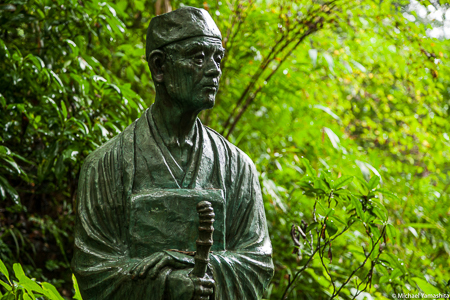
In his perfectly crafted haiku poems, Basho described the natural world with great simplicity and delicacy of feeling. When he composed The Narrow Road to the Deep North, he was an ardent student of Zen Buddhism, setting off on a series of travels designed to strip away the trappings of the material world and bring spiritual enlightenment. He wrote of the seasons changing, of the smells of the rain, the brightness of the moon, and beauty of the waterfall, through which he sense mysteries of the universe. There's seventeenth-century travel writing not only chronicle Basho's perilous journeys through Japan, but they also capture his vision of eternity in the transient world around him.
In his lucid translation Nobuyuki Yuasa captures the Lyrical qualities of Basho's poetry and prose by using the natural rhythms and language of the contemporary speech. In his introduction, he examines the development of the haibun style in which poetry and prose stand side by side. this edition also includes maps and notes on the texts.
For more than seventy years, Penguin has been the leading publisher of classic literature in the English-speaking world. With more than 1,700 titles, Penguin Classics represents a global bookshelf of the best works throughout history and across genres and disciplines. Readers trust the series to provide authoritative texts enhanced by introductions and notes by distinguished scholars and contemporary authors, as well as up-to-date translations by award-winning translators.
That I beheld
Fresh leaves, green leaves,
Bright in the sun'
In his perfectly crafted haiku poems, Basho described the natural world with great simplicity and delicacy of feeling. When he composed The Narrow Road to the Deep North, he was an ardent student of Zen Buddhism, setting off on a series of travels designed to strip away the trappings of the material world and bring spiritual enlightenment. He wrote of the seasons changing, of the smells of the rain, the brightness of the moon, and beauty of the waterfall, through which he sense mysteries of the universe. There's seventeenth-century travel writing not only chronicle Basho's perilous journeys through Japan, but they also capture his vision of eternity in the transient world around him.
In his lucid translation Nobuyuki Yuasa captures the Lyrical qualities of Basho's poetry and prose by using the natural rhythms and language of the contemporary speech. In his introduction, he examines the development of the haibun style in which poetry and prose stand side by side. this edition also includes maps and notes on the texts.
For more than seventy years, Penguin has been the leading publisher of classic literature in the English-speaking world. With more than 1,700 titles, Penguin Classics represents a global bookshelf of the best works throughout history and across genres and disciplines. Readers trust the series to provide authoritative texts enhanced by introductions and notes by distinguished scholars and contemporary authors, as well as up-to-date translations by award-winning translators.
First published January 1, 1702
About the author
Matsuo Bashō
312 books622 followersKnown Japanese poet Matsuo Basho composed haiku, infused with the spirit of Zen.
The renowned Matsuo Bashō (松尾 芭蕉) during his lifetime of the period of Edo worked in the collaborative haikai no renga form; people today recognize this most famous brief and clear master.
https://en.wikipedia.org/wiki/Matsuo_...
The renowned Matsuo Bashō (松尾 芭蕉) during his lifetime of the period of Edo worked in the collaborative haikai no renga form; people today recognize this most famous brief and clear master.
https://en.wikipedia.org/wiki/Matsuo_...
Ratings & Reviews
Friends & Following
Create a free account to discover what your friends think of this book!
Community Reviews
Displaying 1 - 30 of 680 reviews

Read
November 13, 2011A long time ago I read a book review in the newspaper. It was about a travel book in which the author retraced the footsteps of Matsuo Basho's journey through seventeenth century Japan told in The Narrow Road to the Deep North. Naturally I never did get my hands on the modern book but at my local library there was the penguin translation of Basho's book.
It is a very charming book. The translation contains five travel sketches. Deep Road to the Narrow North is the longest at forty-six printed pages. Basho aimed to combine poetry and prose, he had a reputation as a poet and was accompanied at different stages by, well, I suppose wandering apprentice poets attempting to hone their craft by hanging about with a mastercraftsman, some notable wordsmith or other. Some of their poems are included too.
For Basho the landscape is rich in culture:
The tone is light, fresh and inviting. There is the type of hunger that you can feel in the legs to see distant places. It reminds me oddly of Heinrich Heine in the Harz or up by the North Sea.
I also learnt that Japanese horses are trustworthy. Once Basho borrows one from a farmer and sends it back with some money tied to the saddle. In my own country a horse with some money would be straight down to the fair, frolicking with the fillies or casting a glad eye at the stallions depending on its inclinations.
The journeys are filled with days of rain, floods and difficult passes through mountains requiring the author to hire a guide:
The implication to my mind is that he wasn't a particularly good guide.
But already such tourism as there was in seventeenth century Japan was coming into conflict with the way of life of the locals:
Basho has a religious motivation for his travels, abandoning his house and his possessions is a renunciation of earthly things. He wears at one point the robes of a Buddhist priest but tells us he is perceived like a bat - sometimes as a mouse and sometimes as a bird. Perhaps there is a particular significance to some of the places he visits, his choice of words or his meetings with people, but I leave any commentary to those who know about such things.
There is the joy in this book of setting out with just a few things in a backpack; two coats, one for rain one for cold and some writing materials
no sooner had the spring mist begun to rise over the field than I wanted to be on the road again to cross the barrier-gate of Shirakawa in due time. The gods seemed to have possessed my soul and turned it inside out, and roadside images seemed to invite me from every corner, so that it was impossible for me to stay idle at home. Even while I was getting ready...I was already dreaming of the full moon rising over the islands of Matsushima.
It is a very charming book. The translation contains five travel sketches. Deep Road to the Narrow North is the longest at forty-six printed pages. Basho aimed to combine poetry and prose, he had a reputation as a poet and was accompanied at different stages by, well, I suppose wandering apprentice poets attempting to hone their craft by hanging about with a mastercraftsman, some notable wordsmith or other. Some of their poems are included too.
For Basho the landscape is rich in culture:
It was by a singular stroke of genius that an ancient writer pointed out that the autumn was the best season to visit this beach, for it seemed to me that the scene excelled in loneliness and isolation at that season. It was, on the other hand, an incurable folly of mine to think that, had I come here in autumn, I would have had a greater poetic success, for that only proved the poverty of my mind.There are famous views, historical places, mountains, bays, flowers, trees about which poems have been written. Basho accompanied by apprentices stops at these places, met up with others and they aim to write poems by the moonlight. The group of poets waiting in a spinney on a cloudy night watching for the moon to rise over the trees in order to compose verse amuses me still.
The tone is light, fresh and inviting. There is the type of hunger that you can feel in the legs to see distant places. It reminds me oddly of Heinrich Heine in the Harz or up by the North Sea.
I also learnt that Japanese horses are trustworthy. Once Basho borrows one from a farmer and sends it back with some money tied to the saddle. In my own country a horse with some money would be straight down to the fair, frolicking with the fillies or casting a glad eye at the stallions depending on its inclinations.
The journeys are filled with days of rain, floods and difficult passes through mountains requiring the author to hire a guide:
My guide congratulated me by saying that I was indeed fortunate to have crossed the mountains in safety, for accidents of some sort had always happened to him on past trips.
The implication to my mind is that he wasn't a particularly good guide.
But already such tourism as there was in seventeenth century Japan was coming into conflict with the way of life of the locals:
According to the child who acted as a self-appointed, this stone was once on the top of a mountain, but the travellers who came to see it did so much harm to the crops that the farmers thought it a nuisance and thrust it down into the valley.
Basho has a religious motivation for his travels, abandoning his house and his possessions is a renunciation of earthly things. He wears at one point the robes of a Buddhist priest but tells us he is perceived like a bat - sometimes as a mouse and sometimes as a bird. Perhaps there is a particular significance to some of the places he visits, his choice of words or his meetings with people, but I leave any commentary to those who know about such things.
There is the joy in this book of setting out with just a few things in a backpack; two coats, one for rain one for cold and some writing materials
It was early in October when the sky was terribly uncertain that I decided to set out on a journey. I could not help feeling vague misgivings about the future of my journey, as I watched the fallen leaves of autumn being carried away by the wind.

August 31, 2022

To say goodbye is to die a little, said Raymond Chandler.
Over a month ago, I said goodbye to my country, family and friends, familiar places and sensations. I died a little and felt more alive than ever. Immersed in the Woolfesque atmosphere created by Michael Cunningham, I looked life in the face and confronted fears, challenged assumptions, tested hypotheses, and wrote a new chapter.
I am currently living in Australia.
Again, I don’t have much free time for literature since I’m studying my third career: Programming. I’ve also resumed creating content on Instagram: @firenzeforti, if you'd like to drop by. I’m sharing this new experience and posting information to help people take a leap of faith and move from vision to reality.

It's been a complicated, bittersweet year. I'm still coping with a tragic loss, and despite the typical struggles that a life-changing event such as moving to another country entails, I feel fine, safe and loved.
The Narrow Road to the Deep North and Other Travel Sketches describes Bashō's series of travels in the 17th century, masterfully blending haiku and prose. Ordinary affairs of life and musings of the spiritual world.
After hundreds of years, we still embark on journeys to discover something new about ourselves, gain fresh perspectives, enrich our lives with new cultures, and attain some inner peace. With its highs and lows, my journey has been a meditative experience amidst the most beautiful natural setting, so it feels like the perfect time to reread Bashō's reflections on life and nature.
Still alive I am
At the end of a long dream
On my journey,
Fall of an autumn day.
— Bashō
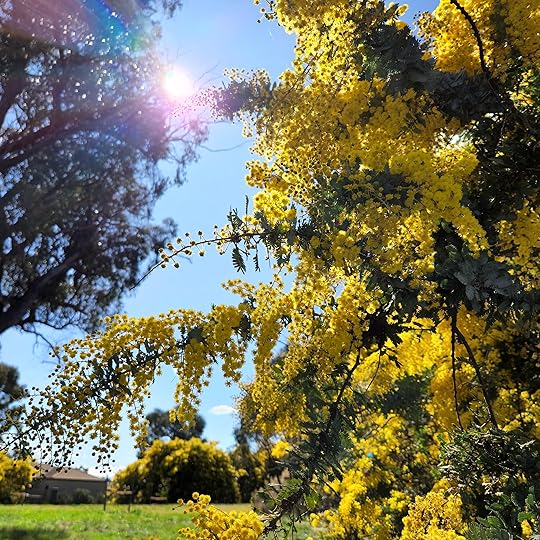
Aug 31, 2022
* Credit: Photos I've taken in Australia, where I'm currently residing.
** Later on my blog.

February 16, 2018
Acknowledgements
Introduction, by Nobuyuki Yuasa
--The Records of a Weather-Exposed Skeleton
--A Visit to the Kashima Shrine
--The Records of a Travel-Worn Satchel
--A Visit to Sarashina Village
--The Narrow Road to the Deep North
Maps
Notes
Introduction, by Nobuyuki Yuasa
--The Records of a Weather-Exposed Skeleton
--A Visit to the Kashima Shrine
--The Records of a Travel-Worn Satchel
--A Visit to Sarashina Village
--The Narrow Road to the Deep North
Maps
Notes

August 20, 2015
I want to be very clear about one thing: who the heck am I to be giving Basho two stars? I am nobody, and I am not giving Basho two stars, I am giving this book two stars. The Japanese literary tradition is so deep and aesthetically interesting, and I have no doubt whatsoever that, *in Japanese*, these travel narratives are well worth reading.
But I, filthy occidental, do not know Japanese, and I am reduced to reading sentences such as this, chosen entirely at random: "Dragging my sore heels, I plodded along like Saigyo, all the time with the memory of his suffering at the River Tenryu in my mind, and when I hired a horse, I thought of the famous priest who had experienced the disgrace of being thrown from his horse into a moat."
I can accept that my own ignorance makes it hard to get the references, and that something just does go missing if, like me, you don't know much about 17th century Japan's cultural references. That's on me. What isn't on me is the plodding, dragging translation, which does cause my heel to get sore and cause my mind great suffering, and in my less patient moments made me wish the translator could be thrown into a moat. Even if one didn't want to bother making the prose into something approaching literature, one might try with the haiku. No such luck.
At sunrise I saw
Tanned faces of fishermen
Among the flowers
Of white poppy.
I'll be in the other room, reading Rexroth's translations.
To be fair, I'm very glad someone took the time to get this into English of any quality.
But I, filthy occidental, do not know Japanese, and I am reduced to reading sentences such as this, chosen entirely at random: "Dragging my sore heels, I plodded along like Saigyo, all the time with the memory of his suffering at the River Tenryu in my mind, and when I hired a horse, I thought of the famous priest who had experienced the disgrace of being thrown from his horse into a moat."
I can accept that my own ignorance makes it hard to get the references, and that something just does go missing if, like me, you don't know much about 17th century Japan's cultural references. That's on me. What isn't on me is the plodding, dragging translation, which does cause my heel to get sore and cause my mind great suffering, and in my less patient moments made me wish the translator could be thrown into a moat. Even if one didn't want to bother making the prose into something approaching literature, one might try with the haiku. No such luck.
At sunrise I saw
Tanned faces of fishermen
Among the flowers
Of white poppy.
I'll be in the other room, reading Rexroth's translations.
To be fair, I'm very glad someone took the time to get this into English of any quality.

December 31, 2025
I was deeply drawn to the haikus in the book (by Bashō and other poets)—they are so Zen and soul-cleansing. They left me eager to seek out more of Bashō’s poetry, as well as other Zen haikus, in the future.
As for the travel sketches, perhaps because I’ve read many great travel books this year (such as Travels with a Donkey in the Cévennes by R. L. Stevenson and The Shadow of the Sun by R. Kapuściński), Bashō’s vaguer accounts of his journeys didn’t keep me quite as engaged.
As for the travel sketches, perhaps because I’ve read many great travel books this year (such as Travels with a Donkey in the Cévennes by R. L. Stevenson and The Shadow of the Sun by R. Kapuściński), Bashō’s vaguer accounts of his journeys didn’t keep me quite as engaged.

September 18, 2015
This review is more of a note about this specific translation so that people know what it is.
The Narrow Road to The Deep North and Other Travel Sketches, from Penguin Classics, translated into English by Nobuyuki Yuasa, 1966.
* TOC
* Introduction (pretty good explanation of how haiku stemmed out from waka)
* The Records Of A Weather-Exposed Skeleton (野ざらし紀行: nozarashi kikou) 1684-85
* A Visit To The Kashima Shrine (鹿島紀行: Kashima kikou) 1687
* The Records Of A Travel-Worn Satchel (笈の小文: oi no kobumi) 1687
* A Visit To Sarashina Village (更科紀行: Sarashina kikou) 1687
* The Narrow Road To The Deep North (おくのほそ道: oku no hosomichi) 1689
* Maps and Notes
So, while it's not comprehensive, it covers the majority of Basho's writings. (Matsuo Basho 1644 - 1694)
Now I know there are other translations. I haven't taken a look of all of them (simply because my local library doesn't carry them) but here are some I know:
Basho: The Complete Haiku, translated by Jane Reichhold, 1972
On Love and Barley: Haiku of Basho, translated by Lucien Stryk, 1985 (I think this is an anthology)
The Essential Basho, translated by Sam Hamill, 1998
Let's compare using one of his famous haiku, made at Hiraizumi:
夏草や兵どもが夢の跡
natsukusa ya
tsuwamono-domo ga
yume no ato
Yuasa translation (from this book):
A thicket of summer grass
Is all that remains
Of the dreams and ambitions
Of ancient warriors.
Reichhold translation: (Thanks, Dolors.)
summer grass
the only remains of soldiers'
dreams
Hamill translation:
Summer grasses:
all that remains of great soldiers'
imperial dreams
Basho often refers to the classic waka poems, Chinese poems, and classics such as The Tale of the Heike, so reading these would be helpful for full appreciation.
The Narrow Road to The Deep North and Other Travel Sketches, from Penguin Classics, translated into English by Nobuyuki Yuasa, 1966.
* TOC
* Introduction (pretty good explanation of how haiku stemmed out from waka)
* The Records Of A Weather-Exposed Skeleton (野ざらし紀行: nozarashi kikou) 1684-85
* A Visit To The Kashima Shrine (鹿島紀行: Kashima kikou) 1687
* The Records Of A Travel-Worn Satchel (笈の小文: oi no kobumi) 1687
* A Visit To Sarashina Village (更科紀行: Sarashina kikou) 1687
* The Narrow Road To The Deep North (おくのほそ道: oku no hosomichi) 1689
* Maps and Notes
So, while it's not comprehensive, it covers the majority of Basho's writings. (Matsuo Basho 1644 - 1694)
Now I know there are other translations. I haven't taken a look of all of them (simply because my local library doesn't carry them) but here are some I know:
Basho: The Complete Haiku, translated by Jane Reichhold, 1972
On Love and Barley: Haiku of Basho, translated by Lucien Stryk, 1985 (I think this is an anthology)
The Essential Basho, translated by Sam Hamill, 1998
Let's compare using one of his famous haiku, made at Hiraizumi:
夏草や兵どもが夢の跡
natsukusa ya
tsuwamono-domo ga
yume no ato
Yuasa translation (from this book):
A thicket of summer grass
Is all that remains
Of the dreams and ambitions
Of ancient warriors.
Reichhold translation: (Thanks, Dolors.)
summer grass
the only remains of soldiers'
dreams
Hamill translation:
Summer grasses:
all that remains of great soldiers'
imperial dreams
Basho often refers to the classic waka poems, Chinese poems, and classics such as The Tale of the Heike, so reading these would be helpful for full appreciation.

December 13, 2020
Reflective and playful account of a half year of travel through the countryside of Japan, traversing 2.000 km filled with shrines, mountain views, hot springs, burial places and quaint villages
Summer grass
all that remains
of a Samurai’s dream
夏草や 兵どもが 夢の跡
Natsukusa ya/ Tsuwamonodomo ga/ Yume no ato
Maybe the magic of poetry is hard to translate, or I’m just not as sensitive to haiku as I’d like, but a lot of this account really needed the explanatory notes to have some meaning to the modern day reader. Still the reflections on mortality, the sublime power of nature and sometimes the less sublime (a horse pissing besides the sleeping place of the great poet) make this a worthwhile literary trip to 17th century Edo period Japan.
Matsuo Bashō at no moment during his trip feels unsafe, in some kind of manner I'd expected more brigands and problems but under the Shogun a peace apparently also spread far to the "uncivilized" Northern reaches of Japan. So secure is their travel that someone even lends them a horse with the comment: just return him when you’ve found your way. In chapter 48 they even have a boat trip with a lunch box including sake.
The main topic of the poems are the beauty of nature and solitude. Interesting enough the very natural depiction Basho offers us turns out to be quite constructed. From the travel log of his fellow "pilgrim" we know that many times the observations of multiple days are strung together in a certain manner by the poet to achieve a resonance with, or reference to, ancient Japanese and Chinese poetry. The trip takes him along highlights of the battle between the Taira and the Minamoto, with famous battlefields, castles, shrines and graves being the main attractions. These places are known as utamakura, and Basho is revolutionary in the sense that he actually leaves the "civilization" of Edo and Kyoto to visit these places. He sometimes even gleefully notes that other poets had a totally wrong perception of the utamakura.
The edition I read also included some later works, and I want to close with allegedly the last haiku of the poet, showing a touching reflection on mortality:
Sick on a journey-
in my dream staggering
over withered fields.
Dutch quotes:
Stilte: de stem van een cicade die door de rotsen dringt.
Uit het verleden zijn er vele legendarische plaatsnamen bekend die door dichters zijn bezongen, maar bergen zakken in elkaar, rivieren zoeken een nieuwe bedding, wegen veranderen, rotsen raken begraven onder de grond, oude bomen maken plaats voor jonge, en met het verstrijken van de tijd worden de sporen van het verleden onherkenbaar.
Maar dit monument was onbetwistbaar een overblijfsel van wel duizend jaar geleden, en nu ik het voor mijn ogen zag, keek ik recht in het hart van de ouden. Dit was de beloning van de pelgrim; de vreugde van het leven! Ik vergat de beproevingen van het reizen en werd tot tranen toe geroerd.
Zomergras: wat er overblijft van de dromen van felle strijders.
Vlooien en luizen – bij mijn hoofdkussen een pissend paard.
We maakten een bed van bamboebladeren, met bamboestelen als hoofdkussen, en legden ons te ruste tot de ochtend aanbrak.
Het schitterende landschap was zo stil en verlaten dat we ons hart zuiver voelden worden.
Sora had er de avond tevoren al gelogeerd en dit vers achtergelaten:
Heel de nacht luisterde ik naar de herfstwind – de berg achter mij.
Een scheiding van één nacht is hetzelfde als duizend mijlen. Ook ik hoorde de herfstwind toen ik in de monniken slaapzaal lag.
Als een draak de lucht doorklieft, hagelt het.
Zelfs in Kyōto verlang ik naar Kyōto – een kleine koekoek.
Gevoelens van een reiziger.
Waarom word ik deze herfst zo oud? Een vogel, naar de wolken toe.
Ziek op reis – mijn dromen dwalen over een dorre vlakte.
Wanneer ik slaap, droom ik dat ik over een weg snel onder de ochtendhemel of door avondnevel. Telkens als ik wakker word, schrik ik van een ruisende bergbeek of de schreeuw van een wilde vogel. Boeddha leert ons dat het zonde is om je aan het aardse te hechten, en nu pas besef ik hoe schuldig ik ben.
Some observations on the factualness of the travel as depicted by Basho (also in Dutch):
Opnieuw ziet het ernaar uit dat Bashō de poëtische waarheid belangrijker vond dan een letterlijk verslag van een waar gebeurde reis.
Bashō beweert dat hij de voornaamste gebouwen van deze tempel is gaan bekijken: de soetrakapel en de lichtkapel, maar dankzij Sora’s dagboek weten we dat de soetrakapel ten tijde van Bashō’s bezoek gesloten was. Bashō’s beschrijving stemt dan ook niet met de historische feiten overeen: in deze kapel werden alleen religieuze beelden bewaard, geen beelden van de Fujiwara-generaals.
Nauwelijks heeft Bashō zijn reis naar het noorden beëindigd, of hij gaat alweer op pad: hij beschouwt het reizen werkelijk als een thuis.
Summer grass
all that remains
of a Samurai’s dream
夏草や 兵どもが 夢の跡
Natsukusa ya/ Tsuwamonodomo ga/ Yume no ato
Maybe the magic of poetry is hard to translate, or I’m just not as sensitive to haiku as I’d like, but a lot of this account really needed the explanatory notes to have some meaning to the modern day reader. Still the reflections on mortality, the sublime power of nature and sometimes the less sublime (a horse pissing besides the sleeping place of the great poet) make this a worthwhile literary trip to 17th century Edo period Japan.
Matsuo Bashō at no moment during his trip feels unsafe, in some kind of manner I'd expected more brigands and problems but under the Shogun a peace apparently also spread far to the "uncivilized" Northern reaches of Japan. So secure is their travel that someone even lends them a horse with the comment: just return him when you’ve found your way. In chapter 48 they even have a boat trip with a lunch box including sake.
The main topic of the poems are the beauty of nature and solitude. Interesting enough the very natural depiction Basho offers us turns out to be quite constructed. From the travel log of his fellow "pilgrim" we know that many times the observations of multiple days are strung together in a certain manner by the poet to achieve a resonance with, or reference to, ancient Japanese and Chinese poetry. The trip takes him along highlights of the battle between the Taira and the Minamoto, with famous battlefields, castles, shrines and graves being the main attractions. These places are known as utamakura, and Basho is revolutionary in the sense that he actually leaves the "civilization" of Edo and Kyoto to visit these places. He sometimes even gleefully notes that other poets had a totally wrong perception of the utamakura.
The edition I read also included some later works, and I want to close with allegedly the last haiku of the poet, showing a touching reflection on mortality:
Sick on a journey-
in my dream staggering
over withered fields.
Dutch quotes:
Stilte: de stem van een cicade die door de rotsen dringt.
Uit het verleden zijn er vele legendarische plaatsnamen bekend die door dichters zijn bezongen, maar bergen zakken in elkaar, rivieren zoeken een nieuwe bedding, wegen veranderen, rotsen raken begraven onder de grond, oude bomen maken plaats voor jonge, en met het verstrijken van de tijd worden de sporen van het verleden onherkenbaar.
Maar dit monument was onbetwistbaar een overblijfsel van wel duizend jaar geleden, en nu ik het voor mijn ogen zag, keek ik recht in het hart van de ouden. Dit was de beloning van de pelgrim; de vreugde van het leven! Ik vergat de beproevingen van het reizen en werd tot tranen toe geroerd.
Zomergras: wat er overblijft van de dromen van felle strijders.
Vlooien en luizen – bij mijn hoofdkussen een pissend paard.
We maakten een bed van bamboebladeren, met bamboestelen als hoofdkussen, en legden ons te ruste tot de ochtend aanbrak.
Het schitterende landschap was zo stil en verlaten dat we ons hart zuiver voelden worden.
Sora had er de avond tevoren al gelogeerd en dit vers achtergelaten:
Heel de nacht luisterde ik naar de herfstwind – de berg achter mij.
Een scheiding van één nacht is hetzelfde als duizend mijlen. Ook ik hoorde de herfstwind toen ik in de monniken slaapzaal lag.
Als een draak de lucht doorklieft, hagelt het.
Zelfs in Kyōto verlang ik naar Kyōto – een kleine koekoek.
Gevoelens van een reiziger.
Waarom word ik deze herfst zo oud? Een vogel, naar de wolken toe.
Ziek op reis – mijn dromen dwalen over een dorre vlakte.
Wanneer ik slaap, droom ik dat ik over een weg snel onder de ochtendhemel of door avondnevel. Telkens als ik wakker word, schrik ik van een ruisende bergbeek of de schreeuw van een wilde vogel. Boeddha leert ons dat het zonde is om je aan het aardse te hechten, en nu pas besef ik hoe schuldig ik ben.
Some observations on the factualness of the travel as depicted by Basho (also in Dutch):
Opnieuw ziet het ernaar uit dat Bashō de poëtische waarheid belangrijker vond dan een letterlijk verslag van een waar gebeurde reis.
Bashō beweert dat hij de voornaamste gebouwen van deze tempel is gaan bekijken: de soetrakapel en de lichtkapel, maar dankzij Sora’s dagboek weten we dat de soetrakapel ten tijde van Bashō’s bezoek gesloten was. Bashō’s beschrijving stemt dan ook niet met de historische feiten overeen: in deze kapel werden alleen religieuze beelden bewaard, geen beelden van de Fujiwara-generaals.
Nauwelijks heeft Bashō zijn reis naar het noorden beëindigd, of hij gaat alweer op pad: hij beschouwt het reizen werkelijk als een thuis.

December 12, 2019
beautiful travel log of a the great poet and traveler Basho. small pieces of prose with amazing haiku.this is the guy who said to his disciples to look at the bamboo, to be a bamboo and to forget it so they can write it. excellent advise for any especially writers

March 31, 2018
One doesn't think of Matsuo Basho as a travel writer, but travel write he did! This edition includes "The Records of a Weather-Exposed Skeleton," "A Visit to the Kashima Shrine," "The Records of a Travel-Worn Satchel," "A Visit to Sarashina Village," and "The Narrow Road to the Deep North."
All that said, it was the last piece, around 40 pages, that made the book. The others did not quite hit their stride, telling me that the distinguished poet DID hit his stride as a travel writer with practice.
All of the sketches are filled with short poems, though only some of them are by Basho himself. Many others are poems by his companions or people he met along the way. Lots of shrines, temples, historic markers along the way.
Clearly, Japan is a lot more than crowded cities in his day and ours. It is a natural wonder, too. Meaning: If my bucket list includes Japan, I will spend a lot of time in the countryside, taking a pass on the big cities. As Tolstoy warned us: All big cities are alike: each big countryside is big in its own way. Now write a haiku.
All that said, it was the last piece, around 40 pages, that made the book. The others did not quite hit their stride, telling me that the distinguished poet DID hit his stride as a travel writer with practice.
All of the sketches are filled with short poems, though only some of them are by Basho himself. Many others are poems by his companions or people he met along the way. Lots of shrines, temples, historic markers along the way.
Clearly, Japan is a lot more than crowded cities in his day and ours. It is a natural wonder, too. Meaning: If my bucket list includes Japan, I will spend a lot of time in the countryside, taking a pass on the big cities. As Tolstoy warned us: All big cities are alike: each big countryside is big in its own way. Now write a haiku.

November 28, 2024
Japonya’nın en büyük şairi Matsuo Başo’nun, ‘Kuzeye Giden İnce Yol’ olarak adlandırılan ve bir arınma ve hac yolculuğu sayılabilecek yolculuğunun durakları ile ilgili bilgilerin ve hem dostlarının, hem de kendisinin yazmış olduğu haiku’ların (üç dize, 5+7+5 (17) heceden oluşan şiir) yer aldığı bir eser.
Güzel bir okuma idi. Japonya ziyareti sırasında yararlanılabilecek bilgiler olmasını diledim.
Güzel bir okuma idi. Japonya ziyareti sırasında yararlanılabilecek bilgiler olmasını diledim.

February 16, 2018
3.50 stars
Having found his name and read some famous pieces of his haiku in some old Japanese literary works, I finally came across this 5-story paperback late last month and delightfully had it to read. The Narrow Road to the Deep North is no. 5; Other Travel Sketches include no. 1 The Records of a Weather-Exposed Skeleton, no. 2 A Visit to the Kashima Shrine, no. 3 The Records of a Travel-Worn Satchel, and no. 4 A Visit to Sarashina Village. According to Japan: An Illustrated Encyclopedia 1 A-L (Kodansha 1993, p. 101), they were translated from their Japanese titles with its first year of publication as follows.
In fact, haiku is a form of Japanese poems consisting of 17 syllables, divided into 3 sections of 5-7-5, for instance,
First of all, I would like to say I don't know Japanese so reading such a Japanese romanized haiku above with full understanding and appreciation is simply beyond me; I rather enjoyed reading his prose depicting his travel sketches with witty and reflective inspirations from a famous, elderly and itinerant Buddhist priest whose haiku skills and initiatives have long been cherished and admired in and outside Japan. As for his and others' haiku in this book, I would try to read each with care and arguable understanding as well as some few ideas acquired from its basic interpretation.
Then, I think each translator has his/her own ways of translating the haiku pieces, in other words, it is probably infeasible to translate one, again the Japanese above as an example, into English with perfect rendition or with typical exact words. To put it briefly, each Japanese haiku piece can be translated as its translator wishes and decides as the best he/she can do. To illustrate my point, given the Japanese haiku above as Basho's most famous one (1686), the following translation taken from Essentially Oriental: R. H. Blyth Selection (Hokuseido 1994) reveals another English version. (anonymous translator)
Incidentally, I just visited the Wikipedia on Basho Matsuo and found the following third English rendition:
an ancient pond/ a frog jumps in/ the splash of water
(https://en.wikipedia.org/wiki/Matsuo_...)
in which I vaguely recall as my first Basho encounter many years ago. Basho newcomers are welcome to know him more on his works, fame, legacy, etc. by visiting this website.
There is still the fourth, translated by William J. Higginson:
old pond
frog leaps in
water's sound
(https://en.wikipedia.org/wiki/Haiku)
And the fifth,
Old pond . . .
a frog jumps in
water's sound
(Soichi Furuta, "Haiku: An Art for All Seasons," in Japan: An Illustrated Encyclopedia 1 A-L, Tokyo: Kodansha, 1993, p. 489)
Furthermore, I found the sixth,
The old pond, ah!
A frog jumps in:
The water's sound!
(Daisetz T. Suzuki, "Zen and Haiku," in Zen and Japanese Culture, Tokyo: Tuttle, 1988, p. 238)
The seventh,
An old pond: a frog jumps in-the sound of water
(Hiroaki Sato and Burton Watson, From the Country of Eight Islands: An Anthology of Japanese Poetry, New York: Columbia University Press, 1986, p. 282)
And, the eighth,
An old pond: the sound of a frog jumping into the water.
(Ryunosuke Akutagawa, Mandarins: Stories, trans. Charles De Wolf. Brooklyn, New York: Archipelago Books, 2007, p. 239)
Nevertheless, his travel narratives would bring readers back in time to see and imagine what Japan looked like some 400 years ago as well as enjoy reading his and his friends' various haiku in this book. In the meantime, these following three excerpts should suffice as exemplary prose. First, Basho has written on a huge chestnut tree:
Then, on the magnificent nature in Matsushima:
Finally, on the sense of humor and witty conclusion (Postscript by Soryu):
In summary, we could enjoy reading Basho's travel narratives as well as many haiku poems written by himself and his friends since we would know more from his itinerary prose and viewpoints in the Edo period in seventeenth-century Japan. As for the haiku, one of the famous Japanese poems, we would need more familiarity or probably practical advice from those haiku scholars in the universities worldwide or as background, basic knowledge and practice, please visit this site: https://en.wikipedia.org/wiki/Haiku
Having found his name and read some famous pieces of his haiku in some old Japanese literary works, I finally came across this 5-story paperback late last month and delightfully had it to read. The Narrow Road to the Deep North is no. 5; Other Travel Sketches include no. 1 The Records of a Weather-Exposed Skeleton, no. 2 A Visit to the Kashima Shrine, no. 3 The Records of a Travel-Worn Satchel, and no. 4 A Visit to Sarashina Village. According to Japan: An Illustrated Encyclopedia 1 A-L (Kodansha 1993, p. 101), they were translated from their Japanese titles with its first year of publication as follows.
1 Nozarashi kiko, 1685
2 Kashima kiko, 1687
3 Oi no kobumi, 1690-91
4 Sarashina kiko, 1688
5 Oku no hosomichi, 1694
In fact, haiku is a form of Japanese poems consisting of 17 syllables, divided into 3 sections of 5-7-5, for instance,
Furuike ya, kawazu tobikomu, mizu no oto.
Breaking the silence
Of an ancient pond,
A frog jumped into water -
A deep resonance. (p. 9)
First of all, I would like to say I don't know Japanese so reading such a Japanese romanized haiku above with full understanding and appreciation is simply beyond me; I rather enjoyed reading his prose depicting his travel sketches with witty and reflective inspirations from a famous, elderly and itinerant Buddhist priest whose haiku skills and initiatives have long been cherished and admired in and outside Japan. As for his and others' haiku in this book, I would try to read each with care and arguable understanding as well as some few ideas acquired from its basic interpretation.
Then, I think each translator has his/her own ways of translating the haiku pieces, in other words, it is probably infeasible to translate one, again the Japanese above as an example, into English with perfect rendition or with typical exact words. To put it briefly, each Japanese haiku piece can be translated as its translator wishes and decides as the best he/she can do. To illustrate my point, given the Japanese haiku above as Basho's most famous one (1686), the following translation taken from Essentially Oriental: R. H. Blyth Selection (Hokuseido 1994) reveals another English version. (anonymous translator)
The old pond:
A frog jumps in-
The sound of the water.
(illustration facing p. 262)
Incidentally, I just visited the Wikipedia on Basho Matsuo and found the following third English rendition:
an ancient pond/ a frog jumps in/ the splash of water
(https://en.wikipedia.org/wiki/Matsuo_...)
in which I vaguely recall as my first Basho encounter many years ago. Basho newcomers are welcome to know him more on his works, fame, legacy, etc. by visiting this website.
There is still the fourth, translated by William J. Higginson:
old pond
frog leaps in
water's sound
(https://en.wikipedia.org/wiki/Haiku)
And the fifth,
Old pond . . .
a frog jumps in
water's sound
(Soichi Furuta, "Haiku: An Art for All Seasons," in Japan: An Illustrated Encyclopedia 1 A-L, Tokyo: Kodansha, 1993, p. 489)
Furthermore, I found the sixth,
The old pond, ah!
A frog jumps in:
The water's sound!
(Daisetz T. Suzuki, "Zen and Haiku," in Zen and Japanese Culture, Tokyo: Tuttle, 1988, p. 238)
The seventh,
An old pond: a frog jumps in-the sound of water
(Hiroaki Sato and Burton Watson, From the Country of Eight Islands: An Anthology of Japanese Poetry, New York: Columbia University Press, 1986, p. 282)
And, the eighth,
An old pond: the sound of a frog jumping into the water.
(Ryunosuke Akutagawa, Mandarins: Stories, trans. Charles De Wolf. Brooklyn, New York: Archipelago Books, 2007, p. 239)
Nevertheless, his travel narratives would bring readers back in time to see and imagine what Japan looked like some 400 years ago as well as enjoy reading his and his friends' various haiku in this book. In the meantime, these following three excerpts should suffice as exemplary prose. First, Basho has written on a huge chestnut tree:
The chestnut is a holy tree, for the Chinese ideograph for chestnut is Tree placed directly below West, the direction of the holy land. The Priest Gyoki is said to have used it for his walking stick and the chief support of his house. (p. 107)
Then, on the magnificent nature in Matsushima:
. . . The pines are of the freshest green, and their branches are curved in exquisite lines, bent by the wind constantly blowing through them. Indeed, the beauty of the entire scene can only be compared to the most divinely endowed of feminine countenances, for who else could have created such beauty but the great god of nature himself? My pen strove in vain to equal this superb creation of divine artifice. (p. 116)
Finally, on the sense of humor and witty conclusion (Postscript by Soryu):
. . . What a travel it is indeed that is recorded in this book, and what a man he is who experienced it. The only thing to be regretted is that the author of this book, great man as he is, has in recent years grown old and infirm with hoary frost upon his eye-brows. (p. 143)
In summary, we could enjoy reading Basho's travel narratives as well as many haiku poems written by himself and his friends since we would know more from his itinerary prose and viewpoints in the Edo period in seventeenth-century Japan. As for the haiku, one of the famous Japanese poems, we would need more familiarity or probably practical advice from those haiku scholars in the universities worldwide or as background, basic knowledge and practice, please visit this site: https://en.wikipedia.org/wiki/Haiku

May 28, 2021
Bitten by fleas and lice,
I slept in a bed,
A horse urinating all the time,
Close to my pillow.
This book subverted my expectations. Matsuo Bashō is known primarily as a poet, though this book is mostly prose. These travel sketches are written in haibun, you see—a literary form that mixes narration with poetry (something that perhaps should be more popular). Indeed, because of the translation, this volume does not even contain real haikus, as the translator decided that four lines worked better in English—a justifiable choice, I think, as Japanese haikus often contain words with double meanings, which cannot be briefly conveyed in English.
Even if it did not fit my expectations, I found The Narrow Road to the Deep North to be thoroughly charming. Bashō comes across as the quintessential poet: dreamy, restless, sensitive, abstracted, homeless. It seems that some stereotypes are universal, as Bashō’s persona would work nearly as well as an American Beat poet as an Edo master of the haiku. Unfortunately, even though the translator (Nobuyuki Yuasa, in my edition) did his best, I suspect a great deal was lost in the haiku translations. The poetry seemed rather unremarkable—even unpoetic—compared with the animated prose in the travel sketches.
Even with these limitations, however, I found The Narrow Road to the Deep North to be quite a compelling book. In fact, I now feel quite tempted to sell all of my earthly possessions, buy some straw sandals, and walk aimlessly, composing haikus to commemorate everything I encounter.
I slept in a bed,
A horse urinating all the time,
Close to my pillow.
This book subverted my expectations. Matsuo Bashō is known primarily as a poet, though this book is mostly prose. These travel sketches are written in haibun, you see—a literary form that mixes narration with poetry (something that perhaps should be more popular). Indeed, because of the translation, this volume does not even contain real haikus, as the translator decided that four lines worked better in English—a justifiable choice, I think, as Japanese haikus often contain words with double meanings, which cannot be briefly conveyed in English.
Even if it did not fit my expectations, I found The Narrow Road to the Deep North to be thoroughly charming. Bashō comes across as the quintessential poet: dreamy, restless, sensitive, abstracted, homeless. It seems that some stereotypes are universal, as Bashō’s persona would work nearly as well as an American Beat poet as an Edo master of the haiku. Unfortunately, even though the translator (Nobuyuki Yuasa, in my edition) did his best, I suspect a great deal was lost in the haiku translations. The poetry seemed rather unremarkable—even unpoetic—compared with the animated prose in the travel sketches.
Even with these limitations, however, I found The Narrow Road to the Deep North to be quite a compelling book. In fact, I now feel quite tempted to sell all of my earthly possessions, buy some straw sandals, and walk aimlessly, composing haikus to commemorate everything I encounter.
March 29, 2023
Zamanında Instagram uygulaması yoktu ve Matsuo Başo kitap yazmayı uygun gördü. Şartlar farklı olsaydı gittiği yerleri hikaye aracılığıyla paylaşırdı diye yorumladım.
Tam olarak şöyle:
📍RYUŞAKU TAPINAĞI
Hüzünlü sessizlik
Kayalara işliyor
Ağustos böceğinin ötüşü
Mdkdmdkd çok tatlı bence kitap.

Read
August 2, 2016It's hard for me, gaijin piece of shit that I am, to fully appreciate the aesthetics of classical Japan. I've tried. I tried listening to some koto music in the bamboo forest of Arashiyama in Kyoto, and I just felt corny.
With Basho, I know I'm only getting half of it. I don't have the education in the Tale of the Heike and the Tale of Genji and what not. I don't understand the complexities of shogunate politics. But I do know the sense of melancholy that affects the lone traveler, and the sense of moroseness and isolation I felt on mountain roads in Japan on chilly fall evenings. And that is where Basho shines.
With Basho, I know I'm only getting half of it. I don't have the education in the Tale of the Heike and the Tale of Genji and what not. I don't understand the complexities of shogunate politics. But I do know the sense of melancholy that affects the lone traveler, and the sense of moroseness and isolation I felt on mountain roads in Japan on chilly fall evenings. And that is where Basho shines.

July 8, 2013
I've finished Ben's book
Of cherry trees and temples
A man's long travel.
Written in sweet words
Like a lonely, sad Bob Ross
Bashō did wander.
Of cherry trees and temples
A man's long travel.
Written in sweet words
Like a lonely, sad Bob Ross
Bashō did wander.

January 18, 2020
I’m sorry to have to say that the Penguin Classics translation of this work Into English, though pioneering in its day, is really quite uninspiring.
I haven’t read all of the Donald Keene translation, but, at first glance, it seems far superior and there may be even better translations out there still.
I haven’t read all of the Donald Keene translation, but, at first glance, it seems far superior and there may be even better translations out there still.

July 24, 2018
Ah, it is spring,
Great spring it is now,
Great, great spring -
Ah, great -
Great spring it is now,
Great, great spring -
Ah, great -

May 17, 2025
There is something unique in the way that East Asian artists perceive and connect with nature. They always find a clever way to express their mind and souls. It likely has to do with the Taoist beliefs that nature plays a crucial role in a person's life.
I value Bashō’s sentimentality, you can feel how in touch with his emotions he is, e.g. when he cries in front of an old memorial because the passage of time has emotionally touched him. It reminds me of the Romantic sublime.
Pleasant, quick read.
I value Bashō’s sentimentality, you can feel how in touch with his emotions he is, e.g. when he cries in front of an old memorial because the passage of time has emotionally touched him. It reminds me of the Romantic sublime.
Pleasant, quick read.

July 9, 2026
lesson learned as much as i love asian lit, haiku is not my style💔

December 23, 2013
Of all the books we read in Religion class all term, Basho was my favorite. His simple, poetic descriptions of the Japanese countryside and that poignant sense of loneliness and connection to history and nature all spoke to me vividly. In particular, his emphasis on wabi-sabi, poverty and loneliness, as seen in a lone tree on the hillside or a lone house in a deserted field or drinking water from a simple chipped pitcher, evoked something in me that I'd been able to quite articulate. The way he kept his words brief by including hidden references to previous poets--and even that sense of wanting to be a wind-swept spirit like the poets that had come before him, but never quite living up to that ideal--are just all so powerful. Basho always thinks that if he could just see the full moon or the cherry blossoms, he would feel complete, but when he finally journeyed to that place and saw the sight that he wanted to see, he still didn't feel fulfilled. This exact phenomenon has happened to me so many times in my life that I nearly cried with relief that I wasn't alone.
My professor explained a concept called "utamakura" as "a place where something important happened." He was referring to Japanese poetry and history of course, but I couldn't help but feel that this concept could apply to a great many things, a great many locations that once had some meaning, that you journey to in the hopes to journeying deeper into your own psyche. We could each have our own personal utamakuras, couldn't we? I can only thank Basho for articulating what I had never been able to articulate for myself.
My professor explained a concept called "utamakura" as "a place where something important happened." He was referring to Japanese poetry and history of course, but I couldn't help but feel that this concept could apply to a great many things, a great many locations that once had some meaning, that you journey to in the hopes to journeying deeper into your own psyche. We could each have our own personal utamakuras, couldn't we? I can only thank Basho for articulating what I had never been able to articulate for myself.

February 13, 2022
"What is important is to keep our mind high in the world of true understanding, and returning to the world of our daily experience to seek therein the truth of beauty. No matter what we may be doing at a given moment, we must not forget that it has a bearing upon our everlasting self which is poetry."

January 27, 2024
17. yüzyılda yaşamış bir şairin gezi notları. Ben çok çok keyif aldım. Uzun zamandır böyle hissederek bir şeyler okumuyordum. Farklı beklentilerle başlamış kişilerin neden hayal kırıklığına uğramış olabileceğini anlıyorum fakat.

October 16, 2022
o kadar zaman öncesini dinleyebiliyor olmak ne güzel.

February 1, 2021
'The Narrow Road to the Deep North' is a collection of travel essays by the great Japanese poet Matsuo Basho, who invented the Haiku poetic form. This book has five essays recounting travels that Basho did at different times. All the essays have prose interspersed with poems. Sometimes the poems describe the poet's impression of a particular scene, sometimes they delve on past events and fascinating personalities, sometimes they take the story forward.
In her introduction to the anthology of classic Japanese travel writing, 'Travels with a Writing Brush', translator Meredith McKinney says this – "The greatest pleasure a literary traveller could experience was the pleasure of arriving in person at a place hallowed in poetry. The brief scene in the early Ise Tales in which the man (traditionally identified as the poet Ariwara no Narihira) sends a poem to his beloved from distant Mount Utsu echoes down the centuries in the journals of travellers along the Tōkaidō, who continued to search out the place identified with this scene...it was not the characteristics of the place itself so much as the presence of its name in literature (and sometimes in history) that lent it special power. The term for such place names, and by extension for the places that bore those names, was utamakura (poem-pillow), and their central role in travel literature was one of its defining features. Utamakura places were in a sense sites of literary worship in a manner similar to holy places on a pilgrimage route, places where the traveller would pause in awe, perhaps recite the poem or poems associated with the site, and compose a poem in turn, often incorporating some allusive reference to that earlier poetry, almost as a pilgrim will offer up a prayer...A traveller who was moved by an utamakura site, or by seeing far overhead a flight of wild geese in an autumn evening, was moved the more deeply by partaking in an experience shared with so many others, and thereby drawn into the force field of a greater tradition that imbued his or her own insignificant and contingent experience with far richer meaning."
This passage describes Basho's travels and his essays in this book perfectly, far better than I ever can.
While we read the essays we can feel Basho's style evolving across time, till it all comes together perfectly in the title essay which is also the longest essay in the book, 'The Narrow Road to the Deep North', which is a perfect blend of prose and poetry. It starts with these famous lines – "Days and months are travellers of eternity. So are the years that pass by" – and from there onwards proceeds to reach sublime heights. Basho's prose is beautiful and poetic, and he delves into deep ideas while also displaying a fine sense of humour, occasionally mocking himself gently, which makes us smile.
The book has an insightful introduction by the translator Nobuyuki Yuasa, in which he gives a short history of the Haiku poetic form and Basho's contribution to it. At one point, Yuasa quotes Basho's most famous haiku poem –
"Breaking the silence
Of an ancient pond,
A frog jumped into water –
A deep resonance."
And then he proceeds to give a two page commentary on it which is brilliant.
Yuasa also gives a brief introduction to Basho's life and work, and looks at the essays in this book in detail, on the travel experiences which shaped these essays and how Basho's prose style evolves across time.
I loved 'The Narrow Road to the Deep North'. I can't wait to read more of the Master's poetry now.
I'll leave you with one of my favourite passages from the book. It is from the essay 'A Visit to Sarashina Village'.
"Above my head, mountains rose over mountains, and on my left a huge precipice dropped a thousand feet into a boiling river, leaving not a tiny square of flat land in between, so that, perched on the high saddle, I felt stricken with terror every time my horse gave a jerk. We passed through many a dangerous place...the road always winding and climbing, so that we often felt as if we were groping our way in the clouds. I abandoned my horse and staggered on my own legs, for I was dizzy with the height and unable to maintain my mental balance from fear. The servant, on the other hand, mounted the horse, and seemed to give not even the slightest thought to the danger. He often nodded in a doze and seemed about to fall headlong over the precipice. Every time I saw him drop his head, I was terrified out of my wits. Upon second thoughts, however, it occurred to me that every one of us was like this servant, wading through the ever-changing reefs of this world in stormy weather, totally blind to the hidden dangers, and that the Buddha surveying us from on high, would surely feel the same misgivings about our fortune as I did about the servant."
Have you read 'The Narrow Road to the Deep North'? What do you think about it?
In her introduction to the anthology of classic Japanese travel writing, 'Travels with a Writing Brush', translator Meredith McKinney says this – "The greatest pleasure a literary traveller could experience was the pleasure of arriving in person at a place hallowed in poetry. The brief scene in the early Ise Tales in which the man (traditionally identified as the poet Ariwara no Narihira) sends a poem to his beloved from distant Mount Utsu echoes down the centuries in the journals of travellers along the Tōkaidō, who continued to search out the place identified with this scene...it was not the characteristics of the place itself so much as the presence of its name in literature (and sometimes in history) that lent it special power. The term for such place names, and by extension for the places that bore those names, was utamakura (poem-pillow), and their central role in travel literature was one of its defining features. Utamakura places were in a sense sites of literary worship in a manner similar to holy places on a pilgrimage route, places where the traveller would pause in awe, perhaps recite the poem or poems associated with the site, and compose a poem in turn, often incorporating some allusive reference to that earlier poetry, almost as a pilgrim will offer up a prayer...A traveller who was moved by an utamakura site, or by seeing far overhead a flight of wild geese in an autumn evening, was moved the more deeply by partaking in an experience shared with so many others, and thereby drawn into the force field of a greater tradition that imbued his or her own insignificant and contingent experience with far richer meaning."
This passage describes Basho's travels and his essays in this book perfectly, far better than I ever can.
While we read the essays we can feel Basho's style evolving across time, till it all comes together perfectly in the title essay which is also the longest essay in the book, 'The Narrow Road to the Deep North', which is a perfect blend of prose and poetry. It starts with these famous lines – "Days and months are travellers of eternity. So are the years that pass by" – and from there onwards proceeds to reach sublime heights. Basho's prose is beautiful and poetic, and he delves into deep ideas while also displaying a fine sense of humour, occasionally mocking himself gently, which makes us smile.
The book has an insightful introduction by the translator Nobuyuki Yuasa, in which he gives a short history of the Haiku poetic form and Basho's contribution to it. At one point, Yuasa quotes Basho's most famous haiku poem –
"Breaking the silence
Of an ancient pond,
A frog jumped into water –
A deep resonance."
And then he proceeds to give a two page commentary on it which is brilliant.
Yuasa also gives a brief introduction to Basho's life and work, and looks at the essays in this book in detail, on the travel experiences which shaped these essays and how Basho's prose style evolves across time.
I loved 'The Narrow Road to the Deep North'. I can't wait to read more of the Master's poetry now.
I'll leave you with one of my favourite passages from the book. It is from the essay 'A Visit to Sarashina Village'.
"Above my head, mountains rose over mountains, and on my left a huge precipice dropped a thousand feet into a boiling river, leaving not a tiny square of flat land in between, so that, perched on the high saddle, I felt stricken with terror every time my horse gave a jerk. We passed through many a dangerous place...the road always winding and climbing, so that we often felt as if we were groping our way in the clouds. I abandoned my horse and staggered on my own legs, for I was dizzy with the height and unable to maintain my mental balance from fear. The servant, on the other hand, mounted the horse, and seemed to give not even the slightest thought to the danger. He often nodded in a doze and seemed about to fall headlong over the precipice. Every time I saw him drop his head, I was terrified out of my wits. Upon second thoughts, however, it occurred to me that every one of us was like this servant, wading through the ever-changing reefs of this world in stormy weather, totally blind to the hidden dangers, and that the Buddha surveying us from on high, would surely feel the same misgivings about our fortune as I did about the servant."
Have you read 'The Narrow Road to the Deep North'? What do you think about it?
September 14, 2012
I heartily recommend reading the translator's insightful introduction to this collection of Basho's haibun; the traditional form of Japanese travel journal interspersed with impromptu poems. I don't think I can sum up any better why The Narrow Road to the Deep North holds such a beloved place among the masterworks of Japanese literature, so I won't try. It is a deep, rich, and subtle travelogue, placing his prose and verse in the context of a lifetime of increasingly agonizing self-scrutiny of Buddhist spiritual practice—filled with passages of heart-stopping bravura writing, quiet humor, and empathy for all human beings.
"In the imagination of the people at least, the North was largely an unexplored territory, and it represented for Basho all the mystery there was in the universe. In other words, the Narrow Road to the Deep North was life itself for Basho, and he traveled through it as anyone would travel through the short span of his life there—seeking a vision of eternity in the things that are, by their very nature, destined to perish. In short, The Narrow Road to the Deep North is Basho's study in eternity, and in so far as he has succeeded in this attempt, it is also a monument he has set up against the flow of time."
"In the imagination of the people at least, the North was largely an unexplored territory, and it represented for Basho all the mystery there was in the universe. In other words, the Narrow Road to the Deep North was life itself for Basho, and he traveled through it as anyone would travel through the short span of his life there—seeking a vision of eternity in the things that are, by their very nature, destined to perish. In short, The Narrow Road to the Deep North is Basho's study in eternity, and in so far as he has succeeded in this attempt, it is also a monument he has set up against the flow of time."

July 4, 2023
Şiirler başka bir dile geçerken hep kaybolur, bunda da öyle olacak mı dedim ama oldu :)
Dün bu kitaptan bahsederken bir arkadaşım "Koreliler Haikularla pek eğlenirler" diyerek kıkırdadı, düşününce yer yer komik olmadığını iddia etsek yalan olur sanırım.
Ben kitabı dinleyerek ve yazarın geçtiği yerleri de bir taraftan googlelayarak ilerledim. Başo yazarken bizim şimdi bildiğimiz anlamda yaşlı değilmiş ama ben tonton bir amca kuzeye yürürken gördüklerini şiirle anlatmış diye gezindim sayfalarda.
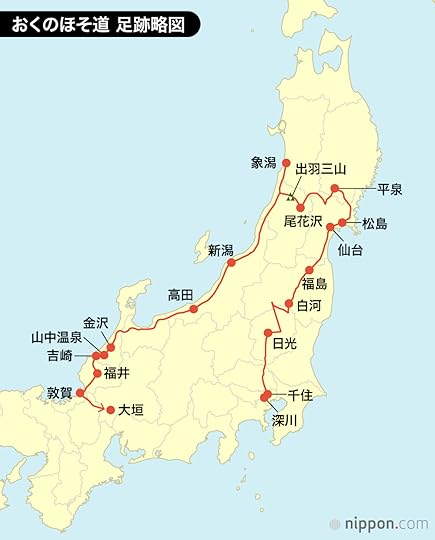
Şimdilerde bu rotada "şairin yolu" adıyla fotoğraf gezileri düzenleniyormuş (Google yalancısıyım), çok da güzel kareler gördüm. O yüzden güzel hatırlayacağım bu kitabı.
Dün bu kitaptan bahsederken bir arkadaşım "Koreliler Haikularla pek eğlenirler" diyerek kıkırdadı, düşününce yer yer komik olmadığını iddia etsek yalan olur sanırım.
Ben kitabı dinleyerek ve yazarın geçtiği yerleri de bir taraftan googlelayarak ilerledim. Başo yazarken bizim şimdi bildiğimiz anlamda yaşlı değilmiş ama ben tonton bir amca kuzeye yürürken gördüklerini şiirle anlatmış diye gezindim sayfalarda.
Şimdilerde bu rotada "şairin yolu" adıyla fotoğraf gezileri düzenleniyormuş (Google yalancısıyım), çok da güzel kareler gördüm. O yüzden güzel hatırlayacağım bu kitabı.

February 17, 2019
Basho takes to the road, and, along the way, writes little haiku.
It wasn't always pleasant:
How far must I walk
To the village of Kasajima
This endlessly muddy road
Of the early wet season?
And:
Bitten by fleas and lice,
I slept in a bed,
A horse urinating all the time
Close to my pillow.
But there are also lovely tributes to nature:
It was with awe
That I beheld
Fresh leaves, green leaves,
Bright in the sun.
And:
In the utter silence
Of a temple,
A cicada's voice alone
Penetrates the rocks.
It's a fascinating walk with a wise man along a road that may not exist any more.
It wasn't always pleasant:
How far must I walk
To the village of Kasajima
This endlessly muddy road
Of the early wet season?
And:
Bitten by fleas and lice,
I slept in a bed,
A horse urinating all the time
Close to my pillow.
But there are also lovely tributes to nature:
It was with awe
That I beheld
Fresh leaves, green leaves,
Bright in the sun.
And:
In the utter silence
Of a temple,
A cicada's voice alone
Penetrates the rocks.
It's a fascinating walk with a wise man along a road that may not exist any more.

December 20, 2021
On a Friday early afternoon, a time I usually refer to as ‘my morning’, 32 degree heat seeps through me. Staring into space for a long time, the headphones guide me through vastness. Cracking voice and over-exposed guitars place both my feet in the approaching ocean. So many places to travel to, even if only within the confines of my skull. We will do this again and again, oftentimes over the same ground, till old bones stretch weathered skin and the last journey holds only farewells and no greetings.

January 3, 2013
This collection presents the development, and perfection, of Basho’s uniquely hybrid literary works – part memoir-like travelogue, part poetry – which ideally convey his experiences by offering trudges (prose) toward brief crystallized moments of sensory apotheoses (haiku). Basho’s art was wedded to his self-styled Zen practice, which to my mind was more an excuse to pass as a mendicant priest or monk while pursuing his own aesthetic which was a conjunction of the impersonality of Zen and a refinement of sensory perception. For all his skinniness, paper raincoats, worn out sandals, and mendicancy, Basho was an extreme sensualist (of the eye and ear and nose) intent on “peak experiences”. He also over the years whittled his expression down to its barest essentials, until even his accumulated thoughts and ideas were excluded from them, leaving pure products of perception. Take this haiku, as an example:
It was with awe
That I beheld
Fresh leaves, green leaves,
Bright in the sun
On its own, read out of context, I would be the first to admit that it seems like nothing more than a simple (non-literary) observation; and so as a poem is a failure. But in context, that is to say keeping in mind Basho’s “poverty” (he travelled lightly and abandoned homes and possessions on a whim, but also was often comfortably put up by friends and devotees while travelling), his physical hardships while trudging across Japan, his middle-age crisis which led to his pushing his frail body to its limits in pursuit of his ideals, and his literary development; one can read this simple observation of green leaves as a laser-like perception of a perfect sensual moment, with not only Basho’s personal history buried in it, but also the history of the development of haiku up to that moment (not that I know all that much of that history, but I can certainly feel it). Read like this this poem has the power to compel the reader to (vicariously, or not) participate in Basho’s perfection of the conjunction of perception and spontaneous expression, making the world a more detailed and light-filled beautiful place, while spotlighting the fact that though we can zone on bright blades of grass the charge of that perception is terrifyingly fleeting and certainly will not repair our sandals or get us a real raincoat.
It was with awe
That I beheld
Fresh leaves, green leaves,
Bright in the sun
On its own, read out of context, I would be the first to admit that it seems like nothing more than a simple (non-literary) observation; and so as a poem is a failure. But in context, that is to say keeping in mind Basho’s “poverty” (he travelled lightly and abandoned homes and possessions on a whim, but also was often comfortably put up by friends and devotees while travelling), his physical hardships while trudging across Japan, his middle-age crisis which led to his pushing his frail body to its limits in pursuit of his ideals, and his literary development; one can read this simple observation of green leaves as a laser-like perception of a perfect sensual moment, with not only Basho’s personal history buried in it, but also the history of the development of haiku up to that moment (not that I know all that much of that history, but I can certainly feel it). Read like this this poem has the power to compel the reader to (vicariously, or not) participate in Basho’s perfection of the conjunction of perception and spontaneous expression, making the world a more detailed and light-filled beautiful place, while spotlighting the fact that though we can zone on bright blades of grass the charge of that perception is terrifyingly fleeting and certainly will not repair our sandals or get us a real raincoat.

August 9, 2017
I have wanted to read this book for many years. I tried when I was 16 years old but I didn't get very far. I was insufficiently knowledgeable about the context in which Basho's travels took place and the book seemed beyond my assimilation. I tried again this year and succeeded. I wish I could give it an even higher rating because I am sure it is a masterpiece of literature. My problem is that I sometimes found my mind wandering while reading it, probably because I couldn't visualize clearly the places that Basho visited on all his travels. I suspect this is my failing rather than his. I did enjoy the poems interspersed with the prose and this blend seems to be a very refreshing way of writing a travelogue. Although my mind wandered off the page now and again, I have to say that there are many moments of astonishing surprise and beauty and wistfulness in these sketches.
Displaying 1 - 30 of 680 reviews