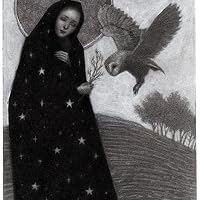
Twenty-one stories reveal a world of complexity in the moments and memories that make up ordinary lives, such as the conflicting images of a wedding seen through the eyes of various family members
Jason Schwartz is the author of a book of fiction, A German Picturesque (Alfred A. Knopf, 1998). His work has appeared in American Letters & Commentary, Antioch Review, Conjunctions, New York Tyrant, The Quarterly, StoryQuarterly, Unsaid, and other publications.
I need to write a review of this book someday, but anybody who has not read A German Picturesque should do so soon. That is, anybody who demands the highest quality from their literature. Jason Schwartz continues to write short stories and publish them in a select few print periodicals. He is taxing and is the only contemporary writer who never disappoints me in any way. I would recommend this book to demanding readers who enjoy the intellect of Thomas Bernhard and Robert Walser but could do with a little less negativism than these two offer up profusely (which I confess to not ever getting enough of). But the language Schwartz uses is exquisite. The images he produces will flat-out knock your socks off. Jason Schwartz is a master storyteller of the small things in life so vastly important to our life-long pursuit for perfection.
I can see what Schwartz is trying to do. It just didn't work for me. Dissonant sentences, that don't fit together, or might almost fit together through near-assonance such as "the purse is brown, its buckle undone". But then this is followed by the near gibberish of the next 2 sentences - "The necktie is red - blood red, if you like. And as for our speculation upon the hat?" So much of these stories read like lists: of clothes, of food, of furniture. I hesitate to say descriptive lists, though they are in most cases, they're also peculiarly terse as if chiding you for taking an interest in the details. You begin to think these words have been chosen deliberately for their percussiveness, but also because in their combinations they are empty of meaning. Words as non-signifiers.
"Surely the fire hunt was an afterthought. A feast for the ghosts, as the saying goes. Or something in commemoration. I cannot report that the porcelain chipped, that the glass cracked. The garret however collapsed". And so did this stout reading party.
A really wonderfully inventive book that to me at least presents a totally different way to approach narrative. As much a revelation to me as Ben Marcus was.
The book is split into three sections, which I think might be more useful a organizing heuristic than the short and fragmentary pieces that make up each section; the sections, then, group the stories more or less by setting and period, and the fragments are something like monologues that describe sometimes the action but often the environment themselves.
The first section is maybe the richest and most strikingly original in this regard, because it seems bounded by a single consciousness as well as the setting. As I was reading, I felt like I was being guided by a museum docent through a restored historical scene, sort of like you'd want when you walked around Vesuvius, maybe. There are lots of things the speaker seems to know about the German landscape of these first stories, but not everything. All of it is delivered in a more or less conversational tone, though obviously a conversational tone under pressure, making a deliberate presentation of what you are seeing, in a fairly academic tone and vocabulary. It's true, the docent would concede, that there were stories, dramas that played out here, but that is not our primary interest-- the story of Vesuvius is not that people lived ordinary lives there, but that those ordinary lives were disrupted by the volcano. I get a similar sense here, that I've entered an environment, and the goal of these stories is to help me to engage with that environment.
The language of the stories at the start reminded me of G Stein to some degree, maybe because the use of the academic jargon and odd word choice made me think of the plasticity of Stein's language, and the shared interest in domestic spaces and environments. But Schwartz' prose seems much more aware of a listener, the fact that there is an objective reality to present, and some subjects to whom that is being presented-- it doesn't make the transmission an easy one, by any means, and certainly the language is aestheticized. But I think it's aestheticized by the writer, not the ostensible speaker. Instead, the speaker hesitates, questions, and qualifies what s/he says, in ways that made me even more engaged in the tableaux I was being presented.
I'll concede this isn't a book for everyone, but for sheer novelty, this is one of the most exciting things I've read in a while. Accomplished, and very distinct.
Maybe the hardest hundred pages I've ever read, but utterly unique. A game of language, often opaque, but at other times, as it were, vivid. Strangely stilted assonances, rhythms, one could say. Words like rabblement, shad, harpax. A hole in a shelf. Your judgment, I take it, would waver.
This book is has imbedded itself so deeply into my head, that it has influenced almost all of my own writings since I first read it. It is a book of short stories that are magical and dream-like, shifting perspectives and time itself seemlessly and with the elegance of a romantic poet in prose.
it conjures up images and feelings of rustic furniture in the country side, of childhood innocence and size of the world, of grass swaying on hills and bedtime stories of sea faring adventures.
I usually love short books with no narrative and no characters, but this collection left me feeling like I had just read a mover's list written by a poet. Lots of well-written descriptions of all the furniture in a room.
Kaleidoscopic and utterly compelling (in small doses). Read like science fiction - disorienting time travel through recent pasts. Hidden menace obfuscated by detail and arcana. Unforgettable.
“What the hell is this? What the heck am I reading?” I would cry in desperation looking up from the page. “Does this even hold together?” But then I’d fall back into the pages and the controlled intensity of the prose would continue its structural re-wiring of my idea of literature!
Jason Schwartz’s A German Picturesque is a curious collection of twenty-one short what? Short stories as a term doesn’t seem adequate. Vignettes? Tableaux? Enigmatic writings that frustrate the need for meaning. A literary balancing act: how much can the author write, whilst sustaining the mood, without revealing any character, nor action, nor event, to hold the narrative in a continual state of delicate poise.
The vignettes are rich in period ambience, the trappings of the 19th Century European upper class, the milieu of TS Eliot’s Madame de Tornquist ("in the dark room / Shifting the candles; Fraulein von Kulp / Who turned in the hall, one hand on the door.") Each vignette presents a registering of objects and domestic spaces, without main characters and events only alluded to. A German Picturesque is a book of things; objects, rooms, spaces, rarefied atmospheres. There is the feeling that the drama, possibly tragic, has occurred off-page and that characters have just left the room, the air reverberant with the memory of their presence.
The prose, precise and controlled, exquisitely literate, is concerned with seemingly random details; the carvings on a set of chairs, the crimp at the top of the drapes, a crease in a tablecloth, obscure technical aspects of architecture. The narrator scours over obscure details, interrogating objects, but always permeated with the air of uncertainty.
With the gradual build up of tone, the details that echo and resonate with each other across the pieces, the withholding of narrative release, the vignettes are akin to delicate chamber pieces in classical music. A German Picturesque successfully pushes language and literature towards the abstract state of music.
This is another beautifully produced hardback by Little Island Press, with slick design and layout. A beautiful object in its own right.
I stopped reading this a while ago and never finished it - I stopped halfway because the author was trying to be so unique with his prose that no matter how hard I read it and tried to process it, I could not understand his writing. Shakespeare is easier to decipher than this guy’s text. Don’t recommend reading it, and I have no desire to attempt to finish it.
Unique is surely an overused term, but it’s hard to avoid in speaking of Schwartz’s stories: some of them have the feel of touring a museum or historical site with a particularly reticent docent, others perhaps a verbal equivalent (or description) of Cornell’s boxes. Their brevity is important because otherwise the reader would simply be overwhelmed.
Another book that I can acknowledge is beautiful without liking it or enjoying it. I had to trudge through it and it wasn't worth it but it's also a very artful book.
A selection of Schwartz's writing, they do not fit into a chronological order. Simply read this book as if they were a set of letters you found at a second hand shop and each one is a small snippet of someone's life. Letters written by unknown authors describing their thoughts and physical surroundings to their friend or love one.
The problem is there's nowhere to grip, so I'm sliding down the 21-story face of a beautiful building with a truly unique facade but no chance to digest it, and little salvation in the end.
When it works, which is surprisingly often, it is difficult not to believe Schwartz an extraordinary, original and major figure - it is difficult to ignore a whiff of genius about these stories.