It's the mid-1960s, and everyone is fighting back. Black Americans are fighting for civil rights, the counterculture is trying to subvert the Vietnam War, and women are fighting for their liberation. Indians were fighting, too, though it's a fight too few have documented, and even fewer remember. At the time, newspapers and television broadcasts were filled with images of Indian activists staging dramatic events such as the seizure of Alcatraz in 1969, the storming of the Bureau of Indian Affairs building on the eve of Nixon's re-election in 1972, and the American Indian Movement (AIM)-supported seizure of Wounded Knee by the Oglala Sioux in 1973. Like a Hurricane puts these events into historical context and provides one of the first narrative accounts of that momentous period.
Unlike most other books written about American Indians, this book does not seek to persuade readers that government policies were cruel and misguided. Nor is it told from the perspective of outsiders looking in. Written by two American Indians, Paul Chaat Smith and Robert Allen Warrior, Like a Hurricane is a gripping account of how for a brief, but brilliant season Indians strategized to change the course and tone of American Indian-U.S. government interaction. Unwaveringly honest, it analyzes not only the period's successes but also its failures.
Smith and Warrior have gathered together the stories of both the leaders and foot soldiers of AIM, conservative tribal leaders, top White House aides, and the ordinary citizens caught up in the maelstrom of activity that would shape a new generation of political thought. Here are insider accounts of how local groups coalesced to form a national movement for change. Here, too, is a clear-eyed assessment of the period's key the fancy dance revolutionary Clyde Warrior, the enigmatic Hank Adams, and AIM leaders Dennis Banks and Russell Means. The result is a human story of drama, sacrifice, triumph, and tragedy that gives a ground-level view of events that forever changed the lives of Americans, particularly American Indians.
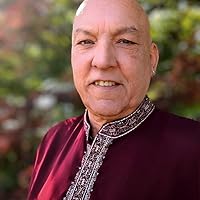
Paul Chaat Smith is a Comanche author, essayist, and curator. His books and exhibitions focus on the contemporary landscape of American Indian politics and culture.
Smith joined the Smithsonian’s National Museum of the American Indian in 2001, where he currently serves as Associate Curator. His projects include the NMAI’s history gallery, performance artist James Luna’s Emendatio at the 2005 Venice Biennial, Fritz Scholder: Indian/Not Indian (2008), and Brian Jungen: Strange Comfort (2009).
With Robert Warrior, he is the author of Like a Hurricane: the Indian Movement from Alcatraz to Wounded Knee (New Press, 1996), a standard text in Native studies and American history courses. His second book, Everything You Know about Indians Is Wrong, was published in 2009 by the University of Minnesota Press, and is now in its second printing.
Appointed Critic in Residence three times in galleries in the U.S. and Canada, Smith’s exhibitions and essays have explored the work of Richard Ray Whitman, Baco Ohama, Faye HeavyShield, Shelley Niro, Erica Lord, and Kent Monkman. He has lectured at the National Gallery of Art, Center for the Arts in San Francisco, and the Getty Center for the History of Art and the Humanities in Los Angeles. His television appearances include the 1995 Canadian series Markings with Neil Bissondath, and served as creative consultant for the American Experience series We Shall Remain: A Native History of America, broadcast on PBS in April 2009.
Smith lives in Washington, D.C. His middle name is pronounced “chot,” has no hyphen, and rhymes with hot. He has no college or university degrees.
This book is, actually, very convenient for the research papers and proving thesis. Paul Chaat Smith and Robert Allen Warrior have made a great communication giving very useful account of happenings with detailed events of that thunderous period. The book is very valuable giving detailed information on protests, such as the 1969 invasion and 19-month occupation of Alcatraz Island; the 1972 seizure and trashing of the Bureau of Indian Affairs Building in Washington; and, a year later, the two-month occupation of Wounded Knee, North Dakota, that ended with two dead and 300 Indians under indictment (which effectively bankrupted AIM). Another reason why this source is valuable because the authors were focused on being as unbiased as possible by not only exposing deception of the US Government, but by also featuring the mistakes that Native Americans, who had participation in early movements, did.
The reason I gave 4 stars is because, considering I have used it for research paper, I did not think the section about Wounded Knee was properly finished, according to other books I have read, there was good amount of things missing.
However, other than that, as Banks said " As the AIM founder, I recommend this book to students and historians alike."
“Like a Hurricane” is the story of Native American activism in the early 1970s. In late 1969, a group of Native students and activists took over the island of Alcatraz in the San Francisco Bay. They demanded the US government deed the land over to Native Americans, citing the Fort Laramie Treaty of 1868 with the Sioux which “granted the tribe surplus federal land”. The group’s complaint was the USA’s consistent pattern of not doing right by Native people. They wanted the defeat of racism, more amenities for their poverty-stricken people, and the ability to take their place in American society. They were tired of being invisible, their cultures seen as relics of the past.
“New friends huddled around fires late into the night in quiet conversation, sharing the common pain of those who understood, really understood, what it meant to spend your life ignored and invisible, a walking museum piece, a joke.”
The government initially responded by extensive negotiation, but when a settlement could not be reached, they eventually went in and forcibly removed the occupiers. However, this stand at Alcatraz was only the beginning. It sparked a movement across the country as Native activists made protests at places like Plymouth Rock. In late 1972, a group of activists known as the AIM (American Indian Movement) spearheaded a protest march on Washington D.C. that ended in the takeover of the BIA (Bureau of Indian Affairs) building. Then in February of 1973, AIM occupied Wounded Knee. This occupation ended only when the government agreed to meet formally with the occupiers and discuss their concerns.
This is a very important book. It digs deep into the time period and explains the whys and wherefores of Native activism. Despite my years of study on Native American history, I have never read a book about this time period before. It was an eye-opening read. After reading it, I felt much better prepared for understanding how things are in Native America today. Although I can’t condone every thing the activists did, I couldn’t help but sympathize with them. What America was doing, and in many ways continues to do, was and is wrong. I admit, I don’t understand the ins and outs of the BIA, or tribal governments, or any of these things. But I do know that we need to work for a better future. As humans, and more especially as Christians, we have a responsibility to our fellow men to treat them with dignity and compassion. We have a responsibility to see them as people and allow them to live as such. Many Native people say it this way, “We are still here”. We have a responsibility now. Today.
“Something deeper – the desire of people to take charge of their own destiny – was finding its voice.”
“Like a Hurricane” has numerous sources, from public documents to personal interviews. The book is recommended by one of AIM’s founders, Dennis Banks, and by Muscogee Creek author Joy Harjo. It’s written in a very factual and unbiased manner.
[Content Warning: Drugs are present on Alcatraz Island at the beginning of the book, and some kids are also accused of sniffing glue. There are about half a dozen swear words scattered throughout the book from d…n to h…l. The n-word is also used once. The word rape is mentioned in passing, and one man is said to have “fathered two children” by a woman. A couple spiritual experiences are mentioned, including one man who sees the ghosts of Wounded Knee. A few dozen people dance the Ghost Dance together, and their leader talks about the spiritual experience they may have.]
I definitely recommend this book to all adults. It should be read and contemplated and talked about and prayed over. If I was asked what are the most important books I have read about Native America, I would put this one in the top five.
just finished my second reading of this history of the movement. an important book for anyone wishing to track the difficult narrative describing a period in time when native americans joined the civil rights movement and were outspoken about the injustices leveled against indigenous people by the u.s. government and often within the tribal governments as well. the book starts when a few brave souls captured the grounds at alcatraz prison in 1969 and marches forward to washington d.c. for the takeover of the BIA building and closes with the standoff at wounded knee in 1974.
AIM (american indian movement) caught more criticism and favorable publicity than perhaps any other group of native activists. despite the failures due to mismanagement, poor communication and planning, minuscule financing and support, one thing it did achieve was to stream the struggles of native america through a world-wide media lens.
a first hand account of the ups and downs of the indigenous political struggle at a particular moment in time. the book allows the reader to chart the contrasts between mainstream journalism and insider viewpoints and allows them to receive the voices of numerous native figures both famous and unknown. highly recommended for anyone interested in the progression of the suppressed silence of earlier generations to today, when natives hold positions in some of the highest offices in the land.
While it was a great account of the American Indian movement--a very straight forward historical depiction-- it was bash-your-head-against-the-wall boring.
An intriguing read for several reasons, which all reinforce each other. This book is first and foremost a detailed story of the most active period in AmerIndian activism. Like all great books that are eventually made into films, this book tells the same story Wounded Knee, but is far more captivating. The human interest is heightened, the characters are more vivid, there are more layers and nuances to the story, it has more momentum, and it digs deeper into many themes. Those themes are an intriguing element of their own to this book. They introduce readers to many broader AmerIndian cultural and world views, and even mention the books that can give readers more information on any idea that peaks their interest. By introducing these themes in the context of a detailed story, the book draws sympathy for ideas often dismissed by the general public, the largest one being the central element to the book, public occupation, an action that is often viewed as too radical by the majority of Americans. But because we thoroughly engage with the people who stage and support this occupation through this book, it is not easy to dismiss them and their actions. And the politics of the situations that lead to these occupations are great examples of why occupations and other radical actions should not be dismissed, and may even convince people that these tactics are often the best and/or only ways of dealing with a situation. Lastly, this book is a case study in forming and sustaining a meaningful movement. There are issues on the table, a history of oppression, large often conflicting personalities, a debate over the role of intellectualism, interesting ways that decisions are made, and varying degrees to which actions are successful and unsuccessful, all of which can help future activist better plan their own courses. In the first episode, about the occupation of Alcatraz, we begin with a nearly utopian vision. “With all of the good feelings, the occupiers decided an open house was in order. They would invite the world to see true civilization amidst the ruins of barbarism, dignity and grace overcoming the childish war games of a brutish and uncaring government. A day for the new nation to shine. For the people of the Rock, for whom no amount of irony could ever be too much, the perfect date for this event was coming right up – Thanksgiving” (21). Through the detailed descriptions of how this utopia functioned, we see many that many anarchist ideals were also inherent to AmerIndian cultures, and we see them deployed and tested. Such as alternative forms of disipline: Oakes said of the occupation, “'We have the ultimate punishment for any Indian on our island. We ask him to leave'” (24). And consensus method, “The visitors learned that the council could only operate in emergencies, and the entire group, not just a few representatives, would make decisions. This included both the 'permanent' residents and visitors. Also, they would hold no secret meetings, and the council had no chairperson, because those on Alcatraz practiced pure democracy” (73). Plus the inclusion and even valuation of minority opinions: “Of the Indians present, ten were children, ten were men, and the rest, forty, were women” (73). This succinctly debunks the commonly held myth that Native American activism and Native America in general are both macho or even misogynist. This is just one facet of the myth that our current culture gives women more rights and power than any other culture in history. This is patently untrue. As this detailed telling of the history of Native American activism, Native America do not draw a dichotomy between “masculine” and “feminine” wisdom. Many of its most revered leaders were women, such as LaNada Means, whose story is one of the most captivating in this whole book. And as Russel Means (not related) repeatedly points out, most AmerIndian cultures were matriarchal. One of the few places in which this book is less detailed than other accounts of this occupation, is in the fire that sparked the action. “If the planners needed a goad, they got one on October 10, when the San Francisco Indian Center burned to the ground,” (12). This is the only mention of this fire in this book. In other places, people speculate wildly about the cause of the fire, from saying the FBI torched the building, to accusing Natives of lighting the fire themselves in order to stir support for the occupation of Alcatraz. The last episode in the book brings up the most important themes most thoroughly. “(AIM) believed the tribal government to be a 1930s imposition by the Bureau of Indian Affairs against the clear sentiment of most Lakotas on the reservation. It brought foreign concepts of election campaigns and parliamentary procedure to a community where traditional forms of government were still viable. They didn't simply object to the individuals who held office, but to the system itself” (120). This is a great reflection on everyone's relationship with the current political system. We are disengaged and disenfranchised. Like Native American cultures, all communities have viable forms of governing themselves that are often imposed upon by the larger system. Yet when these community groups are crushed or assimilated because they are not hemogenous with the dominant culture, it is considered just or at least inevitable. This is because of the fallacy that majority rules is just. Americans are prone to dismiss tragedies against minority groups because those groups opposed elected officials of the minority. When they hear that AIM occupied a building, they dismiss the action as fringe because elected officials on the reservation condemned the action. This logic is flawed on many levels. First, because the assumed “majority” is rarely a true majority, because the majority of people rarely vote in systems that are imposed on them, that do not connect to their daily lives. This is true of the “democracies” that America has installed around the world, it is true of the tribal governments that the U.S. Government installed on Native reservations, and it is true of America in general, where the majority of Americans, meaning more than half of them, have not elected a single politician in the history of the country. Second, that those elected by this debunked majority represent even the constituents who voted for them in their daily decisions. You would be hard pressed to find a voter who has not been disappointed with a decision of someone they voted for. More often than not, elected officials are guided by forces “larger” than them, like the government itself or multinational corporations, and not by the “little” people who elected them. Lastly, even if an unjust decision is supported by an elected official who beholds to a true majority, that does not make it just, it is a symbol that a system has grown too large and is beginning to perpetrate against another system. To disagree with that is to justify the destruction of Native America. When two irreconcilable groups must compromise “for the good of the whole,” it is a sign that the system has grown destructively unruly, diversity is being sacrificed for hegemony, and decisions are being made that will undoubtably be bad for the whole of humanity. An example of how the alternative is good for all of humanity, is that AIM only agreed to deal with the federal government if, “The starting point of the discussions would be that racism and discrimination exist and corrective measures must be taken” (187). Such an important place to begin – one must debunk the myth of majority rules. It is hard to get people here, but once they grasp this, every other important idea is so much more attainable. It is absolutely essential to any sort of lasting agreement. Interestingly, other sources give the Oglala opponents of AIM much more credibility than this book, for example: “(Wilson's opponents gave the unit the derisive name 'goons', and the name stuck like glue. Unable to shake it, they proudly accepted the term, claiming it stood for Guardians of the Oglala Nation)” (196). Other sources accept that the goons created the term for themselves, and meant it to mean Guardian... all along, and that perhaps the acronym was simply a oversight, like the Coalition of Indian Americans. And this book does an excellent job of explaining the psyche behind AIM members, moving the debate beyond a dismissal of these young men as merely hot headed. “Chief Frank Fools Crow never spoke English in public, though some claimed he understood it quite well. Fools Crow spoke Lakota. The young men of AIM did not, with few exceptions, speak their tribal languages. That, in fact, was the crux of the matter. The old chiefs had everything the young bloods of the movement wanted: tradition and ceremony, wisdom and ancient knowledge. Those things had been denied the shock troops of the movement. To them their lack burned like the theft of something priceless, irreplaceable, and with it came a smoldering resentment they felt nearly every waking moment. This, more than any specific grievance, fueled their bold activism” (199). Nicely refutes those who dismissed these younger activist for not being “real” Natives, for not even speaking the language, understanding facets of the culture, practicing the religion, etc. The whole reason these activists were angry was because they could not speak their own language, grow up in their culture, and practice their own religion. They had been ripped from their homes at a young age, placed in cities and school that marginalized the cultures they came from, and punished them for clinging to their traditions, speaking their language, etc. One of the best moments in the story of wounded knee is when the FBI demands that AIM release the townspeople who were in Wounded Knee before the occupation. “Wilbur Reigert, eighty-two, told reporters 'the fact is, we as a group of hostages decided to stay to save AIM (the “hostages” were, in fact, in sympathy with many of the militants' demands) and our own property. Had we not, those troops would have come down here and killed all of these people'” (208). When the FBI threatened to attack Wounded Knee, a reporter asked if they thought it would be fair for the Natives to fight back, and the FBI replied, “'We don't think it's reasonable to assume that anyone would fire at federal authorities. I think that's fairly clear'” (211). This demonstrates how deeply the belief in majority rules runs. The statement implies that there is no circumstance under which it is justifiable to fight back against the federal government, no matter how unjustly it deals with a situation, even if it threatens your own life. The military was actually stationed against the Natives at Wounded Knee, in a direct affront to the US constitution – a conspiracy called Garden Plot (213). This name is particularly unsetteling for me considering the history of Natives in this country. Like when people call the Europeans who invaded Native America pioneers, it implies that Native America was an unruly chaos, something that had to be tamed and cultivated to be useful. The epilogue is largely a reflection on how whether or not this period in the history of Native American activism was a success. Ultimately, the authors blame its failures on an intense anti-intellectualism. But whether or not this is true, Vine Deloria, Native America's most revered intellectual, said of Russel Means, “I cannot remain silent because of disagreements over strategy and allow a chance to go by to honor as best I can a man who gave to my tribe even for a brief moment, a vision of something better than what we had” (274).
“'So far as our American Indians are concerned, Commissioner Dillon Myer of the Bureau of Indian Affairs is a Hitler and Mussolini rolled into one,'” (8), Harold Ickes, Secretary of the Interior under Roosevelt and Truman.
The book Like A Hurricane: The Indian Movement from Alcatraz to Wounded Knee by Paul Chaat Smith and Robert Allen Warrior offers a compelling narrative and insightful examination of Native American activism in the mid-twentieth century. As someone generally unfamiliar with the events of the Indian Movements during the twentieth century, this book presented and unpacked many eye-opening aspects in an almost unbiased manner. For instance, I had little understanding of the extent of the Alcatraz occupation. My education has not covered the whole timeline of this event, so reading about the months of occupation on this island by American Indian activists helped me grasp the complexity and significance of the event, which marked a pivotal moment in Native activism and drew national attention. While the entire book presents a wealth of information about these historical events, I appreciated that the authors not only explained what happened but also explored why it happened. They emphasized that Alcatraz was not the beginning of modern Indian radicalism; instead, it was significant for the attention it received from the press and, in doing so, explored the years prior to the occupation.
At the point of press attention, the media aspect that runs throughout the book is an intriguing transition into a more modern history of Native Americans. It allows readers to see in greater detail, albeit often biased, the unfolding events of these movements. The growing media coverage of these events generated significant publicity, though it sometimes undermined activists' efforts. In the second part of the book, the authors explain how reporters and authors produced articles and books to assert that the vanishing Indian was, in fact, not vanishing. This media attention played a dual role: raising awareness of Native issues while also perpetuating stereotypes. Some media negatively represented American Indians as an ancient people who were rising in the fall of the U.S. This duality of mainstream media during that time had its advantages, as it helped push the cause of the Indian activists and raise awareness of the U.S. government's atrocities. However, it also created significant challenges and perpetuated existing stereotypes of American Indians, which were detrimental.
The structure of this book, primarily the interviews, memoirs, and press accounts the authors used to create a narrative aspect of the history, was thoughtfully crafted to add a layer of human interest to a history that is often dismissed. However, I found one area in particular to be lacking. The gendered narrative was disproportionate. Although the book features strong stories from women, the majority of narratives focus on men in greater detail. I would have liked the authors to discuss more explicitly the situations Indian women faced during this period and their struggles within the movements. Suppose this were a source issue, meaning that, historically, more narratives by Indian men were kept and produced at the time. In that case, I understand the difficulties in addressing the gender gap in this history, but nevertheless, it would be beneficial to mention.
I was clueless about some things but this book cleared them up and offered some new knowledge. I was vaguely aware of the Native America/AIM occupations of Alcatraz and Wounded Knee. This book fleshed both those occupations and introduced me to other AIM protests. The other two major occupations that this book covers were the Bureau of Indian Affairs office in Washington D.C. and a major protest at the courthouse in Custer, South Dakota.
The authors' biases are clearly in support of this movement. There are both positive and negative critiques but I'd say that the book treats the protesters and occupiers favorably.
There's a good amount of humanizing in this book. Many Native American leaders and their actions are explored. These people lived lives with extraordinary meaning. They had their faults and some of the former leaders ended their careers or lives on a bitter note.
The American Indian movement has been going on since the United States has existed. It's not over, but the years of occupations (1969 through 1973) were a historical watermark. Hopefully the current generation of activists learn something about these efforts.
I recommend this book for anyone interested in learning about Native American activism in the late 60s and early 70s, particularly AIM and it’s leaders. It goes into great detail about the events of the occupation of Alcatraz in 1969 and the occupation of Wounded Knee in 1973. It also describes many figures in the movement (both leaders and more minor but still significant players) and their goals and actions as well as describing some of the U.S. government politicians and members of the BIA who responded to it through negotiations and other strategies. It provides a clear picture of both the successes and failures of the movement.
It would have been helpful to have a list at the beginning or end with a sort of “cast of characters” to refer to because there are a ton of names to keep track of. But overall, it’s a great book and very informative.
Read this over twenty years ago and was reminded of it today, which marks the massacre by hanging of the Dakota 38. Wanted to bring it into the forefront as CRT continues to be demonized in pure ignorant fashion by folks in power that have not close-read legit historical content beyond the narrative of the white lens. This book is a helpful primer to more current atrocities, and why abolition is key to pave a more equal future. Leonard Peltier continues to serve time for the AIM movement, but not because he committed a crime.
The stories of the Alcatraz and Wounded Knee occupations, in'69 and '73, respectively, were comprehensive and well-told. The middle section of the book, dealing with the rise of AIM, also good, if less compelling. It was good to be reminded of a time when people decided to no longer lie down in the face of an indifferent and often violent bureaucracy and try to wrest back control in such an in-your-face way. A good read.
A history book that reads like a story. A hugely important story that settler Americans should all really know more about. Particularly any of us involved in Occupy or Indigenous solidarity movements in far-away lands. In the second case, because it's the same story of colonization and resistance, only we're the colonizers. In the first, because Occupy owes SO MUCH to movements like AIM, and it seems to me that's not frequently acknowledged.
I learned so much: I have looked at the occupation of Wounded Knee as a symbol of hope for a long time, and [when living in the US] as a reminder that I lived on colonized land. On someone else's land. Still, even with my politics I knew next to nothing about the events immediately prior to Wounded Knee. I knew even less about the larger context of activism that existed before AIM, and continued to exist after.
A solid introduction to the history of the American Indian Movement, prioritizing three main events (Alcatraz, the D.C. BIA occupation, and Pine Ridge - Wounded Knee) and six or so main individuals (Richard Oakes, Russell Means, Dennis Banks, Clyde & Vernon Bellecourt, Hank Adams. I feel like the book was sometimes a little light on analysis, but it does feel like a fleshed out narrative. I might suggest that this is a movement history that emphasizes leading (and already famous) individual figures rather than a more birds eye perspective of history, groups, and events. Perhaps that's an overreach, but its the impression I'm left with when wondering why I struggle to be more enthusiastic.
Smith and Warrior describe the American Indian Movement from its rise in the the late 1960s to its dissipation in 1973. They highlight AIM's militant activism and attitudes toward the federal government as they took over Alcatraz, the Bureau of Indian Affairs, and Wounded Knee. Unfortunately, the authors are clearly biased towards AIM and Red Power which sought to assert Indian rights through violence.
This is an exceptional overview of the Indian Movement in the United States. Somehow, the author takes multiple communities, different aspects, divergent historical moments into one cohenerent and succinct read. Brilliantly written. This book could have easily been twice as long, and would not have felt that much longer atal. Highly recommend it!
Non-theoretical view of the years between the occupations of Alcatraz and Wounded Knee, written by two Native scholars. Very flattering opinion of Russell Means--hard to align that with his embrace of the role of Powhatan in Disney's Pocahontas. Still, Like a Hurricane gives the reader an unusual inside perspective on the factions within the early 1970s Indian activist movement.
I would have liked to see more footnoted references in this book, but it was still a good history of this period of time in the native rights movement. Especially helpful if you are interested in AIM.
Excellent history of the Native American social movements from the occupation of Alcatraz Island in San Francisco Bay in 1969 to the standoff at Wounded Knee on the Pine Ridge Reservation in South Dakota in 1973.