Jump to ratings and reviews
Rate this book

Omeros

Rate this book
A poem in five books, of circular narrative design, titled with the Greek name for Homer, which simultaneously charts two currents of history: the visible history charted in events - the tribal losses of the American Indian, the tragedy of African enslavement - and the interior, unwritten epic fashioned from the suffering of the individual in exile.

325 pages, Paperback

First published January 1, 1990

322 people are currently reading
7601 people want to read

About the author

Derek Walcott

180 books499 followers
Derek Walcott was a Caribbean poet, playwright, writer and visual artist. Born in Castries, St. Lucia, he won the Nobel Prize for Literature in 1992 "for a poetic oeuvre of great luminosity, sustained by a historical vision, the outcome of a multicultural commitment."

His work, which developed independently of the schools of magic realism emerging in both South America and Europe at around the time of his birth, is intensely related to the symbolism of myth and its relationship to culture. He was best known for his epic poem Omeros, a reworking of Homeric story and tradition into a journey around the Caribbean and beyond to the American West and London.

Walcott founded the Trinidad Theatre Workshop in 1959, which has produced his plays (and others) since that time, and remained active with its Board of Directors until his death. He also founded Boston Playwrights' Theatre at Boston University in 1981. In 2004, Walcott was awarded the Anisfield-Wolf Lifetime Achievement Award, and had retired from teaching poetry and drama in the Creative Writing Department at Boston University by 2007. He continued to give readings and lectures throughout the world after retiring. He divided his time between his home in the Caribbean and New York City.

Ratings & Reviews

What do you think?
Rate this book

Friends & Following

Create a free account to discover what your friends think of this book!

Community Reviews

5 stars
1,304 (39%)
4 stars
1,048 (31%)
3 stars
602 (18%)
2 stars
259 (7%)
1 star
84 (2%)
Displaying 1 - 30 of 378 reviews
Profile Image for Lisa.
1,108 reviews3,290 followers
September 20, 2017
The power of myth and language to trace universal human questions!

Derek Walcott's masterpiece "Omeros" is the perfect example of how ancient myths can be seen as metaphors to clarify human existence - connecting present, past and future, solitude and community, fiction and reality, natural and artificial elements of life.

Set in the Caribbean, in modern times, it features the characters from the Iliad and the Odyssey, playing out their roles in the local, contemporary environment, but with all the issues and challenges of their original counterparts.

It is not a retelling of Homer's stories, however, but rather a free association, focusing on how myths, history, and language have shaped the specific characters of this drama: living on islands with their own creation myths, and strongly influenced by different European and Asian elements, marked by global history and yet refreshingly unique and individual.

They enjoy nature, and fight against its outbursts, and live with the ocean as force majeure, singing the songs of Omeros/Homer because they identify with the general outline, expressing a familiar mix of islanders, their boats, the mingling of different cultures, and the stormy waters with the typical creatures.

Most of all, the verse novel is a poetic celebration of language and its capacity to unite people over time and space. The reflection on words and their multiple meanings is part of the charm of the chapters that flow like a river, pushing the story slowly forwards in ever-changing, yet consistent waves.

"I felt the foam head watching as I stroked an arm, as
cold as its marble, then the shoulders in winter light
in the studio attic. I said: "Omeros,"

and O was the conch-shell's invocation, mer was
both mother and sea in our Antillean patois,
os, a grey bone, and the white surf as it crashes

and spreads its sibilant collar on a lace shore.
Omeros was the crunch of dry leaves, and the washes
that echoed from a cave-mouth when the tide has ebbed.

The name stayed in my mouth..."

"Omeros" most definitely stayed in my head, and it is one of those favourites I enjoy taking out from time to time, just to read a couple of stanzas. The continuous plot, even though it is interesting in itself, is not necessary to find pleasure in the multi-layered, polyglot poetry of time and space with a focal point on an island world both real and fictitious, dominated by the sounds and smells of the ocean - and the ancient stories of mankind in different shapes, forms and interpretations.

Highly recommended!

17th March 2017: RIP, Derek Walcott! You leave a beautiful oeuvre for humanity!
Profile Image for Roman Clodia.
2,897 reviews4,651 followers
September 27, 2022
And Omeros nodded: "We will both praise it now."
But I could not before him. My tongue was a stone
At the bottom of the sea, my mouth a parted conch

From which nothing sounded, and then I heard his own
Greek calypso coming from the marble trunk,
Widening the sea with a blind man's anger


Dazzling use of language from Nobel Laureate Walcott here, imbuing his words with density and layers of meaning that echo and reverberate throughout the poem.

On one level this is a reception and re-writing of classical epic and tragedy: not just Homer as indicated in the title but also Virgil and Sophocles' Philoctetes, with a metric nod to the terza rima form that Dante utilises in his The Divine Comedy. Walcott is more formally innovative, though, with some use of iambic hexameter though he's completely happy to disrupt this rhythm at will so that at times it's closer to free verse with a break into rhyming couplets at one point for emphasis. I'd also say that Joyce's Ulysses is an important knot in the chain of receptions, a stepping stone amongst others that link Homer to Walcott, and a book which itself is built on colonial struggle and a quest for a language in which to articulate Irish consciousness.

In another way, though, this poem is a way of assimilating a Caribbean epic back into a tradition that can be indexed in different ways: yes, to some extent Western epic becomes a model, but Walcott draws attention to the way that the mythology of the Trojan War is also a story of colonialism (Homer, if he existed, probably lived in a Greek settlement in what is now Turkey, an outpost of the Athenian empire), of slavery (the fundamental economic model of classical civilisation) and of enforced diaspora.

Walcott's Helen is both a woman over whom the fishermen Achille and Hector struggle as well as a name for St. Lucia, itself fought over by British and French colonial powers. His use of Philoctetes, the archer wounded and abandoned in a sideline to the Trojan story, becomes a potent figure for the wound to the land upon which slave-worked plantations were built, as well as the psychic wounds of the victims of colonial brutality: not just the descendants of Caribbean slaves but the displaced indigenous Aruac people as well as other native populations which the narrative 'I' witnesses on his travels.

One of the most potent episodes is when Achille follows a swift in a journey back into his African past, meeting his dead father in a startling imitation of epic katabasis, the journey to the underworld. And it's after this that the struggle for healing really begins.

The significance of fathers and sons does draw attention to the fact that this is a very male epic: beautiful Helen has no consciousness and neither really does the sibyl/Circe figure, though the latter, at least, has some agency in the move towards the healing of trauma.

Nevertheless, the way Walcott knots together his various narrative agendas is exemplary, not least the thematic labour to find a voice through which to express a St. Lucian modernity: 'But I could not before him. My tongue was a stone' could not be more untrue - the sheer pliancy and vibrancy of language in this poem is spectacular.
Profile Image for Luke.
1,626 reviews1,194 followers
December 17, 2015
I said, "Omeros,"

and O was the conch-shell's invocation, mer was
both mother and sea in our Antillean patois,
os, a grey bone, and the white surf as it crashes

and spreads its sibilant collar on a lace shore.
Omeros was the crunch of dry leaves, and the washes
that echoed from a cave-mouth when the tide has ebbed.
I wanted to say poetry has more rules and required training of personal taste, but I found something in this in the end. Even if I hadn't, it would be pitiful indeed to claim a fundamental difference blocks my gaze when the writing is in English and the reference to classroom classics are multitude and even the placesetting for historical times is, more often than not, my country. However, I will say I had to contextualize longer and harder than expected, which shows evidence of my erroneous presumption that Nobel Prize Winners for Poetry within Literature would not make use of postmodernism. Indeed, the coupling should be an instinctive trademark for an author such as this, wrestling with a cornucopia of whiteness sprung from the enslavement of ancestors, delving deep into the other in order to compose a self.
...here is my tamer of horses,

our only inheritance that elemental noise
of the windward, unbroken breakers, Ithaca's
or Africa's, all joining the ocean's voice,

because this is the Atlantic now, this great design
of the triangular trade.
It is never as simple as being "original" when one is encultured by lack of representation. It is even more complicated when strains and phrases of the enculturing, despite all evidence otherwise, ring true to the self. An example of this, here, won Walcott the most esteemed prize of colonial literacy, the second of his skin to do so ninety-one years after the the gold star's inauguration. In other words, something, somewhere, went right; seeing as how it happened within my lifetime, despite what myriad op-eds insist, there's life in the creative wording yet.
Why waste lines on Achille, a shade on the sea-floor?
Because strong as self-healing coral, a quiet culture
is branching from the white ribs of each ancestor,

Deeper than it seems on the surface; slowly but sure,
it will change us with the fluent structure of Time,
it will grip like the polyp, soldered by the slime

of the sea slug.
I am reminded of Fanon's proclamation in The Wretched of the Earth of the overwhelming importance of culture as both process and product. I am reminded of the hallucinatory treks to battlefields and slave rings, to the fierce gnawing birth of seaside shanty living and the wide dead streets of London Town, to an ocean of islands that could be Greek, could be Caribbean, could be invoked as one and the same while the tide of context washes in and unfurls out. Erasure and appropriation lose their boundaries when the poet is putting himself on the stand to be judged, a spectacle of profusion when birth parents fuse with papery voices of ancients past. It is this "himself" that explains the lack of the final star, a himself that never steps into high-pedestaled Helen or any of the other female songs. The unselfconscious "I", sailing in joy of the word and scoping in synthesis of seeming contrast, provided the remaining four.
Like Philoctete’s wound, this language carries its cure,
its radiant affliction; reluctantly now,
like Achille’s, my craft slips the chain of its anchor,

moored to its cross as I leave it; its nodding prow
lettered as simply, ribbed in our native timber,
riding these last worried lines; its rhythm agrees

that all it forgot a swift made it remember
since that green sunrise of axes and laurel-trees,
till the sunset chars it, slowly, to an ember.
Profile Image for James Murphy.
982 reviews26 followers
April 25, 2013
Derek Walcott's Omeros is an intersection of characters in present day St. Lucia with the Homeric Iliad and Odyssey. The heart of the story is simple and familiar. Achille and Hector are St. Lucia fishermen who compete for the attentions of the beautiful Helen. She's the housemaid for the retired English Sergeant Major Plunkett and his wife Maud. A blind man called Seven Seas represents Homer himself. Along with other colorful characters like Philoctete, another fisherman evoking Homeric epic, and Ma Kilman, an obeah woman, there's a narrator who apparently is Walcott himself and who helps tie the present to the past and the Caribbean to Greece with a strand of memory running through Dublin, Lisbon, and Rome.

Such analogies are always interesting. Often they're beautiful in their way, too, and Walcott's collage of Greece and the Caribbean is painted using his beautiful almost terza rima and singing language to make one of the most technically accomplished and moving echoes of literature. The narrator, as poet and character, is bridge between its disparate stories and historical periods so that we easily follow the war experiences of Plunkett in North Africa and the story of his and Maud's marriage while reading about the Revolutionary War Battle of the Saintes in which a younger Plunkett died in the waters off St. Lucia. We go with Achille on a dream return to Africa, and we meet a character named Catherine Welton who's an activist working among the Indian reservations of the American Plains. But always, like the gentle wavelets Walcott describes endlessly rolling up the sunlit beaches of his home, the Homeric story of Achilles's rage is continuing on St. Lucia. Once again Achilles brandishes his spear. Hector flashes over the landscape in his car. St. Lucia was once called the Helen of the Caribbean and here Walcott gives us a woman so enormously beautiful she can at the same time be the island and the desirable young woman who walks the shore in a yellow dress. While Seven Seas, the blind father figure, overlooks it all.

I've always been terribly impressed with Omeros. I think it one of the finest long poems of the 20th century. It's been called postmodernist, which would help locate it as a successor to the likes of The Waste Land, Hart Crane's The Bridge and the Paterson of William Carlos Williams. But I think it much more of a narrative than those poems. And it's filled with the music and island color of Walcott's language. Not only a rich verse memoir by a major poet but powerful recreations of history and a magnificent trope on Homer.
Profile Image for Alan.
Author 6 books379 followers
September 2, 2024
I read this when it came out, and was startled by its ductile grandeur and directness. I aloudread it to various students, in classes, and in large gatherings, for several years. It is simply the best re-working of the Odyssey since Joyce's Ulysses. And of course, Walcott has the daring of poetry; Joyce collapsed into prose.
A decade ago I had maybe fifty lines by heart, in short passages, simply because I had aloudread it enough to remember them. The only one that stays with me in my decline is the one I tried--and failed--to say to the author when he was signing books at a community college convention in Portsmouth, NH (I think). Waiting in a long line, I brought my copy from home to him, and tried to say the very last line, "The moon shone like a slice of raw onion." But my voice failed me, only the second time in my life: the first was in third grade, in a Christmas pageant, where I had trouble reading the Luke story in front of an audience.
By the way, Walcott's multi-linguality does not really come through in the poem, and maybe it shouldn't; but here is a man for whom English may be the second or third language he learned as a child, after Creole and perhaps French. I think he may have read some Homer in Greek as well.
Profile Image for Tamara Agha-Jaffar.
Author 6 books282 followers
January 24, 2021
Omeros (the Greek name for Homer) by Derek Walcott is a challenging, multi-layered epic poem in seven books. Although the poem does not retell Homer’s works, it does feature characters in the Iliad and Odyssey and is replete with references to Greek mythology. Several seemingly disparate narrative threads intersect in the poem. Weaving in and out of these different threads is the author’s reflections on his life and his commentary on the damaging effects of colonialism on the indigenous populations of the Caribbean, Africa, and North America.

The primary thread is set in the Caribbean island of St. Lucia and involves fishermen and other sundry characters populating the island—Achille, Hector, Helen, Philoctete, Seven Seas (a blind poet), Ma Kilman (the healer), and Major Plunkett and his wife Maud, among others. The characters sometimes merge with their Homeric counterparts. Within its seemingly haphazard framework, the poet leaps backward and forward in time, changes locations from the island to cities in Europe and North America, frequently interjects himself as a traveler in and out of time and place, and converses with Homer in the final section of the book. All these shifts occur without alerting the reader, so one frequently has to reread passages to determine the location, the timeframe, and the characters involved in any segment.

The poem is complex. It can be confusing at times to follow a narrative thread with its unannounced shifts that pull in any given direction. However, the narrative is not what necessarily draws in the reader. Instead, what draws the reader in and what makes this a spellbinding work of literature is the sheer beauty of the poetry in lines that have to be savored as they twirl around the tongue, lines that reflect the immense talent of the mind that produced them.

In Omeros, Derek Walcott, the 1992 recipient of the Nobel Prize for Literature, gave us a poem with characters drawn with sympathy and compassion. He showed us their struggles, their triumphs, and their defeats. He transported us to their island, an island rich with color and vegetation and with the sights and sounds of the ocean as a constant presence. And he does this while illustrating the debilitating impact of colonialism on the traditions and culture of the indigenous population. Above all, Walcott gave us rhythmic lines of poetry in language that is musical, vibrant, resonant, stunningly beautiful, and replete with images and metaphors shimmering with color.

A challenging poem to read but well worth the effort. Highly recommended.
Profile Image for leynes.
1,316 reviews3,687 followers
May 17, 2024
I didn't really understand this. And so, as with other classics I had trouble understanding, I'm rating this a non-committed three stars. The book is decidedly better than that. I'm sure it's worthy of the many five star ratings it got. Heck, it's one of the reasons why Walcott was awarded the fucking Noble Prize for literature two years after its publications. It's good. Duh. But I didn't really understand it, and therefore, I couldn't really enjoy this as I was reading it. I had to fight my way through this 325 page long poem. It took me nine months. With all the Homeric allusions in it, I might as well call it an odyssey. I'm going to try my best at making sense of this book through this review, but I can't guarantee a thing. It's dense. It's complicated. Here goes nothing.

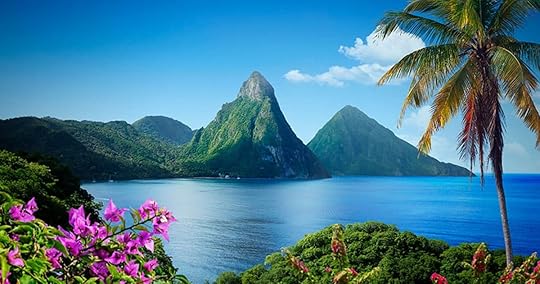
Saint Lucia is an island country of the West Indies in the eastern Caribbean. The island was previously called Iouanalao and later Hewanorra, names given by the native Arawaks, its first proven inhabitants (believed to have first settled in 200-400 AD), and the Caribs, who took over the island in 800 AD, (respectively), two Amerindian peoples. The French were the first Europeans to settle on the island, and they signed a treaty with the native Caribs in 1660. England took control of the island in 1663. In ensuing years, England and France fought 14 times for control of the island, and the rule of the island changed frequently. Because the island switched so often between British and French control, Saint Lucia was also known as the "Helen of the West Indies".
When would the sails drop / from my eyes, when would I not hear the Trojan War / in two fishermen cursing in Ma Kilman’s shop? / When would my head shake off its echoes like a horse / shaking off a wreath of flies? When would it stop, / the echo in the throat, insisting, “Omeros”; / when would I enter that light beyond metaphor?
It is through that lens that Walcott came to Omeros. He wanted to rewrite "Helen"'s history. Plucking her right out of Homer's Iliad, and placing her where she belongs: in the Caribbean, as his island, his native land, Saint Lucia. It's an incredible interesting lens because it is so unique. All of us know dozens of run-of-the-mill modern Iliad retellings, from Miller's Song of Achilles to Barker's The Silence of the Girls. Most modern retellings assume and accept Homer's framework. They might retell the story of the Greeks and the Trojans from a minor character's POV, but they never dare usurp Homer's conditions. Walcott, however, doesn't give a fuck. He unhinges The Iliad. He overbalances Homer. Walcott rightfully asks: "Why not see Helen / as the sun saw her, with no Homeric shadow, / swinging her plastic sandals on that beach alone, / as fresh as the sea-wind? Why make the smoke a door?"

This is why I wouldn't call Omeros a retelling. It's a rewriting. A reshaping. A loose echo. You can feel Homer lingering in the margins. It's brilliantly done, and much more interesting than any other modern Iliad "retelling" I've read, with the exception of Oswald's wonderful Memorial.
"And I heard a hollow moan exhaled from a vase, / not for kings floundering in lances of rain; the prose / of abrupt fishermen cursing over canoes."
Published in 1990, Omeros stands in both a postcolonial and a postmodern literary tradition. Instead of kings and heroes, we find fishermen and taxi drivers. Instead of chariots, canoes. We don't see our characters marching to or defending Troy, our characters are grappling with the islands history with colonialism – how it has seeped its claw into the St Lucia of the present, how tourists flood the island, make it unrecognisable from what it once was: "barefoot Americans strolling into the banks— / there was a plague of them now, worse than the insects / who, at least, were natives". And as Walcott so brilliantly puts it: "
The swans are royal protected, but in whose hands are the black crusts of our children?"

Unlike a conventional epic poem, Omeros has no hero. Walcott divides the narrative rather evenly between his characters and his own voice. Hector and Achille get as much "screen time" as Major Plunkett and his wife Maud, or Philoctete and Ma Kilman. Moreover, the narrative doesn't follow a linear path, Walcott jumps around in time and from character to character without much concern for narrative plotting. This makes Omeros even harder to understand and follow. I had severe problems linking the narrative threads together, but generally, you can divide omeros into three main narrative threads: 1) Achille and Hector competition over the affections of Helen against the backdrop of a modernising St Lucia; 2) Philoctete and Ma Kilman's connections with Africa, dwelling on the horrors of the Middle Passage and the contradictions of the contemporary metropole; and 3) the autobiographical narrative of Walcott himself – "I had nowhere to go but home. Yet I was lost."

Although most of the poem is supposed to take place in the late 20th century, there are sections of the poem that take place in other time periods – "To do what the past always does: suffer, and stare." For instance, there are chapters that take place in the West Indies in the late 18th century (following the ancestors of the characters Achille and Plunkett). These passages describe the Battle of the Saintes which took place off the coast of St Lucia in 1782 and ended with the British fleet, under the command of Admiral George Rodney (who appears in the poem), defeating the French. For another example, in Books 4 and 5 of the poem, Walcott also writes about and in the voice of the 19th-century activist Caroline Weldon who worked on behalf of the rights of the Lakota Sioux Indian tribe in the Dakotas.
Life is so fragile. It trembles like the aspens. / All its shadows are seasonal, including pain.
Another thing of note is Walcott's language. It's unlike anything you've ever read before. Trapped in the typical postcolonial paradox, Walcott uses the language of the coloniser: English. But he distorts it. Mixes it, with French, with Creole. With native idioms. "When cutlass cut smoke, when cocks surprise their arseholes / by shitting eggs, he cursed, black people go get rest / from God", meaning we never do. Every word, every sentence is well placed. I found it incredibly hard to understand because Walcott uses his own cultural frame, one that isn't my own. And so the language isn't familiar to me. But I can still attest that it's beautiful. I wanna share my favorite passage, because it both showcases Walcott's unique lyricism as well as the richness of topics he always manages to explore:
She was selling herself like the island, without
any pain, and the village did not seem to care

that it was dying in its change, the way it whored
away a simple life that would soon disappear
while its children writhed on the sidewalks to the sounds

of the DJ’s fresh-water-Yankee-cool-Creole.
[...]

While the DJs screamed, “WE MOVIN’, MAN! WE MOVIN!”
but towards what? Those stars were too fixed in heaven
to care, but sometimes he wished that he was as far

as they were.
There are many other things that I took note of but I don't know how to incorporate them into this review seamlessly without making it too long. So here's just a short overview: 1) at one point Walcott quotes Melville's Moby Dick, specifically his chapter on "de whiteness ob da whale", and I couldn't have been happier; 2) "Achille! My main man, my nigger!" is a real quote from this book, and I love it more than life itself; 3) "A few make history, the rest are witnesses" seems to be one of the main themes of this work, with the characters constantly grappling with their island's and personal histories; 4) "The rage of Achille at being misunderstood / by a camera" is a great echo at Achilles' Homeric rage. Walcott's reckoning with the tourism industry reminded me of Jamaica Kincaids's brilliant A Small Place. Good stuff.; and lastly 5) Philoctete's "We shall all heal." Let's manifest that for ourselves.

Above all, Omeros is a poem about memory, history, and identity. Walcott merges personal biography with global history. And thus emerges not only the narrative of Walcott's life but also a fascinating portrait of his home, St Lucia. Reading Omeros means inhabiting the contradictions inherent in the postcolonial condition. It is more than a national epic; at its heart are universal questions of how we negotiate legacy – "But all colonies inherit their empire's sin, / and these, who broke free of the net, enmeshed a race."
Profile Image for Catoblepa (Protomoderno).
68 reviews118 followers
February 18, 2020
Verso la fine di uno dei rarissimi poemi epici del secondo Novecento, Derek Walcott improvvisamente interrompe il portentoso flusso di eventi e intrecci che sta portando avanti da circa 300 pagine per chiedersi se non abbia “read and rewritten till literature / was guilty as History.”

Con una toccante apostrofe si rivolge a se stesso e al lettore:
“When would the sails drop / from my eyes, when would I not hear the Trojan War / in two fishermen cursing? / When would it stop, / the echo in the throat, insisting, 'Omeros'; / when would I enter that light beyond metaphor?” Forse è qui più che in qualsiasi altra parte di quest'opera d'incommensurabile splendore che l'autore santaluciano getta il suo guanto di sfida a quella letteratura passata (classica e moderna, europea ed extra-, centrale e periferica, tutta) che è la protagonista del poema sin dal titolo: perché noi, nel presente, siamo costantemente perseguitati dal passato, non solo il nostro passato ma anche quello d'altre persone e altri popoli? Come fu per l'Odisseo di Omero, l'unico modo per arrivare a una risposta è intraprendere un viaggio insieme al poeta, viaggio di carne dei protagonisti e viaggio metafisico di un'opera che si pone come obiettivo “to see the cities of many men and to know their minds.”
Il titolo, appunto: è difatti il poeta Omero, molto più che gli eroi dei suoi poemi (pure presenti, per quanto trasfigurati) a fungere da ispirazione prima per Walcott. Secondo l'antica leggenda Omero veniva da una famiglia d'umili origini ed ebbe vita dura e solitaria. Figlio bastardo di una ragazza di Smirne (allora greca), da giovane navigò per il Mediterraneo ma una volta divenuto cieco fu costretto a vivere elemosinando e recitando versi nelle pubbliche piazze. L'uomo qualsiasi Omero, così lontano dall'idea dei poeti classici e medievali come uomini di corte, avvezzi alle comodità e ai sollazzi: è in questo, prima ancora che nell'immensa eredità artistica, che non poteva non specchiarsi Derek Walcott, egli stesso di umili origini e cantore (anche nel glorioso patrimonio lirico precedente a questo poema) degli ultimi, dei diseredati, dei miserabili, più di tutto nelle persone dei pescatori dei Caraibi. Un Omero moderno, proteiforme, infinitamente dotto ma elusivo, Walcott si pone come lo specchio del poeta classico, che si può rivedere sia nell'autore sia in un personaggio del poema, l'anziano cieco Seven Seas, barcaiolo senza un tetto che porta stretto a sé un manoscritto: lui è la voce del mare, è Omero nei caratteri e in quanto poeta per eccellenza, ma anche il Virgilio che guida il narratore nelle intricatissime vicende del poema.

Intricatissime perché i millenni sono passati, e se all'Omero originale bastava “ricordare” ciò che occorse prima del ritorno di Ulisse da Troia, ora il poeta deve riflettere su un mondo più grande e più vecchio che ha portato in dote nuove guerre e nuovi continenti. E se i protagonisti sono pescatori delle Antille con nomi omerici (Achille, Helen, Hector), il narratore incontra in questo lungo e accidentato e difficilissimo cammino anche imperatori romani, conquistadores spagnoli, Melville, Joyce, e donne delle pulizie polacche che mentre cercano di restare in Canada senza permesso leggono i poeti contemporanei (Herbert, Miłosz, Zagajewski). Dalle Antille contemporanee al Mediterraneo dell'antichità e del medioevo, dall'impero britannico al suo picco alle guerre tra i bianchi e gli indiani d'America, da Boston qui e ora a una mistica africana sepolta nei recessi più profondi della memoria dei suoi figli esiliati (appunto, i neri dei Caraibi). Lo dice Walcott stesso, questo è “a reversible world” e ne da prova rovesciando tutto il rovesciabile, rendendo la storia tutta un unico contemporaneo momento.
Ma quest'epica non è tanto nel narrare una storia quanto nell'esprimere sentimenti e riflessioni degli abitanti (passati, presenti o, come Walcott, intermittenti) di Santa Lucia. Come detto, alcuni personaggi hanno nomi omerici, ma la loro connessione con le motologiche controparti è deliberatamente tenue ed evanescente: Helen è bella come la sua antica omonima, ma il suo viso non scaglia flotte e per lei non si distruggono città: è semplice senza essere pura (ché la purezza è farlocca perversione). Achille, figlio di schiavo africano, è forte e coraggioso come l'omerico, ma anziché Patroclo il suo compagno è lo zoppo Philoctete, che come Filottete soffre d'incurabile ferita. Achille inoltre non prova risentimento per Hector, e non l'uccide: morirà invece questi a causa della sua sconsideratezza, ma il poema non si chiude col suo funerale, ma con la sempiterna esistenza dei sopravvissuti e dei loro ricordi.

Quando, e siamo verso la fine, il narratore finalmente incontra Omero, si lamenta di non poter più usare gli dei che dominarono nell'Iliade e nell'Odissea. “Forget the gods,” consiglia Omero, “and read the rest.” Ma non c'era bisogno, in fondo, di questo consiglio, perché fin dall'inizio Walcott usa forze più spietate e imprevedibili degli dei dell'Olimpo: la natura, il mare, i violenti cambi atmosferici, lucertole e iguane e, più di tutto, la flora della giungla che stende rovina e disordine sul paesaggio (che è anche la distruzione del cliché dei paradisi naturali tanto amati dagli opulenti turisti occidentali, che se venissero a contatto con la vera natura dei posti da sogni fuggirebbero in un nanosecondo) E se dunque, infine, gli dei riescono a portare ordine al mondo di Omero, lo stesso non avviene in quello di Walcott: eppure i riferimenti all'antico passato, in apparenza più nei nomi che nella sostanza, costituiscono le fondamenta del poema. Dotano i nuovi personaggi d'ancestrale potere, suggeriscono alle esperienze valore universale e senza tempo anche quando ambientate nell'hic et nunc caraibico.

Omeros ottiene la sua straordinaria potenza non dalla suspense, visto che il lettore sa quasi sempre prima ciò che sta per accadere, ma dall'abilità di Walcott nel catturare e riscrivere i pensieri dei suoi personaggi e poi nel ricreare, con non scontata chiarezza, i repentini mutamenti di idee e immagini nelle loro menti. La narrazione, difatti, imita spesso i processi cognitivi, e lo fa in modi diversi. Associazioni sonore, anche per tramite di giochi di parole, peraltro in più lingue (“mer” e “mère” in francese, per esempio); ci sono poi le reminiscenze letterarie, spesso incomplete, mutate o interrelate (il viaggio di Achille che richiama Il negro del Narciso di Conrad). E proprio quando sembrano arrivare allo zenit di fosche riflessioni, i pensieri si interrompono, o meglio, vengono interrotti dalle preoccupazioni quotidiane e, a volte, da amaro umorismo.

Torniamo all'inizio, a quando dicevo che questo è un raro (unico?) poema epico contemporaneo: ai tempi di Omero l'epica era forse l'unico possibile mezzo narrativo, tutto sommato neutro. La scelta di Walcott è invece forte e decisa e ha un valore ideologico potentissimo: due anni prima della pubblicazione aveva vinto il Nobel per le sue raccolte di poesie liriche (oh, bellissime peraltro, tutte, accattatevele), e cosa fa? Il raro caso in cui l'opera somma, quella più ambiziosa, più faticosa, quella che con ogni probabilità farà sì che lo si studi per i prossimi secoli, la produce dopo, quando già poteva adagiarsi, quando per il mondo aveva già dato tutto. Walcott sfida le convenzioni, recupera un genere morto da secoli (da Tasso? da Milton? ad essere buoni da Browning, ma non c'è epica in Browning) e lo costruisce con una modernità impareggiabile: la narrazione di Omeros è eccitante e memorabile senza bisogno di inseguimenti, duelli, morti violente. Alla fine Helen torna da Achille; un inglese in esilio parla con la moglie morta; il sole tramonta sui Caraibi. Non c'è più l'azione che sembrava indispensabile per il genere epico, ma c'è una nuova consapevolezza della sofferenza altrui, che è un ulteriore tassello in quella consapevolezza dell'altro che partì proprio con Omero e che è il punto segnatamente fondamentale della letteratura. E forse la sorpresa maggiore è che ci importa di più del passato più remoto, dell'anticaglia, della storia militare, piuttosto che delle preoccupazioni moderne, sterili e inurbane. L'epica di Walcott è un impressionante promemoria del fatto che il passato non è di chi l'ha creato, è di chi sa leggerlo.

I sang of quiet Achille, Afolabe’s son,
who never ascended in an elevator,
who had no passport, since the horizon needs none,

never begged nor borrowed, was nobody’s waiter,
whose end, when it comes, will be a death by water
(which is not for this book, which will remain unknown

and unread by him).  I sang the only slaughter
that brought him delight, and that from necessity –
of fish, sang the channels of his back in the sun.
Profile Image for Daniel Chaikin.
593 reviews71 followers
January 26, 2018
5. Omeros by Derek Walcott
published: 1990
format: 325 page Paperback
acquired: December
read: Jan 1-5, restarted Jan 8-18
rating: 5

From about 1667 to 1814, as the British and French fought for supremacy in the Caribbean and elsewhere, the strategically important island of St. Lucia was fought over numerous times and changed hands fourteen times. It became know as the "Helen of the West Indies". This is Walcott's pick-up point for his masterpiece.

It is, in it's simplest sense, a story of the island of St. Lucia, one that brings in its history of conquest, extermination and slavery, and apparently the author's personal history, along with some selected context from around the world, and that focuses on the economic classes on the island, especially on the poverty. Walcott, in a magical touch, Homerizes everything. The poor islanders are given Homeric names, Achille, Hector, Philoctete, Helen and, of course, Omeros, who is blind. (Omeros is the phonetically correct spelling of the ancient Greek Author, Όμηρος.) Virgil's Sybil becomes Ma Kilman. The Englishman is named Denis Plunkett, and his Irish wife is Maud. The narrator never tells us his name, or that of his lost girlfriend he seeks to find or overcome, while neglecting his wife and children. Dante and Joyce leave their own traces, although I haven't read them couldn't appreciate this much.

Achille (pronounced A-sheel) and Hector do come to battle over Helen, Philoctete struggles with an infected and unhealing wound on his leg, and blind Omeros sees a great deal. And there is a vast finicky ocean to get lost in.

I've been shy to review this because I am not able to capture the impact of its language. The story is originally just context, an excuse for the expression Walcott makes of it. And it's astounding, even more so if you can apply Walcott's own voice, with its St. Lucian/Caribbean lilt. It's something to live in for a bit.

I found that I was ok following, and then about halfway through I was completely lost. (Achille is passed out on a boat, and winds his way to a river and then he's walking back across the ocean floor. I couldn't quite workout that he had gone backwards in time, to an African village along the banks of a large African river, even if I could get the generally hallucinatory feel.) So, I started using Shmoop, and then, as Walcott the narrator travels through the western major cities, bumping into James Joyce and whatnot, unnamed of course, I became completely dependent. I would read the Shmoop summary of a chapter first to get the story, then read the chapter itself for the language. Certainly a hackneyed way to read this. But it got me through with a degree of appreciation. If I was left with a sense it evolved for a time into something a little plot heavy, that probably says more about my reading style than the contents.

The overall impact for me was the sense of presence Walcott creates. Everything has a spiritual impact, or lives, in this language, in direct counter to that. Poverty, accidents, tourism, development all live as tragic counters to weakening divine spirits of these decedents of slavery. Parallels are brought in, heavily, with the extermination of the North American Indians, especially the well documented massacre at Wounded Knee, in 1890, in the midst of the ghost dance. Walcott, in interviews, says that he is angry. But his poem is not exactly, or not simply that. It's both more circumspect and, on the surface at least, pledging some variation of hope.
Profile Image for Kate.
650 reviews150 followers
February 2, 2014
This book is more than a book. It is a remarkable poetic feat. Walcott retells the story of Homer's Odyssey in modern times, using a tiny island and its inhabitants as the setting and characters. And here's something that is truly remarkable about it--just about the whole thing (a couple hundred pages) rhymes. You don't notice that it rhymes, because the story itself is so absorbing. I'm definitely not somebody who believes that poetry has to rhyme, but anybody who can create an epic poem with a sound narrative structure AND rhyme and meter pretty much running through the whole thing has created a masterpiece. I recommend pulling out your old high school or college copy of Odyssey and reading that before reading this. It will enrich the experience.
Profile Image for J.
112 reviews
February 7, 2017
Fantastic !
….
I sang of quiet Achille, Afolabe’s son,
who never ascended in an elevator,
who had no passport, since the horizon needs none,

never begged nor borrowed, was nobody’s waitor,
whose end, when it comes, will be a death by water (320)


…Men can kill

their own brothers in rage, but the madman who tore

Achille’s undershirt from one shoulder also tore

at his heart. The rage that he felt against Hector

was shame. To go crazy for an old bailing tin
crusted with rust! The duel of these fishermen

was over a shadow and its name was Helen. (16-17)


"Good. A girl smells better than the world's libraries."(284)

….

Taste these words:

"Mais qui ca qui rivait-'ous, Philoctete?"
"Moin blesse."
"But what is wrong wif you, Philoctete?"
"I am blest
wif this wound, Ma Kilman, qui pas ka guerir piece.
Which will never heal." (18)


A fantastic epic journey through language, places, literature, history, waters, human existence!
Profile Image for Roger Brunyate.
946 reviews741 followers
June 12, 2016
Evocation

Omeros, the eight-thousand-line poem that undoubtedly clinched Derek Walcott's Nobel Prize in 1992, is a lithe glistening marvel. Like some mythological creature, it twists and turns before your eyes, seldom going straight, but shifting in space and time, sometimes terrible, sometimes almost familiar, always fascinating. Book-length poems (I am thinking of things like Byron's Don Juan, Browning's The Ring and The Book, and Vikram Seth's The Golden Gate ) might almost be thought of as novels in verse. Almost, but not quite. Most novels tell their story in more or less linear fashion, but poetry works not by explanation but by evocation—and at that, Walcott is a master.

And what does he evoke? First and foremost, the people and landscape of his native Caribbean island of St. Lucia. The watercolor on the cover, as though by a tropical Winslow Homer, is in fact by the poet himself. Google his paintings and you will see his extraordinary eye for character and color, qualities that shine equally clearly through his words. Omeros is the Greek spelling of Homer, and on one level the poem is a West Indies version of the Iliad, with two fishermen, Achille and Hector, fighting over the beauty of a local Helen, housemaid to a British expatriate couple. The poem begins in epic fashion with the building and naming of boats, and there are other Homeric allusions throughout its seven long sections. But much of its strength comes from the fact that it does not translate the Iliad into a petty local soap opera, but rather starts from the reality of people and a place that Walcott knows well, and elevates it by evoking a classical ancestry.

Furthermore, this story is only the armature around which many other histories may be spun. Some are stories of conflict, such as the great naval Battle of the Saints, fought between the British and the French in 1792 in the waters around the islands. One of the midshipmen in that battle may have been a distant relative of Major Plunkett, the retired soldier who has lived on the island for many years with his Irish wife Maud, employers of the beautiful Helen; the Major's own experiences in India and in the Western Desert are another part of the narrative. There is also St. Lucia's history as one of the points of arrival at the end of the Middle Passage in the slave trade, and in one of the most striking sections Achille is led by a flying sea-swift back in space and time to rejoin his own ancestors in their river village in West Africa. Other sections of the poem deal with the exile, starvation, and massacre of the plains Indians in the 19th century, as seen through the eyes of contemporary activist and fellow artist Catherine Weldon. And behind all that is Walcott's lament for the loss of the original native inhabitants of the islands, the Aruac peoples.

Though epic in structure and content, this is also a very personal poem. Walcott himself appears as a figure in it, in settings as diverse as Brookline, Massachusetts (where he wrote much of it), and cities such as Lisbon, Istanbul, London, and Dublin. He portrays himself as wounded in love, mourning his own lost Helen, and trying to understand his own biracial heritage and spiritual relationship to a father he hardly knew; it is not coincidental that the Wikipedia article on the poet includes a photograph of President Obama carrying one of Walcott's books. In the beautiful final section of the book, Homer himself takes the poet by the hand and leads him through the ashes of a volcano, like Virgil escorting Dante through the Inferno. Somehow all the many themes of the book get gathered into one, and three millennia of love and conflict, loss and inspiration, come together in this one place at this one time and in the mind of this one man.

======

I could not find a way to include any discussion of Walcott's poetry itself without breaking the shape of the review above. I also find it difficult to single out any one passage to quote. Partly, this is because every part of it is so full of life that there are few moments that stick out notably higher than the rest. Partly too, this is a technical result of the terza rima scheme that Walcott uses, which won't stand still for long enough to take a snapshot of it. In its strict Dantean form, terza rima has three-line stanzas in which the outer two lines rhyme and the middle one carries on into the next, as ABA BCB CDC and so on; it is an ideal form for long poems in that it always keeps moving ahead. Walcott's use of it is even more fluid, since he makes liberal use of half-rhymes and assonance, and also feels free to omit rhyme altogether or to put rhymes in unexpected places, thus keeping readers on their toes. As a small sample—neither the richest nor the most colorful, but summing up one important theme of the book and evoking some of its persistent symbols (the swift, the cedar, the oars, the iguana after which the island was originally named, and one of its native plants)—let me offer three stanzas from the penultimate chapter:
Her wing-beat carries these islands to Africa,
she sewed the Atlantic rift with a needle's line,
the rift in the soul. Now, as the vision grows weaker,

it glimpses the straightened X of the soaring swift,
like a cedar's branches widening in sunrise,
in oars that are crossed and settled in calm water,

since the place held all I needed of paradise,
with no other sign but a lizard's signature,
and no other laurel but the laurier-cannelle's.
Read at least parts of it aloud. You will find it has a rhythm, pace, and tone that is constantly changing, now grand and sonorous, now down to earth, that belies the apparent uniformity of its printed appearance.
Profile Image for Kiran Bhat.
Author 15 books215 followers
August 5, 2020
An enchanting retelling of the Iliad from a Saint Lucian retelling, in Omeros, Walcott merges the personal with the historical, the trotting of one man with the submission and subjugation of an entire community. The epic poem at its most cosmopolitan traverses the USA, Saint Lucia, various sites in Europe. The epic poem at its most political collapses the narrative of the slave trade by giving it a human center. Walcott did for poetry what Rhys did for the novel: he disbanded a form made by the coloniser and used it as a weapon for the sake of his community. And the world of literature is stronger for it, because his act of reshaping, reimagining, and reinventing created one of the best pieces of art to come from the Caribbean, a work with just as much depth as the Inferno, but with a lot more literary pirouettes.
Profile Image for Michael Austin.
Author 138 books301 followers
June 1, 2013
To begin, I think it is important to note how difficult it is to write an epic poem in the modern era. Almost everything about modernity works against the epic sensibility. We are ironic, fragmented, and cynical, while the epic requires seriousness, coherence, and more than a little willing suspension of disbelief. This, I suspect, is why there really hasn't been a great epic poem in the world since 1667--and even Milton was pretty ironic about the whole thing.

Derek Walcott solves this problem splendidly, I think, by simply not writing an epic poem, or even trying to write one. Yes, the title ("Omeros") means "Homer" in Modern Greek. And yes, there are two characters named "Achille" and "Hector" who don't much care for each other. There is a woman named "Helen" who is unfaithful. And there is a blind guy named "Seven Seas" who pops up from time to time. But these character names and occasional allusions don't add up to a "Caribbean Iliad" or even an epic poem.

What they do is force us to ask ourselves why we are in such a hurry to impose an essentially Western narrative on a Caribbean poem just because some of the names are similar. As an essentially Western-trained reader, I found myself constantly trying to force the poem into a comfortable narrative box. And every time I did, I found that it wouldn't really go there. There are some vaguely Homeric themes, and some vaguely Dantean verses, but nothing much else about the poem really resembles Homer or Dante. And to make it do so, I would have to squeeze out most of what matters about the poem. At some point, I began to suspect that this might be Walcott's point.

As I understand Omeros it is the non-Homer, non-Dante elements of the poem that should really command our attention. What the poem is really about (as I read it) is the struggle of the modern post-colonial world to recover/forge its own narratives after hundreds of years during which Western narratives were imposed upon it. It is basically a quest narrative, centered around three inhabitants of the Caribbean island of Santa Lucia: Achilles, the peasant fisherman, who dreams of Africa; major Plunkett, the white colonialist, who struggles to understand his role in what has become his home, and the narrator/author himself, who interacts with the other quests, while, at the same time, trying to recover the narratives of the original native inhabitants of the island.

None of these questors has great success, but, as with most quest narratives, there is value in the journey. There is also a lot of very good poetry from a very powerful mind who also happens to be a master of English language, meter, and rhyme. There is no question that Omeros is a very important poem (whether or not it is an epic). It also happens to be a very good one.
Profile Image for Czarny Pies.
2,829 reviews1 follower
January 25, 2019
Derek Walcott's "Omeros" covers more topics than Wikipedia. Among the subjects that it touches on are colonialism, slavery, racism, sex, class divisions in British society, death, literature, the plight of the American first nations, the vacuity of the American dream, piracy, war and the mediocrity of Toronto. Some readers will likely feel that this poem is excessively grandiose. Walcott, who is currently somewhere on the other side of the Styx, might not disagree. I think rather than he would prefer to say he displays considerable hubris in comparing himself to Homer as he indeed does in this modern epic.
Profile Image for Liz Golden.
67 reviews
February 16, 2017
Beautiful language and imagery but I honestly had no idea what was going on for majority of the poem.
Profile Image for Peter.
576 reviews
April 23, 2015
I found this extraordinarily inventive and extravagantly good. I wasn't sure why anyone would have written an epic poem in the late 20th century, but Walcott shows that an epic can be written not just at the center of an empire to mythologize it, but on the margins, on behalf of the downtrodden, and to interrogate the very idea of empire and empire-building. He figures St. Lucia variously as Troy, as West Africa plundered by slavers, as the prize in a 17th-century sea battle between the French and British, and as the modern island where cruise ships dwarf the biggest buildings in Castries. And then even as a Dante's hell, complete with a circle for the poets and their vanity, with Walcott in there among them, since the poem both sweeps you up and yet is often cunningly, wittily, even movingly self-referential, moving especially when Walcott the narrator introduces reflections on his own history and family. And it's written in a generous spirit, with not only the black fisherman, taxi-driver and maid (Achille, Hector, Helen) represented with sympathy, but also the old white colonialist Major Plunkett, with his ambiguous class position and his Irish wife, Maud. And this is not an epic that centers on conflict and violence, though there is much of that throughout the swathes of history that are covered, but finally in friendship, healing (literal and figurative), and sympathy with the plight of others. And the language is beautiful--memorable, resonant, musical and rich.
Profile Image for Bob Jacobs.
360 reviews31 followers
November 6, 2021
Ik besef dat ik soms tot hyperbolen geneigd ben, maar Derek Walcotts Omeros behoort tot het allerbeste wat ik al las. Walcott, die in 1992 de Nobelprijs literatuur kreeg, schreef met Omeros een epos voor de eeuwigheid. Zoals de titel al doet vermoeden treedt het werk geregeld in dialoog met de klassieke epen van Homeros – zo zijn er personages als Achille, Hector, Helen en Philoctete – , maar het doet nog zoveel meer. Zo stemt het bijvoorbeeld tot nadenken over het koloniale verleden, maar – vooral – ook over de toekomst. Het verhaal speelt zich grotendeel af op het Caribische Saint Lucia post Tweede Wereldoorlog, met geregeld excursies naar andere plaatsen en tijden. De verschillende verhaallijnen – er zijn er drie grote – zijn verweven en verbonden zodat er sprake kan zijn van één groots verhaal.

Walcott was niet alleen een enorm begiftigde verhaalverteller, hij was ook een bijzonder getalenteerd dichter. Zijn verzen zijn krachtig waar ze krachtig moeten zijn en kwetsbaar waar ze kwetsbaar moeten zijn. Hij hanteert een fluwelen pen: zijn epos leest als een absolute wervelwind en komt binnen als een nietsontziende pletwals.
Ik kan Omeros niet genoeg aanraden. Doe jezelf een plezier en lees dit poëtisch meesterwerk, je zal het je niet beklagen!

10/5
Profile Image for Christopher.
1,440 reviews222 followers
September 13, 2012
Published in 1990, Omeros is a poem by expatriate Caribbean poet Derek Walcott about his native island of St. Lucia and, by extension, postcolonial locations everywhere. At 300 pages, this is a poem of epic scale and, at many points, direct allusion to the epic genre of antiquity.

The poem is written in two main strands. On the one hand, there is a fictional plot set on St. Lucia, where the poor black fishermen Achilles and Hector fight over the beautiful Helen. They are joined by a supporting cast of other fishermen and residents of St. Lucia's shantytowns, as well as by British retirees Dennis and Maud Plunkett. Through these character's daily lives Walcott depicts the Caribbean setting in considerable detail. "Major" Plunkett (really a former Regimental Sargeant Major who distinguished himself in the Second World War) develops an interest in the history of the British Empire and through his readings, and the fantasies that they evoke in him, Walcott treats the turbulent history of this island that was taken from the Native Americans and then wrestled from France by Britain.

The second strand is the itinerant academic Walcott's own wanderings over the globe and his relationship with his poetic forebears. He dwells on the pre-contact inhabitants of the Caribbean, the African slave trade and the inequalities of the 18th-century colonial empires. This poetry is of sometimes hermetic or confessional nature, and contains outright imitation of T.S. Eliot, Dante, Homer and others.

For portraying so vividly St. Lucia, Omeros is a tour de force. Walcott really convinces the reader of the natural beauty to be found there, and poignantly writes of the changes that the island went through as it shifted from an impoverished Caribbean backwater to a major tourist destination. Thanks to Walcott's poem, I went from knowing virtually nothing about the place to wanting very much to go there and walk the same paths as the poet.

But for me, Omeros is weakened by two things. One is that the poem is far too dense, with one intricate metaphor after another. Ancient epic was based on a great deal of repetition, which aided memorization and kept listeners and later readers following along. In spite of the fairly consistent rhyme scheme employed in Omeros, the poem cannot be read aloud to listeners, nor is it easy to learn by heart. The second flaw is the disconnect between the two strands of the poem. While it is interesting to have a fictional plot commented on by what Walcott observes in his travels, the poet's first-person meditations get awfully self-indulgent and really jar with the mainly uneducated settings he describes.

Still, In spite of the flaws I perceive in Omeros as a whole, I am sure that I will read it again someday, and there is much to enjoy.
Profile Image for Marc Lamot.
3,462 reviews1,974 followers
April 28, 2019
Poetry isn't my favorite literary genre, I must admit. This book had been standing on my library shelve for more than 20 years. Finally, I found the courage to open it and start to read. I was a bit lost at first, because of the wealth of images. Walcott is very descriptive in his poetry, and dialogue or action is not widely spread, even though there is a real story in it.

The thematic link with the Iliad by Homer is interesting (the rivalry about a beautiful woman), and the setting (the Caribean Island of St-Lucia) very exotic, lending an original flavor to the poem. And then there are the bits about the author himself, interwoven between the chapters of the story. I can take that in a work of prose (I've conquered Joyce, Proust and others), but in this 300 page-long poem, it was a bit out of my league. That's a pity, I know, perhaps after my retirement (still a bit to go) I'll give it another try. Back on the shelf it goes.
Profile Image for Shannon.
62 reviews16 followers
Currently reading
September 27, 2007
I've been chipping away at this one on and off for 6 years. The only man I ever fell head over heels for invited me to hear Walcott read excerpts, and I got hooked: "Were you smoke from a fire that never burned?" That line haunted me along with the phantom heartbreaker that unrequited love turned out to be. But in getting through 2/3 of this epic and years over that man, I have found many other passages worth sticking it out for..."Because rhyme remains the parentheses of palms/ shielding a candle's tongue, it is the language's/ desire to enclose the loved world in its arms."
Profile Image for Raul.
370 reviews294 followers
January 31, 2025
I have a lot on my plate right now so I can't give this brilliant book the review it deserves, not sure I am completely capable of that nonetheless, but this is a beautiful rendering of a place, its people, and its history.
Profile Image for Tyrone_Slothrop (ex-MB).
843 reviews113 followers
November 8, 2021
L'aedo dell'isola bicorne


«In the mist of the sea there is a horned island with deep green harbours where the Greek ships anchor»

E' stata una lettura parecchio impegnativa, ma ne è valsa assolutamente la pena. Difficile anche riuscire a costruire un commento (recensione no, sarebbe troppo arrogante poter pensare di fare una critica di tale capolavoro dal fondo della mia ignoranza letteraria) - pescherò a piene mani dall'ottima postfazione di Molesini: Omeros è un’epopea di uomini che si battono, per lo più inconsapevolmente, contro il destino di morte e di oblio che da sempre tutto travolge. .
E' un libro epico, ma non tanto per i paralleli con Iliade e Odissea, quanto per la densità della scrittura, per la capacità unica e geniale di Walcott di costruire personaggi, ambienti, evocazioni e sensazioni.

Ma bisogna partire dallo stile, unico e (almeno da me) mai letto prima: quello di Walcott è un miracoloso ibrido tra poesia e prosa - il testo è costruito su terzine con un un verso molto lungo, con una forte cesura al mezzo, che Walcott definisce «roughly hexametrical» e la cui cadenza stinge in quella della prosa . Sono e non sono versi rimati, perchè le rime non sono sempre presenti, a volte appena accennate, a volte saltate, a volte stringenti.
Ne risulta uno strumento potentissimo, che il poeta usa con abilità, cambiando tono e complessità del testo a proprio piacimento e raggiungendo vertici di espressività incredibili (e anche passaggi di alta complessità). Ci sono i dialoghi semplici in un inglese deformato, ci sono episodi onirici, c'è la descrizione dell'isola, del suo ambiente e della sua vita, ci sono splendide sezioni immaginifiche e visionarie, ci sono intermezzi narrativi insieme ad inserti autobiografici ed anche metaletterari.

E' vero che ci sono personaggi attorno ai quali gira il libro: Achille, Ettore, Elena, Plunkett, Sette Mari, Filottete, Ma' Kilman - però questo non è un poema narrativo, piuttosto è un meraviglioso ed immenso affresco in cui si possono cogliere frammenti di storie individuali (le quali hanno sempre un significato allegorico e simbolico): una scrittura più pittorica che filmica, innervata da descrizioni minuziose e dunque, in un certo senso, antinarrative. L’immagine tende spesso a prevalere sull’agire .

Forse il vero tema unificante di questa immensa opera può essere trovato nella tensione dicotomica, nel confronto, la contrapposizione, lo scontro e la conciliazione tra elementi opposti (e, forse, complementari)- i due picchi di Saint Lucia, il Gros e il Petit Piton, sono l’incarnazione paesaggistica dell’universo diviso che nel corso di tutto il libro contrappone e congiunge attraverso metafore e simbologie potentissime - una su tutte l'identificazione di Elena con l'isola stessa di Saint Lucia. Elena simbolo dell'isola, motivo di battaglia tra francesi e inglesi nel passato (come troiani e greci) ma anche ossessione presente per il vecchio colonialista inglese Plunkett.

Queste tensioni dualistiche sono la linfa stessa del testo - si intrecciano, si confondono e si rimandano l'una all'altra creando una tensione espressiva unica:

- il rapporto conflittuale tra colonizzati di Saint Lucia e colonizzatori: il maggiore inglese Plunkett e moglie sono il perno del difficile legame tra inglesi e locali - questo straziante dilemma è anche per il poeta che si riconosce parte di questo insolubile problema, nato antillano e cresciuto inglese.

- legata a questo è la perdita di memoria e di identità dei saint-luciani, rappresentato in Ettore che abbandona la pesca per divenire taxista per turisti opposto ad Achille che continua l'attività tradizionale - ma anche lui ha perso la propria storia. In una meravigliosa parte onirica Achille naviga fino in Africa, trova il padre che stigmatizza il fatto che abbia un nome senza riferimenti precisi a fatti od oggetti reali, percepisce i segni dell'antica tratta degli schiavi dalla quale lui stesso discende

- ed il pensiero stesso degli isolani si regge su strane commistioni tra la religione e la cultura dei colonizzatori (Omero, ma anche il cristianesimo) e i resti sommersi degli antichi dei africani, esemplificati nella figura di Ma' Kilman, guaritrice con erbe e devota cristiana. Gli dei greci e quelli atavici africani entrano in rapporto e nella tempesta Ogun può scagliare una saetta con Zeus, suo pari: holding a hurricane-party in their cloud-house, and what brings the gods close is the thunderous weather, where Ogun can fire one with his partner Zeus.
Eppure, forse, le due culture non sono così diverse dato che Omeros, cieco poeta di marmo perlaceo, finisce per confondersi con Sette Mari, vecchio cieco pescatore contastorie dei Caraibi - perchè, in fondo, anche Omero è stato un barbone a Londra maltrattato da un chierico e ignorato dalla potenza coloniale.

- ma ancora, questo epico e complesso confronto-scontro tra culture passa anche per le vicende personali del poeta, che porta la narrazione in Europa per molte pagine del Libro Quinto: a Londra, in Irlanda, in Portogallo ed in Grecia. Il dualismo tra tradizione greca classica e cultura africano-caraibica innerva le pagine del libro in un continuo specchiarsi dei personaggi e degli ambienti (l'isola ha baie dove attraccano le navi achee; i pescatori sono Mirmidoni; il faro ha l'occhio del Ciclope) che non è un vezzo, ma un segno del dramma del poeta e dell'uomo Walcott.
History has simplified  him. Its elegies had blinded me with the temporal lament for a smoky Troy, but where coral died it feeds on its death, the bones branch into more coral,   and contradiction begins

- e l'artista stesso è soggetto a una scissione interiore: il legame stretto ed ancestrale tra terra, natura e nativi è parte dell'essere di Walcott, ma anche la sua educazione inglese è parte di sè ed il fatto stesso di essere poeta è dovuto alla cultura europea in cui è cresciuto. E questa riflessione lo porta ad inserire inserti metaletterari raffinatissimi: affliction is one theme of this work, this fiction, since every «I» is a fiction finally.
I was both there and not there. I was attending the funeral of a character I’d created; the fiction of her life needed a good ending as much as mine;
E così al termine Walcott finisce per immaginarsi novello Dante accompagnato da Omero-Sette Mari attraverso delle bolge sull'isola dove sono puniti tutti gli isolani che hanno "tradito" la loro origine. Questo porta il poeta a mettere in discussione se stesso e a chiedersi se l'arte e la poesia sono serviti ai suoi compagni o sono solo state vane parole per costruire il proprio ego. E, anzi, le sofferenze degli schiavi sono state da lui sfruttate per fini personali
They walk, you write;   keep to that narrow causeway without looking down, climbing in their footsteps, that slow, ancestral beat of those used to climbing roads; your own work owes them     because the couplet of those multiplying feet made your first rhymes.

Così il poeta si confronta con la propria ipocrisia e dubita di se' e della propria arte
Hadn’t I made their poverty my paradise?


oltre a questo denso e sostanzioso materiale narrativo che richiede attenzione ed impegno, sono anche le scelte stilistiche di Walcott a richiedere uno sforzo al lettore: mai come in questo caso avere la versione originale con la traduzione è indispensabile. La scrittura a tratti è narrativa e piana, ma vi sono improvvisi innesti poetici con forti immagini legate all'ambiente e alla terra caraibiche. Si tratta di visioni di natura e tempo di grande respiro e statiche: come una luce forte che blocca la narrazione e abbaglia il lettore.

Il mio inglese non è abbastanza buono per seguire e comprendere pagine di descrizione della natura o di visioni oniriche dove la ricchezza del lessico e la cura della forma sono elevatissime: quindi una lettura in italiano è stata necessaria. D'altra parte ci sono delle esplosioni sonore in versi di una bellezza che può essere apprezzata sono in lingua originale.

they were the found, who were bound for no victories; they were the bound, who levelled nothing before them; they were the ground.

this port where Europe rose with its terrors and terraces, slope after slope?


In conclusione un'opera immensa e meravigliosa che sopravanza di molto parecchi tomi europei - mi si lasci dire che, in tempi di giusto recupero della cultura di popoli colonizzati, questo libro andrebbe portato ai vertici che merita e andrebbe letto molto di più
Profile Image for David.
1,683 reviews
August 22, 2022
“And O was the conch-shell’s invocation, mer was
Both mother and sea in our Antillean patois,
Os, a grey bone, and the white surf as it crashes” (p. 14)

Omeros. Homer that blind bard, Ancient Greek singer of tales of old
The Odyssey, The Iliad, noble causes of colonialism and roots in Africa.
Hector, Achille, Helen, Philoctete, Odysseus and Seven Seas

“The Aegean’s chimera,
Is a camera, you get my drift, a drifter
Is the hero of my book.” (p. 283)

Weave the song of the Caribbean isle Saint Lucia, golden sun
Those fisherman in that yellow boat, Helen in that yellow dress
Wavering sunflower gold, the day is hot the night even hotter.

“Art is immortal and weighs heavily on us,
And museums leave us at a loss of words.” (p. 183)

The American Winslow Homer paints the scene, adrift, Seven Seas
Wiley James Joyce, that one-eyed Dubliner, the bard our man, Ulysses
Drowned his sorrows rattling his inky sword on dog-eared pages,

“The Dead were singing in fringed shawls, the wick-low shade
Leapt high and rouged their cold cheeks with vermilion” (p. 201)

Hector gave up the boat to drive a taxi, the war is over and
The tourists arrive, move that car, sell those trinkets weave the weaving
Mi ‘n’homme blanc-a ka venir, oui! Here comes the white man.

“Art is History’s nostalgia, it prefers a thatched
Roof to a concrete factory, and the huge church
Above a bleached beach.” (p. 228)

Ma Kilman, Maud Plunkett and the major, retired R.S.M, the others
The French and the British and the Portuguese and the Greeks
Cemeteries full , those brave young men that died “for that green flash that was History’s.” Alas.

“Provinces, Protectorates, Colonies, Dominions,
Governor-General, black Knights, ostrich-plumed Viceroys,
Deserts, jungles, hill-stations, all an empire’s zones” (p. 261)

The world has changed, we no longer know what we are fighting for
The island fills with tourists we stripped the land the sea bare
The fishers search for fish in far fallow fields of sea

Who are we?

“the New World, made exactly like the Old, halves of one brain,
Or the beat of both hands rowing that bear the two
Vessels of the heart with balance, weight, and design.” (p. 319)

I never finished reading your book the author tells Omeros,
who told you my real name? a pretty girl but we don’t fight wars
Over beautiful women. Well then, he advised, finish your tale.

Seashells. Seychelles. In God we troust.

**********

For a long time I had not read any poems of Derek Walcott. Recently, while listening to a podcast* on Derek Walcott, I heard about this book. As someone who has read The Odyssey, Kazantzakis’s The Odyssey, I knew I needed to read it. I was amazed!

In my edition, I thought the cover was by Winslow Homer, but it turns out to be a fine watercolour by Walcott himself.

https://www.lrb.co.uk/podcasts-and-vi...

*London Review of Books, Close Readings on Derek Walcott, Seamus Perry and Mark Ford.
Profile Image for Emma Baden.
90 reviews4 followers
February 5, 2024
highly confusing but also highly rewarding. Basically uses the story of the Iliad (with some tweaks) to depict imperialism and the removal of American Indians from their land. Walcott has a fascinating way of layering the story with meaning after meaning and depicting how all of history repeats and repeats and repeats. There is nothing new under the sun.

will be thinking about this one for a while
Profile Image for Moira McPartlin.
Author 11 books39 followers
July 8, 2014
This is probably the best poetry I have ever read; I wanted it to go on for ever.
Omeros is a novel length poem set in St Lucia and follows the exploits of fishermen Achile and Hector and the woman they love, Helen. Omeros is Greek for Homer so it is no coincidence that the names of the characters are picked from The Iliad and a blind poet Seven Seas features in the tale.
But this is not just a tale of the island and the sea. It is the writer's story and the poem moves with him from St Lucia to Boston, to London and also to Africa where the St Lucian's ancestors originated, brought across the Atlantic as slaves.
I don't feel qualified to comment on the poetic form other than to say there were many times the language and the images it portrayed took my breath away.
Profile Image for John.
377 reviews14 followers
August 26, 2020
Continuing to read, here and there. I pick it up periodically and read a Chapter or Sub Chapter. The language is to be savored slowly. You also start to pick up on the rhyming, which makes it more enjoyable.

This book for me is a long, slow, ongoing project, but a joyful one. The language is both funny and amazing at times -- and beautiful.

"I grew up where alleys ended in a harbor
and Infinity wasn't the name of our street;
where the town anarchist was the corner barber"
Profile Image for Read By RodKelly.
281 reviews805 followers
November 18, 2017
I feel so proud to have read this sprawling, difficult, yet stunning work as my introduction to this Nobel Prize winning author. Omeros is a work that takes LOTS of patience and focus to really sort through the unbelievable technical range that Walcott employs, and get to the heart of this Caribbean epic.

I'm so happy I picked this up!
Profile Image for Susanna.
42 reviews12 followers
January 19, 2009
Achingly beautiful. The world looks different while you are reading this epic poem set in St. Lucia. Walcott won the Nobel Prize in 1992 for this one. My heart hurts with love for this book. Omeros makes poetry fall out of your mouth while you rinse a dish.
Displaying 1 - 30 of 378 reviews

Join the discussion

Can't find what you're looking for?

Get help and learn more about the design.