

What do you think?

Poetspeak
Ratings & Reviews
Friends & Following
Create a free account to discover what your friends think of this book!
Community Reviews
Displaying 1 - 5 of 5 reviews

June 11, 2018
“Poetspeak” is a compilation of poetry by 62 modern American poets. It is a sort of anthology.
I found it interesting as each poet made a comment about their poem at the end telling why or what triggered them to write the poem. Also, some poets wrote small anecdotes about becoming a poet. Paul Janeczko oversaw the compilation. Many of the poets had their picture in the book which I enjoyed. This was published in 1982 so many of the poets looked so young. The poets ranged from Thom Gunn to X. J. Kennedy for the men and Nikki Giovanni to Cynthia Macdonald for the women.
I read this as a softcover book. It has 238 pages and was published in 1982 by Aladdin.
I found it interesting as each poet made a comment about their poem at the end telling why or what triggered them to write the poem. Also, some poets wrote small anecdotes about becoming a poet. Paul Janeczko oversaw the compilation. Many of the poets had their picture in the book which I enjoyed. This was published in 1982 so many of the poets looked so young. The poets ranged from Thom Gunn to X. J. Kennedy for the men and Nikki Giovanni to Cynthia Macdonald for the women.
I read this as a softcover book. It has 238 pages and was published in 1982 by Aladdin.
February 25, 2018
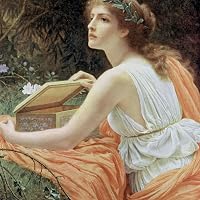
Hm. Sort of dated... for example smoke from an ashtray is meant to "signal warmth and comfort." Probably best for those of us who were young teens (the target audience) within a couple of decades before or a few years after the publication date of 1983 (especially if read with the older cover). And the poems that get notes are the ones that are easiest/ most accessible, generally. Some of the others bewilder me.
Also quite white and male, as evidenced by the photos in a sort of 'preface' design. No evidence that I see of people from outside the US, except maybe Canada.
Still, interesting, much of it worth a read for someone like me who is trying to educate herself in lieu of a good class or course in poetry.
Objectively, that is to say, maybe a three star read. But I didn't mark one bit worth sharing here, or worth remembering, so two stars for me.
Oh, except, it's not Juvenile, as my library marked it, but YA. There's a poem on rape that's much too intense for children or for those sensitive to 'triggers.'
Also quite white and male, as evidenced by the photos in a sort of 'preface' design. No evidence that I see of people from outside the US, except maybe Canada.
Still, interesting, much of it worth a read for someone like me who is trying to educate herself in lieu of a good class or course in poetry.
Objectively, that is to say, maybe a three star read. But I didn't mark one bit worth sharing here, or worth remembering, so two stars for me.
Oh, except, it's not Juvenile, as my library marked it, but YA. There's a poem on rape that's much too intense for children or for those sensitive to 'triggers.'

July 16, 2026
The editor of this book was my high school English teacher in rural Maine in the 80s, and he gave me this book (according to his signature) "in appreciation of her fine work in her English classes." Reading it as an adult is a bit boggling--this is not a sweet assortment of uplifting poems. It includes a long paean to gruesomely intrusive thoughts ("I am / afraid that a bullet will come like a jet plane / right up the front of my face, right up a nostril / and take out the whole back of my skull and its contents, / and that it might not be quick enough" is in the middle of a laundry list of agonizing images by Greg Kuzma, in "Sometimes.") There are multiple wretchedly realistic poems about animals suffering and dying. There's Marge Piercy's "Rape Poem" ("There is no difference between being raped / and being run over by a truck / except that afterward men ask if you enjoyed it.") It was a challenging book, is what I'm saying.
But it was a great challenge, and there are poems high-school me marked with an asterisk that I read now and still feel that ring of resonance like a silver hammer tapping glass, more complex and rich now that I've experienced more of life. Celeste Turner Wright's "Kineo Mountain," about hiking with her mother in Maine and returning one day alone, brings new tears to my eyes.
That beach is ugly now with logs--forgotten.
High noon today was not a picnic time:
I shivered, for the wind was full of autumn.
And long ago, my mother, past her prime,
Encountered darker lakes that had no bottom,
And other cliffs impossible to climb.
Or Ralph Pomeroy's poem "Between Here and Illinois," remembering how "When my father died / I didn't get my brother's telegram" (oh pre-cell-phone days!) and misses various calls and thus doesn't learn of the death until after the funeral:
Monday, my sister reached me.
In the atmosphere of my office
I heard her voice, all the way from Michigan.
She said that the funeral was over.
She described the black vestments and white flowers.
She said that they had all missed me
and were wondering where I was.
If they had reached me
I could have flown from New York to Illinois--
all the way from here to Illinois--
over all the graves that lie between here and Illinois.
The stark, anguished simplicity of his regret touched me in high school, and I think of high school me putting that careful little asterisk next to the poem to remember it, long before I learned first-hand about all the graves that lie between here and Illinois.
But it was a great challenge, and there are poems high-school me marked with an asterisk that I read now and still feel that ring of resonance like a silver hammer tapping glass, more complex and rich now that I've experienced more of life. Celeste Turner Wright's "Kineo Mountain," about hiking with her mother in Maine and returning one day alone, brings new tears to my eyes.
That beach is ugly now with logs--forgotten.
High noon today was not a picnic time:
I shivered, for the wind was full of autumn.
And long ago, my mother, past her prime,
Encountered darker lakes that had no bottom,
And other cliffs impossible to climb.
Or Ralph Pomeroy's poem "Between Here and Illinois," remembering how "When my father died / I didn't get my brother's telegram" (oh pre-cell-phone days!) and misses various calls and thus doesn't learn of the death until after the funeral:
Monday, my sister reached me.
In the atmosphere of my office
I heard her voice, all the way from Michigan.
She said that the funeral was over.
She described the black vestments and white flowers.
She said that they had all missed me
and were wondering where I was.
If they had reached me
I could have flown from New York to Illinois--
all the way from here to Illinois--
over all the graves that lie between here and Illinois.
The stark, anguished simplicity of his regret touched me in high school, and I think of high school me putting that careful little asterisk next to the poem to remember it, long before I learned first-hand about all the graves that lie between here and Illinois.

July 15, 2007
Janeczko is an excellent anthologist and I've been impressed with all of his anthologies I've browsed through; this one, however, is my favorite. Poems are interspersed with commentaries from the poets about writing--most often about the poem itself, but also about poetry writing in general. Several poems make this an "all time favorite" selection, but particuarly Peter Meinke's "Elegy for a Diver."
October 27, 2015
I'm not a fan of poetry type books like this but I thought that the poems in this book were descriptive and I also liked how after a few of the poems, it would go on and talk about how the author came up with that poem and the significance of it, to them.
Displaying 1 - 5 of 5 reviews