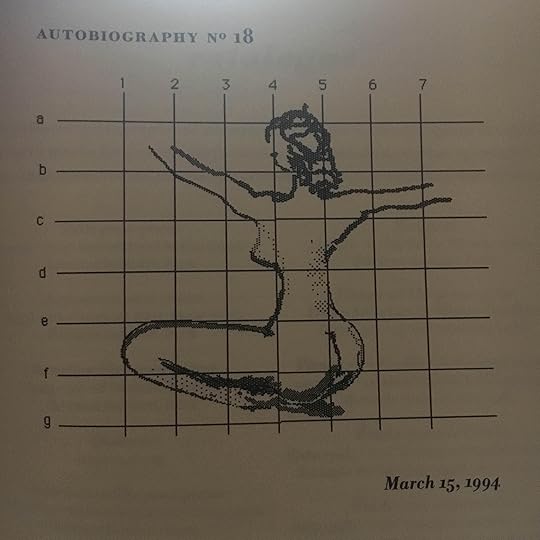
Perhaps the only postwar classical composer to invest avant-garde music with overt eroticism, Luc Ferrari (1929–2005) was one of France’s leading composers of the twentieth century, relentlessly experimental while always preserving his keen sense of humor. Ferrari was a first-generation exponent of musique concrète, and made brilliant use of field recordings to develop sensual, proto-ambient narrative that he termed “anecdotal music” or “cinema for the ear.” Perhaps the most notorious instance of this approach was Danses Organiques (1973), for which Ferrari recorded the meeting and sexual encounter of two young women, cut with other ambient and music sound. In his final decades Ferrari was championed by David Grubbs (of Gastr del Sol), who brought his music to a postrock audience. Almost Nothing is the first publication on this composer. It alternates Jacqueline Caux’s interviews with 14 “imaginary autobiographies” by the composer, offering a lively account of new music’s most revolutionary era.
What Marx is to Hegel, Luc Ferrari is to Pierre Schaeffer. The formulation is a bit cheap. But it does help to clarify the dialectical relationship between the latter pairing. Schaeffer: the innovator, the teacher, the institution builder, the alter-dogmatist, the mystic, the modernist, the structuralist semiotician of sound. Thanks to the just published "Almost Nothing with Luc Ferrari," we have the opportunity to get more deeply acquainted with one of Schaeffer's most accomplished accomplices (of whom there were many) and critics (of whom there are more). Namely, we learn that Ferrari not only inhabited the Schaefferean paradigm. He puts its feet back on concrete ground.
First it must be noted the significance of, in a single month, the English-language publication of "Almost Nothing" and Schaeffer's own, "In Search of a Concrete Music" (UC California Press). Both titles mark the first Anglophone books dedicated to either composer over fifty years after they first began changing the way we hear European avant-garde music. To say that we English-speakers are arriving late to the party doesn't quite cut it. The more generative question might be to ask; why now? And, most importantly, what might the ideas and examples of Schaeffer and Ferrari make possible at this particular historical moment that remained foreclosed for the previous generation of experimental artists?
With these questions in the back of our mind, reading "Almost Nothing" is nothing short of a sensual experience thanks to the loving presentation of the book. Brandon LaBelle's Errant Bodies Press have done a remarkable job of giving us a book that is as much an object of pleasure as the eroticism at the center of Ferrari's own practice as a sound artist. The quality of the paper, typeface and design, the naked clothbound cover, the portrait of Ferrari coyingly covering half of the back jacket, and the perverse purple ribbon that dangles from the spine to serve as a book mark, are all as much hallmarks of book fetishists as of the sensual obsessions of the book's subject.
As we know from his canonical corpus of sound work, Ferrari's eroticism is not the desublimated savagery of a Bataille or Genet. Self-consciously situated in the moment of minimalism and conceptualism, the sensuality of Ferrari's work lingers in the gap between the serious proposition and the awkward pun. Ferrari never aspired to the status of the sexual Olympian or the world-class seducer. As he explains in one of the numerous autobiographical reflections, he had always been plagued by tremendous self-doubt, a crippling self-consciousness about his outsider status. At some point he determined that his awkwardness was in fact the basis of a critical disposition; a keen suspicion of hubris, ambition, dogma, and arrogance. This dialectical inversion becomes a continual theme in "Almost Nothing."
On the one hand Ferrari eschews systems and rules. On the other hand he adopts concepts and methods, only to dispose of them once the idea leads him back into the concrete world of "social, political, and sentimental life". With a quiet insistence, Ferrari speaks again and again to his interest in contradiction. Bringing together conflicting materials, juxtaposing contradictory propositions, bringing into crisis accepted conceits about avant-garde art, Ferrari emerges as a self-proclaimed anarchist but also as a materialist in the fullest sense of the word.
There is so much richness between the modest covers of "Almost Nothing" that I could not possibly catalog it all here. However it must be noted that in the great tradition of sound artists who disturb comfortable categories in the arts in general, Ferrari's analysis of minimalism and conceptualism have broad implications both in the discourses of music and the visual arts. For Ferrari, the notion of a concept for its own sake dangerously approaches the very dogmatism that he scrupulously seeks to avoid. In contrast to mainstream conceptualism (i.e. Conceptual Art), Ferrari sees the concept as fundamentally irrational and contradictory. A wild delusion, the concept asks the artist, what shall be done? And he sets about to find the method to render its fancy in the concrete. Forgive me if I hear echoes of a radical politics.
The move from the irrational abstract to the tendentiously concrete also helps to link the other aim of his distruptive practice; to deconstruct the Schaeffer paradigm. In the work of Schaeffer the passage from the concrete (reduced listening) to the abstract forms of hearing set the stage for codifying the criteria for musical objects and for music composition itself. The implicit ambition to found a new Western music theory becomes explicit with Schaeffer's solfege. Ever the materialist, Ferrari's approaches the abstract as only having meaning in the way it leads the composer and listener alike back into the world of the social, the political, and sensuality. As experiments in precisely this trajectory, compositions like "Heterozygote" (1963-64) and his most notorious work, "Presque Rein No. 1" (1967-70) -- for which the book is titled -- do indeed generate associations of history and memory for the listener; resonances for how we inhabit the world.
"Almost Nothing" helps to make even clearer how Ferrari's incursion into Schaeffer's notion of "entendre" dialecticizes rather than merely rejects Schaeffer's own semiotics. What this dialectical disruption implies for sound practice in the realm of the social, the political, and sensual life offers something that many of us will excitedly be taking up for years to come.
What I can only hope is that the coincidental publication of books on Ferrari and Schaeffer will inspire critical engagements. I would be especially interested in the possibility of queering Ferrari, interrogating the heteronormative sexual fantasy of the microphone and the feminized acoustic landscape. Likewise, when read against George Lewis's important critique of the Eurological ideology in the avant-garde, what contradictions within Ferrari's notion of improvisation and listening might we glean? These and other questions call out for critical responses at the level of praxis. At the same time, "Almost Nothing" helps to settle once and for all the crucial political difference between Ferrari's project and the ecological romanticism of the soundscape movement with whom he is often and wrongly associated. For all of these questions and the new (renewed) avenues for inquiry made possible by the book, "Almost Nothing" is almost a revolution.
A fascinating peek into the life and mind of Luc Ferrari. This isn't a strict biography nor is it a treatise on his music. Its a series of interview excerpts with interludes that tell the stories behind some of his works. What comes across is Ferrari's sense of exploration, playfulness, and conviction. I recommend that every so often you put this book down and listen to one of his works, the two go hand-in-hand.
For the past 12 or so months, I have been obsessing over Musique Concrete, which is basically music made out of everyday but processed electronically or through tape manipulations. For reasons that are not totally clear to me, France seems to ground zero for these composers who work in that medium. One of the greats is Luc Ferrari. He's not the first, but I think, with respect to what I have heard so far, Ferrari's work is pretty great.
Errant Bodies, which is a publishing house that focuses on experimental composers as well as the issues of sound/art published a magnificent book on Ferrari and his theories/thoughts on composing and the world of the avant-garde music making. Basically the book is a series of Q&A interviews with Ferrari, as well as his weird and great autobiographies segments as well as detailed descriptions of some of his compositions. It's a beautifully designed hardcover book, and anyone who has just even the slightest interest in the world of composing, surely needs to read this book.