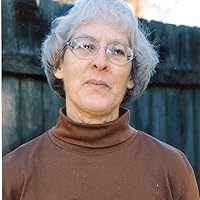
Winner of the 2011 FutureCycle Poetry Book Prize. In MOSSLIGHT, Kimberley Pittman-Schulz invites readers on a walking meditation, a crooked path through loss and longing where solace shimmers in the shadows, rooted in the rhythms of the natural world. Each poem is a small epiphany offered by unlikely mentors—decaying redwood logs and indifferent ravens, “the golden gel” of a banana slug and a blur of wet bees, tiny fish caught in a shoe, a dog’s black face leaning from a truck window, even “eight rusty ants dragging a dead wasp through the grass” that challenge us with, “Who are you, anyway?” Like a lost explorer—part-naturalist, part-Buddhist—the voice in this collection leads the reader deep into the present moment, “stark and lush,” reminding us that while “alone each foot burns/into cold layers” there is a larger interconnectedness, as “even in wet snow falling,/the wren sings.”
Mosslight is a quiet, thoughtful, reflective book. The collection contains primarily poems about the natural world, including a section of travel poems. Even the poems which deal with people include elements of nature. I tend to shy away from collections of nature poems, but thought I should stretch myself, so I was eager to read Mosslight. Most of the poems are almost too quiet for my taste, mere description of a scene, without truly exposing an idea or connection that would make the scene take on larger meaning or significance. The “ah-ha moments” were more of a gentle, reflective reaction, as opposed to the startling revelation where I, as a reader, put the book down in awe. The lines are carefully constructed, line breaks tightly controlled, leaving the reader wishing for a bit of wildness. Perhaps the speaker is moving against a natural world which is messy and beyond our control.
There are many lovely lines, lines that made me wish the poet had gone further with imagery and metaphor.. I especially enjoyed the poems where Pittman-Schulz mentions her parents. Once, when my mother bent to kiss her three small girls, leaned into their breathings, letting her lips tap theirs, the sound reminded her of water dripping into other water, (Magic)
My favorite poem in the collection contains a lovely opening, if lovely can used in a poem titled “After Chemotherapy.” I can do nothing but watch a sky ripe with stars, spilling a path of light over her bed, The helplessness the speaker feels, even after tenderly bathing her mother, “her long, perfect fingers that remember/doing all of this for me,” is evident in the closing lines. My mother is a star, cooling. Each day her body, with its heart of fire, consumes itself, flinging out a little less light, drawing us closer.
In “If I Could See the End Coming,” Pittman-Schulz reveals the solitary nature of being a writer, especially a poet. I wouldn’t expect a sudden white light or a familiar crowd on the horizon waving me forward- just trees hiking down the mountainside, winter creek softening at the edges, filling with snowmelt, tumbling toward me.
I wanted to feel fonder of this book than I did, not just because the publisher was generous enough to share a copy with readers of poetry, but also because the setting of this book is steeped in places I adore: the Pacific Northwest, Alaska, etc. The poet, too, feels generous in her worldview, and I was drawn to her bio, which mentioned her husband, who is a wildlife biologist and her hobbies including hiking and kayaking. I feel a kinship.
But--the poetry itself did not usually feel fresh or new to me. I wanted there to be more surprise in the images and lines. I think, mostly, there was a kind of generic feel to some of the language, using words like "amazing" or "happy" where something stronger would have done better. I think to Neruda's line: "blood of the children ran through the streets / without fuss, like the blood of the children." (Depending on translation; some end with "like children's blood," etc.) But Pittman-Schulz didn't seem to be using simple language to create a stark reality; instead, it seemed the natural language of a welcoming poet, though not strong language.
I also wanted something else to hold onto, other than the naming of the setting. Some circumstance to rise up. More human interaction, which felt vague here. Something at stake. Generally speaking, I'd be content with a sequence of poems that take place outdoors, but for whatever reason, be it the overused words or what-have-you, I wanted something more.
There were some lovely moments though:
"Our bodies beneath our clothes / are warm, like peaches in a brown bag" (39)
"the moist, moved soil round / as peas, the niche / in the white lightning of roots / into which they drop / their babies / like secret plums." (45)
(night on a boat) "The sound of lips smacking all night / is water licking the hull." (58)
And maybe if, instead of a 100+ page book of poetry, (which is altogether too short for a poet you adore, I ought to point out) it could have been edited down to a thirty-page chapbook. Take the strongest, meld into stronger, let it be tight and the repetition may not have been so stark (the bruises, the adjective-noun naming, etc.).
A good book, perhaps, for a non-reader of poetry, instead of someone who has been through such rigorous study. The objections I have wouldn't be present for those who aren't regular readers, but instead would feel a world petaling open (to use a word she connected to snow, which was nice).
I received a copy for free from the publisher. I felt guilty that I did not enjoy the book much. I hated to write a negative review. I delayed writing it. I even read it again.
Looking back on the book, I can't think of any one poem that struck me. That made me want to write one just like that. Just the opposite. I want to write one that shakes up the boring world of this type of poetry.
Here's one example that the editor chose:
MAGIC
When a bird dies, if you place the empty purse of its body under the green velvet of a catalpa leaf, nestle it among berry canes and nettle, the leaf will curl brittle, catch on a thorn, scrape wind, earth-low, overlooked, and where the bird was will be bent grass.
Once, when my mother bent to kiss her three small girls, leaned into their breathings, letting her lips tap theirs, the sound reminded her of water dripping into other water, but later, when the house stood scorched, every window a black, gaping mouth, where that sound had been, now, one child.
These things could be magic or physics or god. No one really knows.
The last stanza is awful in my view. I know the difference between god, physics, and magic. I'm not a nine year old in Sunday school. A good critique would have encouraged her to delete the entire stanza. Her strength is in the natural details.
Another flaw in other poems is the excessive number of questions. And meaningless ones. Should have been deleted.
Still another flaw is the too much personal information and intrusion. It's great her husband kisses her on both eyes, but that's a basic of Seduction 101.
We are the publisher, so all of our authors get five stars from us. Excerpts:
GENESIS
It all began with an amoeba singing
against the fear of separation
one throatless note static
then the fluid soul torn apart.
MAGIC
When a bird dies, if you place the empty purse of its body under the green velvet of a catalpa leaf, nestle it among berry canes and nettle, the leaf will curl brittle, catch on a thorn, scrape wind, earth-low, overlooked, and where the bird was will be bent grass.
Once, when my mother bent to kiss her three small girls, leaned into their breathings, letting her lips tap theirs, the sound reminded her of water dripping into other water, but later, when the house stood scorched, every window a black, gaping mouth, where that sound had been, now, one child.
These things could be magic or physics or god. No one really knows.
I received a copy of Mosslight by Kimberley Pittman-Schulz from Futurecycle Press for review.
Nature is my overall favorite when it comes to summer. Kimberley takes gardens, flowers and a walk over grounds of beauty. Some of the poems are pretty basic,but written well. I am more of a a metaphor poetry reader where it leaves the reader thinking.
My favorites:
Web October Seen Things At Risk
Seen Things:
Not a twig, but a tail, grey-green in pebbles, yellow beneath, the lizard off in poppies or ferns;
a husk of spider, black costume perfect but empty, caught with dew, threaded into web;