

What do you think?

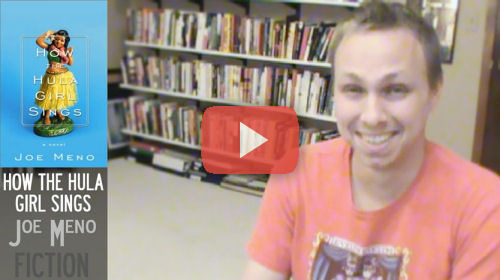
How the Hula Girl Sings
A young ex-con in a small Illinois town. A lonely giant with a haunted past. A beautiful girl with a troubled heart. Strange and darkly magical, How the Hula Girl Sings begins exactly where most pulp fiction usually ends, with the vivid episode of the terrible crime itself. Three years later, Luce Lemay, out on parole for the awful tragedy, does his best to finds hope: in a new job at the local Gas-N-Go; in his companion and fellow ex-con, Junior Breen, who spells out puzzling messages to the unquiet ghosts of his past; and finally, in the arms of the lovely but reckless Charlene. How the Hula Girl Sings is a suspenseful exploration of a country bright with the far-off stars of forgiveness and dark with the still-looming shadow of the death penalty.
Paperback reissue of the second novel from the author of the indie-hit Hairstyles of the Damned
Paperback reissue of the second novel from the author of the indie-hit Hairstyles of the Damned
209 pages, Paperback
First published January 1, 2001
About the author
Joe Meno
84 books489 followersJoe Meno is a fiction writer and playwright who lives in Chicago. A winner of the Nelson Algren Literary Award, the Great Lakes Book Award, a Pushcart Prize, the Society of Midland Author's Fiction Prize, and a finalist for the Story Prize, he is the author of seven novels and two short story collections. He is also the editor of Chicago Noir: The Classics. A long-time contributor to the seminal culture magazine, Punk Planet, his other non-fiction has appeared in the New York Times and Chicago magazine. He is a professor in the Department of Creative Writing at Columbia College Chicago.
Ratings & Reviews
Friends & Following
Create a free account to discover what your friends think of this book!
Community Reviews
Displaying 1 - 30 of 69 reviews

March 31, 2017
Le blues de la Harpie est l'histoire de deux ex-taulards, Luce et Junior, qui reviennent dans leur bled natal pour se refaire une vie, déterminés à rester sur le droit chemin.
C'est une histoire sur la seconde chance, sur la culpabilité, sur le regard que porte une société arriérée et hypocrite sur deux repris de justice. C'est également une histoire d'amour entre Luce et la belle Charlène, la serveuse du diner du coin.
Le blues de la Harpie est poétique et touchant, porté par des personnages émouvants, deux hommes qui ont gagné leur liberté mais pas le pardon.
C'est une histoire sur la seconde chance, sur la culpabilité, sur le regard que porte une société arriérée et hypocrite sur deux repris de justice. C'est également une histoire d'amour entre Luce et la belle Charlène, la serveuse du diner du coin.
Le blues de la Harpie est poétique et touchant, porté par des personnages émouvants, deux hommes qui ont gagné leur liberté mais pas le pardon.

July 1, 2009
It did some things to my heart

January 27, 2017
Quand tu entres dans un bouquin avec un petit sourire, c'est souvent bon signe. Là, ce sourire, je l'avais parce que cette vierge que l'on voit sur la couverture, je l'ai connue toute mon enfance. Elle était là, sur la table de chevet près du lit de ma grand-mère, remplie d'eau bénite. Tous les soirs, c'était un peu sur le front, avant de prier. Cette vierge représentait des choses étranges pour moi, quand j'étais petit. Et maintenant, après avoir terminé cette lecture, elle représente d'autant plus. Cette vierge, c'est l'espoir d'une nouvelle vie. D'un pardon.
Dans "Le Blues de la Harpie" Joe Meno te parle de deux mecs, Luce et Junior. Tous les deux viennent d'être libérés de prison, portent en eux le poids d'une culpabilité qui refuse de les lâcher. Durant tout le roman, ils vont être suivis par des regards, des mots, des attentes. Ils vont marcher avec une épée de Damoclès au-dessus de leur tronche. Tu sais jamais quand elle va tomber, mais elle est là.
Joe Meno, c'est un auteur qui aime les mots. Qui aime la littérature. Il est pas là pour rien, tu sens que le mec écrit comme il respire, comme il espère. Il ose te poser des questions sans t'apporter de réponses, il te fout mal à l'aise, au point où parfois, t'as envie de reposer le bouquin, pour aérer ce que t'as dans le crâne. À chaque moment d'espoir, y'a un nouveau nuage qui apparaît, une nouvelle part d'obscurité, comme un souvenir permanent, une blessure qui refuse de cicatriser.
La rédemption, l'envie de recommencer, le poids d'un passé, le besoin d'un futur. L'amour qui s'y mêle, cet amour qu'on pense peut-être pas mériter, parce que les criminels, ils ont pas le droit d'être entourés de tendresse, pas vrai? Mais y'a aussi la question de la justice, des gens qui décident de punir, et jusqu'à quel point. "Le Blues de la Harpie" c'est tout ça, derrière une couverture bleue qui te pousse à la Foi.
Même si ma lecture a été triste, je suis sorti grandi de ce roman noir flamboyant. Parce qu'il m'a poussé à des remises en question nécessaires sur mes propres convictions, ma propre foi en l'humain. Et c'est en ça que tu reconnais un excellent livre : il parvient à faire partie de tes os, de ce que tu es. Tant mieux. Continuons d'y croire.
Dans "Le Blues de la Harpie" Joe Meno te parle de deux mecs, Luce et Junior. Tous les deux viennent d'être libérés de prison, portent en eux le poids d'une culpabilité qui refuse de les lâcher. Durant tout le roman, ils vont être suivis par des regards, des mots, des attentes. Ils vont marcher avec une épée de Damoclès au-dessus de leur tronche. Tu sais jamais quand elle va tomber, mais elle est là.
Joe Meno, c'est un auteur qui aime les mots. Qui aime la littérature. Il est pas là pour rien, tu sens que le mec écrit comme il respire, comme il espère. Il ose te poser des questions sans t'apporter de réponses, il te fout mal à l'aise, au point où parfois, t'as envie de reposer le bouquin, pour aérer ce que t'as dans le crâne. À chaque moment d'espoir, y'a un nouveau nuage qui apparaît, une nouvelle part d'obscurité, comme un souvenir permanent, une blessure qui refuse de cicatriser.
La rédemption, l'envie de recommencer, le poids d'un passé, le besoin d'un futur. L'amour qui s'y mêle, cet amour qu'on pense peut-être pas mériter, parce que les criminels, ils ont pas le droit d'être entourés de tendresse, pas vrai? Mais y'a aussi la question de la justice, des gens qui décident de punir, et jusqu'à quel point. "Le Blues de la Harpie" c'est tout ça, derrière une couverture bleue qui te pousse à la Foi.
Même si ma lecture a été triste, je suis sorti grandi de ce roman noir flamboyant. Parce qu'il m'a poussé à des remises en question nécessaires sur mes propres convictions, ma propre foi en l'humain. Et c'est en ça que tu reconnais un excellent livre : il parvient à faire partie de tes os, de ce que tu es. Tant mieux. Continuons d'y croire.

October 14, 2019
Certainly has a very unique style. Reads like someone retelling a dream. Some great scenes and a nice quick read.

January 22, 2012
I did not enjoy this book.
Joe Meno's massive repertoire of tics was incredibly distracting, to the point where I couldn't focus on the story. The book is in the first person, so you could, theoretically, pass the tics off as the the character's "voice". But I had the same experience reading The Boy Detective Fails, so I suspect the issues are Meno's, not Luce Lemay's (the narrator/protagonist).
Allow me to nitpick:
First, there are the unnecessary, cliched adjectives. ("Her hair was so curly and brown and shined and moved. Her hair smelled like a peach, like summer, like tender fruit. Charlene was tall and thin and wore this cute frilly blue-and-white-and-pink waitress uniform...[Her hands] were small and white and plain, no rings, just plain white digits, which looked really nice and clean and pretty." It goes on and on.)
A more specific symptom of the adjective problem is the insistence on telling us what color everything is. Even more specifically, it seems like EVERYONE's hands in this book are described, repeatedly, as either "little white hands" or "big white hands", with the exception of one of the villains, whose hands are described as "sturdy white fists" and then, two sentences later, as "steady white fists". I don't know if "white hands" is supposed to symbolize something, but if everyone has them, doesn't that make them kind of meaningless? And of course, everyone has "white teeth", except for a few bad guys who have "dirty white teeth". And "pink gums".
Also, to avoid using the word "said" to move the dialogue along, Meno relies on four words: "smiled", "frowned", "grinned" and "mumbled". In the space of a two-or-three-paragraph conversation, we have characters alternately grinning and frowning and mumbling like crazy people. I imagine it as a sort of grotesque puppet show.
And another thing - which bugged me to no end in this book AND in "Boy Detective" - the past tense of "lie" is "lay", not "laid"!
But I'll try to move beyond these issues and talk about the book itself. It's basically a collection of linked short stories about the life of an ex-con who moves back to his hometown after being released from prison. The stories are (mostly) pretty quiet, about small events - falling in love, an abused kid who frequents the town gas station, a funeral for a bird - which isn't a problem in itself, except that for stories like that to work, the writing has to be very good. Transporting. Which, in my opinion, it isn't.
Joe Meno's massive repertoire of tics was incredibly distracting, to the point where I couldn't focus on the story. The book is in the first person, so you could, theoretically, pass the tics off as the the character's "voice". But I had the same experience reading The Boy Detective Fails, so I suspect the issues are Meno's, not Luce Lemay's (the narrator/protagonist).
Allow me to nitpick:
First, there are the unnecessary, cliched adjectives. ("Her hair was so curly and brown and shined and moved. Her hair smelled like a peach, like summer, like tender fruit. Charlene was tall and thin and wore this cute frilly blue-and-white-and-pink waitress uniform...[Her hands] were small and white and plain, no rings, just plain white digits, which looked really nice and clean and pretty." It goes on and on.)
A more specific symptom of the adjective problem is the insistence on telling us what color everything is. Even more specifically, it seems like EVERYONE's hands in this book are described, repeatedly, as either "little white hands" or "big white hands", with the exception of one of the villains, whose hands are described as "sturdy white fists" and then, two sentences later, as "steady white fists". I don't know if "white hands" is supposed to symbolize something, but if everyone has them, doesn't that make them kind of meaningless? And of course, everyone has "white teeth", except for a few bad guys who have "dirty white teeth". And "pink gums".
Also, to avoid using the word "said" to move the dialogue along, Meno relies on four words: "smiled", "frowned", "grinned" and "mumbled". In the space of a two-or-three-paragraph conversation, we have characters alternately grinning and frowning and mumbling like crazy people. I imagine it as a sort of grotesque puppet show.
And another thing - which bugged me to no end in this book AND in "Boy Detective" - the past tense of "lie" is "lay", not "laid"!
But I'll try to move beyond these issues and talk about the book itself. It's basically a collection of linked short stories about the life of an ex-con who moves back to his hometown after being released from prison. The stories are (mostly) pretty quiet, about small events - falling in love, an abused kid who frequents the town gas station, a funeral for a bird - which isn't a problem in itself, except that for stories like that to work, the writing has to be very good. Transporting. Which, in my opinion, it isn't.

August 10, 2009
Let me begin by saying I love Hairstyles of the Damned and The Boy Detective Fails. Joe Meno's writing style works so well on thse novels, I think, because he has something very definite to say. I have no idea what he was saying with How the Hula Girl Sings.
Maybe I'm too dumb to catch Meno's oh-so subtle hints. All I know is one minute Luce has to stay and make a stand-- like his very manhood depends on it. Then suddenly (after yet another meaningless and seemingly random incident) it's not such a big deal. Wait. Whaaa...
I came away feeling like I had read a bunch of well crafted sentences. And that's all.
Maybe I'm too dumb to catch Meno's oh-so subtle hints. All I know is one minute Luce has to stay and make a stand-- like his very manhood depends on it. Then suddenly (after yet another meaningless and seemingly random incident) it's not such a big deal. Wait. Whaaa...
I came away feeling like I had read a bunch of well crafted sentences. And that's all.

February 21, 2009
While the story's plot unfolds in the parts of the country most of us pass through without much thought (the gas sations, the all-night diners) its essence meditates on the hope and longing from the most often unreckognized and unacknowledged parts of our souls.

May 22, 2021
I have a read a few of Meno’s other novels (Hairstyles of the Damned being one of my all-time favorites) and this one might be my least favorite of the bunch.
Luce is a man who accidentally ran down a baby carriage while escaping a robbery he committed. He’s a criminal, even he’ll admit that, but he’s not a killer. Meno does an excellent job expressing Luce’s sorrow and regret for killing the baby, but I’m still curious as to why Luce resorted to robbery in the first place.
Luce and his friend Junior did the time for the crimes they committed, but they are still burdened with the leftover guilt and it keeps them locked in this sad emotional and physical state and when things start to look up for them, it gets taken away from them. The people in town, however, constantly remind them of their past, making even harder for them to move on.
How can we repent for our past mistakes when we’re not given the acceptance? The book is saying: We are ready to move on. Are you ready to accept us?
It’s written in the first person, but I feel like I didn’t get enough of Luce’s internal thought process. There’s also a few scenes where the POV shifts that I thought were kind of jarring.
The book is set in a small, rural, Illinois town. I like in Illinois and have driven through a bunch of towns like this and Meno (also, an Illinois resident) hits the nail on the head describing the atmosphere and locals.
I gave it 3 stars, but it’s closer to a 3.75 star read for me. It doesn’t change my opinion on Joe Meno. He’s still a great writer and I still plan on reading the rest of his work.
Luce is a man who accidentally ran down a baby carriage while escaping a robbery he committed. He’s a criminal, even he’ll admit that, but he’s not a killer. Meno does an excellent job expressing Luce’s sorrow and regret for killing the baby, but I’m still curious as to why Luce resorted to robbery in the first place.
Luce and his friend Junior did the time for the crimes they committed, but they are still burdened with the leftover guilt and it keeps them locked in this sad emotional and physical state and when things start to look up for them, it gets taken away from them. The people in town, however, constantly remind them of their past, making even harder for them to move on.
How can we repent for our past mistakes when we’re not given the acceptance? The book is saying: We are ready to move on. Are you ready to accept us?
It’s written in the first person, but I feel like I didn’t get enough of Luce’s internal thought process. There’s also a few scenes where the POV shifts that I thought were kind of jarring.
The book is set in a small, rural, Illinois town. I like in Illinois and have driven through a bunch of towns like this and Meno (also, an Illinois resident) hits the nail on the head describing the atmosphere and locals.
I gave it 3 stars, but it’s closer to a 3.75 star read for me. It doesn’t change my opinion on Joe Meno. He’s still a great writer and I still plan on reading the rest of his work.
This entire review has been hidden because of spoilers.
December 22, 2019
Un libro que me tomó más de un año terminar. Disfruté en general la lectura del mismo, tiene un buen ritmo aunque las escenas son muy arquetípicas, no tienen la suficiente profundidad los personajes.
Si bien es un tanto aleccionadora la historia, el final de cuento de hadas se preserva a pesar de las manchas que le pone el autor.
El final no diría que es decepcionante, sino predecible y poco propositivo.
Si bien es un tanto aleccionadora la historia, el final de cuento de hadas se preserva a pesar de las manchas que le pone el autor.
El final no diría que es decepcionante, sino predecible y poco propositivo.
This entire review has been hidden because of spoilers.

May 24, 2017
hella repetitive and completely unrealistic but interesting character takes plus i love jailbirds

April 13, 2019
3.5 stars.
December 25, 2020
A bit too dark and hopeless for my taste but it was well written.

September 14, 2023
Loved the narrators voice in this book- very Holden from The Catcher in the Rye. Joe Meno write raw, every time.

June 2, 2018
I read this mostly because my late friend Paul said I should. It was as he said, "A very fine book."

March 15, 2012
If you've never read a Joe Meno book, I suggest you go out and buy one right now. I would suggest starting with Hairstyles of the Damned, which is what got me started and is also one of my favorite books. It's different from the rest of his work, for sure, but wonderful. I've found each and every one of his books that I've read since to be great, quirky, weird, and somehow heartbreaking.
This is the story of Luce Lemay who is an ex-con returning to his hometown after a three year stay in prison. He robbed the liquor store he had been working at and, while on the run, hit a baby carriage, killing its occupant. He never meant to kill any babies, or any adults for that matter, but he knows that he is returning home marked as a baby killer. He has a job lined up and a place to stay and his ex-con friend Junior is waiting for him. On the bus he meets Charlene. She is beautiful and she's also the little sister of a girl he used to fool around with on Sunday afternoons. And that's just the first chapter.
Attempting to build a new life on the crumbling foundations of an old one is difficult. A lot of people in town don't want Luce around. The one who wants it least is Charlene's ex-fiance. Luce is always trying to move forward, prove that he is a good man and do what is right even though he is guilt-ridden. However, things get violent in town and Luce needs to decide what kind of man he is, regardless of what others say about him.
This is the story of Luce Lemay who is an ex-con returning to his hometown after a three year stay in prison. He robbed the liquor store he had been working at and, while on the run, hit a baby carriage, killing its occupant. He never meant to kill any babies, or any adults for that matter, but he knows that he is returning home marked as a baby killer. He has a job lined up and a place to stay and his ex-con friend Junior is waiting for him. On the bus he meets Charlene. She is beautiful and she's also the little sister of a girl he used to fool around with on Sunday afternoons. And that's just the first chapter.
Attempting to build a new life on the crumbling foundations of an old one is difficult. A lot of people in town don't want Luce around. The one who wants it least is Charlene's ex-fiance. Luce is always trying to move forward, prove that he is a good man and do what is right even though he is guilt-ridden. However, things get violent in town and Luce needs to decide what kind of man he is, regardless of what others say about him.

December 3, 2007
Joe Meno's second novel - I read it while taking his fiction class at Columbia College. At this time he hadn't yet wrote Haristyles of the damned and was probably much more accessable. That doesn't make it a good book. I know he went over it for republication, and changed the cover, because he was having issues with his first publisher, but I read the first edition. The cover is blue with a hula girl on it and had nothing to do with the story. The book is similar to Tender as Hellfire, in that it is about being doomed. The first chapter details a man driving into a baby carriage. After being released from jail, he tries to get his life back by getting strange jobs. He has a Lennyesque friend and also an enemy from prison, recently released, hunting him down. It's an okay book, but it is often dreamy, and hard to keep in your grasp.
August 5, 2011
I had high hopes for this after reading The Boy Detective Fails but I was disappointed. The characters and story (which didn't really get started till about 100 pages in) were interesting but the uneven writing was distracting. All the imagery and motifs (birds, eyes, red hair) felt forced and disconnected from the rest of the book and they added nothing. The point of view shifted in ways that made no sense at all- how did Luce know what Junior was dreaming about?
I think this could have been an amazing book but the writing just wasn't strong enough to carry whatever lofty message it was meant to deliver.
I think this could have been an amazing book but the writing just wasn't strong enough to carry whatever lofty message it was meant to deliver.

March 7, 2013
A good book, not a great one. It's a quick read, less than 200 pages. At first it has a tender, meditative quality, where we kind of grow to feel for the narrator, who is mild and somewhat reformed ex-con. He falls in love, and the relationship didn't move me one way or another. Near the end the action picks up, giving this novel a semblance of plot. The writing is plain, I imagine because the narrator is kind of a plain, slow dude. What saves this and ultimately makes it a pretty good book is the character of Junior, a dumb-but-deep Big Lug with an interesting past and a penchant for blue-collar romanticism. Not a bad book at all, a worthy effort, but not remarkable either.

January 12, 2011
This story follows the lives of several ex-cons after their releases from prison for various offenses. Their pasts haunt them, causing various complications in their "new" lives, where they discover that the term "free men" can never apply to them. Death permeates the story, in various guises. Even attempts at new life in the form of various unwanted and/or imaginary pregnancies only cause more strife. Not a terribly uplifting look at the harshness of mankind and its tendency to forever judge a man lacking.
December 18, 2007
I read this one pretty fast but I liked it just the same, I will probably read it again someday. I wanted to get into another Joe Meno book after reading "The Boy Detective Fails" and was not disappointed at all by "How the Hula Girls Sings". Although the events that happen and the kind of world it takes place in is so far off from anything I've experienced, it was difficult for me not to relate to some of the situations and feelings Meno's characters had gone through.
July 14, 2009
Mneh.
There is only one part of this book that stood out for me and it wouldn't have stood out if I had teeth.
"No dainty gloom could make a body feel more lonesome than missing a tooth. It made me feel improper to smile. Losing that molar over a girl who wouldn't even spare me a kiss made me feel like the imperial king of all fools."
Nothing else really stood out, except some adorable southern slang, which might just be all the True Blood talking.
There is only one part of this book that stood out for me and it wouldn't have stood out if I had teeth.
"No dainty gloom could make a body feel more lonesome than missing a tooth. It made me feel improper to smile. Losing that molar over a girl who wouldn't even spare me a kiss made me feel like the imperial king of all fools."
Nothing else really stood out, except some adorable southern slang, which might just be all the True Blood talking.

August 18, 2011
This book moves quickly, using a short story format to give a portrait of Luce Lemay and the various people he encounters in the small town of La Harpie. I found it dark and sad to the point of being overwhelming. I guess all of Meno's work (at least that I've read) is dark, but this is soul-crushing, without hope.
ETA: This is also pretty graphically violent, which I'm sure didn't help my feelings about it.
ETA: This is also pretty graphically violent, which I'm sure didn't help my feelings about it.

August 9, 2007
Not a bad book, lots of great character development. The author taught a Senior Seminar class that I was required to take in college. He is self-righteors as an instructor, and if you don't buy into his ideals he treats you with disregard. If I would not have been his student I could give this book a higher rating.

March 26, 2009
A good book, kept me entertained while stuck in a small room for days with nothing to do. I learned to not be as judge mental to the ex cons. People make mistakes, or don't at all but get caught up in it. Its a tragedy really. There's a very realistic love story during it all. I can very much relate to! I know i'll end up reading this book again!

June 9, 2010
I love this book with every ounce of my being. The minute I opened it and started reading I fell in love with the story, and the characters. How The Hula Girl Sings is one of those books that you never want to be over. It sucks you in, and you'll never ever want to put it down. I might have to read it again.

Read
July 17, 2010Not exactly a review, but a fun story about the book.

January 25, 2012
i love meno's writing style. this was a great story about an ex-con trying to find redemption, but it didn't smack you over the head with morality stuff. the love story is bittersweet, the imagery is simple and beautiful. the overall premise is perhaps part of an overdone genre, but meno manages to freshen it up a bit. looking forward to reading more of his work.

February 6, 2015
As usual with Meno, his characters stand out as unique and detailed, but unfortunately the story seems stuck on a single note.
Meno does a great job of building up the life experiences of his characters – they come across as quirky and real. And I do enjoy the ins and outs of his writing style. Yet, in the end, I need something with a little more depth.
Meno does a great job of building up the life experiences of his characters – they come across as quirky and real. And I do enjoy the ins and outs of his writing style. Yet, in the end, I need something with a little more depth.

Want to Read
December 21, 2016Free e-book advent calendar from Akashic Books: Download How the Hula Girl Sings for FREE until midnight, December 21, 2016!
Comes in DRM-free mobi or epub, and you don't have to sign in or up for anything.
Comes in DRM-free mobi or epub, and you don't have to sign in or up for anything.

July 21, 2007
I absolutely loved this book. I had read "Hairstyles of the Damned" and decided to read another book of Meno's. While I loved "Hairstyles", I loved this book even more. It's a well-written story that takes you into a mind of a criminal and may even teach you not to be so judgmental.
Displaying 1 - 30 of 69 reviews