

What do you think?
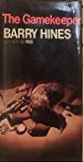
The Gamekeeper
George Purse is an ex-steelworker employed as a gamekeeper on a ducal country estate. He gathers, hand-rears and treasures the birds to be shot at by his wealthy employers. He must ensure that the Duke and his guests have good hunts when the shooting season comes around on the Glorious Twelfth; he must ensure that the poachers who sneak onto the land in search of food do not.
Season by season, over the course of a year, George makes his rounds. He is not a romantic hero. He is a laborer, who knows the natural world well and sees it without sentimentality.
Rightly acclaimed as a masterpiece of nature writing as well as a radical statement on work and class, The Gamekeeper was also, like Hines’s A Kestrel for a Knave ( Kes ), adapted by Hines and filmed by Ken Loach. It too stands as a haunting classic of twentieth-century fiction.
Season by season, over the course of a year, George makes his rounds. He is not a romantic hero. He is a laborer, who knows the natural world well and sees it without sentimentality.
Rightly acclaimed as a masterpiece of nature writing as well as a radical statement on work and class, The Gamekeeper was also, like Hines’s A Kestrel for a Knave ( Kes ), adapted by Hines and filmed by Ken Loach. It too stands as a haunting classic of twentieth-century fiction.
298 pages, Hardcover
Published January 1, 1975
About the author
Barry Hines
28 books70 followersBarry Hines (June 30, 1939 – March 18, 2016) was an English author, playwright, and screenwriter. His novels and screenplays explore the political and economic struggles of working-class Northern England, particularly in his native West Riding / South Yorkshire.
He is best known for the novel A Kestrel for a Knave (1968), which he helped adapt for Ken Loach's film Kes (1969). He also collaborated with Loach on adaptations of his novels Looks and Smiles (1981) and The Gamekeeper, and a 1977 two-part television drama adaption of his book The Price of Coal.
He also wrote the television film Threads, which depicts the impact of a nuclear war on Sheffield.
He is best known for the novel A Kestrel for a Knave (1968), which he helped adapt for Ken Loach's film Kes (1969). He also collaborated with Loach on adaptations of his novels Looks and Smiles (1981) and The Gamekeeper, and a 1977 two-part television drama adaption of his book The Price of Coal.
He also wrote the television film Threads, which depicts the impact of a nuclear war on Sheffield.
Ratings & Reviews
Friends & Following
Create a free account to discover what your friends think of this book!
Community Reviews
Displaying 1 - 21 of 21 reviews

August 1, 2023
Format: audiobook ~ Narrator: Luke R. Francis
Content: 4 stars ~ Narration: 5 stars
Complete audiobook review
George lives with his family in the heart of the English countryside. He is a gamekeeper. His job is to breed pheasants for the Duke so that the pheasant hunt in autumn can be successful. It may seem like a simple job at first glance, but it is not. It’s hard to raise strong pheasants.
George possesses impressive knowledge about nature, the landscape, and the animals that inhabit it. He is very protective of the pheasants, fighting against anything (humans and animals) that could threaten their existence.
Although first published in 1975, The Gamekeeper is, in one way, a timeless novel that outlines the connection between man and nature.
Many detailed descriptions show Hines’ excellent knowledge of this profession. But this also makes the narrative slow. And although The Gamekeeper is an interesting portrait of a working-class man and his connection to nature, it is also very slow, and sometimes the reader may struggle to read it. I highly recommend listening to an audiobook to make things easier.
Thanks to Saga Egmont Audio for the advance copy and this opportunity! This is a voluntary review and all opinions are my own.
Content: 4 stars ~ Narration: 5 stars
Complete audiobook review
George lives with his family in the heart of the English countryside. He is a gamekeeper. His job is to breed pheasants for the Duke so that the pheasant hunt in autumn can be successful. It may seem like a simple job at first glance, but it is not. It’s hard to raise strong pheasants.
George possesses impressive knowledge about nature, the landscape, and the animals that inhabit it. He is very protective of the pheasants, fighting against anything (humans and animals) that could threaten their existence.
George Purse never killed anything for fun. He only killed to protect his pheasants, which were then killed by other people for fun.
Although first published in 1975, The Gamekeeper is, in one way, a timeless novel that outlines the connection between man and nature.
Many detailed descriptions show Hines’ excellent knowledge of this profession. But this also makes the narrative slow. And although The Gamekeeper is an interesting portrait of a working-class man and his connection to nature, it is also very slow, and sometimes the reader may struggle to read it. I highly recommend listening to an audiobook to make things easier.
Thanks to Saga Egmont Audio for the advance copy and this opportunity! This is a voluntary review and all opinions are my own.

July 25, 2026
rtc later (Berger was not wrong about this one)
April 24, 2022
A welcome change, perhaps, in your fiction reading – how many 2020s authors know how ferrets work when they're tasked with killing off rabbits for the gamekeeper of the title? I am sure some of this could have been written recently – Magnus Mills might nail the bureaucracy that is entailed when our man gets some repairs to his house done by those higher up the Lord's chain of command – but this has the authenticity of a real vintage outdoorsman's life, with the muck really getting under the reader's fingernails. Still, for all the veracity in how breeding pheasants works, is there a workable plot and enjoyment through that?
Well, yes and no. The book bizarrely manages to be both bitty and flowing – with the narrative of the calendar year, and the growth of the next hunting season's targets, to the fore yet illustrated by incident, flashback, or a more authorial interjection telling us what long-netting rabbits entails, or any other kind of nature note. These are all to be taken, I think, as snapshots, still images that slowly build up an animation, but one with a very low frame rate. And with the countless mentions of animals being trapped, shot, put down (by shovel or just slammed on to the floor) and so on, a lot of the snapshots are unsavoury and/or feel a little too irrelevant for our path to the grandstand scenes on hunt days. That said, him walking around the outside of the Big House and seemingly knowing all the rooms inside he'd never been in, felt the most out of place.
Still, what this all does is show how there is a permanent disconnect between the man of the earth, the groundsman and gamekeeper and gardener, and the person who owns the earth – his Lordship barely lives in the grounds concerned, and anyway has more than one chunk of Derbyshire to use in the hunting season. That's the point and theme of the book, if you want to know why all this gory detail is provided to us, but even without that I still found something to admire here. Yes, it could have been shorter, less het-up on showing us all the soapy bits of our man's days, but while it looks at themes of the hard-done-to humble rural labourer, and what kind of change their next of kin will see a generation along, I felt this all covered its research and nature knowledge extremely lightly.
So lightly that I was just left wondering how the heck the gamekeeper, who had started out in the steel industry before craving the outdoors life more, got taught everything he did here. Without seeing how he'd got his immense bank of knowledge, I was left seeing it as the author's expertise rather than the character's a little too much. But said expertise doesn't half make for a distinctive and different read.
Well, yes and no. The book bizarrely manages to be both bitty and flowing – with the narrative of the calendar year, and the growth of the next hunting season's targets, to the fore yet illustrated by incident, flashback, or a more authorial interjection telling us what long-netting rabbits entails, or any other kind of nature note. These are all to be taken, I think, as snapshots, still images that slowly build up an animation, but one with a very low frame rate. And with the countless mentions of animals being trapped, shot, put down (by shovel or just slammed on to the floor) and so on, a lot of the snapshots are unsavoury and/or feel a little too irrelevant for our path to the grandstand scenes on hunt days. That said, him walking around the outside of the Big House and seemingly knowing all the rooms inside he'd never been in, felt the most out of place.
Still, what this all does is show how there is a permanent disconnect between the man of the earth, the groundsman and gamekeeper and gardener, and the person who owns the earth – his Lordship barely lives in the grounds concerned, and anyway has more than one chunk of Derbyshire to use in the hunting season. That's the point and theme of the book, if you want to know why all this gory detail is provided to us, but even without that I still found something to admire here. Yes, it could have been shorter, less het-up on showing us all the soapy bits of our man's days, but while it looks at themes of the hard-done-to humble rural labourer, and what kind of change their next of kin will see a generation along, I felt this all covered its research and nature knowledge extremely lightly.
So lightly that I was just left wondering how the heck the gamekeeper, who had started out in the steel industry before craving the outdoors life more, got taught everything he did here. Without seeing how he'd got his immense bank of knowledge, I was left seeing it as the author's expertise rather than the character's a little too much. But said expertise doesn't half make for a distinctive and different read.

February 14, 2024
In the north of England, in Scotland and in Ireland, on millions of acres of moorland owned by the old aristocracy of landowners, and rented by the new aristocracy of businessmen, the shooting was being concluded for the day, the bag collected, and the day’s sport being discussed over drinks.

May 9, 2022
'George Purse never killed anything for fun. He only killed to protect his pheasants, which were then killed by other people for fun.'
The Gamekeeper was originally published in 1975 and has just been re-released by And Other Stories. I’ve read A Kestrel for a Knave, but nothing else by Hines - though I have watched Threads and seen some of his other dramatised work. After reading this I will definitely be looking out for the rest of his back catalogue when it is re-released.
The Gamekeeper is as much a piece of nature writing as it is a novel, chronicling a year in the life of gamekeeper, George Purse. Purse is a former steelworker, now responsible for hand-rearing pheasants on an estate in northern England, guarding them, looking after them with great care and diligence, only for them to be obliterated in a few short hours by the landowner and his wealthy associates. There is a lot of explicit description of gamekeeping practices here, so it is anything but an easy read. There is little or no sentimentality in the telling, but there is subtlety, and there is a great deal of beauty in the sparse, clean writing. The novel explores the contradictions between wealth, privilege and the working man; between ideas of independence and subservience; between Purse’s nurturing side and the inevitable brutality of the shoot. A few small details jarred and felt out of place, but there is so much to admire here that it scarcely matters.
The Gamekeeper was originally published in 1975 and has just been re-released by And Other Stories. I’ve read A Kestrel for a Knave, but nothing else by Hines - though I have watched Threads and seen some of his other dramatised work. After reading this I will definitely be looking out for the rest of his back catalogue when it is re-released.
The Gamekeeper is as much a piece of nature writing as it is a novel, chronicling a year in the life of gamekeeper, George Purse. Purse is a former steelworker, now responsible for hand-rearing pheasants on an estate in northern England, guarding them, looking after them with great care and diligence, only for them to be obliterated in a few short hours by the landowner and his wealthy associates. There is a lot of explicit description of gamekeeping practices here, so it is anything but an easy read. There is little or no sentimentality in the telling, but there is subtlety, and there is a great deal of beauty in the sparse, clean writing. The novel explores the contradictions between wealth, privilege and the working man; between ideas of independence and subservience; between Purse’s nurturing side and the inevitable brutality of the shoot. A few small details jarred and felt out of place, but there is so much to admire here that it scarcely matters.

June 11, 2024
A very straightforward tale about how a gamekeeper works however, this tale has the feeling of a masterpiece. I can’t quite put my finger on why this novel is so good; it just grows on you.

November 12, 2024
The Gamekeeper (1975) by Barry Hines. He is best known for A Kestrel for a Knave (1968). A native of West Riding, Yorkshire, his novels and screenplays describe the struggles of the working-class of Northern England. George is a gamekeeper whose job is to painstakingly raise and protect pheasants for the Duke’s annual hunt. Gamekeeping is a way to escape brutal factory work and to work in nature, but it pays little and is still slavish work. The descriptions of Yorkshire’s nature on the ducal property are beautiful and the job of pheasant breeding, raising, and hunting is carefully described in rich detail. The contrast between the nurturing care he provides to the pheasants throughout the year and their slaughter in a matter of a few hours of shooting for entertainment is starkly incongruous. For the most part the keeper shows a lack of sentimentality or conscience for the birds and other living creatures that must be destroyed in order to fulfill his duties. Warning: there are grisly descriptions of hunting and trapping that are very upsetting, so the book isn’t for everyone. But if you can withstand that the novel raises important ethical and sociological issues including the nature of work, societal equity, and man’s selfishness and brutality. I found it illuminating and heartbreaking. I also found its detached reportage style rather unusual in a novel.
August 22, 2023
This is a strange and unsettling book, both morally complex and occasionally clumsy. Ths is not Lawrence's gamekeeper, but a real gamekeeper who certainly would not have time for affair. George Purser's life is dominated by the birds he must tirelessly raise to a point of perfection, so they can be shot by his employer and his friends. Hines brilliantly demonstrates this absurdity in a way that verges on the disingenuous, making his point all the more powerful.
As nature writing goes, it's as good as MacFarlane, and I don't say that lightly. The description of gamekeeping duties is carefully detailed and (I assume) highly accurate. But the heart of the novel is the dissonance between George's total immersion and integration with the natural world and the requirement that he destroys much of what he encounters. George is both brutalised and pained by his duties, leaving the reader with an intense sympathy not just for the animals he shoots, traps and otherwise kills, but also for George himself, victim as he is of a deeply questionable class system that he loathes but cannot question, trapped just like the badgers and hedgehogs that fall unwittingly into his Fenn traps. A cruel and shocking fate in both cases.
As nature writing goes, it's as good as MacFarlane, and I don't say that lightly. The description of gamekeeping duties is carefully detailed and (I assume) highly accurate. But the heart of the novel is the dissonance between George's total immersion and integration with the natural world and the requirement that he destroys much of what he encounters. George is both brutalised and pained by his duties, leaving the reader with an intense sympathy not just for the animals he shoots, traps and otherwise kills, but also for George himself, victim as he is of a deeply questionable class system that he loathes but cannot question, trapped just like the badgers and hedgehogs that fall unwittingly into his Fenn traps. A cruel and shocking fate in both cases.

August 26, 2023
Evocative and illuminating year-in-the-life story from the author of 'Kes'.
This caught my interest. I loved Kes (book and film) and remembered enjoying the storytelling, the style of writing.
I read this as an audiobook and it did bring the period to life. We follow George Purse through a year of seasons at his job of gamekeeper. Which had moments of total fascination actually. Caring for eggs and raising chicks was the highlight for me. Watching out for poachers. The hunt at the end, bringing home the reality that George's job is literally to ensure the rich have their sport.
The neverending work is really emphasised, the poverty present at the time and in this place, I did feel the period quite sharply.
Very eloquent, and a worthwhile read.
With thanks to Netgalley for providing a sample audio copy.
This caught my interest. I loved Kes (book and film) and remembered enjoying the storytelling, the style of writing.
I read this as an audiobook and it did bring the period to life. We follow George Purse through a year of seasons at his job of gamekeeper. Which had moments of total fascination actually. Caring for eggs and raising chicks was the highlight for me. Watching out for poachers. The hunt at the end, bringing home the reality that George's job is literally to ensure the rich have their sport.
The neverending work is really emphasised, the poverty present at the time and in this place, I did feel the period quite sharply.
Very eloquent, and a worthwhile read.
With thanks to Netgalley for providing a sample audio copy.

August 8, 2025
Intimate nature writing of the absolute highest order. It’s so refreshing to read a narrative that holds so much respect and reverence for the natural world, and then also for the power relationships which stem from control over it. These two sides of the coin are inseparable in this book, and the constitutive tension fizzes beautifully.
Two quotes that stopped me in my TRACKS:
“And when the sun shone on those September days, and the slabs of turned earth gleamed like armour in the fields, there was a softness in the light, and a stillness across the land that meant that summer was spent. Those quiet days were summer’s embers, a respite, a last warning before the harder days to come.’
“The shooting party believed in giving the pheasants a sporting chance. Unlike the poachers, they were sportsmen. Unlike the poachers, they could afford to be.”
Two quotes that stopped me in my TRACKS:
“And when the sun shone on those September days, and the slabs of turned earth gleamed like armour in the fields, there was a softness in the light, and a stillness across the land that meant that summer was spent. Those quiet days were summer’s embers, a respite, a last warning before the harder days to come.’
“The shooting party believed in giving the pheasants a sporting chance. Unlike the poachers, they were sportsmen. Unlike the poachers, they could afford to be.”

August 7, 2023
This re-release of a book from 1979 has an interesting resonance in the current day- only 40 years stands between then and now, and within those years, a whole way of life has seemingly disappeared, with a roster of class-divided people all vying to secure their position and interact with nature in a way that makes most sense to them- protecting or shooting wild birds, and surviving however they can.
I received an advance copy of this book from NetGalley in exchange for an honest review.
I received an advance copy of this book from NetGalley in exchange for an honest review.

July 25, 2023
An ode and manual to a quiet life that now reads as a coda to a lifestyle that barely seems possible in current times. The Gamekeeper covers a year in the life of a gamekeeper (shocking) who raises pheasants and grouse to be hunt on a duchy in rural England. A retired steelworker, our protagonist now spends his day caring for his birds and fending off poachers, both human and animal. Touching on themes of class, friendship, and solitude, the novel will get its teeth in you and its hard not to yearn for this life among the birds and trees.
April 20, 2025
The monotonous long descriptions of the beginning just build, solidify, and hold the tension that allows the actual hunting scenes in the second half of the book to not only feel beautifully written but incredibly destructive. AND it’s discussing the rights and status of the worker? Yeah that’s a 10/10.

August 18, 2022
was really enjoying this novel/account when my bag was stolen, the book inside. i was like 70% done but i’m counting it anyway. really vivid images, natural realism, and an endearing protagonist make this a fun read, but not for anybody looking for a page-turning plot.
August 20, 2024
Barbaric English ( in this case Yorkshire) practice of shooting grouse, aristocracy at its worst, inequality at its worst too. Wonderful descriptions though and read most wonderfully too. I was appalled and angered but I loved the details of the work of the gamekeeper.

Want to Read
May 1, 2022I learned of this via this review: https://neverimitate.wordpress.com/20...

October 28, 2022
My copy is an advance proof I acquired at this year's London Book Fair.

August 17, 2023
The greens on his suit. Window replacements up the chain. Outstanding. What happened to class commentary
Read
November 22, 2023Obscure banger

July 24, 2014
Wonderful read ... Thoroughly enjoyed ...
Displaying 1 - 21 of 21 reviews