Jump to ratings and reviews
Rate this book

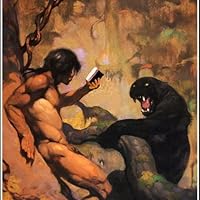
The Fox / The Captain's Doll / The Ladybird

Rate this book
A collection of three novellas that display D. H. Lawrence's brilliant and insightful evocation of human relationships - both tender and cruel - and the devastating results of war 

In The Fox , two young women living on a small farm during the First World War find their solitary life interrupted. As a fox preys on their poultry, a human predator has the women in his sights. The Captain's Doll explores the complex relationship between a German countess and a married Scottish soldier in occupied Germany, while in The Ladybird a wounded prisoner of war has a disturbing influence on the Englishwoman who visits him in hospital.

For more than seventy years, Penguin has been the leading publisher of classic literature in the English-speaking world. With more than 1,700 titles, Penguin Classics represents a global bookshelf of the best works throughout history and across genres and disciplines. Readers trust the series to provide authoritative texts enhanced by introductions and notes by distinguished scholars and contemporary authors, as well as up-to-date translations by award-winning translators.

267 pages, Paperback

First published January 1, 1920

45 people are currently reading
687 people want to read

About the author

D.H. Lawrence

2,085 books4,179 followers
David Herbert Richards Lawrence was an English writer of the 20th century, whose prolific and diverse output included novels, short stories, poems, plays, essays, travel books, paintings, translations, literary criticism, and personal letters. His collected works represent an extended reflection upon the dehumanizing effects of modernity and industrialisation. In them, Lawrence confronts issues relating to emotional health and vitality, spontaneity, human sexuality and instinct.

Lawrence's opinions earned him many enemies and he endured official persecution, censorship, and misrepresentation of his creative work throughout the second half of his life, much of which he spent in a voluntary exile he called his "savage pilgrimage." At the time of his death, his public reputation was that of a pornographer who had wasted his considerable talents. E. M. Forster, in an obituary notice, challenged this widely held view, describing him as "the greatest imaginative novelist of our generation." Later, the influential Cambridge critic F. R. Leavis championed both his artistic integrity and his moral seriousness, placing much of Lawrence's fiction within the canonical "great tradition" of the English novel. He is now generally valued as a visionary thinker and a significant representative of modernism in English literature.
http://en.wikipedia.org/wiki/D.H._Law...

Ratings & Reviews

What do you think?
Rate this book

Friends & Following

Create a free account to discover what your friends think of this book!

Community Reviews

5 stars
142 (20%)
4 stars
248 (34%)
3 stars
231 (32%)
2 stars
69 (9%)
1 star
20 (2%)
Displaying 1 - 30 of 63 reviews
Profile Image for Vit Babenco.
1,786 reviews5,796 followers
March 22, 2022
Novellas by D.H. Lawrence are written in the exquisite metaphoric language and they are full of subtle psychological nuances and refined mockery.
The Ladybird is a symbolic title – it symbolizes many things… Despite appearing cute and innocuous ladybird is a ravenous insect – it feeds on aphids…
Yes, her will was fixed in the determination that life should be gentle and good and benevolent. Whereas her blood was reckless, the blood of daredevils. Her will was the stronger of the two. But her blood had its revenge on her. So it is with strong natures today: shattered from the inside.

It is a story of relationships between the genteel young Englishwoman and the German prisoner of war – their disturbing relationships are rich in dusky subconscious currents…
‘True love is dark, a throbbing together in darkness, like the wild-cat in the night, when the green screen opens and her eyes are on the darkness.’

Fox always stood for cunning so The Fox is a story of guile.
Two women live independently at the farm and suddenly, one evening in comes a sly young man… And he is full of wily schemes and plans…
He was a huntsman in spirit, not a farmer, and not a soldier stuck in a regiment. And it was as a young hunter that he wanted to bring down March as his quarry, to make her his wife. So he gathered himself subtly together, seemed to withdraw into a kind of invisibility. He was not quite sure how he would go on. And March was suspicious as a hare.

In this peculiar way the triangle of interests is formed… Don’t let the fox guard the henhouse… If you deal with a fox, think of his tricks.
Dolls aren’t just for children… Some dolls are very special… Some dolls are even animate as it is a case with The Captain’s Doll.
She’s made a fine doll, which was a grotesque replica of the captain… And at the same time she herself was the captain’s doll… He wanted to be a puppeteer but she didn’t wish to be his puppet…
He took his hands out of his pockets and returned to her like a piece of iron returning to a magnet. He sat down again in front of her and put his hands out to her, looking into her face.

Passion is as old as mankind and it keeps holding sway.
Profile Image for Paula Mota.
1,668 reviews567 followers
July 25, 2024
D.H. Lawrence é um escritor que constrói frases magníficas e fala de desejo feminino como nenhum outro homem no início do século XX, apesar de por vezes tender para o mau gosto, como em “A Mulher que Fugiu a Cavalo” e “O Amante de Lady Chatterly”. Não é o caso destas novelas, género onde, para mim, este escritor se contém e se limita ao essencial, com pouco espaço para filosofar, como acontece em obras mais extensas.
A inclusão destas três obras no mesmo volume faz todo o sentido, visto que todas elas decorrem no período da Primeira Guerra Mundial com os três protagonistas masculinos a terem combatido nela. Além disso, estamos perante três relações que enfrentam algum impedimento e não são bem vistas pela sociedade, em que três mulheres fortes lutam elas próprias contra os seus sentimentos para manterem a independência e o respeito por si mesmas.
Em “The Ladybird” (4,5*), Lady Daphne, casada com um soldado em combate, visita periodicamente o Conde Dionys, um prisioneiro de guerra alemão internado num hospital, alguém que fazia parte dos conhecimentos da sua família antes de estalar o conflito. De início, há uma certa acrimónia entre eles, mas com o convívio e a aproximação da data de partida do conde para o seu país derrotado, percebe-se que há um encantamento entre ambos, uma concupiscência em que a escolha do nome dos intervenientes, a remeter para o classicismo, não é decerto inocente.

Night came, and the kind of swoon upon her. Yes, and the call from the night. The call! She rose helplessly and hurried down the corridor. The light was under his door. She sat down in the big oak arm-chair that stood near his door, and huddled herself tight in her black shawl. (...) But she saw nothing. Only she wrapped herself close in the black shawl, and listened to the sound from the room. It called. Oh, it called her! Why could she not go? Why could she not cross through the closed door. Then the noise ceased.

Em “The Fox” (4,5*), o inesperado fascínio de March, solteirona de 30 anos, por um jovem de 20 anos em licença do exército, é algo que tenta reprimir desde o início, não fosse o interesse mútuo e alimentado pelo sedutor Henry. É um confronto que se torna literalmente uma questão de vida ou morte.

Then he lifted his face. It was bright with a curious light, as if exultant, and his eyes were strange- ly clear as he watched March. She turned her face aside, her mouth suffering as if wounded, and her consciousness dim. Banford became a little puzzled. She watched the steady, pellucid gaze of the youth’s eyes as he looked at March, with the invisible smile gleaming on his face. She did not know how he was smiling, for no feature moved. It seemed only in the gleam, almost the glitter of the fine hairs on his cheeks.

A última novela, “The Captain’s Doll” (3,5*), dispersa-se ligeiramente e é um pouco confusa, mas também aqui há uma tentativa de resistência à sedução, ainda que desta vez haja um certo braço-de-ferro entre os dois intervenientes, a Condessa Hannele e o Capitão Hepburn, um escocês casado pertencente às forças ocupantes da Alemanha derrotada.

But because he gave himself away, she forgave him and even liked him. And the strange passion of his, that gave out incomprehensible flashes, was rather fascinating to her. She felt just a tiny bit sorry for him. But she wasn't going to be bullied by him. She wasn't going to give in to him and his black passion. No, never. It must be love on equal terms or nothing. For love on equal terms she was quite ready. She only waited for him to offer it.

Há ainda outro pormenor curioso que liga estas histórias, a zoomorfização. DH Lawrence confere aos três protagonistas traços animalescos, comparando um deles a um macaco, outro a uma raposa e o terceiro a um gafanhoto ou a um girino, o que leva as mulheres a debaterem-se ainda mais com o magnetismo que as atrai para eles.

'I suppose,' she said to herself, 'that is love à l'anglaise.’
Profile Image for Chrystal.
998 reviews63 followers
September 4, 2022
My love-hate relationship with DH continues. At times I hate him so much, when he bangs on with his stinking rot about love. Then he turns around and writes something so perceptive about men and women and their struggles with one another. He was so often right about the power struggles and the opposing viewpoints of men and women within a relationship. When he incisively writes about these themes, this is when I love his writing.

In The Fox he shows how cannily the man sort of hypnotized the woman with his sensuous presence, to the point where she was repelled by him when he wasn't there. The story was amazing...but then he ruined it at the end with his heavy-handed preachiness, as only he can.

The Captain's Doll was kind of boring until the last half. This is where Lawrence pulls out all the stops and does what he does best. The man and the woman have an utterly realistic argument about their different perspectives on love and marriage. It is a phenomenal exchange.

The Ladybird was pure rot. Boring and ridiculous. I'm just going to ignore this story and exclude it from my final rating of the book.
Profile Image for Χρήστος Αρμάντο.
Author 15 books278 followers
May 20, 2020
Τα βιβλία του Ντέιβιντ Χέρμπερτ Λώρενς (1885-1930) προκαλούσαν τα λιμνάζοντα σεξουαλικά ήθη της εποχής, τα οποία αποτυπώνονταν όχι μόνο στις κοινωνικές αγκυλώσεις κοινών μα ανομολόγητων μυστικών, αλλά και στις κυρίαρχες λογοτεχνικές απεικονίσεις του έρωτα και του σαρκικού πόθου. Με γλώσσα εντέχνως σκανδαλώδη για τους συγκαιρινούς του αναγνώστες, σκιαγράφησε και ανέδειξε με ευθύ και απροκάλυπτο τρόπο την αδιάσπαστα ακόρεστη ψυχοσωματικότητα του ανθρώπου και την περιπλοκότητα των ερωτικών σχέσεων, τις ευτράπελες αλλά και δυσάρεστες παλινωδίες τις οποίες όλοι γνωρίζουν αλλά προτιμούν να κρύβουν κάτω από το παχύ χαλάκι του διαδρόμου.

Στις Τρεις ιστορίες, που κυκλοφορούν σε πολύ καλή μετάφραση του Γιώργου Λαμπράκου από τις καλαίσθητες εκδόσεις Κουκούτσι και, όπως εύλογα θα περίμενε κανείς, περιλαμβάνουν τρεις ιστορίες του συγγραφέα, διακρίνονται ξεκάθαρα ορισμένες από αυτές τις στοχεύσεις, μολονότι με πιο κομψό και λεπταίσθητο τρόπο και όχι με την περιγραφική δριμύτητα άλλων έργων του, όπως για παράδειγμα του εμβληματικού Ο εραστής της λαίδης Τσάτερλι.

Στην πρώτη ιστορία, μια Αμερικανίδα σύζυγος και μητέρα προσβλέπει και προσφεύγει στον μεσογειακό ήλιο για τη βελτίωση της υγείας της, αφήνοντας πίσω στην πατρίδα για λίγο καιρό τον σύζυγό της. Η οξυμμένη και βοερή φύση, η ορμητική αλμύρα του κύματος, ο τσιτσιριστός μαυλιστικός ήλιος, αναζωπυρώνουν τη νεκρωμένη ερωτική της επιθυμία, απομακρύνοντάς την πλέον και νοερά από την οικογενειακή εστία και τις απαράβατες υποχρεώσεις της. Ο ήλιος είναι ο πρώτος επίδοξος εραστής: χυμώδης, θρασύς, παντοτινός ηδονοβλεψίας, αδιάκριτος, τη χαϊδεύει χωρίς δεύτερη κουβέντα και χωρίς άδεια, ένας παλλόμενος αιματώδης θεός της έξαψης και της καρποφορίας, μαυρίζει τα μέλη της και γλυκαίνει την ψυχή της.

Δίνει ωστόσο σύντομα τη θέση του σε έναν ταπεινό χωρικό, που με τους άξεστους τρόπους του θέλγει τη γυναίκα με ένταση λησμονημένη και την παρακινεί σε σκέψεις που και το σχήμα τους μόνο είναι ικανό να ερυθριάσει μια καθωσπρέπει πιστή γυναίκα. Εδώ, η ερωτική περιπέτεια γίνεται όχημα μιας ρωμαλέας απόπειρας γυναικείας χειραφέτησης, αφού η ίδια απαρνείται, βουλητικά έστω, όχι μόνο τον ρόλο της συζύγου αλλά και αυτόν της μάνας, θέτοντας στο κέντρο των προτεραιοτήτων της το δικό της σώμα, τον δικό της νου, αποδεσμευμένα από τις ερήμην επιταγές της φύσης και της κοινωνίας, σε ένα τοπίο αντονιονικής περιπέτειας και περιπλάνησης χωρίς αποτέλεσμα ή προορισμό.

Στο δεύτερο διήγημα, ένας άντρας αγαπάει τα νησιά. Εκμισθώνει ένα μικρό κι έρημο και το κατοικεί, δημιουργώντας έτσι μια προσωπική Εδέμ, που τον τοποθετεί έξω από τον χρόνο, γεφυρώνοντάς τον με τη φύση και τον εαυτό του. Κάποια στιγμή θα παντρευτεί μια γυναίκα από το λιγοστό εργατικό προσωπικό, μηχανιστικά, αυτοματοποιημένα, χωρίς καμία επιθυμία, μα με μια ακόμα πιο ενισχυμένη πλέον ώθηση για απομάκρυνση, απομόνωση και ενδοσκόπηση. Θα αναζητήσει τη γαλήνη σε ένα τρίτο νησί, στο οποίο περιπλανάται, μοναχικός Αδάμ, παρατηρώντας την πλάση, πληθωρική, αισθαντικά περιγραφόμενη, να καταλαμβάνει τη θέση της γυναίκας, με έναν τρόπο όμως πιο υπερβατικό και διαχρονικό, μια σκιά που δεν μπορείς να αποφύγεις και αποβαίνει στο τέλος μονομανής και καταδικαστική.

Καθώς κοιτούσε, ο ουρανός σκοτείνιασε και ψύχρανε μυστηριωδώς. Από μακριά έφτανε το μουρμούρισμα του ανικανοποίητου κεραυνού, κι ήξερε ότι αυτό ήταν σημάδι πως το χιόνι στριφογύριζε πάνω από τη θάλασσα. Γύρισε κι ένιωσε την ανάσα του χιονιού πάνω του.


--> Ολόκληρο το κείμενο εδώ:

https://www.bookpress.gr/kritikes/xen...
Profile Image for Nick Wallace.
13 reviews1 follower
September 23, 2023
Nobody writes like Lawrence, his idiom is one of the most unique in literature; and just when you think you are going to be subjected to a tedious and predictable English Romance, he drops a percipient Psycho-dynamic description of human relationships , expounds a profound existential jewel, or the ancient gods appear suddenly in all their subtile and ethereal glory. The characters in each of these three stories flourish rapidly into their own distinct lives and yet you can always sense Lawrence’s omniscience lurking behind their eyes, silently generating the worlds they see and experience.
Profile Image for Leela.
129 reviews1 follower
October 27, 2023
Idk well written but did not enjoy
105 reviews1 follower
May 8, 2025

The Captain’s Doll


The Captain’s Doll functions primarily as a criticism of the state of marriage in the early 20th century. Captain Hepburn is introduced to us in the context of his love affair with the German Countess Hannele. The captain appears to have a miniscule and permissive sense of self. He lusts after the countess but doesn’t seem to know or care about his own real wishes in the world. He claims to be ‘nothing’, and to her chagrin and confusion says the same about his lover before kissing her. Later on, we see the captain in a new context – marriage. Hepburn still has the same old lack of selfhood, but this time it is channelled away from the frosty and distant mystery he embodies for the countess, towards a sort of passive, domestic acquiescence. The countess is disgusted by what she sees and chastises herself for ever being attracted to this man who is ‘the perfect little husband’ – he follows his wife’s every command, he mills about, disengaging from the world to a new extent, and he acts like he barely knows the countess. How the captain feels about this situation is never expounded upon as such but it may be enough to say that his wife ‘falls out of a window’ and dies on impact with the ground. Lawrence provides a plausible enough series of accidents to explain this situation but I also think that there’s an intentional indication that Hepburn at the very least willed such an accident into existence. Hepburn takes a turn – he loved his wife, but he decides that this love was the source of the empty listlessness of his life thus far because such love as existed between he and his wife was built on the emotional moulding of both parties to what they both felt to be an unnatural situation. Hepburn frequently refers to his wife as something like a ‘fairy’ or ‘bird’ who has been forced to participate in banal human life by the institution of marriage – Hepburn confesses his guilt about this and claims that he felt an obligation to ensure that the cage he kept this bird in was as comfortable as possible. Free of this burden he decides that he will pursue the countess, but only if she promises obedience and respect, fear over love. This is all symbolised by Hepburn’s slightly idiotic desire to walk on top of a glacier in Austria without any of the proper equipment in a series of rather dawdling descriptive passages of nature writing, as if he must prove his right to live in the cold, inhuman world of breathless ice and dead landscapes. Psychologically incisive, Lawrence attacks English domestic life as a place where love is unwelcome and degraded and where respect is something forced upon a resentful target – however, the ending and some of the circumstances strain credulity with their neatness and brevity.


The Fox


Two femcels in their late twenties, stoic and practical March and delicately mannered Banford, are running a farm. All the young men have gone off to war or and all of the old men, as in the case of the previous owner of the farm, have died off. One young man, 20 year old Henry, has returned to the old man’s farm, who was of some relation to him, and is shocked to find these two women in his place. Initially affable, Henry becomes more and more sinister as the story goes on, as he tries harder and harder to capture March in a marital situation that would exclude Banford. Henry becomes identified with the titular fox, and represents the Outside, with its passion, ruthlessness, and disrespect for convention approaching the civilised, warm, somewhat cramped Inside. It’s this tension that defines the whole story – with a sense of love comparable to Hepburn’s for his wife, March feels it is her life’s mission to maintain domestic bliss for her platonic life partner (so we are led to believe) Banford, but the call of Henry/the fox represents a dark and murky desire for real sensuality, excitement, and contact with the outside world. Henry’s bucking against civilisation creates one of my favourite images and a motif that recurs in the Ladybird – that of England as a net of hedges, loud dogs, and little houses that leaves very little room for wildness. It’s my favourite because it’s something you can really feel when you’re in certain mind-sets of isolation or boredom – all these little houses with all their little inhabitants and all their little conventions. I often say that I couldn’t live in a village because it’s in villages that you’re most likely to be bombarded by various prickling and passive-aggressive signs: “NO BALL GAMES”, “DRIVE SLOWLY”, “PICK UP YOUR DOG’S MUCK”, “BE QUIET” – some of these are fairly reasonable requests, but take on the character of a hectoring voice from anonymous looming Belsen commissars. Unfortunately, the escape Henry offers from the mire of domesticity is a false one – Henry contrives a way to kill Banford and force March to marry him and move to Canada, rather than finding new life in wildness she feels herself submerged beneath Henry’s depressing and suffocating rule, where she will likely mourn for Banford and her comfortable life in England forever. Again, Lawrence offers a critique of domestic life that itself is prone to different ways of crushing the individual spirit.


The Ladybird


This one was definitely my favourite overall. Lady Daphne is the principle character in the story, but she acts as the lightning rod to which two archetypal responses to the tragedy of the First World War are displayed. The first is the injured Austrian POW Count Johannes Psanek Dionys. As he recovers from his wounds Psanek appears to be almost mad with despair. He commits himself to the idea that one day the human project will be utterly wiped out, and he believes he has his own role to play in this, saying that he will repeatedly hammer against the human edifice until it’s completely broken. He looks into the future and sees nothing worth saving, the aristocracy, themselves hopelessly decadent, has been shattered and replaced with a vulgar democracy which lacks the will to enact anything great or even human. Therefore, Psanek identifies himself with wildness and darkness, linking his family’s sigil, the titular ladybird, back to the dung-beetle, who creates by a process of decomposition. In the great tradition of all philosophers, or indeed anyone that wishes to ‘grow up’, he ceases his dedication to the merely conventional and seeks salvation in the metaphorical (and occasionally literal) outside. He shows little concern for his family or his country, seeing nothing worth going back to, nor does he hold any particular hatred for England despite her imprisonment of him and her part in the destruction of his country – all attachments and bonds have been severed by the advent of mechanistic warfare. For Lady Daphne, Psanek awakens an inner rebelliousness that seeks liberation from the mores of her class and country, not quite attraction, but certainly a paradoxical magnetism that also repulses her.


On the other hand is Lady Daphne’s husband, Basil. Basil is the son of a famous MP but lacks much money of his own. Daphne remembers him as a jovial, friendly man, but he has returned from the Middle-Eastern theatre with a giant scar and a new yet distant and uncanny devotion to Daphne. He certainly loved her before, but the love took the form of a warm and comfortable home, a gentleness, good humour, perhaps what most people today would still think of as domestic love. Now, changed by the war, Basil practically worships Daphne – not out of any particular personal feeling though, rather out of a refreshed and desperate re-dedication to the pleasures of the past. Daphne to Basil represents all that he missed whilst he was at war, but the war has rendered him incapable of loving it and her beyond the level of abstraction. Tellingly, when Basil and Psanek finally meet, and Psanek expounds his cod-Nietzschean ideology, Basil is enraptured – albeit in total disagreement. Meanwhile, Psanek enjoys the conversation – but he keeps his eye on Daphne; he recognises the subterranean chemistry that is pulling them together, and he can see all too well the cold brightness of Basil’s devotion pushing Daphne away. The classical allusions are somewhat heavy handed in this story but ultimately add a level of depth. The mythical Daphne is related to Persephone, who is snatched away by Hades and taken to the underworld, though she may return to the surface for a short period in a cyclical manner to renew the crops she is normally responsible for. The count has an obvious relationship to Dionysus – but not the Dionysus of Bacchic revelry born from Zeus’ thigh, as made clear by Lawrence’s in-text comparison between this version of Dionysus and Basil because the latter’s surface level happiness. Instead, Psanek is related to the Dionysus that is torn apart by Maenads, the destruction and violence that leads to further creation. Indeed, Dionysus can be related thematically with Hades, both embody a threat to conventional civilisation, and it is Count Dionys that steals Lady Daphne away from Basil. Note that Basil lacks any mythic correlate, he is utterly contemporary and little else, the defence and embodiment of a structure irrecoverably shaken by war. I found it hard to imagine what Dionys was meant to look like – Basil and even Daphne were fairly identifiable as stereotypically 1920s figures – but the description of the count as vaguely animalic, hirsute, dark-featured, resembling a monkey, lead me to see him almost as a vampire. This is probably apt, the vampire representing old world aristocracy corrupted by contact with the modern age and turned destructive.


In the end, Lawrence yet again makes his feelings clear but offers little hope – Count Psanek is clearly the more vital figure of the two men, and the one Lawrence admires the most, but ultimately he and Lady Daphne have an uncertain fate, and Psanek himself seems resigned to the idea that he will fade into isolation and obscurity as the Basils of the world try and reconstruct society. Daphne is left depressed and torn between two ideals, for all of Lawrence’s sympathy for old-world masculinity it nonetheless fails to be salvific.
Profile Image for Kate.
10 reviews
July 27, 2010
Without an interest in and appreciation of Lawrence's techniques and style as a writer, this book of three novellas would probably have seemed quite dull.
Luckily, I love his work, so I really enjoyed these stories.
Another great writer trapped by his society and their small-mindedness.
Profile Image for Rosemary.
2,196 reviews101 followers
April 12, 2020
All of these novellas are set during or just after the First World War, showing the effect of the war on men, and the effect of those altered men on women.

The Fox was the only one that meant much to me. I thought that if the other two had been written by women, they’d have been dismissed as romantic fluff: I could imagine them flowing from the pen of Elinor Glyn, for example. But because they were written by a man, they’re amazing emotionally revealing literature, apparently ;)

I wonder if Lawrence was influenced by Glyn? I wouldn’t be surprised.
Profile Image for Tor Franz.
22 reviews2 followers
April 23, 2024
It’s hard. The writing is so beautiful, and Lawrence has yet again managed to capture the raw beauty of the natural world. Whilst all this is true I would go so far as to say that the impact of these novels was, for me, a little mellowed by the outdatedness of both the outlooks and view points of the characters these novellas give us. With Lawrence it’s always very hard, but it does feel worth it.
Profile Image for Richard.
599 reviews6 followers
October 28, 2015
These three novellas are probably not the best starting-point for those new to the works of D. H. Lawrence. Unfortunately, they are also unlikely to convert anyone who, like myself, finds it difficult to appreciate or enjoy his writing. Varying in setting and incident (although only The Fox has much of a plot), each is the account of a love-triangle, populated by characters who think, feel, and act in ways that are virtually unrecognisable as the thoughts, emotions, and behaviour of anyone I've ever encountered in literature or in life, or indeed that I could imagine. Each story is interspersed with, and culminates in, swatches of indulgent and repetitive explication of feelings and motivations that aim at the evocative and insightful, and succeed only in being turgid and obscure. Here is an example from The Ladybird:
That fierce power of continuing alone, even with your lover, the fierce power of the woman in excelsis - alas, she could not keep it. She could rise to the height for the time, the incandescent, transcendent, moon-fierce womanhood. But alas, she could not stay intensified and resplendent in her white, womanly powers, her female mystery.
And so on. My sense of rising irritation while reading each novella was matched in intensity only by my relief at having finished it. Not a book to return to, and perhaps, sadly, time to accept that Lawrence is not for me.
Profile Image for Geoff Wooldridge.
916 reviews1 follower
October 23, 2018
Written in Lawrence's normal elegant style, the three novellas (or short stories) in this edition cover a period around the end of WWI and are set in England and Germany.

Unfortunately, none of the three yarns quite reach the heights of Lawrence's more well known novels, but they are enjoyable and relatively satisfying in their own way.

Of the three, I enjoyed The Fox the most, followed by The Captain's Doll and finally The Ladybird.

If you are a fan of Lawrence, these three novellas, first published in 1923, are definitely worth the short time it will take to read them.
Profile Image for Craig Thornber.
4 reviews
February 8, 2014
So I just read this relatively short novella for uni and I loved it..... It's a powerful but short love story, that refers to lesbianism without it ever being mentioned. But who is in love the two women? or the woman and the man? and furthermore how does the pressure placed upon them by society immediately after WWI force their hands in such matters.

A great short read with a surprising ending that leaves all parties both bitter and pleased with the results at the same time.
Profile Image for Chris.
17 reviews8 followers
November 27, 2009
So far I have read the fox, a terrible insight to some of the disaster that can be caused by sexual attraction mistaken for love, in the mind of our young soldier, and the power it and war can have on affecting his judgement. After reading this depressing yet intricately written novella I have found an author that I really enjoy, best of all-it's a literature text. :)
48 reviews1 follower
November 16, 2014
"The Fox" was pretty good, and the first half of "The Captain's Doll" was ok, but I rather disliked the end of "The Captain's Doll," and I very much disliked "The Ladybird." Not into his "will to power" junk and the lengthy philosophizing without a story line!
Profile Image for Ross.
64 reviews
February 15, 2016
Women and men contend with each other in these three novellas taking place during the First World War and its aftermath. Lawrence’s rapturous descriptions of flora and fauna are frosted over by his characters’ thoughts and base motivations, which are brought to the chilly forefront.
Profile Image for David.
177 reviews2 followers
September 19, 2022
Did Lawrence feel conflicted during WW1 given that his wife was German? These three novellas seem to have been published in the aftermath of that war's unprecedented carnage and might have been pushing it a bit in having sympathetic German/Austrian characters, and not so sympathetic British ones. The stories might seem slight in some respects, particularly The Captain's Doll, but there's a lot in the context. As with Lady Chatterley's Lover, these stories seem to be as much about the war's effect on people as anything else.

First up is The Ladybird. A wounded German count is found injured in a British hospital and forms a relationship with a family he knew before the war, particularly a young wife awaiting her husband's return from battle. He has given that young woman a thimble carrying a family Ladybird emblem and this is totemic. The lady's husband returns wounded and traumatised and the couple continue to visit the enigmatic count. As with all of these stories, the plot rather peters out as the count's repatriation approaches. It seems clear that the couple's relationship will not recover and that she is in love with the count. The point that she is lucky to have a husband back at all is not made. After that war women had to live alone due to the shortage of marriage partners.

The Fox features the complex character of a very young British tommy who returns to a childhood farm haunt to find it being run by two women, not particularly successfully. Their chickens are preyed upon by The Fox. Originally he sets his heart on the vigorous March, with a view to taking back the farm through marriage, but he then becomes obsessed with possessing her. This despite the strong hint of a lesbian relationship with the delicate Banford. March is older and has her relationship with Banford and the plot swings around her doubts. Following tragedy, the plot ends with great unhappiness and a likely unsuccessful relationship. It's easy to forget the lack of options for women at the time. If you doubt that Lawrence is implying a lesbian relationship, read The Rainbow.

The final story is rather marred by anti-semitism, including the expression 'the heavy jews of the wrong sort', whatever that's supposed to be. Lawrence also seems to be criticising jews for trying to pretend to be Austrians, or to put it another way, assimilate. Minority groups just can't win can they? If Lawrence could have seen the future where such lazy stereotyping and talk contributed to the holocaust, would he have written this stuff? Despite criticisms, I always think there's a deep humanity in his actual writing.

A trip to see a glacier hints at a globally warming future, as early as the early 20th century. The summer has been unusually hot and the glacier is melting, the melt water streams gushing with crystal clear water. I wonder if that glacier is even still there.

A British captain has struck up a relationship with a deposed countess with whom he shares a house, although they have different apartments. The countess scrapes a living by making dolls and fine embroidery, in partnership with another aristocrat, and makes a fine doll of the captain that's spookily life like. It's never revealed how far this relationship has got. It works on the basis that the captain's marriage is empty shell. Bear in mind the captain is an occupier and the war has ruined the countess.

His wife turns up having got a hint of infidelity. Lawrence does not describe her or her actions favourably. She throws something of a spanner in the works. Her offer for the doll is rejected and the two aristocrats depart.

The captain becomes free and traces the countess, now engaged to an Austrian gentleman. Let's see if that can be screwed up for her. The relationship between the captain and the countess are frankly bizarre. If you were back in this time, in love with a former enemy, possibly traumatised and deprived of former privilege, would you behave in this way? There is nowt queerer than folk.

As with the other stories there is a lot left unresolved here. Will they, won't they? The countess breaks a social convention that is no longer a convention, so she perhaps comes across as less of a radical than she would have had at the time. She is superior to the captain, being frequently astounded at his behaviour, although his interest in astronomy hints at intellectual depth.

The descriptive writing here is excellent, it's like being in the scene. Despite reservations, the situations and relationships are not too far fetched given the war time and post war settings. Lawrence explores the nature of relationships and has strong female characters; how many other writers were doing this at the time? Showing sympathy for German characters might have taken some courage at the time. He tries to be real world and to address its complexities, although I'm not sure how successful that is sometimes.
Profile Image for Phrodrick slowed his growing backlog.
1,077 reviews68 followers
February 17, 2025
I had come to this collection of D. H. Lawrence novellas after having read The Rainbow and Intending to finish the set by reading Women in Love. Somehow, this collection, The Fox/The Captain's Doll/The Ladybird, seemed to me a trilogy and I like trilogies. The books are all about people in love, and all having some relationship with the just finished WWI. Thematically they are related but need not be considered as a trilogy.

The Fox, is perhaps least related to the other two. Two women, living together happily, if not successfully as farmers in a remote part of the county find that a fox has targeted their poultry. Even more so the animal nature of the fox has impressed one of the two women. Surprise, a man comes upon the household and makes himself useful to the ladies. And no surprise he becomes the Fox and the effected damsel, his target.

For me, much of this story is about style and the legitimacy of the women’s response to the sly predator in their midst. His decision to marry, seems entirely arbitrary and venial. I guess it is realistic in a world of male dominance and low regard for romantic feelings. That his suit is successful was something I had problems comprehending.

Ther are complexities in this relationship that I think a better reader would do a better job of reviewing. Mostly I was frustrated.

The other two stories are at surface level quite simple.
A old, married military officer is having an affair with a now down on her heels title woman. She makes her living by making puppets. Her mistake is to fashion a doll too much in his image. The middle passage of the book is where things that hardly matter happen except that they allow these two, The Mistress and the Soldier to have a major heart to heart about what each expects in a relationship. She is of course a believer in romantic, emotional love, what he wants is best understood from him.

The Ladybird is an insect. In America is best known as the Ladybug. It is our symbol because it is on the MMC’s, family coat of arms, and because it is known as a relentless eater of Aphids. This only worked for me, because I was asked by the author to accept it.

Our male character is a titled German Officer, a wounded and captured Prisoner of War. Out FMC is the wife of a serving British Officer, also a POW in Turkey. A key to appreciating Lawrence is that events are important in that they set up how characters relate to each other and how much you appreciate his style. Lawrence is rightly known for his craftsmanship. Sometime his style is too over apparent. What matters over style is your willingness to accept that he understands his female characters and gives us believable female characters.
57 reviews
August 16, 2021
The Fox: [reviewed elsewhere on this page]

The Ladybird: In rating a book first published in 1923 there is a dilemma: how to rate novellas written in a time when customs and conventions differed from today's. I find I can excuse Lawrence's objectification of characters, his repeated return to the outward beauty of the woman, his rapturous descriptions of her white wrists, his descriptions of Count Dionys as, "a queer, dark, aboriginal little face he had, with a fine little nose; not an Aryan, surely." The reason such blatant sexism and racism is forgivable? They stem from the innermost perceptions of the characters themselves.

Daphne, the privileged Englishwoman who visits Count Dionys in hospital, is a product of her time. She is also curious and open to the unsettling conversations. While awaiting the return of her husband with a mix of desire and dread she visits the count, a man she knew in her girlhood. He is now an injured POW, recovering in a hospital nearby. While Daphne recoils from the count's physical appearance and shortness of stature there are deeper currents at play. Upon her husband's return she invites the count to stay at their property and, with a loss of desire for her husband, takes the count as a lover. But only in the dark where she cannot see him.

The surprise for me came at the end when Daphne's husband, Basil, indicates that he has some awareness of her feelings for the count. As the count departs and Basil accompanies him in the car he states, "something in me died in the war. I feel it will take me an eternity to sit and think about it all." Love, for Daphne's husband is "action" and while he wouldn't mind "work" he would "only ask of life to spare [him] of any action of any sort - even love."

The Ladybird has much to say about the sad repercussions of war, of forced separation and societal pressures to adapt after wartime. Its message over time outweighs political correctness.
Profile Image for Zachary Ngow.
150 reviews5 followers
September 23, 2024
I have been reading the stories of D. H. Lawrence in random order, which includes these three novellas. Of these, I read The Captain's Doll first, then The Fox and finally The Ladybird. The three stories don't seem to be linked, at least not overtly, but they all explore the magnetic pull of unconscious minds.

The best was The Ladybird, which features Lady Daphne, and a 'dark' and 'light' representative. This story has Lawrence's philosophy of blood consciousness intertwined with the fallout from the Great War and Ancient Egyptian symbols. This story has excellent dialogue which feels completely lifelike, with the oddities of real speech. An earlier/alternate version was called The Thimble, which will make sense when you read it. There is also something there about Dionysus that I will have to look into...
5/5

The Captain's Doll was very good, a tale also involving a war veteran, who is made into a doll. It spans the most area of the three stories, and ends in a black-and-white mountain town full of people straying like lost souls and a great glacier. There are a lot of great quotes: "That's true. In a great measure, there's nothing." The thimble in the previous and the doll in this story both seem to have some power (like voodoo dolls). There is unfortunately some strange and racist statements about 'Jews of the wrong sort' that keep appearing.
4/5

The Fox wasn't as good as the others. A pair of sisters have to put up with a horrible guest, who is like a fox that is terrorising their hen coop. It is similar to Hadrian/You Touched Me, with a dark unconcious pull. Another interesting theme that keeps coming up with Lawrence is animal consciousness. However, the story suffers from too much didacticism.
2/5
Profile Image for Jennifer (JC-S).
3,539 reviews285 followers
October 1, 2025
I have been a fan of D. H. Lawrence’s writing ever since I read ‘Women in Love’ at high school last century. But while I have read several of his novels, I had not read any of his short stories.

Written before January 1922, these three novellas explore human relationships. Each of the stories involves three people. In ‘The Fox’, two young women living on a small farm in the UK have their lives disrupted first by a fox preying on their poultry, and then by a young man. In ‘The Captain’s Doll’ the three people are a German Countess, a Scottish soldier, and his wife. And in ‘The Ladybird’, the three people are a wounded prisoner of war, an English woman who visits him in hospital, and her husband.

There are no happy endings here, and I didn’t care much for any of the characters and the situations they found themselves in. In the hands of a lesser writer, the stories would not have held my attention at all. But there is something in the way D. H Lawrence writes about relationships, his recognition that while convention may be recognised and accepted, it is life at the margins of convention which holds our interest. D.H. Lawrence brings his characters, their dilemmas and their foibles to life. I might not have liked them, but I did wonder about the situations each were in and the choices they made.

And now, I will seek out more of Lawrence’s work.

Jennifer Cameron-Smith


Profile Image for Alexander Mastros.
142 reviews3 followers
April 23, 2020
Three interesting and pretty bizarre stories. I love the way he describes the feelings each character has, such a rich palette of words and expressions, simply amazing.

It's the second book by Lawrence, that I read and it's quite easy to see a pattern. The characters are mysterious and most of the time spiritually disturbed. That which surprises me more though, is the fact that there is always a "smell" of misery.
What is even more surprising is that, the endings are anticlimactic most of the time. Like, something's missing.
Profile Image for Lyle.
4 reviews2 followers
October 11, 2020
To be fair, I only read the first two novellas (started the Ladybird but got bored quickly). The Fox is definitely the highlight of the 3. With that being said, boy can Lawrence write a sentence: “The chief thing that the captain knew, at this juncture, was that a hatchet had gone through the ligatures and veins that connected him with the people of his affection, and that he was left with the bleeding ends of all his vital human relationships.”
Big change of pace coming from Wilde’s lackluster descriptions.
Overall, 67.8/100
Profile Image for Kathryn.
133 reviews2 followers
May 13, 2021
I abhor the men in these stories, but I can easily feel for the women. I found the motives of the women distressing, that they give into these men so easily even when their conscious speaks of the darkness and despair that would transpire. They debate with their souls and spirits against primal desires.

I did not like how the Count in ladybird is described as a brown bohemian monkey, so racist and a bit disappointing to read in comparison to how vastly beautiful white English lady fingers are.

Still I gave it three stars because the book made me think of marriage, infidelity, and misogyny.
Profile Image for Sarah .
437 reviews28 followers
Read
December 19, 2022
Puh, das war nix für mich. Etwa nach der Hälfte abgebrochen.
Zwar sind die Geschichten ganz gut erzählt, aber inhaltlich gehen sie vollkommen an mir vorbei: die Darstellung von Mann und Frau, das Beharren darauf, was männlich und was weiblich ist, dieses eigenartige unverständliche Verführen der Frauen durch einen Mann. Ich fand die Geschichten einfach nur unangenehm eigenartig und nichts hielt mich am Weiterlesen. Danke, nein.
Profile Image for Andrea Motta.
73 reviews
December 24, 2024
Rivoluzionario perché parla di omosessualità senza citarla e in un periodo tabù (1918). Critica la società dell'epoca per l'omofobia e lo fa metaforicamente. L'eterosessualità che vince sull'omosessualità ma svuota la povera March della vita. Purtroppo però è scritto in modo pessimo. Fastidioso, ripetitivo, monotono, con una trama da seconda elementare se non fosse per la simbologia e le metafore
34 reviews14 followers
July 5, 2022
2.5 if I were feeling generous. The Fox is by far the highlight here, the other two weren’t worth the time it took to read them. I was struck by the writing - given Lawrence’s reputation as a great writer descriptions such as ‘huge and massive’ and ‘wide as a wide bowl’ just seemed….a bit shit tbh
Profile Image for Thomas Brown.
294 reviews
August 15, 2022
Somewhat odd triplet of novellas, each about a woman falling under the spell of a pretentious and selfish man for no convincing reason. But with some interesting and thoughtful moments, and a good edge of the unusual and sinister on occasion
Displaying 1 - 30 of 63 reviews

Can't find what you're looking for?

Get help and learn more about the design.