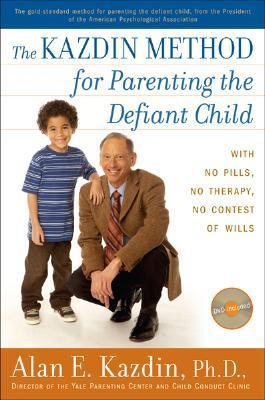
A lifesaving handbook for parents of children who are occasionally, or too often, “out of control” Includes a bound-in twenty-minute DVD featuring Dr. Kazdin and his staff illustrating key concepts of the Kazdin Method Most child-behavior books are filled with advice that sounds reasonable, fits with what parents already believe about child-rearing, and is—as Dr. Kazdin proves— guaranteed to fail. The Kazdin Method for Parenting the Defiant Child makes available to parents for the first time Dr. Kazdin’s proven program—one backed up by some of the most long-term and respected research devoted to any therapy for children. Kazdin shatters decades’ worth of accumulated myths about tantrums, time-outs, punishments fitting the crime, and much more.With the practicality of Ferber and the warmth of Brazelton, Kazdin leads parents through every step of the Kazdin Method in action—how to use tone of voice, when and how to touch, how to lead your child in a “practice” session, how to adjust your approach for different-age children, how to involve siblings, and more.The program is temporary, but the results are permanent—for very young children, adolescents, and even beyond.
Alan E. Kazdin, Ph.D., is the John M. Musser Professor of Psychology and Child Psychiatry at Yale University and Director of the Yale Parenting Center. His work on parenting and childrearing has been featured on NPR, PBS, the BBC, and he has appeared on the Today Show, Good Morning America, ABC News, 20/20, and Dr. Phil. He frequently lectures to parents, educators, and business groups interested in learning the latest research and techniques of childrearing.
When I read this a few years ago, it seemed like a good plan. And it probably is, if you can be dedicated and stick to the plan for behavior modification: tackling one problem at a time, maintaining a reward chart, consistency, etc. But I live in the real world with three highly active kids (who are either strong-willed or too smart for their own good!), so this just didn't work. I have found much more success in tapping into my child's emotions and understanding them, then choosing an action. I have found that (my) children usually act out for a reason... tired/hungry/needing positive attention/needing more activity/needing less activity... because each situation may have a different reason, I feel it may need a different approach depending on circumstances. As I have worked to become more in tune with my children, the less I have needed any sort of punishment as part of my discipline plan. Instead of this book, I would recommend "Discipline without Distress" and "The 5 Love Languages of Children."
Thoughts so far (about 1/4 in): This book should have been called "Parenting Children," not parenting defiant children. I would not have picked it up if it hadn't been recommended by someone else, because as obnoxious as my kids can be, I don't think of them as defiant. But so far, the approach seems sensible and backed up with data, and workable for all sorts of children and parents.
Update - thoughts after finishing/skimming before returning to the library. Am intrigued by the approach and think it sounds sensible. In fact, I've ordered a copy for reference. But it's not an exciting reading experience. So 5 stars for good information, minus a couple of stars because it's a parenting book and a slog to get through.
Someone needs to come up with a new marketing approach for self-help book authors, for readers who truly hate reading the genre - I will pay you full price, but you give me the information condensed into pamphlet form. Sounds like a win-win to me.
I like the points about the ineffectiveness of punishment, and I think if you're looking to modify a discrete behavior -- getting ready in the mornings-- then the point-system method will work (think: sticker chart). I admit it's exhilirating that he keeps saying the program is temporary-- like if you just do it for a month, boom. Also, it'd be better for younger kids, I think. The problem with this system for my son is that he WOULD view not earning a point/reward as a punishment and it would lead to an explosion-- and that happened exactly-- what I'm trying to avoid in the first place (no advice on that in his trouble-shooting section). He says for older kids, you should connect the reward right to the behavior "if you do this, you get this." If bribes worked (he swears it isn't a bribe), I think parents would have it all figured out right? We're not above that! But, good reminder to parents to praise the good every time-- will combine that with talking after or pre-explosion about alternative behaviors. (also: I don't like the title and he talks about all children)
I love this approach. I think his positive feedback approach can work with any child, and It is a refreshing change from all the punitive based programs out there. This WORKS with my 4 yr old who has Aspergers. It is so simple, celebrate the behavior you want to encourage. Specific praise. I can't say how much this book has change my sons behaivior, and my whole approach to parenting.
طريقة كازدين هي برنامج وضعه دكتور ألان كازدين لتغيير سلوكيات الأطفال والمراهقين للأفضل. يشغل كازدين حالياً منصب مدير مركز الاستشارات الأبوية بجامعة ييل الأمريكية، وله باع طويل في سيكولوجية الطفل؛ نحو ثلاثين عاماً.
يرى كازدين أن طريقته التي طورها على مدار عمله هي طريقة تعتمد على البحث العلمي، كما أنه وزملاءه قاموا باختبارها على آلاف الأسر التي تزور المركز بحثاً عن حلول لمعالجة سلوك أطفالها. ولجعل هذه المعرفة المبنية على التجربة متاحة للآباء والأمهات؛ قام بتأليف هذا الكتاب في ٢٠٠٨، كما قام فيما بعد بشرح برنامجه في مساق على كورسيرا يستغرق شهراً.
تتلخص طريقة كازدين في ثلاثة خطوات أسماها: The ABC method
A: Antecedents يرمز الحرف الأول إلى الطريقة التي ينبغي أن يُطلب بها السلوك أو التصرف من الطفل. فمثلاً لا داعي لصياغة الطلب في شكل أمر، وينصح باستخدام عبارة: من فضلك، واستخدام نبرة صوت مناسبة، وتعبيرات وجه غير عدائية.
B: Behavior يرمز الحرف الثاني إلى السلوك نفسه الذي سيقوم به الطفل وكيف يمكن أن نعوده عليه. من ضمن هذه الطرق: التشكيل؛ وهو أن نقوم بتجزئة السلوك إلى عدة أجزاء، فلا نطالب الطفل بأن يقوم بإزالة كل لعبه المبعثرة، بل نبدأ بأن نطلب منه أن يزيل لعبة أو اثنتين، ثم تدريجيًا نقوم بإضافة لعب أخرى. الهدف من هذه التجزئة هو أن يبدأ الطفل ولو بخطوات بسيطة ثم يعتاد الأمر حتى يقوم بالمهمة كاملة.
C: Consequence الحرف الثالث يرمز إلى التبعات التي تنقسم إلى الثواب والعقاب. أما الثواب فأهم ما دعى إليه كازدين أن نقوم بمديح السلوك الجيد بشكل حماسي مع ذكر السلوك بكل وضوح، فمثلاً نقول: "رااائع! لقد قمت بترتيب لعبك، يا لك من ولد كبير!" ثم نعقب المديح بحضن، أو قبلة، أو أي طريقة نشتبك بها جسديًا مع الطفل.
أما العقاب فهو يتلخص في استبعاد الطفل إلى مكان آخر أو حرمانه من شيء يحبه، على ألا يتم المبالغة في وقت الاستبعاد أو الحرمان. أما الضرب والنهر فهما طبعاً مُحرمان تماماً.
قد يرى البعض أن كازدين لم يأت بجديد، جميع الأمهات والآباء يعاقبون أطفالهم ويمدحونهم، والبعض يستخدم طريقة التشكيل، والبعض لا يضرب أطفاله؛ لكن كازدين يخبر قراؤه أن هذه الطرق قد تبدو مألوفة لهم من الناحية اللفظية أما التطبيق فيختلف. يقوم كازدين بشرح كل خطوة بالطريقة التي ينبغي أن تكون عليها حتى تنجح في تغيير السلوك. فمثلًا عند استبعاد الطفل من مكان اللعب لعقابه لابد أن تكون قد أعلمناه من قبل بما يستحق هذا العقاب، وألا يتم استبعاده أكثر من خمس دقائق، وأن نقول له بوضوح أن عليه أن يذهب لمكان استبعاده لأنه فعل كذا بطريقة عملية، بدون نهر، وإذا لم يستجب نحذره أننا سنقوم بإضافة دقيقة أخرى. كل هذا من المفترض أن يتم بطريقة حازمة وهادئة على قدر المستطاع.
أما القاعدة الذهبية لطريقة كازدين فهي التركيز على الثواب أكثر من العقاب، أو ما أسماه تعزيز الإيجابيات. أي أن نسبة العقاب إلى الثواب لابد ألا تقل عن واحد إلى خمسة، لذا لابد أن نعتاد ملاحظة السلوك الإيجابي وامتداحه بدلا من تركيزنا على الأخطاء فقط.
هناك نظريات كثيرة للتعلم، وهي نظريات تسعى للوصول لطريقة أفضل لتعليم الأفراد. وبما أن الهدف الرئيسي للكتاب هو تغيير السلوك السيء للأطفال أي تعليمهم السلوك الصحيح؛ كان من الطبيعي أن نلاحظ أن طريقة كازدين تدور في إطار إحدى النظريات دون غيرها.
تتبع طريقة كازدين النظرية السلوكية التي تركز على تغيير السلوك باستخدام الثواب والعقاب، يتضح ذلك عندما تساءل أحد الآباء عن قدرة هذه الطريقة على تعليم طفله، فهي تجعل كل المحفزات خارجية وليست داخلية، فكان رد كازدين أن أهم شيء أن يتدرب الطفل كثيرا على أداء السلوك الحسن لأن التدريب هو الذي سيضمن أن يداوم الطفل على السلوك، وهذا هو ما يسعى له هذا البرنامج. أي أنه ركز على أن يدعم السلوك نفسه بغض النظر عما يدور في عقل الطفل. ورغم أن التدرب على فعل سلوك ما هو فعلاً الذي يضمن تكراره، لكن ألا توجد وسيلة أخرى للتدريب تهتم بتحفيز الطفل ليقوم بهذا السلوك وهو مقتنع به بدلا من أن يكون نتيجة لاستجابته للثواب والمكافأة فقط؟ هذا هو أساس النظرية السلوكية التي تتعامل مع العقل على أنه صندوق أسود لا شأن لها بما يدور داخله، هي تركز على النتائج بغض النظر عن طريقة معالجة الطفل العقلية والنفسية للسلوك.
ورغم أن كازدين أكد على نجاح طريقته المجرَّب؛ قام بإفراد الفصل الأخير لوسائل مهمة من شأنها إنجاح برنامجه لكن بطريقة مختصرة ودون تفصيل؛ كان من ضمنها حسن الإنصات للطفل، وتحفيزه على حل المشكلات؛ وهذا دليل على أن برنامجه لا يمكن أن يغير حقا إذا لم يتم تهيئة الظروف المناسبة له؛ لذا ربما كان من الأوقع لكازدين أن يدخل توصياته هذه ضمن الطريقة نفسها، وأن يدرجها بالتفصيل ذاته الذي استخدمه لشرح طريقته على مدار ٣٠٠ صفحة.
الكتاب به عدد من النصائح الجيدة، وستجده فرصة ممتازة لتتمهل بعض الشيء وتتأمل بعض الافتراضات الخاطئة التي تتصرف على أساسها بطريقة تلقائية مع الأطفال، فتفسح المجال لأساليب أخرى.
ينقص الكتاب النظرة الشاملة؛ لكن د. كازدين على أي حال لم يزعم أنه يعد بواحدة. كما أنه يجب قراءة أكثر من كتاب عن الموضوع لتكوين صورة شاملة عنه.
Looooove it!!! Especially that it's based on not just his own experience, but on lots of research - other studies. I will definitely buy it to use with Betsy. I like his "program" for dealing with specific behaviors you'd like to change, but also the end which talks about how using traditional values helps kids turn out better.
Quotes: "Children tend to avoid interacting with a punishing agent - parents, teachers, whoever it might be - and to minimize the time they are obliged to spend with him or her. . . .By driving a wedge between parent and child, harsh and frequent punishment will reduce the effectiveness of that parent's praise as a reward for good behavior." 132 "[G]ood parental habits. . . [Parents] are not so likely to foster or exacerbate problems with harsh commands, endless reprimands, caboosing, or corporal punishment. They're specifying exactly what behavior they would like and offering more specific praise for that behavior when they see it, using nonnagging prompts and trying to identify and reinforce positive opposites.
Positive parenting: 1. Instruct calmly. 2. Listen to your child. 3. Solve problems together. 4. Be generous with warm fuzzies. 5. Build competencies. (interests) 6. Encourage social interaction, often under your supervision. 7. Always know where your child is. "The research shows that not knowing where your child is places him at greater risk for all sorts of behaviors, . . . Children who are unmonitored are more likely to bond with, connect to, and be encouraged by peers who are themselves not monitored well. As they have more unsupervised time, they talk more about deviant behavior and engage in more of it." 8. Plan down time. 9. Put value on quantity time. 10. Develop rituals and routines with your child. 11. Connect the child to other family members. 12. Take care of yourself.
Wow! What a powerful book! Don't be deceived by the title. This book isn't just for the "defiant child." It's really about how to change behavior period. I even used the principles in this book to help me lose weight. I love how the book emphasizes the power of positive reinforcement and not expecting perfection. When you're teaching a child to walk, you don't wait until he can run before you praise his efforts and you certainly don't punish him when he falls. You help him practice and you teach him and guide him to a learned behavior. I also loved the idea that un-praised behavior falls out. That's true. If I go the extra mile for someone and they don't notice it or appreciate it, I'm not likely to do it again. These methods can be as much or as little work as you want to put into it but even slight adjustments can make a big difference in the home. I think my favorite idea is "find your child doing something right, then praise them." So helpful! You should hear my kids at dinner time now. There are "May I have some . . . please" comments all over the place. Love this book. Love how it teaches you to influence your children without all the yelling, nagging, and punishments.
Şöyle ki pozitif ebeveynlik terimi ve nerdigi yonteme ilk sayfalarda akillica bir gorus olarak bakmasamda sonradan okudukca evet aslinda yetiskinlerde bunu ister diye düşünmeye basladim. Birileri tarafından takdir edilmeyi, dogru davranislarinin fark edilmesini ve buna gore ayricaliklar elde etmeyi yetislinlerde sever. '
Önerdiği yontemlerinuc gundur deniyorum simdilik benim bakis acim ve hislerimde bile degisiklikler oldugunu farkediyorum. Yani sadece cocuk degil ebeveynde degismeli...
There are a couple of key things I learned from this book, specifically, the most effective way to issue a command, and the most effective way to praise. It also changed my perspective on punishment somewhat. There is information on how to set up an effective point system, however, I would have appreciated more example scenarios. The point/reward system is set up briefly within one chapter, leaving me unsure how to handle certain situations. I did try implementing a point system, which has achieved moderate success. Though I have been a little disappointed in the results, my daughter's compliance does seem to have increased in general.
One point that seems to be overlooked in the book is what to do when you must stop a negative behavior immediately. (The general policy is to reward the positive opposite of the behavior, extinguishing the negative behavior by not giving attention to it). But what if I need my daughter to stop screaming in the middle of church right then? Or quit running away from me in the store? I can't just ignore these actions. I have to confess, I did not finish the book, but found little hope from skimming the rest that such information is offered in the book. Please correct me if I'm wrong. The subsequent chapters seemed to address specific issues such as applying the system to pre-adolescents, or low frequency behaviors, etc. I think the book also could have distilled the information into a shorter, clearer format. (And as long as I'm being picky, maybe it could be a little less dry). And I found the accompanying DVD to be fairly useless, especially where the point system was concerned (the part where I could have used the MOST clarification).
I skimmed the parts about dealing with older children because I was specifically reading for advice for my children's ages. (I'll have to reread as my children get older.) The area I'm really struggling now is parenting my defiant 2 1/2 year-old, so I was bummed that advice started at the age of 4. All of the methods suggested are too advanced for my youngest son as he doesn't comprehend charts or anything like that yet. Despite that, I have found success by applying these methods to my 5 year-old and to myself about how to react to certain actions of my 2 1/2 year-old. Since the book focuses so much on praising the positive, I find myself controlling my temper better and I'm genuinely a happier mom! My 5 year-old is working so hard each day to earn the rewards for the system we set up together, and the home is a lot more pleasant because in general there is less contention. I love the suggestions in the book to have the child choose the rewards and to use fun rewards that aren't always monetary. I also loved the chapter on punishments, specifically the information on time-outs.
This powerful, positive book on parenting is recommended to the patients and families by the doctor I work with in our Child Development clinic (I am a social worker), so I decided to read it. After checking it out of the library, I read most of it. It offers parents of kids of all ages practical ideas on how to increase attention to positive behavior choices while decreasing negative attention and punishment. He backs up the method with research across various academic settings where he has worked through the years. His philosophy makes sense. I liked the 20 minute video that came with the book; we actually watched it as a family. Now our family utilizes his techniques on each other. I was praising my almost 13 year old son the other night for making dinner. He cleared his throat, indicating he wanted the Kazdin Method, so I touched his shoulder, was very enthusiastic and specific. Our children give it back to my husband and me too when we do something that pleases them.
So I only read the parts applicable to my children's ages, but I really liked all the emphasis on being more positive and focusing on the positive and staying in control not by controlling your child, but by ignoring negative behavior. The whole premise is that if we ignore negative behavior and praise positive behavior, the negative behavior will become extinct for want of attention. I buy into that. It's very Christlike at any rate.
This book was exactly what I needed! I have very strong-willed children, and often parenting can be a challenge. Kazdin's advise is based on scientific studies - a method that has proven to work time and time again. While it's not a guarantee, he says the Kazdin Method, has worked for more than 85% of his patients. My children responded immediately, however, we still have more work to develop new long-lasting patterns. I highly recommend this book.
This book is a bit dry, but has some good information. Stay calm, tell them exactly what you want (instead of what you don’t want), catch your child being good. Nagging, threatening, long explanations and punishing are ineffective. And remember, they’re kids! And even the best behaved kids only listen 80% of the time. Model correct behavior (yelling teaches yelling, anger teaches anger).
Sorun bezdirici seviyede değilse çoğu ebeveynin puan sistemiyle, ödüllerle uğraşmak isteyeceğini sanmasam da istenen davranışı ortaya çıkarmak için çocukla nasıl iletişim kurmak (ya da kurmamak) gerektiği konusunda akıllarında kalacak birkaç önemli bilgi edinebileceklerini düşünüyorum. Tavsiye ederim.
Kitapta bahsedilen metot sistematik olarak şöyle işliyor:
• Çocuğunuzda istenmeyen bir davranışı oldukça basit şekilde tanımlamak (ev ödevini yapmaması), • Bu davranışın yerini almasını istediğiniz pozitif tersini net olarak belirlemek (masasında sakince oturup 20 dakika boyunca ödevini yapması), • İstenen davranışın ortaya çıkması için gerekli öncüllerin sağlanması, • Davranış gerçekleştiğinde sözlü takdir ve ödüle dönüştürebileceği puan kazanımı.
Metodun uygulanabileceği sorunlardan bazıları olası yolaklarla senaryo halinde ayrıca daha detaylı işlenmiş:
• Yatma vakti sorunu • Süpermarkette huysuzluk • Okula geç kalma • Kardeş kavgaları - arkadaş kavgaları • Ev ödevinden kaçınma • (Daha kısaca) Ergenlik öncesi: kötü tavır, küfürlü konuşma, evde yalnız kalma meselesi, anlaşmalar
The therapist recommended this one. It's a method of reinforcing positive behavior, based on science. He explains a system of creating a point chart and addressing a few compliant behaviors at a time for defiant children. We just started, but so far, so good.
I never would have picked this book up because I don't identify with the title, however it was recommended in a group that I generally appreciate, so I gave it a shot. I've been more and more persuaded of evidence based "gentle" parenting, especially by resources that focus on child development. But so far all the resources I've found for parenting with these things in mind either leave me asking "Ok, but really, how?" or offer some helpful information, but leave major gaps when it comes to actually raising children. For instance, focusing on the "gentle" part without giving any tools for behavior change, and not acknowledging the fact that (for their own well being) I need to raise children that other people will want to be around and invest in. This is the first book I've found that actually feels like a solid foundation to build a parenting style on, and it left none of my concerns or questions unanswered. I picked it up looking for answers to typical toddler issues, and I have an answer for those things as well as inspiration for how to make the family life I dream of, and to inspire children as they grow and give them the tools to build a successful, fulfilling life for themselves. I'm also finding it incredibly inspiring for myself, since he focuses on the science of how behavior change works in the brain, it applies far beyond children. I'm finding so many encouraging principles for how to change things myself, and even how to interact with other adults, even though he doesn't specifically talk about these aspects, the principles can apply. I've found it very encouraging to realize that changing my defaults for how I interact with children can rewire my brain to be less frustrated, less overwhelmed, more confident, more kind, and more peaceful by default. It's also very encouraging to feel like I have the tools to begin to do that, and its so much less stressful to do than my instinctive defaults. This is also the first parenting book I've read so far that mitigates conflict between parent and child, rather than ignoring it or using it as a tool or part of the method. This is giving me the tools to feel calm, confident, and collected, and to interact with my children from that place of peace. I'm still learning the method, but just applying some of the principles I'm reading about, even without fully applying the method or the reward charts, has already resolved many of the issues I picked the book up for in the first place.
This book introduces the Kazdin method of discipline, which I think is an age-old common sense way of raising kids. It is about teaching the parents communicating clearly and consistently with their children and telling them how important it is to follow through with a point reward system, which at some point can be abolished. I was shocked that the whole book is based on this simple idea but then presented with an aura of superiority and a claim about how it works all the time. If it doesn't work? Well, the author tells then that it's the parent's fault, they did something wrong in 'applying the method'. The big catch is, for a parent to follow through with this, the parent should be a calm person who has patience, perseverance, and a mind that can think things through clearly in moments of chaos and difficulty. If you are that kind of person, then you don’t need this method anyways. Because if you are indeed such a person, then that means you can get control of any situation that you are in. However, if you are not that kind of person, maybe you can learn something from Kazdin's words about how to communicate calmly with your children. I thought that there were a lot of flashy words presented with their scientific jargon equivalent, to beef up the so-called-method that is presumably backed up by science. But the only science that I could see behind the method was the application of classical conditioning to children (If you have taken Psych 101, remember Pavlov's dog that salivated? It's basically getting kids to salivate for trinkets and using this to manipulate their behavior)…. And even though he claims it's all backed up by science, I have not seen him list any references. The only person he makes a vague reference to is B.F. Skinner, who happens to be the American counterpart of Pavlov!...
The method is all about praising your child for every good behavior, teaching the parent how to give orders to the child, and doing this over and over with a reward system in place (which is a point chart). And then it teaches you what to say when your child misbehaves. Again, if you have your communication skills down good, then all you have to do, is adjust that tone and use it towards your kid with a lot of loving and understanding and doing it over and over and over. There is no magic trick to it.
So much great advice for struggling parents. We have seen a huge improvement in our child's behavior since implementing positive behavior modification. It's hard to ignore bad behavior, which, let's face it, is mostly irritating behavior. If it's not dangerous or expensive, ignore it. The irritating behavior usually burns itself out if it doesn't get any attention. Instead, focus in on the good stuff and water and feed those behaviors and watch them bloom.
I highly recommend this book to every person who works with children in any capacity. We can all learn new tactics for dealing with kids, even if they don't pose a behavior problem. This book should be on every baby shower wish list. It's never too early to prepare for when your little one decides to be defiant. We could have saved so many hours in timeouts and yelling if we'd read this book earlier.
Points out the errors of punishment, and the benefits of positive shaping of behavior. I'm looking forward to seeing how this helps with classroom management in a middle school. If you like this, you'll like this article from the NYT, http://www.nytimes.com/2006/06/25/fas... ("What Shamu Taught Me About a Happy Marriage") and the subsequent book, What Shamu Taught Me About Life, Love, and Marriage: Lessons for People from Animals and Their Trainers (http://www.amazon.com/What-Shamu-Taug...).
Had some good content and solutions, but the information was repeated a lot. I got really tired of reading the same thing in every chapter. And although it does have sections for pre-teens and teens, I found that the techniques in the book were not as helpful for those ages, and were only slightly different from the same tactics used with toddlers. My 11-yr old is extremely strong-willed and also may have some anger management issues, and he just doesn't respond well long-term to these practices. Or more likely I'm doing it wrong and reading a book is just not enough to help me.
This book was user friendly, but his method relies too heavily on extrinsic reward systems---we're using some of the techniques, but using only specific positive verbal feedback and I think that's more in line with our beliefs. Overall it's a decent book.
A fantastically useful book, even if your children aren't "defiant." Concrete, research-based, and always focused on positive reinforcement of target behaviors. Combines my quest for positive patenting with my love of behavior charts. ;) Will definitely be playing a big role in our summer systems.
I found this book super helpful for resetting some behaviors with my 6 year old son. I followed the plan laid out in the book pretty much exactly. We ended up with a reward chart that resembled something you'd see in an arcade (where you can exchange X number of tickets for various prizes). He had a lot of fun saving up points and deciding which prizes to the redeem them on. I had fun making all the prize options (little toys, trips to the ice cream shop, there was even a prize he could buy that involved me giving him a wheelbarrow ride around the neighborhood.) It was all very silly and fun. I think the magic of this method is that it interrupted the negative habits/patterns we had gotten into (ie, he would misbehave, which would lead me to give a negative consequence, which would lead him to get upset, etc). Instead we had a positive, silly, fun system that motivated him to cooperate politely with daily tasks. Within 6 months or so, the good behaviors became the default habit and we eventually retired the reward points system. I think of it like putting a cast on a broken arm. It's a temporary measure to reset things. This is not like a comprehensive parenting book. It's more like a practical system for resetting behaviors between parents and young children.
This book is a must-read for all parents. The basis of Kazdin's method is that children respond better to positive reinforcement (rewards) than negative reinforecment (punishment). Kazdin's method is spot-on and based on decades of scientific testing. He gives specific steps and enough explanation to make his method easy to implement without being overwhelming. He also sets up a system that provides rewards without teaching kids to expect to be rewarded for everything. And he provides clear, helpful directions for how to phase it out once the good behavior has been established. And it works well with children and teens of all ages and mental abilities. A modified version of his method has been very helpful with parenting my five-year-old. I'd recommend it to parents, guardians, and teachers everywhere.
Not a silver bullet, but the technique is helpful. It has led to an 80% increase in better behavior with our four year old. When she is tired, hungry, or jealous, nothing helps. With respect to tips, I have found placing rewards on a high shelf where kids can see them to be motivating. Also, because I tend to forget the little details key to making this method work, I will probably have to re-read it every six months or so.
There's really good information in this book. The main issue with it is that he uses punishments to curtail behavior, (has a whole chapter on how to punish a child the "right" way) these punishments have nothing to do with the child's behavior either. If he focused on logical and natural consequences and how to implement boundaries in a healthy way that .ake sense to the child's behavior, I think this book would've been better.
If you are a parent you NEED to read this book. Start reading anytime when your child is between the ages of 3-16. After that it may be too late to utilize the teachings. It is an "AHA moment" type of book. Backed by intensive scientific research. The results are pretty amazing too. Good for all members of the family, extended family, grandparents, and caretakers.
I marked over 20 pages and sections with tips for is to keep in mind. Started applying some while I was still reading and already saw a positive effect. Highly recommend reading this if you believe your child might have ODD. I’ll definitely reread it as time goes on to refresh and evolve how we as parents handle raising our kids