Jump to ratings and reviews
Rate this book

Tropic Moon

Rate this book
Newly translated for this edition.

A young Frenchman, Joseph Timar, travels to Gabon carrying a letter of introduction from an influential uncle. He wants work experience; he wants to see the world. But in the oppressive heat and glare of the equator, Timar doesn't know what to do with himself, and no one seems inclined to help except Adèle, the hotel owner's wife, who takes him to bed one day and rebuffs him the next, leaving him sick with desire. But then, in the course of a single night, Adèle's husband dies and a black servant is shot, and Timar is sure that Adèle is involved. He'll cover for the crime if she'll do what he wants. The fix is in. But Timar can't even begin to imagine how deep.

In Tropic Moon , Simenon, the master of the psychological novel, offers an incomparable picture of degeneracy and corruption in a colonial outpost.

134 pages, Paperback

First published January 1, 1933

23 people are currently reading
993 people want to read

About the author

Georges Simenon

2,738 books2,301 followers
Georges Joseph Christian Simenon (1903 – 1989) was a Belgian writer. A prolific author who published nearly 500 novels and numerous short works, Simenon is best known as the creator of the fictional detective Jules Maigret.
Although he never resided in Belgium after 1922, he remained a Belgian citizen throughout his life.

Simenon was one of the most prolific writers of the twentieth century, capable of writing 60 to 80 pages per day. His oeuvre includes nearly 200 novels, over 150 novellas, several autobiographical works, numerous articles, and scores of pulp novels written under more than two dozen pseudonyms. Altogether, about 550 million copies of his works have been printed.

He is best known, however, for his 75 novels and 28 short stories featuring Commissaire Maigret. The first novel in the series, Pietr-le-Letton, appeared in 1931; the last one, Maigret et M. Charles, was published in 1972. The Maigret novels were translated into all major languages and several of them were turned into films and radio plays. Two television series (1960-63 and 1992-93) have been made in Great Britain.

During his "American" period, Simenon reached the height of his creative powers, and several novels of those years were inspired by the context in which they were written (Trois chambres à Manhattan (1946), Maigret à New York (1947), Maigret se fâche (1947)).

Simenon also wrote a large number of "psychological novels", such as La neige était sale (1948) or Le fils (1957), as well as several autobiographical works, in particular Je me souviens (1945), Pedigree (1948), Mémoires intimes (1981).

In 1966, Simenon was given the MWA's highest honor, the Grand Master Award.

In 2005 he was nominated for the title of De Grootste Belg (The Greatest Belgian). In the Flemish version he ended 77th place. In the Walloon version he ended 10th place.

Ratings & Reviews

What do you think?
Rate this book

Friends & Following

Create a free account to discover what your friends think of this book!

Community Reviews

5 stars
145 (16%)
4 stars
373 (41%)
3 stars
293 (32%)
2 stars
72 (8%)
1 star
12 (1%)
Displaying 1 - 30 of 126 reviews
Profile Image for Orsodimondo.
2,462 reviews2,435 followers
December 30, 2025
AMANTE DELL’EQUATORE


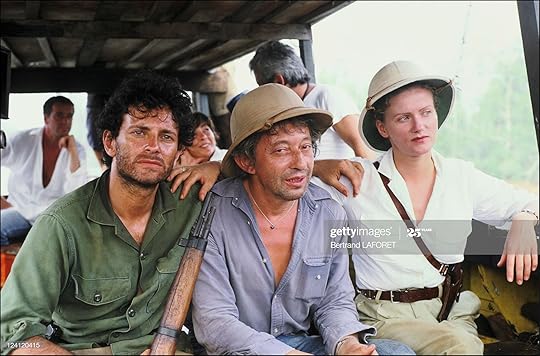
Francis Huster è Joseph Timar.

Simenon ritorna in terra esotica. Questa volta non è il Pacifico, ma l’Atlantico. Questa volta non è la Polinesia, ma ci porta in Africa, sulla costa occidentale, in Gabon.


Barbara Sukova è Adèle, la proprietaria dell’hotel, che s’innamora del giovane Joseph.

Joseph Timar, il protagonista, viene da La Rochelle, forse la location preferita e più utilizzata da Simenon, è un neofita, dell’Africa non sa altro che quello che ha letto nei libri, che come si sa non corrisponde mai a come sono davvero le cose. I locali, intendendo i francesi che vivono a Libreville da tempo, faranno presto a farglielo notare, implacabili.
Joseph Timar ricorda male Oscar Donadieu protagonista di Turista da banane: viaggio con spalle più leggere meno fardello ereditario ad appesantire il suo passo – ma lo stesso entusiasmo ingenuo, la stessa voglia di farsi una nuova vita


Il film è intitolato “Équateur – Equator, L’amante sconosciuta” ed è del 1983.

Lo slancio candido del neofita appena arrivato; la colonia francese all’insegna del cinismo e della corruzione; neri e bianchi che si mischiano male, con diffidenza; il sudore e l’alcol tracannato e le febbri tropicali; i neri indolenti e seminudi, vagamente minacciosi; una donna matura che sembra innamorarsi del ben più giovane protagonista; uno sparo che uccide…
Gli ingredienti ci sono tutti.
In più la solita cura del dettaglio e della psicologia.
Forse questa volta manca un pochino di thriller.


A sinistra Francis Huster, a destra Barbara Sukova, al centro Serge Gainsbourg, che ha scritto, diretto e musicato il film.
Profile Image for Hanneke.
395 reviews490 followers
March 13, 2020
Joseph Timar, 23 years old, from a good bourgeois family in provincial France, lands at Libreville, Gabon, to take up a job at a timber company. The job had been arranged by his distinguished uncle, a well-known politician. That the uncle is such a well-known person certainly opens doors for Timar, but it does nothing to elevate his loneliness or make him a popular person with the woodloggers, the only white people in the area who frequent the hotel where he is staying. The hotel is run with a competent hand by Adele, a French lady who wears the same black silk dress every day and nothing underneath. Clearly, Adele is the absolute ruler of the expat community in Libreville. Timar is in awe, obsessed and spiteful towards Adele. Being an innocent provincial boy, this environment of seduction, abhorrence and lust drives him over the edge, derengue fever attacks do not help and heavy drinking tops it off. A murder is committed and everyone knows who the killer is. Nobody cares because it is a black servant boy. The story then becomes reminiscent of ‘Heart of Darkness’, but there is no Kurz at the end of the voyage. Although Timar makes his only stand against colonial injustice in the end, we do not know whether it had any impact, as he is shipped back to France in a delirious state.

Simenon’s sober and suggestive language evoked a very uneasy atmosphere. You could easily picture the expats in the cafe of the hotel, snickering over Timar’s unawareness what was going on. And Timar upstairs, sweating under his mosquitto net, burning with jealousy and knocking down his Pernods. His innocence reminded me of the young British man in 'The Innocent’ of Ian McEwan who was also confronted with murder as an innocent bystander. Or, indeed, the mysterious atmosphere of The Sheltering Sky of Paul Bowles, where the protagonists could not possibly control what was happening to them.

Very interesting novel of Simenon once again. Luckily, there are still quite a few romans durs to go. I will try to read them all!

P.S. March 13, 2020:
I just read in the biography of Simenon by Pierre Assouline that Simenon stayed in Libreville, Gabon, in Hotel Central owned by a Madame Mercier who recognized herself and her customers in Tropic Moon and she sued Simenon for slander, demanding a big sum as compensation and seizure of the manuscript. Simenon won the case, since the plaintiff was not mentioned in the book by her own name, thus she had not been defamed according to the judge.
Profile Image for Glenn Russell.
1,515 reviews13.3k followers
Read
May 9, 2024


Tropic Moon - Georges Simenon’s first novel set outside Europe, one of what the author termed his romans durs, hard novels, but with Tropic Moon, not only is the story tough on the main character but also tough on the entire French colonial system, or more precisely, brutally tough on the French colonialists in Africa.

It’s 1933 and we’re in Gabon, West Africa, right along the equator in the ramshackle coast town of Liberville. We follow Joseph Timar, age 24, full of courage and enthusiasm, recently arrived from France to take up a post in the large timber company, a position he secured through his influential uncle.

Timar learns his job overseeing the cutting of timber ten days boat journey upriver will be postponed for at least a month since the company barge's damaged hull needs serious repair.

Timar resigns himself to booking a room at the one and only Liberville hotel and hanging out in the main room on the first floor that serves as lounge, bar and restaurant where all the European bachelors take their meals. Timar drinks his first shot of whisky.

All this is new to Timar - he was never accustomed to washing in a basin the size of a soup plate and going outside to squat behind a tree when he needed to take a dump. Nor had he ever shared his room with swarms of flies, mosquitoes, scorpions, spiders and other noxious insects.

And the suffocating heat and humidity. Damn! Timar wakes up completely naked the next morning in his cocoon of mosquito netting. Oh, yes, since he was drenched in sweat last night he took off his pajamas.

Suddenly, there's an attractive woman in her thirties beside his bed asking him if he would like coffee, tea or chocolate. Turns out, a husband and wife own the hotel and the woman is wife Adèle. Timar is aroused by Adèle's sensual, soft, yielding body. They have sex.

Since he had nothing to do outside the hotel, Timar remained inside, drinking whiskey, reading the newspaper and taking practice shots at the pool table. Man, the heat - all you had to do was raise an arm and you started sweating. Adèle acted a bartender and her big, fat husband Eugène occasionally made an appearance.

Then the big "gala" night had come, the entertainer, Manuelo, a female impersonator and dancer. Many European men and women fill the main room; in the darkness, hundreds of blacks peer in through the door and windows. Champagne and whiskey all round. Timar overhears an older European explaining to a young, vulgar guy how to horsewhip a black man without leaving any marks.

Just then Timar catches a glimpse of Adèle in the kitchen punching one of her employees, a black named Thomas. Thomas doesn't flinch or budge; he simply takes the blows.

Sometime thereafter, having imbibed much liquor, Timar leaves the hotel through the back door for a stroll out by an open field. Everything is pitch dark and someone comes rushing toward him. Ah, Adèle! "Get out of my way, you fool!" she tells him.

Back in the main room, having taken a seat and drinking a nightcap, Timar watches as the party winds up when two events occur in rapid succession: prior to trudging upstairs to his bed, Eugène tells Adèle to call a doctor since he has the blackwater again and this time it means he's a goner. Secondly, a group of blacks run toward the door; one of the timber traders translates their message: they found Thomas in a field, shot dead with a revolver.

Thus Simenon concludes his first chapter, creating the foundation for a series of events propelling the tale's drama. I purposely focused on the author's setup in some detail for the following reasons:

1) Simenon places Joseph Timar at the story's center and three things overwhelm Timar in French Equatorial Africa: the oppressive heat, his continual drinking and Adèle;

2) Simenon writes here about the French imperialists in action, how these French men and women are reduced to their most basic animal appetites in the sweltering heat. The novel's atmosphere counts for so much;

3) Beginning in the second chapter, Simenon's intriguing page-turner takes a number of unexpected twists and gyrations. As reviewer, I wouldn't want to divulge too much so as to spoil for a reader.

Reflect on Georges Simenon writing all those many Inspector Maigret novels. One reality stands out above all others: the need to work toward a sense of justice - if someone commits a crime, by law the criminal must be punished.

But did Simenon encounter such a sense of justice when he traveled through French Equatorial Africa? Or, rather, did these white French colonialists strongarm the native blacks into submitting to one fiercely maintained ironclad rule: whites can do whatever they want to blacks.

Sound harsh? Sound brutal? Sound like Thomas Hobbes? Young Joseph Timor voices his verdict.

I encourage you to read Tropic Moon in the New York Review Books edition where Norman Rush writes an insightful introductory essay on Simenon's African Trio - the three novels included: Talatala, Tropic Moon and Aboard the Aquitaine, brilliant translation of Tropic Moon complements of Stuart Gilbert.


Georges Simenon age 30 in 1933, the year of publication of Tropic Moon
Profile Image for Jan-Maat.
1,689 reviews2,504 followers
Read
April 4, 2020
This roman durs of Simenon is an atmospheric, anti-colonial fable, set in French Gabon in the early 1930s or late 1920s. Many of the colonists seem to have been shipped out as punishment for crimes committed in France, they dream of amassing a million or more Frances, travelling home and blowing the lot on various nonsense. In Gabon they murder, rape, and steal from the locals most of whom are nameless and when they do speak or sing it is in languages the central character does not understand. Written a couple of years after A Crime in Holland, it shows that the young Simenon was still breast obsessed. Adele wears nothing under her black silk dress and the consequences of that catch the central character's imagination, the effect however I felt wasn't erotic, perhaps because it reminded him of his school teacher. The central character also notices a black girl who still has a child's protuberant belly but more significantly for him the biggest breasts in the whole of Gabon.

As in Heart of Darkness it is not Africa which is dark, that darkness is simply a projection of what the colonists bring to it (or one might say alternatively what empire is), and given time, what they will make Africa (and by extension Indochina, Polynesia and so on) become.

The primary sensation is of alienation. The narrator begins fresh off the boat, it is not just that he can't communicate with the black people, the old colonial hands have their own argot too and their own unwritten code of conduct which as you can guess involves mostly covering for each other, the colonial authorities too ideally prefer to hush things up, perhaps to indicate to Paris that everything out in the tropics is under control.

It is rather like a Maigret novel, except less fun, there is the same sense of the individual in society as tending to sin and be criminal but here without resolution, only complicity. I found it underwhelming, the fabric of the tale given shape mostly by Simenon's breast obsession. However the French colonial authorities found it sufficiently on point to deny him permission thereafter to visit France's colonial possessions. The ending is good and underlines Simenon's case that Empire is insane and insanely damaging to the imperialists, but inevitably since they are insane, this fact isn't going to stop the business of Empire any time soon. At east not until all the trees have been cut down (money in this case really does grow on trees).
Profile Image for Steven Godin.
2,784 reviews3,406 followers
July 10, 2025

When I think Simenon I think snow. I think cold and windy provincial Belgian towns. I think train rides with killers on board and bodies floating in the Seine. I think Parisian apartments, Montmartre cabaret performers and French Riviera strip clubs. Here is something different. Here Simenon takes his Roman Dur (hard novel) overseas for the first time. Here we get sultry heat, mosquito nets and snail fever.

Whilst sexual encounters, obsession, deceitfulness and murder are nothing new to me when it comes to Simenon, none of the novels I've read so far had a real nasty taste like this one. His scathing depiction of French colonial rule in Africa - rape and cold-blooded treatment of the Gabonese is rife, made for a tough read. Again, one thing he really excels at though is the psychological nature of his characters and having a narrative that was as tight as the string on a bow.

Timar just wanted work experience. Well, after bedding Adele, a hotel owner, and then throw in the death of her husband and a black servant, he'll end up getting a life experience; a damn right culture shock that he couldn't have imagined. It's not one of my favourites - I do prefer the French/Belgian setting, but I still found it to be a solid read which didn't do a lot wrong in regards his Roman Durs.
Profile Image for Sarah Mcgrath.
713 reviews1 follower
November 3, 2018
A sort of French version of Heart of Darkness, a study of increasing madness and a criticism of the colonial system. I could almost feel the oppressive heat. Fascinating.
Profile Image for JimZ.
1,298 reviews769 followers
April 4, 2020
I would rate this work by Simenon as 2.5 stars.

Basically I liked his vivid description of people and the environment in which events took place. But I don’t think I “got it”. I do not understand the ending. For me to tell you why I did not understand it would be to reveal events in too much detail so as to constitute a spoiler. And I don’t like to reveal spoilers. 😊 I imagine after posting this review I can run to my GR friends who are Simenon fans and ask them about the ending.

Basically Joseph Timar, a 24 year old, wet-behind-the-ears never-done-anything-in-his-life, is shipped off to Gabon Province of French Equatorial Africa by his family to get a job with the Sacova Trading Company interior some distance from Libreville, Gabon Province where he originally is transported to from France, “ felling timber and selling cheap goods to the natives”. When he gets to Libreville he rooms at the only hotel in town, The Central, and gets information that the current holder of the job he is supposed to get has no intentions of quitting. Not so good and it’s not even Day One on the job! (Like, why the hell did I come all the way to Africa to find out I am not wanted?) He encounters the husband and wife owner of the hotel Adele and Eugene. Eugene makes an early exit from the novel by dying but references are made to him later on. Adele figures prominently in the novel and is portrayed as enigmatic and sexually attractive. Indeed, Timar is sexually attracted to her. Adele suggests a joint venture between her and Timar in another area of Gabon involving cutting down and selling timber. They arrive at the destination and soon thereafter Adele leaves to go back to Libreville to take care of unfinished business. She leaves a note for Timar telling him as much, but he gets jealous and weirded out and wants to go back to Libreville to determine the outcome of Adele’s unfinished business. The novel ends, and I won’t tell you how it ends in part because I don’t know how it ends. ☹

One thing is clear – sometimes one bonds with characters in a novel and other times one is neutral and still other times one cannot stand a character in a novel. I could not stand Timar. But for that matter I couldn’t stand anybody else in the novel except perhaps for the black inhabitants of Gabon. One sees how badly they were treated under colonial rule by the French. Pejorative terms such as ‘nigger’ and ‘pickaninny’ are used in the novel. It’s just the way French folk in French West Africa at that time felt towards the native Gabonians.

Timar was ranting a good deal of the time in the novel, or was mean to people he encountered, and appeared to have a sickness of some sort he contracted in Gabon Province (the name of the novel in French is literally translated into English as “moon fever”. Oh, and every other sentence in the novel he was downing absinthe or whiskey. And Timar was not a friendly drunk, he was a mean drunk when he wasn’t semi-unconscious from alcohol and/or moon fever or whatever disease he had contracted in Gabon Province.

I read this novel in a triplet of novels titled, African Trio (Harcourt, Brace, and Jovanovich, 1979), containing three of his works pertaining to Africa and its 20th century colonialization under French, English, and Belgian rule: ‘Talatala’ [1943], ‘Tropic Moon’ [1933], and “Aboard the Aquitaine’ [1936]. ‘Tropic Moon’ was translated into English by two translators – in 1942 by Stuart Gilbert and included in Two Latitudes (George Routledge, 1942; Penguin Books, 1952) and African Trio (Harcourt Brace Jovanovich, 1979), and by Marc Romano (New York Review Books Classics series, 2009). The book when published in 1933 was in French and titled, “Coup de Lune (Éditions Fayard, 1933), literally "moonburn" or "moonstroke" in French”.

‘Tropic Moon’ is among one of the author's first self-described roman durs or "hard novels" to distinguish it from his romans populaires or "popular novels," which are primarily mysteries that usually feature his famous Inspector Maigret character.

Reviews:
This first review is really interesting: it was written by Graeme Macrae Burnet in 2014…he wrote ‘The Disappearance of Adele Bedeau’ (2014), ‘His Bloody Project’ (2015), and ‘The Accident on the A35’ (2017): https://graememacraeburnet.com/2014/0... [JimZ: I have read the first two novels by Burnet and found them to be very good, and ‘The Disappearance of Adele Bedeau’ is reminiscent of Simenon’s psychological novels.]

This review is really good (written by M.A. Orthofer, 5 June 2016)…within the review are two links to other reviews from The Guardian (2009) and New Statesman (2006): http://www.complete-review.com/review...
Profile Image for Tony.
1,032 reviews1,914 followers
March 17, 2020
It is not the whiskey, or the mosquitoes, or the oppressive heat, or even his raw youth which is the young Frenchman's undoing in colonial Gabon. Nor is it his conscience, although he acts to stop an injustice. No. The French have a saying for what happens to Joseph Timar. Cherchez la femme. That is what shatters him.

Yet all the rest is here too, that Africa, even as Timar repeats as a bell tolling, It doesn't exist . . . It doesn't exist.
Profile Image for Tristan.
112 reviews254 followers
August 23, 2016
A deliciously compressed little colonial nightmare. Less apocalyptic in tone than that other- more culturally entrenched - literary work of anti-colonialism Heart of Darkness, but infinitely more insidious. One can almost sense the moral and physical putrefaction rise from the pages, slowly invading the system like a tropical fever.

My first of Simenon's romans durs, and it won't be the last.
Profile Image for Friederike Knabe.
400 reviews188 followers
October 12, 2011
Reading an early Simenon mystery today is as much entertainment as it is a trip into the past. This in especially true for Tropic Moon ("Coup de lune"), originally published in 1933, one of three novels set in Africa. It was also an early example of Simenon's "romans durs" - psychological dramas rather than a Maigret-type detective story that Simenon has been famous for. Having traveled and worked in several countries in Africa for much of 1932, Simenon's personal exposure to the harsh realities of French colonialism are, without doubt, manifest in this brief, intense, yet remarkable and very readable book.

The title of the novel hints at the story's intricacy. A term made up in analogy to "coup de soleil" (sunstroke), "coup de lune" suggests "moon stroke", inviting a comparison between the two in terms of the debilitating intensity on those exposed to it. The "victim" here is Joseph Timar, twenty-three years old, arriving in Gabon (then part of French Equatorial Africa) for a vacation - of sorts - from his bourgeois life in France. He is to manage his uncle's timber business set upcountry from the capital Libreville. But things don't turn out as planned. With a few sentences in the opening paragraphs of the novel, Simenon insinuates that Timar's stay will be anything but a vacation. While there is nothing tangible to justify the young man's apprehension - other than being alone in Africa for the first time - an atmosphere of anxiety and unease is established around the protagonist, as he stumbles innocently on an eerily artificial, yet very real, miserable colonialist community.

With transport upriver not ready for some time, Timar becomes increasingly entangled with the group of regular patrons of the "Central", the only hotel in town, and Adele, the seductive wife of its owner. With a few precise strokes, Simenon characterized this utterly bored, crude, and lowly collection of expatriates, whose main relaxation consists of alcohol, card games and the odd orgy with local women. While Africans are primarily seen as part of the backdrop, supplying services of various kinds, Simenon does not shy away from describing in some detail the insulting treatment that the Gabonese suffer by this group of whites. The overwhelming impression that the author expertly conveys is the dreariness, squalor and the desolation of the place. Slowly it dawns on Timar, who for the most part remains a naïve outsider, that the local white officials are no better than his drinking and gambling companions. When Thomas, the hotel's young African "boy" is murdered, the investigation is undertaken listlessly. While suspicions as to the culprit are rife, nobody really wants to act on them.

A major element amplifying the growing malaise experienced by Timar, is the sweltering heat of the tropical sun, that is stifling any initiative. This is a recurring theme throughout the novel. Simenon aptly employs it to reveal his hero's mental state as he goes through different stages of emotional upheaval and physical illness.

Timar's voyage upcountry, when it finally occurs, is not at all what he had anticipated. Could this be a new beginning? As dengue fever takes hold of him and he floats between reality and hallucination, events and context come into a new perspective and, for the first time, he sees more clearly what has been happening around him. Also for the first time, he experiences Africa and Africans directly and intimately. He is experiences "an immense feeling of peace, ...but peace tinged with sadness". While he cannot identify a focus his newfound "tenderness", "...it seemed to him that he was on the verge of understanding this land of Africa, which had provoked him so far to nothing but an unhealthy exaltation."

This new sense of freedom, understanding and confidence is bound to set him on an inevitable collision course with the white community in Libreville. Is there a compromise possible and what can Timar do? Simenon is unswerving in tone and perspective as he concludes the book consistent with the colonial reality of the time. Even after more than seventy years, Simenon's astute observations on French colonialism and his underlying harsh critique of the treatment of indigenous people and environments, are still relevant. Parallels to more recent historical circumstances come easily to mind. Thanks to the new NYRB edition and translation a wider audience have the opportunity to absorb this evocative story.
Profile Image for Alex.
807 reviews37 followers
March 6, 2021
Κάνα δύο σκαλιά κάτω από τα υπόλοιπα "σκληρά" του που έχω διαβάσει, αν και το στήσιμο της ιστορίας και το πλαίσιο της είναι δοσμένο όπως πάντα, με μαεστρία. Ξενέρωσα λίγο με το ανοικτό φινάλε, αλλά αυτό είναι θέμα εσωτερικού μου διχασμού που θέλω να μου τα σερβίρουν ενίοτε όλα στο πιάτο και ταυτόχρονα δεν θέλω γιατί ευτελίζεται η ιστορία. ¯\_(ツ)_/¯
Profile Image for Scott Bradley.
140 reviews23 followers
July 19, 2017
Even by Simenon's high standards, this is a mesmerizing novel. A literal reading tells the story of Joseph Timar who leaves France for Gabon with a prospect of a job. The job falls through and Timar is left in a state of limbo amongst Libreville's inhabitants. The tone of the novel becomes increasingly feverish with every turn of the page. In the end, I had to ask myself if Timar ever was in Gabon or was it all a fever dream experienced within some French asylum. The ambiguity is quintessential Simenon. He is one of my favourite Modernist writers for the simple reason that he never provides his reader with clarity. And yet he has this disturbing ability to reach deep within the reader's id so that glimpses of a kind of understanding are made possible. I know the last two sentences are more than a little contradictory, but that I can believe in both is testament to the strength of Simenon's story telling expertise. This is a fantastic novel and I really should have given it 5 stars.
Profile Image for paper0r0ss0.
652 reviews58 followers
October 29, 2021
La decadenza o meglio il decadimento di un uomo, come meglio non poteva essere descritto. Complice un' Africa cosi' ben descritta da essere quasi palpabile, Joseph Timar, il giovane protagonista, precipita in una spirale di autodistruzione dalla quale e' impossibile risalire. Il meccanismo di Simenon e' perfetto. Tutto succede perche' cosi' deve succedere, quasi come una regola matematica. Ma nonostante questa stringente necessita', il lirismo delle ambientazioni e la fantastica profondita' dei personaggi rendono magica e straniante l'atmosfera.
Profile Image for George K..
2,761 reviews373 followers
February 23, 2017
Πέμπτο βιβλίο του Ζορζ Σιμενόν που διαβάζω και δηλώνω για ακόμα μια φορά ικανοποιημένος και ευχαριστημένος, τόσο από την ίδια την ιστορία, όσο και από την γραφή. Το βιβλίο αυτό ανήκει πιο πολύ στα κοινωνικά μυθιστορήματα του συγγραφέα -με λίγα στοιχεία εγκλήματος-, παρά στην αστυνομική λογοτεχνία. Δεν είναι ένα θρίλερ που ψάχνεις να βρεις τον δολοφόνο, που έχει ανατροπές ή μυστήριο. Καμία σχέση. Όσοι θέλουν να διαβάσουν κάτι τέτοιο, ας πιάσουν άλλο βιβλίο. Εδώ έχουμε να κάνουμε με ένα δραματικό νουάρ.

Ένας νεαρός Γάλλος, ο Ζοζέφ Τιμάρ, που για να δουλέψει και να δει τον κόσμο ταξιδεύει στην εξωτική και απομακρυσμένη Γκαμπόν, στο ξενοδοχείο όπου θα μείνει, γνωρίζει μια αισθησιακή γυναίκα, την Αντέλ, που θα τον μαγέψει, αν και δεν είναι και τόσο νέα πια. Όμως, η δολοφονία ενός μαύρου και ο θάνατος του συζύγου της Αντέλ, μπερδεύουν κατά πολύ τα πράγματα. Οι λευκοί που βρίσκονται στην χώρα, τι κάνουν ακριβώς; Η Αντέλ σε τι ιστορίες είναι μπλεγμένη; Πόσο θέλει ο άνθρωπος για να σεληνιαστεί, με την συνεχόμενη ζέστη, τους ξένους ολόγυρα, όλα τα περίεργα που συμβαίνουν, και μια γυναίκα που σε έχει ξετρελάνει;

Την διαφορά στο βιβλίο δεν την κάνει τόσο η πλοκή -που είναι ενδιαφέρουσα και έχει μια κάποια αγωνία για την συνέχεια αλλά δεν σε μαγεύει κιόλας-, αλλά η υπέροχη γραφή του Σιμενόν, έτσι λιτή και διεισδυτική όπως είναι, με τις υπέροχες περιγραφές των τοπίων, των διαφόρων σκηνικών και των χαρακτήρων της ιστορίας. Πραγματικά, ο άνθρωπος κατάφερε να με ταξιδέψει πίσω στον χρόνο, στο Λιμπρεβίλ και στα διάφορα άλλα εξωτικά μέρη της αποικιοκρατικής Γκαμπόν. Επίσης, κατάφερε να μου δείξει πως ήταν τότε τα πράγματα σε μια Αφρικανική χώρα και, επίσης, την κατάπτωση και την τρέλα ενός ανθρώπου που δεν του ταιριάζουν τέτοια μέρη, μακριά από τον τόπο του. Προτείνεται.
Profile Image for LW.
357 reviews94 followers
December 16, 2017
Le coup de lune ...titolo intrigante , promettente
e invece ... maddeché!!
La storia è esile e confusa ,il protagonista un babbeo infantile e isterico
Questo romanzo gronda sudore
gronda meschinità e maschilismo (alla ennesima potenza del colonialismo )
Au revoir monsieur Simenon ! :)
(e io che volevo La Marie du port , ma era ancora in prestito!)
Profile Image for Kathy.
3,877 reviews290 followers
January 31, 2019
1933 novel where action is centered in Gabon, West Africa. I was drawn to the book for this reason as my son served there in the Peace Corps. I was imagining my son's first reactions to the land and people when he first arrived as the young man in this novel makes his arrival from France.
Well...that didn't last long. This French dude was a drunken mess whereas my son went to assist in the efforts to educate about AIDS.
Apparently Simenon wished to draw attention to the failure of colonialism, or so says the Prologue. "What it achieves aesthetically is a true evocation of a social hell and a persuasive portrayal of what it does to thinking, perception, identity to be a member of the oppressor class in such an environment, and to a lesser degree, of what the toll is on the oppressed." Norman Rush

The book is fairly short and is somewhat interesting as a case study of a man ruled by desires that eventually drive him mad. He starts off in a hotel where whites comes to eat and drink alcohol and seems uncomfortable with mosquito netting over his bed. In contrast, my son slept on a dirt floor. OK, I can't fairly judge the book. Guilty!

You can't blame a person for selecting a title with the word "Tropic" in it when the temperature is 25 degrees below zero, eh?

Profile Image for Joseph.
Author 11 books37 followers
January 29, 2010
Okay, I am entirely unsure how this Simenon escaped me for so long, especially considering there is little I love more than mental/metaphysical/physiological unraveling deep in the swarthy throes of hostile geography... that we MUST confront such intensity even though we know it's only going to lead us to madness, malaria, parasites both metaphorical and too squirming through the intestines perhaps forever...to shuck comfort just to come out of the slime with a story to tell...we should always go to the jungle and we should always stay out of it...etc etc...and I can say with a clear conscience having been there (and currently writing about it) that at any given moment I would rather have a jaguar chew my throat out than die, say, on the 405 crushed by an SUV. yes. death by that or by woman...

This is jungle fiction of trans-colonialist madness at its best, an afternoon read, sweaty, delicious, sexy and revolting all the same, the green hell lives...
Profile Image for Rusalka.
455 reviews122 followers
March 28, 2018
You know that feeling when you are slightly hungover - clammy, mild smell of off spirits about you, small headache behind your eyes that's threatening to erupt - and you are stuck somewhere claustrophobic, overly warm, and inescapable. Such as a meeting room or a bus. No windows can be opened, the heating is too high, there are too many people in the space, you just have to make it through before you pass out or succumb to building nausea that wasn't there before you stepped into this space, and the panic of possibly breaking a social taboo is compounding any feeling you may have.

That was this book. An overwhelming haze of booze, a hot and oppressive atmosphere, and just being stuck. It wasn't pleasant. I wouldn't recommend it to anyone.
Profile Image for AlbertoD.
153 reviews
November 24, 2025
Un libro insolito per Simenon. Insolito per l’ambientazione, che non è la consueta provincia francese, olandese o americana, ma la colonia africana del Gabon. E insolito per il tema, che è una evidente presa di posizione polemica nei confronti della politica coloniale. Nell’immaginario del francese in patria, la colonia appare carica di fascinose aspettative, una promessa di avventura ed esotismo; la realtà, quella con cui Joseph Timar, il giovane protagonista del libro, si dovrà confrontare appena sbarcato a Libreville, è invece fatta di pregiudizi, razzismo, soprusi e bassezze nei confronti della popolazione indigena, e di una giustizia amministrata a solo ed esclusivo beneficio dei bianchi (una realtà che Simenon ebbe modo di toccare con mano, essendo egli stesso reduce da un viaggio in Africa, fonte di ispirazione per la vicenda).
Ed è lo scontrarsi con il mondo oscuro, spietato, straniante, inafferabile della colonia, insieme all’ossessione per Adèle, a determinare il processo involutivo del protagonista: disillusione e disagio prima, abbrutimento poi, e, per finire, crollo emotivo e caduta verso il delirio.
È anche uno dei primi “romanzi duri” dello scrittore belga (il libro è apparso nel 1933), e forse per questo appare ancora acerbo, con meccanismi che non sono ancora quelli perfettamente oliati delle opere più mature.
This entire review has been hidden because of spoilers.
Profile Image for Dave Van Rompaye.
112 reviews1 follower
July 13, 2025
Manesteek is een broeierig, psychologisch geladen verhaal dat sterk doet denken aan Heart of Darkness. Net als Conrad werpt Simenon een scherp licht op de koloniale geest: de arrogantie, het racisme en de zelfgenoegzaamheid van de Europese kolonisator worden door hem ontleed met vlijmscherpe observaties.

Tegelijk zit de roman gevangen in zijn eigen tijd. De manier waarop Simenon over zwarte personages schrijft (vooral de Afrikaanse vrouwen) blijft nogal moeilijk . Veel adjectieven zoals kinderlijk, natuurlijk, maar hij geeft hij ze geen echte stem. Zijn kritiek op het kolonialisme is dus dubbel: raak, maar niet vrij van de vooroordelen die hij zelf niet lijkt te doorgronden.

Toch blijft het een krachtig boek, een beklemmende studie van een man die afglijdt, niet enkel door de hitte of de eenzaamheid, maar door de confrontatie met zichzelf en de wereld.

Voor de liefhebbers, er is een verfilming van (door Serge Gainsbourg nog wel).
Profile Image for Roger Brunyate.
946 reviews744 followers
May 26, 2016
Black

Simenon, the author of over 100 stories featuring Inspector Maigret, did not abandon his skills as a crime writer when writing his serious novels, or romans durs, of which Tropic Moon (1933) is one of the first. There is the same laconic straightforward style, the same ability to capture the atmosphere of a setting in a few sentences, and the same interest in those dark areas that lie outside the law. There is a murder here, quite early on in the book, but Simenon's focus is not on who committed it—that becomes clear well before the end—but on the psychological nightmare that swirls around it. As the word dur (hard) might indicate, this is a hard-boiled novel with a vengeance. Simenon here is the literary cousin of writers of noir fiction such as Dashiell Hammett and (a little later) Raymond Chandler, but his blackness goes beyond being a mere setting for the book; it becomes its principal subject.

The setting is Gabon, a former French colony in West Africa. Joseph Timar, a young man from the French provinces, arrives to take up a job with a timber company. While attempting to discover whether the job in fact exists, he stays at a small hotel in Libreville, the capital, where he falls into bed with the hotelier's wife, Adèle. When her husband dies of bilharzia, Joseph enters into a relationship with Adèle that is held together as much by lust and implicit blackmail as by any business agreement, and journeys with her upriver to a timber concession in the interior. That trajectory will be reversed in the last third of the book, bringing them both back to Libreville for the harrowing climax, and sending Timar home to France a shattered victim of his former innocence.

The parallels with Conrad's Heart of Darkness are surely deliberate. Both books are set in African colonies; both feature young protagonists who enter the country full of hope and leave in disarray; even the journey upriver, with its stop at a native settlement along the way, makes one think of the earlier novel. But there is no mad Kurtz at the end; the horror that Joseph Timar finds lies inside himself, his companion, and by implication in all the white colonists. For Simenon is as strong as Conrad before him in denouncing colonialism. The governor, police chief, and other white officials whom Joseph visits in Libreville treat him graciously on account of his uncle, a distinguished French politician, yet they have no hesitation in closing ranks against him once their way of life is threatened. But Joseph changes too, most obviously in his rapid descent into alcoholism, but morally as well. At the end of his first week, Joseph accompanies a group of loggers on a sexual debauch exploiting native women, though he holds back from active participation. In a parallel scene later in the palindromic structure of the book, Joseph will not hold back; although his motives are different, the moral result will be the same.

Norman Rush, in his unusually strong introduction to the NYRB edition of the novel (one which can safely be read in advance), not only places the book within the colonialism of its time but also shows its contemporary relevance to the faded dream of an independent Africa. He also compares Tropic Moon to the novels that Graham Greene would later write in colonial settings, such as The Heart of the Matter, and I agree; although Simenon is grittier and Greene more nuanced, their atmosphere is much the same. Yet when Rush suggests that Simenon was not interested in morality, I disagree. Certainly he does not have the explicit Catholic theology of Greene. Yet Joseph Timar struggles with his conscience as much as any Greene hero, but in a fevered state, only half aware of what is at stake. At the climax of the book, in a torment of delirium, Joseph finally takes a moral stand. But we never know if it makes the slightest difference; if there is a God in Simenon's French West Africa, he is not in evidence. That is what makes the book so truly black.
Profile Image for Jim.
2,419 reviews800 followers
September 7, 2014
A well-connected young man with a weak character goes to Gabon to make his fortune in the Colonies. The young man, Joseph Timar, takes up with Adele Renaud, an innkeeper whose husband dies -- right around the same time that she is suspected of the murder of a black named Thomas. Tropic Moon is the first of Georges Simenon's romans durs to be set outside of France.

Despite being warned by his politico uncle back in France to beware of partnerships, he takes up with Adele to run a lumber concession upriver in the bush. At this point, Timar comes apart like a cheap suit. He comes down with fevers, makes horrendous judgments, and in general is "cruising for a bruising."

Tropic Moon is an excellent book, reminiscent of Jim Thompson's Pop 1280. It moves quickly as Timar's character swirls lower and lower in some tropical miasma.

Profile Image for Adam  McPhee.
1,529 reviews344 followers
September 19, 2016
Fever dream colonialism. Completely malarial. Better than Joseph Conrad and all your Apocalypse Nows. Even better than Fitzcarraldo (I always found the backstory better than the movie: Kinski shooting into the tent, the Peruvian natives offering to kill Kinski, Herzog not realizing they disassembled the boat before dragging it over the mountain). The intro compares it to Dr. Destouches's writings about Africa in Journey to the End of the Night, and yeah, I'd say that's about where it belongs in the pantheon. Brutal, and perhaps portentous.

From the introduction:
An aspect of empire that Simenon captures well is the ethical blankness, the cloud of unknowing, it seems to engender in the psyches of the imperializers, at all levels. The characters in Tropic Moon may experience odd moments of vague disquiet that interrupt the peculiar emotional equilibrium that reigns while dark deeds are routinely transpiring, but deep recognition of what is truly happening is rare, and when it occurs, costly.


If novels could give you dengue fever, this one would.
Profile Image for Bud Smith.
Author 17 books477 followers
July 18, 2018
Tropic Moon was not nice, was ugly, and skin crawling, but that's worth something. It's pulp fiction setup is transcended here, without any tricks, just by the skill of the author, who writes with a clarity to be admired. A book without heroes. A book about the sliding away of the mind. Over all, well written, I did care at page 1 and I did care at the end. This novel got Simenon banned from the west Africa french colonies.

In french the title is Moonburn or Moonstroke and while Tropic Moon is a good title, man, Moonstroke is so much doper. Oh well.


A serious novel, psychological more than plot driven. It's little, 133 pgs. Just 1/200 novels written by Georges Simenon.

Step into the time machine and go to the jungle, the bush, down near the equator, your brains being cooked and water too dangerous for white men to drink so they drink whiskey or Pernod absinthe.

A french man goes to Africa in 1933 and lives the colonial life at a hotel, where he is witness to a murder but doesn't say anything so he can continue to sleep with the suspected murderer.

Sun helmets, natives paddling canoes, logging mahogany. It's kind of Heart of Darkness at triple speed.


As the blog Old Books by Dead Guys says: 'The contemporary reader is not so much shocked by the racism as gradually suffocated by it. “They were whites, and they did whatever they wanted to—because they were whites.”'

By the end of the novel it's ambiguous as to what is real and what is not real. Ah it doesn't matter, the truth is long sweated out slipped out of every pore in the body.
Profile Image for Karen.
2,142 reviews55 followers
May 5, 2015
A young Frenchman goes to Gabon (a French Colony in the 30s)to work in his family's company. He reaches Libreville, but is prevented from going further into the interior where the factory is located (at first) The book reminds me of Paul Bowles The Sheltering Sky, where foreigners are irrevocably changed by spending time in Africa (in a bad way). What bothered me about the book is that he didn't care about the locals much, in fact didn't seem to really notice them.
Profile Image for Antonio Ippolito.
417 reviews39 followers
June 8, 2019
Non è il caso di rimproverare Simenon, uomo di temperamento conservatore che scrive negli anni ’30, se non parla del Gabon con il linguaggio che vent’anni dopo Camus e Sartre useranno per l’Algeria: l’ipocrisia del colonialismo è ben chiara anche a chi non conosce il politicamente corretto e scrive “negri” e “negre”; basta vedere come nella festa del primo capitolo, in mezzo allo champagne e vicino al “signor procuratore generale, un giovanottone dall’aria volgare”, Simenon ci mostra chiacchiere su come bastonare un lavoratore negro in modo da non lasciare tracce penalmente relevanti (e va notato che il volume in oggetto fa parte di un’intera collana dedicata a Simenon dal Monde, storico quotidiano francese di centrosinistra corrispondente alla nostra Repubblica: l’editoria italiana sarebbe capace di non avere paraocchi allo stesso modo? Da noi Simenon fu pubblicato da Mondadori e poi da Adelphi, quindi mai da case editrici propriamente “di sinistra”; questo romanzo, solo recentemente da Adelphi)..
Il protagonista, come spesso nei suoi “romans durs”, è un inetto sveviano, incapace di dare un senso o almeno di imporre una direzione alla vita che gli scorre intorno, e addirittura di abbandonarvisi come fanno gli altri, nonostante non abbia nemmeno troppi scrupoli e ci provi, ad adeguarsi.. (al commissario non rivela nulla del delitto di cui verrà sapere).
Partito per l’Africa in cerca di fortuna salutando mamma e sorelle, con la scorta del nome di uno zio influente, scopre che la concessione nella foresta che gli hanno promesso è occupata da un pazzo pericoloso, che nessuno va a disturbare; del resto, la decantata società coloniale dove lo zio ha influenza è da tempo sull’orlo del fallimento e sopravvive solo grazie ad aiuti sotto gamba. Parcheggiatosi nell’unico hotel di Libreville senza saper bene che fare, intreccia un “amour fou” con Adèle, l’ambigua albergatrice; e cerca di crearsi un’identità illudendosi di essere stato l’unico amante, sia pure occasionale, di quella che si rivelerà una “lupa” verghiana..
Tutto, nell’Africa colonizzata, è ottusa degradazione e violenza: il whisky onnipresente (a quelle temperature!), la rassegnazione delle donne locali, anche sposate e dei villaggi dell’interno, agli abusi dei bianchi; il cinismo di questi nei confronti degli indigeni (“davvero gli dsparereste con una rivoltella senza pensarci?” “c’è chi per cavarsela ha dovuto buttare un candelotto di dinamite in mezzo a loro”); la meschina rivalsa di questi colonizzatori verso i loro stessi connazionali più fortunati (uno, una volta tornato nella sua Bordeaux, sperpera le ricchezze accumulate con il legname per requisire tutte le vetture pubbliche in una sera di pioggia, e vedere così le dame uscire da teatro e dover tornare a casa a piedi..).
Il protagonista, che guidato da Adèle sembrava aver fatto un grande affare e aver conquistato finalmente una concessione nella giungla, sconvolto dalla gelosia, dall’alcool e dalla febbre, si precipita in canoa verso Libreville per inseguirla. Le due giornate di viaggio sul fiume gli daranno per la prima volta la cognizione della vera “innocenza” africana, lontano dalla corruzione portata dai bianchi: la gioia animale e armoniosa dei 12 rematori che cantano mentre imbracciano le pagaie da mattina a sera; soprattutto, la sensuale innocenza della ragazza che gli si offre, ancora vergine, nel villaggio, e di cui lui approfitta senza nemmeno salutarla il giorno dopo (mentre lei gli manderà un timido cenno: uno straziante momento di incomunicabilità, che mi ricorda la scena finale della “Dolce vita”), per restarne però ossessionato e vedere la sua immagine dappertutto, anche nei volti dei negri che, al processo per omicidio, saranno ingiustamente condannati.
Il protagonista non sa comportarsi da colonizzatore ma nemmeno trovare un atteggiamento umano verso i locali; non saprà scegliere, in pratica, tra Adèle e la ragazza del villaggio: finirà con il perdere tutto e inabissarsi nella follia.
Profile Image for Elettra.
357 reviews28 followers
November 5, 2023
Nel 1932, reduce da un viaggio di due mesi in Africa, Simenon scrive questo libro, la cui atmosfera ad un certo punto mi ha trasportato in quella inquietante e tenebrosa di conradiana memoria. È stato solo per un attimo, però perché mai libri furono così diversi. Qui Simenon vuole chiaramente condannare il colonialismo in atto, il razzismo in tutte le sue varie declinazioni. E le sue descrizioni, nonchè molte scene sono molto realistiche. Timar, il protagonista, è un giovane di belle speranze, giunto dalla Francia in Gabon, perché, come molti altri è attirato da false speranze di benessere, avventure. Ma la realtà che lo accoglie è ben diversa dai sogni. Da una parte c’è la comunità dei bianchi per lo più cinici, mediocri, spesso rovinati dal clima e dall’alcool o dalle malattie ma mai privi di pregiudizi e e capaci di ignobili bassezze, dall’altra c’è la comunità degli indigeni, apatici, inafferrabili, quasi annichiliti ma pur sempre potenzialmente minacciosi. E poi c’è il clima massacrante che stordisce e ottunde la mente. E il giovane Timar si trova incapace ad instaurare un buon rapporto sia con gli indigeni che con i bianchi, entrando in una forma di inguaribile straniamento! La trama ovviamente rivela le caratteristiche del giallo, quindi si respira una forma di suspence per tutto il racconto. I personaggi non mancano di interessanti ritratti psicologici e lo stile, e, come sempre in Simenon, lo stile è ricco, pulito, coinvolgente.
Profile Image for F.E. Beyer.
Author 3 books108 followers
August 10, 2025
Simenon nails French colonial society in Gabon. Or at least gives a description that convinced me. The protagonist, Timar could be construed a hero. He is the only French person, albeit briefly, to admire and recognise the humanity of the Africans. They disgust him too, but such rejection is normal when chucked into the deep end of a different culture. Other reviews describe Timar as a weak character rendered helpless in an unfamiliar world. But he takes action against the grain and pays the price. I'd rate this above Graham Greene's African novels. Yes, I know I'm talking about novels set in Africa by 20th century white men who were part of the oppression. Dirty Snow is the best Simenon 'Roman Dur' for many. I found it repetitive and a grind. This is my fav Dur so far. Lazy cover from NYRB. I guess the title is ironic as it's the tropical sun not the moon doing the damage.
Displaying 1 - 30 of 126 reviews

Can't find what you're looking for?

Get help and learn more about the design.