

What do you think?
Golf Stories #2
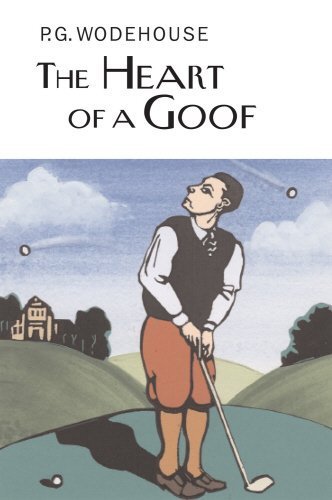
The Heart of a Goof (Everyman's Library P G WODEHOUSE) by P.G. Wodehouse
"Golf is the Great Mystery. Like some capricious goddess, it bestows favors with what would appear an almost fat-headed lack of method and discrimination." These words, uttered by "The Oldest Member," set the stage for a romp around the greens only Wodehouse could have conjured up. In nine stories Wodehouse describes not only the fates of the goofs who have allowed golf "to eat into their souls like some malignant growth" but also the impact of the so-called game on courtship, friendship, and business relationships.
Hardcover
First published January 1, 1926
About the author
P.G. Wodehouse
1,714 books7,139 followersSir Pelham Grenville Wodehouse, KBE, was a comic writer who enjoyed enormous popular success during a career of more than seventy years and continues to be widely read over 40 years after his death. Despite the political and social upheavals that occurred during his life, much of which was spent in France and the United States, Wodehouse's main canvas remained that of prewar English upper-class society, reflecting his birth, education, and youthful writing career.
An acknowledged master of English prose, Wodehouse has been admired both by contemporaries such as Hilaire Belloc, Evelyn Waugh and Rudyard Kipling and by more recent writers such as Douglas Adams, Salman Rushdie and Terry Pratchett. Sean O'Casey famously called him "English literature's performing flea", a description that Wodehouse used as the title of a collection of his letters to a friend, Bill Townend.
Best known today for the Jeeves and Blandings Castle novels and short stories, Wodehouse was also a talented playwright and lyricist who was part author and writer of fifteen plays and of 250 lyrics for some thirty musical comedies. He worked with Cole Porter on the musical Anything Goes (1934) and frequently collaborated with Jerome Kern and Guy Bolton. He wrote the lyrics for the hit song Bill in Kern's Show Boat (1927), wrote the lyrics for the Gershwin/Romberg musical Rosalie (1928), and collaborated with Rudolf Friml on a musical version of The Three Musketeers (1928).
An acknowledged master of English prose, Wodehouse has been admired both by contemporaries such as Hilaire Belloc, Evelyn Waugh and Rudyard Kipling and by more recent writers such as Douglas Adams, Salman Rushdie and Terry Pratchett. Sean O'Casey famously called him "English literature's performing flea", a description that Wodehouse used as the title of a collection of his letters to a friend, Bill Townend.
Best known today for the Jeeves and Blandings Castle novels and short stories, Wodehouse was also a talented playwright and lyricist who was part author and writer of fifteen plays and of 250 lyrics for some thirty musical comedies. He worked with Cole Porter on the musical Anything Goes (1934) and frequently collaborated with Jerome Kern and Guy Bolton. He wrote the lyrics for the hit song Bill in Kern's Show Boat (1927), wrote the lyrics for the Gershwin/Romberg musical Rosalie (1928), and collaborated with Rudolf Friml on a musical version of The Three Musketeers (1928).
Ratings & Reviews
Friends & Following
Create a free account to discover what your friends think of this book!
Community Reviews
Displaying 1 - 30 of 148 reviews

December 2, 2012
Rating: 4* of five
The Publisher Says: "Golf is the Great Mystery. Like some capricious goddess, it bestows favors with what would appear an almost fat-headed lack of method and discrimination." These words, uttered by "The Oldest Member," set the stage for a romp around the greens only Wodehouse could have conjured up. In nine stories Wodehouse describes not only the fates of the goofs who have allowed golf "to eat into their souls like some malignant growth" but also the impact of the so-called game on courtship, friendship, and business relationships.
This volume includes "The Heart of a Goof," "High Stakes," "Keeping in with Vosper," "Chester Forgets Himself," "The Magic Plus Fours," "The Awakening of Rollo Podmarsh," "Rodney Fails to Qualify," "Jane Gets off the Fairway," and "The Purfication of Rodney Spelvin."
My Review: I bow to no man in my appreciation of Wodehouse, even when the subject of his talent is the shudder-and-narcolepsy inducing topic of golf. (Seriously, have you ever watched golf? It is unspeakably dull...almost as boring as cricket, which is the emperor of all screamingly tedious pastimes. Both feature commentators explaining the goings-on in such hushed, reverential tones that they rival nature documentary narrators for comatosity. The mind boggles and the spirit quails before the notion of viewing the “action” live in either case. Has the World Court heard about this? Seems they need to pep up their torture prosecutors, haven't heard of a single case against golfers or cricketeers.)
Where was I? Oh, Wodehouse and his brilliance. The stories in this collection are uniformly amusing, with moments of laugh-out-loud funny. I chose this moment from “Chester Forgets Himself,” a tale of a young man of fine sensibilities and a distinct inability to let loose his baser instincts in cursing the duffers who infest golfing:
If that doesn't raise a smile, or as in my case cause a laugh, avoid the book, and indeed possibly Wodehouse. He's like this a lot. The Oldest Member, a stock character of great and enduring popularity...the tedious old buttonholer in a prominently placed chair who will talk your ear off about nothing much...is so marvelously played for laughs that he's a National Treasure. The Oldest Member always has a story to match your circumstances, explain your problem, soothe your temper. That is, if one isn't whipped into frothing frenzied hatred by the old boy, as quite a lot of 21st-century people are.
But if one can slow down a bit, forget Adam Sandler's insulting humor or Jim Carrey's manic muggings for a moment, there's a humor in here that might just wind a tendril of affection around one's heart. It's a humor of silly and sly and slow genesis, from subjects of daily familiarity. Not the butlers and not the expensive golf clubs, no, those are the set decorations. Wodehouse's humor is about what kind of people there are in our lives. Old people who want to tell you things to help you, but go on and on. Young people in love with each other and not knowing how to say so to each other. Harried strivers working the angles and never quite seeing the forest for all those pesky trees.
Wodehouse knew them, smiled at them, made them into figures of fun, and never once insulted them. I love that, I treasure that, I batten on it. Given the right mind-set, maybe you can too. What have you got to lose? A half-hour reading a story? Try “The Heart of a Goof,” first of this collection, and if there are no smiles, no chortles, no guffaws, return the book to the library and pass on to your next read. You won't be harmed, and you might be enchanted.

This work is licensed under a Creative Commons Attribution-NonCommercial-ShareAlike 3.0 Unported License.
The Publisher Says: "Golf is the Great Mystery. Like some capricious goddess, it bestows favors with what would appear an almost fat-headed lack of method and discrimination." These words, uttered by "The Oldest Member," set the stage for a romp around the greens only Wodehouse could have conjured up. In nine stories Wodehouse describes not only the fates of the goofs who have allowed golf "to eat into their souls like some malignant growth" but also the impact of the so-called game on courtship, friendship, and business relationships.
This volume includes "The Heart of a Goof," "High Stakes," "Keeping in with Vosper," "Chester Forgets Himself," "The Magic Plus Fours," "The Awakening of Rollo Podmarsh," "Rodney Fails to Qualify," "Jane Gets off the Fairway," and "The Purfication of Rodney Spelvin."
My Review: I bow to no man in my appreciation of Wodehouse, even when the subject of his talent is the shudder-and-narcolepsy inducing topic of golf. (Seriously, have you ever watched golf? It is unspeakably dull...almost as boring as cricket, which is the emperor of all screamingly tedious pastimes. Both feature commentators explaining the goings-on in such hushed, reverential tones that they rival nature documentary narrators for comatosity. The mind boggles and the spirit quails before the notion of viewing the “action” live in either case. Has the World Court heard about this? Seems they need to pep up their torture prosecutors, haven't heard of a single case against golfers or cricketeers.)
Where was I? Oh, Wodehouse and his brilliance. The stories in this collection are uniformly amusing, with moments of laugh-out-loud funny. I chose this moment from “Chester Forgets Himself,” a tale of a young man of fine sensibilities and a distinct inability to let loose his baser instincts in cursing the duffers who infest golfing:
...there was something particularly irritating about the methods of the Wrecking Crew {four bad late-life converts to golfing}. They tried so hard that it seemed almost inconceivable that they should be so slow.(p75, 1956 Herbert Jenkins Autograph edition)
“They are all respectable men,” {the Oldest Member} said, “and were, I believe, highly thought of in their respective businesses. But on the links I admit they are a trial.”
“They are the direct lineal descendants of the Gadarene swine,” said Chester firmly. “Every time they come out I expect to see them rush down the hill from the first tee and hurl themselves into the lake at the second.”
If that doesn't raise a smile, or as in my case cause a laugh, avoid the book, and indeed possibly Wodehouse. He's like this a lot. The Oldest Member, a stock character of great and enduring popularity...the tedious old buttonholer in a prominently placed chair who will talk your ear off about nothing much...is so marvelously played for laughs that he's a National Treasure. The Oldest Member always has a story to match your circumstances, explain your problem, soothe your temper. That is, if one isn't whipped into frothing frenzied hatred by the old boy, as quite a lot of 21st-century people are.
But if one can slow down a bit, forget Adam Sandler's insulting humor or Jim Carrey's manic muggings for a moment, there's a humor in here that might just wind a tendril of affection around one's heart. It's a humor of silly and sly and slow genesis, from subjects of daily familiarity. Not the butlers and not the expensive golf clubs, no, those are the set decorations. Wodehouse's humor is about what kind of people there are in our lives. Old people who want to tell you things to help you, but go on and on. Young people in love with each other and not knowing how to say so to each other. Harried strivers working the angles and never quite seeing the forest for all those pesky trees.
Wodehouse knew them, smiled at them, made them into figures of fun, and never once insulted them. I love that, I treasure that, I batten on it. Given the right mind-set, maybe you can too. What have you got to lose? A half-hour reading a story? Try “The Heart of a Goof,” first of this collection, and if there are no smiles, no chortles, no guffaws, return the book to the library and pass on to your next read. You won't be harmed, and you might be enchanted.
This work is licensed under a Creative Commons Attribution-NonCommercial-ShareAlike 3.0 Unported License.

January 24, 2023
Nine amusing golf stories told by the golf clubs oldest member. What got me was the same people playing in the morning and afternoon. Ah what a life. As a past gets of player I can relate to that one good shot in twenty.
The combination of using the same characters in some stories worked well. An enjoyable read and I plan to keep this book to reread another time. Was I tempted to return to golfing and the mixture of joy and frustration. Not in this lifetime.
The combination of using the same characters in some stories worked well. An enjoyable read and I plan to keep this book to reread another time. Was I tempted to return to golfing and the mixture of joy and frustration. Not in this lifetime.

October 12, 2019
I have never been interested in golf,but it makes an appearance in quite a few Wodehouse books.Enjoyable and hilarious.

May 18, 2026
I'm not a fan of golf. I don't much enjoy Wodehouse's early works. So yeah, this one wasn't my favorite. Why'd I read it? Because I'll read anything by PG Wodehouse! It's never a total loss. Every book of his I've read contains at least a handful of phrases that make me chuckle. It's just that the chuckle factor intensifies as you get into his later writing career.

August 21, 2017
A collection of 9 short stories, all narrated by the 'Oldest Member' of the golf course, often forcefully, to younger patrons, all obviously related to life on the golf course and life off the golf course affected by events on the golf course.
I don't play golf but after reading the hilarious anecdotes, I feel like a lesser mortal for not appreciating this sport 😃. But let me tell you, even if you don't know the ABC of Golf, you'll still laugh your guts out while listening to the 'Oldest Member' tell you tale after tale.
My two favourite parts about the book though, had nothing to do with golf (when seen in isolation)- first was the dedication page and the second a book review/description by the Oldest Member which appears as part of a story (pics attached) ; the reason why I believe you don't really need to know what's a handicap or a birdie to enjoy yet another masterpiece by the undisputed King of Comedy.
Without doubt, another 5/5.
I don't play golf but after reading the hilarious anecdotes, I feel like a lesser mortal for not appreciating this sport 😃. But let me tell you, even if you don't know the ABC of Golf, you'll still laugh your guts out while listening to the 'Oldest Member' tell you tale after tale.
My two favourite parts about the book though, had nothing to do with golf (when seen in isolation)- first was the dedication page and the second a book review/description by the Oldest Member which appears as part of a story (pics attached) ; the reason why I believe you don't really need to know what's a handicap or a birdie to enjoy yet another masterpiece by the undisputed King of Comedy.
Without doubt, another 5/5.

Read
August 28, 2023Not quite as funny as the Jeeves books, but still a great way to spend time. Bonus, I got to go down a rabbit hole about obsolete golf clubs. Mashies, brassies, niblicks...

December 3, 2023
UK title: The Heart of a Goof.
Only P.G. Wodehouse could tempt me to read a book of stories about golf and then make me enjoy it (though he didn't pull off the, I suspect impossible, feat of making me actually interested in the game as such). He does this by his wonderfully farcical writing, and by making the stories not really about golf; instead, they're about people who happen to be obsessed with golf, but who also have other conflicts going on (mostly romantic in nature), with which their obsession is somehow intertwined.
As usual in Wodehouse, these characters generally have no jobs to distract from their participation in the plot; they're either retired businessmen or people who apparently enjoy private incomes large enough that they can play golf all the time. (They're not necessarily filthy rich, but at least comfortably off.)
All of the stories have a frame which involves the golf club's Oldest Member buttonholing another member of the club, in the style of the Ancient Mariner, and insisting on telling him the story despite his obvious reluctance for the role of auditor. It's an extra bit of fun. (My father was also an enthusiastic raconteur, who was equally impossible to prevent from telling his stories, and it brought back fond memories of him.)
The stories originally appeared in magazines on both sides of the Atlantic, but the author still manages to make several of them sequels of each other. He cleverly does this by having the Oldest Member tell them to the same person, who says (after the first one), "You already told me that one," and summarizes the previous story's plot. The Oldest Member then informs him that this is a different story involving the same people, and proceeds from the point at which the previous story left off. This makes for a nice reminder for someone who had read the previous story in an earlier issue of the same magazine, and orients anyone who missed the earlier story too.
The stories themselves are pretty classic Wodehouse; the stakes are never any higher than a successful romance, and often lower than that, but whatever they are he makes them feel vitally important just by how much the characters care about them. There are misunderstandings, miscommunications, worms who turn, and even a cad reformed. It's enjoyable light comedy, skillfully executed.
Only P.G. Wodehouse could tempt me to read a book of stories about golf and then make me enjoy it (though he didn't pull off the, I suspect impossible, feat of making me actually interested in the game as such). He does this by his wonderfully farcical writing, and by making the stories not really about golf; instead, they're about people who happen to be obsessed with golf, but who also have other conflicts going on (mostly romantic in nature), with which their obsession is somehow intertwined.
As usual in Wodehouse, these characters generally have no jobs to distract from their participation in the plot; they're either retired businessmen or people who apparently enjoy private incomes large enough that they can play golf all the time. (They're not necessarily filthy rich, but at least comfortably off.)
All of the stories have a frame which involves the golf club's Oldest Member buttonholing another member of the club, in the style of the Ancient Mariner, and insisting on telling him the story despite his obvious reluctance for the role of auditor. It's an extra bit of fun. (My father was also an enthusiastic raconteur, who was equally impossible to prevent from telling his stories, and it brought back fond memories of him.)
The stories originally appeared in magazines on both sides of the Atlantic, but the author still manages to make several of them sequels of each other. He cleverly does this by having the Oldest Member tell them to the same person, who says (after the first one), "You already told me that one," and summarizes the previous story's plot. The Oldest Member then informs him that this is a different story involving the same people, and proceeds from the point at which the previous story left off. This makes for a nice reminder for someone who had read the previous story in an earlier issue of the same magazine, and orients anyone who missed the earlier story too.
The stories themselves are pretty classic Wodehouse; the stakes are never any higher than a successful romance, and often lower than that, but whatever they are he makes them feel vitally important just by how much the characters care about them. There are misunderstandings, miscommunications, worms who turn, and even a cad reformed. It's enjoyable light comedy, skillfully executed.

June 26, 2022
A fine collection of short stories. Fine, though they were about golf, a sport I don't prefer. But you don't read Wodehouse for the golf. You read him for his inimitable mastery of the English language.
Favorite quotes:
"Bradbury had never liked his wives' mothers. His first wife, he recalled, had had a particularly objectionable mother. So had his second, third, and fourth. And the present holder of the title appeared to him to be scratch. She had a habit of sniffing in a significant way whenever she looked at him, and this can never make for a spirit of easy comradeship between man and woman. Given a free hand, he would have tied a brick to her neck and dropped her in the water-hazard at the second; but, realizing that this was but a Utopian dream, he sensibly decided to make the best of things and to content himself with jumping out of window whenever she came into a room in which he happened to be sitting" (p.71).
"'I beg your pardon?' he said, stiffly.
'I did not speak.'
'I thought you did.'
'I merely inhaled. I simply drew in air through my nostrils. If I am not at liberty to draw in air through my nostrils in your house, pray inform me.'
'I would prefer that you didn't,' said Bradbury, between set teeth.
'Then I would suffocate.'
'Yes,' said Bradbury Fisher" (p.86).
"[His club was just coming down for a swing] when the world became full of shouts of 'Fore!' and something hard smote him violently on the seat of his plus-fours.
The supreme tragedies of life leave us momentarily stunned. For an instant which seemed an age Chester could not understand what had happened. True, he realised that there had been an earthquake, a cloud-burst, and a railway accident, and that a high building had fallen on him at the exact moment when somebody had shot him with a gun, but these happenings would account for only a small part of his sensations. He blinked several times, and rolled his eyes wildly. And it was while rolling them that he caught sight of the gesticulating Wrecking Crew on the lower slopes and found enlightenment. Simultaneously, he observed his ball only a yard and a half from where it had been when he addressed it" (p.118).
"To the philosophical student of golf like myself (said the Oldest Member) perhaps the most outstanding virtue of this noble pursuit is the fact that it is a medicine for the soul. Its great service to humanity is that it teaches human beings that, whatever petty triumphs they may have achieved in other walks of life, they are after all merely human. It acts as a corrective against sinful pride. I attribute the insane arrogance of the later Roman emperors almost entirely to the fact that, never having played golf, they never knew that strange chastening humility which is engendered by a topped chip-shot. If Cleopatra had been outed in the first round of the Ladies' Singles, we should have heard a lot less of her proud imperiousness" (p.124).
"He dived into an alleyway of dead clothing, dug for a moment, and emerged with something at the sight of which Wallace Chesney, hardened golfer that he was, blenched and threw up an arm defensively.
'No, no!' he cried.
The object which Lou Cohen was waving insinuatingly before his eyes was a pair of those golfing breeches which are technically known as Plus Fours. A player of two years' standing, Wallace Chesney was not unfamiliar with Plus Fours – all the club cracks wore them – but he had never seen Plus Fours like these. What might be termed the main motif of the fabric was a curious vivid pink, and with this to work on the architect had let his imagination run free, and had produced so much variety in the way of chessboard squares of white, yellow, violet, and green that the eye swam as it looked upon them.
'These were made to measure for Sandy McHoots, the Open Champion,' said Lou, stroking the left leg lovingly. 'But he sent 'em back for some reason or other.'
'Perhaps they frightened the children,' said Wallace, recollecting having heard that Mr McHoots was a married man" (pp.127-128).
"'Just the girl I wanted to see,' said Raymond. 'Miss Dix, I represent a select committee of my fellow-members, and I have come to ask you on their behalf to use the influence of a good woman to induce Wally to destroy those Plus Fours of his, which we all consider nothing short of Bolshevik propaganda and a menace to the public weal. May I rely on you?'" (p.131).
"'Hullo, old girl!' said William, affectionately. 'You back? What have you been doing with yourself?'
'Oh, shopping,' said Jane listlessly.
'See anyone you knew?'
For a moment Jane hesitated.
'Yes,' she said. 'I met Rodney Spelvin.'
Jealousy and suspicion had been left entirely out of William Bates's make-up. He did not start and frown; he did not clutch the arm of his chair; he merely threw back his head and laughed like a hyaena. And that laugh wounded Jane more than the most violent exhibition of mistrust could have done.
'Good Lord!' gurgled William, jovially. 'You don't mean to say that bird is still going around loose? I should have thought he would have been lynched years ago. Looks like negligence somewhere'" (p.206).
Favorite quotes:
"Bradbury had never liked his wives' mothers. His first wife, he recalled, had had a particularly objectionable mother. So had his second, third, and fourth. And the present holder of the title appeared to him to be scratch. She had a habit of sniffing in a significant way whenever she looked at him, and this can never make for a spirit of easy comradeship between man and woman. Given a free hand, he would have tied a brick to her neck and dropped her in the water-hazard at the second; but, realizing that this was but a Utopian dream, he sensibly decided to make the best of things and to content himself with jumping out of window whenever she came into a room in which he happened to be sitting" (p.71).
"'I beg your pardon?' he said, stiffly.
'I did not speak.'
'I thought you did.'
'I merely inhaled. I simply drew in air through my nostrils. If I am not at liberty to draw in air through my nostrils in your house, pray inform me.'
'I would prefer that you didn't,' said Bradbury, between set teeth.
'Then I would suffocate.'
'Yes,' said Bradbury Fisher" (p.86).
"[His club was just coming down for a swing] when the world became full of shouts of 'Fore!' and something hard smote him violently on the seat of his plus-fours.
The supreme tragedies of life leave us momentarily stunned. For an instant which seemed an age Chester could not understand what had happened. True, he realised that there had been an earthquake, a cloud-burst, and a railway accident, and that a high building had fallen on him at the exact moment when somebody had shot him with a gun, but these happenings would account for only a small part of his sensations. He blinked several times, and rolled his eyes wildly. And it was while rolling them that he caught sight of the gesticulating Wrecking Crew on the lower slopes and found enlightenment. Simultaneously, he observed his ball only a yard and a half from where it had been when he addressed it" (p.118).
"To the philosophical student of golf like myself (said the Oldest Member) perhaps the most outstanding virtue of this noble pursuit is the fact that it is a medicine for the soul. Its great service to humanity is that it teaches human beings that, whatever petty triumphs they may have achieved in other walks of life, they are after all merely human. It acts as a corrective against sinful pride. I attribute the insane arrogance of the later Roman emperors almost entirely to the fact that, never having played golf, they never knew that strange chastening humility which is engendered by a topped chip-shot. If Cleopatra had been outed in the first round of the Ladies' Singles, we should have heard a lot less of her proud imperiousness" (p.124).
"He dived into an alleyway of dead clothing, dug for a moment, and emerged with something at the sight of which Wallace Chesney, hardened golfer that he was, blenched and threw up an arm defensively.
'No, no!' he cried.
The object which Lou Cohen was waving insinuatingly before his eyes was a pair of those golfing breeches which are technically known as Plus Fours. A player of two years' standing, Wallace Chesney was not unfamiliar with Plus Fours – all the club cracks wore them – but he had never seen Plus Fours like these. What might be termed the main motif of the fabric was a curious vivid pink, and with this to work on the architect had let his imagination run free, and had produced so much variety in the way of chessboard squares of white, yellow, violet, and green that the eye swam as it looked upon them.
'These were made to measure for Sandy McHoots, the Open Champion,' said Lou, stroking the left leg lovingly. 'But he sent 'em back for some reason or other.'
'Perhaps they frightened the children,' said Wallace, recollecting having heard that Mr McHoots was a married man" (pp.127-128).
"'Just the girl I wanted to see,' said Raymond. 'Miss Dix, I represent a select committee of my fellow-members, and I have come to ask you on their behalf to use the influence of a good woman to induce Wally to destroy those Plus Fours of his, which we all consider nothing short of Bolshevik propaganda and a menace to the public weal. May I rely on you?'" (p.131).
"'Hullo, old girl!' said William, affectionately. 'You back? What have you been doing with yourself?'
'Oh, shopping,' said Jane listlessly.
'See anyone you knew?'
For a moment Jane hesitated.
'Yes,' she said. 'I met Rodney Spelvin.'
Jealousy and suspicion had been left entirely out of William Bates's make-up. He did not start and frown; he did not clutch the arm of his chair; he merely threw back his head and laughed like a hyaena. And that laugh wounded Jane more than the most violent exhibition of mistrust could have done.
'Good Lord!' gurgled William, jovially. 'You don't mean to say that bird is still going around loose? I should have thought he would have been lynched years ago. Looks like negligence somewhere'" (p.206).

February 15, 2021
My first P G Wodehouse - better late than never. It is difficult to pick up the golf terminology without knowing the game but it is easier to see the beautiful language of Wodehouse. A light and breezy ready packed with humor, one can pick this up any time to feel the refreshing flow of the language.

June 5, 2019
Imagine if ... golf were as fun as a Wodehouse story.
February 13, 2025
Wodehouse lampoons golf
In a tiny bit of writing for a Creative Writing class, I wanted to use the word "goof" as a jocular insult in a story set in 1925. Looking up the usage history of "goof", I discovered P.G. Wodehouse's The Heart of a Goof, published in 1926. So, home free! Except I have never had the sense to quit while I was ahead, and I got the book to find out if Wodehouse's usage is consistent with mine. It is not. (But I'm gonna do it, anyway.)
The consolation prize, though, was that The Heart of a Goof is Wodehouse at the top of his game. It is literally laugh-out-loud funny. It is, it must be admitted, a one-joke book. But the joke is funny and subject to infinite variation.
Heart of a Goof is about golf. It consists of nine stories (golf allusion there!) told by the Oldest Member of the Club. The Oldest Member is a sort of Ancient Mariner of golf, who traps the unwary with his gaze and voice and recounts golf stories. For the Oldest Member, golf is more like a religion than a pass-time. People who don't play golf are a subhuman (or at least subgolfer) species. Here, for instance, is one of his gems
Blog review.
In a tiny bit of writing for a Creative Writing class, I wanted to use the word "goof" as a jocular insult in a story set in 1925. Looking up the usage history of "goof", I discovered P.G. Wodehouse's The Heart of a Goof, published in 1926. So, home free! Except I have never had the sense to quit while I was ahead, and I got the book to find out if Wodehouse's usage is consistent with mine. It is not. (But I'm gonna do it, anyway.)
The consolation prize, though, was that The Heart of a Goof is Wodehouse at the top of his game. It is literally laugh-out-loud funny. It is, it must be admitted, a one-joke book. But the joke is funny and subject to infinite variation.
Heart of a Goof is about golf. It consists of nine stories (golf allusion there!) told by the Oldest Member of the Club. The Oldest Member is a sort of Ancient Mariner of golf, who traps the unwary with his gaze and voice and recounts golf stories. For the Oldest Member, golf is more like a religion than a pass-time. People who don't play golf are a subhuman (or at least subgolfer) species. Here, for instance, is one of his gems
I am not a narrow-minded man; I quite appreciate the fact that non-golfers are entitled to marry; but I could not countenance their marrying potential winners of the Ladies’ Invitation Tournament at Mossy Heath.Wodehouse is of course mocking the excessive passion some golfers have for their sport (if you can call it that). But there is no doubt he does it out of a real love of the game. And of course he is P.G. Wodehouse, one of the greatest comic writers of the twentieth century, so he mocks with passion and skill.
Blog review.

February 7, 2008
The true testament to a writer's skill is the ability to make something inherently boring interesting to read about. Wodehouse not only makes golf interesting to read about in this volume, he also makes it hilarious! This is the book that rocketed Wodehouse to the top of my favorite writer's list. Highly recommended.

March 21, 2024
I've just read a few - how would you put it - books with lumpy prose that stood as a significant barrier between myself, the plot and the ineffable sense that reading is one of the most enjoyable pastimes one can engage in. In such dire straits there is always the break glass in case of emergency of running back to someone you can guarantee will slap a dipstick in your literary oil and tell you your comprehension tires are up to snuff. And in this case the Wodehouse that is now public domain and thus easily Guttenbergable sits conveniently in a little red box by the door with the dinkiest of hammers.
Divots is the second collection of Plum's golfing short stories and whilst I do not care a jot for the long walk spoilt, I have to admit that it does allow a surprisingly varied canvas for Wodehouse to bounce around his usual tales of relationships torn asunder via the prism of golf instead of vulgar things like class and money. I am also very fond of the silent film versions of some of the previous stories in The Clicking Of Cuthbert, so while I never have too much trouble picturing Wodehouse's silly asses as they go about their business, there is always something lovely about being reminded of Harry Beasley's Caddie
Divots is the second collection of Plum's golfing short stories and whilst I do not care a jot for the long walk spoilt, I have to admit that it does allow a surprisingly varied canvas for Wodehouse to bounce around his usual tales of relationships torn asunder via the prism of golf instead of vulgar things like class and money. I am also very fond of the silent film versions of some of the previous stories in The Clicking Of Cuthbert, so while I never have too much trouble picturing Wodehouse's silly asses as they go about their business, there is always something lovely about being reminded of Harry Beasley's Caddie
March 15, 2020
In a dark and troubled world every now and then it does me good to lose myself in the wide eyed and innocent world created by someone widely regarded as the greatest comic writer of the 20th century . This collection of golfing stories are all very similar and depict a time and a place long gone which may never even have existed but I like to think it may have done and “ the Oldest Member “ ( Sage ) is a character that every golf club should have but the age in which he may have thrived is probably long gone more’s the pity . As an introduction to Wodehouse this will probably only appeal to golfers and possibly only old ones who are familiar with golf and it’s archaic and now extinct terms like “brassie” “ niblick “ “ bisque “ and “stymie “ but these stories are ones that I revisit time and time again especially in times like these

May 10, 2021
In completing this book I’ve now read all 55 books of novels and short story collections in the main cannon of the eight series of stories by P.G. Wodehouse: Psmith, Blandings Castle, Drones Club, Golf stories, Jeeves and Wooster, Mr. Mulliner, Ukridge; and Uncle Fred.

September 19, 2019
Frykteleg søt, og særleg dei tre siste sogene kunne mest like gjerne vore slått saman til ein liten roman. I forteljingane om Jeeves og Wooster ligg mykje av humoren i at Wooster er ein upåliteleg forteljar fordi han er stokk dum, her er det meir at særleg den eldste medlemmen er så forbanna dogmatisk.

May 24, 2021
Whether a golfer yourself or not, this collection of short stories will transport you to a different, simpler time. Such clever writing that will have you smiling from ear to ear.
September 12, 2022
Light and humorous. Just what I was looking for!

August 13, 2023
I know nothing about golf but Wodehouse's way with words still makes me laugh out loud.

March 28, 2021
Hard to believe a book written almost 100 years ago
Is still funny today but it is. Highly recommend for golf fans.
Is still funny today but it is. Highly recommend for golf fans.

July 16, 2024
Holiday in Scotland, book 2.
East Lothian. There are a lot of golf courses here, so this seemed the right choice.
East Lothian. There are a lot of golf courses here, so this seemed the right choice.

April 6, 2023
This is Wodehouse's second collection of golf stories (Clicking of Cuthbert being the first). It is wonderful and worth reading, but in this reader's humble opinion, something in Wodehouse's literary mashie niblick leaves this effort just a bit shy of the carpet. Give him par on this one.
Read
August 25, 2020The language is wonderful. Non-golfers may need a little help with jokes that are golfcentric but how are the words "mashie" and "niblick" not funny, even if you don't know what they mean.
The stories have very few twists -- you always know where you are going -- so the book is a blessing during the pandemic. If you can't get enough of Jeeves & Wooster, this will be a treat.
The stories have very few twists -- you always know where you are going -- so the book is a blessing during the pandemic. If you can't get enough of Jeeves & Wooster, this will be a treat.

April 30, 2022
Boring. I couldn’t finish it. I do not recommend this book unless you want something guaranteed to put you to sleep.
January 12, 2010
A book that purports to be about golf but instead is a collection of short, humorous tales about the odd ways in which the human species behaves. The stories are told by the golf club's Oldest Member to anyone willing, or reluctant, to listen. There's Wallace Chesney and his confidence boosting plus-fours, the high stakes rivalry between Bradbury Fisher and Gladstone Bott, and half a dozen romances gone askew. All are linked by the love of the sport of golf. Pure joy to read, even for those such as myself who can't tell a mashie from a niblick.

November 3, 2019
Nothing for non-golfers - like myself - to fear. Though The Oldest Member may not approve, your amusement will be on par with that enjoyed from other Wodehouse works.

January 19, 2026
I have loved P.G. Wodehouse's writing since I was a young man, but for years I didn't appreciate his golf stories as much as some of his other fictional worlds, such as his Blandings Castle and Jeeves books. But over the years, the golf stories have gone up in my estimation. They are invariably narrated by the Oldest Member of a golf club, delivered to another member who realizes too late that he's in for another of the Oldest Member's stories. The stories generally revolve around the power of golf, that Great Mystery, to purify hearts, unite lovers, and punish the wicked.
Wodehouse, like Flannery O'Connor and Bob & Ray, has a gift for names and nicknames. The most dreaded foursome of the golf club is the Wrecking Crew, whose members are the First Grave-Digger, the Man With the Hoe, Old Father Time, and Consul, the Almost Human.
Even Wodehouse's preface is funny, quoting great authors of the past supposedly writing about golf. Shakespeare on an impatient foursome: "Four rogues in buckram let drive at me."
As the Oldest Member explains, the "goof" in the title is "one of those unfortunate beings who have allowed this noblest of sports to get too great a grip upon them, who have permitted it to eat into their souls, like some malignent growth." If you can avoid that weakness, The Heart of a Goof is a delightful "little nine-hole course," as Wodehouse describes it in the preface.
Wodehouse, like Flannery O'Connor and Bob & Ray, has a gift for names and nicknames. The most dreaded foursome of the golf club is the Wrecking Crew, whose members are the First Grave-Digger, the Man With the Hoe, Old Father Time, and Consul, the Almost Human.
Even Wodehouse's preface is funny, quoting great authors of the past supposedly writing about golf. Shakespeare on an impatient foursome: "Four rogues in buckram let drive at me."
As the Oldest Member explains, the "goof" in the title is "one of those unfortunate beings who have allowed this noblest of sports to get too great a grip upon them, who have permitted it to eat into their souls, like some malignent growth." If you can avoid that weakness, The Heart of a Goof is a delightful "little nine-hole course," as Wodehouse describes it in the preface.

November 30, 2018
I know a young lady who is my age which is odd as I am no longer a young man. In addition to other sterling qualities, she is also a fan of PG Wodehouse. I mentioned that I was finishing up a decent romantic comedy from Wodehouse and would pass it along for her perusal. In an un-PC moment I mentioned that I wasn't all that sold on some of the Wodehouse rom-coms but as a lady she might appreciate it ore than I did. She chuckled and said that at least it would be better than 'those golf stories'.
It happened that Heart of a Goof, a collection of nine golf stories, was next up in my chronological reading of The Master. For the first six stories, I tended to agree with my young friend, but fortunately the final trilogy of stories somewhat redeemed the collection. Even so it is mediocre Wodehouse which still makes an enjoyable if somewhat monotonous read. Comedy writing is a difficult occupation and sports comedy might be among the toughest to write. From cricket to rugby to boxing to golf to horse racing to egg and spoon racing, Wodehouse took a crack at writing about most of the grand old English sports. Oddly the egg and spoon race might have featured in the best of these. Probably having the mighty and surprisingly cunning brain of Jeeves behind the scenes on that short story made all the difference. The oldest Member is a pleasant story teller but he is no Jeeves.
It happened that Heart of a Goof, a collection of nine golf stories, was next up in my chronological reading of The Master. For the first six stories, I tended to agree with my young friend, but fortunately the final trilogy of stories somewhat redeemed the collection. Even so it is mediocre Wodehouse which still makes an enjoyable if somewhat monotonous read. Comedy writing is a difficult occupation and sports comedy might be among the toughest to write. From cricket to rugby to boxing to golf to horse racing to egg and spoon racing, Wodehouse took a crack at writing about most of the grand old English sports. Oddly the egg and spoon race might have featured in the best of these. Probably having the mighty and surprisingly cunning brain of Jeeves behind the scenes on that short story made all the difference. The oldest Member is a pleasant story teller but he is no Jeeves.

September 28, 2023
One of the reasons that Wodehouse’s works are so popular is that they take you out of the humdrum of your everyday life into a world where the trivial is heightened to an extreme. The golfing stories (or Oldest Member stories to those of us with a soft spot for the radio adaptations) are perfect in this regard, elevating a simple game to the most important thing in life.
The Heart of a Goof is Wodehouse’s second volume of golfing stories. Nine tales of how golf can affect everything from the course of true love to the acquisition of butlers, told in a manner no other author could hope to achieve. Several of the stories form linked narratives, with the trilogy involving Jane and William Bates and the non-golfing effete Rodney Spelvin being the highlight of the volume. In fact, if you are explaining the works of Wodehouse to one unfamiliar, it is in the second of these stories you get the perfect encapsulation of how his golfing stories work. Jane, estranged from her husband because he has been consistently forgetting their anniversary, has taken her young son to the city to live in artistic circles. However, when she sees the toddler holding a club with the wrong grip, she has an epiphany – she has neglected her duties as a mother. This is the charm of these stories, and the second volume provides such charm in spades. Not to be missed.
The Heart of a Goof is Wodehouse’s second volume of golfing stories. Nine tales of how golf can affect everything from the course of true love to the acquisition of butlers, told in a manner no other author could hope to achieve. Several of the stories form linked narratives, with the trilogy involving Jane and William Bates and the non-golfing effete Rodney Spelvin being the highlight of the volume. In fact, if you are explaining the works of Wodehouse to one unfamiliar, it is in the second of these stories you get the perfect encapsulation of how his golfing stories work. Jane, estranged from her husband because he has been consistently forgetting their anniversary, has taken her young son to the city to live in artistic circles. However, when she sees the toddler holding a club with the wrong grip, she has an epiphany – she has neglected her duties as a mother. This is the charm of these stories, and the second volume provides such charm in spades. Not to be missed.

September 24, 2022
A definite over par effort given Wodehouse's usual masterful 5/6 unders!
The book is all about golf and hence might end up annoying some non golf enthusiasts a tad bit. People would struggle to understand why is golf such a big deal for everyone in this book. May also struggle to understand why Wodehouse had to select this sport vs other aristocratic ones like horse riding, croquet etc. Perhaps it was just arbitrary or maybe Wodehouse was an enthusiast himself. Regardless, it does make the stories a bit monotonous and almost everything is on the same lines.
However, and this is a big However in this case, plot variety obviously had never been a strong suite for Mr W. The entire Jeeves/Wooster series is a grand total of one plot. The hasn't stopped it from being hands down the BEST series I've ever read (Dune being a close second).
This monotonousness, however, a bit too much and ends up making the book less enjoyable.
Other bits like language and wit are the usual world class for the author. All in, I'd say if you're a Wodehouse fan and have read the bulk of his other writings go for this. If you're new, this is most definitely not the first one to pick up.
A firm 3.5 star in my view but upgraded to a 4 given my usual adulation for the author.
The book is all about golf and hence might end up annoying some non golf enthusiasts a tad bit. People would struggle to understand why is golf such a big deal for everyone in this book. May also struggle to understand why Wodehouse had to select this sport vs other aristocratic ones like horse riding, croquet etc. Perhaps it was just arbitrary or maybe Wodehouse was an enthusiast himself. Regardless, it does make the stories a bit monotonous and almost everything is on the same lines.
However, and this is a big However in this case, plot variety obviously had never been a strong suite for Mr W. The entire Jeeves/Wooster series is a grand total of one plot. The hasn't stopped it from being hands down the BEST series I've ever read (Dune being a close second).
This monotonousness, however, a bit too much and ends up making the book less enjoyable.
Other bits like language and wit are the usual world class for the author. All in, I'd say if you're a Wodehouse fan and have read the bulk of his other writings go for this. If you're new, this is most definitely not the first one to pick up.
A firm 3.5 star in my view but upgraded to a 4 given my usual adulation for the author.
Displaying 1 - 30 of 148 reviews