In this handy volume, two professors of religious studies provide the student of religious studies - whether the motivated undergraduate, graduate student, or professor - with a brief review of theorists' work from the perspective of religious studies. For example, in 5-10 pages, the reader will get a review of Emmanuel Levinas's work as it offers insights for scholars in religious studies, followed by a selected bibliography. In short, this is a guide for students of religious studies that will take major theoretical writers in the humanities and social sciences and explain their relevance to the study of religion.
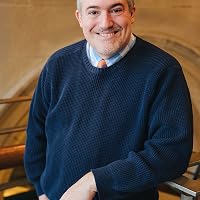
Timothy Beal is Distinguished University Professor, Florence Harkness Professor of Religion, and Director of h.lab at Case Western Reserve University. He has published sixteen books, including When Time Is Short: Finding Our Way in the Anthropocene (Beacon Press, 2022) and The Book of Revelation: A Biography (Princeton University Press, 2018), for which he won a Public Scholar Award from the National Endowment for the Humanities. He has also written popular essays on religion and culture for The New York Times, The Wall Street Journal, The Washington Post, The Chronicle of Higher Education, and The Christian Century, among others.
Tim was born in Hood River, Oregon and grew up near Anchorage, Alaska. He now commutes between Cleveland, Ohio, where he works, and Denver, Colorado, where he lives with his wife, Clover Reuter Beal, a Presbyterian minister. They have two grown kids, Sophie and Seth.
This is the book that EVERY Religious Studies doctoral student should have; it should be handed out at the beginning of their graduate program and required reading for the ABD. I would have spared myself easily months of confusion and angst if I had had this book recommended to me. If it's not a perfect text, then it's at least an ESSENTIAL one.
I loved this book. When I was getting my degree in religious studies this was one of the books for my senior seminar. The book starts off describing the influence of the "predecessors" Freud, Marx, Nietzsche and Saussure. Then it has an alphabetical listing of the theorists. Some are actual theorists of religion, but most are from other social sciences--sociology, anthropology, gender studies. Their influence on religious studies and allied fields is examined. I didn't have time to read Foucault, Althusser etc., so this book was a great reference. However, the entries on Walter Benjamin, Jacques Derrida and Emmanuel Levinas stirred up enough interest in me to delve further into those personalities.