

What do you think?
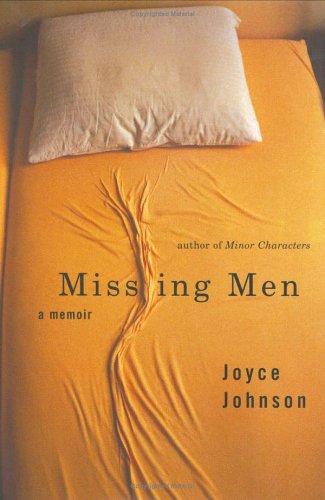
Missing Men: A Memoir
Joyce Johnson has led the kind of life the rest of us only see in novels; who else gets to share a childhood stage with Marlon Brando dressed up as a bear? In her first two works of nonfiction, Door Wide Open and the award-winning Minor Characters, Johnson chronicled a beat coming of age through the lens of her brief relationship with Jack Kerouac. Missing Men fills in the gaps in this bohemian life story even as it highlights them. Fittingly enough for a woman who married two abstract painters, it's a book about negative space. Three extended reminiscences--one for her childhood, one for each of her marriages--tease out the patterns in a life that "shaped itself around absences." Missing men defined those she her iron-willed mother, whose immigrant father killed himself when she was five; her two husbands, each fatherless, each with his own burden of tragedy and rage; Johnson herself, left behind with her freedom and her art. The writing, as always, is lovely and precise. Whether she is recounting the home-sewn dresses of her mother's lonely girlhood or the "metallic sputter" of the old red motorbike that ends her first marriage, Johnson breaks your heart with the tellingly chosen detail. --Mary Park
288 pages, Hardcover
First published January 1, 2004
About the author
Joyce Johnson
106 books107 followersBorn Joyce Glassman to a Jewish family in Queens, New York, Joyce was raised on the Upper West Side of Manhattan, just around the corner from the apartment of William S. Burroughs and Joan Vollmer Burroughs. Allen Ginsberg and Kerouac were frequent visitors to Burroughs' apartment.
At the age of 13, Joyce rebelled against her controlling parents and began hanging out in Washington Square. She matriculated at Barnard College at 16, failing her graduation by one class. It was at Barnard that she became friends with Elise Cowen (briefly Allen Ginsberg's lover) who introduced her to the Beat circle. Ginsberg arranged for Glassman and Kerouac to meet on a blind date.
Joyce was married briefly to abstract painter James Johnson, who was killed in a motorcycle accident. From her second marriage to painter Peter Pinchbeck, which ended in divorce, came her son, Daniel Pinchbeck, also an author and co-founder of Open City literary magazine.
Since 1983 she has taught writing, primarily at Columbia University's MFA program, but also at the Breadloaf Writers Conference, the University of Vermont and New York University. In 1992 she received an NEA grant.
At the age of 13, Joyce rebelled against her controlling parents and began hanging out in Washington Square. She matriculated at Barnard College at 16, failing her graduation by one class. It was at Barnard that she became friends with Elise Cowen (briefly Allen Ginsberg's lover) who introduced her to the Beat circle. Ginsberg arranged for Glassman and Kerouac to meet on a blind date.
Joyce was married briefly to abstract painter James Johnson, who was killed in a motorcycle accident. From her second marriage to painter Peter Pinchbeck, which ended in divorce, came her son, Daniel Pinchbeck, also an author and co-founder of Open City literary magazine.
Since 1983 she has taught writing, primarily at Columbia University's MFA program, but also at the Breadloaf Writers Conference, the University of Vermont and New York University. In 1992 she received an NEA grant.
Ratings & Reviews
Friends & Following
Create a free account to discover what your friends think of this book!
Community Reviews
Displaying 1 - 8 of 8 reviews
November 19, 2009
This book takes up where Minor Characters left off and made more of an impression on me. Very well-drawn characters and interesting insights into the NYC arts community at the time in all its snobbishness--her comment about the photos of the first wife wearing the corsage at the Ohio art opening--as well as the intensity--those passionate conversations about art and the jealousies and hopes of that marginalized group. I respected the insights of those artist and their willingness to sacrifice so much to pursue their art. What I found astounding was the author's own lack of introspection--how many times she says things were a blur to her or she didn't think about something. How about wondering why she was constantly attracted to emotionally unavailable men? I wondered again and again about her passivity. Having been brought up in that era myself, I know what the culture expected of us, but she was surrounded by people who were able to draw their own map. I also thought we lost touch with the family so well-portrayed in the first part of the story. What did she learn or come to understand about life from those earlier women in her family? So I guess I found some pleasure in my own theorizing about those issues.

July 15, 2026
I read this aftere I read her first memoir, and I agree with another reviewer that this one was slightly more interesting I think because of the examination of the marriages, the length of time, her maturity, and her observing the changing artistic dynamics of New York. I just find her thinking and writing very engaging, intelligent and relatable. I see part of her makeup as wanting very much to be in a lovely relationships, but I personally have experienced very serious artists deeply focussed on their metier to the exclusion of their primary partner. I think it's just the nature of the beast, except women as artists have to find a difficult balance if they have children or a family without the luxury of male freedom.
"He was difficult as a houseguest in some of the ways he’d been difficult as a husband, again, seeming to claim all the available space, his socks, his books, his half a packed bag in the pine floor for the living room, his shirts, and sweaters on the back of chairs. I tackily point out a chest where he might put things come, and he’d not his head and suggestion. But he’d rather volunteer to put shelves up for me, selecting the perfect boards at thelump.com measurements, Carpenter pencil. As well as the proper picking things up. The time changed, but he had not..."
I'd filled another pitcher of icetea and carried it out to the porch, and think "No, I could certainly never live with anyone again." His demanding needy presence seemed to fill the small house, leaving little room for me. I wanted him to make his own damn bed, pulling the covers smooth for once; I was becoming increasinly irritated by anything he did in the kitchen - even boilinh water - entailed a trail of crumpled paper towels. "Why is it necessary to kill so many trees?" I found myself saying
"He was difficult as a houseguest in some of the ways he’d been difficult as a husband, again, seeming to claim all the available space, his socks, his books, his half a packed bag in the pine floor for the living room, his shirts, and sweaters on the back of chairs. I tackily point out a chest where he might put things come, and he’d not his head and suggestion. But he’d rather volunteer to put shelves up for me, selecting the perfect boards at thelump.com measurements, Carpenter pencil. As well as the proper picking things up. The time changed, but he had not..."
I'd filled another pitcher of icetea and carried it out to the porch, and think "No, I could certainly never live with anyone again." His demanding needy presence seemed to fill the small house, leaving little room for me. I wanted him to make his own damn bed, pulling the covers smooth for once; I was becoming increasinly irritated by anything he did in the kitchen - even boilinh water - entailed a trail of crumpled paper towels. "Why is it necessary to kill so many trees?" I found myself saying

May 21, 2023
Memoir of a writer's beginnings. And also of men who left too soon--or who had to be left. From the grandfather whose loss haunted her mother's generation, to her loss of her father. Her first husband, abstract artist Jim Johnson, who died early. Artist spouse Peter Pinchbeck, whom she had to leave, but hovered in their lives. These men also had fathers who walked out early. Very well done, and will have me seeking out Minor Characters, an earlier memoir.
The ending, re Peter: "He died before he could outlive his imagination. Any artist would wish for such an ending. I would like to be as lucky and as brave."
The ending, re Peter: "He died before he could outlive his imagination. Any artist would wish for such an ending. I would like to be as lucky and as brave."

June 7, 2024
Joyce Johnson's musings on the men in her life, how they affected her.

April 8, 2009
so this book reminded me a lot of books i have read about women from the generation between my grandmother and my mother. This woman was in her mid 60s when she wrote this memoir in 2004.. now this woman has had an amazing life. she worked with Marlon Brando on stage as a child. she shacked up with Jack Keroauc and she lived a Beat artists like in NYC. oh and her dream came true. she is the published author she always knew she could be. total girl power!
But when you read about her private life, it sounds like "The Woman's Room" or the "Bell Jar".. A woman cannot make it in the man's world they were raised in. It was so horribly depressing. How can a woman who is so successful get trapped into relationships with men who are abusive to her? her first husband appears to have committed suicide and definitely was a troubled alcoholic...but because of his death, he seems to have taken on idol status. she does her best to keep her memories of him human, but she was really just a kid when she married this man. I too was swept off my feet by a man early in life and almost suffered the same abusive fate. I feel like this author has issues that I have. Problems with Men that I have. The title of "MIssing Men" was appropriate.
the book cost me 4.99. so it was worth the read for a few days. it just made me sad to see myself in the story. i know i am getting help for issues similar to this woman's but i wonder if she knows she has issues... the book ended without me knowing if this author is a happy person to be who she is.
But when you read about her private life, it sounds like "The Woman's Room" or the "Bell Jar".. A woman cannot make it in the man's world they were raised in. It was so horribly depressing. How can a woman who is so successful get trapped into relationships with men who are abusive to her? her first husband appears to have committed suicide and definitely was a troubled alcoholic...but because of his death, he seems to have taken on idol status. she does her best to keep her memories of him human, but she was really just a kid when she married this man. I too was swept off my feet by a man early in life and almost suffered the same abusive fate. I feel like this author has issues that I have. Problems with Men that I have. The title of "MIssing Men" was appropriate.
the book cost me 4.99. so it was worth the read for a few days. it just made me sad to see myself in the story. i know i am getting help for issues similar to this woman's but i wonder if she knows she has issues... the book ended without me knowing if this author is a happy person to be who she is.

August 1, 2014
"Minor Characters" is one of my favorite books, so this was especially a disappointment. The idea was amazing—part of me wishes I could have edited this for the author! But details were poorly used, the structure was unbalanced, and there wasn't a very strong beginning or end, to any of the sections or to the memoir as a whole. It was a really amazing concept memoir and I could see what she was trying to do, but the execution just didn't work, and that was SUCH a let-down, because I love her work and her story.

June 25, 2008
Dear Joyce,
I love you. I love the way you talk about men (in this and Minor Characters) with equal parts awe and resignation and level-headedness. I wish this had been more in line with the title and less just your continued memoir, but I enjoyed it alot. I liked the pictures, I feel like I know the boys from your life. I feel like they were sort of all the same boy...
You're great.
I love you. I love the way you talk about men (in this and Minor Characters) with equal parts awe and resignation and level-headedness. I wish this had been more in line with the title and less just your continued memoir, but I enjoyed it alot. I liked the pictures, I feel like I know the boys from your life. I feel like they were sort of all the same boy...
You're great.

August 22, 2007
i heart joyce johnson. not as good as minor characters, though i do love the whole middle of the book about her marriage to her first husband, jim.
Displaying 1 - 8 of 8 reviews