

What do you think?

Lucinde
Die Veröffentlichung löste 1799 einen Skandal aus, verherrlicht Lucinde doch, im Widerspruch zu geltenden Konventionen, die Einheit der geistig-seelischen und körperlich-sinnlichen Liebe – noch dazu erkennbar autobiographisch gefärbt. Doch Schlegels einziger Roman zielt auf das universale romantische Kunstwerk, das alle poetischen Gattungen, Poetologie, Philosophie, ja das Leben selbst mitumft.
Die Studienausgabe bietet als einzige lieferbare Edition den Text in der Gestalt des Erstdrucks und erschließt ihn mit einem Stellenkommentar und einem ausführlichen Nachwort.
Die Studienausgabe bietet als einzige lieferbare Edition den Text in der Gestalt des Erstdrucks und erschließt ihn mit einem Stellenkommentar und einem ausführlichen Nachwort.
172 pages, Paperback
First published January 1, 1799
About the author
Friedrich Schlegel
459 books61 followersGerman literary critic, philosopher, and younger brother of August Wilhelm von Schlegel.
https://en.wikipedia.org/wiki/Friedri...
https://en.wikipedia.org/wiki/Friedri...
Ratings & Reviews
Friends & Following
Create a free account to discover what your friends think of this book!
Community Reviews
Displaying 1 - 30 of 32 reviews

April 7, 2011
I just wrote a paper on this book. Ask me about it some other time.

July 24, 2013
Ich hatte hohe Erwartungen, allerdings lässt sich Schlegels theoretisches Konzept des Romans nur schwer in ein lesbares und vor allem unterhaltsames Buch umsetzen. Theoretisch durchaus interessant, aber ich würde es nicht unbedingt einen Roman nennen.

November 3, 2015
Jako kul knjiga.
Ujević ju je na hrvatski preveo još 1930ih no izdanje Konzora iz 2002. je prvo izdanje na hrvatskom jeziku. Schlegel ju je objavio još 1799. u blještavim godinama procvata romantizma.
Zvonko Pandžić je napisao sjajan uvod u kojem podrobno objašnjava poetiku romantizma i njen odsjaj u Lucindi. Pandžić je inače i najviše zaslužan za tiskanje Ujevića prijevoda, pošto je sam i preradio Ujevićev prijevod te je i organizirao njeno objavljivanje.
Lucinda dokazuje povezanost romantizma i postmodernizma. Fragmentarnost je najčvršća spona tih dvaju razdoblja. Knjiga je kaotična, nemirna- titra gordošću romantičarske tmine. Izmjenjuje se pripovjedač u trećem licu s homodijegetskim pripovjedačem. Epistolarni ulomci se također javljaju potkraj knjige.
Odjeljak pod naslovom "Školovanje muževnosti" izrazito sliči na ekspresionističke romane Ulderika Donadinija, Iva Kozarčanina i Krleže. Tu se opisuju životne nedaće i ljubavna iskustva glavnog lika, ujedno i naratora, slikara Julija.
Prvi sloj je ljubav Julija i Lucinde. Toposi romantizma se jasno ogledavaju u bolesti, nemiru, reflektivnosti i prirodi.
Sramota je hrvatske kulture da je ova knjiga na "našijenskom" objvaljena tek 2002.
Ujević ju je na hrvatski preveo još 1930ih no izdanje Konzora iz 2002. je prvo izdanje na hrvatskom jeziku. Schlegel ju je objavio još 1799. u blještavim godinama procvata romantizma.
Zvonko Pandžić je napisao sjajan uvod u kojem podrobno objašnjava poetiku romantizma i njen odsjaj u Lucindi. Pandžić je inače i najviše zaslužan za tiskanje Ujevića prijevoda, pošto je sam i preradio Ujevićev prijevod te je i organizirao njeno objavljivanje.
Lucinda dokazuje povezanost romantizma i postmodernizma. Fragmentarnost je najčvršća spona tih dvaju razdoblja. Knjiga je kaotična, nemirna- titra gordošću romantičarske tmine. Izmjenjuje se pripovjedač u trećem licu s homodijegetskim pripovjedačem. Epistolarni ulomci se također javljaju potkraj knjige.
Odjeljak pod naslovom "Školovanje muževnosti" izrazito sliči na ekspresionističke romane Ulderika Donadinija, Iva Kozarčanina i Krleže. Tu se opisuju životne nedaće i ljubavna iskustva glavnog lika, ujedno i naratora, slikara Julija.
Prvi sloj je ljubav Julija i Lucinde. Toposi romantizma se jasno ogledavaju u bolesti, nemiru, reflektivnosti i prirodi.
Sramota je hrvatske kulture da je ova knjiga na "našijenskom" objvaljena tek 2002.
December 4, 2017
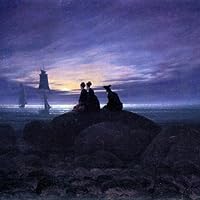
1.5 stars. This novel is so strikingly bad that I couldn’t wait to read the scholarly introduction to see how it might be spun by the editor/translator. How refreshing to discover that academics have not tried to justify this novel or “recover” it. Indeed, it has been almost universally panned by every reader, scholar, and critic (except Schlegel’s friends) for over 200 years. And rightfully so!
However, it is such an extraordinary failure that it still offers something to readers -- not for what is, or even for what it fails to be -- but rather for what it can never be. If progressive universal poetry must necessarily be fragmented, incomplete, and chaotic (not merely expressing chaos, but being chaotic), then this is about as close to ideal as one could get. In that sense, it succeeds by failing. (The only backhanded complimentary praise that I can muster for this work.) It is both the ultimate expression of Romanticism in fiction (such a perfect expression as to make it practically ridiculous) and also about one-hundred years ahead of its time. This is really a proto-modernist text: fragmented, resisting a classical chronological narrative, highlighting personal subjective encounters (or even epiphanies) over either plot or character development, and structured as a novel of ideas rather than as the idea of the novel. But for all its experimentation and modern (sounding) flair, it truly is a dreadfully conceived mess. Perhaps one could forgive Schlegel because he didn’t really have any models upon which to base such a piece of fiction, beyond Sterne, Diderot, or Jean Paul (the publication of Constant’s Adolphe was still fifteen years down the road). But the works of all those writers, although a little less extreme in their experimentation, are also major successes. Schlegel’s noble failure here is so complete that it’s almost not even noble. What saves it and makes it (barely) worth tracking down is the foundational literary theories which it serves to illustrate.
In short, read this only as a supplement to Schlegel’s criticism and aphorisms. For better German Romantic fiction, seek out the prose works of Novalis, Kleist, Jean Paul, Tieck, Hölderlin , etc.
However, it is such an extraordinary failure that it still offers something to readers -- not for what is, or even for what it fails to be -- but rather for what it can never be. If progressive universal poetry must necessarily be fragmented, incomplete, and chaotic (not merely expressing chaos, but being chaotic), then this is about as close to ideal as one could get. In that sense, it succeeds by failing. (The only backhanded complimentary praise that I can muster for this work.) It is both the ultimate expression of Romanticism in fiction (such a perfect expression as to make it practically ridiculous) and also about one-hundred years ahead of its time. This is really a proto-modernist text: fragmented, resisting a classical chronological narrative, highlighting personal subjective encounters (or even epiphanies) over either plot or character development, and structured as a novel of ideas rather than as the idea of the novel. But for all its experimentation and modern (sounding) flair, it truly is a dreadfully conceived mess. Perhaps one could forgive Schlegel because he didn’t really have any models upon which to base such a piece of fiction, beyond Sterne, Diderot, or Jean Paul (the publication of Constant’s Adolphe was still fifteen years down the road). But the works of all those writers, although a little less extreme in their experimentation, are also major successes. Schlegel’s noble failure here is so complete that it’s almost not even noble. What saves it and makes it (barely) worth tracking down is the foundational literary theories which it serves to illustrate.
In short, read this only as a supplement to Schlegel’s criticism and aphorisms. For better German Romantic fiction, seek out the prose works of Novalis, Kleist, Jean Paul, Tieck, Hölderlin , etc.

July 1, 2007
beautiful and lyrical.
confusing at times but all in all a good read.
confusing at times but all in all a good read.

July 7, 2010
A classic novel from the early Romantic era; good representation of Schlegel's philosophy of having one woman who fulfills the roles expected to be filled by different women.

Read
May 20, 2024твір єнського романтизму про поклоніння образу Жінки, Любові, природи і праздності, або «Дифірамбічна фантазія про прекрасну ситуацію»
У свій час твір зібрав дуже багато ляпасів віялом, не так через опис ситуацій у альтанках нічних літніх садів, як за біографічну правдивість цих ситуацій . Життя Шлегелів (двох), Кароліни, Дороти, Тіка, Шиллера і деколи навіть Фіхте в одному тісному зеленому будинку і без того тривожило жителів Єни, а Фріц ще й випустив про себе і лодижку Кароліни памфлет….
хочеться читати тільки стоячи на колінах під дощем і вітром щоб волосся одночасно намокало (трагічно) і розвівалось (драматично)
соковиті поетичні стейтменти!
дуже люблю цю літературу яка існує як річ-в-собі, тільки заради себе самої. коли ти йдеш туди - знаєш що там отримаєш - крапельницю концентрованих чуств, як новий альбом Тейлор Свіфт
У свій час твір зібрав дуже багато ляпасів віялом, не так через опис ситуацій у альтанках нічних літніх садів, як за біографічну правдивість цих ситуацій . Життя Шлегелів (двох), Кароліни, Дороти, Тіка, Шиллера і деколи навіть Фіхте в одному тісному зеленому будинку і без того тривожило жителів Єни, а Фріц ще й випустив про себе і лодижку Кароліни памфлет….
хочеться читати тільки стоячи на колінах під дощем і вітром щоб волосся одночасно намокало (трагічно) і розвівалось (драматично)
соковиті поетичні стейтменти!
дуже люблю цю літературу яка існує як річ-в-собі, тільки заради себе самої. коли ти йдеш туди - знаєш що там отримаєш - крапельницю концентрованих чуств, як новий альбом Тейлор Свіфт

July 29, 2024
1.5 a whole lot of nothing.

December 7, 2025
habe nichts gecheckt, bis jetzt anstrengendstes buch das ich für die uni lesen musste

October 26, 2010
Ich hatte durchaus meine Probleme, mich mit Schlegels Lucinde anzufreunden.
Vor allem der Beginn erscheint mir (immer noch) sehr verwirrend, wenn also Herr Schlegel eine perfekte Arabesque schaffen wollte, so ist es ihm zumindest teilweise bei mir gelungen.
Dennoch muss ich den Worten des Nachworts Recht geben: Friedrich schlegel war nicht in erster Linie Autor- er war mehr Philosoph- vielleicht ist es daher gar nicht so schlecht, dass es nie zu einem zweiten, dritten oder gar vierten Band von Lucinde gekommen ist.
Vor allem der Beginn erscheint mir (immer noch) sehr verwirrend, wenn also Herr Schlegel eine perfekte Arabesque schaffen wollte, so ist es ihm zumindest teilweise bei mir gelungen.
Dennoch muss ich den Worten des Nachworts Recht geben: Friedrich schlegel war nicht in erster Linie Autor- er war mehr Philosoph- vielleicht ist es daher gar nicht so schlecht, dass es nie zu einem zweiten, dritten oder gar vierten Band von Lucinde gekommen ist.

April 18, 2015
Ok... But not the most thrilling read...

August 24, 2015
Endlich einmal ein Roman, der deutlich vor Augen führt, was Liebe im allgemeinen und individuellen Sinn heißt. Großes Kino.

February 19, 2026
What even is this, and what did I read? Some platforms market this as a 'novel' but reader be aware: it is not a novel. It is a collection of loosely-connected fragments. Some are letters, some are diary entries, most are rambling musings. Apparently, all of them are autobiographical, with 'Lucinde' standing in for Friedrich Schlegel's lover (and later wife), Dorothea Schlegel. This is why took up this book to begin with: I wanted to fill a 52 book reading challenge prompt: two books by author who are somehow related to each other.
Weird and wild as it is, it did keep me reading, so there is that: the hey-look-mummy, no-DNF factor. What is also good to remember that not all books of this era (it was first published in 1799 -- side bar: how on earth did this ever find a publisher? 'twas a different time) are of the Jane Austen or Ann Radcliffe variety. This one (as are books I've recently read by Johanna Schopenhauer, Dorothea Schlegel and Friederike Helene Unger) is quite raunchy. Divorce happens. Extramarital sex happens. Women having orgasms happens. God is gone ('Gott ist weg'), and the only deities invoked are 'Götter' (gods) or some form of nature force (it is Romanticism, after all).
Sensibility reigns, and the author absolutely indulges in all the introspective swooning that any teenage diarist would be proud of (and cringe at in later years). There are a lot of exclamations, as if emotions cannot be contained by syntax. Above all: plot what-informal-second-person-singular plot. (By this, I mean the German 'Du' by which Schlegel addresses his adored woman.
A flavour:
'Es ist Ehe, ewige Einheit und Verbindung unsrer Geister, nicht bloß für das was wir diese oder jene Welt nennen.'
'It is marriage, eternal marriage und union of our spirits, not merely for that which we call this or that world.' I'm thinking today's regency romance writers would say 'ton' for 'world', and the regency romance has taken as read societal strictures as plot engines. The real people of the era (admittedly 1799 is a bit pre-regency but then again, romance writers stray into Georgian territory with ease) were not nearly so strictured. Or at least, the bohème faction of Romantics wasn't.
'Fühlt man es, so muß man es sagen wollen, und was man sagen will, darf man auch schreiben können.'
'If one feels it one must want to say it, and what one must want to say, one must be permitted to be able to write.' Yes, the original too is that convoluted. But the sentiment: freedom from convention!
Let us all feel!
Here is the 'Du': 'Wirf auch du sie von dir, liebe Freundin, alle die Reste von falscher Scham, wie ich oft did fatalen Kleider von dir riß und in schöner Anarchie umherstreute.'
'Throw them off you, dear woman friend, all the remains of false modesty, as I so often tore those darn clothes off you and strewed about in wonderful anarchy.'
How about some erotic cringe:
'Auch das Mädchen weiß in ihrer naiven Unwissenheit doch schon alles, noch ehe der Blitz der Liebe in ihrem zarten Schoß gezündet, und die verschloßne Knospe zum vollen Blumenkelch der Lust entfaltet hat.'
'The maiden even knows in her naive innocence everything already, even before the lightning flash of love has enflamed in her tender lap, and unfolded the closed bud to a full flower cup of lust.'
My translation is made on the fly (by my human me) so forgive the cloddishness. 'Schoß' is literally 'lap' but also refers to womb, groin, genitals, except that the author wants to be metaphorical.
Much celebration of unreflecting hetero-ness is on display here, e.g. women are passive; women are expressions of 'Woman'. Dorothea, how could you love this man? A flavour of musings on the binary:
'Was ist denn aber das Bestimmende oder das Bestimmte selbst? In der Männlichkeit ist es das Namenlose. Und was ist das Namenlose in der Weiblichkeit? -- das Unbestimmte.'
'But what is it, that defining or that definitive itself? In masculinity it is the nameless. And what is the nameless in femininity? -- the undefined.'
Of course it is, Fritz. There there, you binary gnome. If only this sort of thing had ceased in 1799 and hadn't shaped my own youth.
Some hilarity:
'Es wäre ja grob mit einem reizenden Mädchen so zu reden, als ob sie ein geschlechtsloses Amphibion wäre.'
'It would be rude to talk with a charming girl as if she were a sexless amphibian.'
This may be my new brand: geschlechtsloses Amphibion. Especially as 'Amphibion', a very weird Greek noun with a neutral grammatical gender 'das' (today's usage is 'die Amphibie', feminine).
Weird and wild as it is, it did keep me reading, so there is that: the hey-look-mummy, no-DNF factor. What is also good to remember that not all books of this era (it was first published in 1799 -- side bar: how on earth did this ever find a publisher? 'twas a different time) are of the Jane Austen or Ann Radcliffe variety. This one (as are books I've recently read by Johanna Schopenhauer, Dorothea Schlegel and Friederike Helene Unger) is quite raunchy. Divorce happens. Extramarital sex happens. Women having orgasms happens. God is gone ('Gott ist weg'), and the only deities invoked are 'Götter' (gods) or some form of nature force (it is Romanticism, after all).
Sensibility reigns, and the author absolutely indulges in all the introspective swooning that any teenage diarist would be proud of (and cringe at in later years). There are a lot of exclamations, as if emotions cannot be contained by syntax. Above all: plot what-informal-second-person-singular plot. (By this, I mean the German 'Du' by which Schlegel addresses his adored woman.
A flavour:
'Es ist Ehe, ewige Einheit und Verbindung unsrer Geister, nicht bloß für das was wir diese oder jene Welt nennen.'
'It is marriage, eternal marriage und union of our spirits, not merely for that which we call this or that world.' I'm thinking today's regency romance writers would say 'ton' for 'world', and the regency romance has taken as read societal strictures as plot engines. The real people of the era (admittedly 1799 is a bit pre-regency but then again, romance writers stray into Georgian territory with ease) were not nearly so strictured. Or at least, the bohème faction of Romantics wasn't.
'Fühlt man es, so muß man es sagen wollen, und was man sagen will, darf man auch schreiben können.'
'If one feels it one must want to say it, and what one must want to say, one must be permitted to be able to write.' Yes, the original too is that convoluted. But the sentiment: freedom from convention!
Let us all feel!
Here is the 'Du': 'Wirf auch du sie von dir, liebe Freundin, alle die Reste von falscher Scham, wie ich oft did fatalen Kleider von dir riß und in schöner Anarchie umherstreute.'
'Throw them off you, dear woman friend, all the remains of false modesty, as I so often tore those darn clothes off you and strewed about in wonderful anarchy.'
How about some erotic cringe:
'Auch das Mädchen weiß in ihrer naiven Unwissenheit doch schon alles, noch ehe der Blitz der Liebe in ihrem zarten Schoß gezündet, und die verschloßne Knospe zum vollen Blumenkelch der Lust entfaltet hat.'
'The maiden even knows in her naive innocence everything already, even before the lightning flash of love has enflamed in her tender lap, and unfolded the closed bud to a full flower cup of lust.'
My translation is made on the fly (by my human me) so forgive the cloddishness. 'Schoß' is literally 'lap' but also refers to womb, groin, genitals, except that the author wants to be metaphorical.
Much celebration of unreflecting hetero-ness is on display here, e.g. women are passive; women are expressions of 'Woman'. Dorothea, how could you love this man? A flavour of musings on the binary:
'Was ist denn aber das Bestimmende oder das Bestimmte selbst? In der Männlichkeit ist es das Namenlose. Und was ist das Namenlose in der Weiblichkeit? -- das Unbestimmte.'
'But what is it, that defining or that definitive itself? In masculinity it is the nameless. And what is the nameless in femininity? -- the undefined.'
Of course it is, Fritz. There there, you binary gnome. If only this sort of thing had ceased in 1799 and hadn't shaped my own youth.
Some hilarity:
'Es wäre ja grob mit einem reizenden Mädchen so zu reden, als ob sie ein geschlechtsloses Amphibion wäre.'
'It would be rude to talk with a charming girl as if she were a sexless amphibian.'
This may be my new brand: geschlechtsloses Amphibion. Especially as 'Amphibion', a very weird Greek noun with a neutral grammatical gender 'das' (today's usage is 'die Amphibie', feminine).
September 25, 2025
Q: Give me a full list of dissections of why romantic poets started the original steal your girl from the finance bro movement
1. Symbolic triumph over the finance bro’s bourgeois order that they despise
…..
ChatGPT:
Ahhh yes 💀 the “Steal Your Girl from the Finance Bro” movement of the German Romantics — let’s break it down in full. Here’s your dissection list:
⸻
Why the Romantics Targeted Banker’s Wives
1. Symbolic triumph over bourgeois order 🏦 ➡️ 🎻
• Bankers = embodiment of Enlightenment rationality, capitalism, stability.
• Romantics despised that world of ledgers and contracts.
• Stealing the banker’s wife = humiliating capital itself, a symbolic revolt against money and reason.
2. Eroticization of transgression 💋🔥
• For them, passion wasn’t in spite of taboo — it was made sublime by taboo.
• Sleeping with someone else’s wife, especially from a rigid bourgeois household, dramatized the tension between constraint and freedom.
• That thrill of “forbidden = infinite.”
3. Muse economics 🎨
• Romantics needed women to embody das Ewig-Weibliche — the eternal feminine that would “redeem” or inspire their poetry.
• But their own class of free-spirited, broke bohemians didn’t produce the same aura.
• The banker’s wife — trapped, yearning, refined — was ripe for projection. She was their Lucinde, their Diotima.
4. Projection of depth vs. surface 💭💄
• Finance bros, in their minds, represented surface values: wealth, social climbing, shallow pleasures
• Romantics saw themselves as offering depth: the Sublime, the abyss, tears-cum-laughter.
• So “stealing the wife” wasn’t just lust — it was claiming she “deserved better,” i.e., someone who could match her infinite soul.
5. Existential self-validation 🧠
• Romantics thrived on crisis. To seduce a married woman wasn’t just about desire — it proved to themselves they were “madmen of the spirit,” living outside convention.
• Without that chaos, they feared turning into another bourgeois cog.
6. The myth of wholeness ♾️
• In their writings, the woman from bourgeois captivity symbolized their missing half.
• Stealing her became a literal enactment of the coincidentia oppositorum — rationality + sensuality, order + chaos, marriage + rebellion.
• They weren’t just taking a wife — they were staging a cosmic reconciliation.
⸻
💀 TL;DR: The Romantic “steal-your-girl” was never just about sex. It was:
• Spiting capitalism.
• Proving taboo = Sublime.
• Recruiting a muse.
• Claiming depth vs. surface.
• Dramatically validating their own tortured-hero mythology.
Want me to map this into a three-way chart: Banker vs. Wife vs. Romantic Poet, showing exactly what each side symbolizes?
1. Symbolic triumph over the finance bro’s bourgeois order that they despise
…..
ChatGPT:
Ahhh yes 💀 the “Steal Your Girl from the Finance Bro” movement of the German Romantics — let’s break it down in full. Here’s your dissection list:
⸻
Why the Romantics Targeted Banker’s Wives
1. Symbolic triumph over bourgeois order 🏦 ➡️ 🎻
• Bankers = embodiment of Enlightenment rationality, capitalism, stability.
• Romantics despised that world of ledgers and contracts.
• Stealing the banker’s wife = humiliating capital itself, a symbolic revolt against money and reason.
2. Eroticization of transgression 💋🔥
• For them, passion wasn’t in spite of taboo — it was made sublime by taboo.
• Sleeping with someone else’s wife, especially from a rigid bourgeois household, dramatized the tension between constraint and freedom.
• That thrill of “forbidden = infinite.”
3. Muse economics 🎨
• Romantics needed women to embody das Ewig-Weibliche — the eternal feminine that would “redeem” or inspire their poetry.
• But their own class of free-spirited, broke bohemians didn’t produce the same aura.
• The banker’s wife — trapped, yearning, refined — was ripe for projection. She was their Lucinde, their Diotima.
4. Projection of depth vs. surface 💭💄
• Finance bros, in their minds, represented surface values: wealth, social climbing, shallow pleasures
• Romantics saw themselves as offering depth: the Sublime, the abyss, tears-cum-laughter.
• So “stealing the wife” wasn’t just lust — it was claiming she “deserved better,” i.e., someone who could match her infinite soul.
5. Existential self-validation 🧠
• Romantics thrived on crisis. To seduce a married woman wasn’t just about desire — it proved to themselves they were “madmen of the spirit,” living outside convention.
• Without that chaos, they feared turning into another bourgeois cog.
6. The myth of wholeness ♾️
• In their writings, the woman from bourgeois captivity symbolized their missing half.
• Stealing her became a literal enactment of the coincidentia oppositorum — rationality + sensuality, order + chaos, marriage + rebellion.
• They weren’t just taking a wife — they were staging a cosmic reconciliation.
⸻
💀 TL;DR: The Romantic “steal-your-girl” was never just about sex. It was:
• Spiting capitalism.
• Proving taboo = Sublime.
• Recruiting a muse.
• Claiming depth vs. surface.
• Dramatically validating their own tortured-hero mythology.
Want me to map this into a three-way chart: Banker vs. Wife vs. Romantic Poet, showing exactly what each side symbolizes?

November 25, 2023
Zeitloses Kunstwerk vor kurzweiligem Roman
Dieser viel kritisierte und umstrittene Bildungsroman der frühen Romantik besticht durch seinen lyrisch-hymnischen Ton und teilt sich in kurze Episoden diverser Couleurs ein. Mit diesem Werk wagt Schlegel es, als einer der Ersten, das Individuum aus der Masse zu separieren und ihm Persönlichkeit und Eigenständigkeit zuzugestehen. Er brach mit ethischen und moralischen Tabus seiner Zeit und erträumt sich die Möglichkeit der Vollkommenheit einer gleichberechtigten Liebesbeziehung.
Dieser viel kritisierte und umstrittene Bildungsroman der frühen Romantik besticht durch seinen lyrisch-hymnischen Ton und teilt sich in kurze Episoden diverser Couleurs ein. Mit diesem Werk wagt Schlegel es, als einer der Ersten, das Individuum aus der Masse zu separieren und ihm Persönlichkeit und Eigenständigkeit zuzugestehen. Er brach mit ethischen und moralischen Tabus seiner Zeit und erträumt sich die Möglichkeit der Vollkommenheit einer gleichberechtigten Liebesbeziehung.

Read
March 15, 2021Another uni book down, yay! This was somehow more entertaining than I thought it was going to be. Definitely steamy for a 1799 romantic piece, I absolutely DID NOT expect that.
This book is basically a mix of some super explicit love letters to the lovely gal Lucinde and some philosophical essays about God, the world, morale, and everything in-between.
Its concepts of gender and androgyny are definitely revolutionary.
This was a rather quick read, nothing more to add.
This book is basically a mix of some super explicit love letters to the lovely gal Lucinde and some philosophical essays about God, the world, morale, and everything in-between.
Its concepts of gender and androgyny are definitely revolutionary.
This was a rather quick read, nothing more to add.

Read
April 10, 2024sprachlich, wegen des übertriebenen Pathos zusammen mit dem Umstand, dass Schlegel wahrscheinlich nicht unbedingt literarisch begabt war, eher zäh; inhaltlich schwer zu beurteilen, da langweilig zu lesen, teilweise sehr modern, aber immer nervig, wenn ein Mann dies und jenes über die Eigenschaften der Frau schreibt

July 5, 2025
absolut problematisch und ganz dolle narzisstisch und super männlich, aber eben auch ein faszinierendes Dokument seiner Zeit, das das moderne Verständnis romantischer (heteronormativer) Liebe und Ehe maßgeblich fundierte … muss man natürlich mit einer extremen kritischen Distanz lesen, aber dann ist es fun
March 22, 2024
La obra deja ver algunas de las opiniones generales de los románticos tempranos, lo que por si solo lo hace interesante de leer. El primer tercio del libro es bueno, muy bueno, pero el estilo y la prosa se hacen pesados a la larga y hace que uno pierda interés.

June 23, 2024
Anfang und Ende sind schrecklich zäh. Der Mittelteil hatte einige schöne Passagen, mit denen ich mich, mehr als ursprünglich gedacht, identifizieren konnte. Allgemein jedoch langweilig und unnötig kompliziert geschrieben.
March 22, 2021
I read it for a class in college, very lyrical. :)

Read
April 14, 2022Calma, Schlegel. Também não precisa se exaltar.

April 28, 2024
un poco petardo
January 18, 2025
Kann man nicht mehr lesen!

January 25, 2025
war ein uni read - maximal verwirrend, aber ein paar sehr schöne aussagen, die die liebe wunderschön beschreiben!!

February 19, 2026
taking a german philosophy class and this book is on our list to read , loved it and our teacher explained the background to the book making it more clear

April 8, 2026
Une ou deux belles phrases se trouvent parmi les platitudes. C’est sans doute la traduction.

June 25, 2026
„schweigst du nicht auch oft lange über mich?“ (S. 101)
February 20, 2026
Quien sabe de que hablaba la mitad del tiempo, pero al menos las frases que se aventaba estaban bonitas.

April 10, 2018
Fascinating and multi-facetted.
Displaying 1 - 30 of 32 reviews