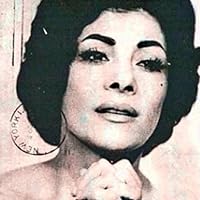
Le Poète comme un boxeur. « En moi, disait Kateb Yacine, le poète combat le militant et le militant combat le poète. » Comment faire tenir ensemble la révolte et la révolution, la poésie et l'action, comment être soi-même quand on a choisi de partager le destin de tout un peuple? Ces onze entretiens et leurs annexes constituent sans doute la réponse la plus lucide et la plus émouvante à de telles interrogations : l'exil, la misère, la solitude... mais aussi les amitiés, les élans de générosité, les éclats de rire, le monde entier dans son horreur et dans sa beauté. Car l'histoire de Kateb Yacine, de sa vie et de son œuvre, telle qu'elle nous est contée ici par lui-même, est aussi celle de l'Algérie et de ses convulsions : « La révolution algérienne est une tragédie, et c'est cela que j'écris. » Les textes présentés dans ce volume sont extraits du fonds d'archives Kateb Yacine réuni à l'Institut mémoires de l'édition contemporaine (IMEC) à Paris.
Reporter for Alger Republicain until 1950; then full-time writer. Yacine is one of the most notable French Algerian writers. Nedjma, a long prose poem reminiscent of Faulkner in the handling of time, has been called by Georges J. Joyaux "undoubtedly the best testimonial to the birth of a new Algeria." Yacine once said: "Nedjma [the girl in the story] is the soul of Algeria, torn apart since its origin and ravaged by too many exclusive passions."
From Wikipedia: Kateb Yacine was officially born on August 6, 1929, but it is more likely that his birth occurred four days earlier. He was born in Constantine. Born as Yacine Kateb, he once said that he was so used to hearing his teachers calling out names with the last name first that he adopted Kateb Yacine as his pen name when publishing. He came from a scholarly maraboutic Berber family from Djebel Nador in eastern Guelma Province, called Kheltiya (or Keblout). His maternal grandfather was the 'bach adel', or deputy judge of the qadi in Condé Smendou (Zirout Youcef). His father was a lawyer, and the family followed him through his various assignments in different parts of the country. Young Kateb (which means 'writer'), attended the Sedrata Quran school in 1937, then in 1938 the French school in Lafayette (Bougaa) in Little Kabylie, where the family had moved. In 1941 he enrolled in the colonial 'collège' (secondary school) of Setif as a boarder. Kateb Yacine was in his third year at the collège when the May 8, 1945 demonstrations occurred. He participated in these demonstrations that ended with the massacre of between six and eight (according to nationalists forty-five) thousand Algerians by the French army and police. Three days later he was placed under arrest and imprisoned for two months. From that point on he became a partisan for the nationalist cause. Expelled from secondary school, watching his mother's psychological health decline, passing through a period of dejection and immersed in the writings of Lautréamont and Baudelaire, his father sent him to the high school in Bône (Annaba). There he met 'Nedjma' ('the star'), an 'already married cousin' with whom he lived for 'maybe eight months', as he later acknowledged. While living with Nedjma he published his first collection of poetry in 1946. He had already become 'politicized' and started giving lectures under the auspices of the PPA, 'the great nationalist party of the masses'. Yacine went to Paris in 1947, "into the lion's den" as he put it. In May 1947 he joined the Communist party and gave a lecture in the 'Salle des Sociétés savantes' on emir Abd al-Qadir. During a second visit to France the following year he published 'Nedjma ou le Poème du Couteau' ('a hint of what was to follow') in the revue 'Le Mercure de France'. He was a journalist at the daily 'Alger républicain' between 1949 and 1951, his first great reportages coming from Saudi Arabia and Sudan (Khartoum). After returning to Algeria, he published (under the pseudonym Said Lamri) an article denouncing 'swindling' at the holy place of Mecca. After his father's death in 1950 Yacine worked as a longshoreman in Algiers. He returned to Paris where he would stay until 1959. During this period in Paris he worked with Malek Haddad, developed a relationship with M'hamed Issiakhem, and, in 1954, spoke extensively with Bertold Brecht. In 1954, the revue Esprit published Yacine's play 'Le cadavre encerclé', which was staged by Jean-Marie Serreau but was banned in France. 'Nedjma' was published in 1956 (and Kateb will not forget the editor's comment: "This is too complicated. In Algeria you've got such pretty sheep, why don't you talk about your sheep?"). During the Algerian war for independence Yacine was forced to travel abroad for a long time due to the harassment he faced from the DST. He lived in numerous places, subsisting as a guest writer or working various odd jobs in France, Belgium,
a great read for anyone interested in Kateb Yacine or political developments in Algeria in the second half of the 20th century. fascinating because as a reader it lets of follow the development of katébian thought over the course of the years, particularly on language politics, the relations between algerian arabic, standard arabic, french, and tamazight, and how this network of tensions reflects, or can, or should be reflected in art and cultural creation in the algerian context. one point that really gets illustrated here, one that occasionally misses from the way his work, particularly Nedjma, is presented, is his perspective and self-understanding as african marxist, which is essencial to understand his position within franco-algerian literature, a position that ultimately cannot be exploited for bourgeois nation building projects without being twisted and torn apart, bc it centers not just Algeria, but the algerian working class. and it's not just a collection of interviews that is of historic interest, bc the topics Kateb Yacine gets into are still very much present today. Obviously doesn't mean one has to share all of his opinions 100%, but even if one doesn't they're still very much interesting to ponder.