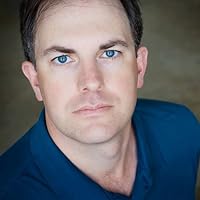
Under what conditions can a business hope to deliver consistent financial results, inspire employees, protect the environment, and make the world a better place? The question gets to the heart of a set of fundamental What is the purpose of a business? In what ways does a business create value, and whom does it really serve? Can a business promote social causes and yet remain robust, competitive, and profitable?Jeffrey Hollender has run Seventh Generation, the world leader in creating environmentally friendly, nontoxic household and personal care products for more than fifteen years. That the company's success continued through the 90's bubble attests to an unwavering set of principles and behavioral guidelines based on the premise that social responsibility is a viable, vital, and sustainable business strategy. What Matters Most illuminates the successful practices of Seventh Generation--and many other pioneering companies, including Intel, Chiquita, and BP--to demonstrate a corporate strategy that hardwires social and environmental concerns into a company's culture, operating systems, and business relationships. Outlining seven specific principles of corporate responsibility, What Matters Most shows you how to assess your company's performance, address rising consumer expectations, honestly communicate your game plan, and embark on a path of long-term growth. For general readers, What Matters Most is bound to fuel the debate over the role of business in society and the limits to which it can drive positive change.
The CEO of Seventh generation, Jeffrey Hollender, pens this book on responsible business. I came across this book because Seventh Generation recently decided to sell their wares through Target instead of Wal-Mart. Most small businesses would love to be courted by the Wal-Mart retailing giant but Jeffrey Hollender felt that Target agreed more with Seventh Generation. In this book, Jeffrey discusses his thoughts on running a responsible business.
The opening chapters were somewhat difficult to get through. Perhaps it just took several pages for me to get used to his prose?
The underlying message I felt was that having a socially responsible business is possible but will require a lot of work on everyone’s part. Everyone is so connected to each other now. Perhaps an environmental conscious entrepreneur decides to open a chain of organic restaurants and ensures that farmers are paid a fair price. But what if the restaurant hires an exterminator that uses a toxin that ends up contaminating the soil for generations?
The idea is to have a closed-loop business model … that leaves things in the same condition as when the company began. For example, think of the credo of camping sites. Moreover, the closed loop business model is more than just your business but includes your suppliers and customers. Specifically, there are hidden costs to disposal of things like electronics and the ubiquitous clear plastic bags. Of course, we every day consumers can throw them in the trash for someone else to deal with. But someone does deal with our trash and there are some real costs. The book gives a story of a putrid land in China where a lot of our electronic waste goes.
I have always loved companies that are transparent with their business models from a financial perspective. Transparency is about communicating to shareholders, consumers, and employees. Transparency is about being candid and introspective on dealings and reasoning for decisions.
There are a mixed bag of corporate stories mainly with Ben & Jerry Ice Cream (who is now part of Unilever) and Seventh Generation. There is of course some mention of Johnson and Johnson’s Tylenol case and also on electronic companies like Hewlett Packard and Dell. There is some applause for British Petroleum for a decision to put no money to politics and Shell who compromised with Greenpeace on an issue in Africa.
Surprisingly this is a well thought out book that doesn’t get hysterical. It’s honest, transparent and I recommend it.
This was the first book I ever bought about Corporate Social Responsibility (CSR). Back then, I was a senior in college, taking up an advertising course with a particular passion for advocacy and CSR - even though, at the time, I didn't know exactly what it was! I've heard the phrase thrown around every now and then, and saw a couple of case studies showcasing what were supposedly best practices in CSR (the Shell Malampaya Project was among the most memorable ones). The situation was that none of my teachers really knew much about it, and didn't know where I could go to get more information. So it was very fortunate that I chanced upon this book at the bookstore just across the street from UA&P :-)
I think it was a great first read about this whole world of CSR - written like a personal testimonial of Jeffrey Hollender, but formatted like a textbook with very detailed multiple indices. Makes for both an easy read and an easy reference.
It walks you through the evolution of the CSR movement through the personal story of Hollender and how he put up his company, Seventh Generation. Chapters cover essentials such as Risk and Reputation, Sustainability, Accountability, and Transparency. He also touches a bit on the technical side, explaining the "triple bottom line" concept of CSR reporting, full product lifecycle responsibility, social audits and stakeholder relations -- without getting too complicated and jargon-ey.
At the end of the book he offers a good number of references on sustainable business and best practices, socially responsible business networks, publications and websites dedicated to CSR, and even a list of organizations complete with contact information. All case studies cited in the book are indexed along with the URLs where you can find more information.
Definitely worth the price. For those of you who want to understand CSR more, this book is a good place to start :-)
Contains a rather staggering number of errors (including "illicit" instead of "elicit"), mostly just random commas, which leads me to believe this was published with little to no editing. BUT there are some good and important ideas here, the most revolutionary of which is basically "hey, big business: wake up! You'll make a bigger profit doing the right thing, sweartocow!" ...Which is awesome. Sadly, Hollender himself was fairly recently ousted from Seventh Generation after making some inflammatory statements on television ("our company isn't good. It's just LESS BAD.") The book gave me some hope, though, that maybe other people like him can turn the tides toward true Corporate Social Responsibility being the norm.
Fantastic book! This looks at the development of sustainable business, from the 1980s on. It shows how CSR developed, warts and all. It produces valuable lessons from incidents involving Shell, Ben & Jerrys, and of course, Hollender's own Seventh Generation. Must read to understand where Sustainable Business is coming from, and where it is going.