A new collection by one of America's most respected young experimental poets. In his new collection Torn Awake , Gander continues to blend passion with intelligence, unveiling the forces of physical nature and personhood, the self as a construction of reciprocally reflective relations. Proposing models of hybridity, each of the book's major sequences develops a unique subject, rhythm, and form. Bringing to light the molten potential at the core of personality, the poems illuminate ways that language, as history read by anthropologists, discourse between lovers, gestures between parent and child, graffiti in temples, or even language as an event in itself (the very experience of words at play), incarnates presence. Addressing father and son relationships, and venerating erotic love, Gander's poems surge with the energy of active discovery.
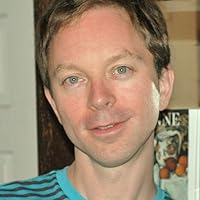
Born in the Mojave Desert, Forrest Gander grew up in Virginia and spent significant periods in San Francisco, Dolores Hidalgo (Mexico), and Eureka Springs, Arkansas before moving to Rhode Island. He holds degrees in literature and in geology, a subject that recurs in his writing and for which his work has been connected to ecological poetics.
Collaboration has been an important engagement for Gander who, over the years, has worked with artists such as Ann Hamilton, Sally Mann, Eiko & Koma, Lucas Foglia, Ashwini Bhat, Richard Hirsch & Michael Rogers. He also translates extensively and has edited several anthologies of contemporary poetry from Latin America, Spain, and Japan.
I bought this book of poems along with Science & Steepleflower. I must say, I have added this author to my favorite's list. Another reviewer characterized this book of poems as a "solid sucker punch." I agree.
From "Carried Across"
"Long negra-azul hair rivers to the Ahh of her back."
I found this line to stand out for it's beauty and intimacy which made me feel almost embarrassed...as if I was intruding on a moment not meant for me.
Gander is such a pretty writer. I think it's got something to do with his knowledge of bird, bark, rock, etc. and of (what seems like) all the words one needs to speak knowledgeably (and concisely)about such things. It's also got something to do with his tendency to collapse space and time: "he" and his son become the ant his son dangles over the ant-lion; through the hall, where the throng rushes the fleeing queen, tourists walk, "swayed by plans for lunch."
What's great about this book in particular is how Gander's diction and sophisticated sense of time and place are applied to (somewhat) self-conscious third person depictions of inter-personal relationships. These are the "father-son poem," the "couple poem," the "family poem," the-"place-I-love-poem," yes, but Gander's approach rejuvenates the otherwise all-too-familiar gestures. Ex:
"By the way he has raised his hand to her face/as though it were an innovation on faces or merely the envelope/for his admiring, as though a hand could say 'thou'--we recognize them,/lovers who have rushed//to the wood's edge//on trails of inference/through all the thicknesses of scattered and divergent signs,/flying the contagion. What plague this time? What time?"
Favorites: The Hugeness of That Which is Missing, To the Reader, and To Eurydice