Formerly India's most corrupt tourist guide, Raju - just released from prison - seeks refuge in an abandoned temple. Mistaken for a holy man, he plays the part and succeeds so well that God himself intervenes to put Raju's newfound sanctity to the test. Narayan's most celebrated novel, The Guide won him the National Prize of the Indian Literary Academy, his country's highest literary honor.
R. K. Narayan is among the best known and most widely read Indian novelists who wrote in English.
R.K. Narayan was born in Madras, South India, in 1906, and educated there and at Maharaja's College in Mysore. His first novel, Swami and Friends and its successor, The Bachelor of Arts, are both set in the enchanting fictional territory of Malgudi and are only two out of the twelve novels he based there. In 1958 Narayan's work The Guide won him the National Prize of the Indian Literary Academy, his country's highest literary honor.
In addition to his novels, Narayan has authored five collections of short stories, including A Horse and Two Goats, Malguidi Days, and Under the Banyan Tree, two travel books, two volumes of essays, a volume of memoirs, and the re-told legends Gods, Demons and Others, The Ramayana, and the Mahabharata. In 1980 he was awarded the A.C. Benson Medal by the Royal Society of Literature and in 1982 he was made an Honorary Member of the American Academy and Institute of Arts and Letters.
Most of Narayan's work, starting with his first novel Swami and Friends (1935), captures many Indian traits while retaining a unique identity of its own. He was sometimes compared to the American writer William Faulkner, whose novels were also grounded in a compassionate humanism and celebrated the humour and energy of ordinary life.
Narayan who lived till age of ninety-four, died in 2001. He wrote for more than fifty years, and published until he was eighty seven. He wrote fourteen novels, five volumes of short stories, a number of travelogues and collections of non-fiction, condensed versions of Indian epics in English, and the memoir My Days.
The last time I read R.K. Narayan was when I was in twelfth standard. I remember borrowing the paperback copy of The Man-Eater of Malgudi from the town library and I remember I was consulting the thick English to Bengali dictionary once or twice at every sentence. I was that bad in English. Curiously, I finished the book. And I remember smiling at times when I luckily got a pun Narayan was driving at. Before then I only read Swami and His Friends by Narayan. I am glad that I have waited so long(7 years) before getting my hands on 'The Guide', a book I wished to read for a long time. Narayan is such a natural storyteller, and he does so with such grace that sometimes I stopped and marvelled at the lucidity and depth of the work. Raju's story is tragic in a fateful, destined way. Raju's story is also a comedy due to the ridiculousness of the turn of events. Raju's 'going with the flow' nature led him to a series of blunders. Perhaps the only redeeming moment was when his reluctance to the forced fasting turned into a willful determination. It is interesting that Narayan named the book as 'The Guide' even though the protagonist was guided only by his own will.
R. K. Narayan's 'The Guide' is a complex and multidimensional novel, full of complex characters and feminist undertones, and a narration that swings between first person point-of-view to third person limited/omniscient. The 'main' story is about the love-affair between Raju and Rosie (and how Rosie eventually fulfils her ambitions), whereas it is 'framed' within the story about Raju accidentally becoming a saint, the saviour and guide of an obscure village in Narayan's fictional geography of Malgudi.
Curiously, for a large part of the book, I found myself more interested in the frame story rather than the actual story of Raju's life and his involvement with Rosie, a girl married to a man named Marco. The situational humour sprinkled in the process of Raju's becoming a saint is surely one of the strengths of this short novel. Narayan is good at humour, but I found his prose a bit of let-down, actually. Sometimes the prose felt like a translation, rather than an original work in English.
The characters in the novel make it complicated. Rosie's shifting attitudes about her husband, Raju's own dilemmas and doubts and changing priorities, Marco's almost improbable detachment regarding the whereabouts of his newly married wife--these are just a few instances of the characters behaving in a somewhat unpredictable fashion. Yet, sometimes their attitudes/behaviours are a bit hard to digest. Why would Marco allow Rosie to stay on at the Peak house only because, in his own estimation, he is "not a ruffian", and then reject her company at the railway station? Why would Rosie still nourish sympathies for her husband despite the fact that he vehemently opposed her art? Why would Raju become so obsessively money-minded, to the point of making Rosie, the love of his life, very unhappy about it?
The ending of the novel has been left deliberately ambiguous by the writer. It is not crystal clear whether Raju's new life as a saint becomes a success or a failure. And the question that came to my mind after reading the last line of the novel is "What is the point of it all?" And as I write this on Goodreads, a word comes to my mind: "Redemption". Yet that may well be my personal imposition on an 'open ended' text.
Overall, I would say that 'The Guide' is a novel with a lot of genuinely funny scenes as well as some pretty strong emotionally poignant ones. I have no criticism against the emotional content of the novel, it just seems to me that it is not a very 'logical' novel. Still, I am now interested in R. K. Narayan, and I might as well read some more books by him in the future.
The Guide is a story of the transformation of a tourist guide called Raju to a rich influencial mentor of Nalini(Rosie) and back to a poor sage who is dependent on the villagers for his needs. R.K.Narayan not only hints at the stratification of the Indian society but also the dream of every man to become content and self-sufficient in life.The writer points out that this satisfaction does not come through monetary means but through one's actions and principles in life, thereby integrating with the Indian philosophical thought. This novel is also an excellent example for Indian writing in English in contrast to western literature.
This entire review has been hidden because of spoilers.
Had read this book long ago. I re-read it again now and it’s still an interesting read.
“There he sat with a thin broken twig at his side. The modern notions of child psychology were unknown then; the stick was an educator’s indispensable equipment. "The unbeaten brat will remain unlearned" said my father, quoting an old proverb.”
“The essence of sainthood seemed to lie in one’s ability to utter mystifying statements. “Until you try, how can you know what you can or cannot do?” he asked. He was dragging those innocent men deeper and deeper into the bog of unclear thoughts.”
After Raju is released from prison in southern India, he takes up residence in a deserted temple and soon finds himself being treated as a holy man. As we hear how this develops, he tells in the first person the tale of how he went from being a small-time shopkeeper to a people-pleasing tour guide fascinated by a traditional Indian dancer called Rosie, and how that led him into prison.
It's a wonderful comedy of errors with a very obtuse anti-hero. All the characters seem to fall into every trap that life lays for them, but Raju falls harder than most.
I went into the book with least expectations, as I had tried reading it when i was in 16 years old and it induced sleep. Now years later (to be exact: 7) i went into it with trepidation I had started reading books both which I love and don't like since last three years as I decided to major in literature and Now at my Masters level I faced this. As I read on I realised one thing last three years have changed me as a reader and the book which was sleep inducing 7 years back is now a sleep repeller. The story follows a man who becomes saint unknowingly. It has multiple layers to it (literature criticism does this to you you starts to see layers of meaning even in every text). It is a typical R.K. Narayan work with seriousness and hilariousness, a book with a good heart I will always cherish the book. The book will help the readers to understand India of late 50's. We see a man's rise fall and rise again in the book. We love him then hate him then sympathise with him and by the end we once again love him immensly. Now many may wonder why does we have a dancing figure on the cover, it is because the man whom we follow is transformed by her at the same time he transforms her. It is a book which shares feminist ideologies. It is a prejudiced novel as we see the past of Raju through his eyes.
The novel highly relies on the "power of speech" which I felt to be a prominent aspect of the book as it is the words spoken by characters which sets many things in motion.
i enjoyed the books This time I breezed through the book.
Definitely want to read more of Narayan's work. You don't know whether to laugh or cry in some passages -- humor and tragedy in the same sentence. It looks like an easy read but there are passages you'll read and re-read when you realize how deep and complex it really is.
The copy I had is missing the last few pages so I did not manage to finish the book, however, it remained a fun book with interesting characters and a well written story. I have a nasty habit of getting bored easily with fiction, but this book managed to stay an entertaining read till the end.
smooth story but interesting. R. K. Narayan always put some moments in a story those create keenness to think that what will next to be happened? , and that is the main characteristic of R. K. Narayan books. Well deserved the national prize of Indian literary academy for this book.
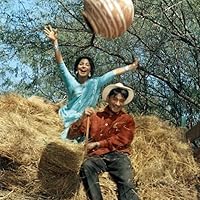
It's a nice book. Simple and easy-going story. I saw the movie first and read the book later. I somehow felt that the movie was slightly better than the book.
My dear fellow readers, I have nothing more to add. R. K. Narayana is guilty as charged with creating a truly unforgettable work. Ladies and gents, I rest my case.