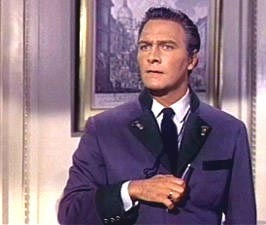
Trapp báró, az osztrák császári és királyi hadiflotta kapitánya özvegyi sorsra jut. Hét gyermekét Salzburg közeli kastélyában nevelőnők sokasága próbálja rendre szoktatni, ám minden kísérlet kudarcot vall – a virgonc gyerekek jóvoltából. A reménytelennek tűnő helyzetet egy új nevelőnő, az apácanövendék Mária nővér oldja meg, aki varázslatos egyéniségével, humanizmusával és zeneszeretetével hamar belopja magát a gyerekek és Trapp báró szívébe…
Valójában ezzel veszi kezdetét a világhírű „éneklő Trapp család” igaz története, amely Ausztriában az Anschluss idején, majd Amerikában a háború utáni években játszódik.
Baroness Maria Augusta von Trapp was the stepmother and matriarch of the Trapp Family Singers. Her story served as the inspiration for a 1956 German film that in turn inspired the Broadway musical The Sound of Music.—Source
In a Nutshell: A memoir penned by Maria Von Trapp, whose life later inspired ‘The Sound of Music’. Written in 1949, much before the Broadway musical and the movie. Offers a decent glimpse of Maria and the Trapp family, and also indirectly shows us the liberties taken by Broadway/Hollywood in their portrayal. A good option for those who want to know more about how a rich Austrian naval captain’s family ended up becoming tour singers in the US.
~~~~~~~~~~~~~~~~~~~~~~~~~~~~
Most English-movie watchers might have at least heard of ‘The Sound of Music’, even if they haven’t watched it. I had first seen this movie in my childhood and immediately fell in love with the music. (It broke my heart to discover that the couple from my favourite song ‘Sixteen Going On Seventeen’ didn’t proceed to a happy ending.) It was only many years later that I discovered that the movie was based on the actual family from Austria.
I have had this book in my TBR since ages, mainly as I'm a big fan of the music from the movie. There is an upcoming Random House publication, ‘Maria: A Novel of Maria von Trapp’ penned by Michelle Moran, which supposedly focusses on Maria’s reaction to the adaptation of her life story into a Broadway musical and later, a movie. But as it is a fictional work, I decided to first read Maria's life story in her own words so that I know the truth without (many) fictional embellishments.
Maria Von Trapp has written three memoirs. The second and the third memoirs came out in the 1970s, and focussed more on her own life, and possibly included details about the musical and the 1965 movie as well, I’m not sure. However, ‘The Story of the Trapp Family Singers’ was published in 1949, much before any adaptation. So the focus in this book is strictly, as the title suggests, on the family’s singing career.
By sheer coincidence (or possibly not), Maria begins her story at the same point as the movie does – her life as a novitiate and how she is suddenly handed over the assignment of helping out one of the Trapp children, who was unwell, with her studies. (Unlike what the movie showed, Maria wasn’t appointed as a governess to all seven kids but just as a teacher to one.) The book continues into how her bond with the children grew, her reaction to Captain Georg’s proposal (not at all like that in the movie – sigh!), their married life in Austria, and later, their move to the USA, their singing career and general life in their new country.
It is important to keep the title in mind, because the book doesn’t offer a detailed picture of the Trapps. We do get some backstory about Captain Georg’s accomplished naval career during WWI, a barely-there mention of his first wife Agathe, and the names and some behavioural details of his seven children with Agathe. However, a deeper insight into the people is missing most of the way. As the title suggests, this memoir is not about the movie or the Trapp family but about the family’s social identity as ‘Trapp Family Singers’. The romance and other family scenes depicted in the movie gets done within the first sixty pages of this book (without any of the frivolities, of course.) The rest is all about their move to and subsequent life in the USA.
For a woman who didn’t know English until she landed in the USA, Maria seems to have mastered the language almost instantaneously. (I wonder if she had a ghost-writer for this book!) She knows the history, geography, culture and traditions of her country very well, and her pride in being an Austrian comes out strongly. Her language is mostly simple, and her writing approach is both self-deprecating and self-congratulatory, a strange combination. Her tone does get very preachy at times.
At the same time, because she is so focussed on giving us the story of the “Trapp Family Singers”, she forgets to provide necessary information about the “Trapp Family”. We don’t know the ages of most of the children, we don’t even know Maria’s origins and how she ended up in the convent. The trickiest part is the understanding of the passage of time. The story spans the years 1926 to 1947, and while Maria’s narration is linear, there are very few year references across the book. So it is not easy to figure out the exact spread of the 21 years. Moreover, though Maria was only seven years older than the eldest Trapp child – a boy named Rupert, she keeps referring to the children as ‘boys’ and ‘girls’ till the end of the book, making it tough to remember that Rupert is in his mid-thirties by the time the book comes to a close.
Some parts of this memoir haven't aged well. Maria is a product of her era, so there are references to spanking children (and not even questioning the validity of this action), multiple uses of the N word to refer to Blacks, and a strange fascination about getting to meet the "real Indians" (a reference that made me cringe.) Of her three children, she speaks fondly only of her youngest, who was her only son. We barely get any details of her older daughters. Maria also seems overly naive talking about how they were never put in camps by the Americans during WWII even though they were registered as enemy aliens, and about how the US government was fair even to outsiders such as the Polish and the Austrian immigrants. I wonder if it ever crossed her mind that *other* ethnicities such as the Japanese (even if they were Japanese-Americans) had to go forcibly into internment camps.
The second half of the book feels very repetitive. Though not like typical immigrants, the Trapp family had to go through multiple swings in their singing career before they could finally relax about their finances. The ups and downs seemed to blend into each other after a point, though I loved learning about how they made do when times were bad, and smiled at Maria’s misinterpretations of US lingo. But even when Maria speaks about good times and difficulties, the writing somehow doesn’t transform into a visual experience in my head. The description feels very bare-bones, focussing only on needed facts before jumping onto the next big event.
Maria also stresses overly on the positive experiences, and doesn’t detail a single negative anecdote about any person. I find it tough to believe that every single human being they met was helpful and supportive. No one can be that lucky! (Then again, she didn’t even have to anything negative to say about Hitler; I might have assumed that the ‘nun’ values ran strong, but most nuns I know would be the first to pass judgement on people!)
The most poignant chapter of the book is the final one, where Maria details her husband’s illness and his death in 1947. In an otherwise strictly controlled narrative, it felt like the only chapter where she allowed her heart to speak more than her head. If she had written the entire book with this much emotion, it would have been an easy 4.5 stars.
Even without intending to, this memoir reveals just how many liberties Broadway and Hollywood took with the facts. The children don’t correspond in age and gender. Liesl from the movie is entirely fictional, as is Rolf. The Captain and Maria had a 25-year age gap; he was 47 and she just 22 when they got married – conveniently not mentioned in the movie. The details of their escape from Austria are not just incorrect but also incomplete. (Maria had two children of her own when they escaped; it wasn’t immediately after her marriage as the movie seemed to suggest.)
The movie also turned the Georg-Maria relationship into a typical enemies-to-lovers romance, though it was actually a marriage of convenience that slowly grew towards mutual respect and love. The biggest injustice has been done to Captain Georg, whom the movie portrays as a strict disciplinarian who doesn’t even allow his children to sing. His real-life counterpart seems to have been a loving father, though not very vociferous in his display of emotions, as was the norm among privileged men then. Basically, if you considered the movie true to life, you will be very disappointed. (Then again, it is a Hollywood movie; you ought to have known better!)
One dominant aspect in this book that is totally missing in the movie is the strong element of faith. (This might be annoying to those who don’t like religious content in their books.) Though Maria had to give up on her dream of becoming a nun, she was much rooted in her Catholic beliefs till the end. Even the Trapps were practising Christians. So the memoir has many references to their belief system, the power of prayer, the idea of trusting God with our lives, and so on. I did like some of these details, such as the Austrian traditions at Christmastime.
All in all, despite certain issues, this is still an informative read, though it could have been far better written. If you are a fan of the movie and want to know the truth about the family behind the characters, this memoir might serve you well, though that part is restricted to the first 20%. Most of the rest is fairly easy-going and somewhat monotonous, except for the final chapter.
2.5 stars. No regrets reading it, but no repeat value. Rounding up for sentimental nostalgia.
Now I am even more curious to get to Michelle Moran’s book and learn more about the distortions made by Hollywood in bringing this life story to screen. I know that it will be better written, considering that its author is actually a professional writer, not someone like Maria who wrote this account after her friends convinced her to. I just hope the research is accurate as well. Fingers crossed!
Remember the movie The Sound of Music? Well, this book was written by the real Maria von Trapp, about their real life ... not what you saw in the movie. Regarding the movie, her youngest son, Johannes, said, "This was the Hollywood version, of the Broadway version, of the German film version, of the book that my mother wrote." That sums it up quite nicely! So many things were changed, added, or omitted, that the movie barely resembles the real story. I won't go into all the differences, but they were numerous. Since I enjoy nonfiction much more than fiction, this book hit the spot for me. I enjoyed reading about what really happened, instead of watching Hollywood's fictional creation.
I thought Maria told their story in a very pleasant, friendly, and interesting manner. It was intriguing to see how moving to America affected them, as I'm sure it was quite a cultural shock. Learning of all the things they did, in addition to singing, was nice, too.
I'll say one thing ... she has more energy in her little finger, than I have in my entire body! That goes for all the other family members, too!
If you have an interest in the famous movie, or the von Trapp family, you will enjoy this book. As most of you know, they were a Catholic family, and she does share how their faith impacted their lives, at different points along the way. She's not overbearing with it, just slips it in there. So, if you're interested in reading about a family that leans on their faith, you'll enjoy this book. If you're not religious, you won't be put off by her unpretentious insertions.
3 Stars = I liked the book. I enjoyed it. I'm glad I read it.
This account is written by the original Maria, it was only recently I discovered the film was based on a true story and more surprising to me, the film is very true to the actual story. The first part of the book covers the same ground as the film, the last two thirds concentrates on their life after leaving Austria and their singing career in America.
This book could have been more descriptive for me, I felt I didn't get to know the family much throughout the book, for example I didn't feel any of the children's individual personalities came through or scenes created in my mind. I was interested in their singing career but was left wondering what they sang, I think there was a brief mention of titles but their family concerts were such an interesting and unique occupation I was left wanting to hear lots more about this.
There were some photos but I would have loved to have seen more. I would have loved an epilogue, I wonder what their many children went on to do in life after their very musical start?
What a powerful story and testament to a spirited woman, a gentle loving husband, and ten extraordinary children. This was our local library's July book selection. Even though I absolutely adore "The Sound of Music", I would never have read this book if it weren't for our book group. I am very glad that I did.
I don't have too much more to add to what other reviewers have already stated so well. Except, I do have a couple of points of reflection that I would like to share. I recognize that some of the details of the book are different than the screen and broadway play. But for me, some things in a book just can't translate to the screen with impact. For example:
1) It was much more powerful to watch them climb over the alps to freedom than to exit Austria on a train. For me, the climb over the Alps was symbolic of their overall journey which the movie did not touch upon. They went from being one of the wealthiest and aristocratic families in Europe, to penniless refugees without any rights and at the mercy of each country they visited. They often didn't know where their next meal was coming from or where they would sleep.
2) I know the family struggled deeply with the depiction of their father as a cold hearted naval captain that distanced himself from his family. I never quite felt that way watching Christopher Plummer. I felt Plummer portrayed a man who loved his children very much, but lost his way in the depth of his grief for his late wife. I think the book alludes to the fact that Captain Georg also had these moments and often traveled great distances away from home because he couldn't bear to see his home and children without his beloved wife. The book certainly confirms the kind, dedicated, patient, loving husband and father that he was. In fact, I would say he was "the glue" that held them together and his untimely death impacted their lives significantly. They carried the burden of grief a long time after his death.
I was deeply impressed with this family's love, courage, devotion and spiritual faith. It was the guiding light in their life and a true inspiration.
The Story of the Trapp Family Singers, is a “must-read” for every family attempting to incorporate Thomas Jefferson Education in their home. I say this because among many others, the following lessons are taught in this book: 1) Trust in God 2) Work together for the good of ourselves and others 3) Education can happen outside of a school
I pulled this book off the shelf for the second time because I was feeling rather discouraged and knew it was just what I needed to get me back on track. Like Job, this family starts off very well to do. They live in a mansion in the Austrian countryside, have a whole household of servants, own a car (which was uncommon at the time), and are able to travel anywhere they like without thinking of the cost. But, like Job, it was all taken away in an instant. It was the beginning of World War II and Hitler was making things difficult on Austria’s economy. One day the phone rang at the Von Trapp home. Their bank had failed; all their money was lost. At this news, most people would despair and become lost themselves. However, like Job, the Von Trapps take it with amazing fortitude. Baroness Von Trap exclaims repeatedly, “Aren’t we lucky.” Her reasoning is that if this hadn’t have happened, they wouldn’t have discovered who their true friends were, nor what great character their children had. Rather than blame God, they turn to Him in their time of need, remembering their creed: “The only important thing on earth for us is to find out what is the Will of God and to do it” (11). And their mantra: “God’s will hath no why” (13). Of the many examples of the Trapp family working together for the good of their family and others, I choose two to describe here. After the family loses their fortune, they have to find a way to support themselves. The last thing they consider is to sing as a family. However, they come to realize that not only is this the will of God, but it is actually serving their fellowmen by lifting their hearts and spirits. So despite their initial strong objections, they succumb and consent to give concerts. This path becomes a life-saver for them, becoming the means of their escape from Austria when they procure a contract to go on tour in America. While here, their music gives them many opportunities to serve others, but the most significant is when they use their fame to garner support for destitute families in Austria. Between concert stops, they all work together to package and ship the money and humanitarian items to their homeland. The Trapps also demonstrate that children can be educated outside of a school. When they first go on tour in America, they believe they need to leave their youngest daughters behind in a boarding school. However, over time they learn that the girls can be educated at home by a tutor, and then eventually they realize that the girls and the tutor can tour with them. I loved watching this metamorphosis because it is similar to the change that happened to me when I decided to educate my children at home. When my daughter first started school, I considered the teachers there the “experts” and looked to them for all the answers to my child’s problems, whether academic or otherwise. But as I began to consider and research homeschool, I realized that no, I am the expert on my child, and the best place for her to be is with her family. The Trapp family is an excellent example of a family trusting God, working together, and educating children with the family. That is why I recommend this book to every TJed family.
I'd been wanting to read this for awhile, as The Sound of Music is one of my favorite movies - Maria's boundless optimism, youthful energy, can-do attitude, and bottomless faith, combined with Captain von Trapp's worldliness and stern yet vaguely faggy swashbuckling are, for me, a match made in heaven and I never tire of watching these two fall for each other onscreen. How did the movie match up with the reality, I wondered? More than I thought they would, actually. Although the courtship and marriage are disappointingly all wrapped up by page 62, there really is a moment where the Captain's presumed fiancee, a Princess Yvonne, comes to the villa and confronts Maria: "Do you realize that the Captain is in love with you?" I always assumed that was Hollywood talking!
Hitler actually makes an appearance in the book. Maria and Georg went to a new exhibit of German art in Munich for which der Führer had selected the works. It included a wall of cheesy paintings of him in medieval armor on horseback. They went to the restaurant next door and found themselves seated at a table next to...Hitler and a bunch of SS guards. All were drinking beer except Hitler, who was drinking raspberry juice (apparently he's a teetotaler, and a vegetarian). The merriment was such that several times he nearly choked and fell backwards, "his thin hair fell over his forehead, his arms waved in the air, his world-famous moustachelet quivered - he was an embarrassing sight."
(Heinrich Himmler confiscated and inhabited the lovely Trapp villa outside Salzburg during the war; after the war, the Trapps sold it to a Catholic seminary and today it's a hotel.)
Also not addressed in the movie: Maria's fear of Negroes. "After asking around, I learned that in the whole neighborhood there were only three midwives to be found, all of them Negroes. At that time I was a little afraid of colored people, whom we had never seen in our country, and who still seemed to us a little legendary; people out of A Thousand and One Nights, interesting to look at and to talk to, but a little scary to have around and too close." But her fear quickly turns to enchantment, as their bus tours the South. "Bashfully and embarrassedly at first, later more and more encouraged by the always hearty and kind reception, I asked whether I might take a picture of this old grandma rocking on the porch with the cutest little darky on her lap, or of that group of sturdy colored boys picking cotton or harvesting peanuts."
Even before they left Austria, the Trapps lost most of their wealth in a bank failure. The Trapp Family Choir became a necessary business enterprise, as the only thing Georg knew how to do was command submarines, and he did not wish to do so for the Nazis. Life in America for many years was quite penny-pinching; during the war, as Austrians, they were declared enemy aliens (although two Trapp sons served in the U.S. armed forces). The main underpinning of the book is the family's extremely strong Catholic faith; no matter how bad things get, no matter how many days they're trapped on Ellis Island, no matter how many auditions they fail at, no matter how many music impresarios criticize their lack of sex appeal, God will provide.
I happened to catch the Sound of Music on television the other day -- one of my favorite movies -- and decided to pick up the book. It's always interesting to see how reality inspires fiction.
In this case, I discovered that the fictional account bears almost no resemblance to reality. A few elements were accurately reflected in the play/movie: Maria was in the convent preparing to be a nun. She was a tomboyish young woman who was always in trouble for un-nun-like behavior. The Captain did have 7 children, and he did use a whistle to call them. But he was not a cold, uncaring father -- he loved his children, though he did stay gone for long periods of time because they reminded him of his dead wife. He was dating and almost engaged to a princess -- royalty! -- not a baronness. (Sometimes I wonder why in the world they change things like that!) When the invitation to join the Nazi military came, the family simply declined and left the country in a normal, unexciting way.
And that was all in the first couple of chapters! The book chronicles the story of the Trapp family for years and years as they traveled the world as a singing sensation, added three more children, bought a farm, opened a music camp.
The writing was at times delightful and at other times a bit slow and contrived. But this was Maria Augusta Trapp's first book (she wrote another one later - that's on my list as well), and she was a singer, not a writer. Her faith was apparent throughout, and spiritual messages were beautifully woven into the life of this extraordinary family.
Maria Augusta Trapp, what a wonderful inspiration to women everywhere! Reading the story of her life has made me in awe of her. She persevered through every tribulation possible, and remained strong in her faith to God and relied on that faith to endure. Her writing is so beautiful, her descriptions are so rich that you feel you are there with her experiencing it all over again with her. This is true to the end and I caution you that the two final chapters require several boxes of Kleenexes to make it through. P.S. I must confess that I did go back and read those final chapters and you can make it through everything except the chapter called "A Letter". Even if you skip that chapter I think you can make it through. "A Letter" is just too heartfelt to get through without crying, in reading it you feel the emotion that it was written with to the extent of it happening to you today.
This was such a great book written by Maria herself!! I could hear Julie Andrews' voice through the whole thing. The movie really captured my impression of Maria's real personality, at least according to this book. I always wondered what happened to them after leaving Austria--now I know! She was so optimistic about everything. She said at one point that she was happy that they lost all their money because it gave the children an opportunity to let their true characters shine through--and they were solid, wonderful characters. It also gave them an opportunity to see how generous and loving their friends and neighbors where. I know I wouldn't have been so happy about losing all my money!! Really a great and interesting read.
The first time I read this, I was babysitting and picked it up off their shelf. Enjoyed it so much, I found it to finish at home. This is a great story of perseverance and hard work, using the talents you have to succeed.
For pure sentimental reasons I loved it, but if it wasn't for The Sound Of Music this would be just another mediocre book. It was published in 1949 so the style of Maria's writing is archaic and old-fashioned; people don't talk like they did 60 years ago, even if English wasn't their first language. So that was kind of annoying and hard to get past. It was good to read how the family's story actually happened, though, and not the whitewashed version of TSOM. However, it would've been nice if she had fleshed out the story of her life before meeting the Von Trapp family. She doesn't say anything about her own family, what her life was like, why she decided to enter a convent, or anything like that except that she was raised in the mountains. Also, the constant religious stuff grated on my nerves, even though I should've expected it since she was in training to become a nun.
While I enjoyed reading this pleasant tale of an Austrian family emigrating to the USA and then setting down roots, I found it a bit exhausting to see Maria von Trapp's world through her nun-coloured glasses. Maria couldn't even say anything bad about Adolf Hitler, but to describe him as a bit rude. In fact, the worst thing she says about anybody, in the entire book, is to call a soldier's party girl a "bedbug". The woman has put such a rosy gloss on everything, it becomes difficult to percieve any hardship at all. And (in the very last chapter,) she insists that the Trapp family did endure hardship, she provides one example (one daughter going missing for three days,) but then refuses to elaborate on that hardship. We never find out her reasons for running away, or her state of mind, or her health. The reader is only given a very tiny sample of "hardship", and then the door is closed. Hardship is private. So after reading the entire book, I read the last chapter and suddenly had a feeling of mistrust develop, about Maria von Trapp. I can only imagine what she left out, in an effort to promote only the positive side of her story. If you're reading this to get to know the real tale behind "The Sound of Music" (as it is boldly emphasized on the cover,) you need not read further than the first few chapters. I was pleasantly surprised as to how much more of the tale there was to be told. Maria's writing style is simplistic, but descriptive enough for even the least imaginative reader. The language is easy to understand and straightforward. I enjoyed the impressions of the family as they arrived in this intensely foreign America, learning how the backward New Worlders went about life and attempting to blend their own customs with what was acceptable in the new culture. Overall, I am not unhappy that I read this book. It is a piece of pop culture I was glad to become accquainted with.
Very interesting piece of historical fiction. It had its slow spots and ups and downs but overall I enjoyed it. The first half was a bit slow. I enjoyed the second half much better! 3.5 stars rounded up to 4.
What a wonderful more complete story of the Trapp family then we get from The Sound of Music -- which I love and why I read the book. Heart warming story of faith and family.
I've always been a fan of the Sound of Music, so I was thrilled to see that Maria had written an autobiography. The story of the Von Trapp family is incredible. I am so touched by their faith and their perseverance in the face of pain and fear and trials. Absolutly beautiful story that everyone should read. ❤
As much as I love the Sound of Music, the real story is SO much better than the Hollywood version. The family life of the Von Trapps serves as a model for all Christian families—prayer, leisure, work, and trust in God as the foundation. In reference to the early Christians in Acts, their home was named “Cor Unum,” and it is evident throughout the entire story that they truly lived with “One Heart.”
This is a book I could read over and over again and probably my favorite autobiography of all time (other than maybe The Confessions, but it’s way easier to read).
To say I loved this book is an understatement - it was fabulous, moving, and even funnier than I imagined it would be! Of course I grew up watching the great film, Sound of Music, of which Maria's life was based from, but I'd never read the true story of her life. There was so much more to her life than was portrayed in the film, and it was exciting to really get to know her in her own words.
Maria von Trapp shares her life from convent to barroness to family singing group - from Austria to America – filling the pages with humor, love, faith and family, and lot's and lot's of stories. Like learning their very first American songs: “My Old Kentucky Home” and Old Black Joe”. And trying her first taste of Coca-Cola, root beer, and ginger ale (she disliked the first two “decidedly”).
I was inspired by so many of these wonderful stories of the family's struggles adapting to a new world and language, or the chaos of living on the road with a large family...or building a house in the mountains of Vermont in the middle of winter. My favorite story remains that of her engagement to Captain Georg von Trapp – much more humorous than the movie version.
“None of the people we had met on the boat lived in New York. We had no acquaintances and no friends, no letters of introduction to anybody. We discovered the New World by ourselves.”
Her faith was such a part of her life, her family, and thus her story. It's on every page. You can hear it in every word she wrote. This book has become a new favorite for me, and sparked a deeper interest in this inspiring family who followed wherever God led, no matter the cost. I would highly recommend this to everyone - it's both greatly historical and faith-filled.
“We have now the precious opportunity to find out for ourselves whether the words we have heard and read so often can be taken literally: 'Seek ye first the kingdom of God and His justice, and all these things shall be added until you.'”
I cannot recommend this book enough, if I could, I would hand it out to people! I just loved it. It was a delight all the way through. I read this with other ladies in a read-along and the conversations that flowed from it were immense. I laughed harder than I can remember in a book in awhile, and was crying all the way through the last three chapters. The first part of the book is about some of what we know in The Sound of Music. The second half is their life in America. It is beautifully written, Maria has a wry wit and great skill at telling stories that I wish I could've been in the presence of. So thankful for this book and look froward to reading more from her. Her encouragement in living a Christian life was very exhorting. It also made me so thankful for all the hymn sings we had as kids and the kids all getting together at convention to sing hymns. It's such a gift.
"Every night we all danced folk-dances on the lawn. One day we took them up the highest mountain in the State of Vermont, Mount Mansfield; on another we showed them one of the loveliest lakes of the neighborhood, carrying along music and food. Every excursion was a success. Every night after Benediction in the chapel, we sang a few motets and hymns to give those hearts present a little more chance to enter into the spirit of prayer. There was so much to pray for."
The part that inspired the movie (loosely) was only the first part. I enjoyed the real Georg who very little resembles the movie Georg (well, little of the movie resembles the story other than they were Austrians who sang during the WWII era and didn't like Hitler, had a big house, and an almost nun marries a widower former navy captain with seven children instead of the noblewoman he was courting--anything that goes past the facts in that sentence in the movie probably doesn't match the real story). The kids aren't very fleshed out, it's more focused on Maria (the author) the family as a unit, and their family endeavors.
The longer second half was about their concerts in America, a lot of it interesting, but not as interesting as the first part if you choose this book because you love the movie. Their faith plays a huge part in the book which was also nice. As a former ESL teacher I got a kick out of the parts on the successes and failures in her English language acquisition. Fun if you like to know the real story and worth the read, but I'd probably only recommend it to the people who would be the people that would already automatically pick it up based on the title just like we did at a yard sale. :) So if the title intrigues you, go for it.
I picked this book up when I was staying with a friend and had to buy a copy after I'd read 40 pages! I was curious to read the book that the famous film/musical version was based on. It was completely different but that's no surprise!
I preferred the book because it was more realistic and I learned much more about the Trapp family and their adventures beyond leaving Austria. Maria von Trapp has a natural intimate writing style and is very religious and spiritual. As an atheist I found this interesting and think it could be quite comforting if you are going through a rough time. They went through some tough times yet they usually managed to find a positive solution by a bit of luck, praying and using their entreprenerial skills. I still love the musical but the book is much more profound and real.
it certainly was interesting that the book was so different then the movie. Not even the names of the children were the same. There is nothing in the movie about the second part of the book about their life in the US. There also was no dramatic escape from Austria, which also occur far earlier than right after their honeymoon.
Though I was aware that “The Sound of Music” was based on the life of Maria von Trapp, I only recently realized that it wasn’t just the fame of her family singing troupe that made Hollywood notice her. She also wrote a memoir. As a writer, I’m always interested in any book that makes it into film, and the ones that end up eclipsing the life of the author are the most fascinating of all.
The events of the movie, from Maria’s stint as the von Trapp’s governess to her marriage to the Baron to their escape from the Nazis, are all Chapter One of the book. The rest of it is about their adjustment to life in America. The most emotionally gripping chapter is the final one, which describes Georg’s death. Since grief of a loved one has been the driving force behind many a memoir, I wouldn’t be surprised if that was the case here, too. But what especially impressed me is the clear through-line between the real Maria and the “problem” character the nuns were singing about. The real Maria comes across as deeply religious and very sweet, but also enterprising enough to go after “impossible” dreams. She wasn’t worried about taking on debt, for example, which seems to have made her husband pretty nervous. So, reading between the lines, you can see someone both headstrong, yet extremely creative, and since she has such a sense of humor, you can’t help liking her. She’s not afraid to make herself look less than perfect, either. She’s often the butt of her own jokes. Her favorite anecdotes seem to be about the embarrassing mistakes she made while learning to speak English.
From a Jewish perspective, the book may be somewhat problematic. It’s chock full of Christian references, though it’s easy to see the parallels to our own concept of Divine Providence. The von Trapps were recipients of plenty of it, and because Maria was so religious, she saw it in precisely those terms. The other problem is that while the von Trapps deserve tremendous credit for resisting the Nazis, which they did at great personal cost, I couldn’t help but feel that any hardship they underwent was nothing compared to what Jews had to go through, especially those who didn’t make it out of Europe. But all in all, it was a charming book. Had Maria written one about her life after the movie’s success, I would have read that, too.
If you are looking for a bookish version of The Sound of Music, I am not sure that exists.
This is essentially a memoir written by Maria Von Trapp. She is delightfully funny and an excellent writer. Her catholic faith features prominently and she is quick to thank God and acknowledge his provision along the way.
The faith and fortitude of the Von Trapp family is certainly admirable. I read this aloud to my two older boys (ages 12 and 10), and we had multiple conversations about their ingenuity and willingness to do whatever it took to care for their family and stay together.
I recommend this, but if you love the musical (like we do) go in knowing it is wildly different.
Rereading this book was delightful, just like the the first time I read it. I LOVE Maria's writing style and how she detailed the Catholic traditions. We need more older folk to pass down these traditions so that we can carry them on to our own children and grandchildren!! Hopefully more will take their cue from Maria!
I wouldn’t be surprised if this turned out to be my favorite book this year. Absolutely loved it, and was so encouraged and inspired by the Trapp family.
Just a tad bit long, the end is not as exciting as the beginning. The religious references, too, are quite repetitive in the end. It feels like reading about a whole family of Pollyannas: always happy, always positive, somewhat reckless. You've seen the musical - The Sound of Music - or the movie of the same name. Maria, an aspiring nun, gets a job as a private teacher in the family of widowed naval commander Georg Johannes von Trapp. They end up married, touring the world as a musical choir, escaping WWII Europe for a life in the USA. They sure suffered and achieved more than the average family. Their settling in Vermont looks like the typical American dream coming true. But sometimes they seems too kind, too optimists, almost unreal. Mrs Trapp has a good sense of humour and a good sense of timing: I enjoyed reading about her attempts to learn English. Her writing is pleasant and it often makes you feel part of the family. It's almost a fairytale, a bedtime story.
I caught half of The Sound of Music on tv a couple of weeks ago and I had a sudden desire to know about the real Trapp family and their story. I thought this book was interesting and very different from the movie. I'm glad that Maria wrote a book and that I could find out about what the family did after escaping Nazi-occupied Austria. It was funny in some parts and slow in others--you can tell the book wasn't written by a writer, but by a real person just telling her story (so that is both good and bad.) I enjoyed seeing how much faith the Trapp family had and how they were willing to submit their will to God's in all kinds of dire circumstances--I was inspired to try to face my own trials with the same positive outlook and total reliance on God. Worth reading and inspirational--I would give it more than three stars but the writing style made parts a little slow for me.