What do you think?
Rate this book


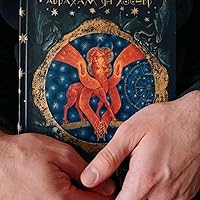
112 pages, Paperback
First published January 1, 1602
The philosopher, theologian and poet Tommaso Campanella (1568–1639) was undoubtedly one of the most prominent utopians of the Renaissance. The clergyman was accused of heresy and of incitement to rebellion against the authorities and was repeatedly punished with both imprisonment and torture. In prison, he pretended to be insane, and thanks to a convincing performance, he escaped execution. The manuscript of the "City of the Sun" was written while in captivity in 1602. It was smuggled out of prison, page by page, under great secrecy.
In his best-known work, Campanella lays out an ideal state whose citizens live in a kind of commune: private property is not known there, all of the work is done together and everyone can hold a profession "in which they have the most talent and inclination". Of course, there has also been criticism of the author's then contemporary view of life and the ways of thinking that prevailed at the time. Campanella hoped that an ideal state like the City of the Sun could be brought to life in practice, and with the help of various efforts, he repeatedly attempted to do so. Although his attempts were doomed to failure, many of his ideas were later developed, setting an example for French revolutionaries as well as the 19th-century positivists and socialists.
This reprint of "Päikeselinn" appears in a newly edited translation and is supplemented with footnotes and an Afterword. - a translation of the Estonian language synopsis.
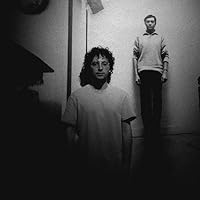
Sacrifice is conducted after the following manner: Hoh asks the people which one among them wishes to give himself as a sacrifice to God for the sake of his fellows. He is then placed upon the fourth table, with ceremonies and the offering up of prayers: the table is hung up in a wonderful manner by means of four ropes passing through four cords attached to firm pulley-blocks in the small dome of the temple. This done they cry to the God of mercy, that he may accept the offering, not of a beast as among the heathen, but of a human being. Then Hoh orders the ropes to be drawn and the sacrifice is pulled up above to the centre of the small dome, and there it dedicates itself with the most fervent supplications. Food is given to it through a window by the priests, who live around the dome, but it is allowed a very little to eat, until it has atoned for the sins of the State. There with prayer and fasting he cries to the God of heaven that he might accept its willing offering. And after twenty or thirty days, the anger of God being appeased, the sacrifice becomes a priest, or sometimes, though rarely, returns below by means of the outer way for the priests. Ever after, this man is treated with great benevolence and much honor, for the reason that he offered himself unto death for the sake of his country. But God does not require death.